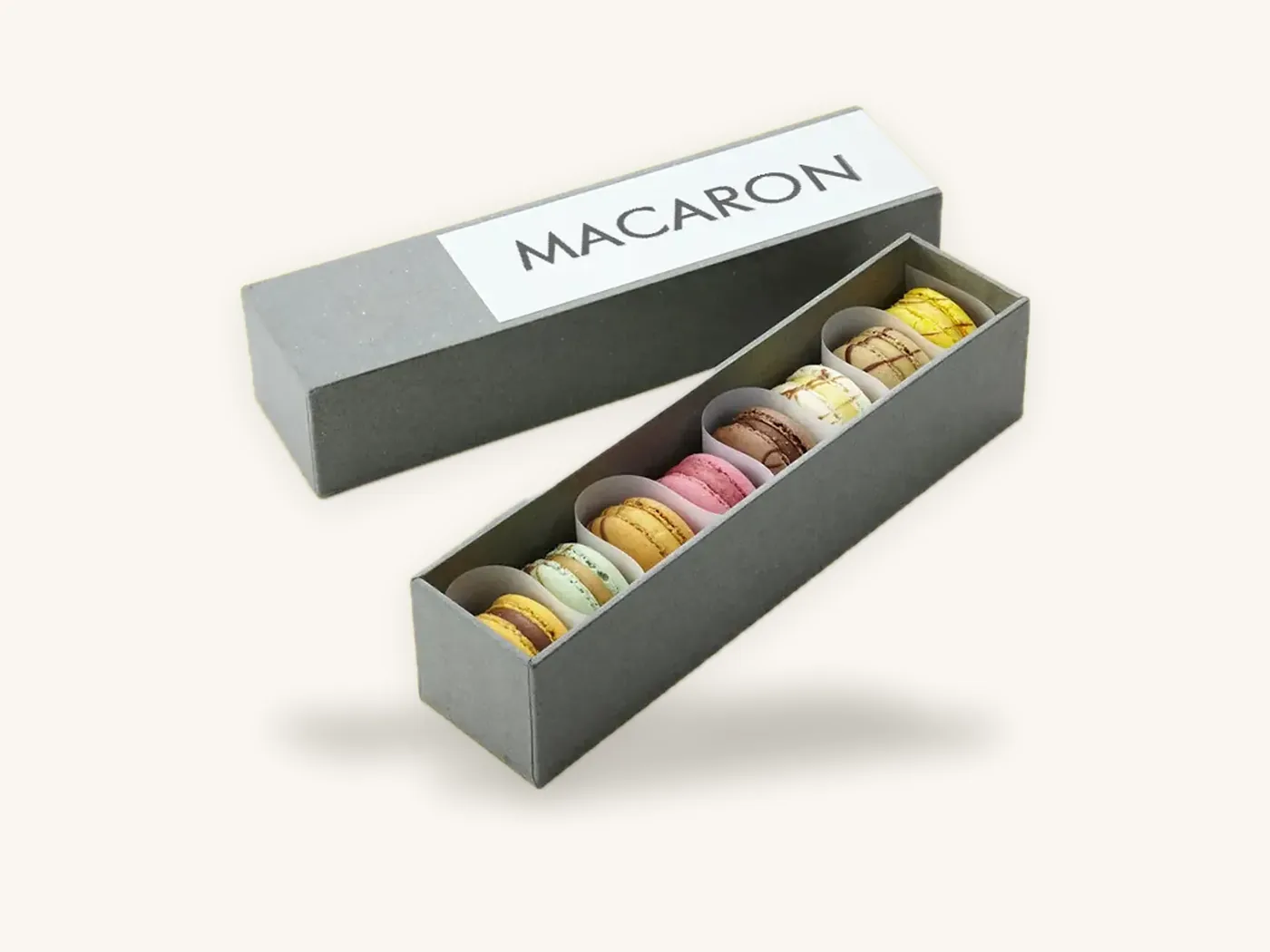
Good macaron boxes hold every macaron in its own cavity or channel so that nothing touches the thin shell except the tray walls, and the lid never presses down. The shells crack under light pressure and the feet chip when macarons slide into each other, so tray spacing matters far more than box board. A slim sleeve-and-tray or drawer box with a snug paperboard insert is the standard answer for most macaron packaging.
This guide explains why macarons break, how to choose between standing and lying layouts, how to calculate cavity and channel sizes for 3 to 24 macarons, which structures suit which occasions, and how to plan macaron gift boxes that survive refrigeration, shipping and a handbag. It closes with pricing references and an ordering checklist.
Key takeaways
- Macarons fail at the shell and the foot. Side impacts chip feet; top pressure cracks shells; condensation softens both.
- Two layouts dominate: standing on edge in channels (compact, classic) and lying flat in cavities (best view, least pressure on each shell).
- Size channels about 1/16 to 1/8 in wider than a macaron's thickness and cavities about 1/8 in wider than its diameter. Tighter scrapes shells; looser lets them rattle.
- Sleeve-and-tray and drawer boxes protect best because the tray slides out horizontally instead of being lifted past a lid.
- Chilled macarons fog windows and soften boxes as they warm, so plan for condensation in fridge-to-counter handling.
- Box Sense makes macaron packaging from 10 units, with one-time insert tooling of about $45 and free 3D proofs.
How macarons break: the four failure points
Understanding the damage tells you what the packaging must do. A macaron is two thin meringue-based shells, each with a ruffled "foot" at its base, joined by a soft filling. Each part fails differently.
1. Cracked tops
The dome of each shell is thin and brittle. Pressure from above, such as a lid pressing down or a bag on top of the box, cracks it. The fix is depth: the lid must never touch the macaron.
2. Chipped feet
The ruffled foot sticks out slightly beyond the dome. When macarons slide sideways and hit each other or a hard wall, the foot chips. The fix is a close-fitting cavity or channel that stops movement.
3. Sheared shells
If a macaron standing on edge tips over inside a loose channel, the top shell can slide on the filling, especially when the filling is soft or warm. The fix is channels sized to the thickness, with no extra space for tipping.
4. Softened shells from moisture
Macarons are usually stored chilled. Take a cold box into a warm, humid room and condensation forms on the macarons and the inside of the box. Shells go sticky and paperboard softens. The fix is letting boxes warm up gradually while closed, and choosing board and coatings that tolerate brief humidity.
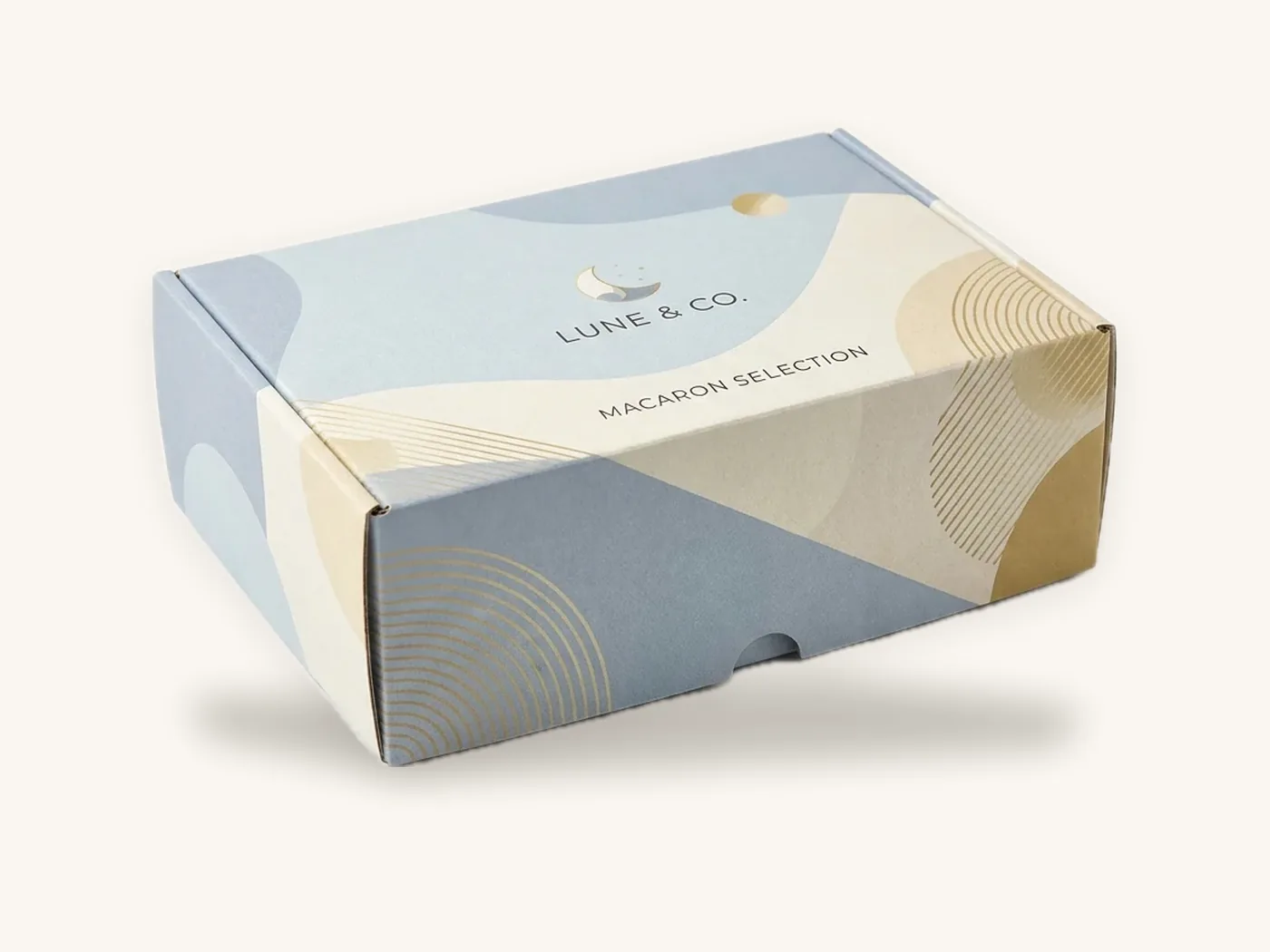
Standing or lying flat: choosing a macaron layout
Before sizing anything, decide how macarons sit. The layout changes the box shape, the tray design and the look when opened.
| Layout | How it looks | Protection | Box shape | Best for |
|---|---|---|---|---|
| Standing on edge, single row | Row of macarons side by side, like coins in a roll | Good if channel is snug | Long, narrow and slim | 5 to 8 pieces, gifts, favors, retail |
| Standing on edge, multiple rows | Two or more parallel rows | Good; rows support each other | Rectangular, slim | 12 to 24 pieces |
| Lying flat in round cavities | Each macaron in its own well, top facing up | Best for shells; nothing presses sides | Wider and shallower | Decorated tops, premium assortments |
| Lying flat, stacked pairs | Two macarons per cavity | Moderate; top pressure on lower shell | Compact | Bulk or budget packs |
| Loose in a small box | Macarons touching | Poor | Any | Same-day eating only |
When to stand them up
Standing layouts are compact and show the color of each macaron's side. They suit plain or lightly decorated macarons and gift boxes that need to look slim and elegant. Each macaron is supported by its neighbors and the channel walls, so a well-sized channel resists movement well.
When to lay them flat
Lay macarons flat when the top is decorated with drizzle, gold leaf, sprinkles or a printed design. Flat cavities also isolate each macaron completely, which is the safest choice for shipping. The trade-off is a larger footprint for the same count.
Tray spacing: cavities, channels and walls
The tray is where macaron packaging succeeds or fails. Measure your own macarons: a common size is about 1.5 in across and 0.9 to 1 in thick, but many bakers make larger 1.75 to 2 in shells, and filling thickness varies by flavor.
Measure these first
- Diameter at the widest point of the foot, not the dome.
- Thickness from the bottom of the lower foot to the top of the upper dome, including filling bulge.
- Variation across flavors. Measure the thickest and widest flavors, not an average.
Channel sizing for standing macarons
For standing layouts, the channel width runs across the macaron's thickness and the channel length holds a row.
- Channel width = macaron thickness plus about 1/16 to 1/8 in.
- Channel length = number of macarons x (thickness plus a small allowance, about 1/32 in each) plus about 1/4 in total for fingers at one end.
- Channel depth should hold about half to two thirds of the diameter, so the tops stay visible and easy to grab.
- Wall between channels is typically one or two thicknesses of paperboard, around 1/32 to 1/16 in.
Cavity sizing for flat macarons
- Cavity diameter = macaron diameter plus about 1/8 in.
- Cavity depth = about half the thickness, so the macaron sits down in the well.
- Pitch (center to center) = cavity diameter plus a wall of about 1/8 to 1/4 in.
- Edge margin from the outer cavity to the tray edge: about 1/4 in.
Sizing reference for standard macarons
The table assumes macarons about 1.5 in across and 1 in thick. It gives approximate internal tray sizes as a starting point.
| Count | Layout | Approx. internal tray size | Approx. box depth | Common use |
|---|---|---|---|---|
| 2 to 3 | Standing, one row | 3.5 x 1.75 in | 1.75 in | Wedding and event favors |
| 5 to 6 | Standing, one row | 6.5 to 7.5 x 1.75 in | 1.75 in | Retail gift and add-on |
| 6 | Flat, 2x3 cavities | 5.5 x 3.75 in | 1.25 in | Decorated tops |
| 12 | Standing, two rows of 6 | 7.5 x 3.5 in | 1.75 in | The classic gift size |
| 12 | Flat, 3x4 cavities | 7.25 x 5.5 in | 1.25 in | Premium assortments |
| 24 | Standing, four rows of 6 or two rows of 12 | 7.5 x 7 in or 13.5 x 3.5 in | 1.75 in | Parties and corporate gifts |
Add the thickness of the outer box walls and any sleeve to get the external size.
Watch out: filling thickness changes by flavor. A ganache or buttercream-filled flavor can be noticeably thicker than a jam-filled one. If you size channels to your thinnest flavor, thicker flavors jam, and if you size to the thickest, thin ones tip. Measure across your whole menu and size to the upper end, then check thin flavors in a sample.
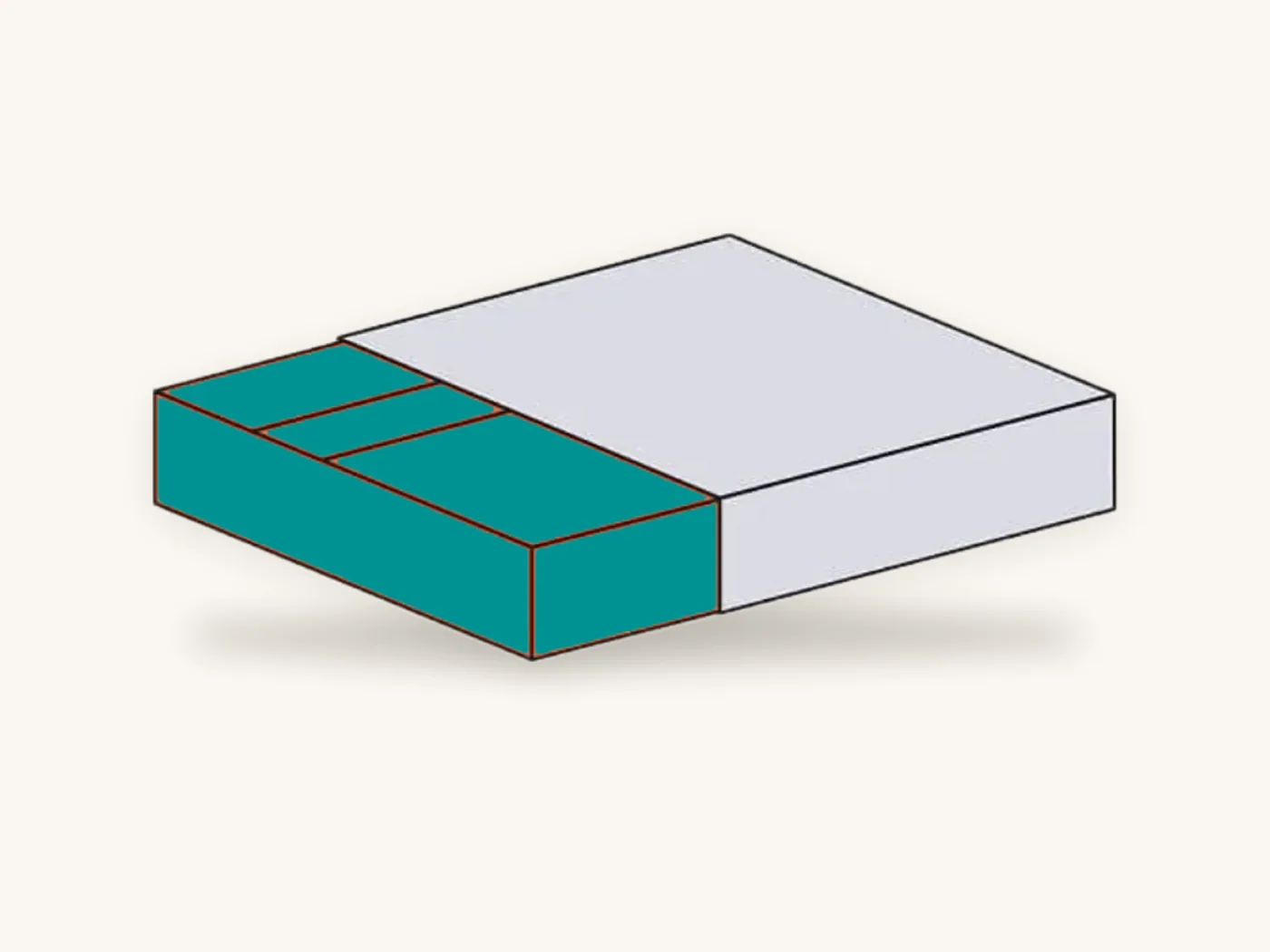
Tray and insert materials
Macaron trays can be made from several materials. The right choice depends on your look, your sustainability goals and how far the macarons travel. The box inserts page shows the insert options we produce.
Paperboard inserts
Die-cut and folded paperboard is the most common insert Box Sense makes for macaron boxes. It can form channels or cavities, prints if needed and stays in the paper recycling stream. Choose materials suitable for food contact where the macaron touches the insert; our guide to food-safe inks and coatings explains the general principles. Leave the contact surfaces unprinted.
Molded pulp inserts
Molded pulp trays give a soft, cushioned cavity with a natural texture. They suit plastic-free brands and flat-lying layouts. Cavity tolerances are looser than die-cut paperboard, so test the fit with your macarons.
Clear plastic trays
Clear formed plastic trays are widely used for macarons because they show the product. They are not among the insert types we produce, so if you use a stock plastic tray, send us its measurements and we will size the outer box around it.
Soft liners
A thin glassine or parchment sheet under flat macarons helps with sticky fillings and gives a clean release. It adds little thickness but include it in your cavity depth.
Box structures for macaron packaging
The outer box protects the tray, blocks light and sets the gift experience. Some structures suit macarons better than others because of how the tray comes out.
| Structure | How it opens | Protection | Presentation | Choose it when |
|---|---|---|---|---|
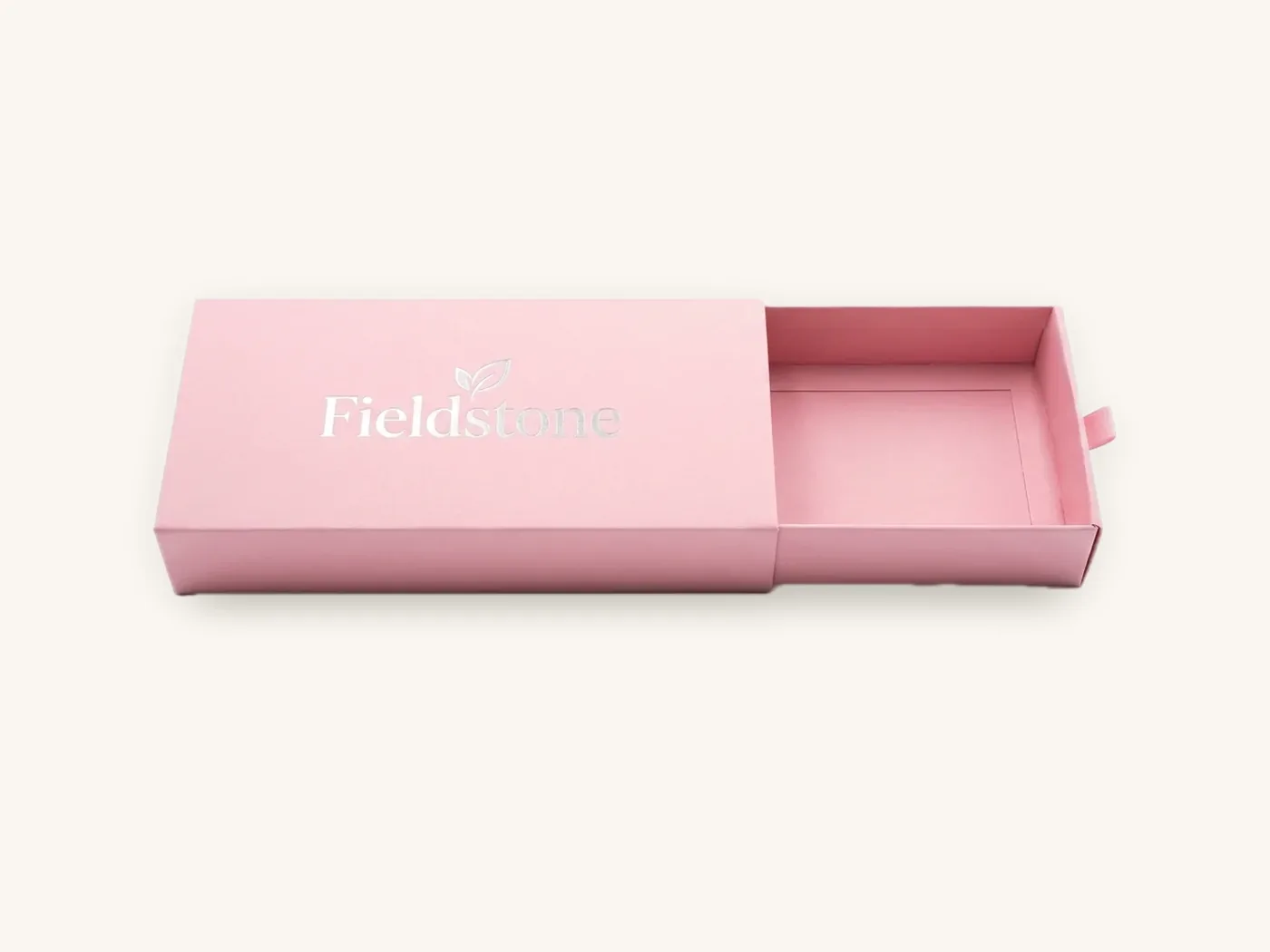
| Sleeve and tray | Tray slides out of a printed sleeve | Very good | Clean, modern | Retail boxes of 5 to 12; brand print on the sleeve |
| Drawer box (rigid) | Rigid drawer slides from a rigid shell, often with a ribbon pull | Excellent | Premium keepsake | Gift sets of 12 to 24, corporate gifts |
| Window tuck carton | Lid tuck with a window over the tray | Good if tray is snug | Product visible | Counter sales and grab-and-go |
| Two-piece rigid lid and base | Lid lifts off | Very good | Luxury reveal | Flat-lying assortments, wedding gifts |
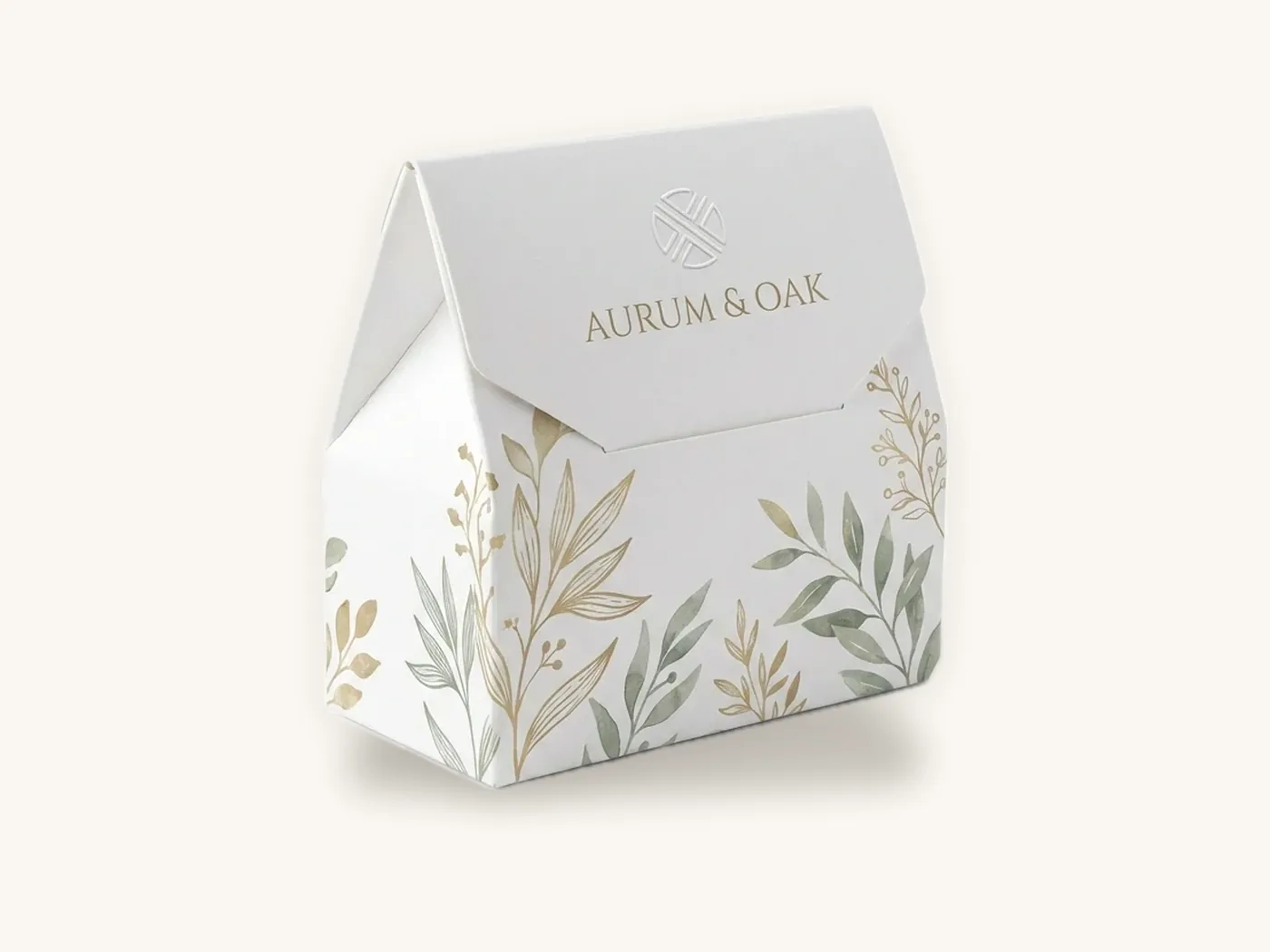
| Small favor box or pillow box | Tuck or pinch closure | Moderate | Playful | 2 to 3 macarons for events |
Why sliding structures protect best
When a tray slides out of a sleeve or drawer, it moves horizontally and stays level. Nothing passes over the tops of the macarons. With a hinged lid, a flap or lip can catch the top of a standing macaron as it opens and closes. That is why sleeve and tray boxes and drawer boxes dominate macaron packaging. The sleeve boxes guide and drawer boxes guide go deeper on each structure.
Windows
A window in the lid or sleeve shows colors without opening, which helps retail sales. Keep windows small enough that the sleeve or lid stays stiff, and expect fog when chilled boxes meet warm air. See window boxes for window shapes.
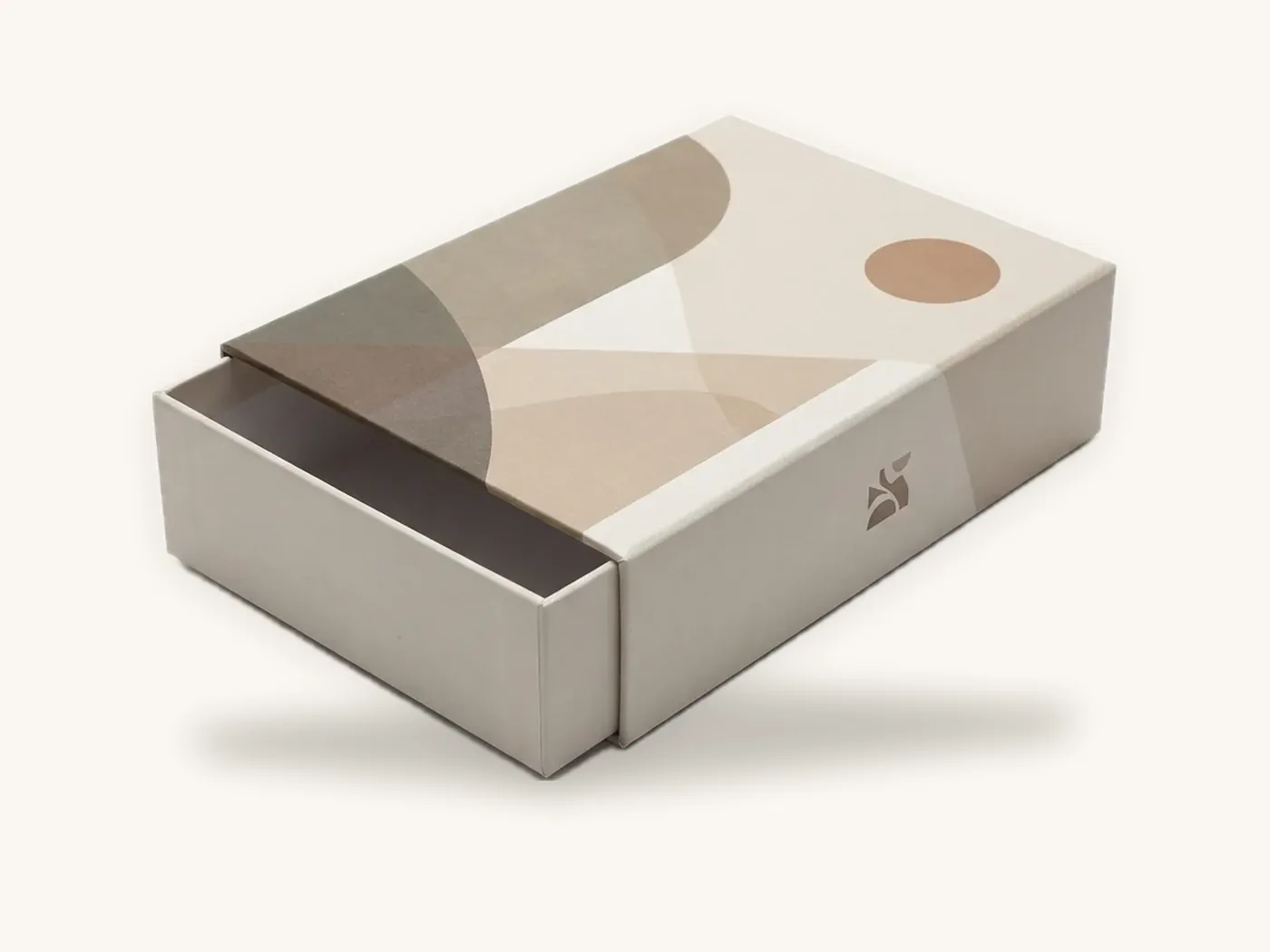
Planning macaron gift boxes
Macaron gift boxes are bought for occasions, and each occasion has different needs. A clear range usually has three or four tiers rather than one box in many sizes.
A practical gift tier plan
- Favor (2 to 3 pieces): a small standing-channel box or pillow box, often printed with a couple's names or event date. Short digital runs suit this well.
- Everyday gift (6 pieces): a slim sleeve and tray box in paperboard, printed full color on the sleeve.
- Signature gift (12 pieces): a sleeve and tray or rigid drawer box with foil stamping on the logo.
- Celebration or corporate (24 pieces): a rigid drawer or lid-and-base box, possibly with space for a printed card or a small second item.
Pairing macarons with other items
Gift sets often combine macarons with tea, coffee, a candle or a bottle. Design the insert with a separate bay for the second item, and weigh the whole set, because a bottle or jar adds far more weight than the macarons and needs a stiffer box. Our tea packaging guide covers tea formats that pair well, and the wine packaging guide covers bottle sets.
Seasonal editions without a full reprint
Keep the rigid box or tray constant and change only the sleeve, belly band or sticker for holidays. The sleeve is the cheapest part to reprint and carries most of the design.
Cold chain, shipping and handling
Macarons are usually made ahead, matured in the fridge and served near room temperature. Packaging has to survive that journey.
Handling steps that prevent damage
- Box macarons cold after the filling has set, so shells and filling are firm.
- Close the box before removing it from the fridge and let it warm up closed, so condensation forms on the outside of the box instead of the macarons.
- Keep boxes flat. A standing-row box on its end lets macarons slide to one side.
- Carry in a bag with a flat base, not a handbag where items press on the box.
- For shipping, use an insulated outer and cold packs, with the macaron box held tight so it cannot move. Ship early in the week so parcels do not sit over weekends.
Our guides to cold chain packaging for food and shipping fragile items cover the outer packaging in depth. A printed custom mailer box can serve as the branded outer around the insulated liner.
Choosing board for humidity
Paperboard absorbs moisture. A coated or laminated outside surface resists the brief humidity of condensation better than uncoated board, and rigid greyboard boxes hold their shape better than light cartons when they get slightly damp. For long cold-chain shipments, keep the macaron box inside a sealed bag within the insulated shipper.
Printing and finishes on small macaron boxes
Macaron boxes are small, so finishes do a lot of the work. A single foil logo on a soft-touch sleeve reads as premium from across a counter.
- Soft-touch lamination gives a velvety feel that suits pastel and luxury brands.
- Foil stamping on a logo carries a one-time tooling charge of about $60.
- Embossing a logo on a rigid lid, also about $60 in one-time tooling.
- Pastel PMS colors are worth specifying exactly, because small shifts in CMYK can make pastels look dull.
- Inside printing on the tray base, where macarons have been removed, reveals a message as the box empties.
The printing and finishes page shows every option, and the bakery and confectionery and chocolate and candy pages show related packaging.
What macaron boxes cost
We do not publish a dedicated macaron box price row, because counts, trays and structures vary widely. These rows from our current rates are the closest references, with US shipping included:
| Reference spec | 10 | 100 | 500 | 1,000 |
|---|---|---|---|---|
| Rigid box with insert, 2 mm, 3x3x1.5 in, matte, foil (favor-size reference) | about $5.06 | about $3.35 | about $1.79 | about $1.49 |
| Rigid box, 2 mm greyboard wrapped, 8x6x3 in, full color, matte (gift set reference) | about $13.76 | about $9.10 | about $4.85 | about $4.05 |
| Reverse tuck end carton, 14 pt SBS, 2x2x6 in, full color, gloss (slim carton reference) | about $1.77 | about $1.17 | about $0.63 | about $0.52 |
A slim paperboard sleeve and tray for 6 macarons will generally sit closer to the carton reference than to the rigid rows; a rigid drawer box for 24 sits near or above the 8x6x3 in rigid reference. Custom insert dies add about $45 once. Use the instant price estimator for your exact spec.
How to order macaron boxes from Box Sense
Start with your macarons, not a box size. We design the tray and box together.
What to send
- Macaron diameter and thickness for your widest and thickest flavors
- Counts per box and preferred layout: standing in channels or flat in cavities
- Structure: sleeve and tray, rigid drawer, window carton, lid and base or favor box
- Insert material: paperboard or molded pulp, or the size of your stock plastic tray
- Print and finishes: full color, PMS pastels, soft-touch, foil, embossing
- Quantities per size and the event or launch date you are working toward
- Artwork, or a request for help from our design services team
From quote to delivery
We confirm pricing within 24 hours and provide the dieline, artwork setup and a 3D digital proof with two free revision rounds. Unprinted structural samples are free, so you can load real macarons and test your fridge-to-counter routine; a printed sample of approved artwork is free on orders of 100 or more. See samples.
Standard production is 8–12 business days after proof approval, with rush in 5 business days on most paperboard styles; rigid boxes follow the standard timeline. The minimum order is 10 boxes, US shipping is free, and defective boxes reported within 14 days are reprinted free. Browse macaron boxes for structure photos, and see the bakery packaging guide for the rest of your range.
Frequently asked questions
How do you keep macarons from breaking in a box?
Give each macaron its own snug channel or cavity so it cannot slide into others, and make the box deep enough that the lid never touches the tops. Sleeve and tray or drawer boxes help because the tray slides out level. Box macarons cold once the filling has set, keep boxes flat and let them warm up closed.
What size box do I need for 12 macarons?
For standard macarons about 1.5 in across and 1 in thick, standing in two rows of six, a tray of roughly 7.5 x 3.5 in inside and about 1.75 in deep works. Lying flat in a 3x4 grid needs roughly 7.25 x 5.5 in and about 1.25 in deep. Measure your thickest and widest flavors before finalizing.
Should macarons stand up or lie flat in a box?
Stand them on edge for a compact, slim box that shows each macaron's color from the side; this suits plain and lightly decorated macarons. Lay them flat in cavities when tops are decorated or when shipping, since each macaron is fully isolated. Flat layouts need a larger footprint for the same count.
What are macaron boxes made of?
Common macaron boxes use SBS paperboard for sleeves and cartons, rigid greyboard wrapped in printed paper for premium drawer and lid boxes, and inserts of die-cut paperboard, molded pulp or clear plastic. Box Sense produces paperboard, molded pulp and foam inserts and can size an outer box around a stock plastic tray you already use.
How do you ship macarons without damage?
Pack macarons cold in a snug tray inside their gift box, then place that box in an insulated shipper with cold packs, tightly held so it cannot move. Ship early in the week with fast service to avoid weekend delays. Keep the box flat and use a sealed bag around it to limit condensation on arrival.
Can I order custom macaron gift boxes in small quantities?
Yes. Box Sense produces custom macaron gift boxes from 10 units, which suits weddings, launches and seasonal editions. Short runs are printed digitally without plates. Custom inserts carry a one-time die charge, and foil or embossing each have one-time tooling, so reorders of the same design cost less to set up.
How much do macaron boxes cost?
It depends on count, structure, insert and finish. As references, a small 3x3x1.5 in rigid box with insert and foil is about $3.35 each at 100 units, and an 8x6x3 in rigid gift box is about $4.05 at 1,000, with US shipping included. Slim paperboard sleeve boxes cost less. Use the pricing estimator for your spec.
Next steps
Measure your widest and thickest macarons, choose standing or flat layouts, and settle on two or three gift tiers. Price your sizes in the macaron box price estimator, then request a macaron packaging quote; we confirm pricing within 24 hours and design your tray and box as a matched set.
Boxes in this guide
Order the packaging we covered
Written by the Box Sense Packaging Team
Our structural designers, prepress technicians and production staff print and convert custom boxes every day for brands in the United States, United Kingdom and UAE. Questions about this guide? Talk to us.