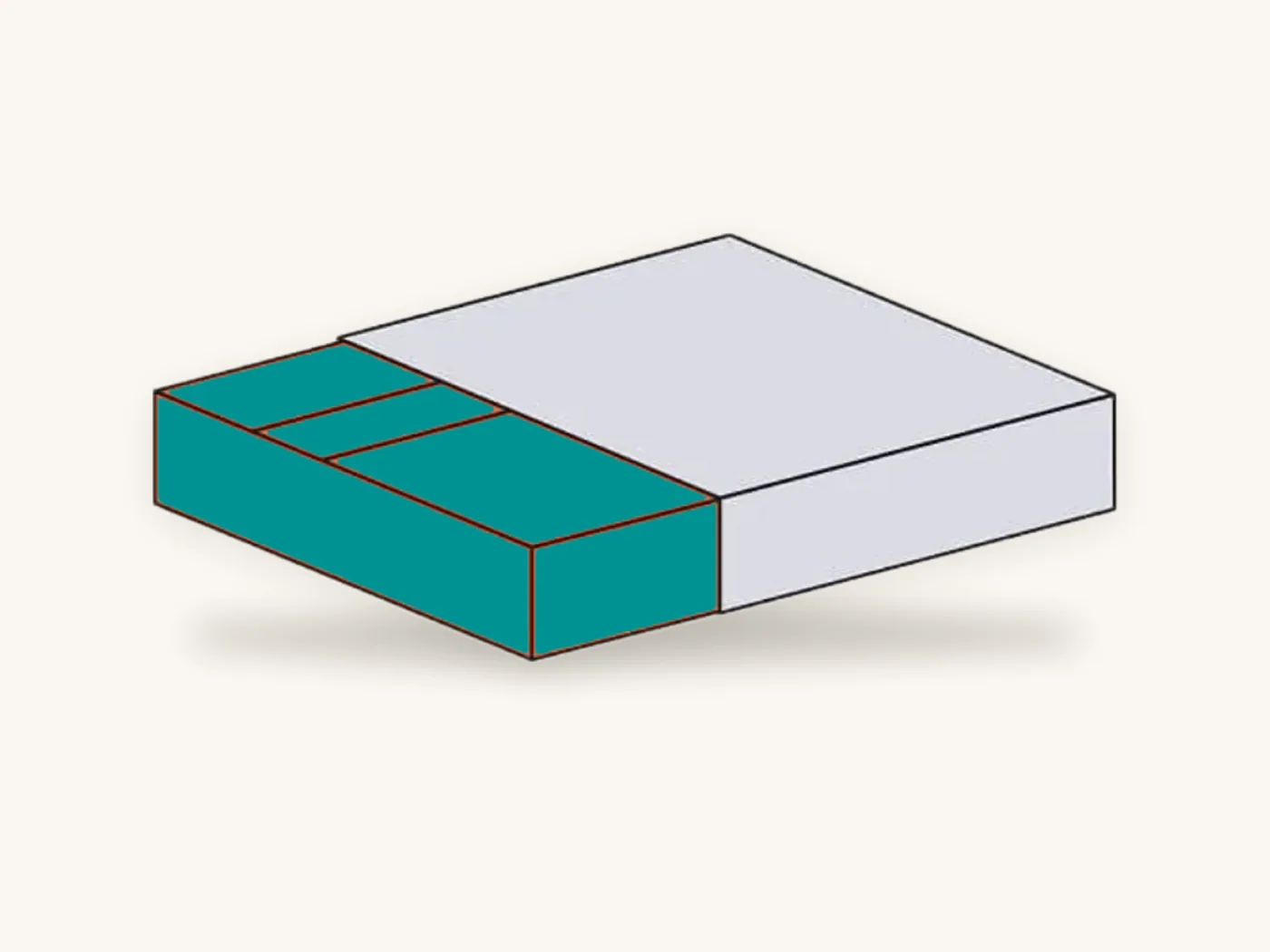
Sleeve boxes are two-part packages: an open-ended printed sleeve that slides over a tray, or over a product or plain box, to close and brand it. Push the tray out and the product is revealed in one smooth motion. That slide is the whole appeal, and it is why tray and sleeve boxes show up on chocolates, macarons, soaps, cosmetics sets and tech accessories.
The format is also quietly economical. Because the sleeve carries most of the branding, you can print the sleeve in full color and keep the tray plain, or use one tray for several products and change only the sleeve. This guide explains the formats, the fit tolerances that make the slide feel right, how to pair materials, what sleeve packaging costs, and how to order it.
Key takeaways
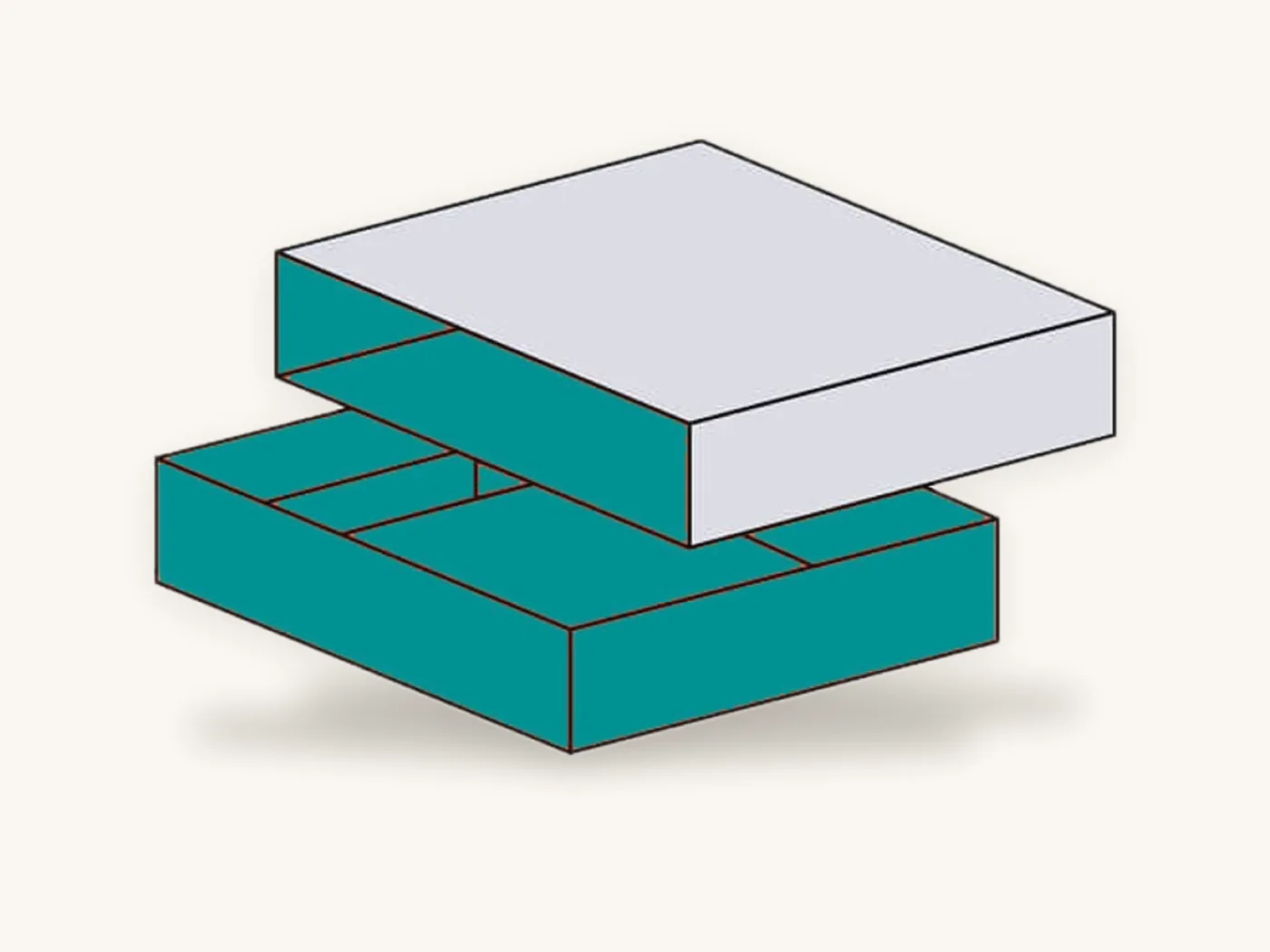
- A sleeve box has two parts: a sleeve (a printed tube open at both ends) and a tray or inner box that slides inside it.
- The slide feel is set by clearance: roughly 1/32 to 1/16 in (about 1–1.5 mm) of total clearance on width and height between tray and sleeve is a common paperboard starting point, tuned with a physical sample.
- Pair a thinner, highly printed sleeve with a sturdier tray, or a paperboard sleeve with a rigid greyboard tray for a premium feel at a lower cost than a full rigid box.
- Printing only the sleeve and keeping trays plain lets one tray serve many flavors, scents or shades.
- A kraft soap sleeve or box, 3.5x2.5x1.25 in in one color, is about $0.66 each at 100 units and about $0.29 at 1,000, with US shipping included.
- Box Sense makes custom sleeve packaging from 10 units with free structural samples, so you can feel the slide before you commit.
The anatomy of a tray and sleeve box
Before choosing a format, it helps to name the parts. Suppliers use slightly different terms, and mismatched vocabulary causes a surprising number of wrong quotes.
The sleeve
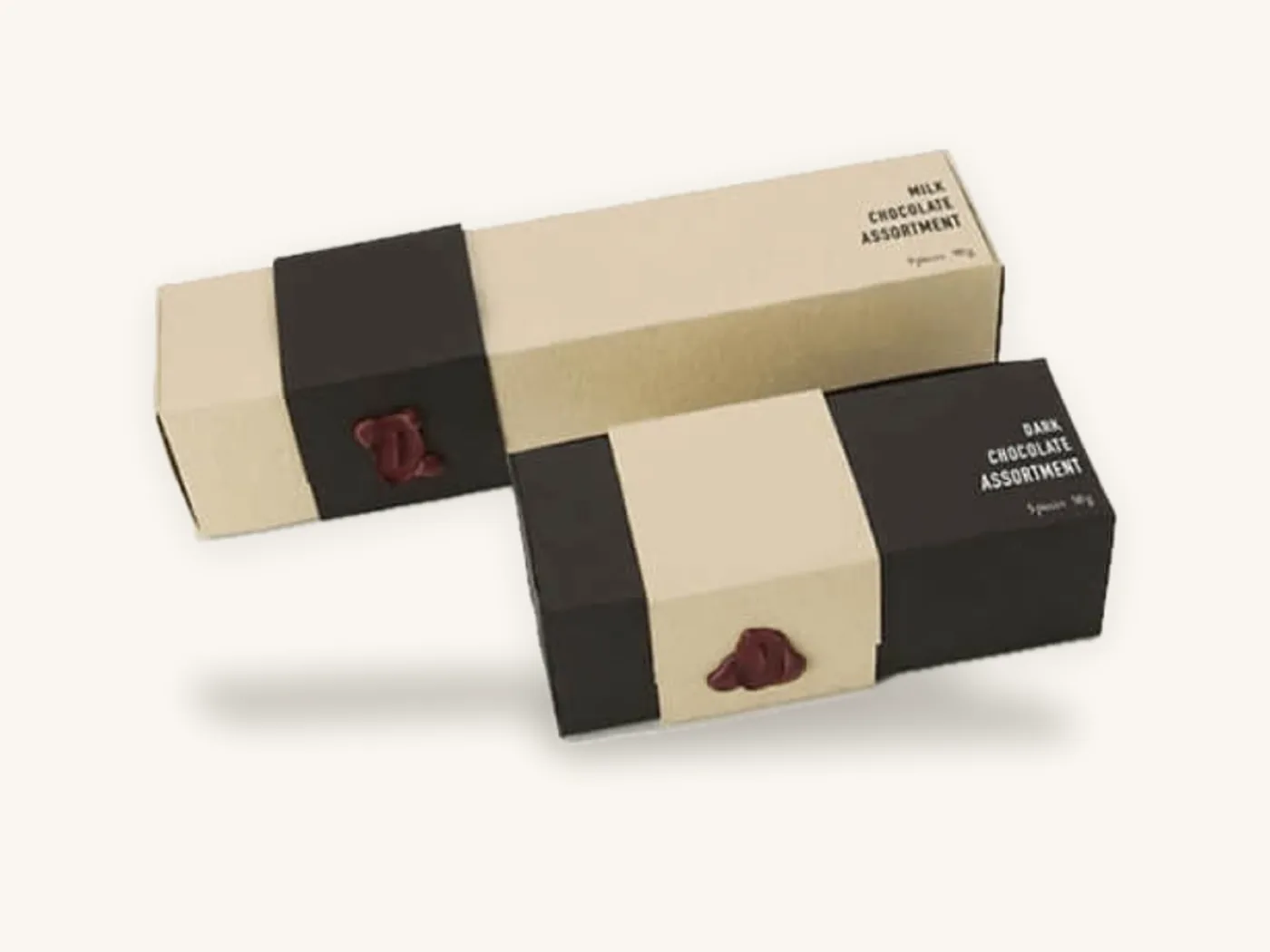
The sleeve is a four-sided band with open ends. It is die-cut as a flat blank and glued along one seam, so it ships flat and pops open into a rectangle. Its inside dimensions must match the outside of the tray plus clearance. Sleeves can cover the whole tray length, or only part of it, in which case they are often called a belly band.
The tray
The tray is an open-top box that holds the product. Paperboard trays are usually one of two constructions:
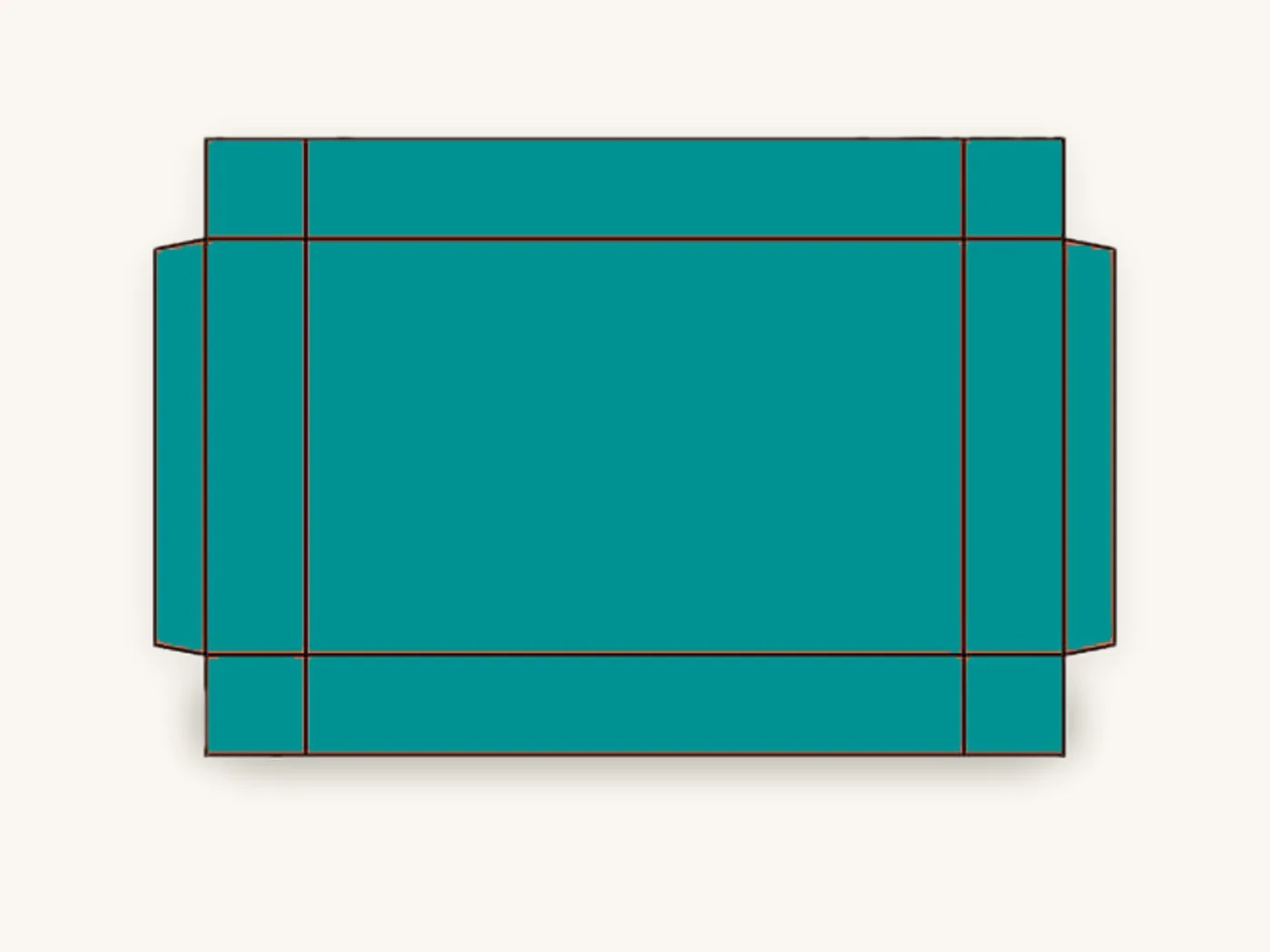
- Four-corner glued tray: the walls fold up and are glued at the corners by machine. It ships flat or nested depending on design and gives clean, square corners.
- Folded tray with locking tabs: the walls fold up and lock with tabs, no glue. It ships flat and assembles by hand, which suits short runs and very small quantities.
Trays can also be made of rigid greyboard, wrapped in paper, for a heavier feel.
Optional parts
- Thumb notch or finger cut-out on the sleeve end, so the tray is easy to push.
- Ribbon pull glued under the tray so it slides out with a tug.
- Insert inside the tray to hold individual pieces, such as a cavity card for chocolates.
- Window in the sleeve, revealing part of the tray artwork or product.
Four sleeve formats and when to use each
Sleeve packaging is really a family of formats. Choosing between them is mostly a question of how premium the pack needs to feel, how many SKUs share the structure and what the product weighs.
| Format | Construction | Feel | Typical products | Choose it when |
|---|---|---|---|---|
| Belly band | Printed paper or paperboard band around a product or plain box | Minimal, crafty | Soap bars, candles, folded textiles, stationery sets | You want branding on a stock box or bare product at the lowest cost |
| Paperboard sleeve and paperboard tray | Both parts in SBS or kraft paperboard | Clean, light, retail-ready | Macarons, chocolates, cosmetics minis, tea | You need a proper slide reveal at folding-carton cost |
| Paperboard sleeve over rigid tray | Printed paperboard sleeve, wrapped greyboard tray | Premium, weighty | Gift sets, jewelry, fragrance samples, tech accessories | You want rigid-box presence but can save on the outer |
| Rigid sleeve and rigid tray | Both parts in wrapped greyboard | Luxury, very sturdy | Watches, high-end gifts, collector editions | The box is kept and reused, and budget allows |
Belly bands: the entry point
A belly band is the simplest form of custom sleeve packaging. Wrap a band around a soap bar, a stack of cards or an unprinted box and you have a branded product. It uses the least material and is easy to change for seasonal or limited runs. The limit is protection: a band alone does not stop dust, scuffs or tampering.
Full paperboard tray and sleeve
This is what most people mean by a tray and sleeve box. Both parts are printed paperboard, often 16 to 24 pt SBS, which gives a crisp print surface and a light, shippable weight. It is the go-to format for confectionery and small cosmetics, and it is what we make as standard sleeve and tray boxes.
The hybrid: paperboard sleeve, rigid tray
The tray is the part the customer handles most after opening, so upgrading only the tray to wrapped greyboard makes the whole pack feel heavier and more solid. A paperboard sleeve keeps the print cost reasonable and can be changed without retooling the tray. For a full rigid build, including drawer-style rigid shells, see our drawer boxes guide, which covers the closely related match-box structure.
All-rigid
A rigid sleeve over a rigid tray is essentially a rigid drawer box with both ends open. It is sturdy enough to keep and reuse. The custom rigid boxes guide covers greyboard thickness and wrap papers if you are heading this way, and the luxury packaging guide discusses when that spend pays off.
Fit and friction: sizing the sleeve to the tray
The slide is what customers remember. Too tight and they wrestle the tray out, tearing the sleeve. Too loose and the tray falls out when the box is picked up by the sleeve, which happens on shelves more often than you would expect.
How to size a sleeve box
- Size the tray to the product first. Measure the product with any insert, then add a little clearance, roughly 1/16 in (1.5 mm) on length and width for rigid items.
- Calculate the tray's outside dimensions. Add the board thickness on each side. An 18 pt board is about 0.018 in (0.46 mm) thick, so the outside of a paperboard tray is roughly 1/32 in larger than the inside on each dimension. Greyboard adds far more, commonly 1.5–2 mm per wall plus wrap paper.
- Add sleeve clearance. The sleeve's inside needs to be a little larger than the tray's outside. Start around 1/32 to 1/16 in total on width and height for paperboard.
- Decide the sleeve length. Full-length sleeves match the tray length exactly or run a hair short so the tray edge is easy to grip. Belly bands can be any length.
- Add a push point. A thumb notch on one or both sleeve ends, or a ribbon pull on the tray, makes opening intuitive.
- Test with a structural sample. Friction depends on coating and lamination, so the same dimensions can feel different on matte film versus uncoated kraft.
| Situation | Adjust clearance | Why |
|---|---|---|
| Laminated sleeve and tray | Slightly looser | Laminated surfaces grip each other more than you expect |
| Uncoated kraft on kraft | Standard to slightly tighter | Fibrous surfaces slide easily and scuff less visibly |
| Heavy product, such as a glass jar | Tighter, plus a secondary closure | Weight drags the tray out when the pack is tilted |
| Rigid tray in paperboard sleeve | Check wrap paper thickness | Wrapped corners are slightly rounded and thicker than the walls |
| Humid storage or shipping | Slightly looser | Paperboard absorbs moisture and swells a little |
Watch out: a sleeve box is not a sealed package. Tilt it and the tray can slide out. For retail shelves or anything that ships, add a secondary closure: a small clear seal sticker across the sleeve edge, a tuck flap on the tray, or a shrink band. It also makes tampering visible.
Choosing materials for sleeve and tray
Because the two parts do different jobs, they rarely need the same board. Mixing materials is one of the most useful levers in sleeve packaging.
Sleeve materials
The sleeve is mostly a print surface, and it gets handled. SBS paperboard gives the brightest color and sharpest type. Kraft paperboard suits natural, handmade and eco-positioned products, printed with one dark color or opaque white ink. Textured and specialty papers add a tactile quality that pairs well with foil or blind embossing on a sleeve, where a single large panel shows off the effect.
Tray materials
The tray is the structure. For light items, 18 pt SBS or kraft is plenty. For heavier contents, move up in caliper or use a rigid tray. For fragile or multi-piece contents, the insert matters more than the tray board: a die-cut paperboard cavity card, a molded pulp tray or foam.
Contrast as a design tool
A plain kraft tray inside a full-color sleeve, or a solid-color tray inside a minimal white sleeve, creates a two-tone reveal that looks intentional. It also cuts cost, because the tray needs no artwork. Printing the inside of the tray in a single brand color is a middle ground that adds a moment of surprise when it slides out.
One tray, many sleeves: a SKU strategy
The most practical reason to choose sleeve boxes is often not the unboxing, but inventory. If you sell a range of products in the same size, a single tray plus multiple sleeves can simplify production and storage.
How it works
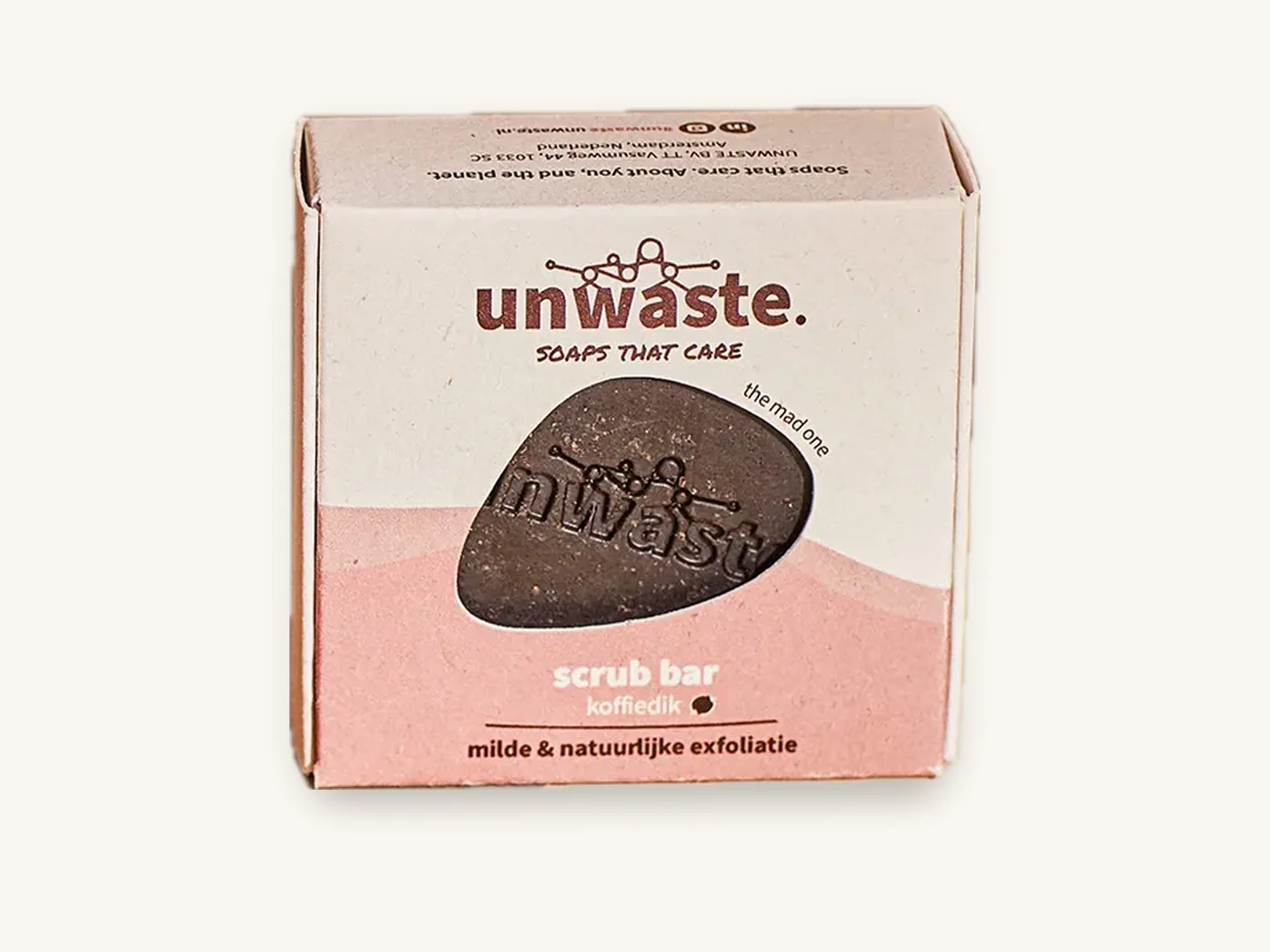
Say you make handmade soap in six scents, all the same bar size. Instead of ordering six fully printed cartons, you order one plain or single-color kraft tray in a larger quantity, plus six short-run printed sleeves. When a scent sells out or you launch a seasonal one, you reorder only that sleeve.
The same approach works for chocolate bars in several flavors, tea tins in several blends, lipstick shades or phone accessories in several colorways. Digital printing makes short sleeve runs affordable, since there are no plates to make per design.
What to keep consistent
- Tray dimensions and board, so every sleeve fits every tray.
- Sleeve dieline, so artwork templates are reusable.
- Barcode and regulatory panel position, so retail staff and scanners find them in the same place on every SKU.
- Brand frame, such as logo position and a common color band, with only the flavor or scent area changing.
When to print the tray too
If the tray is visible on shelf, for example through a sleeve window or because the sleeve is a short belly band, it deserves at least a brand color. If the pack will be gifted, a printed tray interior makes the reveal. Otherwise, keep trays plain and put the budget into the sleeve finish.
Where sleeve boxes work best
Some categories use tray and sleeve boxes almost by default. Here is what each one asks of the format.
Confectionery: macarons, chocolates and candy
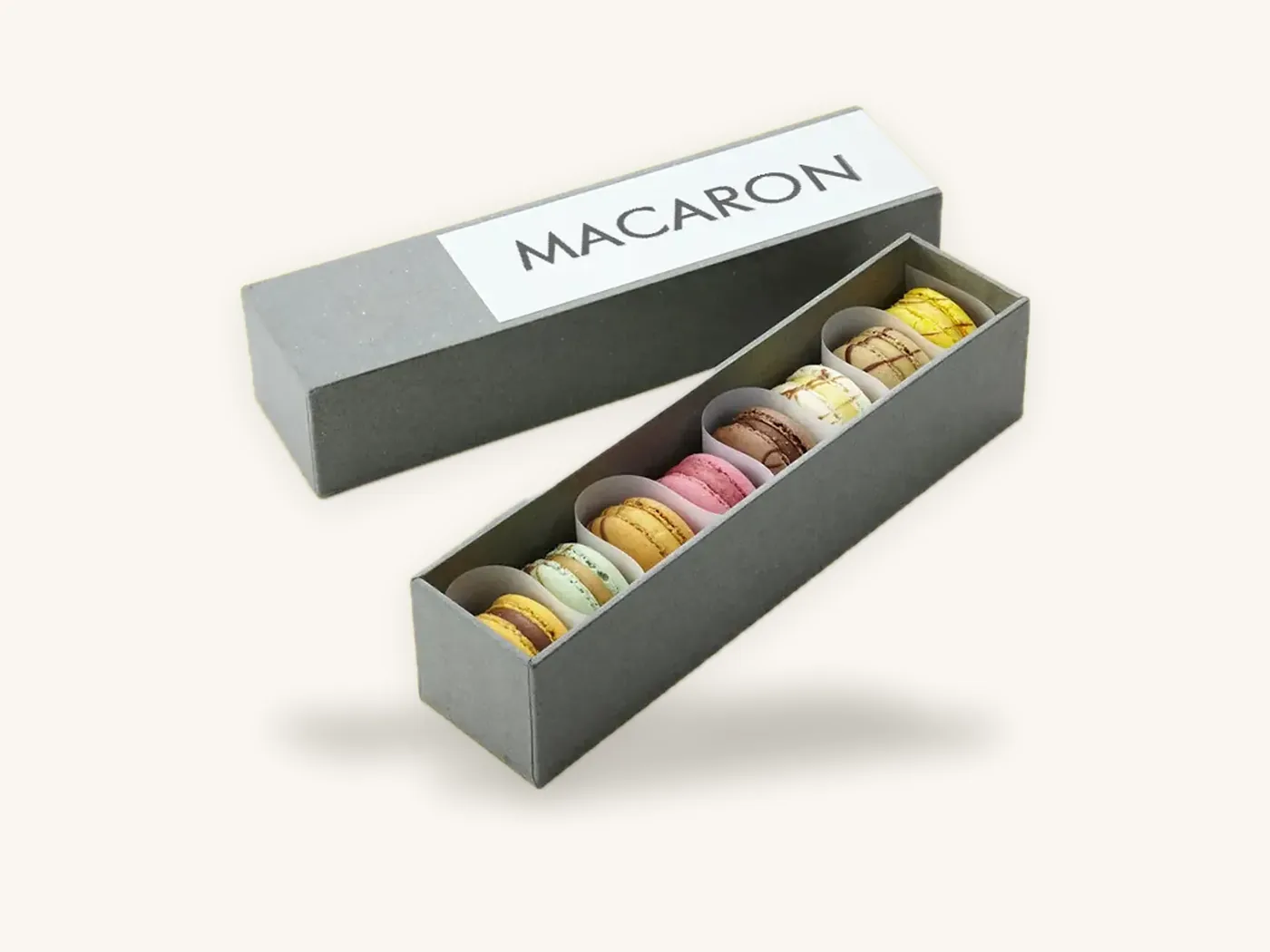
Macaron boxes are often long, narrow sleeve-and-tray packs with an insert that keeps each macaron standing in a row. Chocolate boxes commonly use a cavity insert in a shallow tray under a printed sleeve. Use food-contact suitable board or a liner for surfaces that touch unwrapped food, and confirm current US requirements with the FDA or your food safety advisor. Our macaron packaging guide and chocolate packaging guide cover inserts and sizes in detail.
Soap and bath
Soap boxes frequently use a sleeve or belly band so shoppers can smell the product. A kraft sleeve printed in one color keeps the handmade feel and the cost low. For full soap packaging options, see the soap and bath packaging page.
Cosmetics and personal care
Palettes, lip sets, sample kits and skincare minis use sleeves for a tidy retail look with a gift-like reveal. Required labeling for cosmetics, such as identity, net contents and ingredients, needs to appear on the outer package the customer sees at retail, which for a sleeve box usually means the sleeve. Confirm current rules with the FDA for your product type.
Tech accessories and small electronics
Cables, earbuds, phone accessories and chargers often ship in a sleeve over a rigid or heavy paperboard tray with a molded pulp or foam insert. The sleeve carries specifications and compliance marks; the tray delivers the premium feel.
What custom sleeve packaging costs
A sleeve box costs roughly what its two parts cost, plus any inserts, finishes and closures. The biggest drivers are the tray construction (paperboard versus rigid), size, print coverage and quantity.
The table shows indicative per-unit prices from our current rates for specs that match common sleeve and tray components, with US shipping included. Enter your exact spec in the instant price estimator.
| Spec | 10 | 100 | 250 | 500 | 1,000 | 5,000 |
|---|---|---|---|---|---|---|
| Soap sleeve/box, 18 pt kraft, 3.5x2.5x1.25 in, 1-color | $0.99 | $0.66 | $0.47 | $0.35 | $0.29 | $0.21 |
| Cosmetic carton, 18 pt SBS, 2.5x2.5x6 in, full color, soft-touch + foil | $2.91 | $1.93 | $1.37 | $1.03 | $0.86 | $0.61 |
| Rigid box, 2 mm greyboard wrapped, 8x6x3 in, full color, matte | $13.76 | $9.10 | $6.47 | $4.85 | $4.05 | $2.87 |
Reading the table for a sleeve project
The kraft soap sleeve row is a useful floor: a small, one-color paperboard component at about $0.29 each at 1,000. The cosmetic carton row shows how soft-touch and foil raise a small paperboard pack, which is similar to adding those finishes to a sleeve. The rigid box row shows why the hybrid format is popular: a fully rigid build sits in a very different price band, so upgrading only the tray and keeping the sleeve in paperboard can land you in between.
Ways to keep sleeve boxes affordable
- Print the sleeve only, and keep the tray plain or one color.
- Share one tray size across several products.
- Use foil or embossing on the sleeve front only, where it shows. Each carries one-time tooling.
- Choose a folded, tab-locking tray for small runs so no glue step is needed.
Shipping sleeve boxes safely
Tray and sleeve boxes are retail and presentation packs, not shipping containers. The open ends and sliding tray mean they need help in the parcel network.
Protecting sleeves in transit
- Secure the tray. A seal sticker or shrink band stops the tray sliding out and exposing the product.
- Overbox it. Put sleeve boxes inside a custom mailer box or shipper with minimal void. Our custom mailer boxes guide explains how to size an outer box, and the custom shipping boxes guide covers bulk and wholesale cartons.
- Protect the sleeve print. A matte or gloss lamination or aqueous coating reduces scuffing from other boxes rubbing in a case pack.
- Consider a gift box instead. If the item is a gift that ships alone, a mailer with inside printing may give a similar reveal with less packing. The custom gift boxes guide compares options.
How to order sleeve boxes from Box Sense
Sleeve projects involve two components that must fit each other, so a few extra details up front save revision rounds.
What to send with your request
- Product dimensions and weight, with any insert or wrapping
- Format: belly band, paperboard tray and sleeve, paperboard sleeve with rigid tray, or all-rigid
- Whether the sleeve needs a thumb notch, window or ribbon pull on the tray
- Board for each part, such as SBS or kraft, and caliper if known
- Print for each part: full color, one color, PMS, or unprinted
- Finishes: lamination, foil, embossing, spot UV
- Number of sleeve designs sharing one tray, and quantity per design
- Target delivery date, ship-to location and artwork, or a request for design services
What happens next
- We confirm your quote within 24 hours.
- Our structural team supplies matched dielines for sleeve and tray, sets up artwork and sends a 3D digital proof, with two revision rounds included.
- A free unprinted structural sample lets you test the slide with your real product. A printed sample of approved artwork is free on orders of 100 or more; see packaging samples.
- Standard production is 8–12 business days after proof approval, and rush in 5 business days is available on most paperboard styles.
- Shipping is free on every US order. The minimum is 10 boxes, with no die or plate charges, and defective boxes reported within 14 days are reprinted free.
Tip: when you test the structural sample, pick the box up by the sleeve only and tilt it 45 degrees. If the tray slides out on its own, ask for a slightly tighter sleeve or plan for a seal sticker.
Frequently asked questions
What is a sleeve box?
A sleeve box is a two-part package in which a printed, open-ended sleeve slides over a tray or inner box. The customer pushes the tray out to reveal the product. Sleeves can be full length or a short belly band, and trays can be paperboard or rigid greyboard. The format is common for chocolates, soaps, cosmetics and accessories.
What is the difference between a sleeve box and a drawer box?
The terms overlap. A drawer box usually has an outer shell closed on one end or both, often rigid, with a pull such as a ribbon, and is built to be opened repeatedly. A sleeve box has an open-ended sleeve that slides fully off a tray. Many match-box style packs could be described either way.
How tight should a sleeve be on the tray?
Tight enough that the tray stays put when the box is tilted, loose enough to slide out with a thumb push. For paperboard, a total clearance of roughly 1/32 to 1/16 in on width and height is a common starting point. Laminations, humidity and product weight change the feel, so confirm with a structural sample.
Can I use one tray with different sleeves?
Yes, and it is one of the best reasons to choose this format. Order one tray size, plain or in a single color, and print short runs of sleeves for each flavor, scent or shade. Keep the tray dimensions, sleeve dieline and barcode position consistent so every sleeve fits every tray and scans in the same place.
How much do sleeve boxes cost?
It depends on size, whether the tray is paperboard or rigid, print coverage and quantity. As a reference, a small kraft soap sleeve or box in one color is about $0.66 each at 100 units and about $0.29 at 1,000, with US shipping included. Rigid trays cost considerably more. Use the pricing page for your exact spec.
Are sleeve boxes good for shipping?
Not on their own. The open ends and sliding tray mean a sleeve box should ship inside a mailer or shipping box, with a seal sticker or shrink band to keep the tray in place. A coating or lamination protects the sleeve print from scuffing in transit and in case packs.
Can sleeve boxes be made from kraft or recycled board?
Yes. Kraft paperboard sleeves and trays suit natural and handmade brands and keep the pack paper-based and widely recyclable. Box Sense offers FSC-certified boards, soy or water-based inks and aqueous coatings. Print light colors on kraft with opaque white ink underneath so they stay readable against the brown board.
Next steps
Measure your product with its insert, decide whether the tray or the sleeve carries the premium feel, and check the numbers in the sleeve box price estimator. Then request a quote for custom sleeve packaging and we will confirm pricing within 24 hours, send matched dielines and prepare a free structural sample so you can feel the slide.
Boxes in this guide
Order the packaging we covered
Written by the Box Sense Packaging Team
Our structural designers, prepress technicians and production staff print and convert custom boxes every day for brands in the United States, United Kingdom and UAE. Questions about this guide? Talk to us.