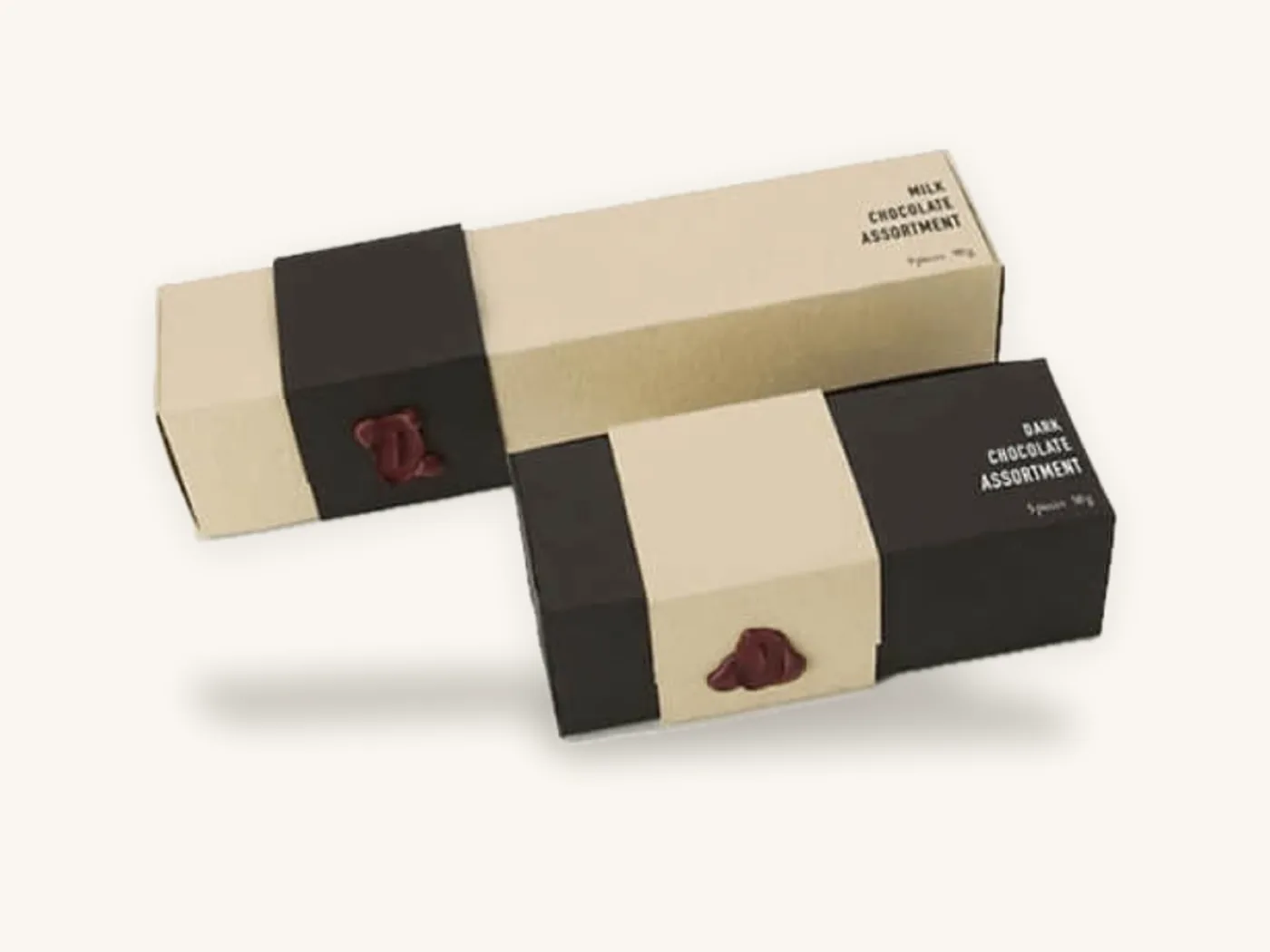
Good chocolate packaging has three layers working together: a food-contact layer that touches the chocolate (cups, pads, liners or a bar wrap), a tray or insert that stops pieces from touching each other, and an outer box that carries the brand and survives handling. Get the inner two wrong and even a beautiful box arrives with scuffed, cracked or bloomed pieces.
For most chocolatiers the decision is less about "which box looks best" and more about matching structure to the product: truffle boxes with fitted cavities for filled pieces, sleeves or tuck cartons for bars, and rigid presentation boxes for gifting. This guide walks through each layer, gives cavity and sizing numbers, compares rigid and paperboard options with real price points, and covers the part many brands learn the hard way: shipping chocolate when the weather is warm.
Key takeaways
- Think in three layers: food-contact wrap or cup, a fitted tray, and the printed outer box. Each solves a different problem.
- Size truffle boxes from the cavity out: measure your largest piece, add clearance, then build the tray grid before choosing a box size.
- Rigid boxes suit gifting and premium assortments; paperboard sleeves, drawers and tuck cartons suit bars, small counts and everyday retail.
- A small rigid box (2 mm greyboard, 3x3x1.5 in, foil and insert) runs about $3.35 each at 100 units; an 8x6x3 in wrapped rigid box is about $9.10 at 100 and about $4.05 at 1,000.
- Heat is the biggest shipping risk. Packaging slows it down; it does not stop it. Plan shipping days and insulation around the forecast.
- Box Sense makes custom chocolate boxes from 10 units with free dielines and 3D proofs, and standard production of 8–12 business days after proof approval.
What chocolate does to its packaging
Chocolate is unusually demanding for a product that looks so simple. It is soft at warm room temperatures, it absorbs odors, its surface marks easily, and filled pieces can leak oils into anything porous. Every packaging decision below traces back to one of these behaviors.
Bloom and temperature swings
When chocolate warms and cools, cocoa butter can migrate to the surface and set as a dull, streaky film called fat bloom. Humidity and condensation cause sugar bloom, a gritty white haze. Neither is a safety issue, but both make a gift look old. Packaging cannot prevent bloom on its own; it can only buffer short temperature swings and keep condensation off the surface when a cold box is opened in a warm room.
Aroma transfer
Cocoa butter picks up smells from its surroundings, including solvent-heavy inks, some adhesives and strongly scented neighbors on a shelf. That is one reason chocolatiers favor low-odor water-based or soy-based inks, aqueous coatings and a food-contact barrier between the chocolate and the printed board. Our food-safe inks and coatings guide explains the terms suppliers use.
Scuffing, cracking and fat migration
Tempered chocolate has a glossy surface that shows every fingerprint and rub. Pieces that slide against each other, or against a rough tray, lose that shine within one delivery. Nut pralines and caramel-filled pieces can also wick oil into uncoated paper, leaving translucent spots. The fix is a smooth, grease-resistant contact surface and a cavity that holds each piece still.
Chocolate packaging formats matched to the product
Different chocolate products want different structures. Start with what you sell, not with a box style you like.
| Product | Typical primary layer | Best outer format | Why it works |
|---|---|---|---|
| Truffles and bonbons (4–25 pieces) | Paper or glassine cups, or a fitted tray | Rigid lid-and-base, drawer or sleeve and tray | Cavities keep pieces apart; the lid reveal suits gifting |
| Single-origin or craft bars | Inner foil or compostable film wrap | Paper sleeve, tuck carton or wrap | Flat, light and cheap to ship; big print surface |
| Bark, brittle, slabs | Food-safe bag or glassine liner | Window box or two-piece box | Irregular shapes need a liner, not cavities |
| Dragées and coated nuts | Sealed bag or pouch | Tube, round box or hexagon box | Loose pieces pour; round forms add shelf interest |
| Hot chocolate bombs and molded shapes | Individual clear cup or dome | Window box with insert | Shows off the shape while protecting it |
| Corporate and holiday assortments | Mixed cups plus divider | Magnetic closure or luxury gift box | Keepsake value justifies the spend |
The chocolate boxes page covers our standard formats, and the chocolate and candy industry page shows how brands combine them into ranges.
Truffle boxes: designing the tray first
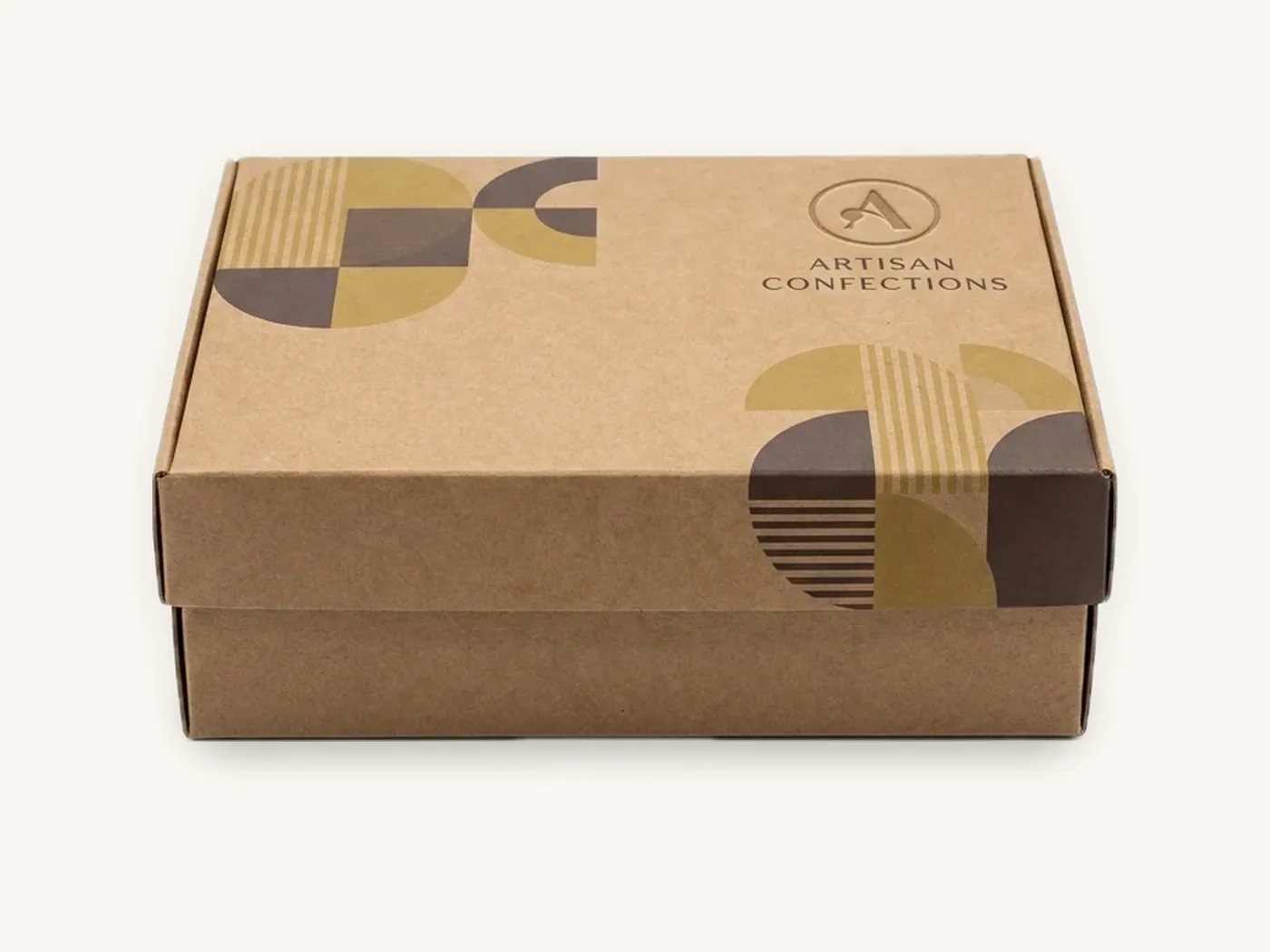
Truffle boxes fail most often at the tray, not the box. A tray that is too loose lets pieces tumble; a tray that is too tight crushes delicate shells when the customer lifts them out. Build the tray grid first and let the box size follow.
Cavity sizing numbers
Most filled pieces and truffles fall between roughly 0.9 and 1.25 in across and 0.6 to 0.9 in tall. A cavity about 1/16 to 1/8 in (1.5 to 3 mm) wider than the piece lets it drop in and lift out cleanly. If you use paper cups, measure the piece sitting in its cup, because a pleated cup can add around 1/8 in to the footprint.
Allow at least 1/8 in of board between cavities so the walls do not tear when the tray is die-cut. Add a border of roughly 1/4 in around the grid so the tray drops into the box without catching.
A worked tray layout
Say your largest bonbon, in its cup, measures 1.1 in across and 0.8 in tall. A 1.2 in cavity with 1/8 in walls gives a pitch of about 1.33 in per piece.
| Piece count | Grid | Approximate tray footprint | Inner box depth |
|---|---|---|---|
| 4 | 2 x 2 | about 3.0 x 3.0 in | about 1.0 in |
| 6 | 2 x 3 | about 3.0 x 4.3 in | about 1.0 in |
| 9 | 3 x 3 | about 4.3 x 4.3 in | about 1.0 in |
| 12 | 3 x 4 | about 4.3 x 5.6 in | about 1.0 in |
| 16 | 4 x 4 | about 5.6 x 5.6 in | about 1.0 in |
| 24 | 4 x 6 | about 5.6 x 8.3 in | about 1.0 in |
These footprints include the border. Your actual numbers will change with piece size and whether you add a cushion pad on top, so treat the table as a starting point for a structural sample rather than a final spec.
Step-by-step: from bonbon to finished truffle box
- Measure the largest piece you will ever put in this box, in its cup, including seasonal shapes that may be taller.
- Choose a grid that matches how you sell: 4, 9 and 16 square grids read as gifts; 6 and 12 rectangular grids fit retail shelves and slim mailers better.
- Pick a tray material. Paperboard trays are printable and recyclable; food-safe plastic trays give deeper, smoother cavities for glossy shells. Ask for a grease-resistant surface either way.
- Add a top pad or glassine sheet if pieces will travel. It stops them lifting out of cavities when the box is turned over.
- Size the outer box around the tray with about 1/16 in clearance per side for rigid boxes, slightly more for paperboard.
- Order a structural sample and fill it with real product. Turn it upside down, shake it gently and open it at the other end of the room.
- Only then finalize artwork on the dieline.
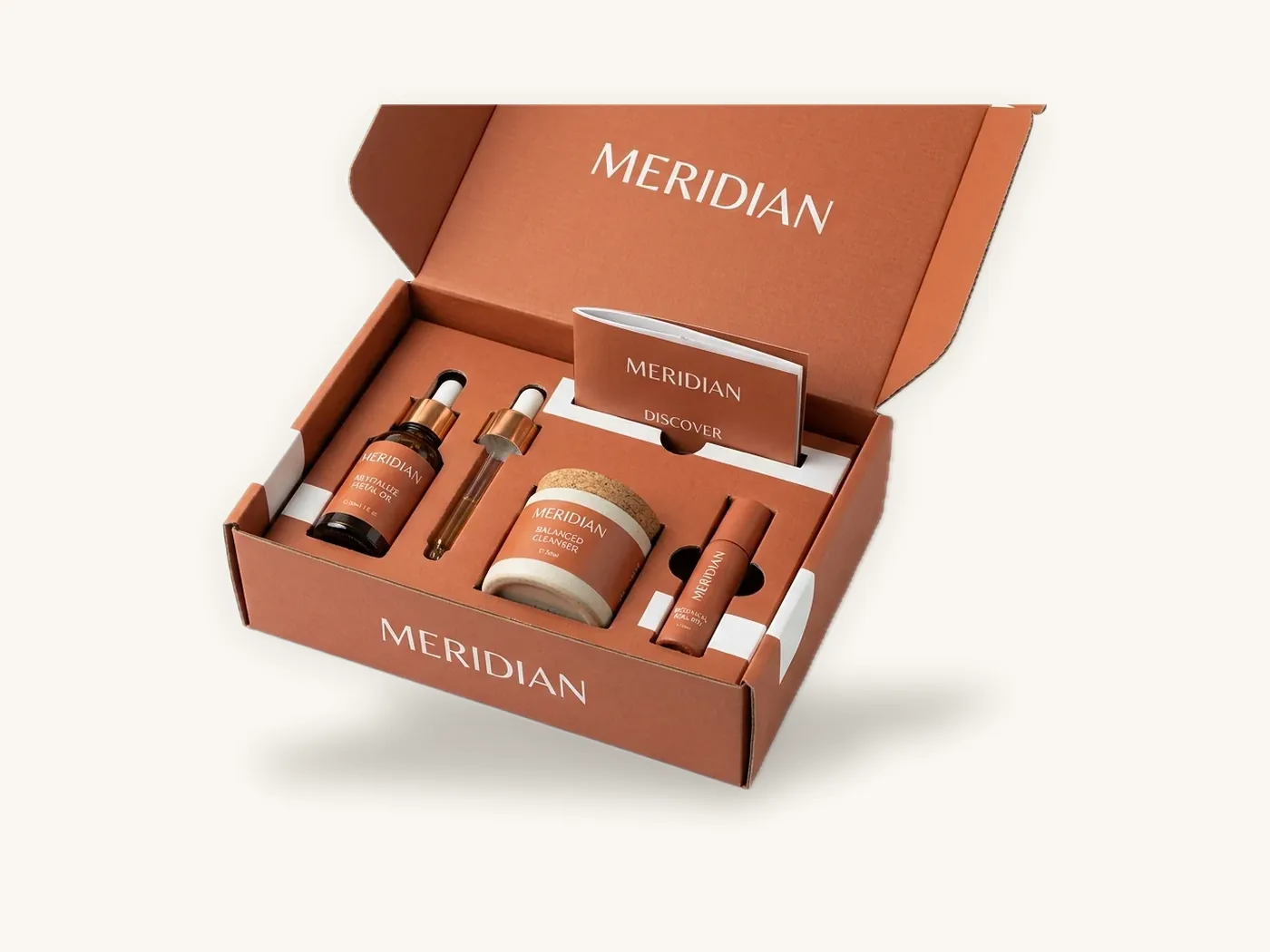
Our box inserts guide covers insert materials in more depth, and the box inserts and dividers page lists the tray types we cut.
Tip: design one tray footprint that fits several box styles. A 9-piece tray that drops into both a sleeve and tray box and a rigid lid box lets you run an everyday version and a gift version without re-engineering the insert.
Wraps, cups, liners and food-contact layers
The outer box rarely touches the chocolate. Something else does, and that layer is where food-contact rules and product quality meet.
Paper and glassine cups
Pleated cups make pieces easy to lift and hide small imperfections at the base. Glassine is dense, smooth and grease resistant without a plastic coating, so it suits pralines and nut fillings. Printed cups are possible, but most brands keep them plain and put the design effort into the tray and lid.
Bar wraps
Craft bars usually carry two layers: an inner wrap that protects the chocolate and an outer paper sleeve or carton that carries the brand. Foil inner wraps give strong barrier and a classic feel. Compostable or paper-based inner films appeal to sustainability-focused brands but vary widely in barrier performance, so test shelf life before switching.
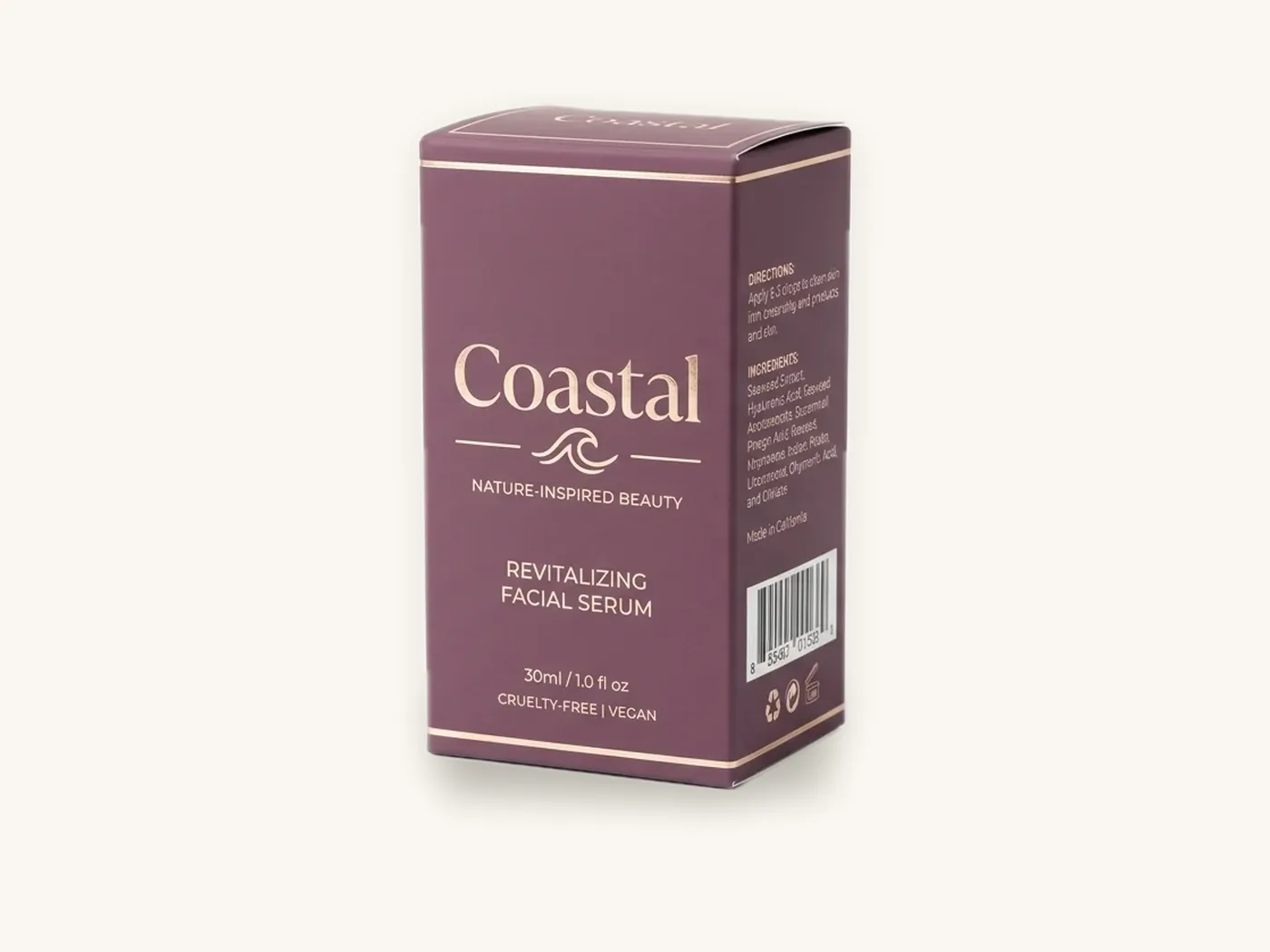
For the outer layer, a printed sleeve or slim straight tuck end box gives you a flat, stackable pack. For reference, an 18 pt SBS straight tuck end carton at 3x2x5 in, full color with aqueous coating, runs about $1.15 at 100 units and about $0.51 at 1,000. A bar carton is flatter than that spec, so check your exact size in the estimator.
Food-contact basics, in general terms
In the US, materials that contact food are regulated by the FDA, and suppliers of inks, coatings, films and papers intended for direct contact generally document that their materials are suitable for that use. The practical rule for a chocolatier: ask for confirmation that any layer touching the chocolate is intended for direct food contact, and keep printed board separated from the product by a cup, liner, wrap or tray unless the supplier confirms otherwise. Confirm current requirements with the FDA or your food-safety advisor.
Rigid, paperboard or sleeve: choosing the outer box
The outer box sets the price point the customer expects before they taste anything. Here is how the main custom chocolate boxes compare, with indicative prices from our current rates where a matching spec exists.
| Outer box | Feel | Best for | Indicative price |
|---|---|---|---|
| Small rigid lid box, 2 mm greyboard, 3x3x1.5 in, matte, foil, insert | Dense, keepsake | 2–4 piece favors, samplers | about $3.35 at 100, about $1.49 at 1,000 |
| Rigid box, 2 mm greyboard wrapped, 8x6x3 in, full color, matte | Premium, substantial | 16–24 piece assortments | about $9.10 at 100, about $4.05 at 1,000 |
| Rigid magnetic box, 2 mm, 10x8x3 in, soft-touch, foil, insert | Luxury gift | Corporate and holiday sets | about $14.23 at 100, about $6.32 at 1,000 |
| Window box, 18 pt SBS, 4x4x4 in, full color, aqueous | Bright, retail | Molded shapes, bark, cocoa bombs | about $1.66 at 100, about $0.74 at 1,000 |
| Paperboard sleeve and tray | Clean, modern | Bars, 6–12 piece everyday boxes | Use the estimator |
| Paperboard drawer box | Playful reveal | Small counts, subscription add-ons | Use the estimator |
When rigid is worth it
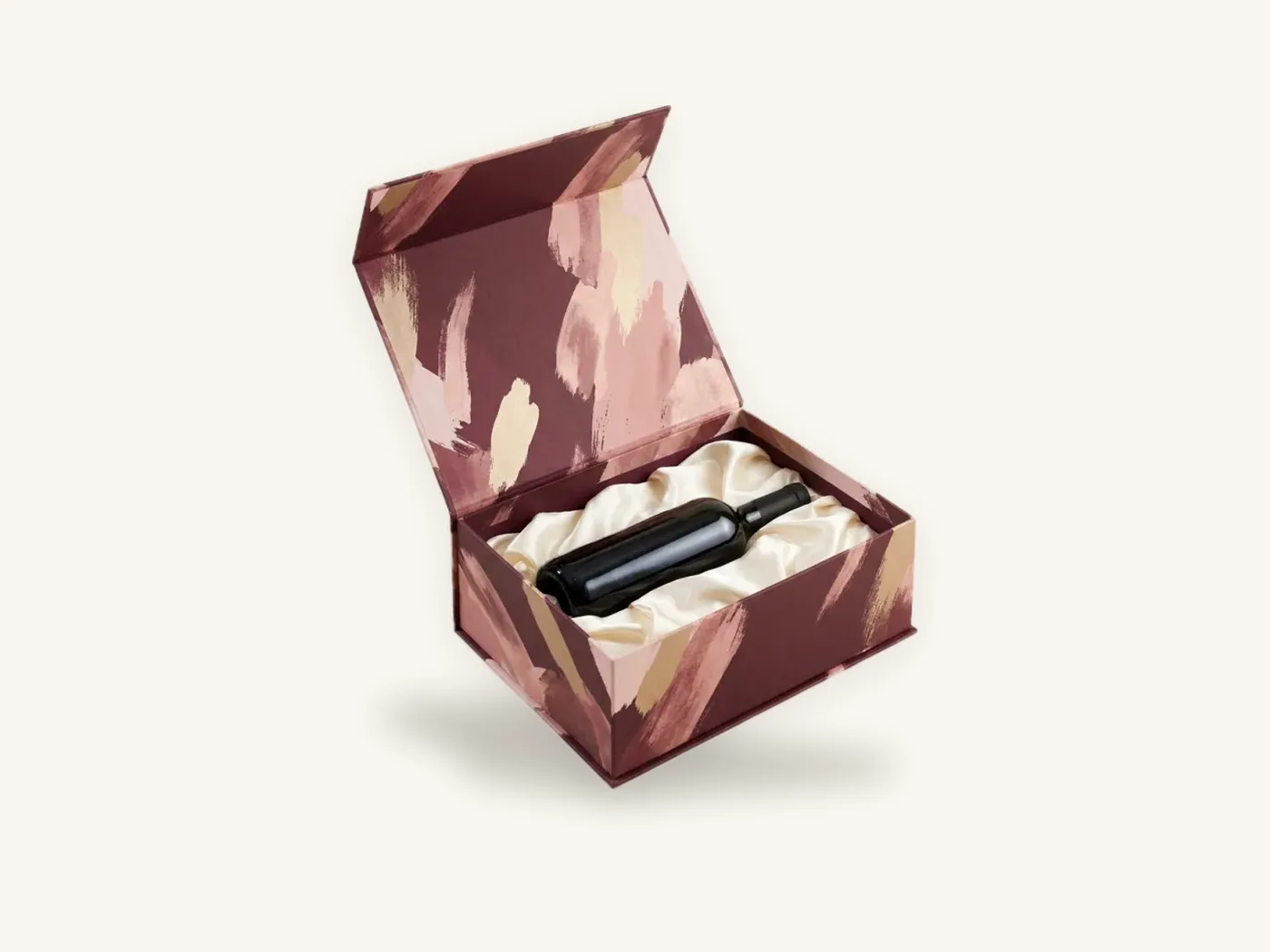
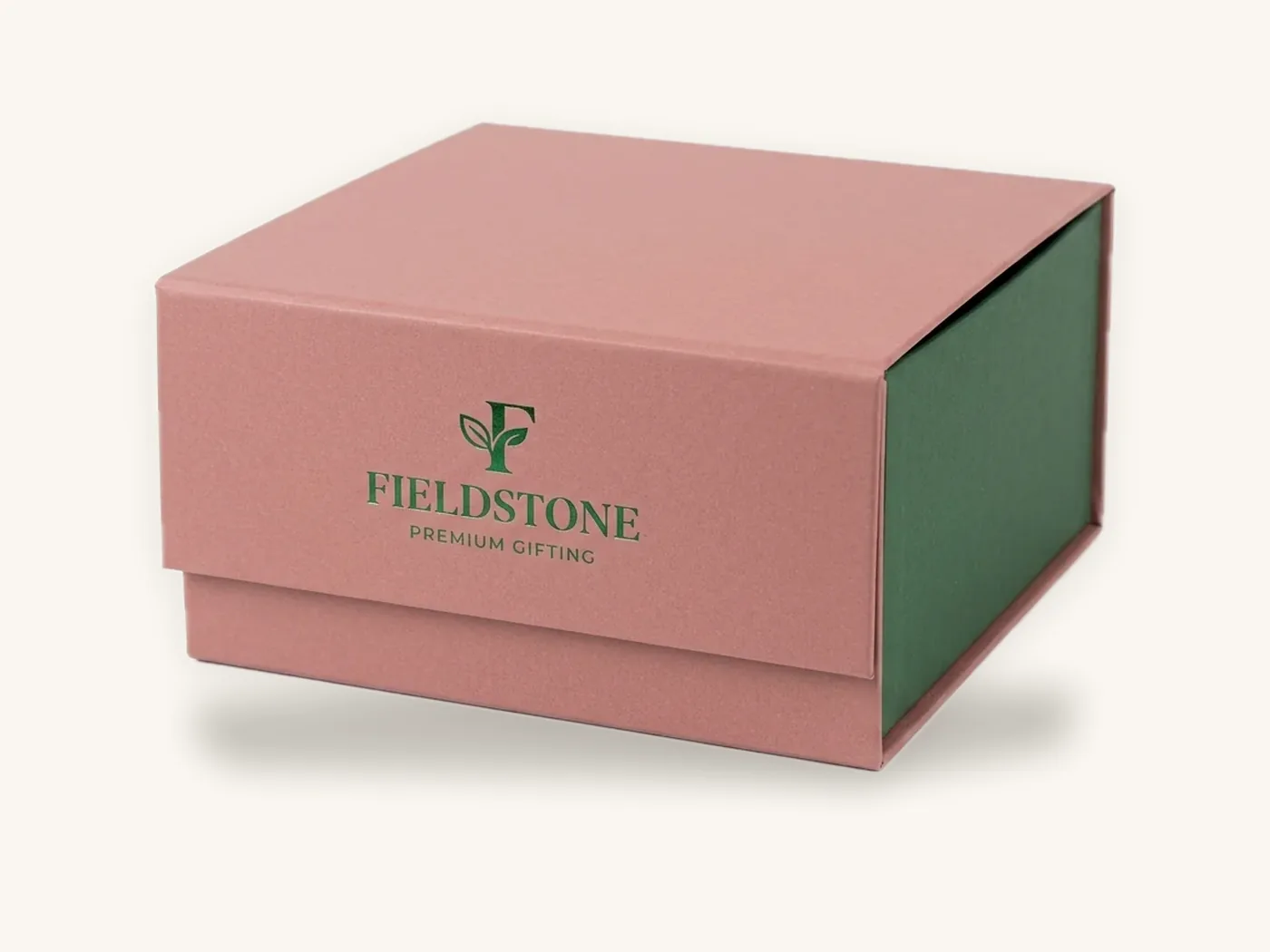
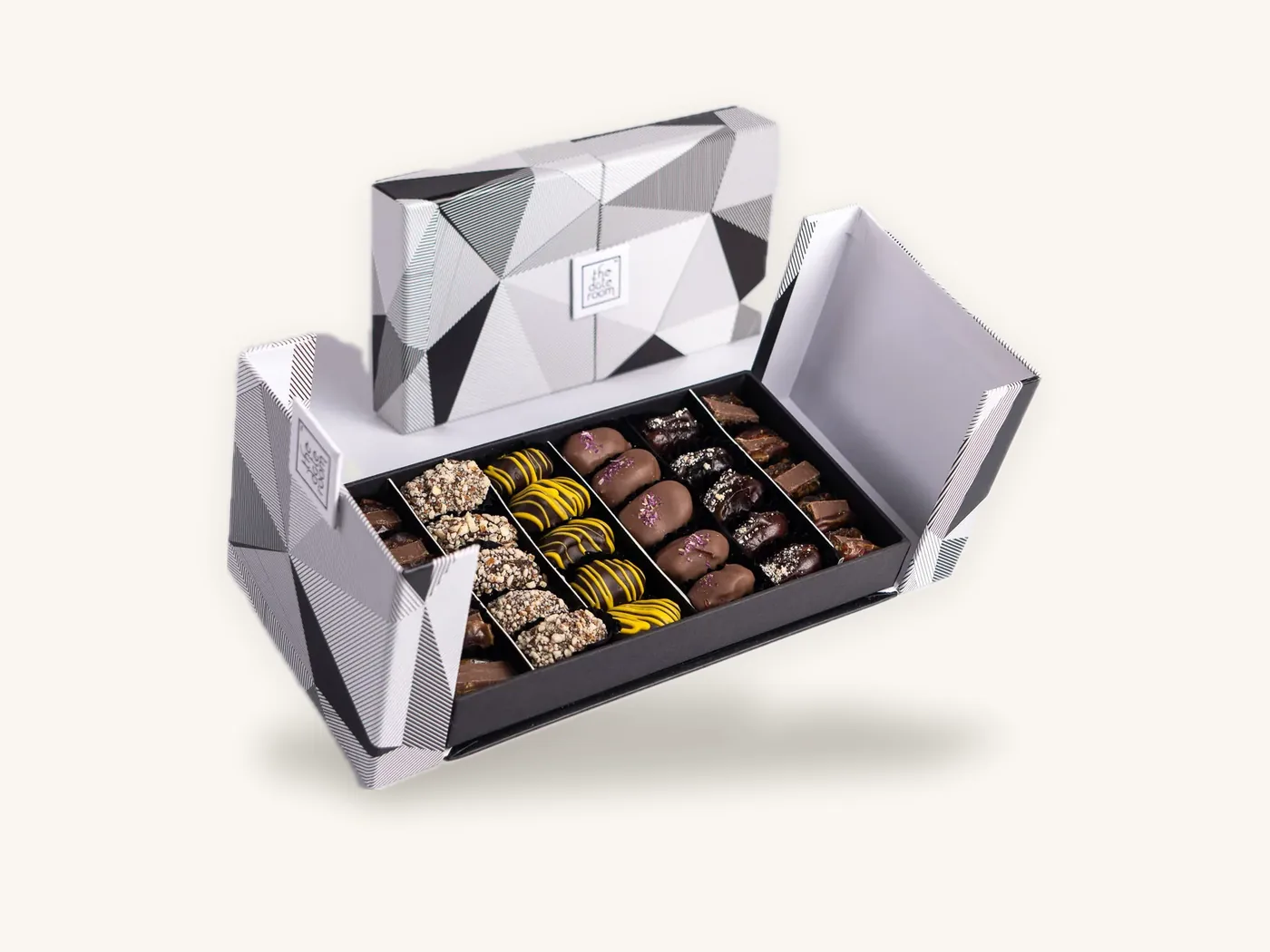
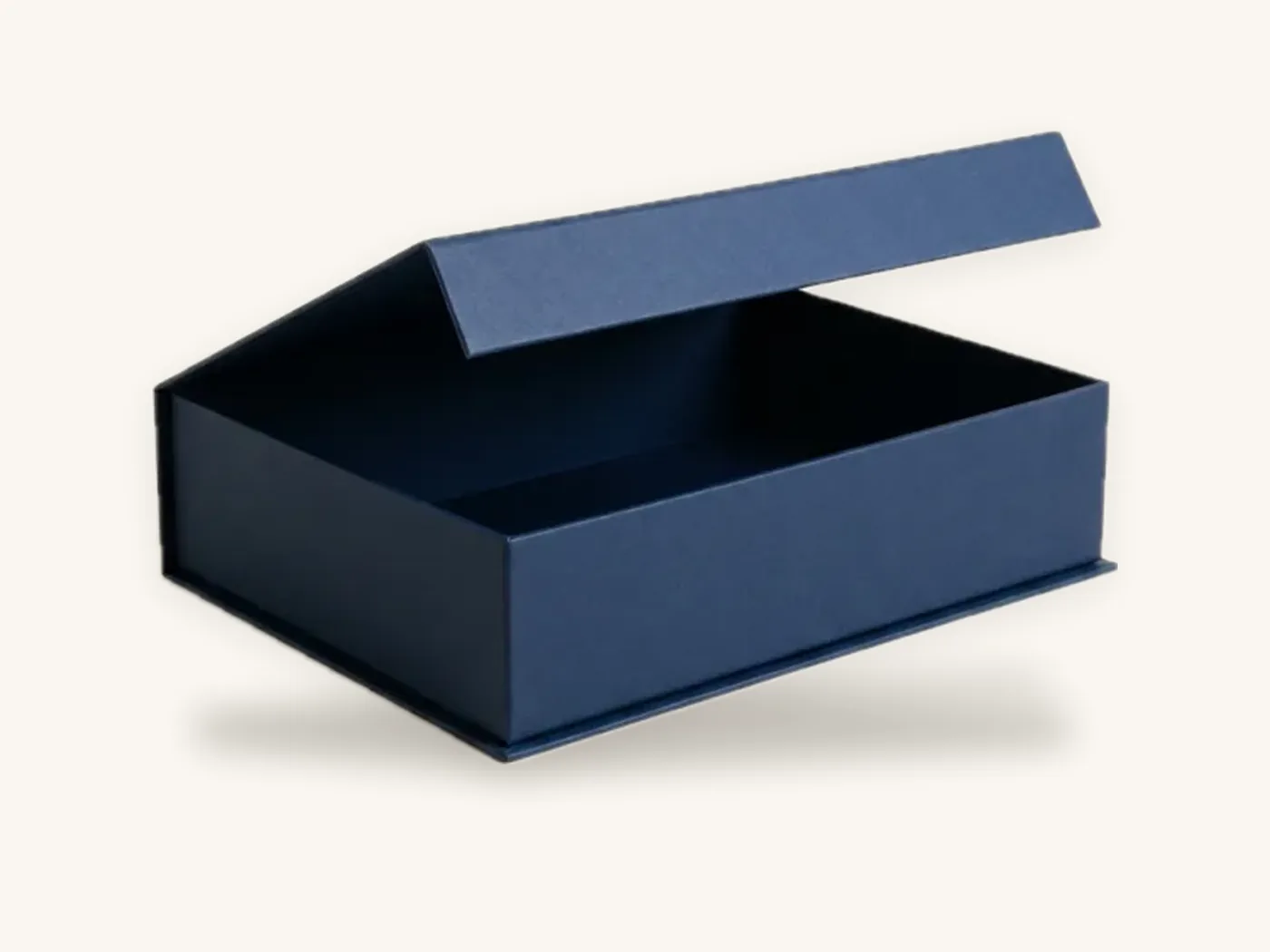
Choose rigid when the box itself is part of the gift: holiday assortments, corporate orders, wedding favors and anything priced as a luxury purchase. A rigid lid lifts off with a slow, air-cushioned slide, and customers keep the box afterward. Our custom rigid boxes guide explains greyboard thickness and wrap papers, and the luxury gift boxes page shows closures and ribbon options.
When paperboard is the better call
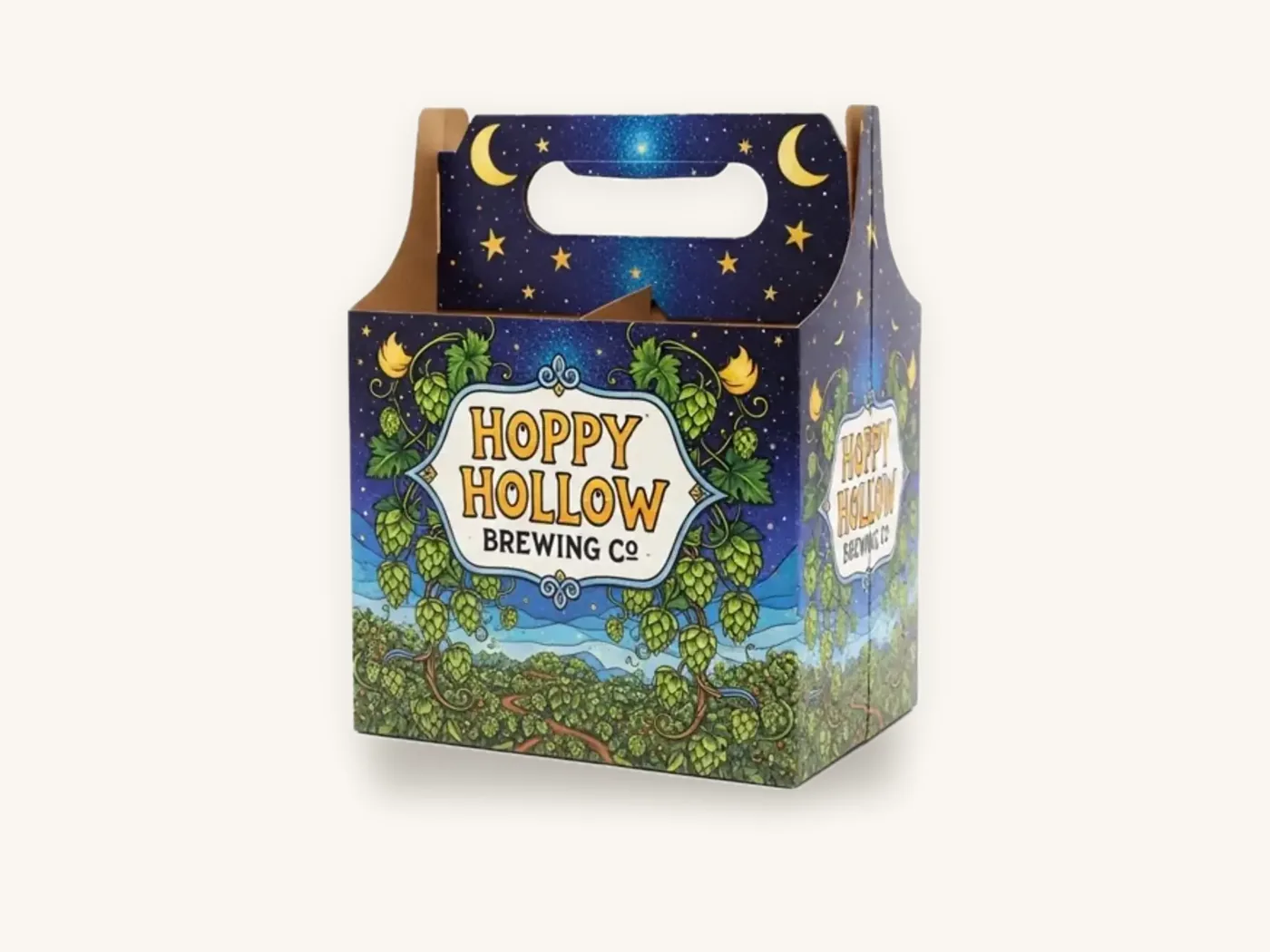
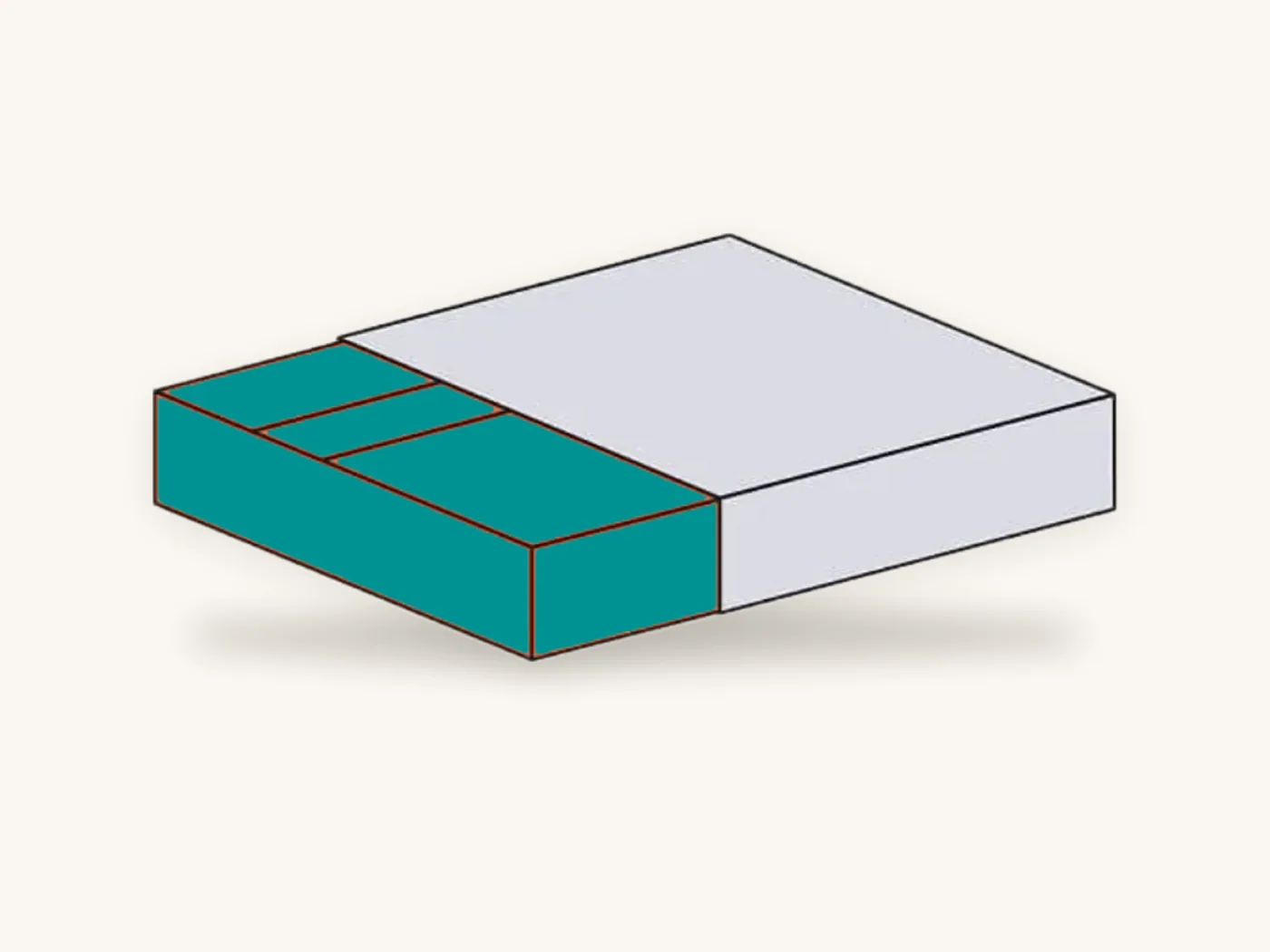
Choose paperboard when you sell in volume, ship to retailers, or change flavors often. SBS paperboard prints crisply, folds flat for storage and costs a fraction of rigid. A sleeve over a tray gives a two-tone reveal that feels considered without the rigid price, and our sleeve boxes guide and drawer boxes guide compare the two slide-open formats.
Finishes that suit chocolate boxes
Chocolate brands lean on tactile finishes because the product itself is sensory. A few choices consistently earn their cost.
- Soft-touch lamination: a velvety surface that suits dark palettes and minimal design. It shows fingerprints less than gloss.
- Foil stamping: gold, copper or rose gold foil on a logo or pattern reads instantly as "gift." One-time tooling is about $60.
- Embossing or debossing: a raised logo or cocoa-pod pattern adds texture you feel before you read. One-time tooling is about $60.
- Spot UV: a gloss highlight on a matte base, good for making a flavor name or illustration catch the light. One-time tooling is about $40.
- Textured wrap papers: on rigid boxes, a linen or felt paper does a lot of the premium work without any print. See textured and specialty papers.
- Aqueous coating: the low-odor, recyclable default for paperboard, and a good choice when aroma transfer is a concern.
A custom insert die is about $45 one time. Because these are one-time charges, they matter a lot on a 50-box test run and very little on a 1,000-box holiday order. The foil stamping guide covers foil colors and minimum line weights.
Seasonal ranges without reprinting everything
Chocolate sales cluster around a handful of dates, and many chocolatiers want different packaging for each. Reprinting a whole range every season gets expensive and leaves dead stock.
Build a base box plus a seasonal layer
Print a core box with your brand, a neutral palette and the legal information, then add a seasonal element on top: a printed sleeve, a belly band, a sticker seal or a ribbon color. The base box can run at a higher quantity for a better unit price, while the seasonal layer runs short.
Use digital printing for limited editions
Short runs of roughly 10 to 500 are printed digitally, with no plates, so a 150-box limited-edition flavor or a named corporate order is practical. Larger evergreen runs move to offset for the best unit price. The holiday packaging guide and corporate gift packaging guide cover planning calendars for both.
Plan the calendar backward
Work back from the date the boxes must be filled, not the date they go on sale. Allow time for proof approval, standard production of 8–12 business days, delivery, and a buffer for filling and labeling. Rush production in 5 business days exists on most paperboard styles, but holiday rush slots fill fast.
Shipping chocolate in warm weather
No box keeps chocolate solid through a hot truck on its own. Packaging buys time; logistics decide whether that time is enough.
What the packaging can do
- Hold pieces still. A fitted tray and top pad prevent the scuffing and breakage that happens even when temperatures are fine.
- Separate the gift box from the heat. Put the printed box inside an insulated liner or shipper, then inside a corrugated outer. The gift box should never be the shipping box in summer.
- Leave room for cold packs that do not touch the chocolate directly, which avoids condensation on the surface.
- Protect against crush. A custom shipping box sized around the insulated liner stops the gift box being crushed in transit.
What logistics must do
Ship early in the week so parcels do not sit in a warehouse over a weekend, choose faster services when the forecast is warm, and consider pausing ground shipments to hot regions in peak summer. Tell customers to refrigerate only if needed and to let the box come to room temperature before opening, which reduces condensation and sugar bloom.
The cold chain packaging for food guide goes further into insulation types and cold-pack placement.
Watch out: a soft-touch or dark rigid box left in direct sun on a doorstep heats up faster than a white corrugated shipper. Keep dark gift boxes inside a lighter outer carton for the delivery leg.
Labeling a chocolate box
Retail chocolate is packaged food, so the box or its label typically needs the standard US food labeling elements: a statement of identity, net quantity, ingredient list, allergen declaration, Nutrition Facts where required, and the name and place of business of the manufacturer, packer or distributor. Tree nuts, milk, soy, peanuts and wheat show up often in chocolate recipes, so allergen statements matter.
Some small businesses qualify for exemptions, and cottage food rules vary by state. Check the FDA's food labeling guidance and confirm with your state program or counsel. Our FDA food labeling guide explains where each element usually sits on a box.
Practical layout tips
- Keep the ingredient and allergen panel on the base so it survives the gift reveal; on rigid boxes, a base label is often cleaner than printed wrap paper.
- If flavors change seasonally, put ingredients on a label or card so one printed box works all year.
- Leave space for a best-by date and lot code.
How to order custom chocolate boxes from Box Sense
You do not need a finished spec to start. Send what you know, and our structural team will suggest trays and box sizes around your pieces.
What to send
- The products going into the box: piece dimensions (in cups if used), piece count and bar sizes
- Whether you want a fitted tray, a divider or a liner, and whether the tray should be paperboard or you are supplying your own
- Preferred outer style: rigid lid box, magnetic closure, sleeve and tray, drawer, window or tuck carton
- Finishes: soft-touch, foil, embossing, spot UV, specialty wrap paper
- Quantities to compare, for example 100, 500 and 1,000
- Your fill date and ship-to address
- Artwork, or a note that you would like help from our design services team
What happens next
- Quote within 24 hours, with pricing for each quantity you asked about. You can also check indicative numbers in the instant price estimator.
- Free design support: we supply the dieline, set up artwork and send a 3D digital proof, with two revision rounds.
- Samples: unprinted structural samples are free, so you can test your tray with real chocolate. A printed sample of approved artwork is free on orders of 100 or more. See samples.
- Production: standard production takes 8–12 business days after proof approval; rush in 5 business days is available on most paperboard styles.
- Delivery: free shipping on every US order; international shipping quoted at cost.
The minimum order is 10 boxes, with no die or plate charges. Foil, embossing, spot UV and custom inserts carry one-time tooling. Defective boxes reported within 14 days are reprinted free.
Frequently asked questions
What is the best packaging for chocolate truffles?
Truffles travel best in a fitted tray with one cavity per piece, sized about 1/16 to 1/8 in wider than the truffle in its cup, plus a pad or glassine sheet on top. Put that tray inside a rigid lid box for gifting or a paperboard sleeve for everyday sales. The tray prevents scuffing and cracking; the outer box sets the price perception.
How much do custom chocolate boxes cost?
It depends on structure, size, finishes and quantity. As reference points, a 3x3x1.5 in rigid box with foil and an insert is about $3.35 each at 100 units, and a wrapped 8x6x3 in rigid box is about $9.10 at 100 and about $4.05 at 1,000. Paperboard sleeves and cartons cost considerably less. Use the pricing estimator for your exact size.
Can printed boxes touch chocolate directly?
Generally, it is safer to keep printed board separated from chocolate with a cup, liner, wrap or food-contact tray. In the US, food-contact materials are regulated by the FDA, and suppliers should confirm when an ink, coating or board is intended for direct contact. Chocolate also absorbs odors, so a barrier layer protects flavor as well as meeting safety expectations.
How do I stop chocolate melting when shipping?
Packaging slows heat gain but cannot prevent melting on its own. Ship early in the week, choose faster services when temperatures rise, and put the gift box inside an insulated liner with cold packs that do not touch the chocolate, all inside a corrugated shipping box. In very hot months, many chocolatiers pause ground shipping to warm regions.
What size box do I need for 12 chocolates?
Measure your largest piece in its cup. For a typical 1.1 in bonbon with 1.2 in cavities and 1/8 in walls, a 3 by 4 grid needs a tray of roughly 4.3 x 5.6 in, and the box interior should be sized just around that tray with about 1 in of depth. A free structural sample confirms the fit before printing.
What is the minimum order for custom chocolate boxes?
Box Sense makes custom chocolate boxes from 10 units. Short runs are printed digitally without plates, which makes small test batches, limited editions and named corporate orders practical. Unit prices fall significantly as quantities rise, so compare a few quantity tiers before ordering, especially for seasonal ranges you will sell for several years.
Next steps
Measure your pieces, decide on a piece count and pick the outer format that matches your price point. Then check indicative costs in the chocolate box price estimator and request a custom chocolate packaging quote. We will confirm pricing within 24 hours and send a dieline built around your tray. If you also sell candy, the candy packaging guide covers bags, displays and impulse formats.
Boxes in this guide
Order the packaging we covered
Written by the Box Sense Packaging Team
Our structural designers, prepress technicians and production staff print and convert custom boxes every day for brands in the United States, United Kingdom and UAE. Questions about this guide? Talk to us.