Holiday packaging succeeds or fails on the calendar. The design matters, but the brands that miss Christmas almost always had a good design approved too late. Work backward from the day your first holiday order ships, allow for proofing, 8–12 business days of production, transit to your warehouse and packing time, and you will usually find that artwork needs to be final in early October for late-November selling.
This guide starts with that calendar, then covers which Christmas boxes suit which products and channels, how to make seasonal packaging without redesigning your whole line, how many boxes to order when demand is a guess, and what holiday boxes cost at typical seasonal quantities.
Key takeaways
- Count backward in business days, not calendar days, and remember that public holidays such as Thanksgiving shorten the working weeks you are counting on.
- For product shipping to customers from the week of Black Friday, aim to approve proofs by mid-October at the latest on a standard schedule; rush production in 5 business days is a safety net, not a plan.
- Seasonal sleeves, stickers, tissue and inside-lid prints let you reuse evergreen boxes and avoid leftover stock marked with a specific year.
- Order in two waves if you can: a main run sized to your conservative forecast and a smaller top-up once early sales data comes in.
- A 4x4x4 in full-color window box runs about $0.74 each at 1,000 units; an 8x6x3 in wrapped rigid gift box runs about $4.05 at 1,000.
- Box Sense makes holiday boxes from 10 units with free design support, a 3D digital proof and free US shipping.
Why holiday packaging runs late
Packaging delays in Q4 rarely come from one dramatic problem. They come from a chain of small waits that each look reasonable on their own.
The usual causes
- Artwork starts after product decisions. Gift set contents change in September, and the insert cannot be cut until they are final.
- Approvals stack up. Marketing, founders, retail buyers and legal all want to see seasonal artwork, and each review adds days.
- Revisions multiply. Holiday designs are often more complex, with foil, patterns and several SKUs, so proofs go back and forth.
- Samples get skipped, then regretted. A new gift set structure that was never physically tested can fail at packing time.
- Transit and packing time are forgotten. Boxes that arrive the day before launch still need to be folded, filled and labeled.
- Everyone else is ordering too. Carriers and fulfillment partners get busier from November, so every buffer shrinks.
None of these are solved by working harder in November. They are solved by starting the countdown from the right date.
The Q4 holiday packaging calendar, working backward
The calendar below assumes a US brand that wants packed gift products ready to ship to customers from the week of Black Friday through mid-December, using standard production. Your dates will move with your own sales window, so treat it as a template.
| Stage | Typical duration | Work backward from | Example target for late-November selling |
|---|---|---|---|
| Customer shipping window opens | Your sales plan | Starting point | Week of Black Friday |
| Packing buffer: fold, fill, label, stage inventory | 1–2 weeks | Customer shipping start | Boxes delivered by early November |
| Transit of finished boxes to you | A few business days within the US | Packing start | Boxes ship from production in late October to early November |
| Production after proof approval | 8–12 business days | Transit start | Proof approved by mid-October |
| Proofing and revisions (two rounds included) | About 3–7 business days, longer with many approvers | Production start | Artwork submitted in early October |
| Structural sample and fit test | About 1–2 weeks including shipping and testing | Artwork start | Structure confirmed by late September |
| Contents, forecast and spec decisions | 2–3 weeks | Sample request | Planning in early to mid September |
Reading the calendar
The longest single block is not production. It is the combination of planning, sampling and approvals that happens before production starts. If you start planning in October for late-November shipping, you have removed the buffer from every stage at once.
If you sell into retail, add more time
Retail buyers often need holiday product in their distribution centers well before consumers shop. Ask each buyer for their required in-DC or in-store date, then run the same backward count from that date, adding time for your own packing and freight to them. For many retailers, that pushes packaging approval into late summer.
Carrier deadlines
Carriers publish their own holiday shipping deadlines each year for different services. Check the current USPS, UPS or FedEx holiday schedules for the services you use and put those dates at the end of your plan; do not rely on last year's dates.
Watch out: a business-day countdown that crosses Thanksgiving loses at least one working day, and many teams take extra time off that week. If your proof approval slips into late October, count the business days again before promising a launch date.
Building your own backward schedule
Use this process to turn the template into dates for your brand.
- Pick the date that matters most. For DTC brands, the first day holiday orders ship. For wholesale, the retailer's in-DC date. For events or corporate gifts, the handover date.
- Subtract your packing time. Estimate how long it takes to fold, fill and label your quantity. Time a batch of 20 with sample boxes and multiply.
- Subtract transit. Box Sense ships free within the US; allow several business days for delivery, more for international destinations.
- Subtract 12 business days of production. Plan on the top of the 8–12 business day range, not the bottom.
- Subtract proofing. Allow a week for two revision rounds, and more if several people must sign off.
- Subtract sampling. If the structure or insert is new, allow time for a structural sample to arrive and for you to test it with real products.
- Subtract planning. Contents, quantities and a brief for design.
- Mark the result as your start date, then set internal deadlines for each handoff and share them with everyone who approves artwork.
The answer is often earlier than people expect, which is exactly why doing the math in August or September is worth it. Our custom packaging lead times guide explains each stage of a packaging schedule in more detail.
When rush production makes sense
Rush production in 5 business days is available on most paperboard and corrugated styles. It is useful when a retailer adds an order, a product sells out early or a proof approval slipped. Rigid boxes and complex finishes take longer, so for those, build the standard schedule and treat rush as a backup for simpler pieces.
Choosing Christmas boxes by product and channel
Christmas boxes are not one format. The right structure depends on what you sell and where it is bought.
| Product or channel | Recommended structure | Why it works | Seasonal touch |
|---|---|---|---|
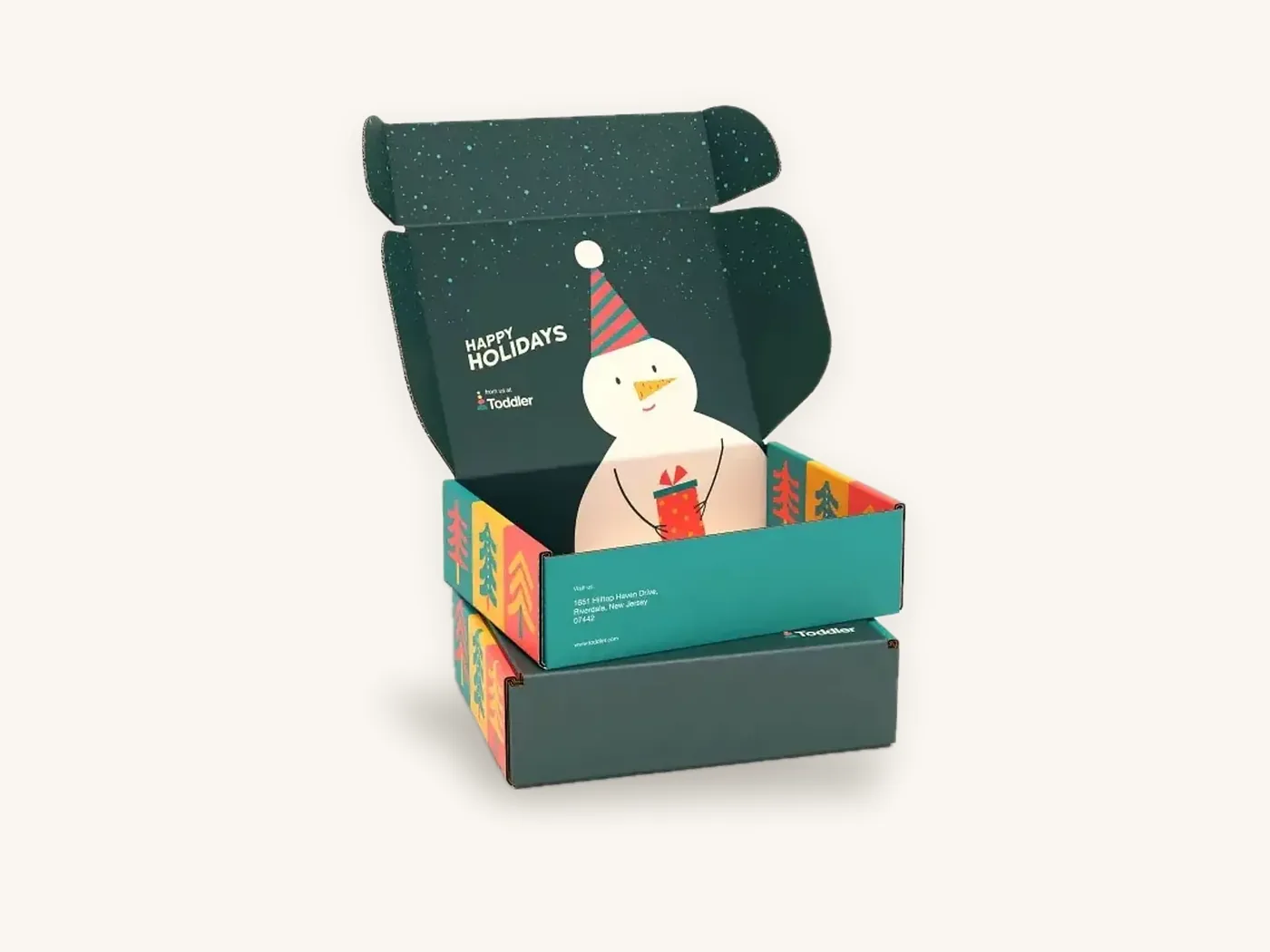
| Gift sets sold online | Printed mailer or rigid box in a shipper | Survives parcels; big inside-lid moment | Printed interior, tissue, card |
| Retail gift sets on shelf | Window box or two-piece rigid box | Shows contents; stacks for display | Foil, seasonal sleeve |
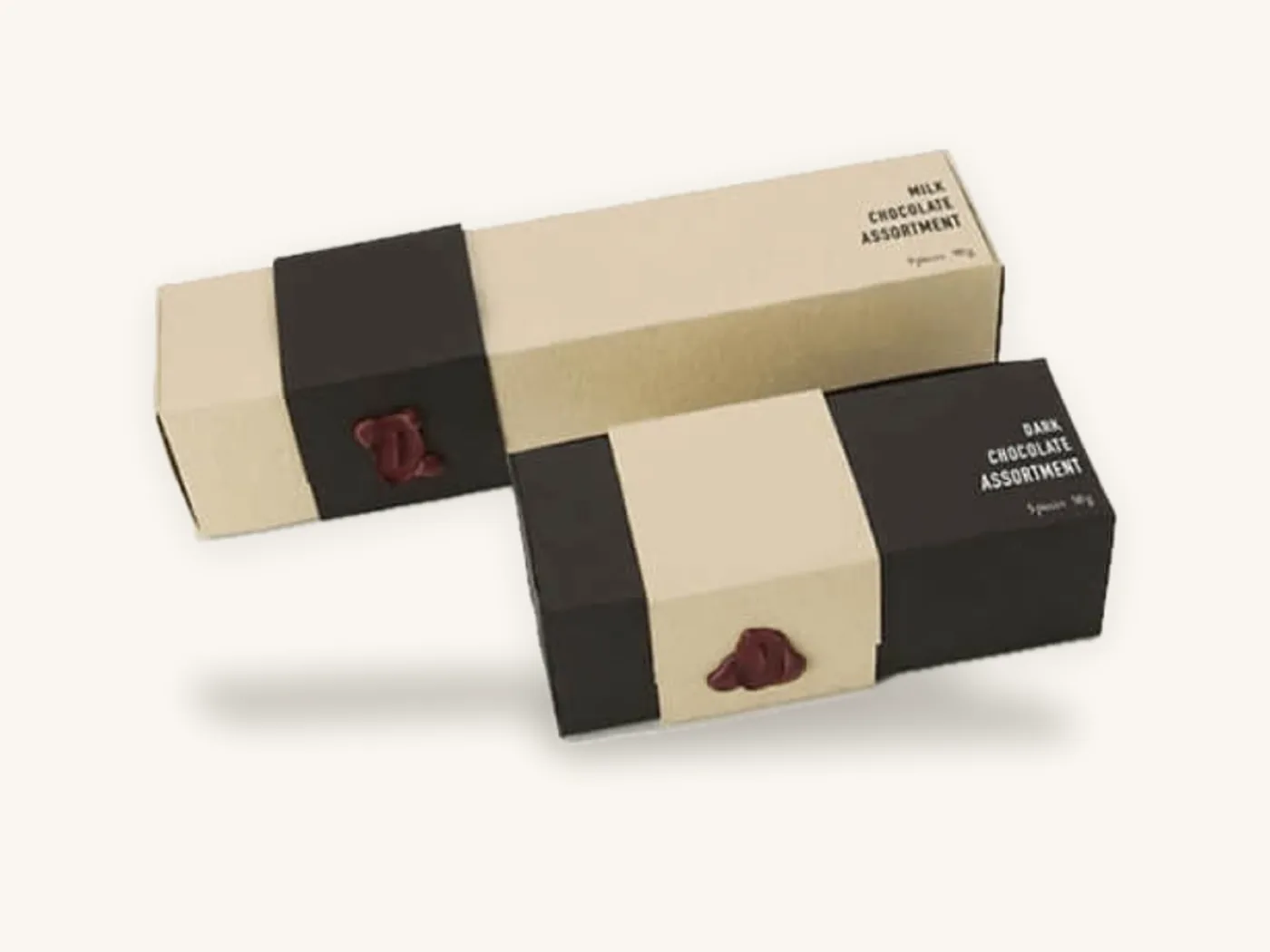
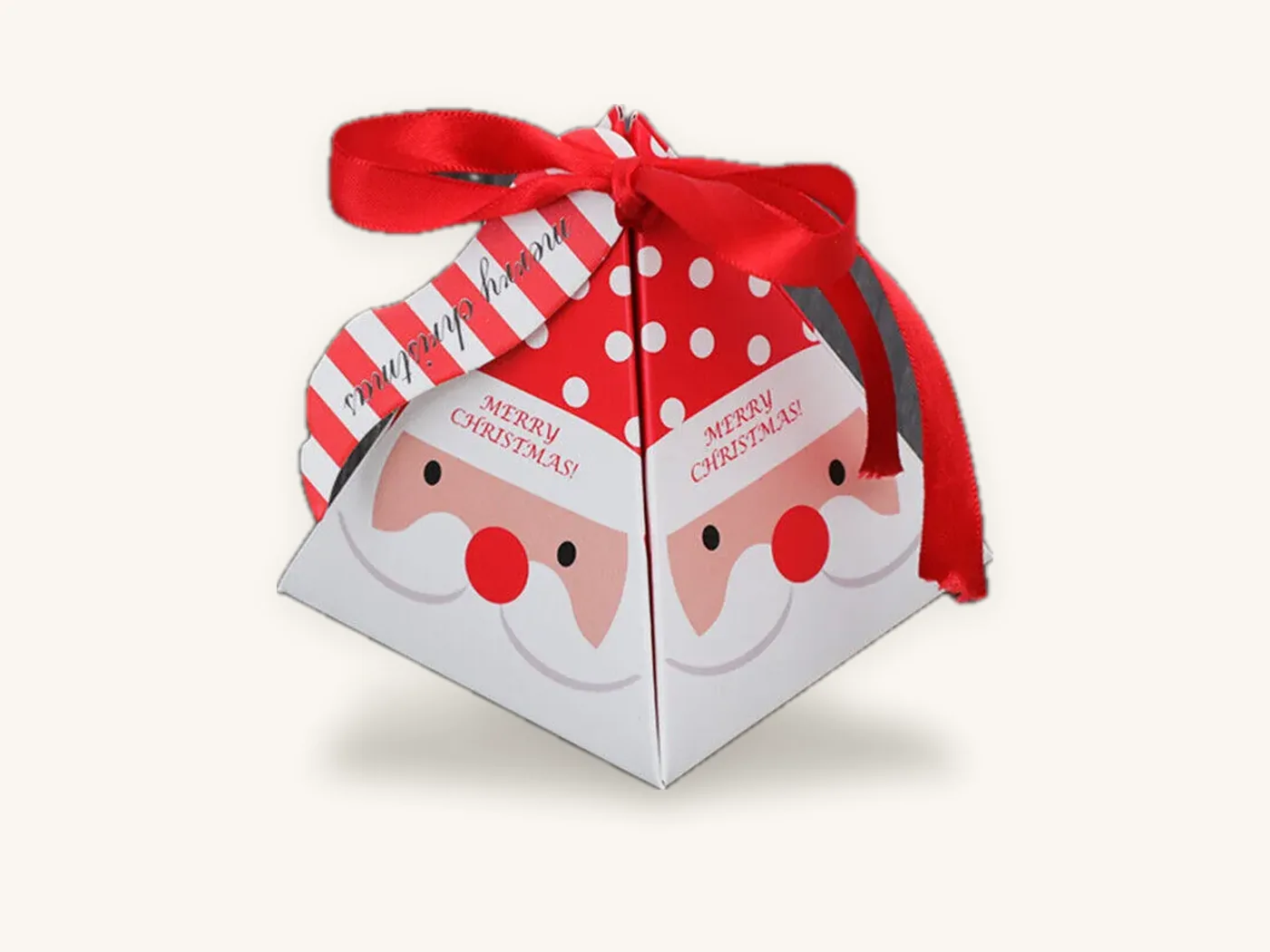
| Chocolates and candy | Window box, drawer box or gable box | Visible treats; portion control | Festive pattern, ribbon |
| Bakery and cookies | Bakery box with window | Food-friendly, easy to fill in-store | Seasonal sticker seal |
| Candles and home fragrance | Tuck carton with insert | Protects glass; clean shelf faces | Foil and matte finish |
| Stocking stuffers | Small tuck carton, pillow box or hang tab box | Low cost, peg or basket display | Bright one-color band |
| Corporate and client gifts | Magnetic rigid box | Keepable, premium | Deboss or foil logo |
Gift boxes for DTC holiday orders
Custom gift boxes sold online need to survive the parcel network in peak season, when volumes are high and handling is rough. A printed corrugated mailer ships on its own. A rigid gift box needs an outer shipper, and that extra carton is worth budgeting rather than risking scuffed wraps on a present. The custom gift boxes guide compares gift box structures in detail.
Candy and chocolate for the season
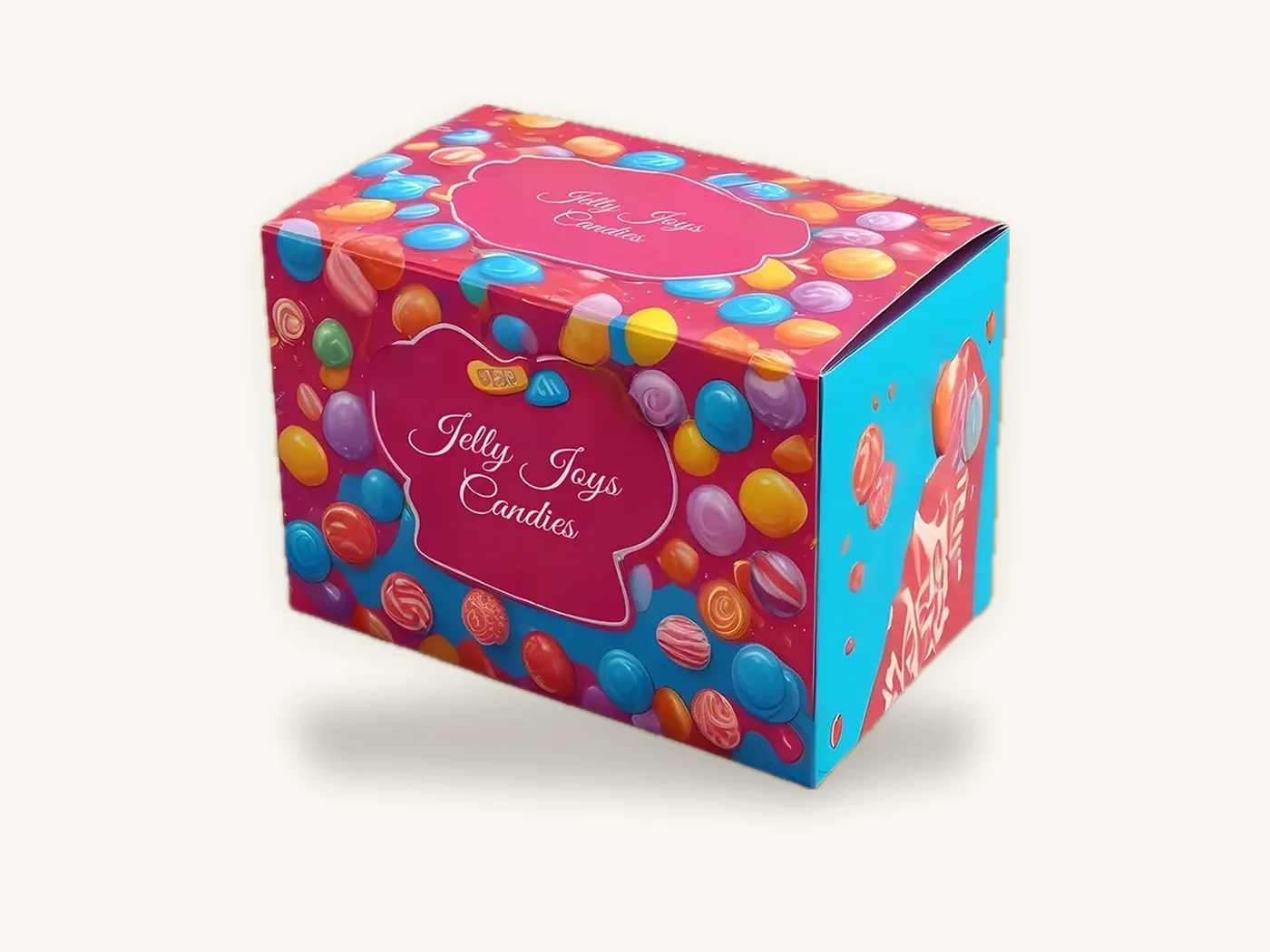
Candy boxes with a PET or PLA window show off colorful sweets and are easy to fill at the counter. Food should sit in an inner bag, tray or wrapper rather than directly against printed board. For assortments with specific piece counts, a printed insert keeps everything in place. The chocolate packaging guide covers trays, bloom and temperature in shipping.
Limited editions and advent-style sets
Holiday limited editions often use a drawer box, sleeve and tray, or a rigid box with compartments. Advent-style calendars with many doors are a specialist structure with more tooling and more assembly, so start those projects earliest of all.
Seasonal packaging without redesigning everything
Not every product needs a completely new box for December. Some of the most effective seasonal packaging reuses what you already stock.
Five ways to go seasonal on a smaller budget
- A printed sleeve over your standard box. One sleeve design can cover several SKUs of the same box size, and the core box stays usable in January.
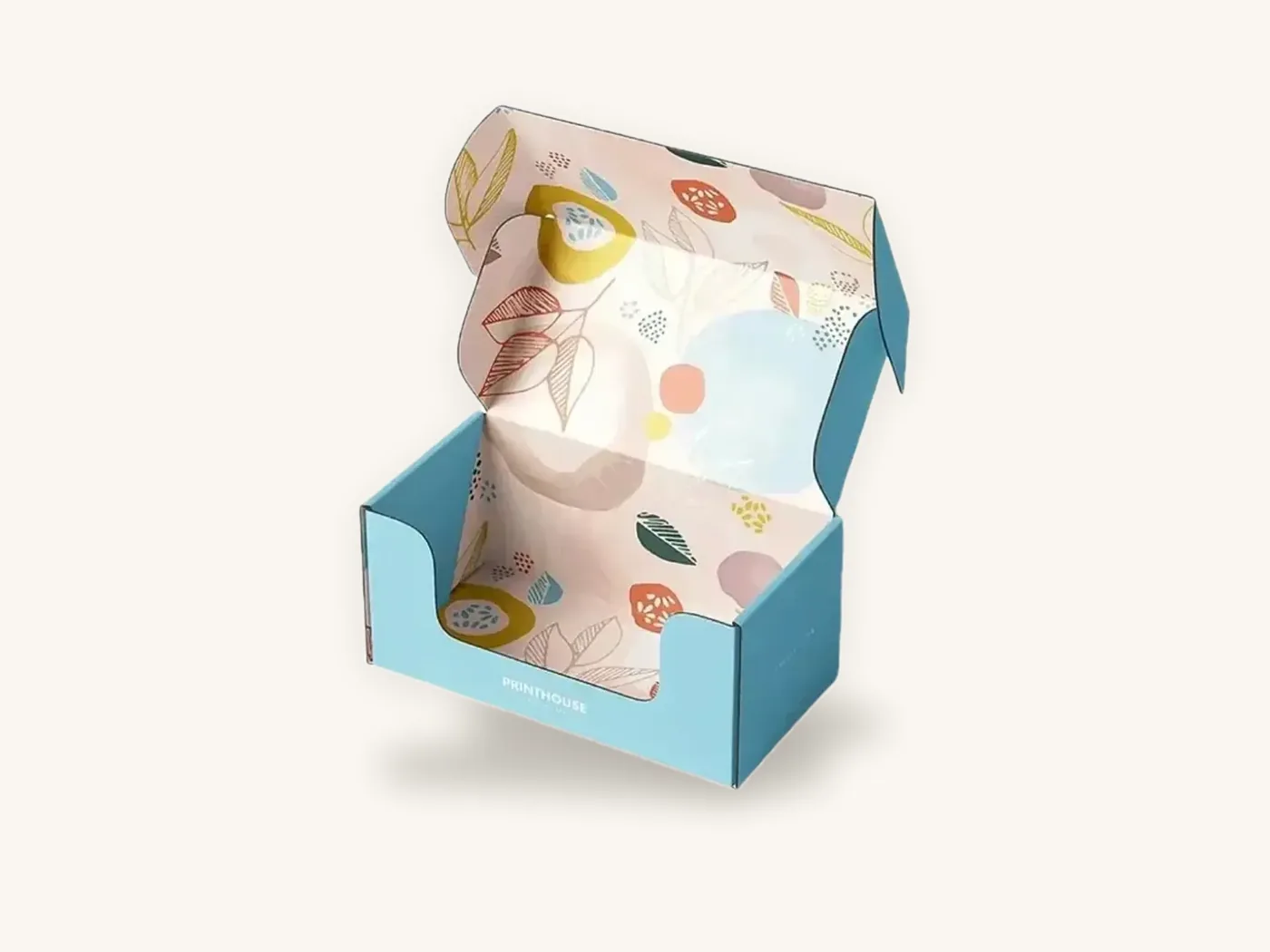
- Seasonal inside-lid printing on a mailer. Keep the outside evergreen and put the festive design where it is seen when opened.
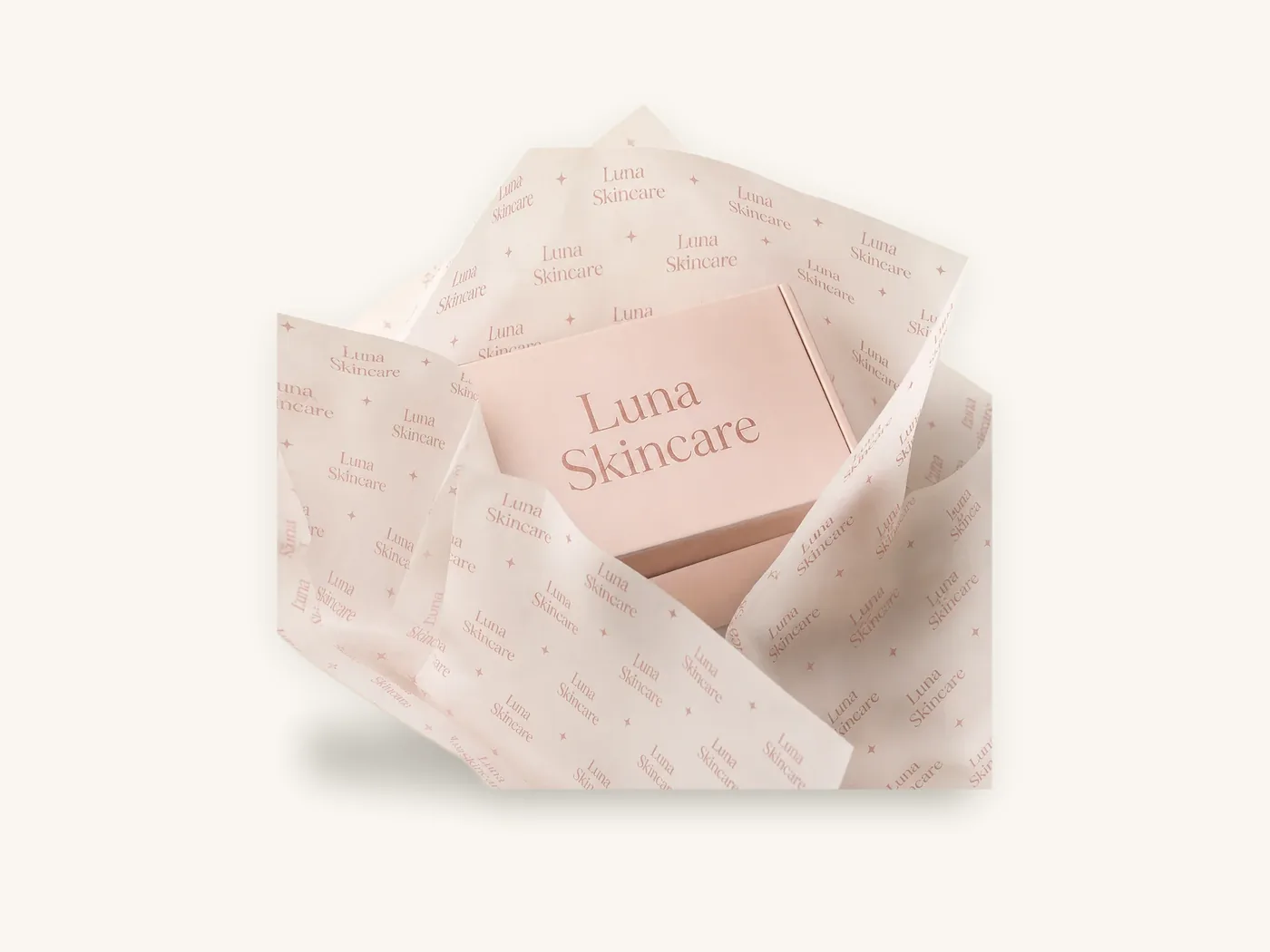
- Printed tissue and cards. Printed tissue paper and a greeting card change the unboxing without changing the box.
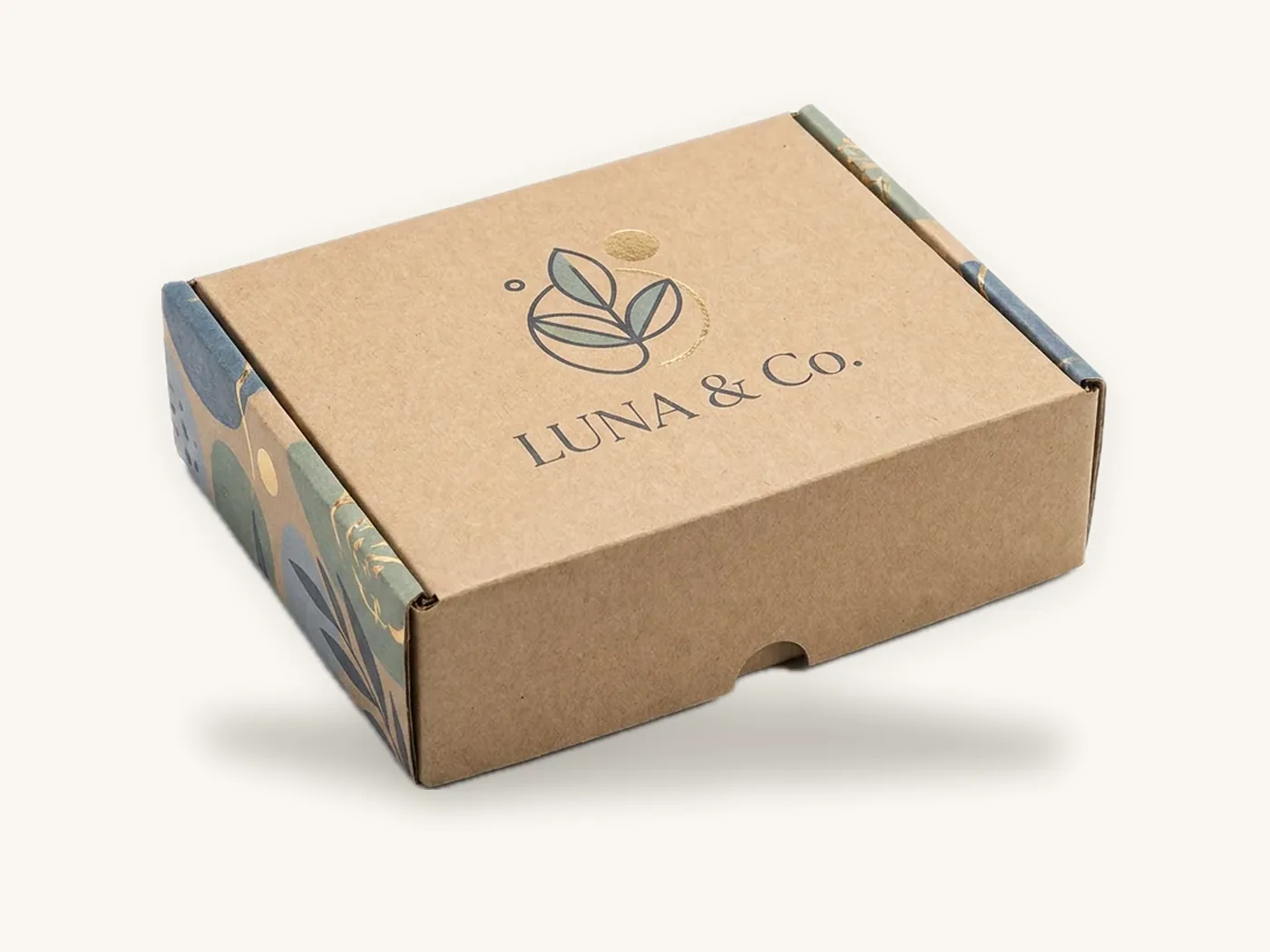
- Sticker seals and labels. A foil-look sticker on a kraft box is quick to apply and costs little.
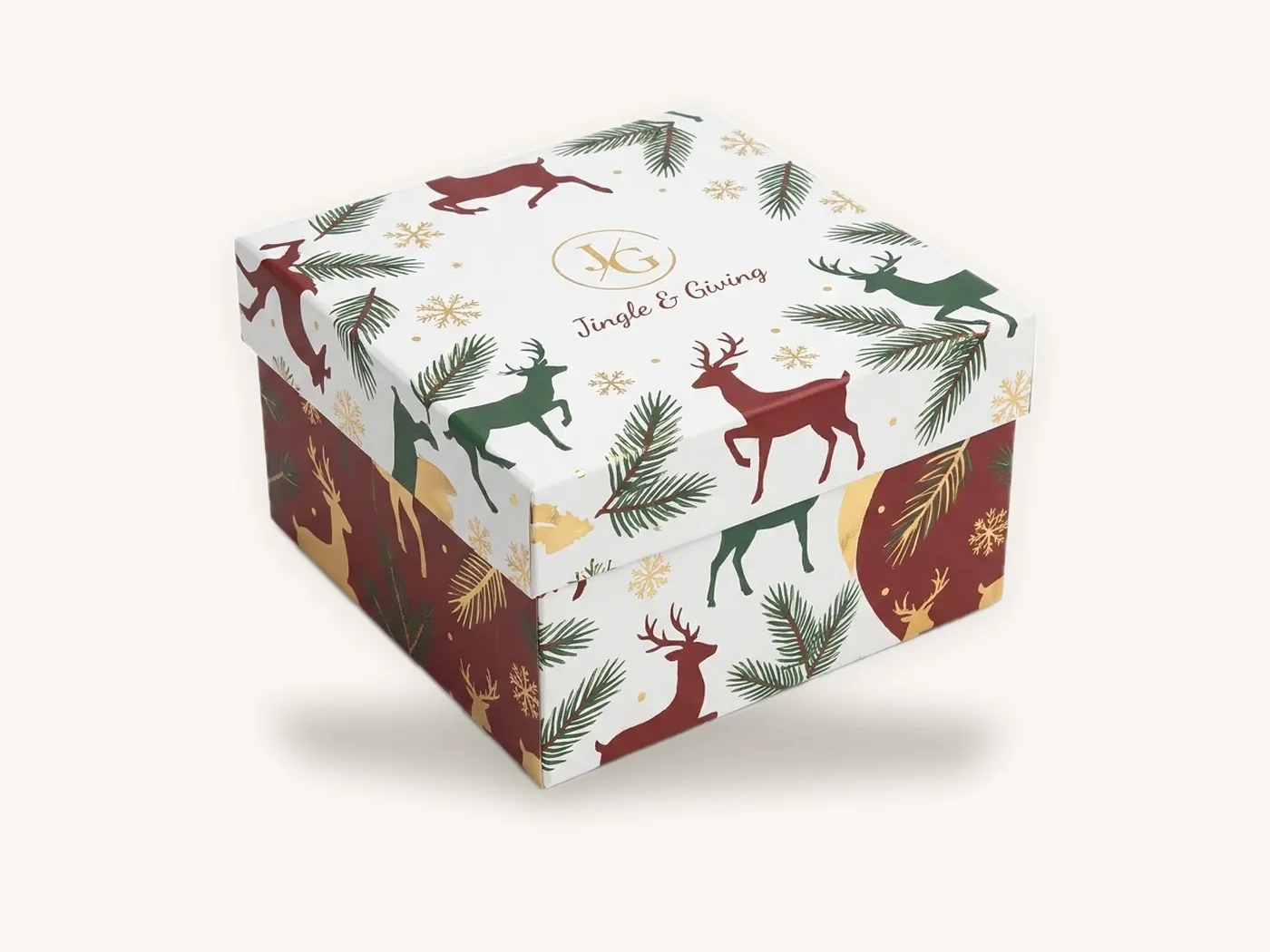
- A winter design rather than a Christmas design. Snowflakes, deep colors and metallic accents work from November to February and cover several holidays.
Designing for more than one holiday
Many brands sell into Hanukkah, Christmas, Kwanzaa and New Year in the same window, and some also plan for Lunar New Year and Valentine's Day. A neutral seasonal palette with a changeable sleeve or card lets one box serve several occasions.
Avoiding dead stock
Boxes printed with a specific year cannot be used next season. Keep the year off the box, use a sticker or card for anything date-specific, and choose a design that will still look right if you hold leftovers for twelve months.
Tip: order your evergreen core boxes early in the year at a higher quantity tier for the lower unit price, then order only the seasonal sleeves or cards in autumn. The seasonal piece is smaller, simpler and faster to produce.
How many holiday boxes to order
Holiday demand is the hardest to forecast because it is concentrated in a few weeks, and a sell-out in mid-December cannot be fixed with a normal reorder.
A practical forecasting approach
- Start with last year's holiday unit sales for each SKU, if you have them.
- Adjust for growth based on your current year-over-year trend, not your hopes.
- Separate evergreen and seasonal SKUs. Evergreen boxes can be over-ordered safely; seasonal ones cannot.
- Plan a main run and a top-up. Size the main run to a conservative forecast. Schedule a decision date for a smaller top-up order early enough that standard or rush production still arrives in time.
- Add a packing buffer of a few percent for damaged or misfolded boxes.
- Check price tiers. Rounding up to the next tier often costs little more in total, which makes a slightly larger run a cheap insurance policy on evergreen designs.
Small-batch holiday launches
If this is your first holiday season or a new gift set, a small initial run is sensible. With a 10-box minimum, you can test a gift set with a few wholesale customers or a pop-up before committing. The guide to custom boxes with no minimum explains how short runs are priced and printed.
Materials and finishes that read as festive
Holiday shoppers respond to texture and shine, but every finish adds complexity to the schedule.
| Finish or material | Holiday effect | Schedule and cost impact |
|---|---|---|
| Foil stamping | Gold, silver, rose gold or red highlights | One-time tooling of about $60; allow for a foil proof |
| Embossing or debossing | Tactile snowflakes, monograms, logos | One-time tooling of about $60 |
| Spot UV | Glossy accents on matte backgrounds | One-time tooling of about $40 |
| Soft-touch lamination | Velvety, premium gift feel | Adds a film layer; affects recyclability |
| Metallic or holographic board | Shimmer across the whole box | See metallic and holographic board |
| Kraft with white and one color | Natural, handmade holiday look | Economical, quick to set up |
| PLA or PET window | Shows treats and gift contents | Small cost per unit; no tooling beyond the die |
Deep reds and greens reproduce differently on kraft than on white board, and rich solid colors can vary slightly across runs. If a brand holiday color must match exactly, specify a PMS spot color. The printing and finishes page shows foil colors and coating samples.
Shipping holiday packaging through peak season
Peak season stresses packaging more than any other time of year. Parcels are stacked higher, handled faster and sit longer in trucks and sorting centers.
Protect the gift, not just the product
A customer receiving a gift wants the box itself to look new, since it may go straight under a tree. For rigid or foil-finished boxes, use a snug outer custom shipping box with a little paper fill. For mailers, right-size the box and use inserts so items do not shift and dent the corners.
Right-size to control shipping costs
Parcel carriers generally bill larger boxes by dimensional weight based on outside dimensions. Festive oversize boxes can add noticeably to shipping costs across thousands of orders. Confirm current dimensional weight rules for your carrier and service.
Gift-ready details
- A gift note card slot or printed message area
- Invoices packed separately or omitted from gift orders
- Tissue that hides contents when the box is first opened
- Tamper-evident tear strips on mailers so recipients know the gift was untouched
What holiday boxes cost
Holiday box costs follow the same drivers as any custom packaging: structure, size, board, print, finishes and quantity. The table shows indicative per-unit prices from our current rates for common holiday specs, with free US shipping included. Check your exact size in the instant price estimator.
| Spec (holiday use) | 250 | 500 | 1,000 | 2,500 |
|---|---|---|---|---|
| Window box, 18 pt SBS, 4x4x4 in, full color, aqueous, window (treats, ornaments) | $1.18 | $0.89 | $0.74 | $0.63 |
| Candle box, 18 pt SBS, 3.5x3.5x4 in, full color, matte + foil + insert (candle gift) | $1.66 | $1.24 | $1.03 | $0.88 |
| Bakery/cake box with window, 18 pt SBS, 10x10x5 in, full color (cookie platters) | $2.91 | $2.18 | $1.82 | $1.54 |
| Mailer box, E-flute, 8x6x3 in, full color outside (DTC gift set) | $1.88 | $1.41 | $1.17 | $1.00 |
| Rigid box, 2 mm greyboard wrapped, 8x6x3 in, full color, matte (premium gift set) | $6.47 | $4.85 | $4.05 | $3.44 |
Holiday budgeting notes
- The top-up order costs more per unit because it is smaller. Build that into your forecast rather than being surprised in December.
- Rush production is quoted for your spec, so ask when you request the quote if you think you may need it.
- Tooling is one-time. A foil die made for this year's holiday box can be reused on next year's run if the artwork stays the same.
How to order holiday packaging from Box Sense
The earlier you send a brief, the more options stay open.
What to send
- Each holiday SKU with contents, dimensions and weight
- Sales channel: DTC, retail, wholesale or corporate
- Target structure, or a request for a recommendation
- Seasonal design approach: full new box, sleeve, inside print, tissue or card
- Finishes, including foil or embossing
- Quantities for the main run and a possible top-up
- The date you need boxes in hand, and your first customer ship date
- Artwork, brand files, or a request for help from our design services team
What happens next
- Quote within 24 hours, including quantity tiers.
- Free design support: dieline, artwork setup and a 3D digital proof with two revision rounds.
- Samples: unprinted structural samples are free; a printed sample of approved artwork is free on orders of 100 or more. See samples.
- Production: 8–12 business days after proof approval, with rush in 5 business days on most paperboard and corrugated styles.
- Delivery: free shipping on every US order; international quoted at cost.
The minimum order is 10 boxes, and there are no die or plate charges. Defective boxes reported within 14 days are reprinted free, which matters when there is no time to wait for a second run. Explore more seasonal formats on the Christmas and holiday boxes page and the gifts and events industry page.
Frequently asked questions
When should I order holiday packaging?
Work backward from your first holiday ship date. For brands shipping to customers from late November on a standard schedule, aim to approve proofs by mid-October, which usually means starting design in late September or early October. Retail programs need packaging much earlier because buyers require stock in distribution centers ahead of consumer shopping.
How long does it take to make custom Christmas boxes?
At Box Sense, standard production takes 8 to 12 business days after proof approval, and rush production in 5 business days is available on most paperboard and corrugated styles. Before production, allow time for quoting, a structural sample if the design is new, and proofing with two revision rounds. After production, allow transit and your own packing time.
How can I make seasonal packaging without buying all new boxes?
Keep your standard boxes and change a smaller seasonal element. Printed sleeves, inside-lid prints on mailers, printed tissue, greeting cards and sticker seals all add a holiday look without a full new box run. A winter-themed design instead of a Christmas-specific one also stretches use from November through February and across several holidays.
How many holiday boxes should I order?
Start with last year's holiday unit sales, adjust for your current growth trend, and size a main run to a conservative forecast. Plan a smaller top-up order with a decision date early enough for production to arrive in time. Over-order evergreen boxes that you can use next year, and keep seasonal, year-specific designs tight.
What are the best Christmas boxes for shipping gifts?
For gifts shipped straight to customers, printed E-flute mailers are the most practical because they survive parcel delivery on their own and have an inside lid for a festive message. Rigid gift boxes look more premium but should ship inside a snug outer carton. Right-size either option to avoid higher dimensional weight charges.
Can I order a small run of holiday boxes?
Yes. Box Sense produces custom holiday boxes from a minimum of 10 units, printed digitally for short runs without plates. That suits pop-up shops, test gift sets, limited editions and small corporate gifting programs. Per-box prices drop as quantity increases, so compare tiers before placing a larger order.
How much do custom holiday boxes cost?
It depends on style, size, finishes and quantity. As a reference, a 4x4x4 inch full-color window box is about $0.74 per box at 1,000 units, a full-color 8x6x3 inch E-flute mailer is about $1.17 at 1,000, and an 8x6x3 inch wrapped rigid box is about $4.05 at 1,000, including US shipping.
Next steps
Pick the date your first holiday order must ship, count back through packing, transit, production, proofing and sampling, and put the start date on your calendar today. Then price your seasonal specs in the holiday box price estimator and request a holiday packaging quote. We confirm pricing within 24 hours, so you can lock in the schedule while there is still room in it.
Boxes in this guide
Order the packaging we covered
Written by the Box Sense Packaging Team
Our structural designers, prepress technicians and production staff print and convert custom boxes every day for brands in the United States, United Kingdom and UAE. Questions about this guide? Talk to us.