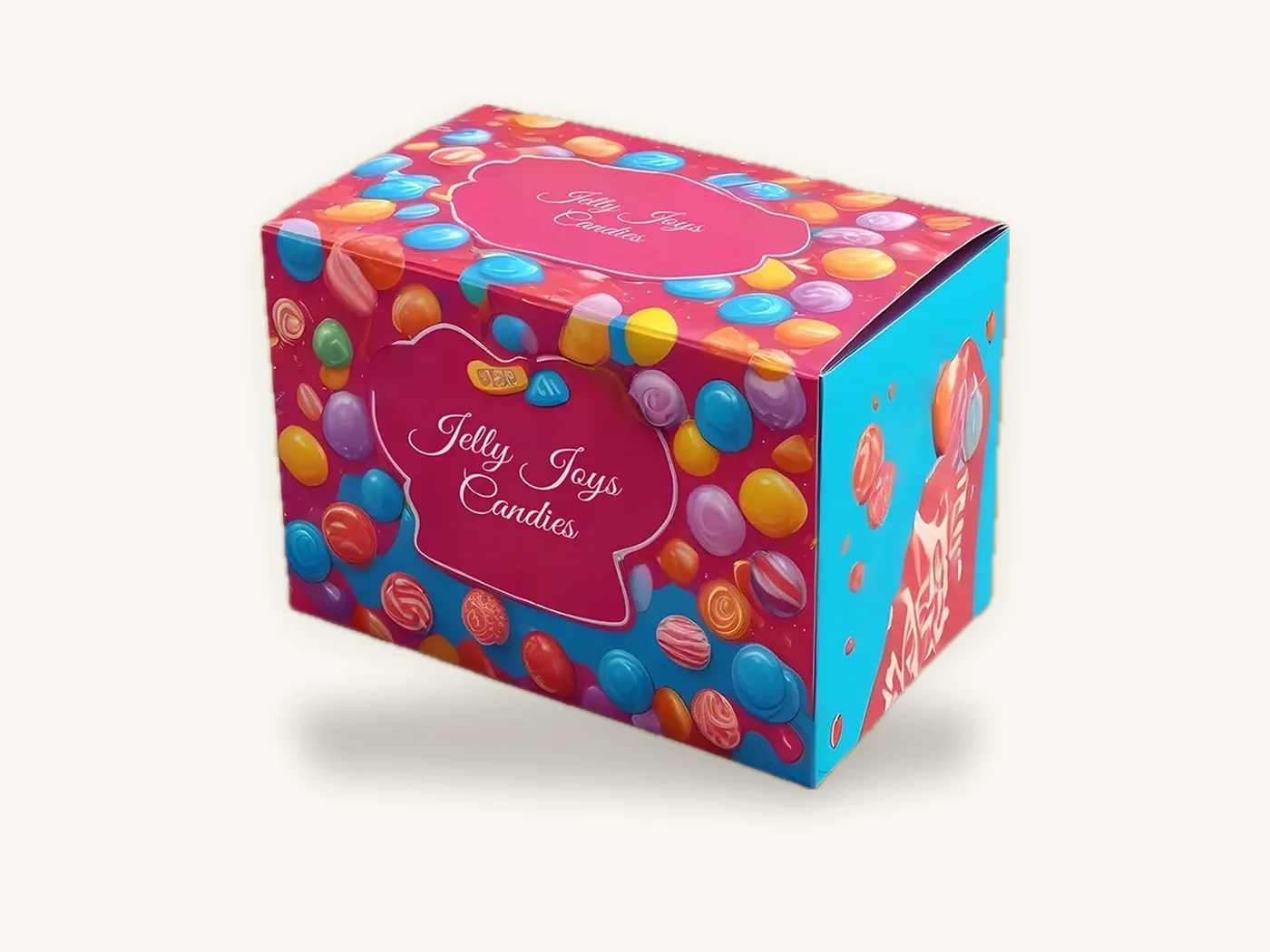
The right candy packaging depends first on where the candy is sold. A checkout-lane treat needs a small, bright pack that a shopper grabs in two seconds; a gift assortment needs a box that feels worth giving; a bulk or online order needs a resealable bag that keeps pieces fresh and ships light. Pick the channel, then the format, then the material.
The second question is what your candy is made of. Hard candy, gummies, caramels, marshmallows and chocolate-coated pieces all react differently to air, humidity and heat, so the barrier inside the pack matters as much as the print outside. This guide works through both questions, compares custom candy boxes, pouches and displays side by side, and covers design, seasonal planning and how to order.
Key takeaways
- Choose the format by sales channel first: impulse, shelf, gift, bulk or online each favor a different pack.
- Most candy needs a moisture barrier. A paperboard box alone does not provide one, so pair it with a sealed bag, wrap or liner.
- Window boxes, pillow boxes, gable boxes and tuck cartons cover most custom candy boxes; stand-up pouches handle resealable and bulk sizes.
- Dispenser and counter display boxes turn a checkout counter into a sales point; a 10x8x6 in E-flute counter display runs about $5.08 each at 100 units.
- Sweet packaging that sells is legible from a distance: one clear flavor name, a strong color block, and a window or photo that shows the candy.
- Box Sense makes candy boxes and displays from 10 units with free design support and 8–12 business day standard production.
Match candy packaging to where it sells
The same gummy can live in five different packs depending on who is buying and where. Start by listing every channel you sell through, then match each to a format.
| Sales channel | What the shopper does | Format that fits | Key design priority |
|---|---|---|---|
| Checkout and counter | Grabs on impulse in seconds | Small tuck carton or bag in a counter display | Instant flavor recognition, price-friendly size |
| Grocery or specialty shelf | Compares options side by side | Window box, tuck carton or stand-up pouch | Front-panel legibility, shelf blocking |
| Gift shop and seasonal | Buys for someone else | Window box, hexagon, gable or rigid gift box | Presentation, perceived value |
| Bulk and refill | Buys a larger quantity to share | Resealable stand-up pouch or dispenser box | Reclosability, portion count |
| Online and subscription | Buys without touching | Pouch or carton inside a mailer | Protection, light weight, unboxing |
| Events and favors | Receives it free | Pillow box, favor box or mini gable | Low unit cost, personalization |
Many candy brands run two or three of these at once. A practical approach is to share artwork and flavor colors across formats so the brand is recognizable whether it is a pouch online or a carton at the counter. The chocolate and candy industry page shows typical format mixes.
Candy types and what they need from a pack
Sugar is hygroscopic: it pulls moisture from the air. That single fact explains most candy packaging failures, from sticky hard candy to gummies that sweat inside a window.
| Candy type | Main risk | What the pack needs | Common formats |
|---|---|---|---|
| Hard candy and lollipops | Absorbs humidity, turns sticky | Individual wraps or sealed bag | Tuck carton, jar-style box, pouch |
| Gummies and jellies | Sticks together, loses or gains moisture | Sealed pouch or bag, anti-stick dusting | Stand-up pouch, window box with inner bag |
| Caramels and taffy | Cold flow and sticking | Individual twist wraps | Tuck carton, gable box, pouch |
| Chocolate-coated pieces | Heat, bloom, scuffing | Sealed bag, cool storage | Window box, hexagon, dispenser |
| Marshmallows and cotton candy | Moisture pickup, crushing | Sealed bag, rigid-enough structure | Tub-style box, gable box, pouch |
| Brittle and toffee | Breakage and humidity | Liner bag plus snug box | Two-piece box, window box |
| Freeze-dried candy | Rapid moisture pickup, crushing | High-barrier sealed pouch | Stand-up pouch inside a carton |
Why a box alone is not enough
Paperboard is porous. Even with a coating, it slows moisture movement only slightly, so candy that is sensitive to humidity should be sealed in a wrap, bag or liner before it goes into a box. The box then does the jobs it is good at: structure, branding, stacking and shelf presence.
For chocolate-heavy ranges, the chocolate packaging guide goes deeper into trays and warm-weather shipping.
Custom candy boxes: the main structures
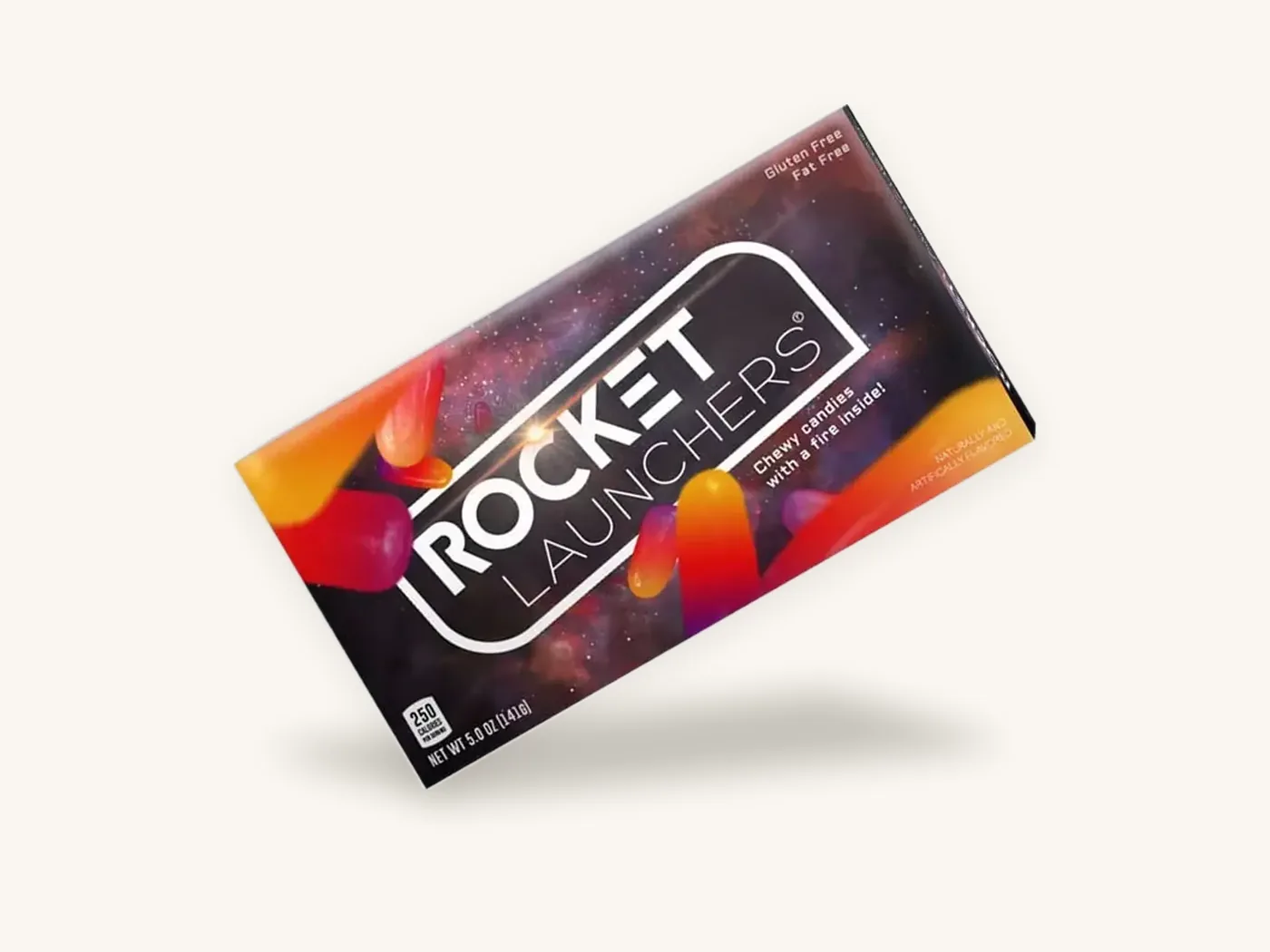
Boxes give candy shelf presence and gift value that bags struggle to match. These structures cover most custom candy boxes we make.
Window boxes
A die-cut window shows the candy itself, which is often the most persuasive thing on the pack. Colorful gummies, rock candy and swirled lollipops sell themselves through a window. Keep the window away from folds and at least 1/4 in from edges so the carton keeps its strength. PET film is crystal clear; compostable PLA film is available for brands with sustainability positioning.
An 18 pt SBS window box at 4x4x4 in, full color with aqueous coating, runs about $1.66 each at 100 units and about $0.74 at 1,000. The custom window boxes guide covers window placement in detail.
Tuck end cartons
Straight and reverse tuck cartons are the workhorse retail pack: fast to fill by hand, stackable and printable on all sides. For reference, an 18 pt SBS straight tuck end carton at 3x2x5 in, full color with aqueous coating, is about $1.15 at 100 units and about $0.51 at 1,000. A natural-look option, an 18 pt kraft tuck carton at 4x3x2 in with one-color print, is about $0.81 at 100 and about $0.36 at 1,000.
Pillow, gable and hexagon boxes
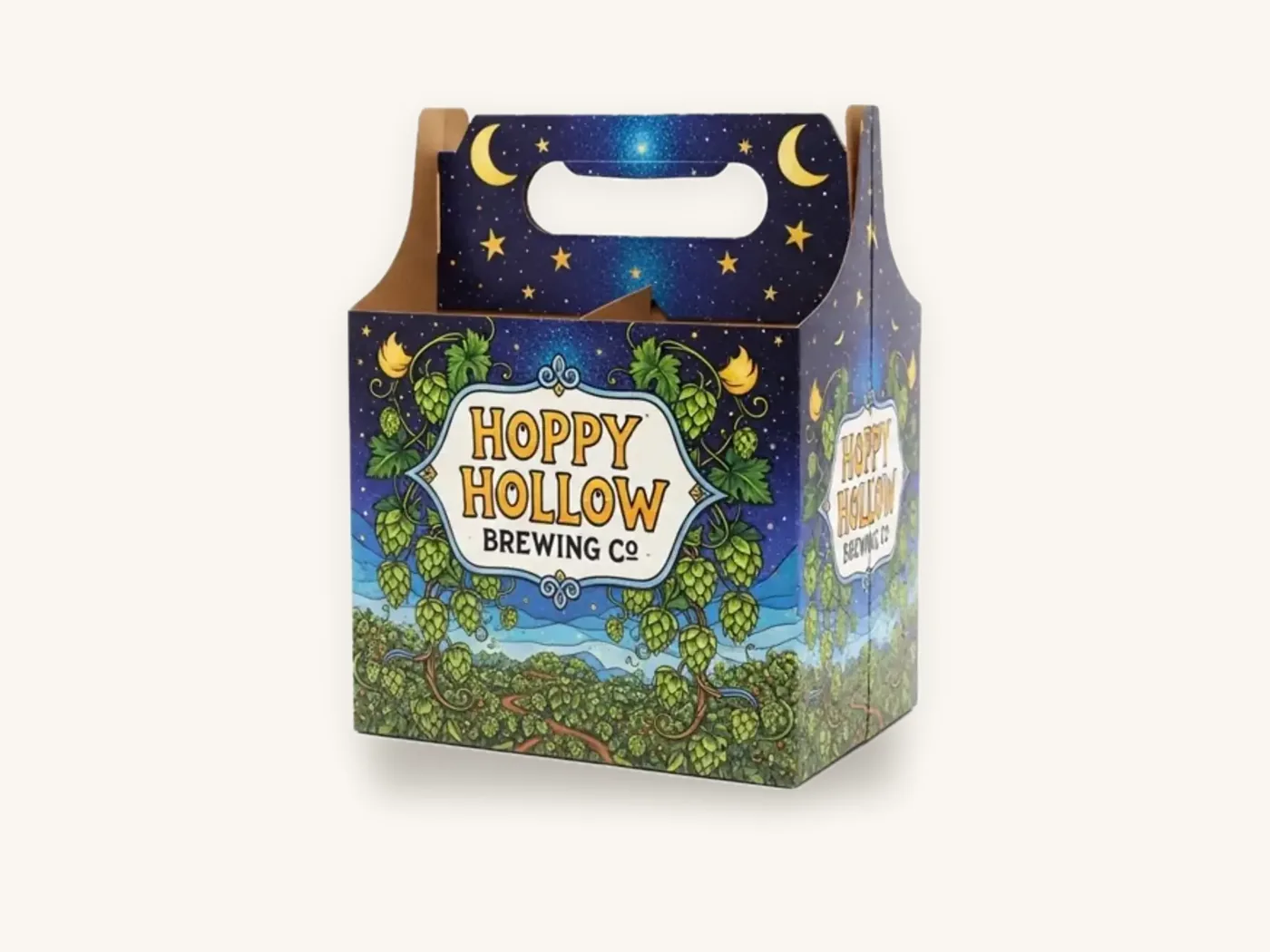
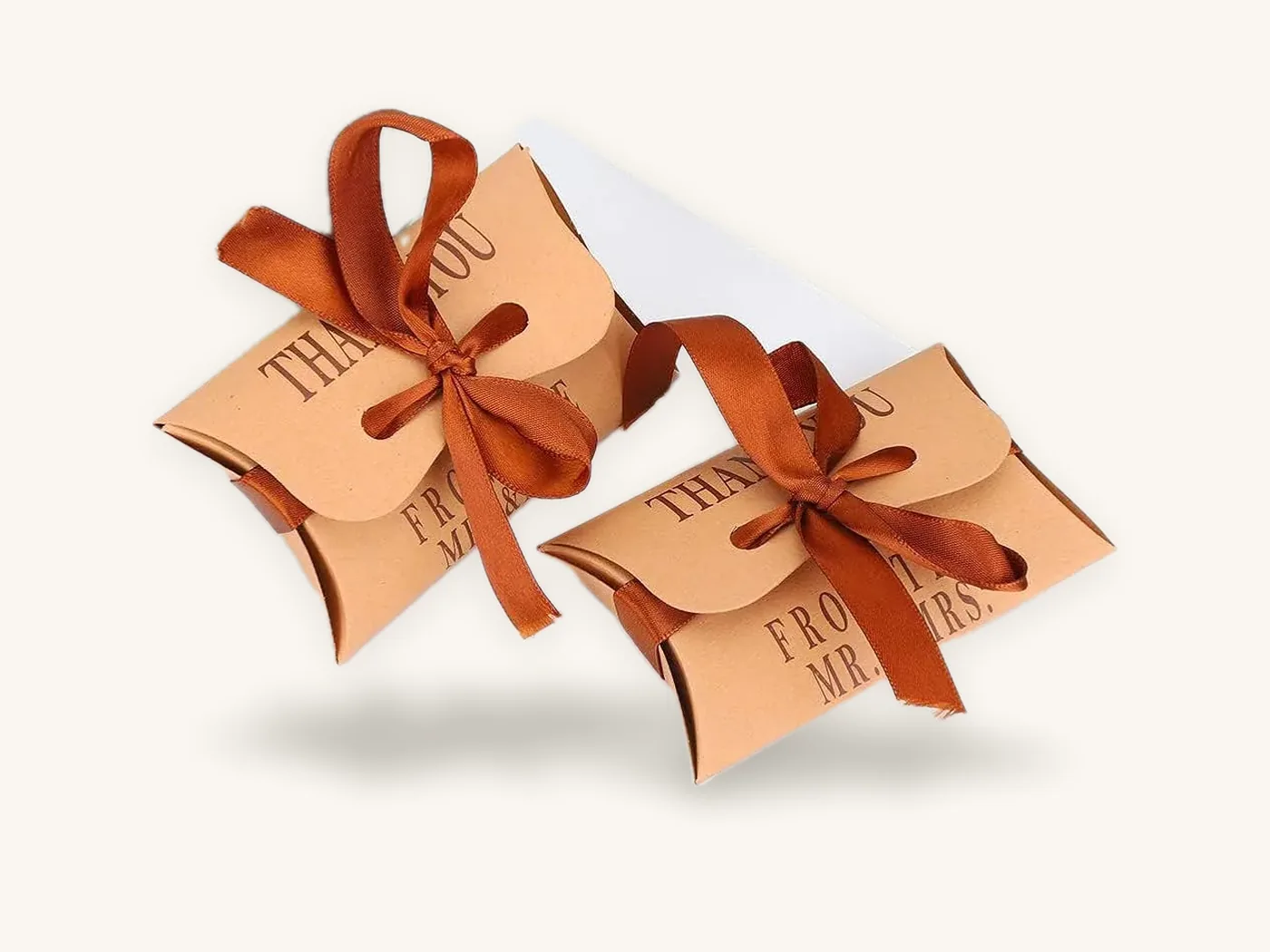
Pillow boxes close with curved ends and suit a handful of wrapped sweets as a favor. Gable boxes add a carry handle for party packs and pick-and-mix. Hexagon boxes give a gift-shop feel and stack in tidy honeycomb displays. These shaped styles are about presentation; plan an inner bag for anything humidity sensitive.
Rigid gift boxes
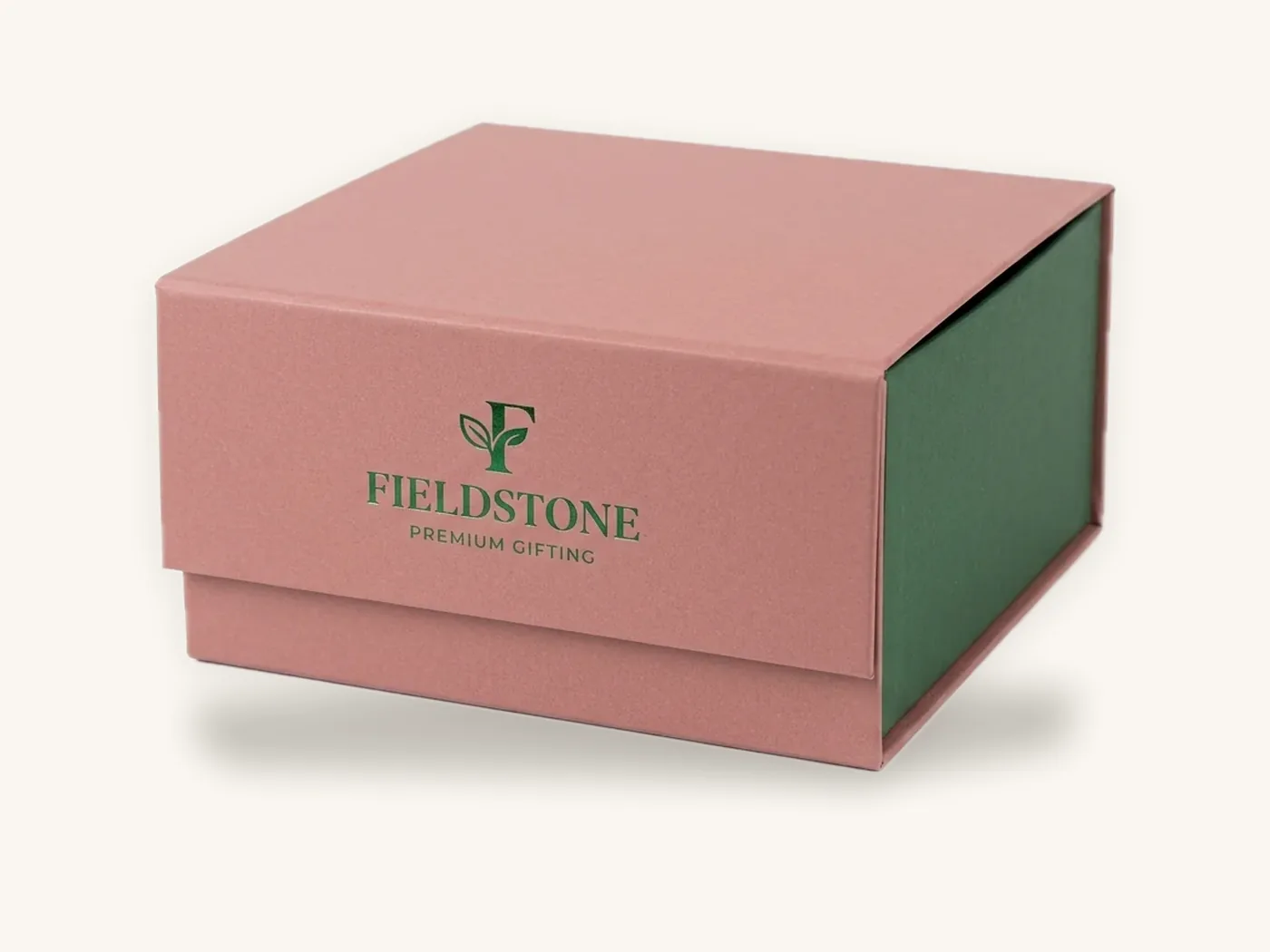
For premium assortments, a rigid lid box or drawer box raises perceived value sharply. Most candy brands use rigid only for seasonal gifts and corporate orders, where the box price is easier to justify.
The candy boxes product page lists sizes and finishes across these formats.
Stand-up pouches: when a bag beats a box
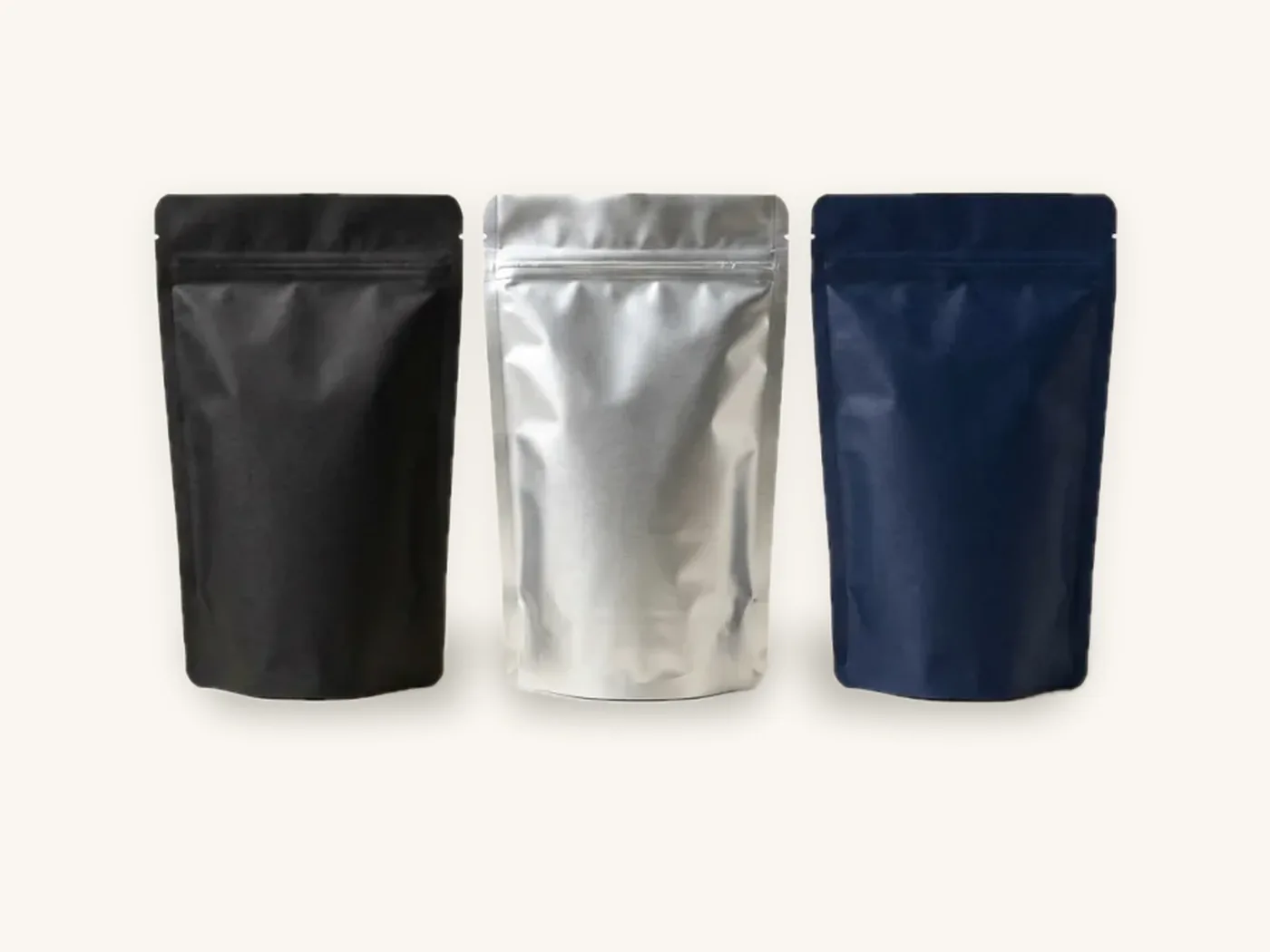
Flexible packaging wins whenever freshness, reclosability or shipping weight is the priority. Stand-up pouches combine a barrier film with a gusseted base that stands on a shelf, and most can take a press-to-close zipper, a tear notch and a hang hole.
Choose a pouch when
- The candy is humidity sensitive and customers will not finish it in one sitting (gummies, freeze-dried candy, sour belts).
- You sell larger share sizes, such as 8 to 16 oz, where a box would be bulky.
- You ship direct to consumers and want to minimize weight and dimensional size.
- You want a window without a separate film patch, using a clear panel in the laminate.
Choose a box when
- Gift value matters more than reclosability.
- The candy is fragile and needs structure, like brittle, molded shapes or lollipops.
- You want strong shelf blocking with flat, crisply printed panels.
- You want customers to keep the packaging.
Using both together
A popular setup is a sealed pouch or flow-wrapped bag inside a printed carton. The bag keeps the candy fresh; the carton gives the shelf presence and a large print area. It costs more than either alone, but it solves two problems in one pack. Our stand-up pouches guide covers film structures and zipper types. Pouch pricing depends on film, size and print, so use the price estimator or request a quote rather than relying on box figures.
Dispenser and counter display boxes for impulse sales
Candy is one of the most impulse-driven categories in retail, and the counter is where impulse happens. A good display puts individual packs within reach, shows the brand at eye level and restocks in seconds.
Dispenser boxes
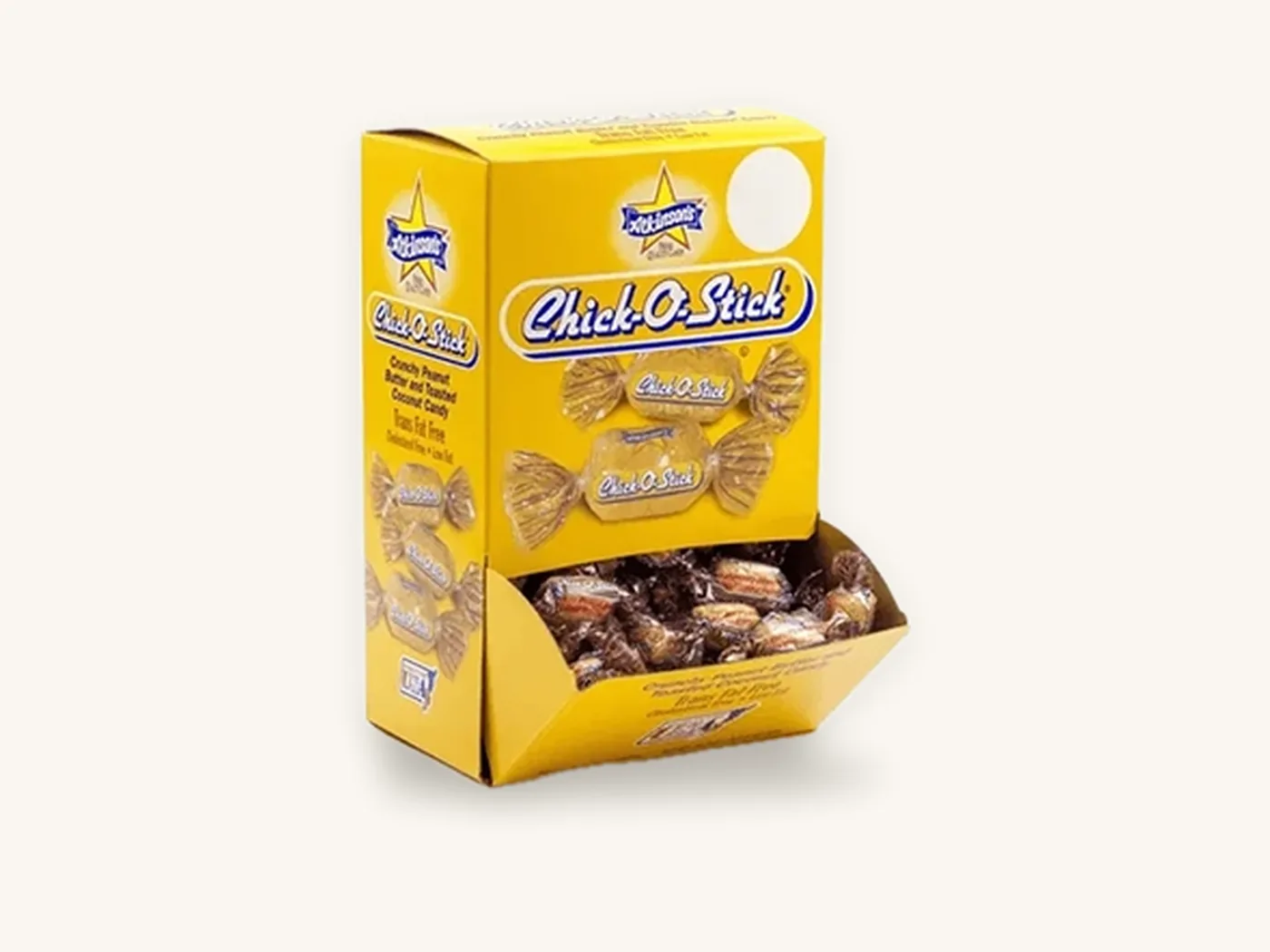
Dispenser boxes have a perforated front panel that tears away, turning the shipping carton into a tray that dispenses single units. They suit individually wrapped lollipops, bars, sachets and small bags. Because the same box ships and displays, retailers do not need to unpack anything onto a shelf. The dispenser boxes guide explains perforation patterns and tear-away designs.
Counter display boxes
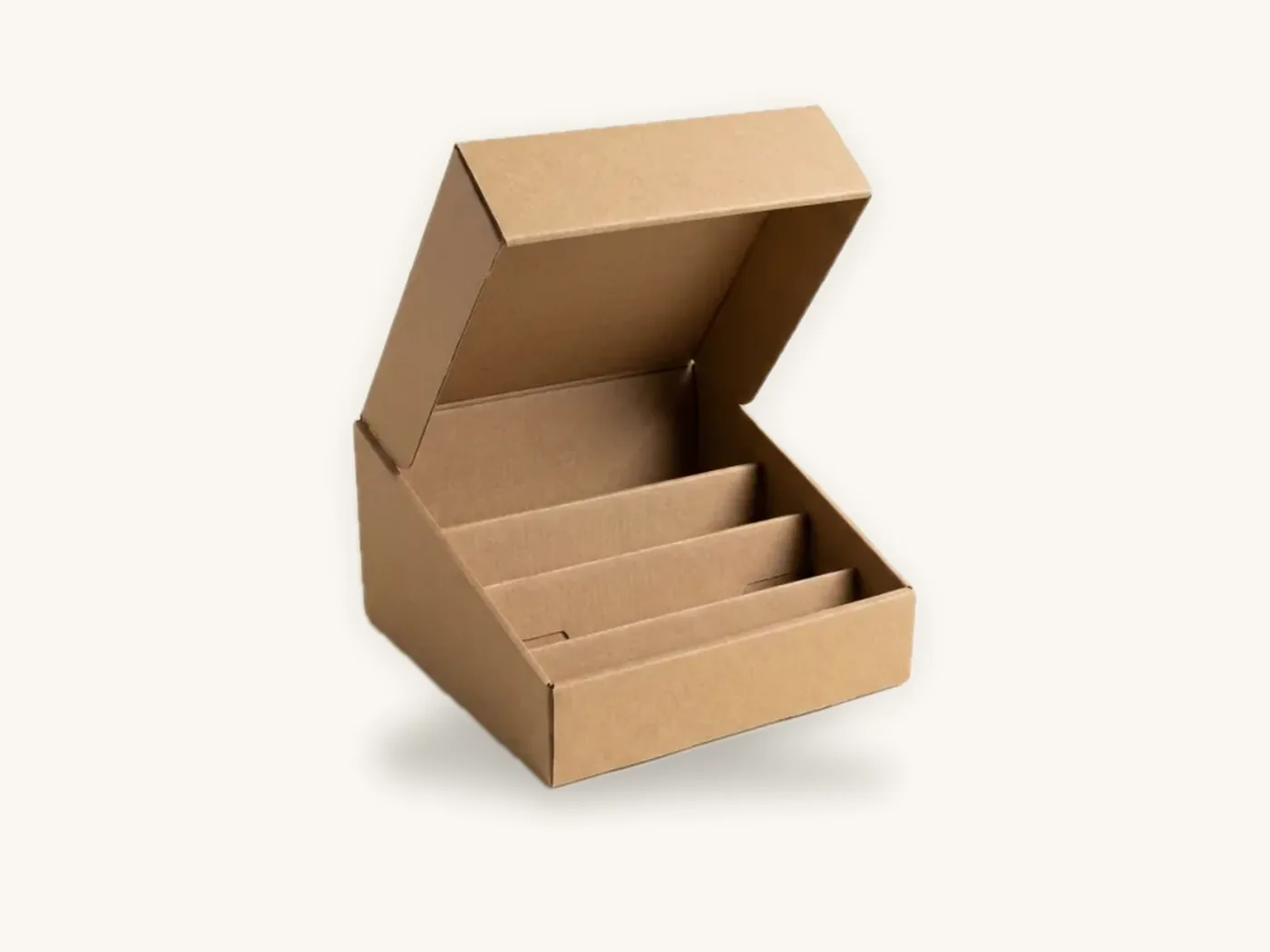
A counter display box adds a printed header card that rises above the product and carries your logo, flavor lineup or price message. An E-flute counter display at 10x8x6 in with full color print runs about $5.08 each at 100 units and about $2.26 at 1,000.
How to design a candy counter display
- Confirm the unit count. Retailers often have a preferred fill, commonly 12, 24 or 36 units. Ask the buyer before engineering the tray.
- Measure the individual pack, not the candy. Include any hang hole or seal crimp.
- Check the counter space. Many registers have a footprint of only a few inches beside the card reader. A tall, narrow display can win space a wide one will not.
- Angle the front. A sloped front lip lets shoppers see the back row, and a lip of roughly 1 to 2 in stops packs sliding out.
- Design the header for distance. It is read from about 3 to 6 feet, so use the brand name, one message and big type.
- Plan shipping. Decide whether the display ships assembled in a corrugated outer, or flat with instructions for the store.
- Sample it filled. Pack the display with real product, lift it by the sides and set it down hard. The base should not bow.
Tip: print the back and inside walls of a counter display, not just the header. As the front row sells out, the inside of the tray becomes the most visible surface on the counter.
Designing sweet packaging that sells
Candy packaging often has a lot of competition within a small space, so clarity beats cleverness.
Make the flavor unmistakable
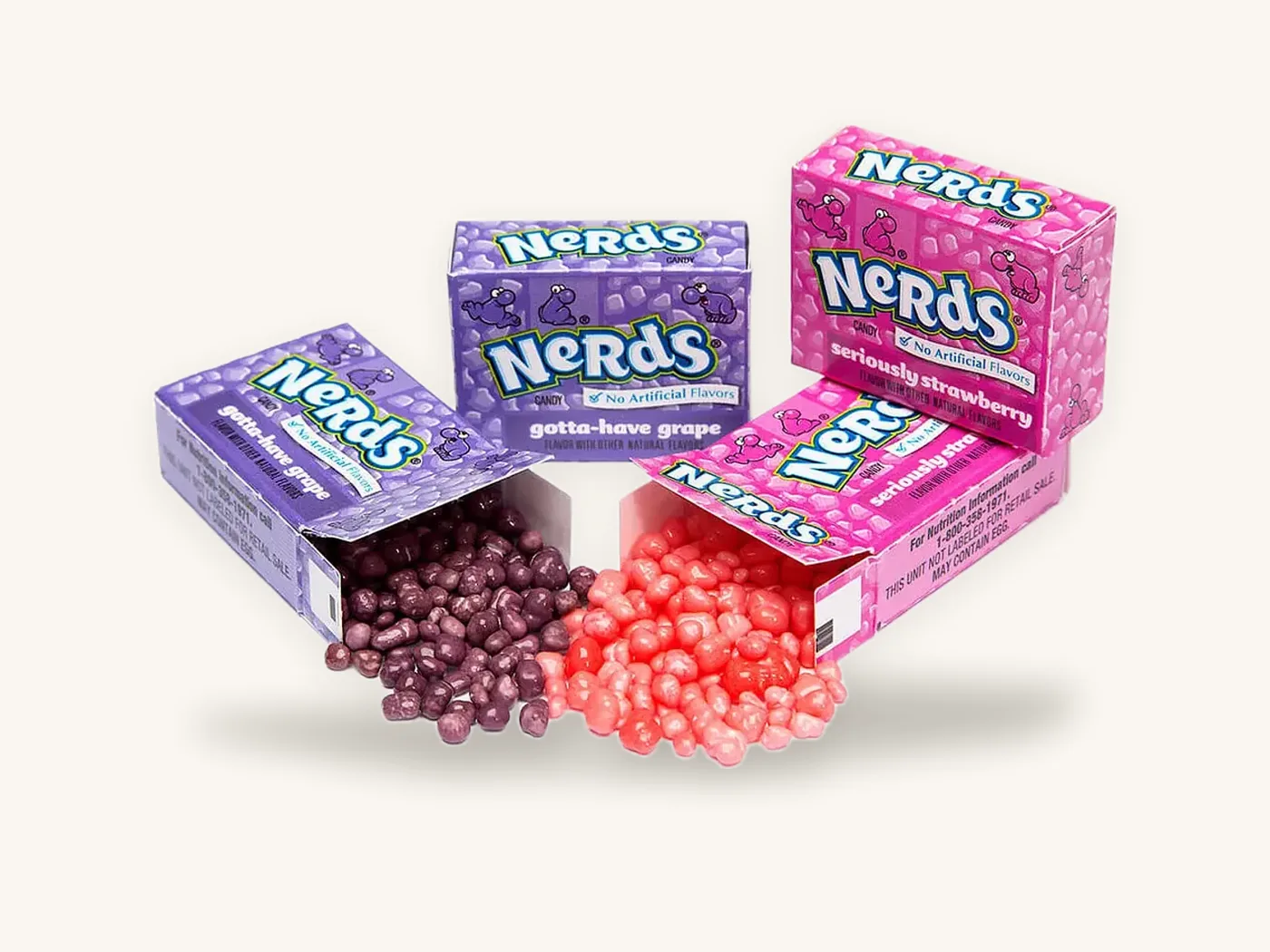
Shoppers decide on flavor faster than on brand. Give each flavor one dominant color and a large, simple flavor name. Keep the color system consistent across boxes, pouches and displays so a returning customer can find "the green one" instantly.
Show the candy
A window, a clear pouch panel or a large, accurate product photo reduces uncertainty, especially for new brands. If you use a photo, make sure it matches what is inside; oversized or misleading imagery can create complaints and undermine trust.
Design for the audience
Candy aimed at children usually leans on bold primary colors and character-driven graphics, while adult and gourmet candy leans on restrained palettes, texture and finishes such as matte lamination, foil or embossing. Decide who is paying before choosing the style; for many kids' products, it is a parent reading the ingredient panel.
Build a shelf block
When several facings sit side by side, repeating patterns or a continuous band of color across cartons turns individual boxes into one large brand block. This works especially well with tuck cartons in retail trays.
Finishes that suit candy
Gloss lamination makes bright colors pop, which suits playful brands. Matte and soft-touch finishes feel more grown-up. Holographic and metallic boards, covered on the metallic and holographic materials page, stand out under store lighting. Foil and embossing each carry about $60 in one-time tooling, and spot UV about $40.
Seasonal and event candy packaging
Candy sales cluster around holidays, and seasonal packaging often sells out faster than evergreen lines. It also creates leftover stock if you overorder.
A practical seasonal plan
- Keep a core pack in production all year with flavor information and legal text.
- Add seasonal sleeves, stickers or limited-edition window boxes on top for each holiday.
- Use digital printing for short seasonal runs of roughly 10 to 500 so each design can be small.
- Order evergreen packaging at higher quantities on offset for the lower unit price.
- Work back from your fill date: proof approval, standard production of 8–12 business days, delivery and filling time.
Favors and events
Weddings, corporate events and parties buy small quantities with personalization. Pillow boxes, mini gable boxes and small window boxes are affordable per unit and quick to fill. The wedding favor boxes guide and holiday packaging guide cover sizing and timelines for both.
Food safety and labeling in brief
Candy is food, so the materials that touch it and the information on the pack both matter.
Food-contact layers
In the US, the FDA regulates materials intended to contact food. For most candy brands, the simplest approach is to keep candy wrapped or bagged in a food-contact material, with printed board on the outside. If candy will sit directly against a box or tray, confirm with your supplier that the board, inks and coatings are intended for that use. The food-safe inks and coatings guide explains the terminology.
Label elements
Packaged candy for retail typically carries a statement of identity, net quantity, ingredients, allergen declaration, Nutrition Facts where required and the manufacturer or distributor details. Artificial colors, nuts, milk, soy and wheat are common in candy, so ingredient and allergen panels deserve careful proofreading. Some small producers qualify for exemptions, and state cottage food rules vary. Our FDA food labeling guide covers placement, and you should confirm current requirements with the FDA or counsel.
Watch out: tiny favor boxes and pillow boxes rarely have room for full labeling. If you sell them at retail, plan a label on the base or an inner bag that carries the required information.
How to order candy boxes and displays from Box Sense
Whether you need 50 favor boxes or a retail display program, the process is the same.
Specs to send
- The candy and its inner pack: wrapped pieces, bag, pouch or loose in a liner
- Pack dimensions and weight, or the candy count per box
- Format: window box, tuck carton, pillow, gable, hexagon, dispenser or counter display
- Board: SBS paperboard for bright color, kraft for a natural look, E-flute for displays
- Print and finishes: full color, PMS colors, gloss or matte, foil, window film type
- Quantities to price, for example 100, 500 and 2,500, and whether you need multiple flavor versions
- Your in-hand date and delivery address
- Artwork, or a request for help from our design services team
The process
- Quote within 24 hours. Check indicative pricing any time in the instant estimator.
- Dieline and 3D proof, free. Two revision rounds are included.
- Samples. Unprinted structural samples are free, and a printed sample of approved artwork is free on orders of 100 or more.
- Production. Standard production takes 8–12 business days after proof approval; rush in 5 business days on most paperboard and corrugated styles.
- Delivery. Free shipping on every US order; international shipping quoted at cost.
The minimum order is 10 boxes, with no die or plate charges. Multiple flavor designs can often share one structure, which keeps setup simple. Defective boxes reported within 14 days are reprinted free.
Frequently asked questions
What is the best packaging for candy?
It depends on the candy and the channel. Humidity-sensitive candy such as gummies and hard candy needs a sealed wrap, bag or pouch. For retail shelves and gifts, put that inner pack in a printed window box or tuck carton. For impulse sales, use a counter display or dispenser box. For bulk and online orders, resealable stand-up pouches are usually best.
How much do custom candy boxes cost?
Cost depends on size, board, print, finishes and quantity. As reference points, an 18 pt SBS window box at 4x4x4 in is about $1.66 per box at 100 units and about $0.74 at 1,000, and a 3x2x5 in straight tuck carton is about $1.15 at 100. Use the pricing estimator for your exact size.
Do candy boxes keep candy fresh?
Not on their own. Paperboard is porous, so it slows moisture only slightly. To keep candy fresh, seal it in individual wraps, a food-contact bag or a barrier pouch, then use the box for structure and branding. Store finished packs away from heat and humidity, and reseal pouches between servings.
Should I use a box or a pouch for gummies?
For gummies, a resealable stand-up pouch is usually the better primary pack because it provides a moisture barrier and reclosability. Use a box when gift value or shelf presence matters, and put a sealed bag inside it. Many brands sell gummies in pouches online and in window boxes with inner bags for gift shops.
What is a candy dispenser box?
A candy dispenser box is a carton with a perforated front panel that tears away, turning the shipping box into a display tray. Retailers set it on the counter and shoppers take individual pieces or packs. It suits wrapped lollipops, bars and small bags, and saves store staff from unpacking product onto shelves.
Can I order small quantities of custom candy boxes?
Yes. Box Sense produces custom candy boxes from 10 units, printed digitally for short runs, so favors, market stalls, test flavors and seasonal editions are practical. Unit prices drop as quantities rise, so it is worth comparing a few tiers. Larger evergreen runs are printed offset for a lower unit cost.
What finishes work best on candy packaging?
Gloss lamination makes bright candy colors look saturated, which suits playful brands. Matte and soft-touch finishes fit gourmet and adult-oriented candy. Holographic boards and foil stamping attract attention under store lighting. Windows with PET or compostable PLA film show the candy itself, which is often the strongest selling point on the pack.
Next steps
List your sales channels, decide which inner pack keeps your candy fresh, and choose the box, pouch or display for each channel. Then run your sizes through the candy box price estimator and request a candy packaging quote. We will confirm pricing within 24 hours and send dielines for every format you are considering.
Boxes in this guide
Order the packaging we covered
Written by the Box Sense Packaging Team
Our structural designers, prepress technicians and production staff print and convert custom boxes every day for brands in the United States, United Kingdom and UAE. Questions about this guide? Talk to us.