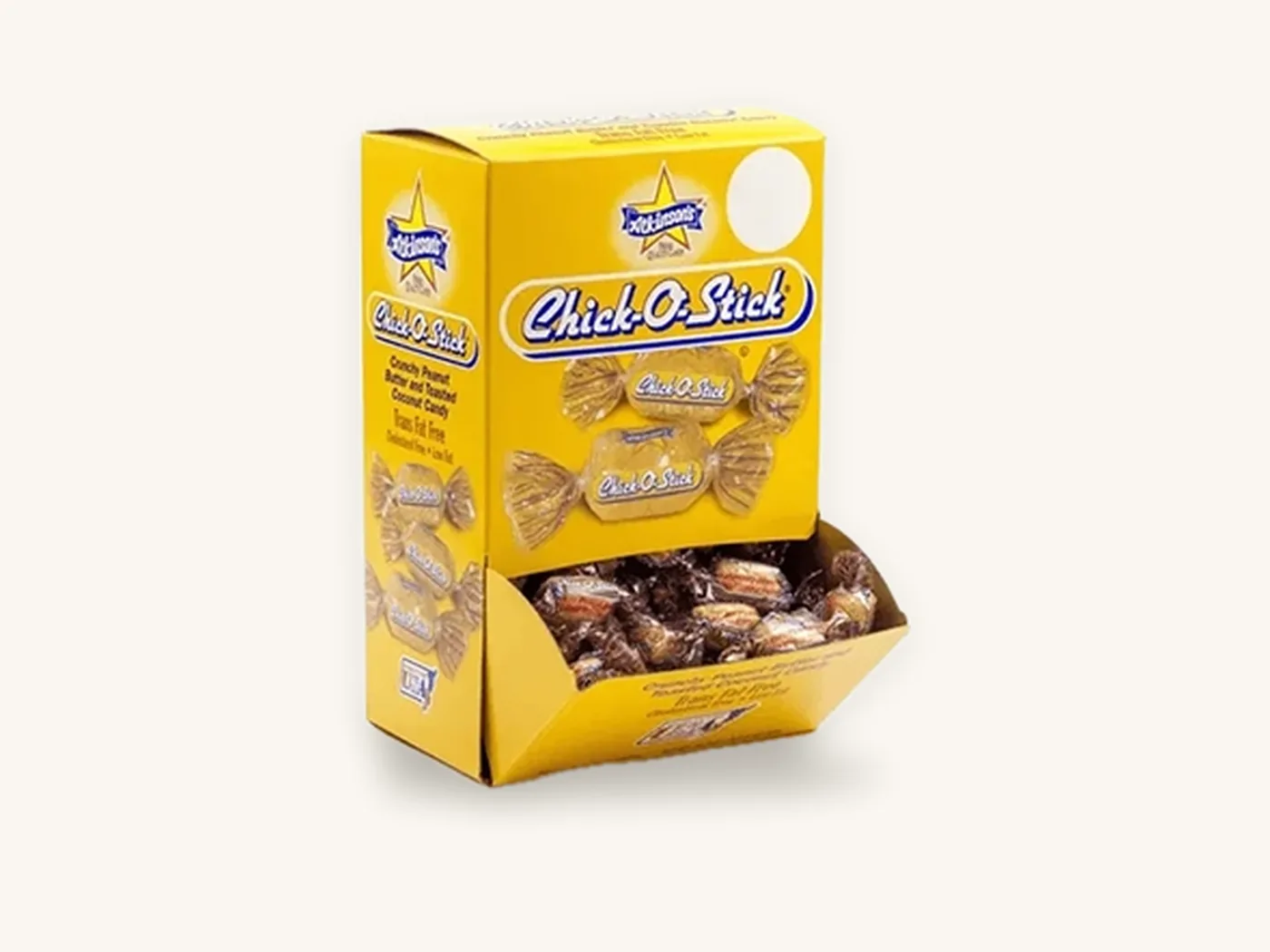
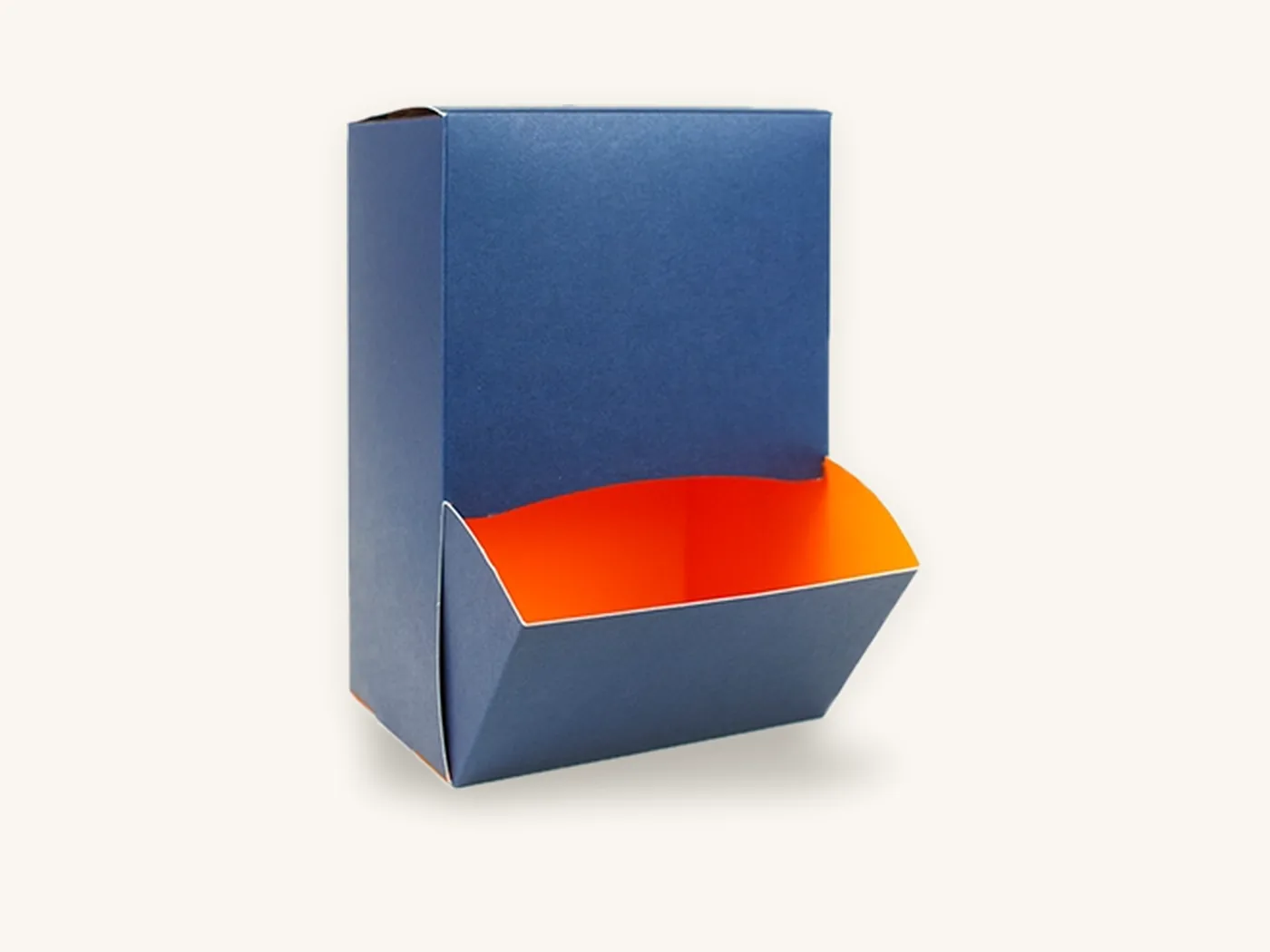
Dispenser boxes are cartons built to hand out one unit at a time. They ship closed like an ordinary box, then a perforated panel tears away, a slot opens or a front flap folds back so shoppers or staff can pull single items straight from the carton. They are the workhorse of counter sales for gum, lip balm, sachets, tea bags, gloves, single-serve snacks and anything sold loose at the register.
The good ones do three jobs with one piece of board: protect a case of product in transit, turn into a branded mini-display in seconds, and keep dispensing cleanly until the last unit is gone. This guide explains the main dispenser designs, how to engineer the tear-away panel so it opens neatly, how many units to pack, what custom dispenser boxes cost and how to order them.
Key takeaways
- A dispenser box is a shipping carton and a point-of-sale display in one; the difference from a regular carton is the opening feature, usually a perforated tear-away panel, a pull-through slot or a fold-back lid.
- 18 pt to 24 pt SBS paperboard suits light single units such as lip balm or sachets; E-flute corrugated suits heavier contents, deeper trays and anything that ships in bulk to retailers.
- Design the artwork for two states: closed (shipping and backroom) and open (on the counter). Most brands only design the first.
- Pack enough units to last between restocks but not so many that the back of the tray is out of reach; 12 to 48 units covers most counter products.
- A 10x8x6 in E-flute counter display box printed full color runs about $5.08 each at 100 units and about $2.26 at 1,000, with US shipping included.
- Box Sense makes custom dispenser boxes from 10 units, with a free dieline, no die or plate charges and standard production of 8–12 business days after proof approval.
How dispenser boxes work
Every dispenser box starts life as a closed carton. The product goes in at your facility or co-packer, the box is sealed, and it travels through distribution looking like any other case. The dispensing feature only comes into play once the box reaches the store or the end user.
That opening feature is a line of weakness designed into the board. On paperboard, it is a perforation or zipper cut: a die-cut line of alternating cuts and uncut ties. On corrugated, it is usually a perforated panel plus a thumb notch to start the tear. On slot-style dispensers, it is a die-cut hole covered by a scored flap or simply left open.
Why the tie pattern matters
The ratio of cut to uncut board decides how a panel behaves. More cut and fewer ties means an easy tear, but also a panel that can pop open in a tightly stacked pallet. Fewer cuts and bigger ties give a strong transit box that shoppers may struggle to open, or that tears ragged and ugly. Dieline engineers balance this by product weight, board caliper and whether the panel carries load when the box is stacked.
The practical rule: a tear-away panel on a box that sits on the bottom of a stack of cases needs stronger ties than one on a lightweight carton shipped inside a master case.
Types of dispenser boxes compared
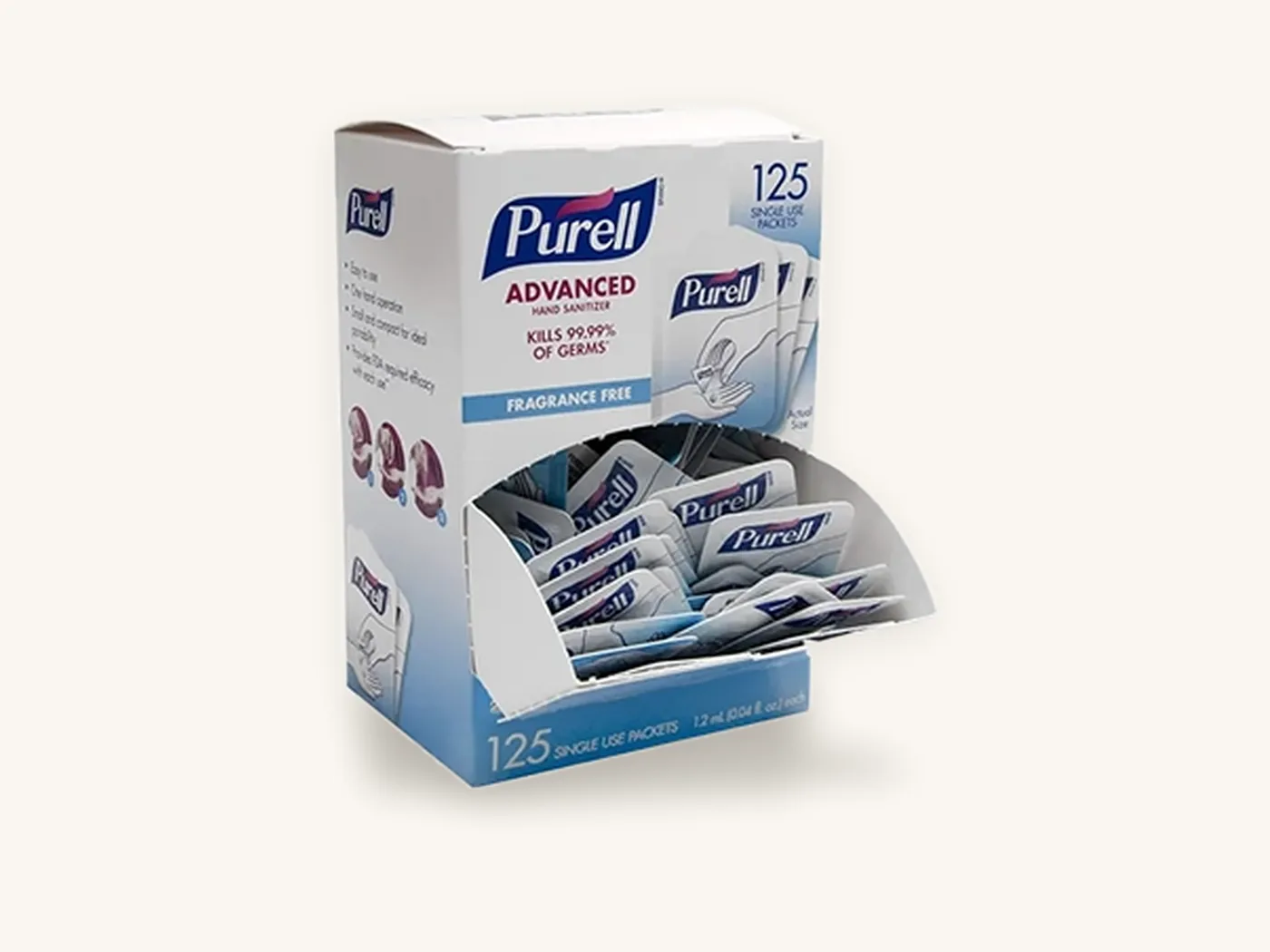
Dispensers fall into a handful of structural families. Each suits a different product shape and selling situation.
| Design | How it opens | Best for | Trade-off |
|---|---|---|---|
| Tear-away front panel | Perforated panel removed from the front and part of the top | Candy bars, lip balm, gum, single sachets | Once torn, it cannot be closed again |
| Tear-away header display | Top and front tear off, back panel stays as a raised header card | Impulse items at registers | Needs taller board and a stable base |
| Pull-through slot | Die-cut hole on top or front; items pulled one at a time | Tea bags, wipes, gloves, flat sachets | Only works for flat, flexible items |
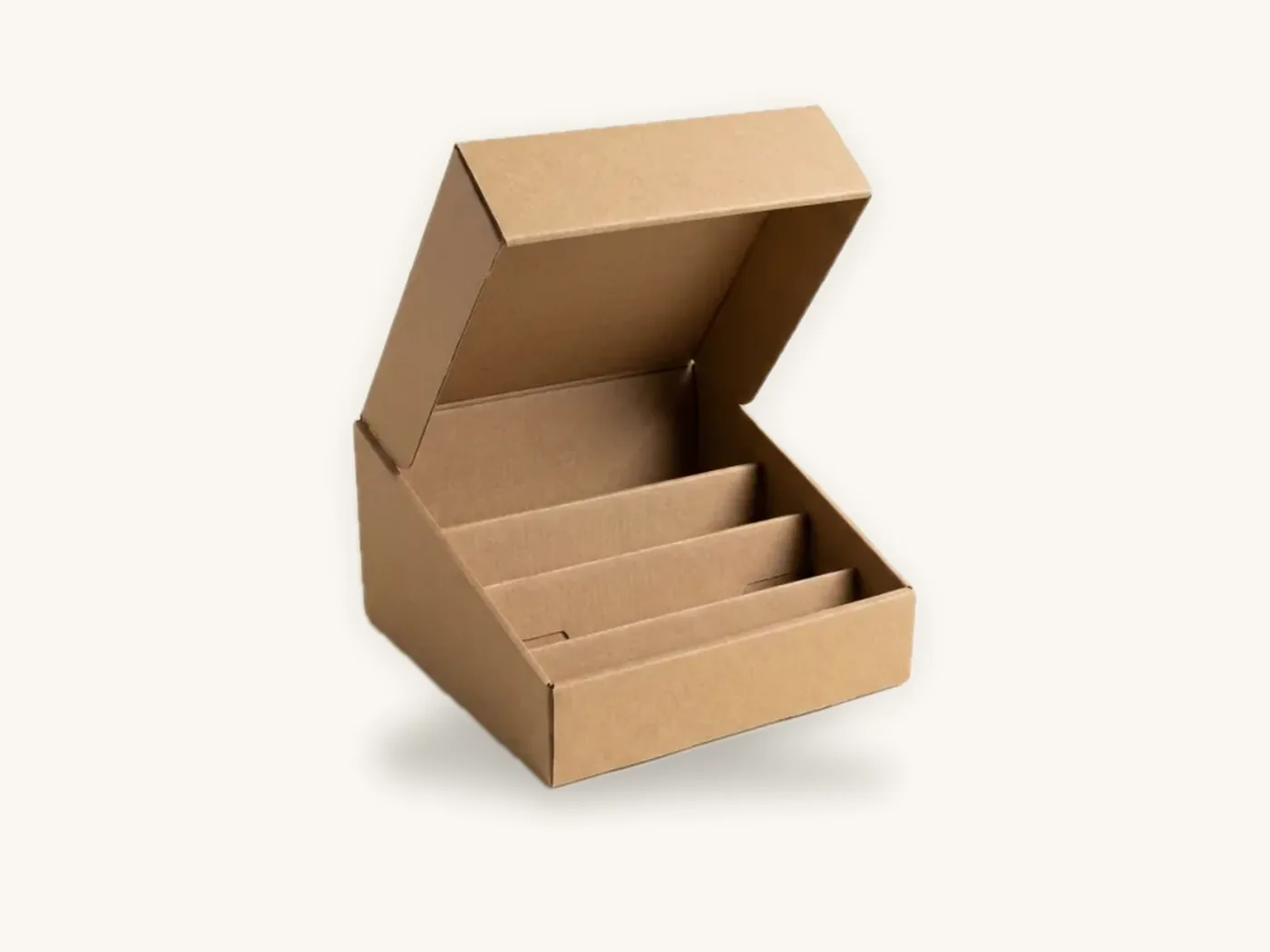
| Gravity-feed front opening | Low opening at the front; units roll or slide forward as others are removed | Cans, tubes, round containers | Needs a precise internal ramp or insert |
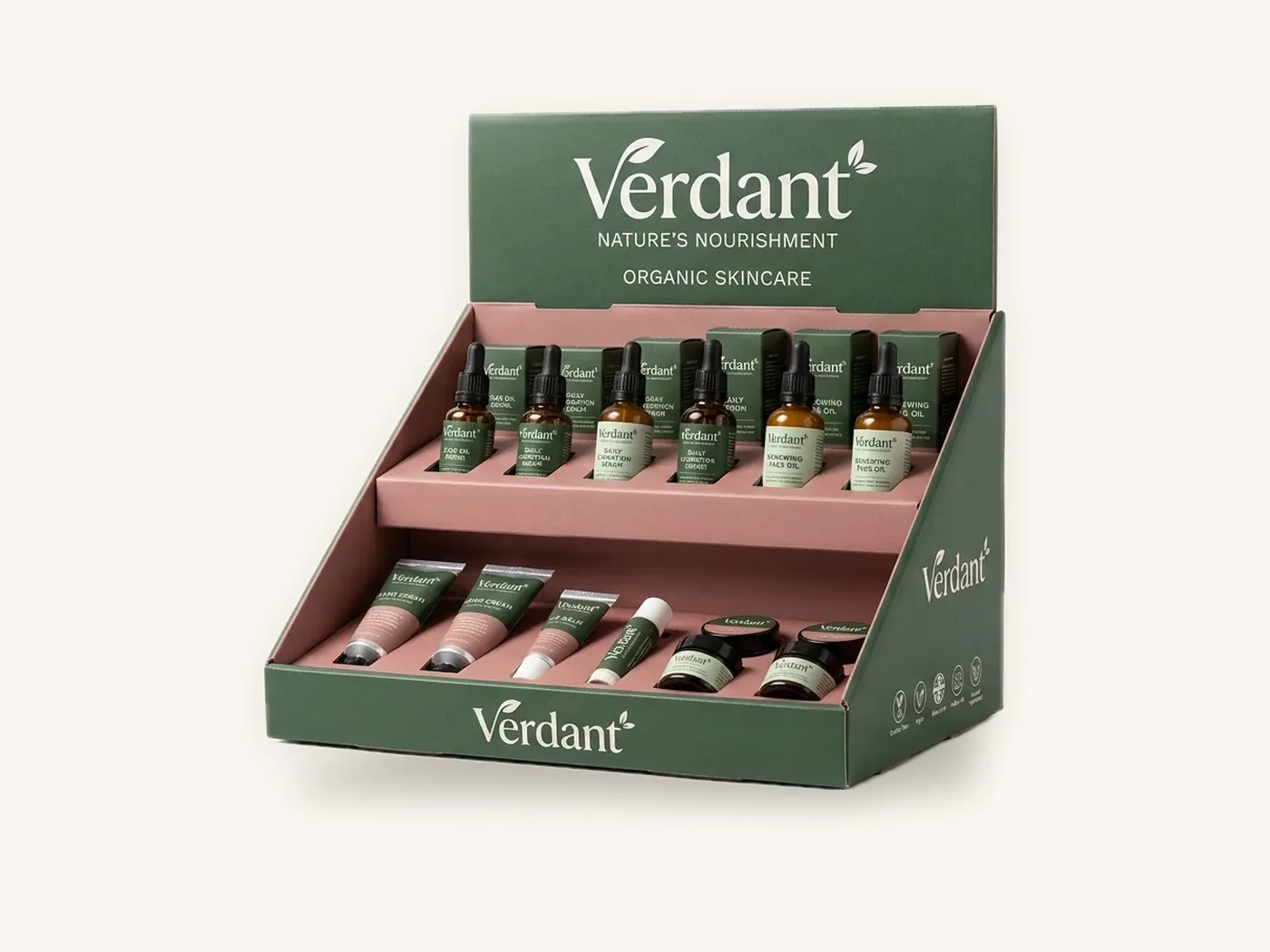
| Fold-back lid dispenser | Lid folds back and tucks behind the box to form a header | Reusable counter boxes, samples | More board, higher unit cost |
| Reclosable flip-top | Hinged lid opens and closes repeatedly | Mints, toothpicks, small tablets | Small sizes only |
Tear-away vs pull-through
Choose a tear-away display box when shoppers need to see the product and pick it up, and when the box will be emptied within days or weeks. It is the fastest transformation from shipping case to display.
Choose a pull-through slot when the product is flat and flexible, when one unit at a time should come out, and when hygiene matters. Glove boxes and tea bag dispensers use this because the remaining units stay covered.
Where counter display boxes fit
The line between a dispenser box and a counter display box is blurry. A counter display is usually an open tray with a printed header card and a larger footprint, holding anywhere from 6 to 48 units. A dispenser is typically more enclosed and relies on a tear, slot or flip to release product. Many brands order both: small dispensers for pharmacies and convenience stores, larger display trays for grocery end caps. Our display boxes guide covers open trays, risers and header cards in more depth.
Which products sell best from a dispenser box
Dispensers make sense when a product is sold as a single unit but shipped in multiples. If a shopper buys one, the retailer needs somewhere to keep the other 23.
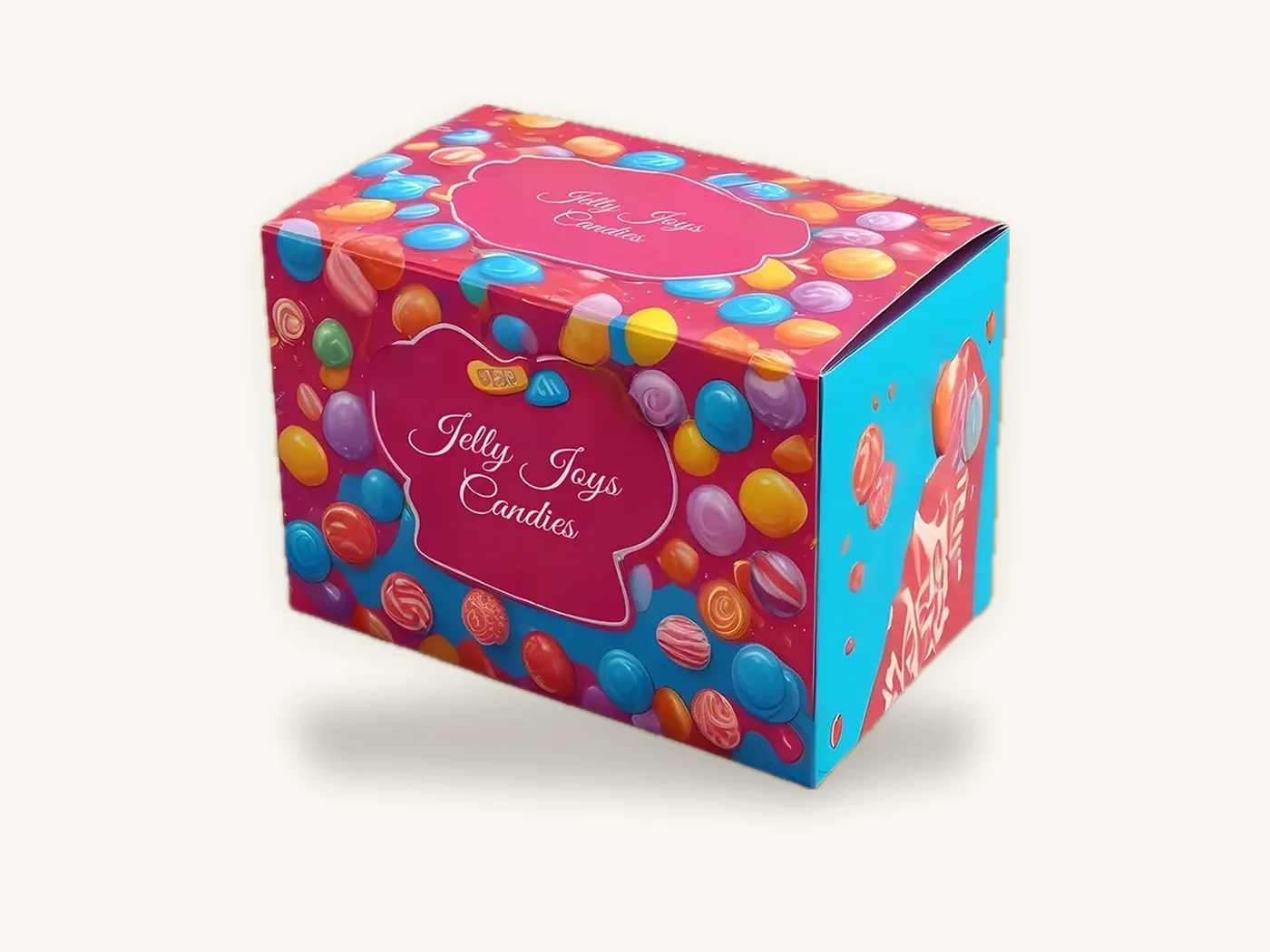
- Confectionery: chocolate bars, lollipops, gum packs and individually wrapped candies. Our candy boxes and the candy packaging guide cover retail-unit cartons for the same category.
- Health and wellness: single-dose supplement packets, electrolyte sachets, lip balm and travel-size pain relief.
- Beauty: sheet masks, nail files, sample vials and hair ties.
- Food service and office: sugar sticks, tea bags, condiment packets, stirrers and snack bars.
- Household and personal care: disposable gloves, wipes, cotton pads and dental floss picks.
- Hardware and automotive: small fasteners, fuses, zip ties and single-use repair kits.
When a dispenser is the wrong choice
If the product is expensive enough to be a theft risk, a tear-away box on an open counter may not suit the retailer; locked cases or peg hooks with hang tab boxes are safer. If each unit needs its own regulatory panel because it is sold separately, the single unit still needs its own labeling regardless of what the dispenser says.
Engineering a tear-away panel that opens cleanly
The opening moment is where dispensers succeed or fail. A torn panel with ragged edges, a flap that will not release, or a front that rips into the side wall makes the product look damaged before anyone buys it.
Rules of thumb for the dieline
- Keep the perforation off load-bearing edges. Corners and vertical edges carry stacking weight. Start the tear line at least 1/4 in in from a vertical corner so the side walls stay intact.
- Add a thumb notch or finger tab. A half-moon cut or a "push here" tab gives the tear a starting point. Without it, people pry at the edge and crush the panel.
- Match tie size to board. Thicker board needs smaller ties to tear; lighter board needs larger ties to hold. Your dieline supplier should adjust this, not you.
- Leave a lip at the bottom. A front wall of roughly 1 to 2 in stops units sliding out once the panel is gone. Taller products need a taller lip.
- Consider the top panel. Removing part of the top as well as the front makes it easier to reach in. Removing the whole top weakens the box.
- Test with filled boxes. An empty sample always tears easily. Load it with real product, stack a few cases on it for a day, then test the tear.
Print across the perforation carefully
Artwork that crosses the tear line gets split when the panel comes off. That is fine for background color, but avoid running logos, barcodes or key claims across the perforation. Put the most important on-shelf message on the part of the box that remains: the inside back wall, the header or the lower front lip.
Tip: print the inside back wall of the box. Once the front is torn away, that panel becomes the billboard behind the product, and on most dispensers it is left blank. A logo and a one-line product message there costs little and turns a plain tray into a branded display.
Sizing and capacity: how many units per dispenser
Capacity is a merchandising decision first and a packaging decision second. Work backward from how the product sells.
Start with the counter, not the product
Register counters are cramped. A dispenser that is too wide will be pushed aside or put under the counter. Small convenience-store dispensers typically keep a footprint of a few inches either way; pharmacy and grocery counters tolerate larger trays. Ask your retail buyers what space they will actually give you before settling on dimensions.
Then size for a sensible sell-through
A box that empties in a day means constant restocking. A box that lasts months looks picked-over and dusty. For fast impulse items, many brands aim for a carton that lasts roughly one to two weeks at a typical store.
| Product type | Typical units per dispenser | Common orientation | Board suggestion |
|---|---|---|---|
| Lip balm tubes | 12–24 | Standing upright in rows | 18 pt SBS, optional insert |
| Candy bars | 12–36 | Stacked flat or standing on edge | 18–24 pt SBS or E-flute |
| Single sachets or stick packs | 24–100 | Standing on edge | 18 pt SBS or kraft |
| Tea bags or wipes | 20–100 | Flat stack, pull-through slot | 18–24 pt SBS |
| Snack bars | 12–24 | Standing on edge | E-flute for weight |
| Small hardware items | 25–100 | Loose in tray or dividers | E-flute with dividers |
Measuring for a dispenser
Arrange the real units the way they will sit, squared up, and measure the block. Add a small clearance in length and width, roughly 1/8 in for rigid packs and a little less for soft packs, so the units drop in and slide out without jamming. For tear-away designs, check that the front lip does not hide the product name on the individual units.
Choosing the board and finish
Board is decided by the weight of the full box, how it ships and how long it will sit on a counter.
SBS paperboard
SBS paperboard gives the brightest, sharpest print and the cleanest tear. At 18 pt it handles light contents like balms, sachets and small candy; 24 pt adds stiffness for taller boxes and fuller loads. SBS dispensers usually ship inside a corrugated master case, so the dispenser itself does not need to survive parcel handling.
Kraft paperboard
Kraft paperboard suits natural, organic or minimal brands. It hides scuffs from handling and looks honest on a farm-stand or co-op counter. Full-color print looks muted on brown board, so plan for one or two strong colors or white ink.
E-flute corrugated
E-flute is the step up when a full dispenser is heavy, when the box will be shipped on its own, or when it carries a tall header card. It prints well enough for full-color artwork and resists being crushed by staff restocking shelves. The folding cartons page explains where paperboard stops and corrugated begins.
Finishes for a counter environment
Counter boxes get handled by staff and customers all day. Aqueous coating is the sensible baseline for scuff resistance while keeping the box recyclable. Gloss lamination makes candy and snack colors look saturated. Spot UV can pick out a logo. Avoid heavy soft-touch films on boxes that will be torn, because lamination can make perforations tear less cleanly; if you want a laminated finish, mention the tear feature so the dieline allows for it.
What custom dispenser boxes cost
Dispenser pricing follows the same drivers as any printed carton: board grade and caliper, the flat size of the blank, how much is printed, finishes and quantity. The tear feature itself is part of the die, and there are no die charges at Box Sense, so a perforation does not add setup cost on its own.
The sheet below shows indicative per-unit prices for specs close to common dispenser formats, with free US shipping included. Enter your exact size in the instant price estimator.
| Spec | 10 | 100 | 250 | 500 | 1,000 | 5,000 |
|---|---|---|---|---|---|---|
| Counter display box, E-flute, 10x8x6 in, full color | $7.68 | $5.08 | $3.61 | $2.71 | $2.26 | $1.60 |
| Straight tuck end carton, 18 pt SBS, 3x2x5 in, full color outside, aqueous | $1.73 | $1.15 | $0.82 | $0.61 | $0.51 | $0.36 |
| Kraft tuck carton, 18 pt kraft, 4x3x2 in, 1-color print | $1.22 | $0.81 | $0.57 | $0.43 | $0.36 | $0.25 |
A small paperboard dispenser for balms or sachets will usually price near the tuck carton rows, while a larger corrugated tray with a header will sit closer to the counter display row.
Cost levers that matter for dispensers
- Print the outside and the inside back wall only. The side walls and inner floor are rarely seen.
- Skip inserts where possible. A well-sized box often holds units upright without dividers.
- Use one structure across flavors. Same dieline, different artwork, lets you run several SKUs in one order and hit a better quantity tier.
- Specify optional finishes deliberately. Spot UV adds one-time tooling of about $40 and foil about $60; aqueous coating adds none.
Getting dispensers to the store intact
A dispenser that arrives crushed or already half-torn is wasted. Plan the outbound pack as part of the design.
Master cases and pallets
Paperboard dispensers should travel in a corrugated master case sized snugly around a set number of dispensers, often 6 or 12. That case protects the perforations and makes it easy for a distributor to break cases for individual stores. Our custom shipping boxes guide explains how to size and grade those outer cartons, and the shipping boxes page lists common structures.
If your brand sells direct-to-consumer as well, a bulk dispenser can double as a gift or office pack. In that case it usually ships inside a printed mailer; the custom mailer boxes guide covers those.
Labeling the individual units
When a retailer sells single units from a dispenser, each unit is what the shopper buys, so it generally needs its own required labeling. For food, the FDA sets rules for items like the statement of identity, net quantity and ingredient list on retail packages. Review current guidance from the US Food and Drug Administration or ask counsel about how those rules apply to your single-serve units and the outer dispenser. Barcodes should be on each unit if each unit scans at the register.
Watch out: retailers often have their own display rules on maximum footprint, header height and how dispensers must be packed in cases. Ask for the retailer's vendor guide before finalizing dimensions; changing a die after approval means a new proof cycle.
How to order custom dispenser boxes from Box Sense
Dispensers are simple to quote once the product and the selling situation are clear. Send what you have and our structural team will fill gaps.
What to include in your request
- The individual unit: dimensions, weight and a photo if the shape is irregular
- Units per dispenser and how they should sit (upright, flat, on edge)
- Opening style: tear-away front, tear-away header, pull-through slot, flip-top or "recommend one"
- Where it will be sold, and any counter footprint or retailer rules
- Board preference (SBS, kraft, E-flute) or a note to advise
- Print areas: outside, inside back wall, header
- Finishes, dividers or inserts
- Quantities to price, for example 100, 500 and 2,500, and whether several artwork versions share one structure
- Target in-hand date and ship-to address
The ordering process
- Quote in 24 hours. We confirm pricing for each quantity and variant.
- Free dieline and design support. We engineer the perforation for your board and load, set up artwork on the dieline and send a 3D digital proof showing the box closed and opened. Two revision rounds are included. See design services for what the team handles.
- Test a sample. Unprinted structural samples are free, so you can load real product, stack cases and try the tear before committing. A printed sample of approved artwork is free on orders of 100 or more; the samples page explains both.
- Production. Standard production is 8–12 business days after proof approval, and rush production in 5 business days is available on most paperboard and corrugated styles.
- Delivery. US shipping is free on every order; international shipping is quoted at cost.
The minimum order is 10 boxes. There are no die or plate charges, and defective boxes reported within 14 days are reprinted free. Browse the dispenser boxes product page for standard formats, or the retail and consumer goods page for related retail packaging.
Frequently asked questions
What is a dispenser box?
A dispenser box is a carton designed to release products one unit at a time. It ships sealed like a normal box, then opens through a perforated tear-away panel, a die-cut slot or a folding lid so shoppers or staff can take single items. Dispensers are common for candy, lip balm, sachets, tea bags, gloves and other small items sold individually at a counter.
What is a tear away display box?
A tear away display box is a dispenser with a perforated panel, usually on the front and part of the top. When the retailer removes that panel, the remaining box becomes an open display tray, sometimes with a raised back panel acting as a header card. It lets one carton serve as protective shipping packaging and a branded counter display without any assembly.
What material is best for dispenser boxes?
For light single units such as lip balm, gum or sachets, 18 pt to 24 pt SBS paperboard is the usual choice because it prints crisply and tears cleanly. Kraft paperboard suits natural brands. For heavier contents, taller header displays or boxes that ship without an outer case, E-flute corrugated gives better crush resistance while still printing full color.
How many units should a dispenser box hold?
Most counter dispensers hold between 12 and 48 units, with sachets and tea bags going higher. Base the number on counter space the retailer will give you and how quickly the product sells. A carton that lasts roughly one to two weeks keeps the display looking full without constant restocking. Always confirm that shoppers can reach the last units at the back.
How much do custom dispenser boxes cost?
Cost depends on size, board, print coverage, finishes and quantity. As a reference, a 10x8x6 in E-flute counter display box printed full color is about $5.08 per box at 100 units and about $2.26 at 1,000, while a small 18 pt SBS tuck carton is about $1.15 at 100. Box Sense has no die charges, so a perforation adds no setup fee.
Can a dispenser box be shipped directly to customers?
Paperboard dispensers usually need an outer shipping carton or mailer for parcel delivery, because the perforations are designed to tear. E-flute dispensers with stronger perforation ties can travel on their own in some cases, but a snug master case is safer. Test a filled, sealed sample through your carrier before committing to shipping dispensers without outer protection.
How long does it take to make custom dispenser boxes?
Box Sense confirms quotes within 24 hours. After you approve the 3D digital proof, standard production takes 8–12 business days, and rush production in 5 business days is available on most paperboard and corrugated styles. Allow a few extra days if you want to test a physical structural sample of the tear-away panel with your product first.
Next steps
Measure one unit of your product, decide how many belong in each dispenser, and note where it will sell. Then check your numbers in the dispenser box price estimator and request a custom dispenser box quote. We will confirm pricing within 24 hours and engineer the tear-away or slot feature around your product. If your range also includes rigid gift sets, the collapsible rigid boxes guide is a useful next read.
Boxes in this guide
Order the packaging we covered
Written by the Box Sense Packaging Team
Our structural designers, prepress technicians and production staff print and convert custom boxes every day for brands in the United States, United Kingdom and UAE. Questions about this guide? Talk to us.