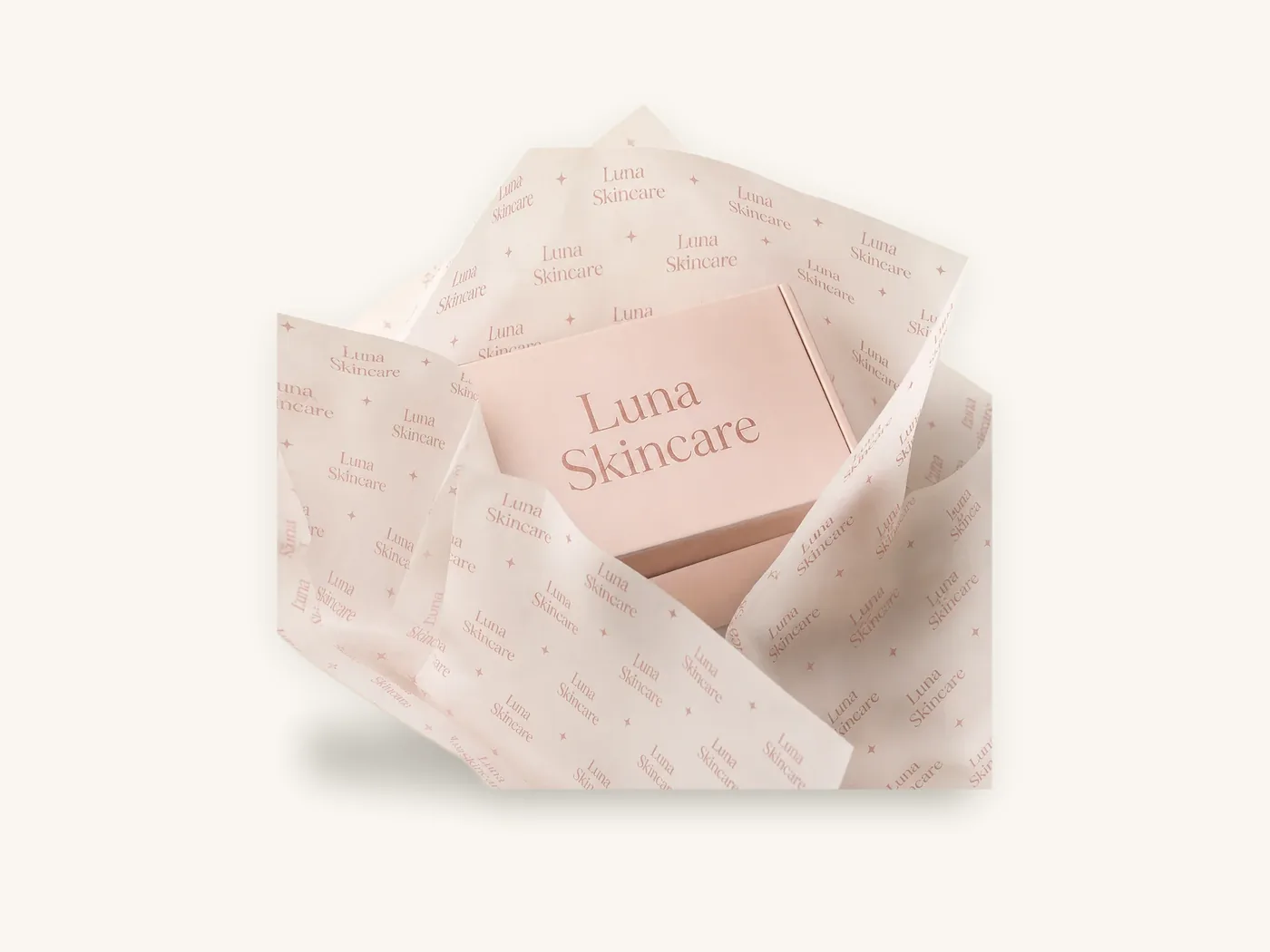
Custom tissue paper is thin, lightweight wrapping paper printed with your logo or pattern, used to wrap products inside a mailer, shopping bag or gift box. It costs little per order, adds a reveal layer between opening the box and seeing the product, and takes up small gaps that would otherwise let items shift.
Good branded tissue paper comes down to a handful of practical choices: a paper weight and color, a design built for how thin paper actually prints, a sheet size that matches your boxes, and a wrapping method your packing team can repeat hundreds of times a day. This guide covers each one, including the math for how many sheets to order.
Key takeaways
- Tissue is typically around 17 to 30 gsm, far lighter than any box board. Lighter sheets are softer and more translucent; heavier sheets feel more substantial and hide contents better.
- All-over repeating patterns print more consistently on tissue than a single, precisely placed logo, and they still look intentional after folding.
- Printed tissue paper is usually produced in one or two colors. Keep solid ink coverage moderate to limit show-through and rub-off.
- Choose sheet size from the box: a sheet should cover the base and fold over the product with a small overlap.
- Seal the fold with a branded sticker so the wrap looks finished and stays closed in transit.
- Box Sense prints custom tissue on white, kraft or colored stock, with free design support and standard production of 8–12 business days after proof approval.
What custom tissue paper does in the unboxing
Tissue sits between the box and the product, so it shapes the moment between opening and seeing. Understanding its jobs helps you decide how much to invest in it.
Four jobs a sheet of tissue does
- Creates a reveal. A folded, sealed wrap gives the customer something to open, which turns a quick unpacking into a short sequence.
- Keeps the product clean. Tissue shields garments and gifts from dust, scuffs from the box interior and fingerprints during packing.
- Fills small gaps. A loosely folded sheet stops soft goods from sliding in a box that is slightly larger than the product.
- Carries the brand inside. Even a plain box can feel branded when the first thing inside is a printed pattern.
Tissue does not replace protective packaging. It will not cushion glass or electronics. For fragile goods, use a fitted insert and put tissue on top as the presentation layer.
Where tissue earns its cost
Tissue matters most when the product is soft, folded or visually understated, such as apparel, textiles, accessories and gift sets. Apparel brands in particular use it as their main interior branding, because a folded garment in a bare box looks unfinished. Our apparel and fashion packaging page shows how tissue, boxes and tags work together for clothing brands.
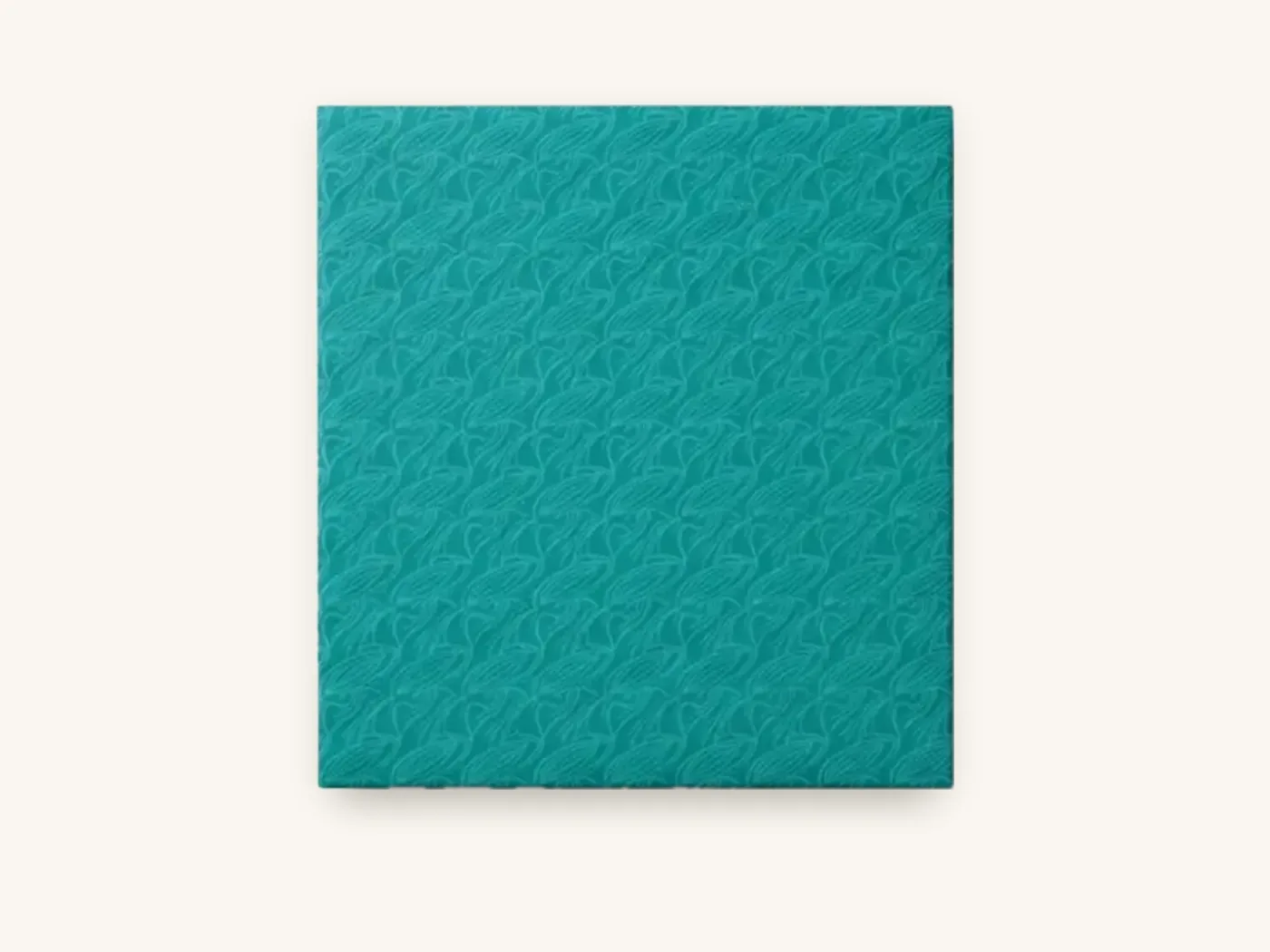
Paper weight, color and stock
Tissue paper is specified by weight in grams per square meter (gsm). Standard gift tissue sits at the light end of the range; premium branded tissue is often a little heavier so it feels more substantial and hides what is underneath.
Choosing a weight
| Weight (approx.) | Feel | Opacity | Best for |
|---|---|---|---|
| Around 17 gsm | Soft, crinkly, very light | Translucent | Everyday wrapping, gift bags, high-volume fulfillment |
| Around 20 to 24 gsm | Smoother, slightly more body | Moderate | Branded apparel wrap, boutique shopping bags |
| Around 28 to 30 gsm | Substantial, less crinkle | Higher | Premium gifts, luxury retail, designs with more ink coverage |
Heavier tissue is not automatically better. It folds less crisply around small items and costs more per sheet. For most e-commerce apparel, a mid-weight sheet balances hand feel and cost.
Many tissue grades are machine glazed (MG), which means one side is smoother and slightly shiny. Printing goes on the smooth side, and that side should face outward when wrapping.
Paper color and how ink looks on it
| Stock | How printed ink appears | Suits |
|---|---|---|
| White | Truest color, highest contrast | Most brands, colorful logos, pastel palettes |
| Kraft (natural brown) | Darker, muted colors; black and deep tones read best | Eco, rustic and minimal brands |
| Black or dark colors | Only light or metallic-look inks show clearly | Luxury, streetwear, bold contrast designs |
| Pastel or brand colors | Ink shifts toward the paper color | Brands with a signature color |
On colored tissue, remember the paper color and ink color mix visually. A light blue logo on pink tissue will look lavender-gray. Ask for a digital proof on the actual paper color, and consider a single dark ink or white-looking knockout effect instead.
Watch out: colored tissue can bleed dye if it gets wet, and heavy ink coverage on very thin paper can rub off onto light fabrics under pressure and humidity. If you wrap white or pale garments, test a printed sample with a damp cloth and a light fabric before approving a full run.
Designing printed tissue paper that prints well
Tissue is thin, absorbent and slightly stretchy, which makes it very different from printing a box. Designs that look crisp on screen can blur, fill in or misregister on tissue. Work with the material, not against it.
Pattern types compared
| Design approach | How it looks after folding | Print consistency | Notes |
|---|---|---|---|
| All-over logo repeat | Logo visible on every fold | High | The most common and forgiving choice |
| Scattered icons or monogram | Relaxed, playful | High | Works well with one color |
| Stripes or geometric pattern | Strong graphic look | Moderate | Straight lines show any stretch or skew |
| Single centered logo | Can be hidden by folds | Lower | Requires precise folding to show off |
| Large solid flood with knockout logo | Bold | Lower | Heavy ink increases show-through and rub-off risk |
Design rules for thin paper
- Use a repeat. A seamless pattern hides the exact position of each sheet on press and looks right however the sheet is folded.
- Keep lines and type chunky. Very fine lines and small type spread into the fibers and fill in. Bold logos and simple icons print cleanly.
- Keep coverage moderate. Leave generous open paper between repeats. Around a third of the sheet covered is a sensible ceiling for most designs.
- Allow loose registration. In two-color designs, avoid elements that must align exactly, such as a thin outline around a filled shape.
- Specify brand colors with PMS numbers, and expect some shift because tissue absorbs ink differently from coated board.
- Mind the scale. A logo repeat around 2 to 4 in across usually reads well on a folded wrap; much larger and folds cut the logo apart.
One color or two
A one-color print is the most economical and often the most elegant, especially on kraft or colored stock. Two colors let you add a secondary icon or tagline. If you want more than two colors or photographic detail, tissue is the wrong substrate; put that artwork on a printed insert card or inside the box lid instead.
Sheet sizes and how many sheets per order
Sheet size should come from your packaging, not from what looks standard. A sheet that is too small leaves the product uncovered; too large and packers waste time folding excess paper.
A simple sizing formula
For the common "lay in the box and fold over" wrap, the sheet needs to cover the base and both side walls, then fold over the product from both sides with an overlap.
- Sheet length ≥ 2 x box width + 2 x box depth + about 2 in overlap
- Sheet width ≥ box length + 2 x box depth
For a 10 x 8 x 4 in mailer: length is 2 x 8 + 2 x 4 + 2 = 26 in, and width is 10 + 2 x 4 = 18 in. A 20 x 30 in sheet covers it with a little to spare.
Starting points by box size
| Box (internal) | Suggested sheet | Sheets per order | Wrap style |
|---|---|---|---|
| About 4 x 4 x 2 in (jewelry, accessories) | Quarter sheet, about 10 x 15 in | 1 | Loose fold or pouch wrap |
| About 8 x 6 x 3 in (small mailer) | Half sheet, about 15 x 20 in | 1 | Envelope fold |
| About 10 x 8 x 4 in (folded tee) | Full sheet, about 20 x 30 in | 1 | Envelope fold with sticker |
| About 12 x 9 x 4 in (subscription kit) | Full sheet, about 20 x 30 in | 1 to 2 | Line the box, fold over contents |
| About 14 x 10 x 4 in (apparel box) | Full sheet, about 20 x 30 in | 2 | Crisscross, two overlapping sheets |
| Shoe box size | Full sheet, about 20 x 30 in | 2 | Two sheets, ends tucked |
How many sheets to order
- Count monthly orders that get tissue, split by box size.
- Multiply by sheets per order from your wrap style.
- Add a spoilage allowance of roughly 5 to 10 percent for torn sheets and rewraps.
- Multiply by months of supply you want on hand, usually two to four months for a design you plan to keep.
- Check storage space. Tissue is light but bulky in cartons, so confirm you have dry shelf space for the quantity.
Say you ship 1,200 apparel orders a month in a 10 x 8 x 4 in mailer, one sheet each. With a 10 percent allowance, that is 1,320 sheets a month, or about 3,960 sheets for three months.
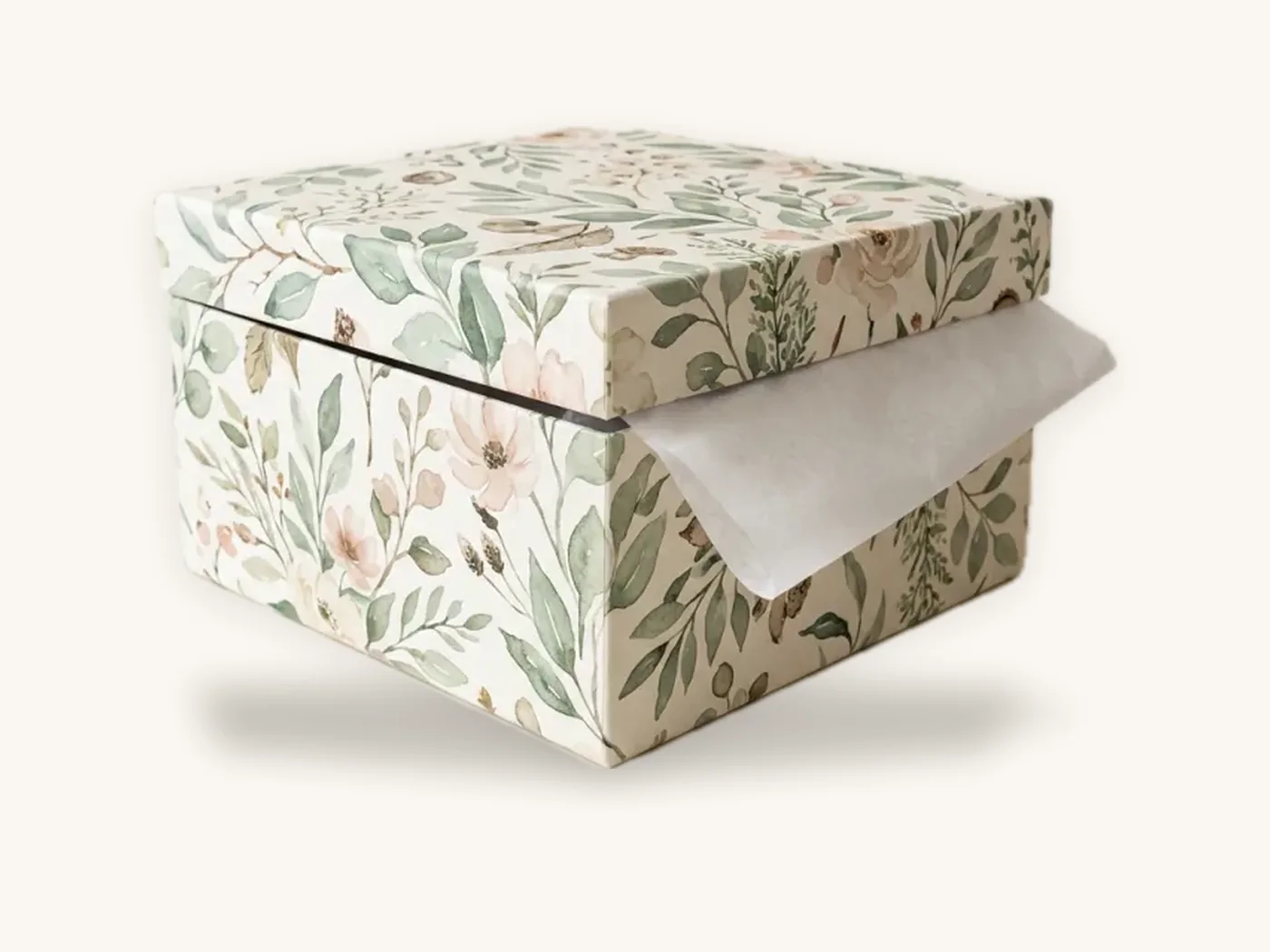
Wrapping methods your packing team can repeat
A beautiful tissue design looks cheap if every order is wrapped differently. Pick one method per product type, photograph it, and put the photo at the packing station.
The envelope fold for folded apparel
- Lay the sheet in the box, printed side down, centered so equal amounts hang over the two long sides.
- Place the folded garment in the center, with its best face up.
- Fold one long side of the tissue over the garment.
- Fold the other long side over the first, overlapping by an inch or two, with the printed side now facing up.
- Tuck the short ends under the garment or fold them neatly toward the center.
- Seal the overlap with a branded sticker, centered where the customer's eye lands when opening the lid.
Other reliable methods
- Crisscross wrap: two sheets laid in an X for larger or bulkier items, folded in alternating layers.
- Gathered pouch: for small, irregular gifts, gather the tissue up around the item and close with a sticker or ribbon.
- Box lining with a loose top fold: line a subscription box and fold the tissue loosely over several items, so the contents are revealed together.
- Shopping bag plume: tuck the center of a sheet into the bag and let the corners rise above the opening, for in-store retail.
Tip: place the seal sticker so its edge does not sit on the garment itself. A sticker pressed onto delicate fabric can leave residue or pull threads when removed; seal tissue to tissue instead. The custom labels and stickers guide covers adhesive choices for seals.
Building tissue into the whole unboxing
Tissue works best as one layer in a planned sequence: outer box, inside print or message, tissue wrap and seal, product, and a card or tag. Each layer should add something the others do not.
Pairing tissue with boxes
A custom mailer box with a printed inside lid and printed tissue can feel repetitive if both carry the same large logo. Use a bold logo on one and a quieter pattern on the other. The custom mailer boxes guide covers inside printing options.
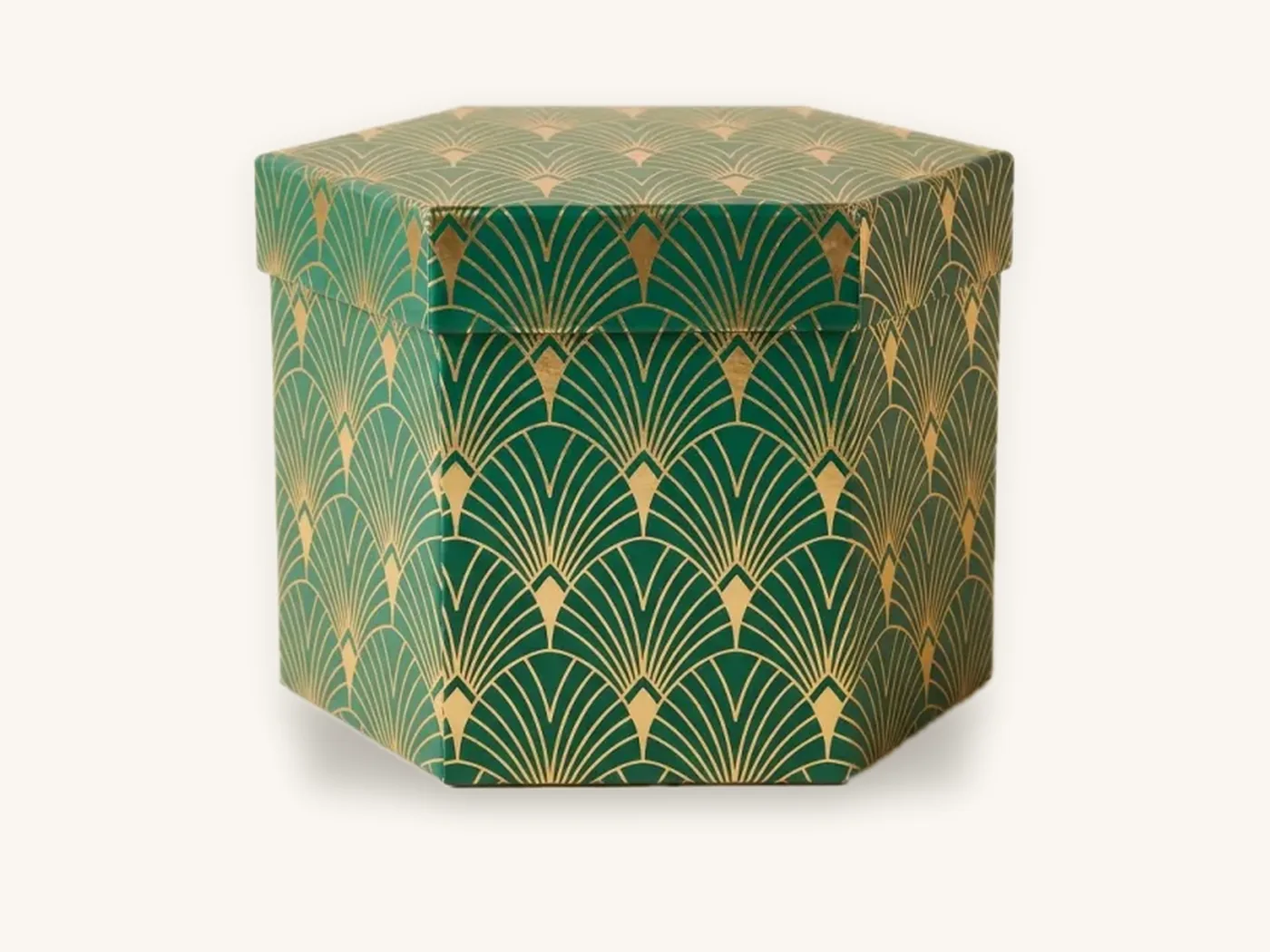
For retail and gifting, apparel boxes and lift-off lid styles covered in the two-piece boxes guide give tissue a clean, flat surface to fold over. Shaped gift packaging, such as the options in our hexagon boxes guide, suits the gathered-pouch method, since square folds do not fit a six-sided cavity.
Adding a tag or card
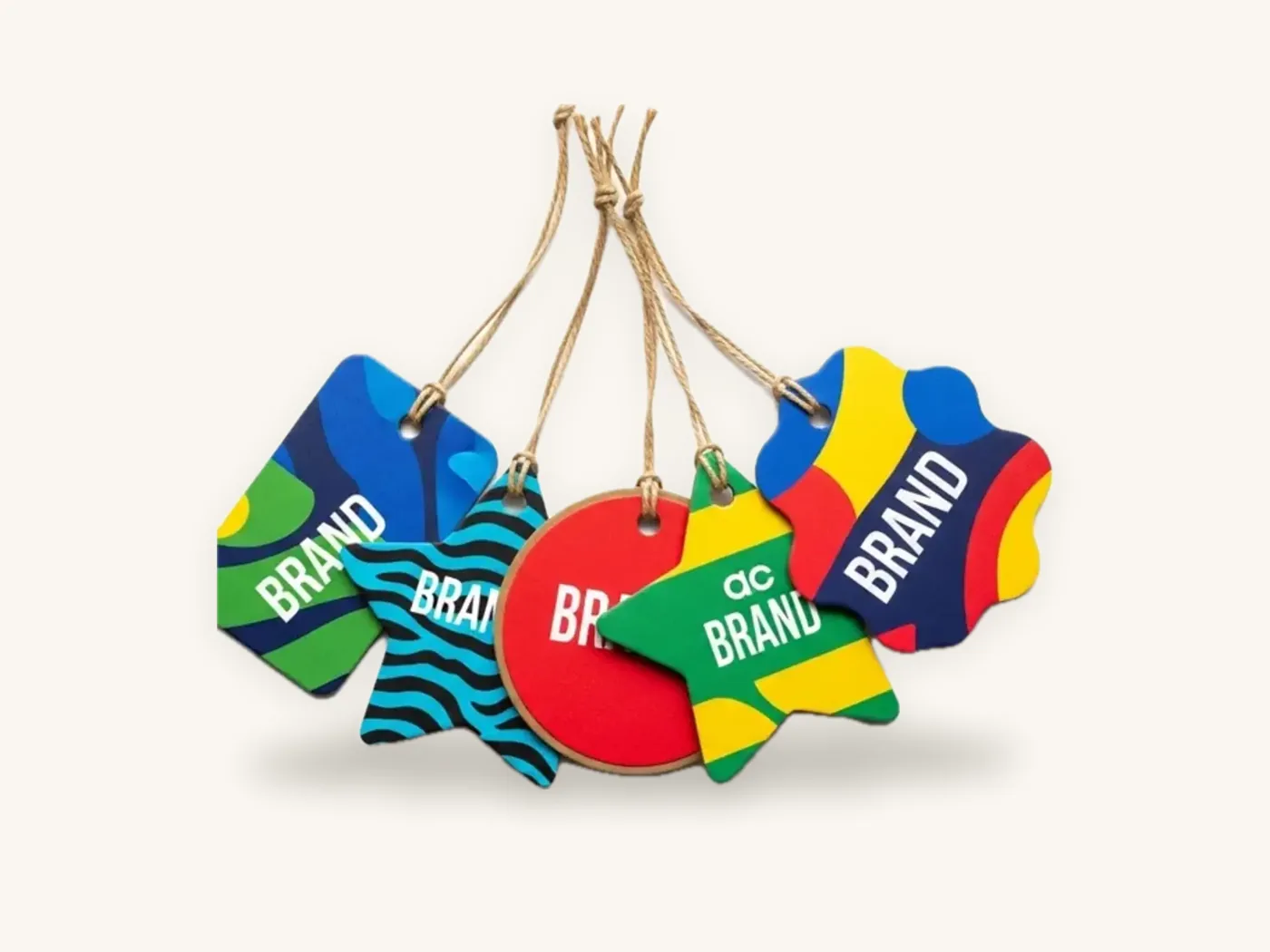
A small tag tied into ribbon or tucked under the seal sticker gives care information or a thank-you message without printing it on the tissue. Our custom hang tags guide covers stocks and strings, and the unboxing experience ideas post covers inserts and message cards.
Handling, storage and product safety
Tissue is delicate before it reaches the packing table. A little care in storage avoids wasted sheets.
Storage
Store cartons flat, off the floor, in a dry area away from direct sun. Humidity softens tissue and makes sheets cling together, while sunlight fades colored stock. Keep open packs covered so dust does not settle on the top sheets.
Product considerations
- Delicate metals and archival textiles: ordinary tissue can contain acids that affect silver and fine fabrics over long periods. If products are stored wrapped for months, ask for acid-free tissue.
- Food: standard printed tissue is not intended for direct contact with unwrapped food. For baked goods and chocolates, wrap food in a food-contact grade liner first and use tissue as an outer decorative layer. Confirm food contact requirements with the FDA or your food safety advisor.
- Moisture-sensitive items: tissue absorbs moisture; it is not a barrier. Use a sealed bag or pouch for products that must stay dry.
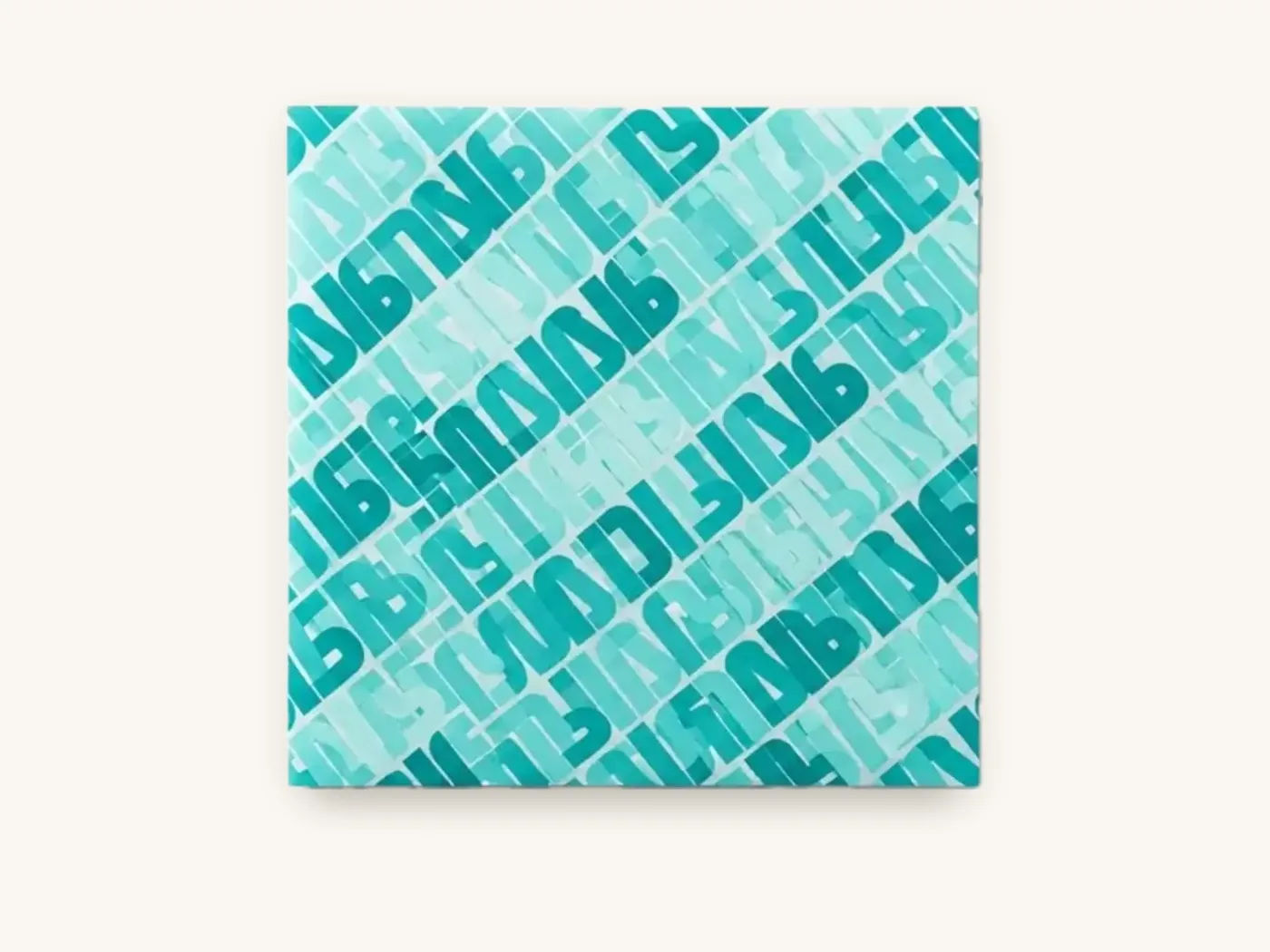
Sustainability and branded tissue paper
Tissue is a paper product made from wood fiber, so it is generally recyclable or compostable where local programs accept it. Very small fibers and heavy inks can make tissue less valuable to recyclers, which is one reason moderate ink coverage is a good habit.
Box Sense offers soy and water-based inks and FSC-certified materials across its range; ask which options apply to your tissue specification when you request a quote. If you print claims such as "recyclable" or "compostable" on the tissue or box, they must be accurate and qualified. The FTC's Green Guides explain how environmental claims should be made, so review current guidance or consult counsel before adding one. Our sustainability page covers the broader options.
What drives the cost of custom tissue paper
Tissue is inexpensive per sheet, but the total depends on specification and quantity. Use our pricing page for the boxes and mailers in your packaging program and request a confirmed quote for tissue.
| Cost driver | Why it matters | How to control it |
|---|---|---|
| Quantity | Setup is spread over more sheets | Order two to four months of supply at once |
| Number of ink colors | Each color adds press setup | One color on a colored or kraft stock often looks premium |
| Paper weight | Heavier paper uses more fiber | Use mid-weight unless opacity is essential |
| Paper color | Colored and kraft stocks may cost more than white | Choose color where it defines the brand |
| Ink coverage | Heavy floods use more ink and raise quality risk | Keep patterns open and repeating |
| Sheet size | Larger sheets use more paper | Size sheets to your boxes with the formula above |
| Packing format | Flat reams vs folded packs affect handling | Choose the format that suits your packing station |
How to order custom tissue paper from Box Sense
What to send
- The boxes or bags the tissue goes into, with internal dimensions
- Sheet size, or a request for a size recommendation
- Paper color (white, kraft or colored) and preferred weight
- Number of ink colors, with PMS references if you have them
- Your logo in vector format and any pattern idea or reference
- Monthly usage and how many months of supply you want
- Whether you also need seal stickers, tags, mailers or apparel boxes
What happens next
- Quote within 24 hours for your size, stock, colors and quantity.
- Free design support: we build the repeat pattern, set up artwork and send a digital proof, with two revision rounds included.
- Samples: ask about printed or paper samples before a large run; the samples page explains our policy.
- Production: standard production is 8–12 business days after proof approval.
- Delivery: free shipping on every US order; international shipping quoted at cost.
Ordering printed tissue paper together with seal stickers and mailers keeps colors consistent and lets everything arrive together. If you need help with the pattern, our design services team can build one from your logo.
Frequently asked questions
What is custom tissue paper made of?
Custom tissue paper is a very thin paper made from wood pulp, typically around 17 to 30 gsm, often machine glazed so one side is smoother for printing. It is printed with your logo or pattern, usually in one or two colors, on white, kraft or colored stock. Water-based and soy-based inks are commonly used for this kind of printing.
What size tissue paper do I need for my boxes?
For a standard fold-over wrap, sheet length should be at least twice the box width plus twice the depth plus about 2 in of overlap, and sheet width at least the box length plus twice the depth. A 20 x 30 in sheet covers a 10 x 8 x 4 in mailer. Smaller boxes can use half or quarter sheets.
Will printed tissue paper transfer ink onto clothing?
Well-cured prints with moderate coverage rarely cause problems in normal conditions. Risk rises with heavy solid ink areas, damp or humid storage, pressure over long periods and pale or white fabrics. Colored tissue can also bleed dye if wet. Test a printed sample against a damp light-colored fabric before approving a large run.
How many colors can be printed on tissue paper?
Printed tissue paper is usually produced in one or two ink colors. Tissue is thin and absorbent, so fine detail and photographic artwork do not reproduce well. A bold one-color repeat is the most economical option and often looks the most refined. Put multi-color or detailed artwork on an insert card or inside the box instead.
Is branded tissue paper worth it for a small business?
It is one of the lowest-cost ways to make a plain or simply printed box feel branded, since one sheet per order costs little compared with printing the box itself. It suits apparel, accessories, candles and gifts especially well. If your product needs protection rather than presentation, invest in inserts first and add tissue later.
Is custom tissue paper recyclable?
Tissue is paper, so it is generally recyclable or compostable where local programs accept it, though short fibers make it less valuable to recyclers than cardboard. Moderate ink coverage and soy or water-based inks help. Check local program acceptance, and follow the FTC Green Guides before printing any recyclability or compostability claim on the tissue or packaging.
How should I seal tissue paper inside a box?
A branded round or rectangular sticker across the overlap is the standard method. Place it tissue to tissue so the adhesive never touches the product, since stickers on delicate fabric can leave residue. For premium gifts, a ribbon or tag tied around the wrap works too. Keep the method consistent across every order.
Next steps
Measure the boxes your tissue will go in, choose a weight and paper color, and sketch a simple repeat around your logo. Then request a custom tissue paper quote with your monthly usage, and plan the mailers it goes in with the pricing estimator. We confirm quotes within 24 hours and send a pattern proof for approval.
Boxes in this guide
Order the packaging we covered
Written by the Box Sense Packaging Team
Our structural designers, prepress technicians and production staff print and convert custom boxes every day for brands in the United States, United Kingdom and UAE. Questions about this guide? Talk to us.