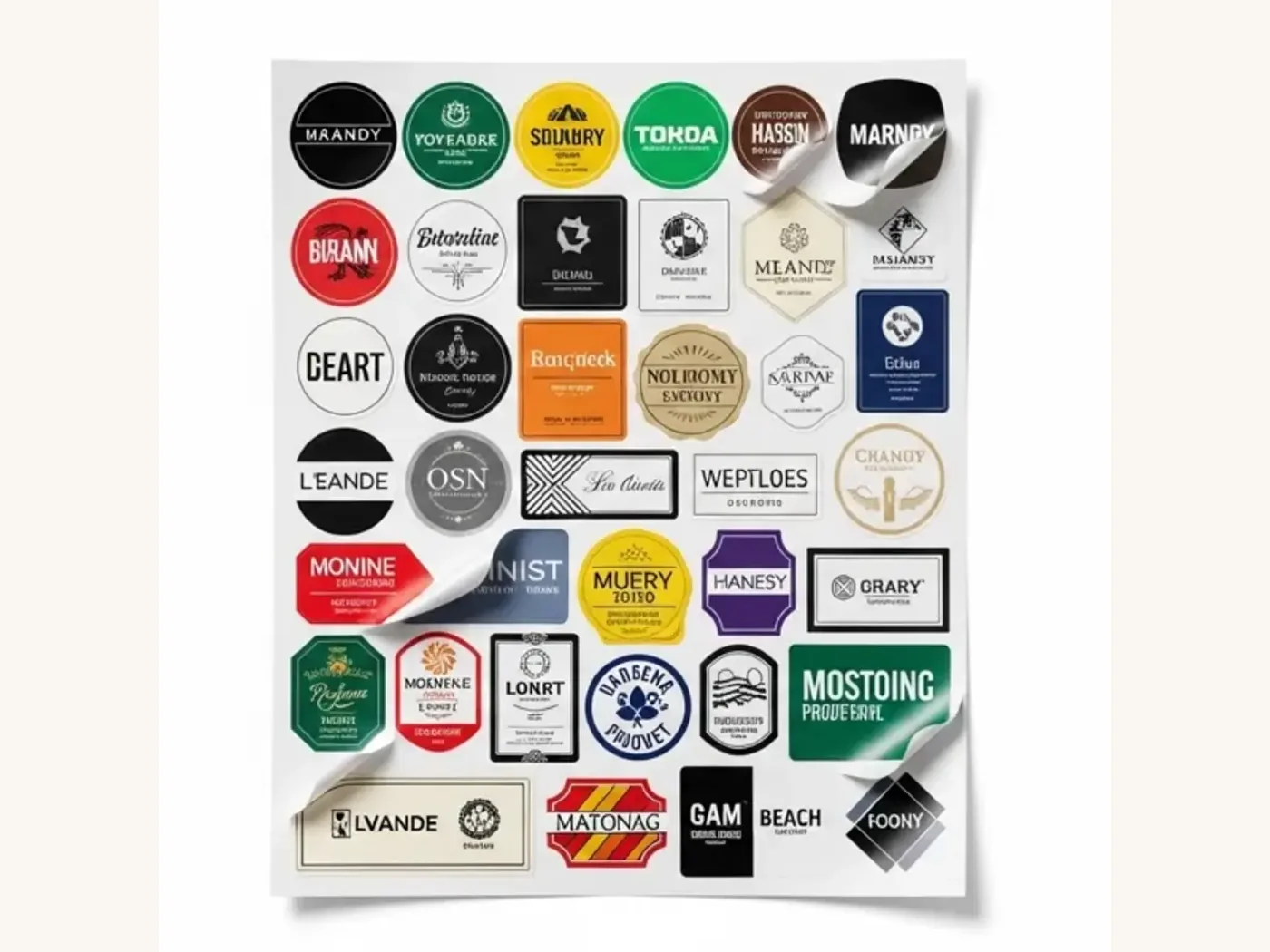
Custom product labels are pressure-sensitive printed labels, made from a face stock, an adhesive and a release liner, that you apply to jars, bottles, pouches, boxes and bags. The right label comes from matching three things to your container: a face stock that survives the conditions (paper, BOPP film or vinyl), an adhesive that grips the surface, and a size that fits the flat or curved area you actually have.
Labels fail in predictable ways. Paper labels wrinkle in a shower, corners lift on a tight bottle curve, clear labels look cloudy on a dark jar, and a label sized from the product listing turns out wider than the straight wall of the container. This guide starts with the container and its environment, then covers stocks, adhesives, formats, sizing math, finishes and what must be printed.
Key takeaways
- Choose the label by where it lives: dry shelf, fridge, freezer, shower, oily kitchen or outdoors. Paper suits dry use; BOPP film suits moisture, oil and squeeze bottles.
- The adhesive matters as much as the face stock. Permanent, removable, freezer-grade and high-tack adhesives solve different problems.
- Roll labels suit hand application at volume and machine applicators; sheet labels and die-cut stickers suit small batches, inserts and giveaways.
- Size to the usable flat area of the container, not its overall height, and use the circumference formula for wraparound labels.
- Food, cosmetic and supplement labels have federal content requirements. Confirm current FDA rules for your category before approving artwork.
- A stock box or pouch plus a custom label is one of the most flexible ways to launch several products with one packaging design.
Start with the container, not the design
Before choosing a material, answer a short list of questions about where the label will be applied and what it will go through. Every later choice follows from these answers.
Pre-order label checklist
- Surface material: glass, PET plastic, HDPE squeeze bottle, metal tin, paperboard box, kraft bag, film pouch?
- Surface texture: smooth, lightly textured, powder-coated or uncoated paper?
- Shape: flat, a single curve (cylinder), a compound curve (a tapered or rounded bottle)?
- Smallest diameter: is the curve tighter than about 1 in across? Tight curves need flexible film and a strong adhesive.
- Conditions: refrigeration, freezing, condensation, water, oils, alcohol, UV light, abrasion in shipping?
- Application: by hand, with a handheld dispenser or with a machine applicator?
- Removal: should the label peel off cleanly (a promotional sticker), or should it tear if removed (a tamper seal)?
- Content: how much mandatory text, and does it need a barcode?
Say you sell a cold-pressed body oil in a 2 oz amber glass bottle. That answer set is: glass, smooth, single curve, about 1.5 in diameter, exposed to oil and bathroom humidity, applied by hand. It points straight to a white or clear BOPP label with a permanent adhesive and a laminate or varnish, not a paper label.
Label face stocks compared
The face stock is the printed layer. The labels and stickers style page shows the range we produce; this table compares the most common materials.
| Face stock | Water and oil resistance | Look and feel | Best for | Avoid for |
|---|---|---|---|---|
| Semi-gloss coated paper | Low | Bright, smooth, economical | Dry goods, boxes, bags, shipping labels | Anything wet, oily or refrigerated |
| Uncoated or matte paper | Low | Soft, writable with pen | Handmade goods, date labels, candle bases | Bathrooms, kitchens |
| Kraft paper | Low | Natural brown, rustic | Coffee bags, bakery boxes, eco brands | Condensation, squeeze bottles |
| Textured or estate paper | Low to moderate | Premium felt texture | Wine, spirits, candles, gifts | Ice buckets unless wet-strength grade |
| White BOPP film | High | Smooth, bright, durable | Beauty, bath, sauces, supplements, beverages | Very rough surfaces |
| Clear BOPP film | High | "No-label" look | Glass and clear plastic, minimal designs | Dark or busy backgrounds without white ink |
| Metallic BOPP film | High | Silver or brushed metallic | Premium cosmetics, spirits, candles | Designs that need a pure white base |
| Vinyl | Very high | Flexible, thick, weather resistant | Die-cut stickers, outdoor use, water bottles | Tight budgets on large runs |
| Polyester (PET) film | Very high | Rigid, heat and chemical resistant | Industrial, electronics, chemical containers | Squeeze bottles, which crack PET labels |
Paper or film
Choose paper when the product stays dry, sells quickly and benefits from a natural or tactile feel. Choose BOPP film for anything that meets water, oil, fridges or hands many times a day. Film also stretches slightly with squeezable bottles, where paper creases and wrinkles.
When clear labels work
Clear labels disappear best on smooth, clear or solid-color containers. Anything printed in color on clear film is translucent unless backed by white ink, so plan a white layer under logos and text that must stay readable. On amber or dark glass, light colors vanish without white behind them.
Adhesives: the part nobody sees
A perfect print on the wrong adhesive peels off in a week. Adhesives are formulated for surface energy (how easily something sticks to the material), temperature and removability.
| Adhesive | Behavior | Use it for |
|---|---|---|
| General permanent | Strong bond after roughly a day of dwell time | Most boxes, jars and bottles at room temperature |
| High-tack permanent | Grabs quickly, bonds to low-energy plastics and textures | HDPE squeeze bottles, textured paper, kraft bags, tight curves |
| Freezer grade | Stays tacky and bonded at low temperatures | Frozen foods, ice cream, cold-chain products |
| Removable | Peels off cleanly for a limited period | Price stickers, promotional seals, reusable jars |
| Repositionable | Can be lifted and moved during application | Large labels applied by hand where alignment is tricky |
| Destructible or tamper-evident | Face stock breaks apart if peeled | Seals across box openings, bag tops, supplement caps |
Watch out: apply labels to clean, dry, room-temperature containers. A bottle straight from a cold filling line gathers condensation, and even freezer-grade adhesives usually need to be applied before the product is chilled. Most adhesives reach full strength about a day after application, so avoid putting freshly labeled products into ice or water immediately.
Roll labels, sheet labels and die-cut stickers
The same design can be produced in several formats. The format depends on how you apply labels and how many you use.
Roll labels
Roll labels are printed and die-cut on a continuous liner wound around a cardboard core. They are the most efficient format for anything above small batches, whether you peel by hand, use a handheld dispenser, or run a semi-automatic or automatic applicator.
If you use an applicator, you need to specify:
- Core size: commonly 1 in or 3 in inner diameter; many machine applicators take 3 in cores.
- Maximum roll diameter: the largest outer diameter your applicator or dispenser holds.
- Unwind direction: which edge of the label comes off the roll first (top, bottom, left or right), and whether labels are wound outside or inside. Machines need a specific orientation, usually shown on a numbered wind chart.
- Gap between labels: often about 1/8 in, adjusted for your machine.
- Labels per roll: set by roll diameter, label size and liner thickness.
Sheet labels
Sheet labels are several labels on a flat liner sheet. They suit very small batches, office printing of variable information and applications where labels are handed out, such as sample kits.
Die-cut stickers and kiss-cut stickers
A die-cut sticker is cut through both the sticker and its backing, so each piece is individually shaped. A kiss-cut sticker is cut through the sticker only, leaving a larger backing that can carry printed instructions. Both make good custom stickers for packaging: box seals, thank-you stickers inside a mailer, and branded giveaways.
Sizing labels for jars, bottles, pouches and boxes
Label sizing is where most first orders go wrong. The listed height of a bottle is not the height of its label panel, because shoulders, necks and the base curve all take up space.
How to measure the label panel
- Find the straight wall. On bottles and jars, measure from where the shoulder starts curving to where the base starts curving. That is your maximum label height.
- Subtract a margin. Take off roughly 1/16 to 1/8 in at top and bottom so the label never touches a curve, where it would wrinkle.
- Measure the diameter of the straight section with calipers or by wrapping a strip of paper around it and measuring the strip.
- Calculate the circumference: circumference = 3.14 x diameter.
- Decide coverage. For a wraparound label with the ends overlapping, add about 1/8 to 1/4 in. For a front-and-back or partial label, subtract the gap you want to leave visible.
- Check seams and features. Mold seams, embossed logos and handle areas can lift a label, so position it to avoid them.
- Test with paper. Print the size on plain paper, cut it out and tape it on before ordering.
Worked example
A straight-sided 8 oz jar has a 3 in diameter and a 2.5 in straight wall. Circumference is about 9.42 in. A full wraparound with a 1/4 in overlap is about 9.67 in long. Leaving 1/8 in margins top and bottom gives a label height of 2.25 in, so the label is roughly 9.67 x 2.25 in. If you want a 1.5 in window of glass visible at the back, the label is about 7.92 in long instead.
Common placements
| Container | Typical label approach | Watch for |
|---|---|---|
| Straight jar or tin | Wraparound or front label | Lids that overlap the upper wall |
| Round bottle | Front and back labels, or a wraparound | Shoulder curve limits height |
| Tapered cup or tub | Arc-shaped (cone) label | A straight rectangle wrinkles on a taper |
| Squeeze bottle | BOPP label with high-tack adhesive | Paper creases on squeezing |
| Stand-up pouch | Front label on the flat upper panel | Keep clear of zipper, seals and gusset |
| Folding carton or mailer | Seal label across the opening, or a front panel label | Rough kraft needs high-tack adhesive |
Finishes that protect and decorate labels
A finish protects the print from scuffing, moisture and handling, and it sets the look. The printing and finishes page covers finishing options across our range.
- Varnish: a thin coating that adds modest protection. Fine for dry, lightly handled products.
- Gloss lamination: a clear film over the print that adds strong scuff, water and oil resistance with a shiny look.
- Matte lamination: the same protection with a low-glare, modern look.
- Soft-touch lamination: a velvety feel for premium beauty and candle labels.
- Foil stamping: gold, silver or colored foil for logos and borders.
- Embossing: a raised logo or pattern, most effective on thicker textured papers.
- Spot UV or raised varnish: glossy highlights on selected areas.
- White ink: an opaque layer under colors on clear or metallic stocks.
For labels that meet bathroom humidity, sauces or repeated handling, pair a film stock with a lamination. Varnish alone on paper is rarely enough for those environments.
What to print on a product label
Label content depends on the product category. Getting the layout right before production saves a reprint.
Federal labeling requirements in general terms
In the US, the FDA sets labeling rules for food, dietary supplements and cosmetics, and the Fair Packaging and Labeling Act requires consumer commodities to state the identity of the product, the net quantity of contents and the name and place of business of the manufacturer, packer or distributor. Foods generally also need an ingredient list, allergen declarations and a Nutrition Facts panel unless exempt; supplements use a Supplement Facts panel; cosmetics need ingredient declarations and any required warnings.
Requirements include placement rules, such as putting the net quantity on the principal display panel, and minimum type sizes. Confirm current rules with the FDA or your regulatory advisor for your product category before approving a proof.
Practical layout tips
- Put brand name, product name and net quantity on the front panel.
- Group mandatory text on the back or side panel, with enough contrast and size to read easily.
- Leave a quiet zone around the barcode and print it dark on a light background; do not shrink UPCs below the size your barcode provider recommends.
- Reserve a blank area for lot numbers and dates if you print them at filling.
- Keep all text at least 1/16 in inside the cut line, and extend background colors about 1/16 in past it as bleed.
Custom stickers for packaging and box branding
Labels are not only for containers. They are one of the most economical ways to brand boxes, bags and mailers.
The stock box plus label strategy
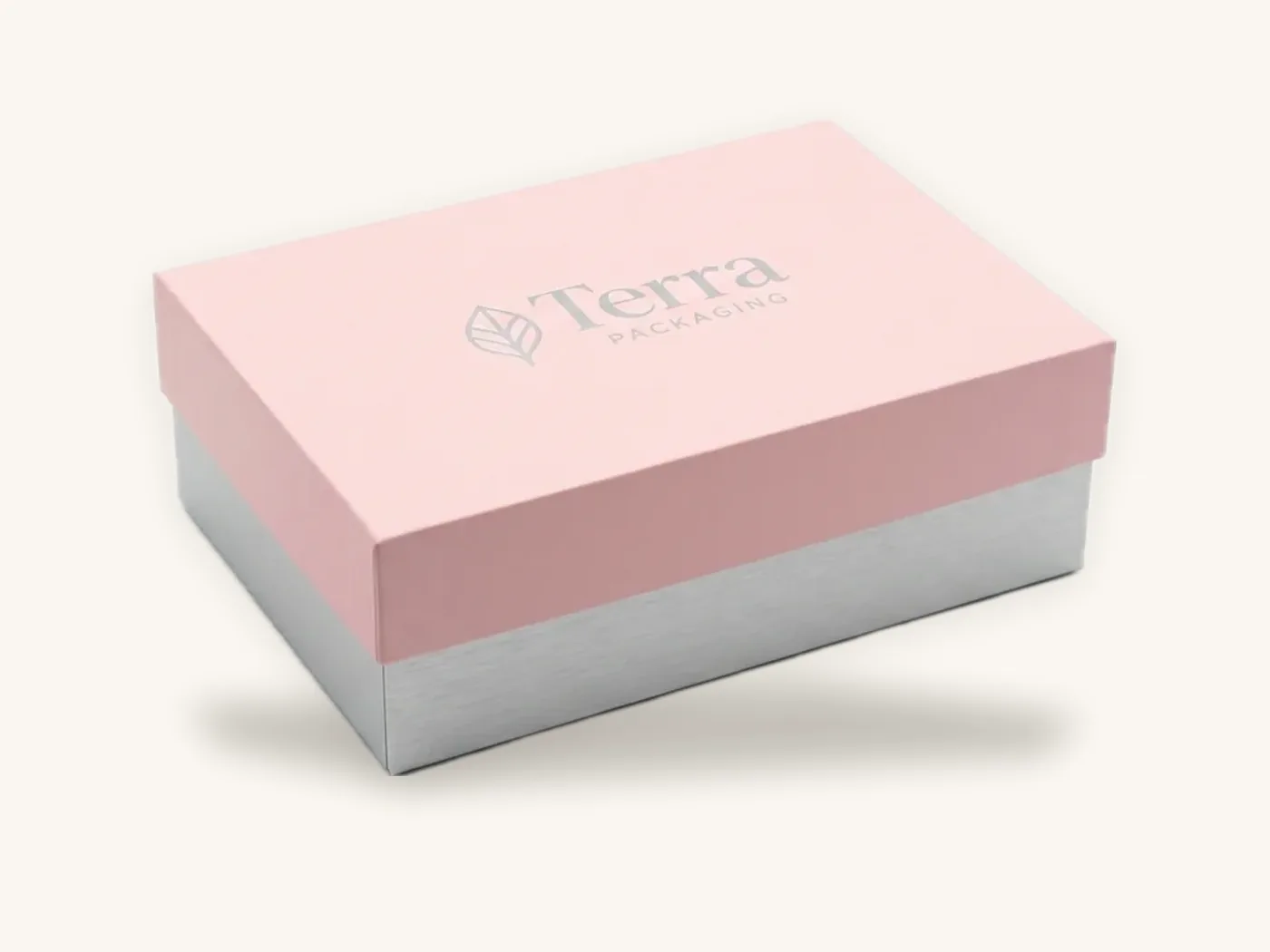
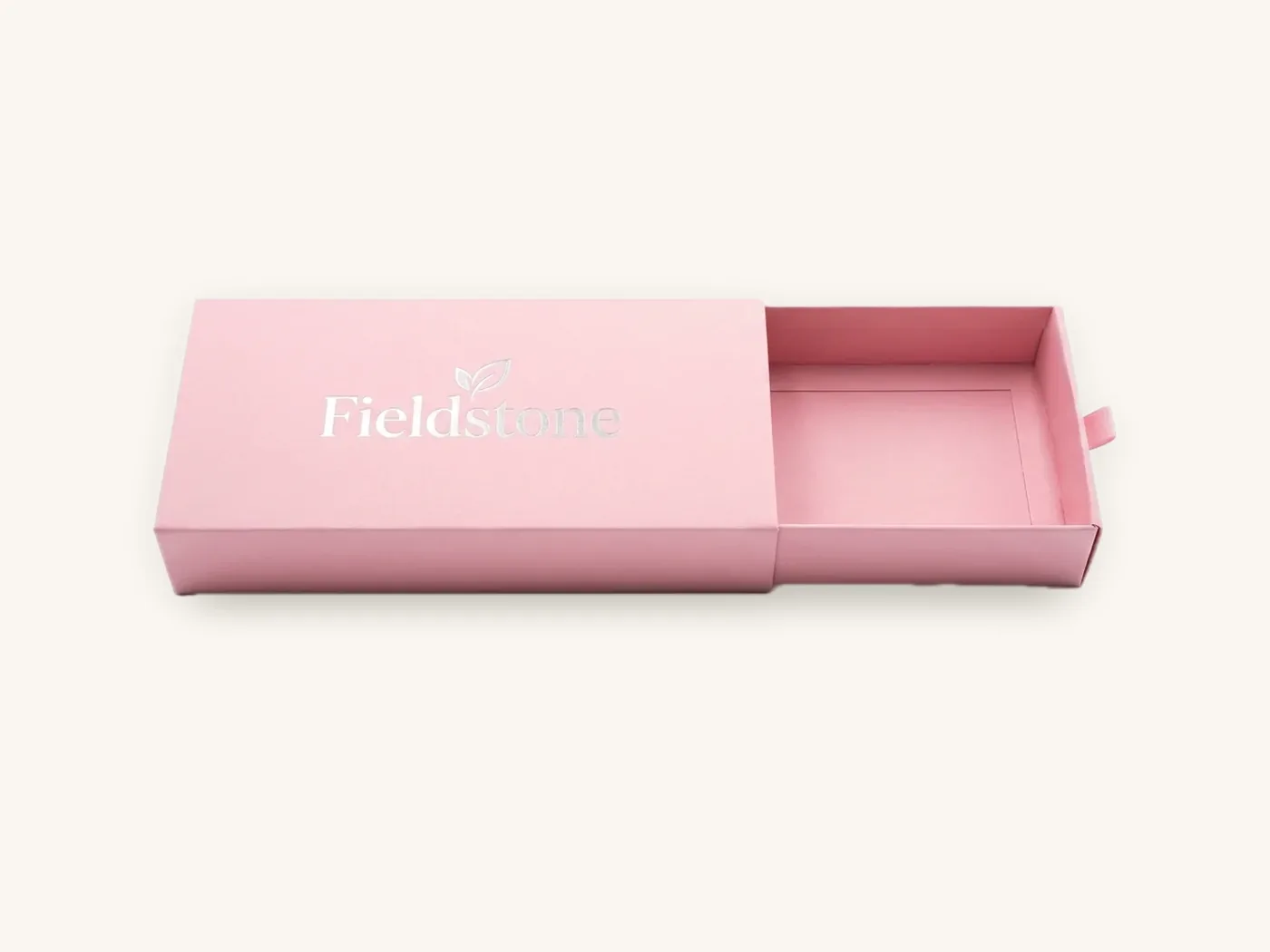
A single printed box or plain kraft box, sealed with a product-specific label, lets you launch several scents, flavors or sizes without separate packaging runs. It suits test launches, seasonal variants and brands still settling on a final design. When one product proves itself, move it to fully printed packaging such as custom product boxes. Two-piece and slide-out formats also take labels well; the two-piece boxes guide and drawer boxes guide show where a seal label fits naturally.
Seals, tape and tags
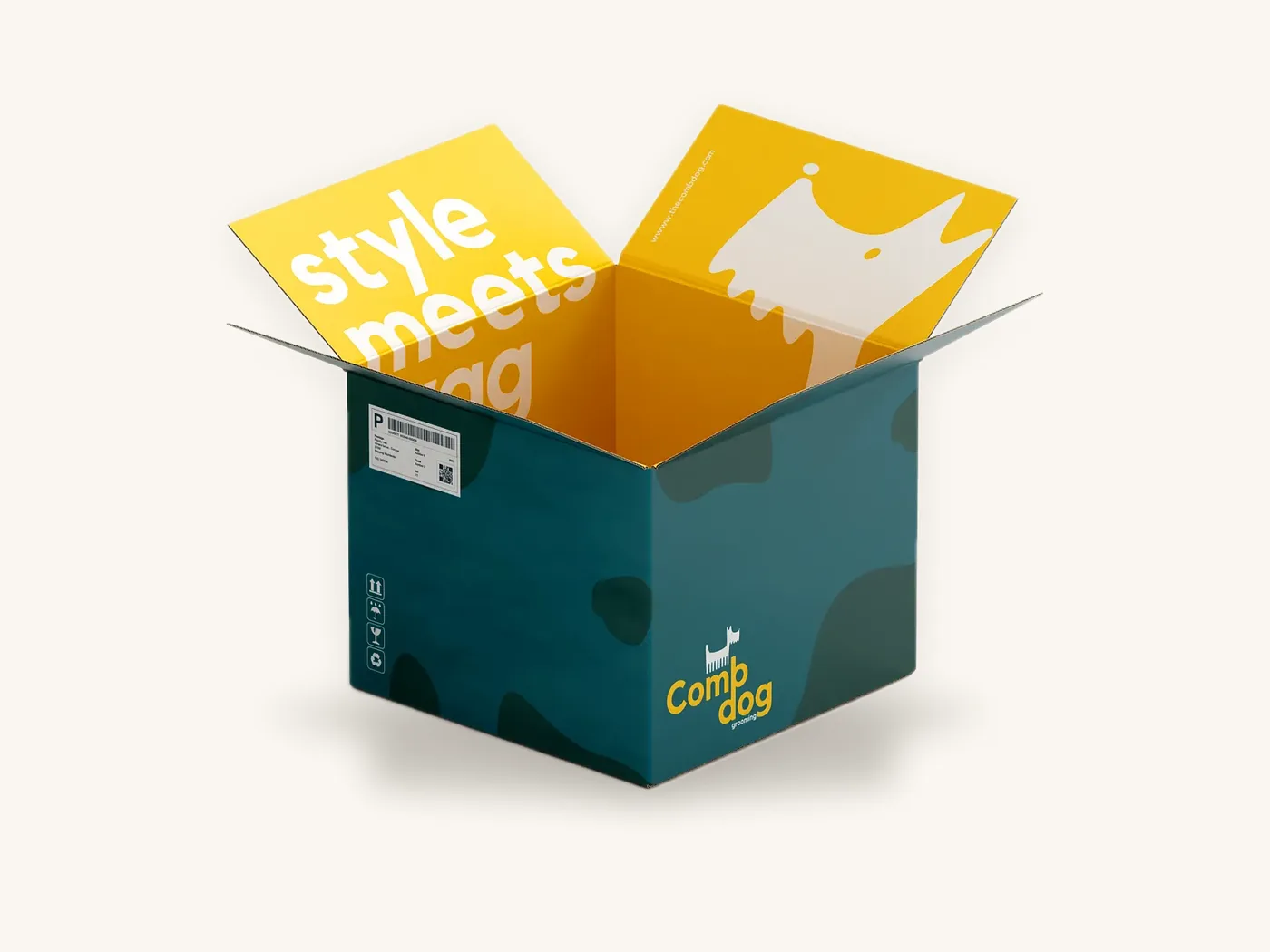
A round sticker across the opening of a custom mailer box or folded tissue gives a finished look and shows whether the package was opened. Custom packaging tape brands every shipping box at a larger scale. For apparel, candles and gifts, hang tags carry a brand story that would crowd a label; the custom hang tags guide covers stocks and strings.
What drives the cost of custom labels
Label pricing depends on material, size, shape, finish and quantity, so request a confirmed quote and use our pricing page to plan the packaging the labels go on. These are the main factors.
| Cost driver | Effect | How to manage it |
|---|---|---|
| Quantity | Setup spreads across more labels, so unit cost falls steeply | Order the next quantity tier if you will use it within a few months |
| Size | More material and press space per label | Size to the usable panel, not larger |
| Face stock | Film, metallic and textured papers cost more than coated paper | Use film only where moisture or oil demands it |
| Shape | Custom die shapes may add cutting setup | Standard rectangles, circles and ovals are the most economical |
| Finishes | Lamination, foil and embossing add passes on press | Laminate where durability matters; use foil on a few key labels |
| Number of designs | Each version adds prepress and changeovers | Share one base design with a printed variant field |
| Format | Machine-ready rolls need exact wind and core specs | Confirm applicator specs before ordering |
How to order custom product labels from Box Sense
What to send
- Container type, material and photos, plus the measured label panel
- Label dimensions and shape, or a request for sizing help
- Conditions: refrigerated, frozen, wet, oily, outdoor or dry
- Face stock and adhesive preferences, or a note that you want a recommendation
- Format: rolls (with core size, max roll diameter and unwind direction), sheets or individual stickers
- Finishes: varnish, gloss, matte or soft-touch lamination, foil, embossing
- Number of designs and quantities for each
- Artwork on our template, or a request for help from our design services team
What happens next
- Quote within 24 hours for your material, format and quantities.
- Free design support: a template with cut line, bleed and safe zone, artwork setup and a digital proof with two revision rounds.
- Samples: ask for stock material samples to test adhesion on your container; see the samples page for our policy.
- Production: standard production is 8–12 business days after proof approval.
- Delivery: free shipping on every US order; international shipping quoted at cost.
If you are ordering boxes, pouches or tape at the same time, request them together so sizes, colors and delivery line up.
Frequently asked questions
What material is best for custom product labels?
It depends on where the label lives. Coated or kraft paper works for dry products like boxes, coffee bags and candles. White or clear BOPP film is the better choice for anything exposed to water, oil, refrigeration or squeezing, such as bath products, sauces and beverages. Vinyl suits die-cut stickers and outdoor use. Match the adhesive to the surface and temperature as well.
Are BOPP labels waterproof?
BOPP film itself resists water and oil, so BOPP labels hold up well in bathrooms, fridges and ice buckets, especially with a lamination over the print. Performance still depends on the adhesive and on applying the label to a clean, dry container at room temperature. Allow roughly a day for the adhesive to reach full strength before exposing it to water.
What is the difference between roll labels and sheet labels?
Roll labels are printed and cut on a continuous liner wound onto a core, which makes them fast to peel by hand and compatible with dispensers and machine applicators. Sheet labels are laid out on flat sheets, which suits very small batches or printing variable information on an office printer. For regular production, roll labels are almost always more efficient.
How do I measure a label for a round bottle or jar?
Measure the straight section of the wall between the shoulder and base curves, then subtract a small margin top and bottom for the label height. Multiply the diameter by 3.14 to get the circumference. For a wraparound, add about 1/8 to 1/4 in overlap; for a partial label, subtract the gap you want visible. Test the size with a paper mockup first.
Why are my labels peeling or wrinkling?
The usual causes are an adhesive that does not suit the surface, such as standard adhesive on HDPE squeeze bottles; applying labels to cold or damp containers; a paper label on a tight curve; or a label that extends onto a shoulder or taper. Switching to a flexible film stock, a high-tack adhesive, or a smaller label on the straight wall usually fixes it.
Can custom stickers be used to seal boxes?
Yes. Round or rectangular stickers across the opening of a mailer, folded tissue or a gift box give a finished look and a simple tamper indicator. For rough kraft board, choose a high-tack adhesive. For clear evidence of tampering, a destructible face stock tears apart if someone peels it, and is often used on supplement and cosmetic packaging.
What information is required on a food product label?
US packaged foods generally need a statement of identity, net quantity, an ingredient list, allergen declarations, a Nutrition Facts panel unless exempt, and the name and place of business of the manufacturer, packer or distributor. Placement and type size rules also apply. Requirements change and exemptions exist, so confirm current rules with the FDA or a regulatory advisor.
Next steps
Measure your container's label panel, list the conditions it will face, and decide between rolls, sheets or stickers. Then request a quote for custom product labels with those details, and check pricing for the boxes or mailers they will go on. We confirm quotes within 24 hours and send a template ready for your artwork.
Boxes in this guide
Order the packaging we covered
Written by the Box Sense Packaging Team
Our structural designers, prepress technicians and production staff print and convert custom boxes every day for brands in the United States, United Kingdom and UAE. Questions about this guide? Talk to us.