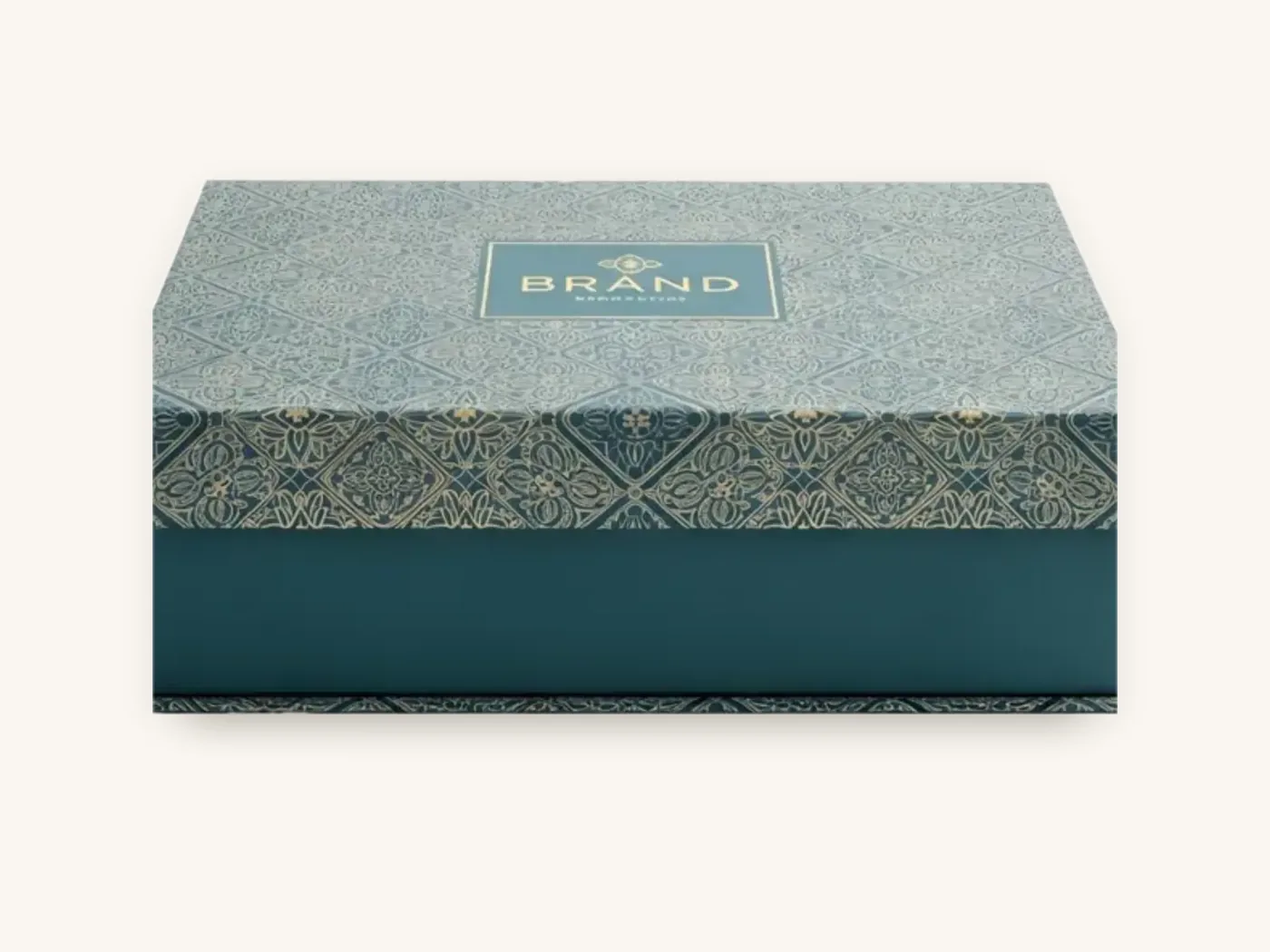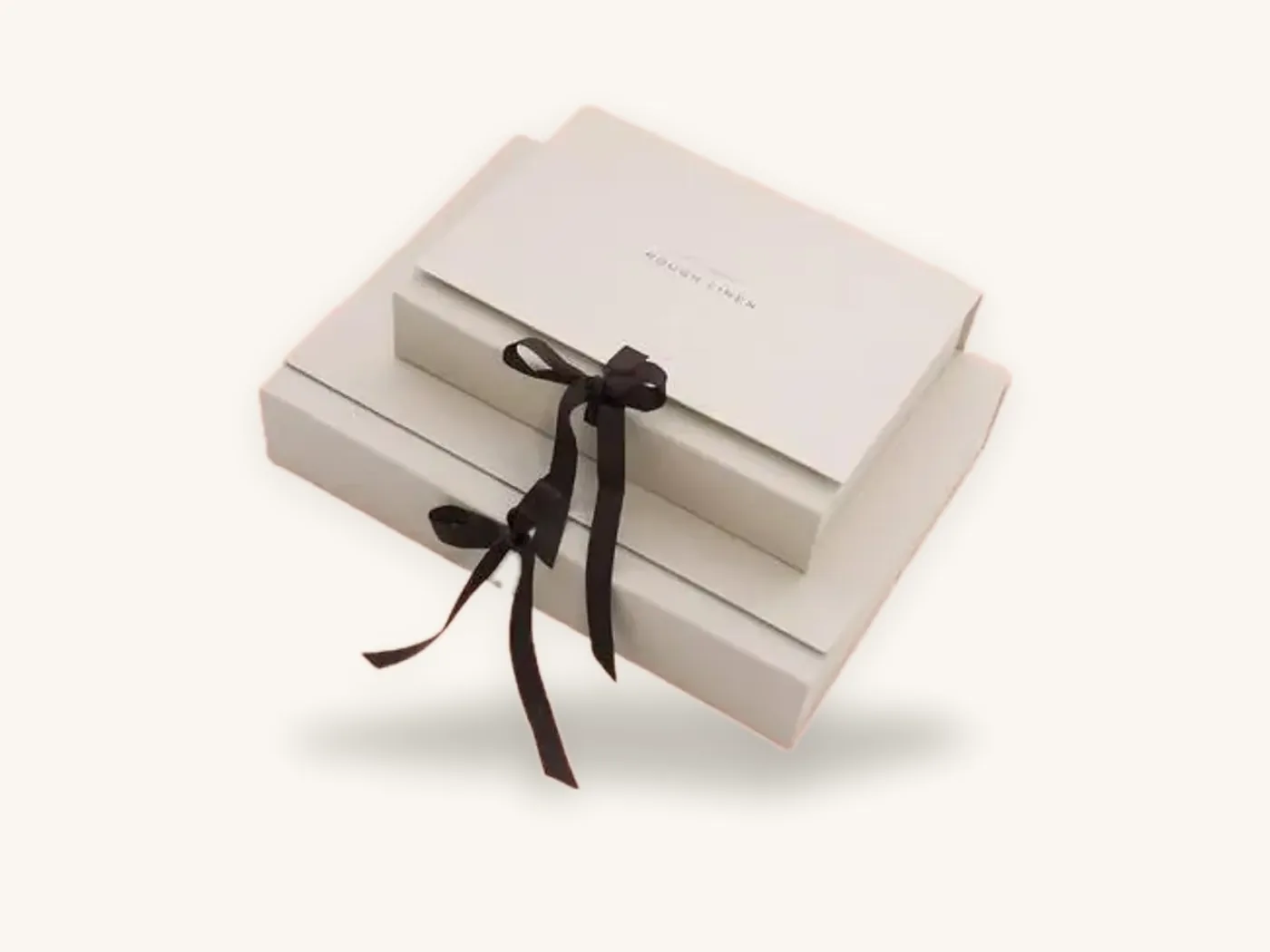
Wine packaging covers everything around the bottle: single-bottle cartons for retail, carriers for the tasting room, rigid gift boxes for holidays and corporate orders, and protective shippers for wine clubs. The right choice depends on where the bottle is going and who opens it. A shelf carton needs to sell, a gift box needs to feel worth keeping, and a shipper needs to survive a parcel network that was never designed for glass.
Every good wine or spirits box starts with the bottle's real dimensions, then adds a structure, an insert that stops the bottle moving, and artwork that respects the label rather than competing with it. This guide follows that sequence, then covers liquor boxes, gift sets, shipping, costs and ordering.
Key takeaways
- Measure your actual bottle, including the widest shoulder, total height with closure, and punt shape. Bottle shapes vary more than the "750 ml" label suggests.
- Choose by occasion: folding cartons for retail, carriers for tasting-room takeaways, rigid and magnetic boxes for gifts, and partitioned corrugated shippers for club and online orders.
- The insert does most of the protecting. A neck lock, cradle or partition that holds the bottle still matters more than thicker board.
- Liquor boxes for spirits often need more structure than wine boxes, because decanter-style bottles are heavier, taller or irregular.
- Alcohol labeling is regulated federally by the TTB, and shipping alcohol directly to consumers depends on state law and carrier policy. Confirm both before designing a direct-to-consumer program.
- Box Sense makes custom wine boxes from 10 units with free design support, a 3D proof and no die or plate charges.
Start with the bottle: shapes and box sizing
Wine and spirits bottles that share a volume can differ by half an inch or more in diameter and over an inch in height. A box sized from a generic chart is the most common reason a first run arrives unusable.
| Bottle type | Approximate diameter | Approximate height | Packaging notes |
|---|---|---|---|
| 750 ml Bordeaux (high shoulder) | about 3 in | about 11.75 to 12 in | Most common still wine shape; fits standard cradles |
| 750 ml Burgundy (sloped shoulder) | about 3.25 in | about 11.5 in | Wider base; inserts must hold the body, not the shoulder |
| 750 ml sparkling | about 3.5 in | about 12 in | Heavy glass and deep punt; add weight margin |
| 375 ml half bottle | about 2.5 in | about 9.5 in | Popular in gift pairs and tasting sets |
| 1.5 L magnum | about 4 in | about 13.5 to 14 in | Needs heavier board or a rigid structure |
| 750 ml spirits (round or square) | widely variable | widely variable | Always measure; decanter shapes need custom cavities |
| 50 ml miniatures | about 1 in | about 4 in | Flights and advent-style sets |
These figures are rough planning ranges. Your glass supplier's technical drawing, or calipers on a filled and closed bottle, is the only reliable source.
How to measure for custom wine boxes
- Use a filled, closed bottle. Corks, capsules, wax dips and stoppers change height.
- Measure the widest point. For most wine this is the body; for some spirits it is a shoulder or decorative base.
- Measure total height from the base to the top of the closure.
- Note irregular features: embossed glass, flat flask sides, heavy punts, neck tags or hang collars.
- Weigh the bottle. Heavy glass affects board choice, insert design and whether a handle is safe.
- Add clearance. Allow roughly 1/8 in around the widest point for the bottle to drop in, then let the insert take up the space.
- Order a structural sample and test it with the real bottle before artwork is final.
Watch out: a wax-dipped or bar-top closure can add enough height to stop a lid seating flat. If you use different closures across a range, size the box for the tallest one and use the insert to keep shorter bottles from moving.
Wine packaging by occasion: a decision matrix
The same wine can need three different packages in one year. Plan by where the bottle will be opened.
| Occasion | What matters most | Recommended structure | Typical finish level |
|---|---|---|---|
| Retail shelf, single bottle | Shelf impact, cost, easy restocking | Folding carton with auto-lock bottom or tuck top | Full color, aqueous or matte lamination |
| Tasting-room takeaway | Carrying, speed, low cost | Two, three or four-bottle carrier | One or two colors on kraft |
| Holiday and gift retail | Perceived value, keepsake feel | Paper tube, two-piece rigid or window gift box | Soft-touch, foil, embossing |
| Corporate gifting | Personalization, presentation, accessories | Magnetic rigid box with custom insert | Foil logo, printed card, premium wrap |
| Wine club and online orders | Protection in the parcel network | Corrugated shipper with partitions or molded pulp | Simple print; branding inside |
| Limited release or library wine | Collectability, story | Rigid box, drawer box or numbered sleeve | Specialty paper, embossing |
Our wine and spirits boxes cover every structure in this matrix, from corrugated carriers to rigid gift sets.
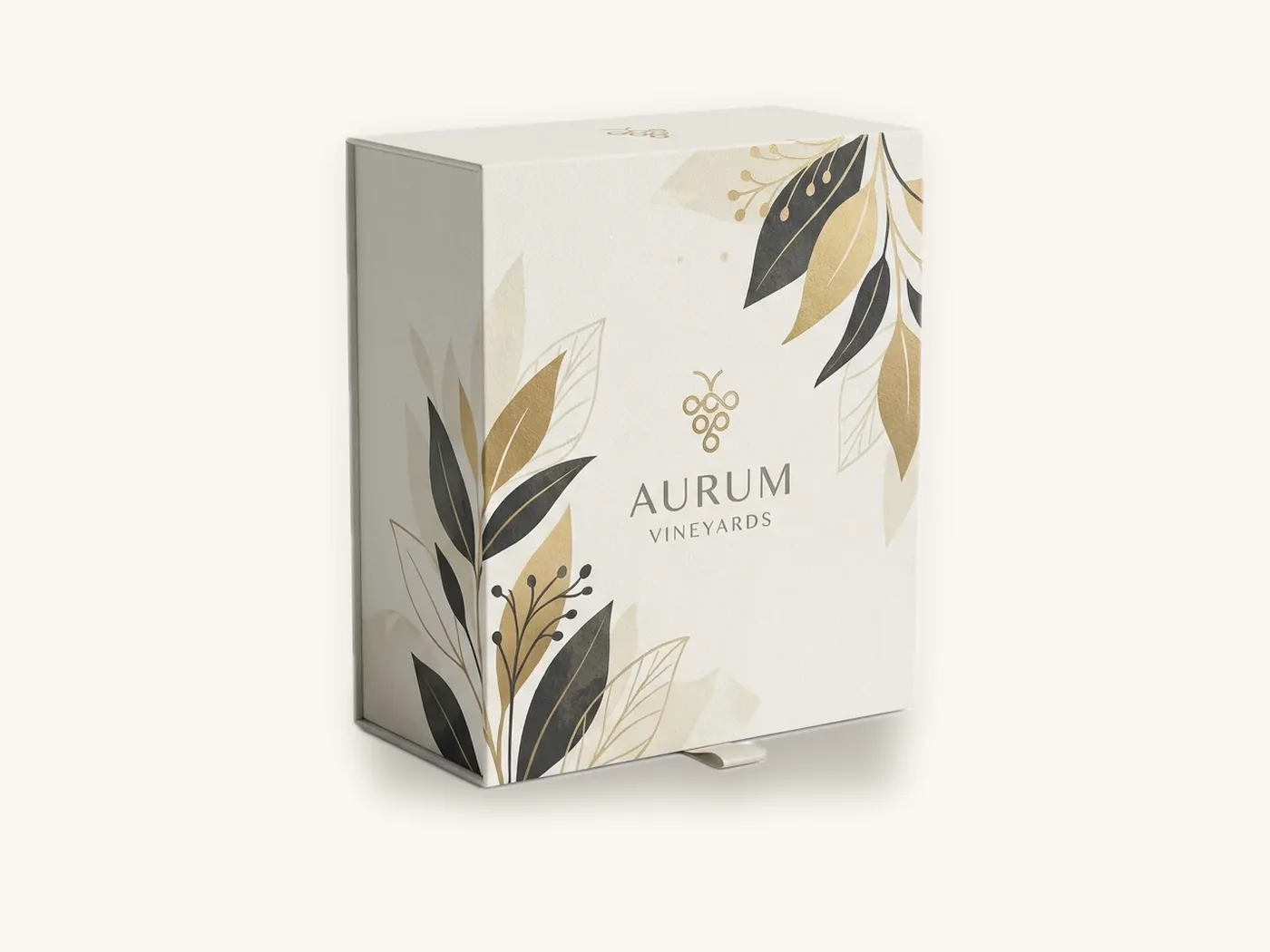
Structures for custom wine boxes
Folding cartons for retail bottles
A paperboard carton is the most economical way to put a bottle on a shelf in a branded package. For heavy glass, specify an auto-lock or crash-lock bottom rather than a tuck bottom, because a tuck flap can give way under a full bottle when the box is lifted from the top. A die-cut window or cut-away shows the label if it is a strong part of the brand.
Paper tubes
A tube matches the bottle's cylinder shape, prints all the way around and feels like a gift without the cost of rigid construction. Tubes are especially popular for spirits. A lined base plug or insert keeps the bottle centered. Our paper tube packaging page shows lid and base options, and the paper tube packaging guide goes deeper on construction.
Two-piece and magnetic rigid boxes
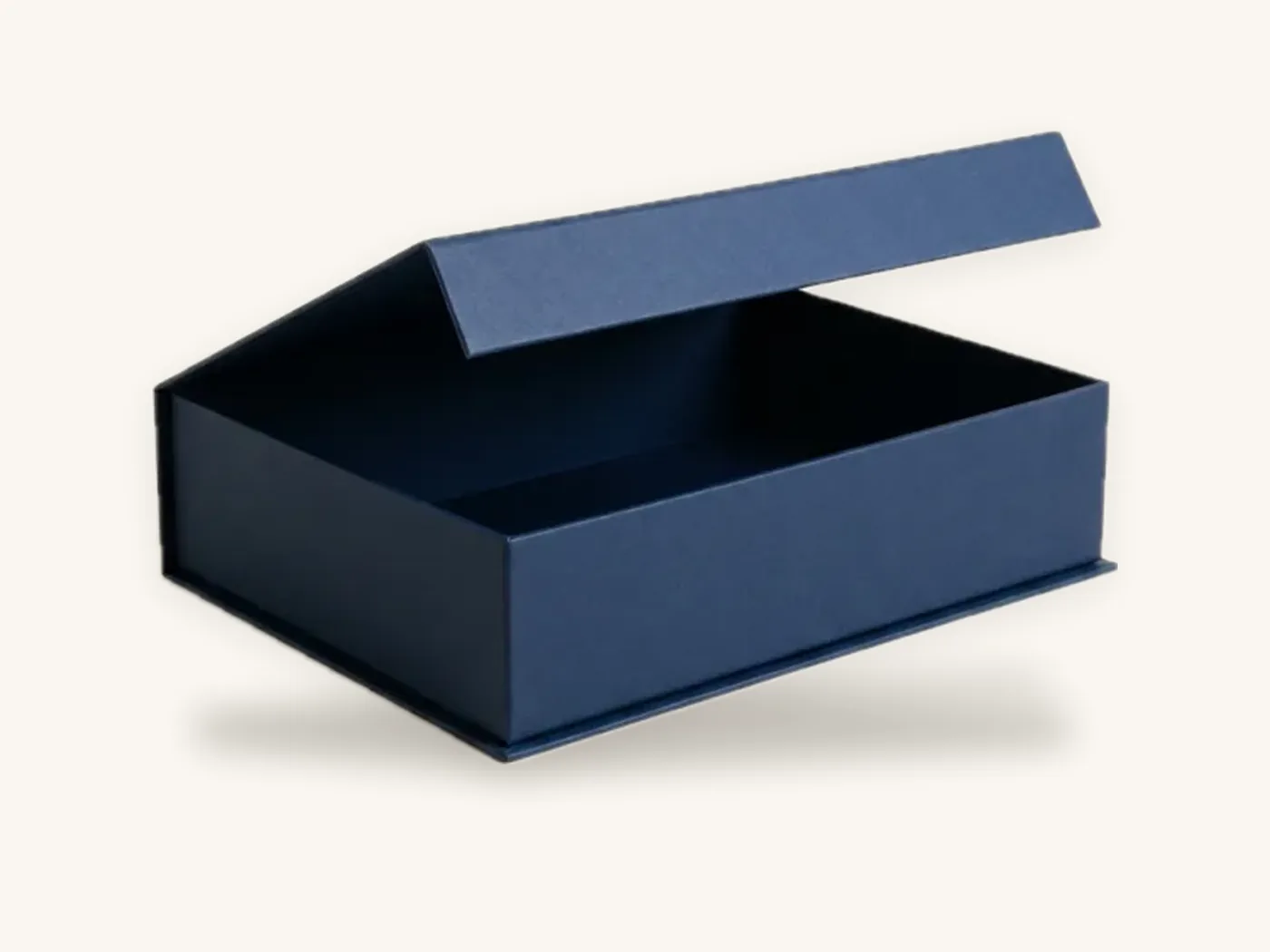
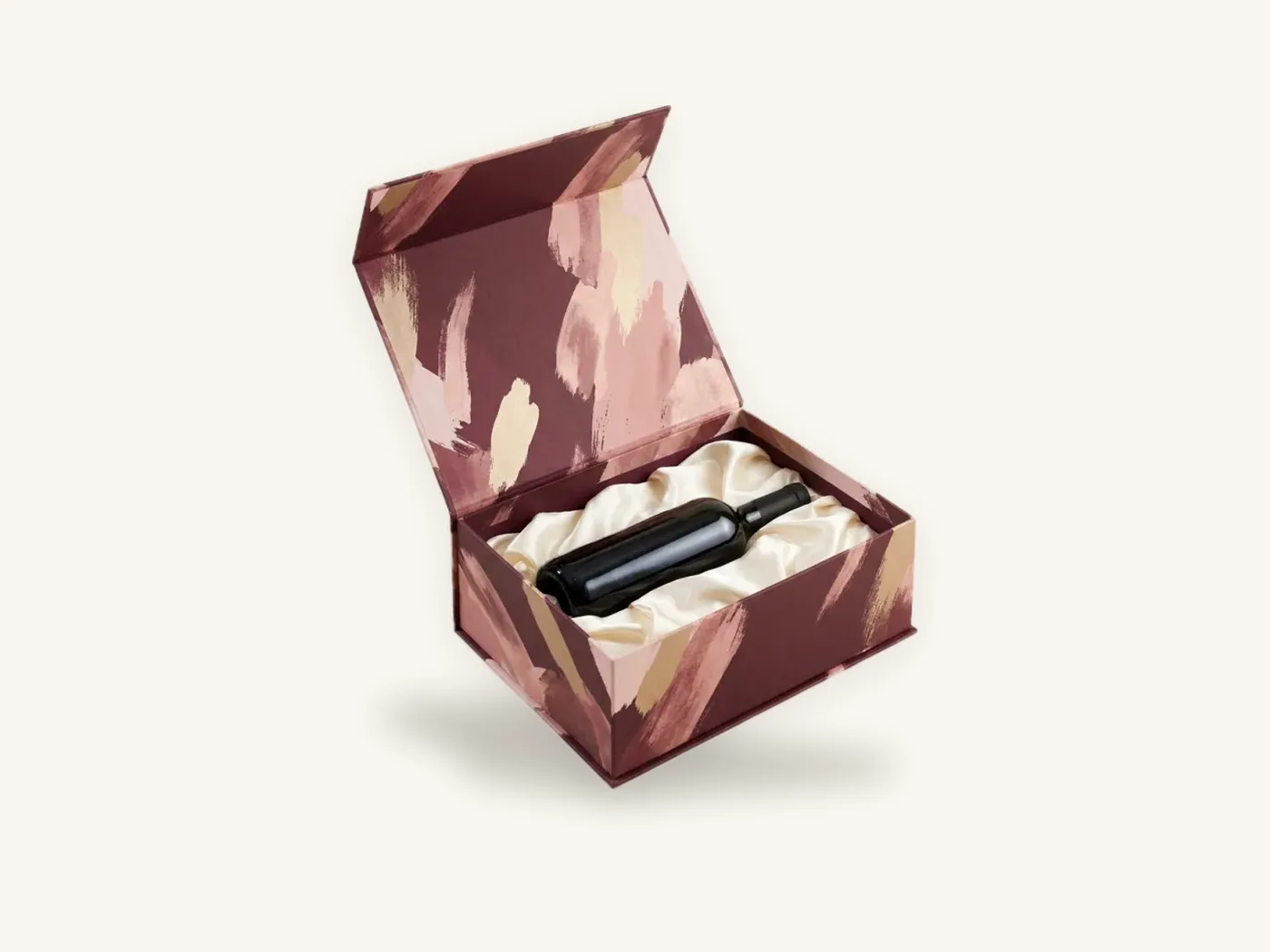
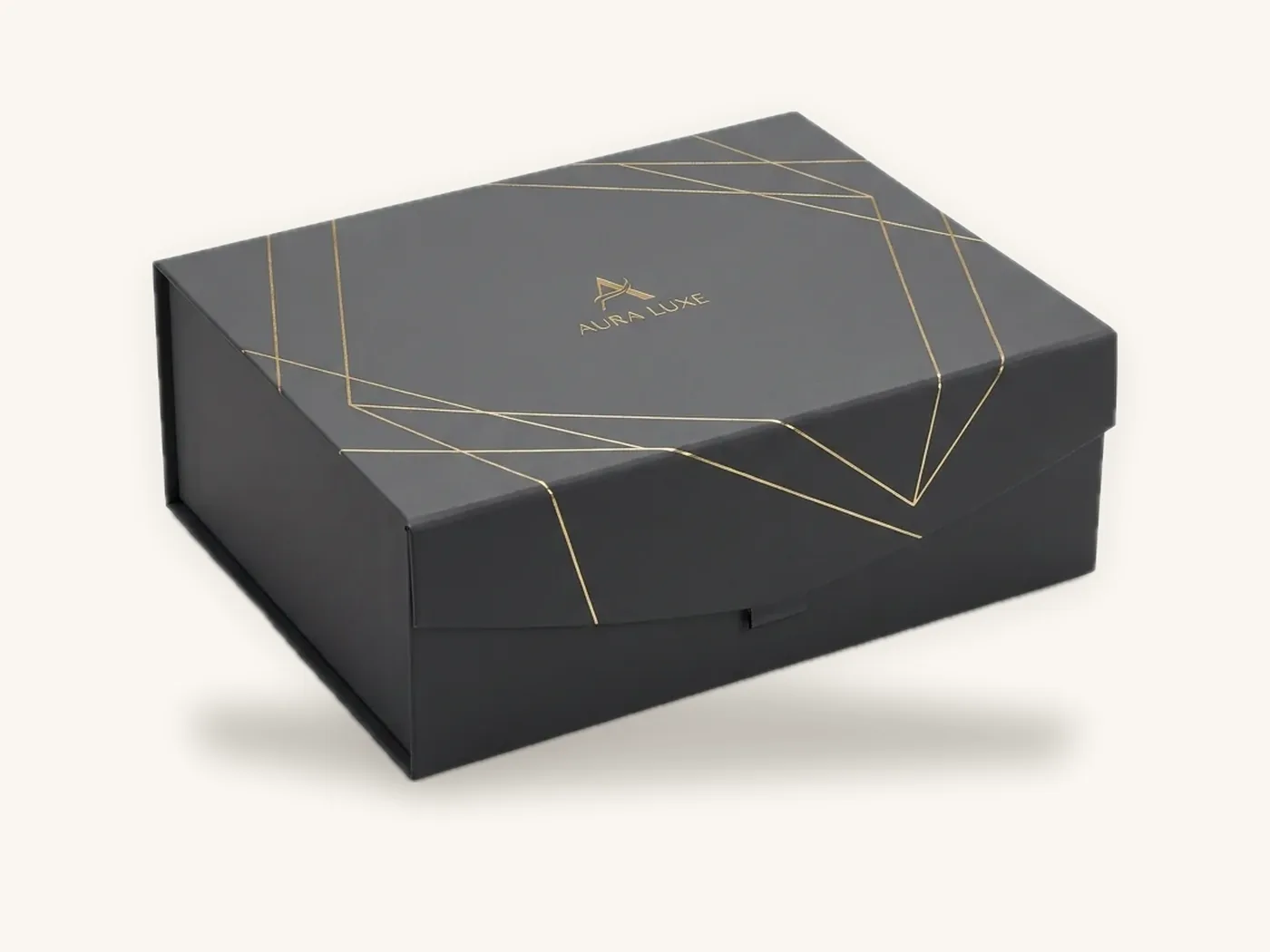
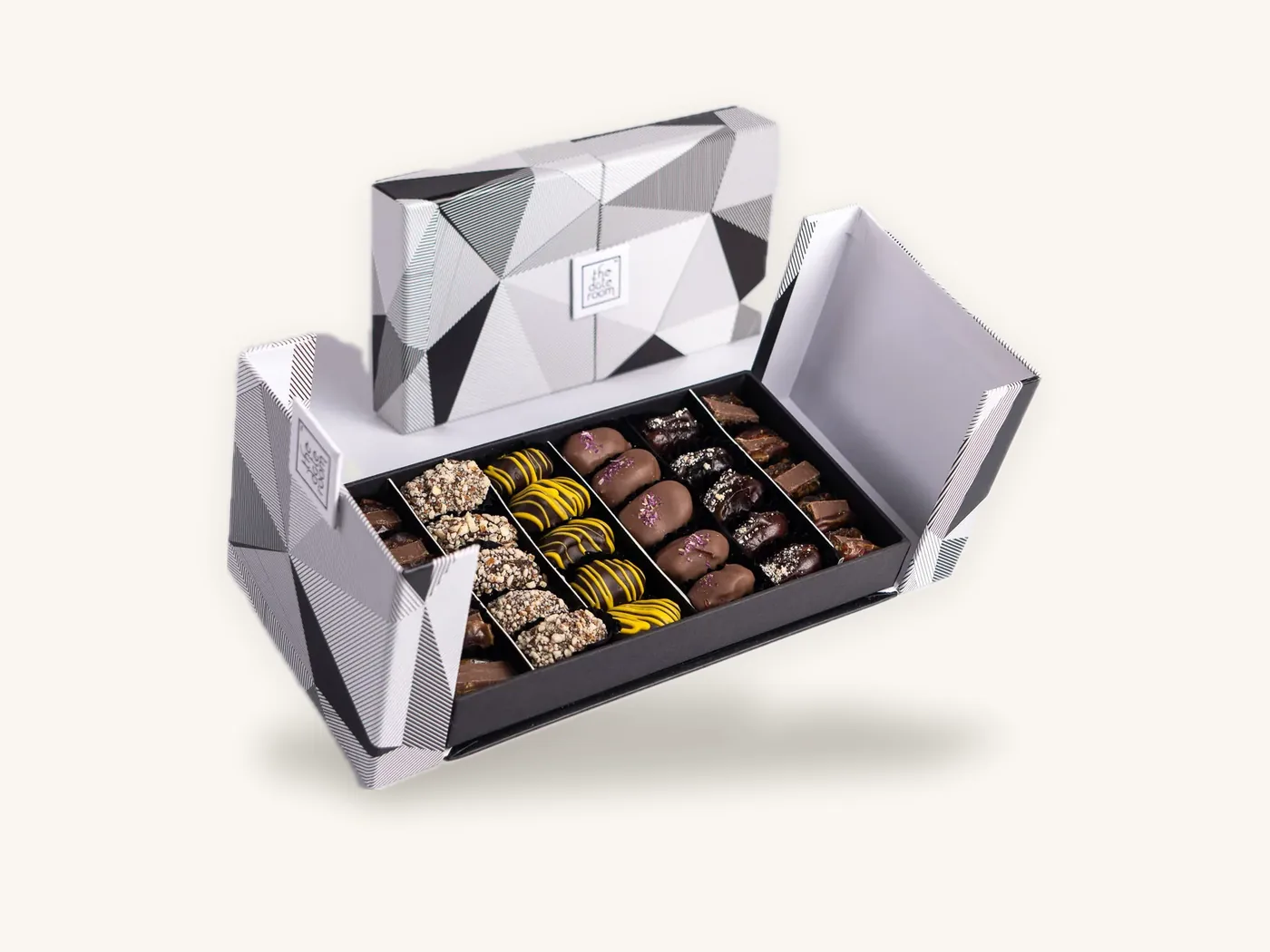
Rigid boxes use thick greyboard wrapped in printed or specialty paper. A two-piece lift-off lid suits a single bottle standing upright or lying down; a book-style magnetic closure box opens like a cover and suits bottles lying on their side with accessories alongside. The magnetic closure boxes guide explains hinge and magnet placement, and the custom rigid boxes guide covers wraps and board thickness.
Carriers
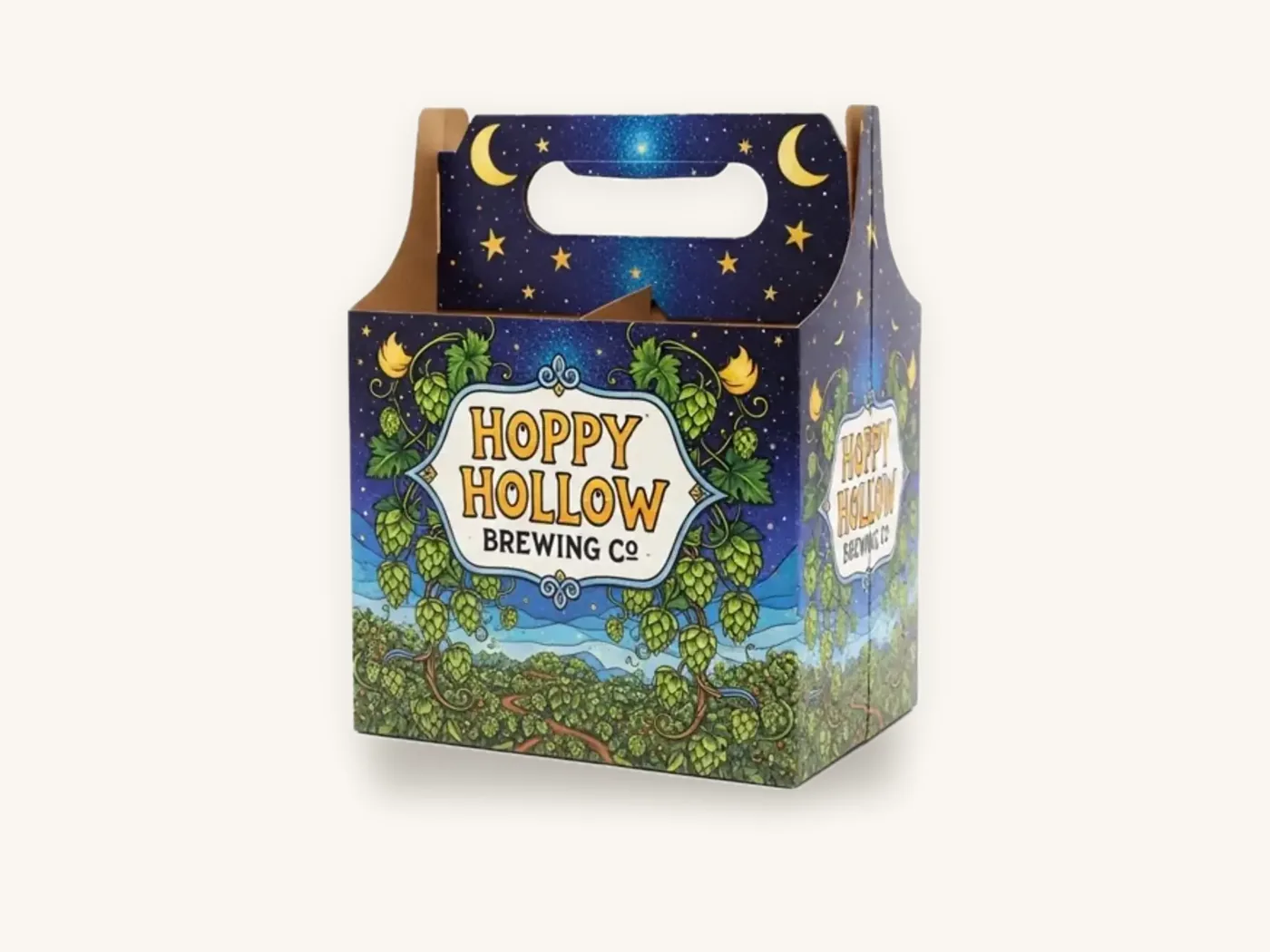
Two to six-bottle carriers with a fold-over handle are the tasting room's workhorse. They assemble quickly, carry comfortably and double as retail carriers for mixed packs. Beverage carriers come in printed corrugated or paperboard. Beer, cider and canned wine producers have different carrier needs, which the beverage carrier guide covers separately.
Corrugated shippers
For orders sent through parcel carriers, a corrugated box with a partition, molded pulp trays or a die-cut cradle keeps bottles from touching each other or the outer walls. Heavier multi-bottle shippers may need double wall board; see our heavy duty double wall boxes. Keep premium print on the inner gift box and let the shipper stay simple, since the outer box gets labeled and scuffed.
Inserts: what actually protects the bottle
The insert is the part that keeps glass intact. A bottle held firmly at the body and neck can survive handling that would break a loose bottle in a much heavier box.
Insert types compared
| Insert | Material | Protection level | Best for | Notes |
|---|---|---|---|---|
| Neck lock or collar | Paperboard | Low to medium | Retail cartons | Stops bottle sliding up and down |
| Base cradle plus neck support | Paperboard or corrugated | Medium | Gift boxes, tubes | Holds bottle at both ends |
| Die-cut cavity insert | Corrugated or foam | Medium to high | Rigid gift sets with glasses | Cavity sized to each item |
| Partition (cell divider) | Corrugated | Medium to high | Multi-bottle carriers and shippers | Stops bottles knocking together |
| Molded pulp tray | Recycled fiber | High | Parcel shipping | Plastic-free, absorbs impact |
| Satin or fabric-lined cradle | Board wrapped in fabric | Presentation first | Luxury spirits | Pair with a protective outer shipper |
Box inserts and dividers are designed alongside the box, not added afterward, so the cavity, board thickness and clearance all work together.
Tip: when a gift box holds a bottle plus two glasses, put the glasses in their own cavities at the bottle's shoulder height rather than beside the base. It shortens the box, balances the weight when lifted, and keeps glass rims away from the heaviest part of the bottle.
Liquor boxes for spirits
Liquor boxes follow the same principles as wine boxes, but spirits packaging tends to push harder on presentation and structure.
What makes spirits different
- Bottle shapes vary widely. Square, flask, squat decanter and tall slim bottles all need their own cavity; a round cradle will not hold a flat flask.
- Glass is often heavier. Premium spirits bottles can be substantially heavier than wine bottles, so rigid boxes, crash-lock bottoms and reinforced handles are more common.
- The box is often displayed. Many spirits are bought as gifts and kept in the box on a shelf, so the package is expected to last.
- Accessory sets are common. Glasses, stoppers, jiggers and tasting notes all compete for space.
Structures that suit spirits
Paper tubes and rigid two-piece boxes are the most common premium liquor boxes. Magnetic book-style boxes suit sets that lie flat. For miniatures and tasting flights, a drawer box or a sleeve over a tray with a row of cavities presents several 50 ml bottles neatly. Soft-touch wraps, foil and blind embossing are the typical finishes, all shown on our printing and finishes page.
Gift sets and corporate wine packaging
Gift sets are where a winery or distillery can earn more per bottle, and where packaging has the most influence on the purchase.
Planning a gift set
Say you want a holiday set with one 750 ml bottle, two stemless glasses and a printed tasting card. The layout options are a tall upright rigid box, a book-style magnetic box with the bottle lying down and glasses beside it, or a wide two-piece box with an insert. The lying-down layout usually gives the most dramatic opening, while the upright layout takes less shelf width in a shop.
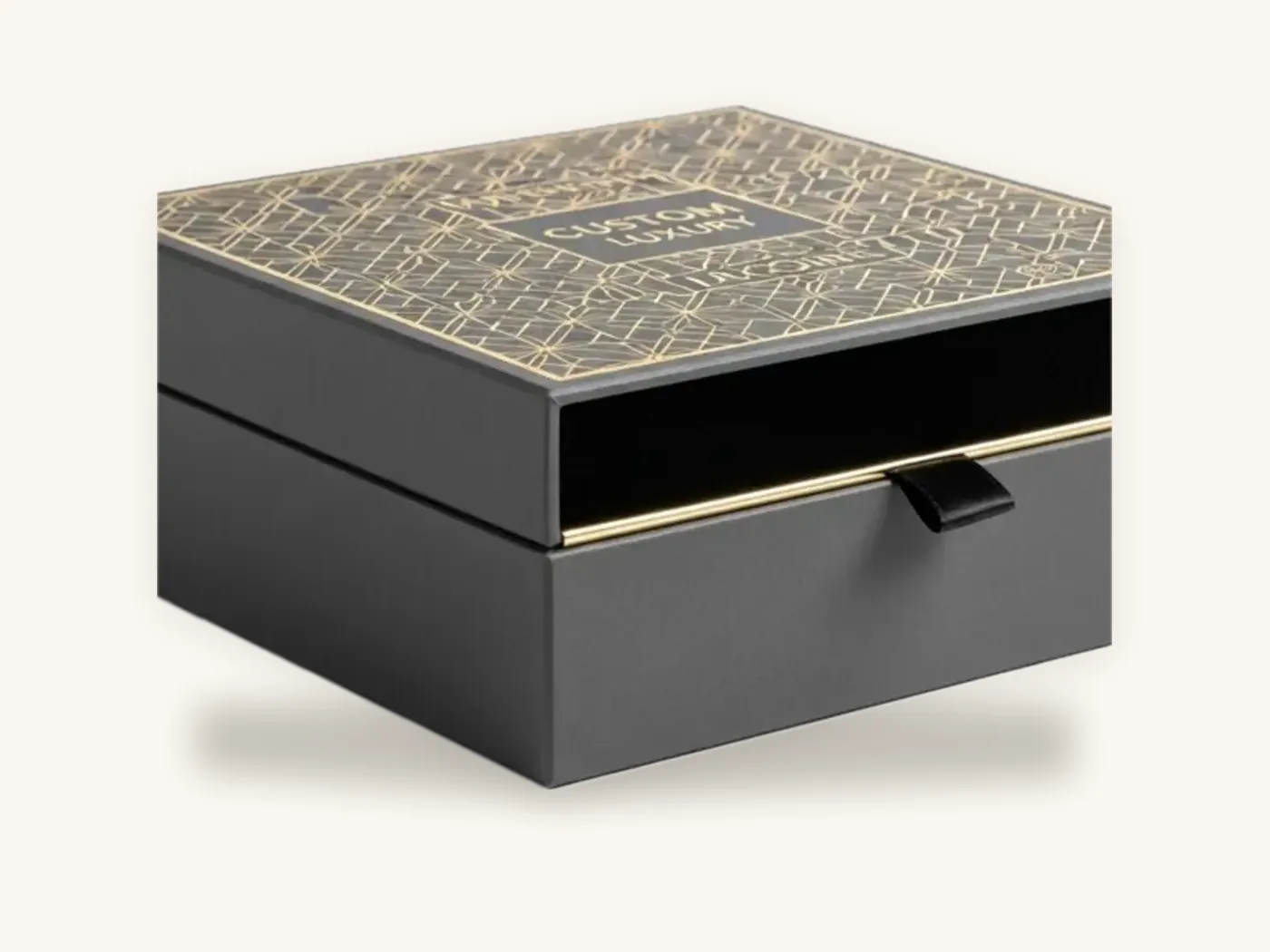
For accessory sets without a full bottle, such as a pair of glasses and a stopper or a miniatures flight, a 10x8x3 in rigid magnetic box with soft-touch wrap, foil and an insert is a useful benchmark. From our price sheet, that spec runs about $14.23 each at 100 units and about $6.32 at 1,000, with US shipping included. Bottle-sized rigid boxes use more board and wrap, so price your exact dimensions in the instant estimator.
Corporate orders
Corporate buyers usually want the company's logo alongside yours, a personal card and consistent delivery dates. Keep the wine brand on the box and put the corporate branding on a sleeve, a printed card or a foil-stamped lid band. That lets you run one box design for many clients. Our corporate gift boxes and luxury gift boxes pages show common formats.
Labeling, compliance and shipping alcohol
Packaging for alcohol touches regulation in two places: what is printed, and how bottles move to consumers.
Labeling
In the US, labeling of wine, distilled spirits and malt beverages is regulated federally by the Alcohol and Tobacco Tax and Trade Bureau (TTB), and bottle labels carry mandatory statements. Outer boxes and gift packaging can also be subject to rules about what they say, especially if they repeat or add claims. State rules can apply as well. Review the TTB's labeling resources and confirm your packaging text with a compliance specialist or counsel before printing.
A practical rule for design: avoid printing anything on the box that contradicts the approved bottle label, such as a different vintage, alcohol content or appellation, and keep any added claims factual.
Shipping alcohol direct to consumers
Whether you can ship wine or spirits directly to consumers depends on state law, which differs from state to state, and on carrier policy, since parcel carriers set their own requirements for alcohol shipments. Spirits are generally more restricted than wine. Confirm current rules for each destination state and your carrier's program before launching a wine club or online store.
Packaging for alcohol shipments should also be designed to protect glass and keep contents discreet where required. Use tested partitioned or molded pulp shippers rather than a single gift box on its own.
Costs: what drives the price of wine and liquor boxes
Wine and liquor box prices depend on structure, bottle size, board, finishes, inserts and quantity.
| Cost driver | Effect | How to manage it |
|---|---|---|
| Structure | Rigid and magnetic boxes cost several times a folding carton | Use rigid for gifts, cartons for everyday retail |
| Bottle size | Tall boxes use more board and wrap | Consider lying bottles down in gift sets |
| Inserts | Die-cut and fabric-lined inserts add material and tooling | Standardize one insert across bottles with the same glass |
| Finishes | Foil, embossing and spot UV each add one-time tooling | Apply them to the logo, not the whole box |
| Quantity | Setup spreads across more units | Plan holiday volume early and order once |
| Number of SKUs | Separate artwork for each wine adds setup at small runs | Use one box with a varietal label or sleeve |
One-time tooling on our price sheet is about $60 for foil, about $60 for embossing, about $40 for spot UV and about $45 for an insert die. There are no die or plate charges otherwise.
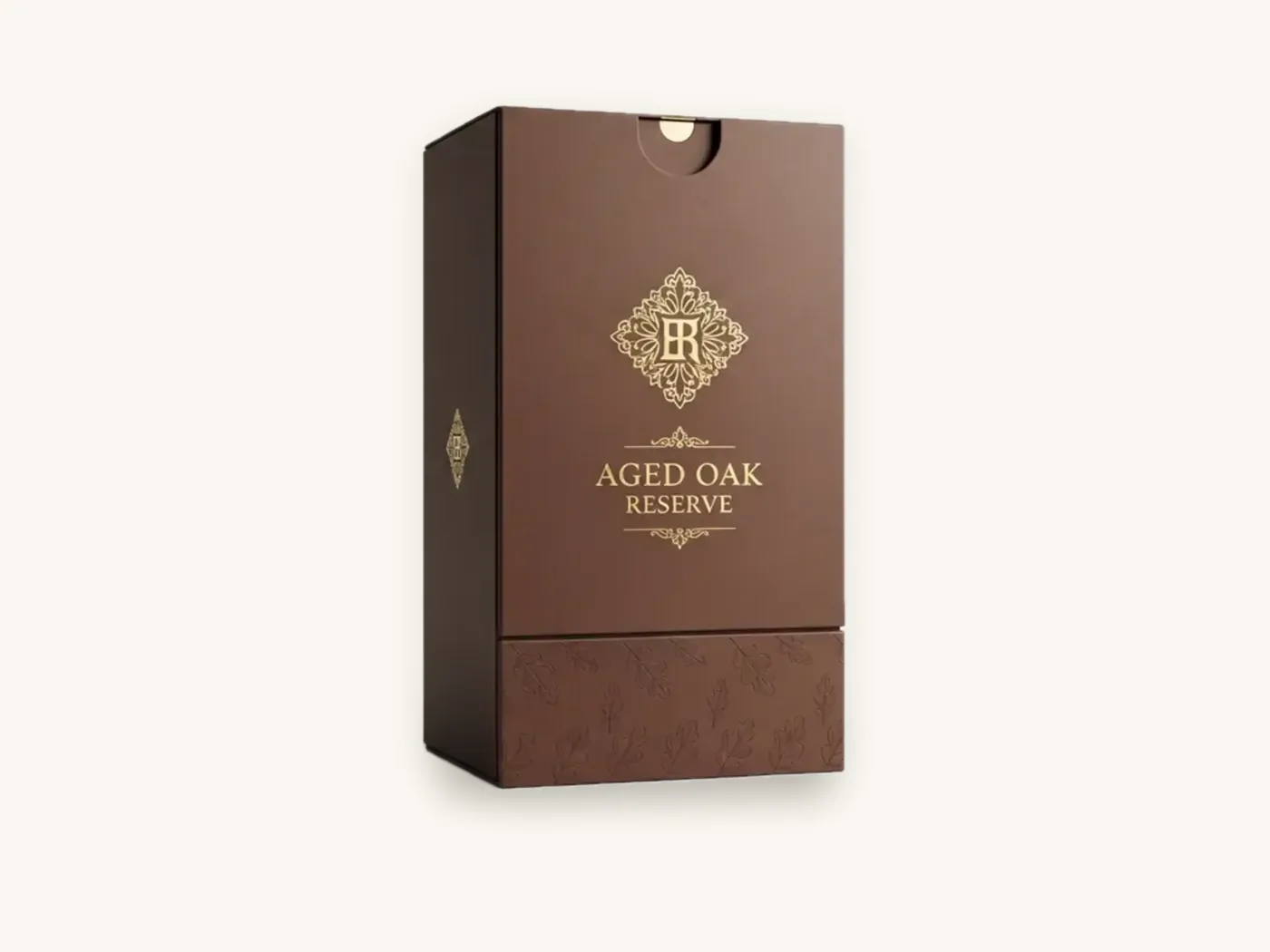
How to order custom wine boxes with Box Sense
Specs to send
- Bottle dimensions (diameter, height with closure) and weight, or the glass supplier's drawing
- Number of bottles per box and any accessories
- Occasion: retail, tasting room, gift, corporate or shipping
- Preferred structure, or a request for our recommendation
- Board, print coverage, finishes and insert type
- Quantities per SKU and target in-hand date, especially for holiday programs
- Artwork, or a request for free design support
The process
- Quote within 24 hours for each structure and quantity.
- Dieline, artwork setup and 3D proof from our design team, with two revision rounds included.
- Structural sample. Unprinted samples are free, so you can test the fit with your real bottle. A printed sample of approved artwork is free on orders of 100 or more; see our samples page.
- Production. Standard production is 8–12 business days after proof approval. Rush in 5 business days is available on most paperboard and corrugated styles, so ask about rush timing for rigid gift boxes when you request a quote.
- Delivery. Shipping is free on every US order, and international shipping is quoted at cost.
The minimum order is 10 boxes. Defective boxes reported within 14 days are reprinted free. For more beverage structures, see our beverage, wine and spirits industry page.
Frequently asked questions
What size box do I need for a wine bottle?
Measure your filled, closed bottle at its widest point and full height, then add roughly 1/8 in of clearance around the widest point and let an insert hold it still. A standard Bordeaux-style 750 ml bottle is about 3 in wide and about 12 in tall, but Burgundy, sparkling and spirits bottles differ, so always measure your own.
What is the best packaging for shipping wine?
A corrugated shipper with partitions, molded pulp trays or a die-cut cradle that keeps each bottle from touching others or the outer walls. Keep premium gift boxes inside the shipper rather than sending them alone. Confirm your carrier's alcohol shipping requirements and your destination states' rules before launching direct-to-consumer shipping.
Can I ship wine to customers in any state?
No. Shipping wine directly to consumers depends on state law, which varies, and on carrier policy, since carriers set their own alcohol shipping requirements. Some states allow licensed direct shipping with permits and volume limits, and others restrict it more. Spirits are generally more restricted than wine. Check current rules with each state and your carrier.
How much do custom wine boxes cost?
It depends on structure, bottle size, finishes, inserts and quantity. Folding cartons are the most economical, and rigid or magnetic gift boxes cost several times more. As a benchmark, a 10x8x3 in rigid magnetic box with soft-touch, foil and an insert is about $6.32 each at 1,000 units. Use the pricing estimator for your bottle-sized spec.
What is the difference between wine boxes and liquor boxes?
The principles are the same, but liquor boxes usually handle heavier, taller or irregular bottles and are more often kept on display. That means more rigid structures, custom cavity inserts and premium finishes. Wine boxes more often focus on standard bottle shapes, multi-bottle carriers and wine club shipping.
Do wine gift boxes need to follow TTB rules?
Alcohol labeling in the US is regulated federally by the TTB, and outer packaging can be subject to rules about the statements it carries, particularly if it repeats or adds claims. State rules can also apply. Keep box text consistent with the approved bottle label and have a compliance specialist review packaging copy before printing.
What insert keeps a wine bottle from breaking?
An insert that holds the bottle at both the base and the neck, or a partition that keeps bottles from touching each other. Molded pulp trays offer strong impact protection for shipping, while die-cut paperboard or corrugated cradles suit retail and gift boxes. The fit matters more than the board thickness.
Next steps
Gather your bottle measurements and decide which occasions you are packaging for this year, starting with the one closest to its deadline. Price your structures in the instant estimator, then request a custom wine box quote and ask for an unprinted sample to test with your bottle. We will confirm pricing within 24 hours and prepare a dieline and 3D proof.
Boxes in this guide
Order the packaging we covered
Written by the Box Sense Packaging Team
Our structural designers, prepress technicians and production staff print and convert custom boxes every day for brands in the United States, United Kingdom and UAE. Questions about this guide? Talk to us.