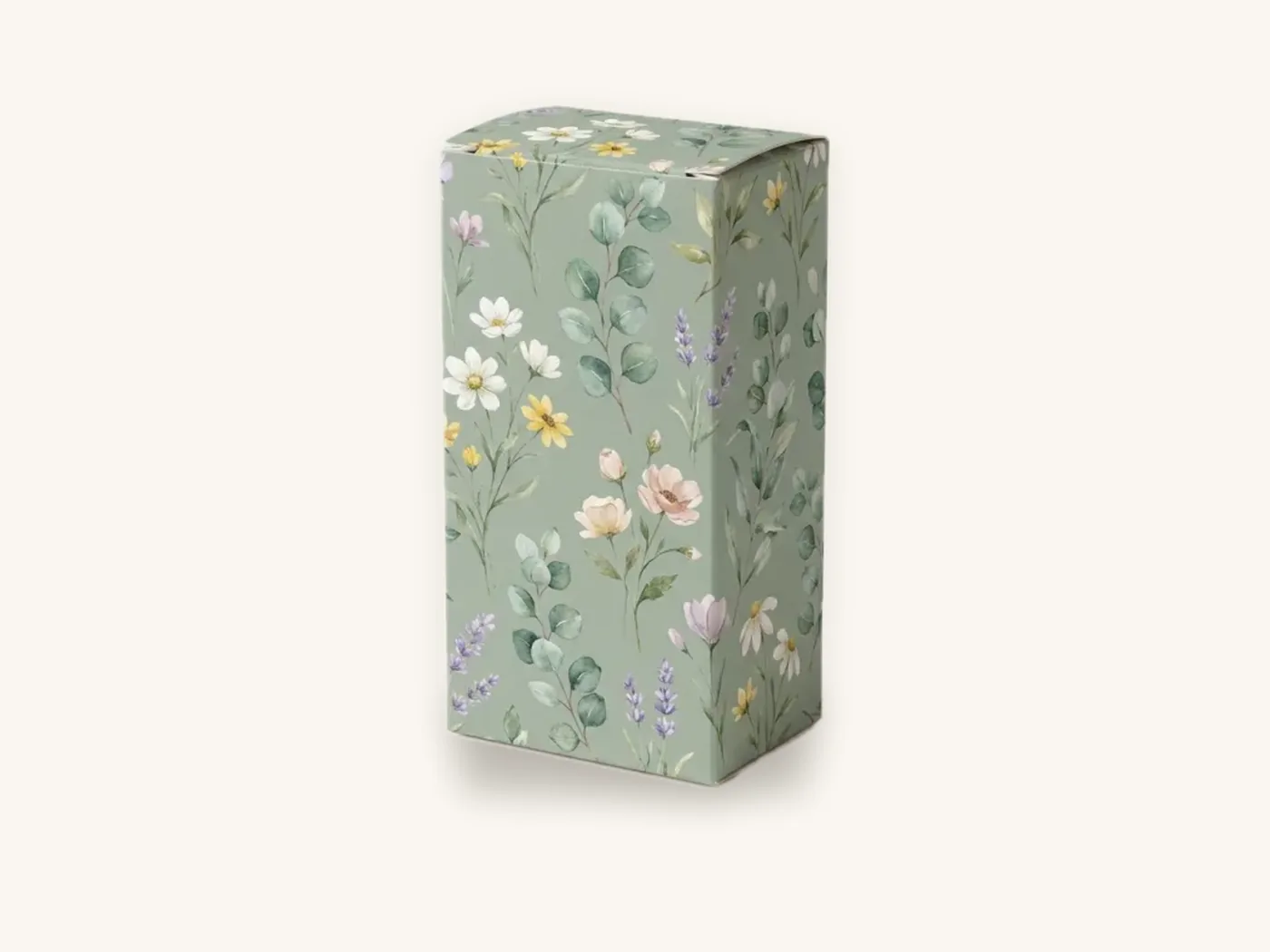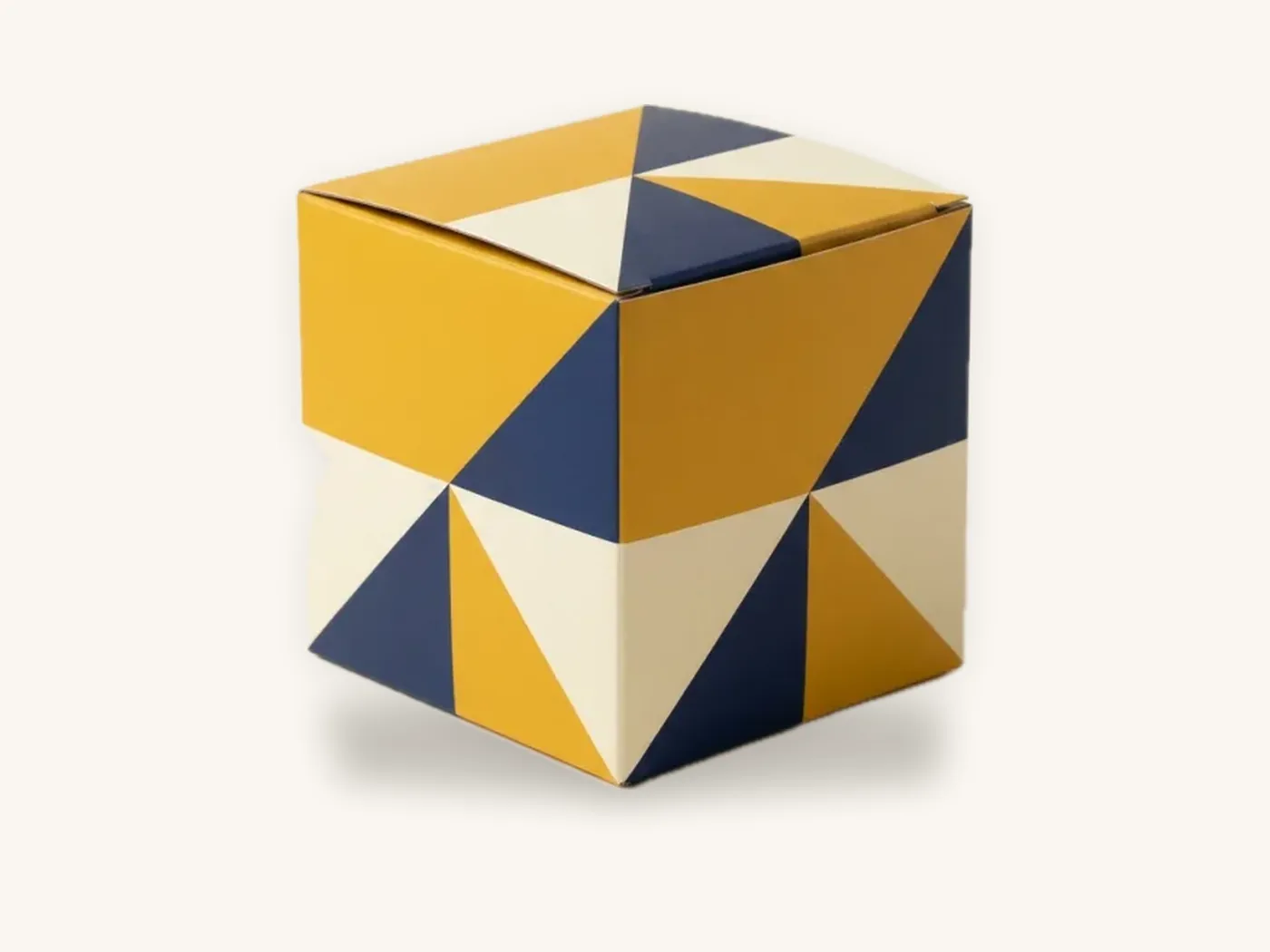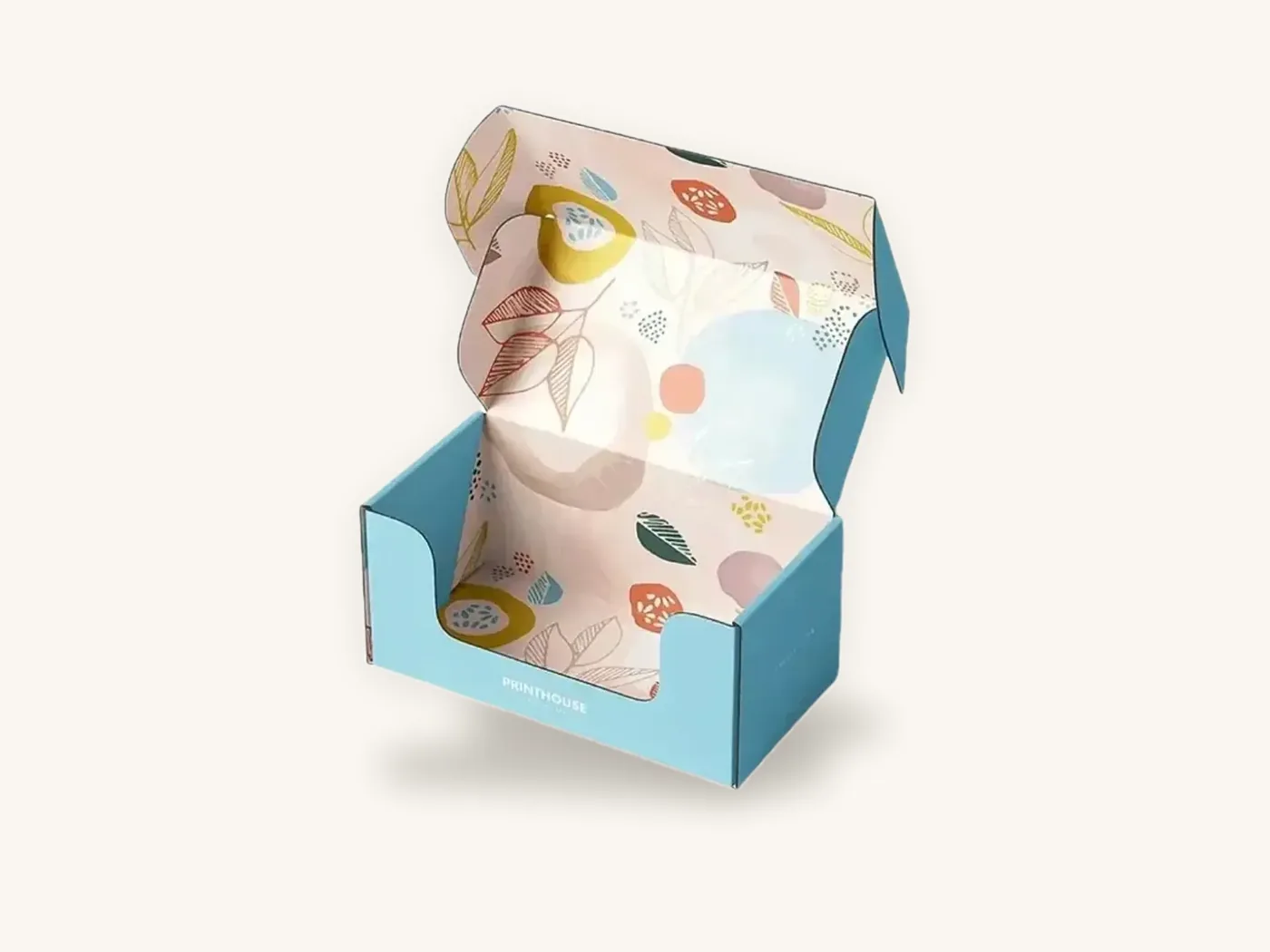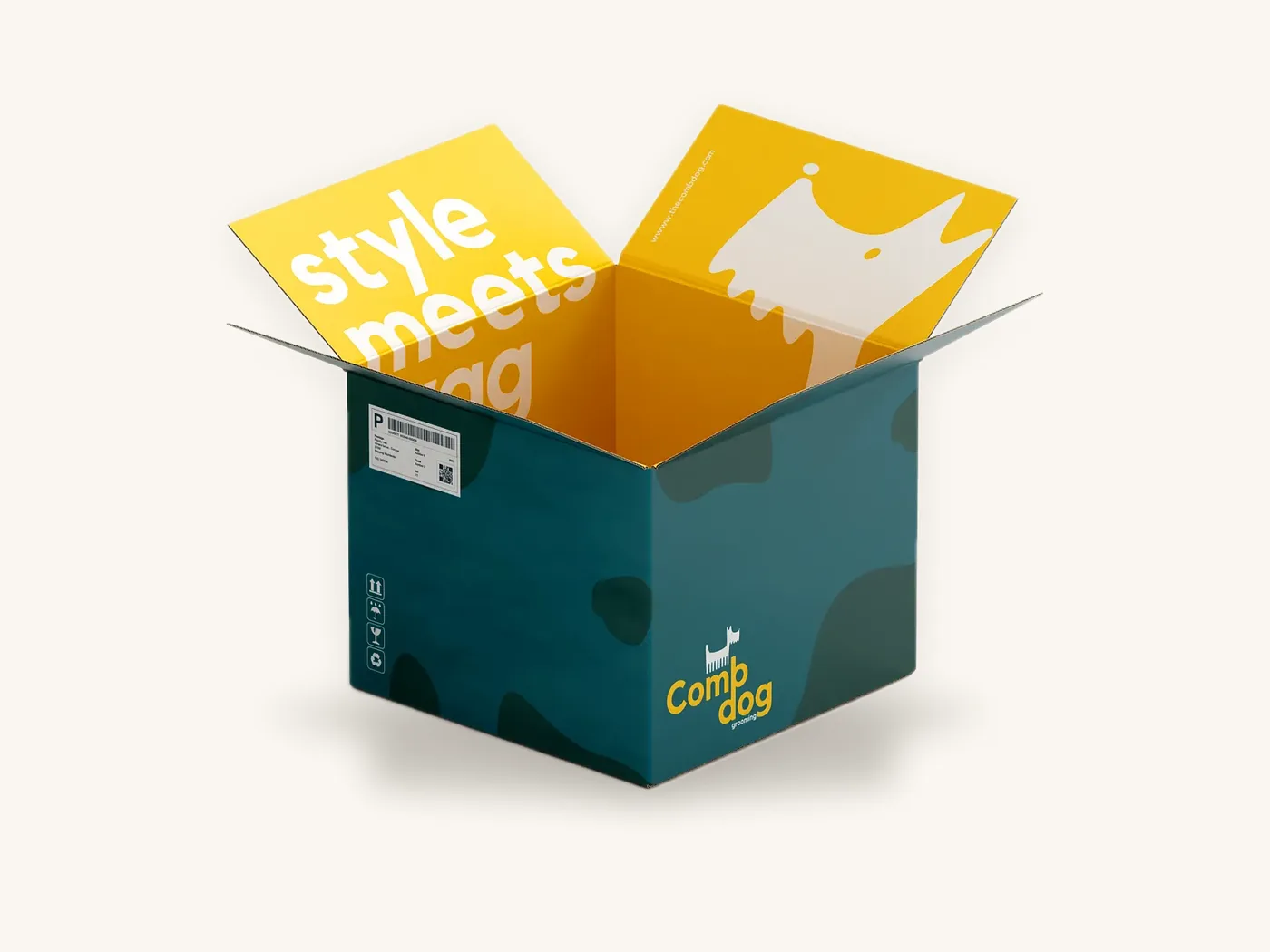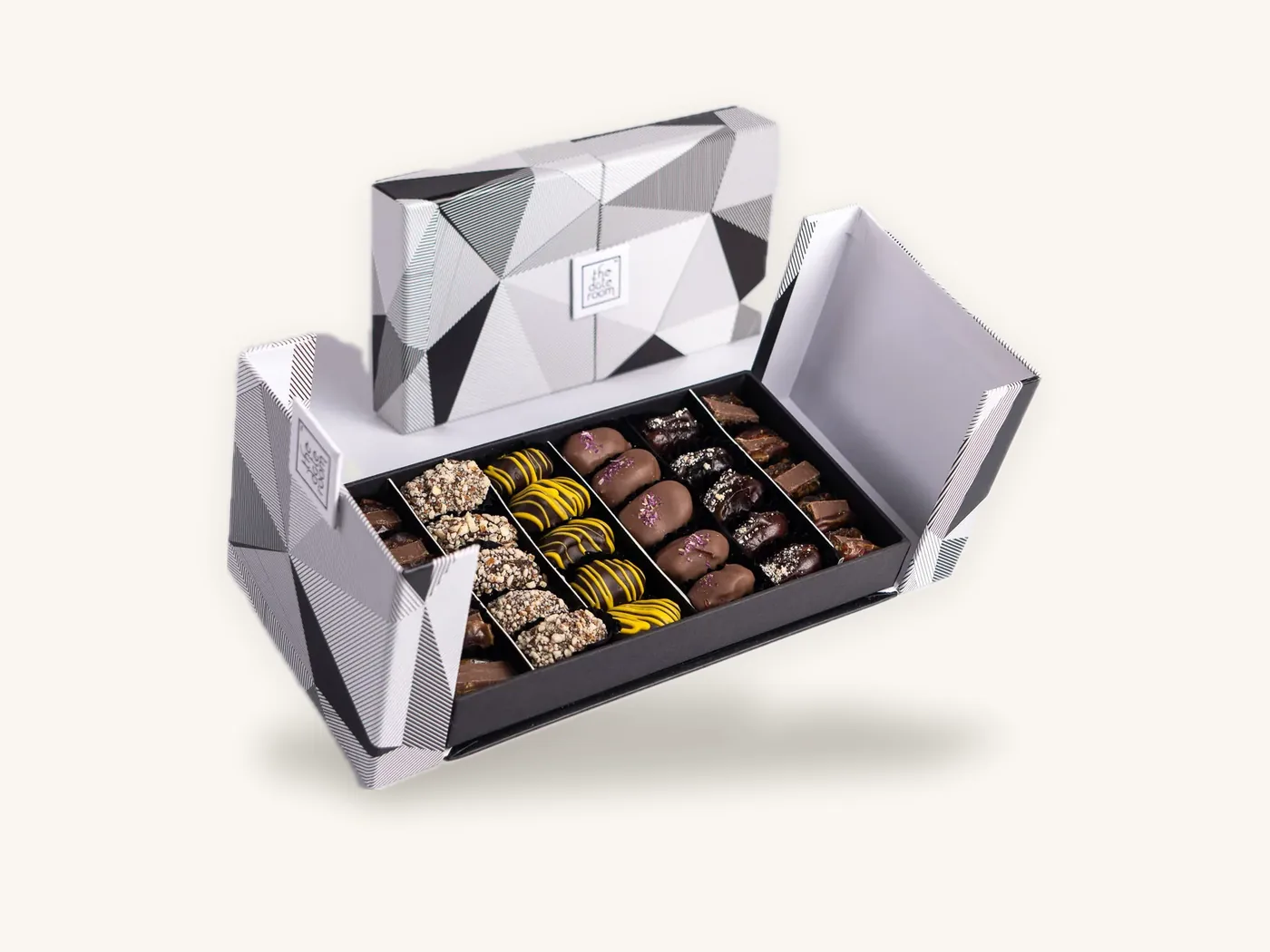
Luxury packaging feels expensive because of physical cues your customer processes before they read a single word: the weight of the box in the hand, the stiffness of the walls, the slow slide of a lid, crisp wrapped corners and a product that sits exactly where the eye lands. Print and foil matter, but they are the last layer, not the first.
Most premium packaging gets its effect from a handful of structural and material decisions, and a few well-chosen finishes, rather than from stacking every embellishment available. This guide breaks down those cues, shows which box formats deliver them at different price points, and gives you a spec checklist you can take to any supplier.
Key takeaways
- The strongest luxury signals are rigidity, weight, fit and reveal time. Decoration amplifies them but cannot replace them.
- Rigid boxes built from roughly 1.5–3 mm greyboard are the benchmark for luxury boxes; a heavy SBS carton with soft-touch and foil is the budget route.
- Pick one hero finish (foil, embossing or spot UV) and let the rest of the surface stay quiet. Restraint reads as confidence.
- The interior deserves as much design time as the lid: a contrasting neck, a fitted insert and a printed message under the lid do more than a busy exterior.
- A 2 mm wrapped rigid box at 8x6x3 in costs about $9.10 each at 100 units and about $4.05 at 1,000; a magnetic rigid box with soft-touch, foil and insert runs about $6.32 at 1,000.
- Protect the presentation in transit with a plain outer shipper; a scuffed rigid box undoes the whole effect.
What makes packaging feel expensive: the six physical cues
Before choosing a box style, it helps to know what the customer is actually responding to. These cues work across categories, from fragrance to spirits to watches, and each maps to a specific spec decision.
1. Resistance and rigidity
A box that does not flex when squeezed signals quality immediately. Paperboard cartons bow under thumb pressure; a greyboard set-up box does not. This is why custom rigid boxes remain the default for premium packaging, and why wall thickness is the first number worth debating with your supplier.
2. Weight
Heft suggests value. A rigid box with 2 mm board and a paperboard insert can weigh several times what a folding carton of the same size weighs. Thicker board and a substantial insert add it naturally.
3. Friction and closing speed
A lid that drops off instantly feels cheap. A lid that slides down slowly on a cushion of trapped air feels considered. That controlled descent comes from tight tolerances between lid and base, usually within a millimeter or so, and it is one of the hardest cues to fake.
4. Edges and corners
Wrapped paper that turns crisply over every edge, with no exposed board, no lifted corners and no glue marks, is the difference between a gift box and a craft project. Sharp corners come from precise board cutting and careful wrapping, not from decoration.
5. Reveal sequence
Luxury unfolds in steps: outer sleeve or ribbon, lid lift, a layer of tissue or a printed flap, then the product. Each step adds a second or two of anticipation. A shoulder neck box, a drawer or a book-style magnetic lid all build this sequence into the structure.
6. Surface feel
Soft-touch lamination, uncoated textured papers and embossed logos give the fingers something to notice.
The luxury packaging ladder: formats from accessible to flagship
Not every product needs the most expensive structure. The right format depends on retail price, where the box is seen and how long the customer keeps it. Think of it as a ladder, and step up only when the product justifies it.
| Rung | Format | Main luxury cues | Typical use | Relative cost |
|---|---|---|---|---|
| 1 | Heavy SBS folding carton with soft-touch and foil | Surface feel, one metallic accent | Prestige skincare, fragrance minis, candles | Lowest |
| 2 | Sleeve over a paperboard tray | Slide-out reveal, two print surfaces | Tea, chocolate, small accessories | Low to medium |
| 3 | Two-piece rigid box (lift-off lid) | Rigidity, weight, slow lid descent | Gift sets, apparel accessories, stationery | Medium |
| 4 | Shoulder neck rigid box | Contrasting neck, layered reveal | Fragrance, spirits, jewelry sets | Medium to high |
| 5 | Magnetic book-style or drawer rigid box | Snap closure or slide, keepsake value | Watches, electronics, PR kits, corporate gifts | High |
| 6 | Rigid box with custom foam or satin insert and outer sleeve | Every cue at once | Limited editions, flagship launches | Highest |
How to choose your rung
Match the packaging to the product's price and the moment it is opened. As a loose rule, packaging that costs a small single-digit percentage of retail price rarely raises eyebrows with finance teams, while packaging that approaches the cost of goods needs a clear reason, such as a gifting season or influencer seeding.
Choose rung 1 or 2 when the box sits on a retail shelf among competitors and gets discarded after purchase. Choose rung 3 or 4 when the box is part of the gift. Choose rung 5 or 6 when the box is meant to be kept, displayed or photographed. If you are still weighing retail cartons, our tuck end boxes guide and auto lock bottom boxes guide cover what a well-specified carton can achieve.
Rigid box structures that do the heavy lifting
Most luxury boxes are rigid, also called set-up boxes. Greyboard (chipboard) is cut, joined at the corners and wrapped in printed or specialty paper. Because the box is built already assembled, it keeps its shape permanently. Our rigid greyboard page explains the board itself; here is how the main structures compare for premium work.
Two-piece lift-off lid
The simplest rigid format: a base and a lid that slides over it. The quality lives in the fit. A lid that is too loose drops and rattles; too tight and customers struggle to open it. It suits apparel accessories, candles, stationery and gift sets, and it is often the best value route into luxury gift boxes.
Shoulder neck
A shoulder neck box adds an inner collar glued inside the base that rises above it. The lid rests on the shoulder, so when it lifts, a band of contrasting color or texture appears. That reveal is why shoulder neck boxes are closely associated with fragrance and fine spirits. Our shoulder neck boxes guide covers neck heights and contrast pairings in detail.
Magnetic book-style
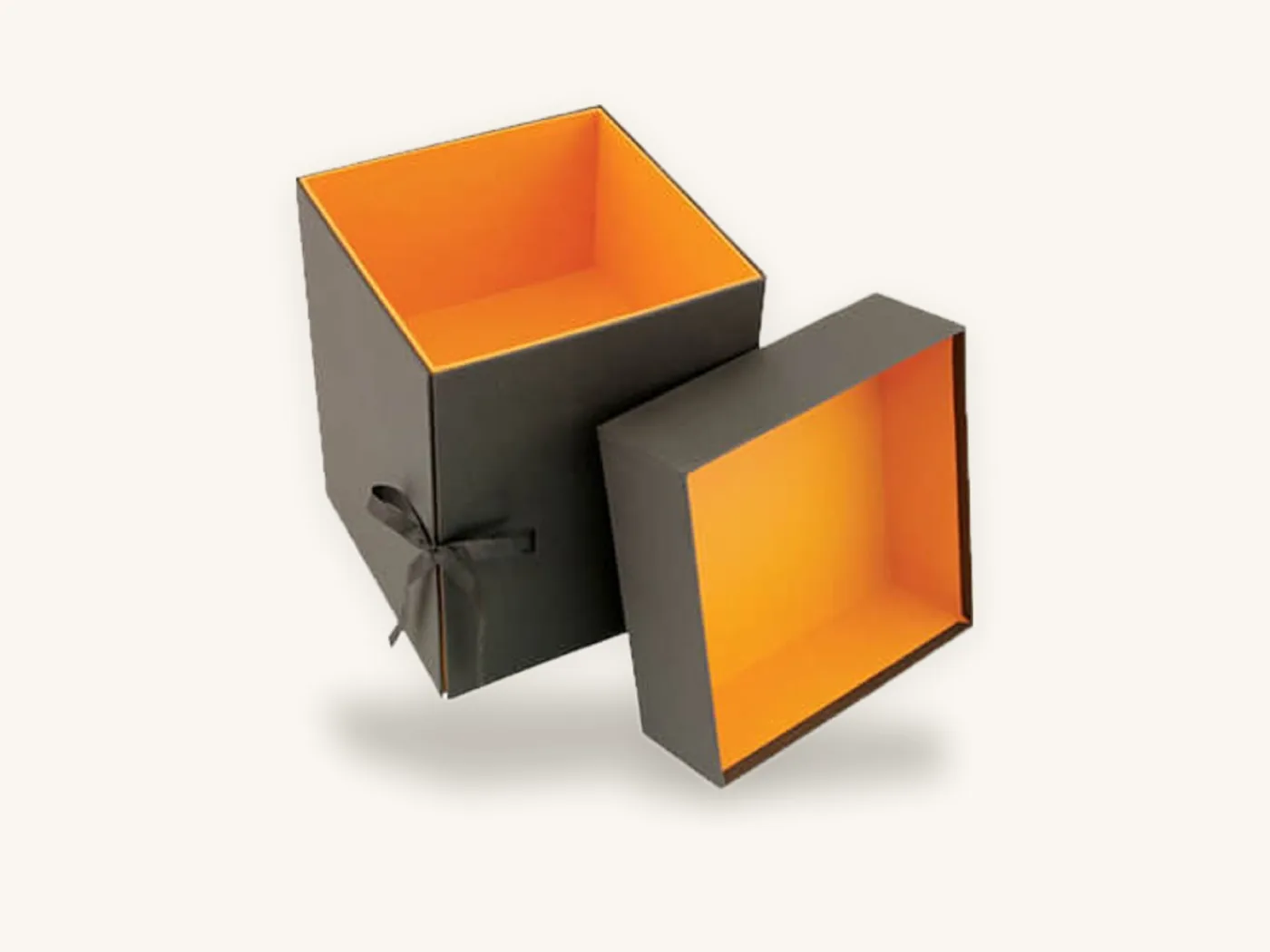
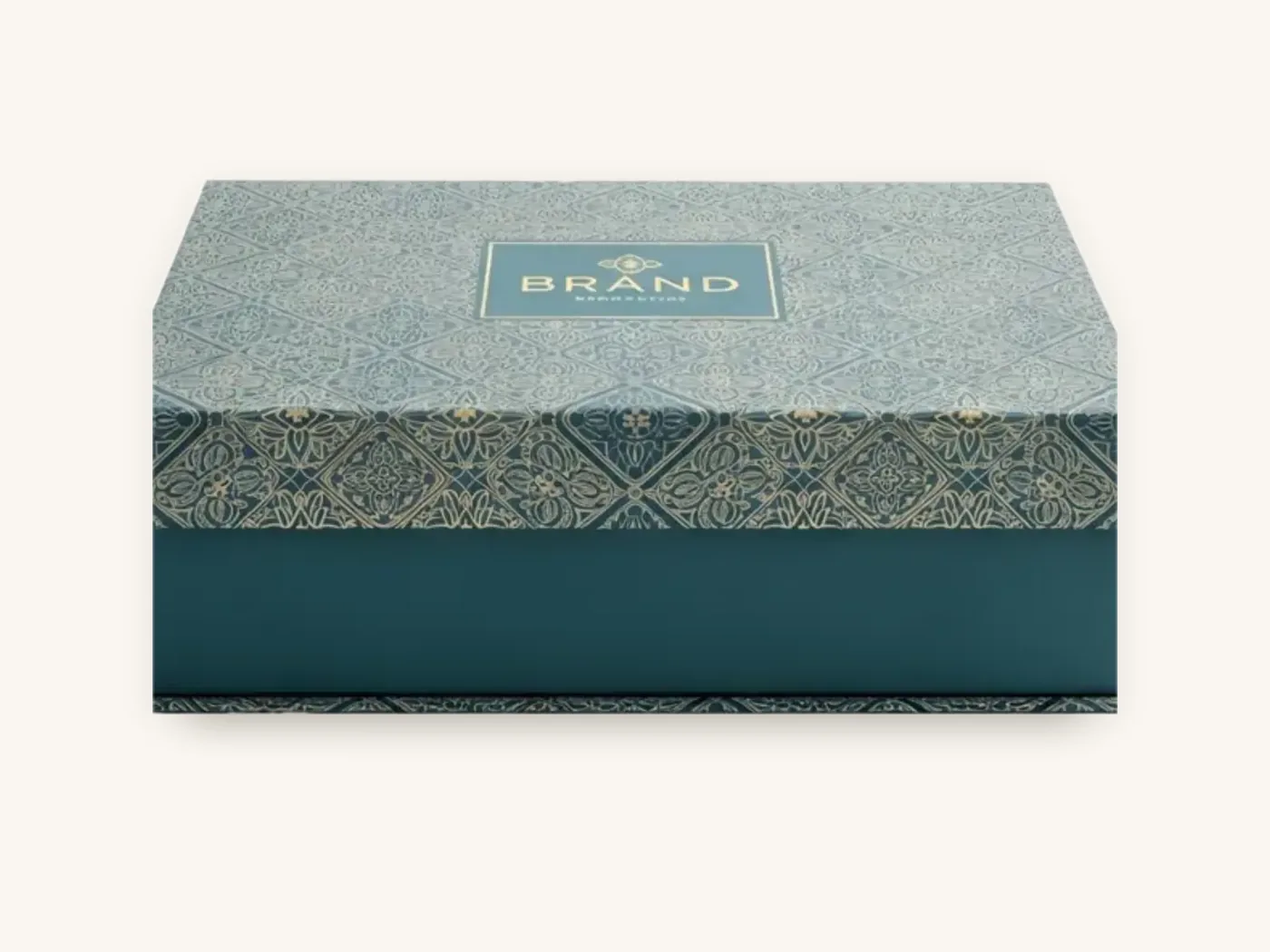
A hinged lid wraps around the base and closes with thin magnets hidden under the wrap. The snap is audible and satisfying, and the box opens like a book, which makes the inside lid a display surface. Magnetic closure boxes are popular for PR kits, electronics and corporate gifting because they get reopened and kept.
Drawer
A tray slides out of a wrapped outer sleeve, usually pulled by a ribbon tab. The slide is slow and deliberate, which suits jewelry, watches and small cosmetics. Drawer boxes also stack neatly for display.
Collapsible rigid
A rigid box that folds flat for shipping and storage, then pops into shape with magnets or tabs. It keeps most of the rigid feel while taking far less warehouse space. It is worth considering when you store thousands of units or ship boxes to a fulfillment partner. See collapsible rigid boxes for the construction.
Watch out: a rigid box with the wrong tolerance is worse than a good carton. Always approve a structural sample with the real product inside before committing to a run, and test the lid by lifting and dropping it several times.
Materials: greyboard, wrap papers and the inside surfaces
The board sets the rigidity, and the wrap sets the first impression. Get both right before spending on finishes.
Greyboard thickness
| Board caliper | Feel | Best for |
|---|---|---|
| About 1.5 mm | Firm but light | Small boxes, jewelry, cosmetics under about 4 in on the longest side |
| About 2 mm | The standard luxury feel | Most gift boxes, fragrance, apparel accessories |
| About 2.5–3 mm | Heavy and substantial | Large presentation boxes, spirits, electronics, keepsake editions |
Thicker board does more than add heft. It keeps large lids from sagging in the middle and holds magnets without flexing. For boxes over roughly 12 in on the longest side, ask whether 2.5 mm or 3 mm is needed to keep panels flat.
Wrap papers
The wrap is a thin paper laminated over the board. Printed art paper gives you full-color graphics and takes lamination well. Uncoated and textured stocks, such as linen, felt-marked or pearlescent papers, give a tactile surface that needs little or no printing. Our textured and specialty papers page shows the families available, and metallic and holographic board covers reflective options.
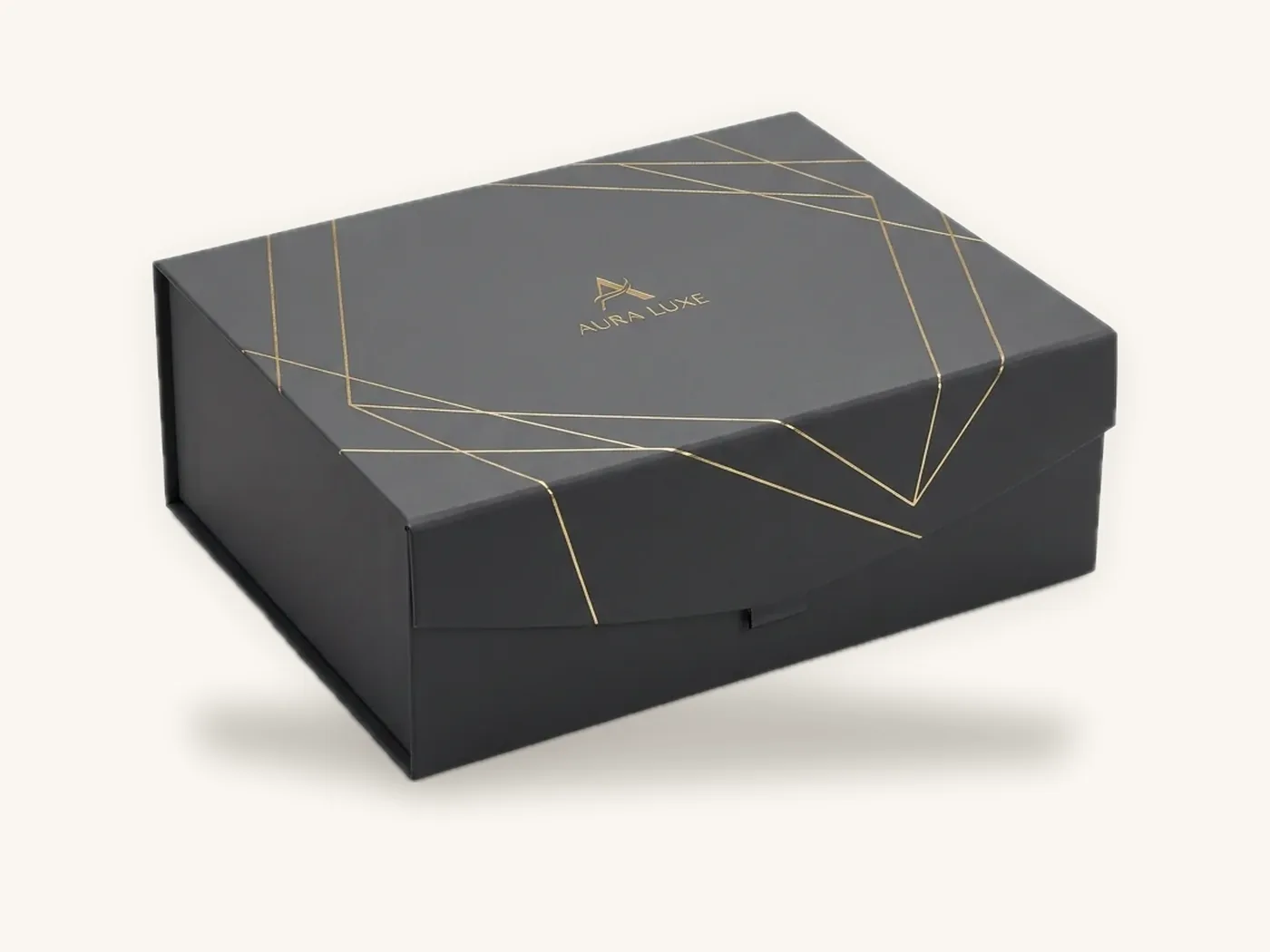
A solid uncoated black or deep navy wrap with a single foil logo is one of the most reliable luxury combinations, because it relies on texture and contrast rather than artwork.
Paper choice and scuffing
Dark uncoated papers look rich but show fingerprints and scuffs. If the box will be handled in retail, either choose a soft-touch laminated wrap or a mid-tone textured paper that hides marks. If the box ships direct and is opened once, uncoated dark stocks are fine inside a protective shipper.
Finishes for premium packaging: restraint beats stacking
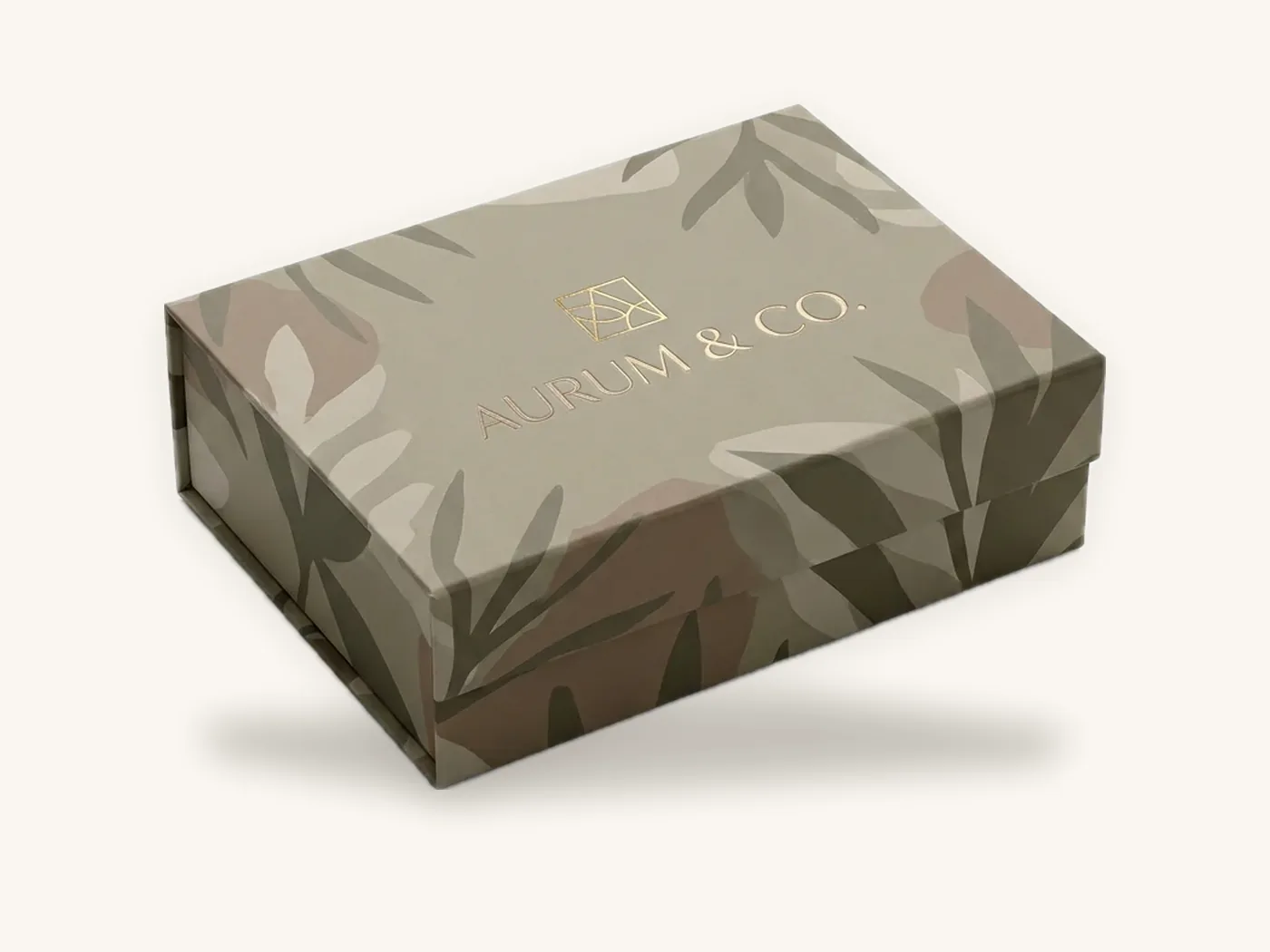
The most common mistake in premium packaging is combining every finish on one lid. Foil next to spot UV next to embossing next to a gradient photograph reads as noise. Pick one hero finish and support it with a quiet base. The printing and finishes page shows each option on real board.
| Finish | What it signals | Pairs well with | Avoid when |
|---|---|---|---|
| Soft-touch lamination | Velvety, tactile, modern | Foil, blind emboss | Box handled heavily at retail with dark colors, which can burnish |
| Matte lamination | Understated, glare-free | Spot UV, foil | You need saturated, glossy color |
| Foil stamping | Precious metal, celebration | Soft-touch, uncoated dark papers | Very fine type below about 6 pt, which can fill in |
| Blind embossing or debossing | Craft, permanence | Uncoated textured papers | The wrap is very thin or highly patterned |
| Spot UV | Contrast of shine against matte | Matte or soft-touch base | Applied over foil or on textured stock |
| Uncoated specialty paper, no print | Quiet confidence | A single foil or deboss | The product needs detailed on-box information |
One-time tooling for finishes
Foil, embossing, spot UV and custom inserts each need a one-time tool. At Box Sense that is about $60 for a foil die, $60 for an embossing die, $40 for spot UV and $45 for an insert die. There are no die or plate charges otherwise. Because tooling is one-time, it matters most on your first short run and becomes negligible on reorders.
Designing the logo for foil and embossing
Keep strokes above roughly 0.3 mm for foil and a little heavier for embossing, which softens detail. Simplify gradients and fine outlines into solid shapes. A logo that looks perfect on screen as a thin script can close up when pressed into textured paper, so ask for a digital proof that shows the finish area as a separate layer.
The interior and the reveal
Inserts that frame the product
A fitted insert holds the product at a deliberate height and angle, stops movement and hides gaps. Wrapped paperboard inserts match the box and feel premium; EVA foam gives a precise cavity for electronics or glass; molded pulp suits brands avoiding plastics. Satin or velvet-lined inserts suit jewelry and watches. Our box inserts guide compares each material and explains how to size cavities.
Layering
A sheet of printed tissue, a belly band or a printed card resting on top of the insert adds a pause before the product appears. One layer is enough; three starts to feel like padding.
The underside of the lid
On a magnetic or book-style box, the inside lid faces the customer at full attention. A short message, a pattern or a founder's note printed there is often more effective than any exterior decoration.
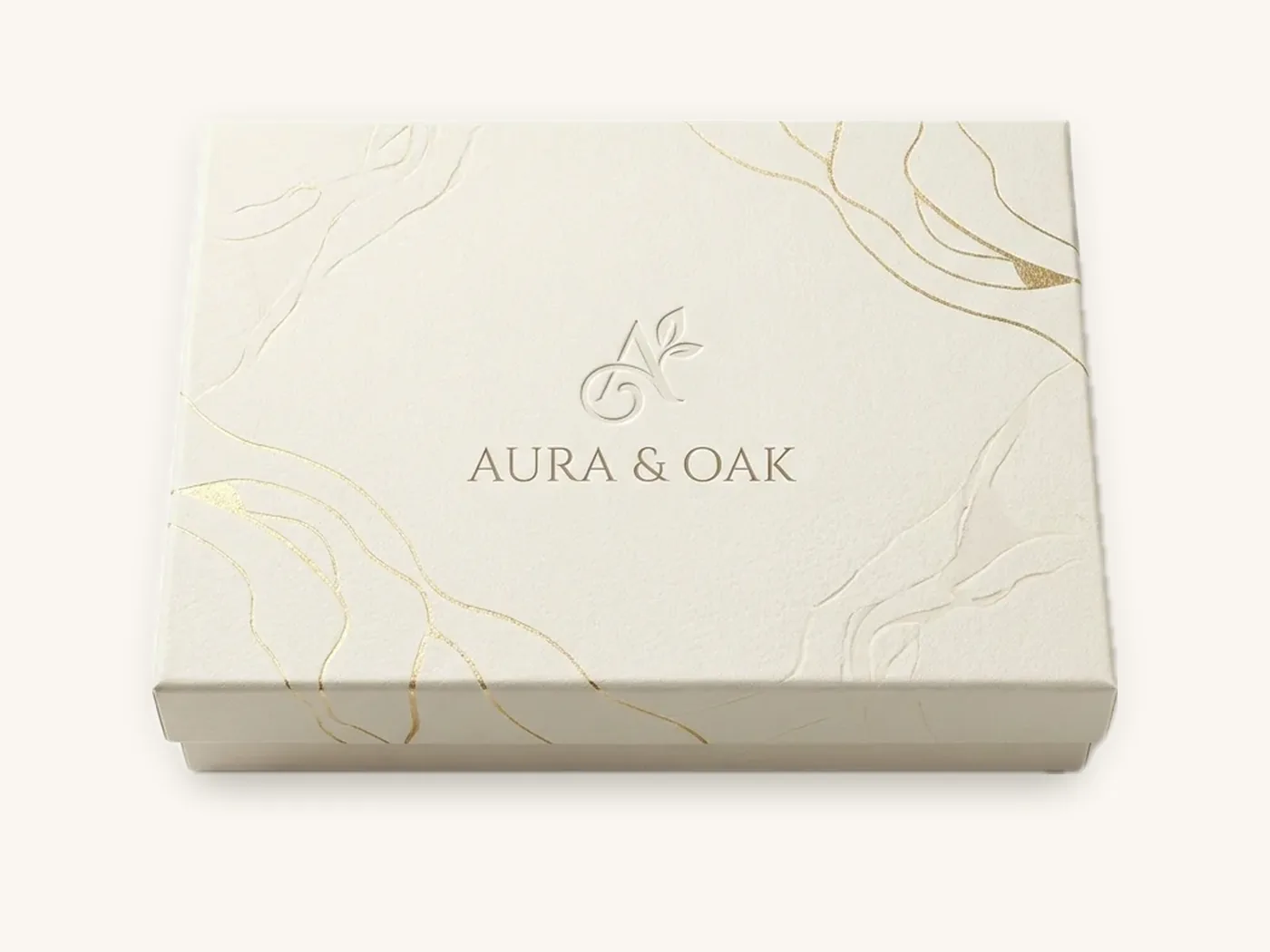
Tip: photograph your prototype from directly above with the lid off. That is how most customers share luxury unboxings online, so the insert layout and interior color deserve as much attention as the lid.
Luxury boxes on a folding carton budget
When a rigid box does not fit the margin, a well-specified folding carton can deliver a surprising share of the effect. Heavier board, a restrained palette and one tactile finish do most of the work.
What to specify
- Board: 18 pt or heavier SBS paperboard, which holds sharper creases and resists bowing better than lighter stock.
- Structure: a straight tuck end with the tuck on the back, so the front panel has no visible seam, or a sleeve over a tray for a slide-out reveal.
- Surface: soft-touch lamination with a single foil logo.
- Interior: a printed inside panel or a simple die-cut paperboard insert so the product does not slide.
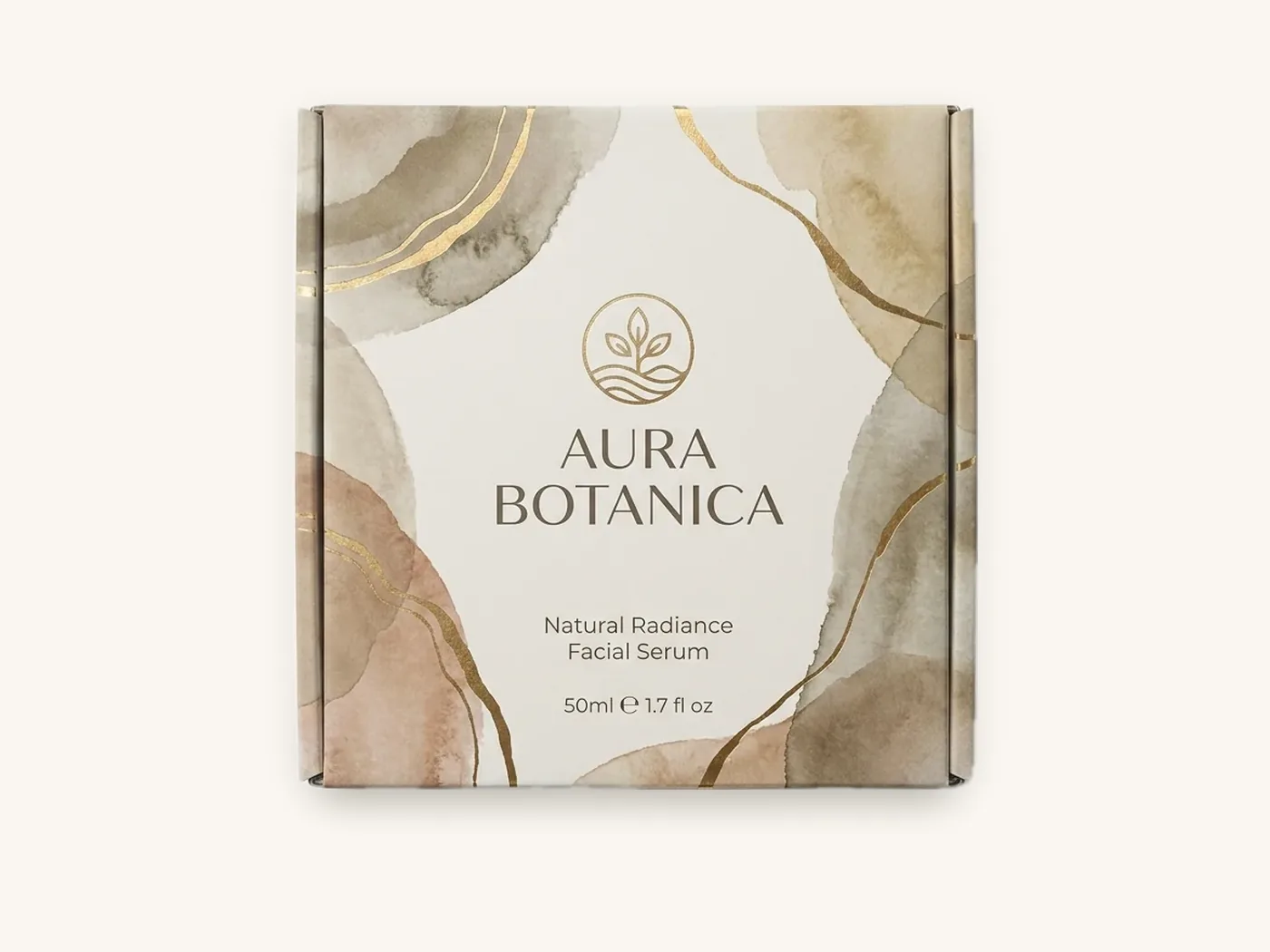
For reference, a 2.5x2.5x6 in cosmetic carton in 18 pt SBS with full color, soft-touch and foil is about $1.93 each at 100 units and about $0.86 at 1,000. Compare that with a small 3x3x1.5 in jewelry rigid box with matte wrap, foil and insert at about $3.35 at 100 and about $1.49 at 1,000. The gap narrows at small sizes, which is why rigid boxes are common for jewelry even at modest price points. Cosmetic boxes show the carton route in practice.
What luxury packaging costs, and where the money goes
Rigid box pricing is driven by board area, wrap paper, finishes, inserts and hand assembly. Because rigid boxes involve more manual work than folding cartons, quantity reduces unit cost steeply.
| Spec (indicative, US shipping included) | 10 | 100 | 500 | 1,000 | 5,000 |
|---|---|---|---|---|---|
| Rigid box, 2 mm greyboard wrapped, 8x6x3 in, full color, matte | $13.76 | $9.10 | $4.85 | $4.05 | $2.87 |
| Rigid magnetic box, 2 mm, 10x8x3 in, soft-touch, foil, insert | $21.50 | $14.23 | $7.59 | $6.32 | $4.49 |
| Jewelry rigid box, 2 mm, 3x3x1.5 in, matte, foil, insert | $5.06 | $3.35 | $1.79 | $1.49 | $1.06 |
| Cosmetic carton, 18 pt SBS, 2.5x2.5x6 in, soft-touch and foil | $2.91 | $1.93 | $1.03 | $0.86 | $0.61 |
Cost drivers in order of impact
- Quantity. Moving from 100 to 1,000 units roughly halves the rigid box unit price.
- Size. Board and wrap scale with surface area, and large boxes may need thicker board.
- Closure and structure. Magnets, drawers and necks add components and assembly steps.
- Inserts. Foam, satin lining or multi-cavity designs add material and labor.
- Finishes. Each hero finish adds one-time tooling plus a small per-unit cost.
Run your own size through the luxury box price estimator to see the tier breaks.
Shipping premium packaging without damage
A rigid box that arrives with a crushed corner or scuffed lid is a worse experience than a plain mailer. Plan the transit layer from the start.
- Always overbox for parcel shipping. Place the rigid box inside a snug corrugated shipper with a little paper fill. A branded custom mailer box can serve as a first reveal layer.
- Protect lamination. Wrap soft-touch boxes in tissue or a paper sleeve so they do not rub against the shipper.
- Stop lid separation. A belly band, ribbon or small clear seal keeps a lift-off lid closed.
- For bulk freight, pack rigid boxes in master cartons sized to prevent movement. Our custom shipping boxes guide covers board grades for master cartons.
For retail, a matching bag completes the experience; luxury shopping bags with rope handles and foil use the same finish language as the box, and the custom paper bags guide explains handle and stock choices.
How to order luxury packaging from Box Sense
A clear brief gets a faster, more accurate quote and fewer proof rounds. You can also start with a product and a rough idea, and our structural team will recommend a format.
Luxury box specification checklist
- Product details: exact dimensions and weight, plus photos of the product and any accessories that go in the box.
- Format: two-piece, shoulder neck, magnetic, drawer, collapsible or a carton alternative; or ask for a recommendation.
- Board: 1.5, 2, 2.5 or 3 mm greyboard, or 18 pt SBS for a carton.
- Wrap: printed art paper with lamination, or an uncoated or textured specialty paper.
- Hero finish: foil (with color), embossing, debossing or spot UV, and exactly where it goes.
- Interior: insert material, number of cavities, lining, and any inside-lid printing.
- Quantities: price at least two tiers, such as 250 and 1,000.
- Shipping plan: direct to customers, to a 3PL or to retail, and the in-hand date you need.
What to expect
- Quote within 24 hours, confirmed for your spec and quantities.
- Free design support: we supply the dieline, set up artwork and send a 3D digital proof, with two revision rounds. The design services page explains the process.
- Samples: unprinted structural samples are free, and a printed sample of approved artwork is free on orders of 100 or more. See samples.
- Production: 8–12 business days after proof approval. Rush in 5 business days applies to most paperboard and corrugated styles, so ask about rigid timing when you quote.
- Minimum order of 10 boxes, free shipping on every US order, and defective boxes reported within 14 days are reprinted free.
Browse the rigid boxes style page to compare structures side by side before you brief us.
Frequently asked questions
What is considered luxury packaging?
Luxury packaging is packaging designed to communicate high value through physical quality rather than volume of decoration. Typical markers are rigid greyboard construction, substantial weight, tight lid tolerances, crisp wrapped edges, tactile finishes such as soft-touch or embossing, and a planned reveal with a fitted insert. It is common for fragrance, jewelry, spirits, watches, electronics and gift sets.
How much do luxury boxes cost?
Cost depends on size, structure, finishes, inserts and quantity. As a reference, a 2 mm wrapped rigid box at 8x6x3 in with full color and matte finish is about $9.10 each at 100 units and about $4.05 at 1,000. A 10x8x3 in magnetic rigid box with soft-touch, foil and an insert is about $6.32 at 1,000, with US shipping included.
What is the difference between a rigid box and a folding carton?
A rigid box is made from thick greyboard, usually 1.5–3 mm, wrapped in paper and built already assembled, so it never flexes or folds flat. A folding carton is printed paperboard, often 14–24 pt, that ships flat and is folded by hand or machine. Rigid boxes feel more premium; cartons are lighter, cheaper and better for high-volume retail.
Which finish makes a box look most expensive?
No single finish does it alone, but soft-touch lamination with one foil-stamped logo is the most reliable combination. It adds a velvety feel and a precise metallic accent without clutter. Blind embossing on an uncoated textured paper is an equally strong, quieter alternative. The key is to choose one hero finish rather than combining several on the same surface.
Can luxury packaging be eco-friendly?
Yes. Rigid boxes are mostly paper-based and often kept and reused. To improve recyclability, choose uncoated specialty papers or aqueous coatings over plastic lamination, use paperboard or molded pulp inserts instead of foam, and specify FSC-certified board with soy or water-based inks. Magnets can be removed before recycling, and any environmental claim printed on the box should be specific and substantiated. See our sustainability page.
Can I order a small run of luxury boxes?
Yes. Box Sense produces custom luxury boxes from a minimum of 10 units, which suits launches, PR kits and prototypes. Unit prices are higher at small quantities because setup and hand assembly are spread over fewer boxes. One-time tooling applies only if you add foil, embossing, spot UV or a custom insert.
Do luxury rigid boxes need an outer shipping box?
For parcel shipping, yes. Rigid boxes resist crushing well, but their wrapped surfaces and laminations scuff easily and lids can separate. Pack them in a snug corrugated mailer or shipper with a little paper fill, and add a belly band or seal for lift-off lids. For retail delivery, use master cartons sized to stop movement.
How long does it take to make custom luxury packaging?
After you approve the digital proof, standard production at Box Sense is 8–12 business days. Allow extra time before that for structural samples and proof revisions, which are especially worthwhile for rigid boxes because fit determines the premium feel. Quotes are confirmed within 24 hours, and shipping is free within the US.
Next steps
Start with your product dimensions and the rung on the luxury ladder that fits your price point, then check where costs land in the instant pricing estimator. When you are ready to see a structure and a 3D proof, request a luxury packaging quote and we will confirm pricing within 24 hours.
Boxes in this guide
Order the packaging we covered
Written by the Box Sense Packaging Team
Our structural designers, prepress technicians and production staff print and convert custom boxes every day for brands in the United States, United Kingdom and UAE. Questions about this guide? Talk to us.