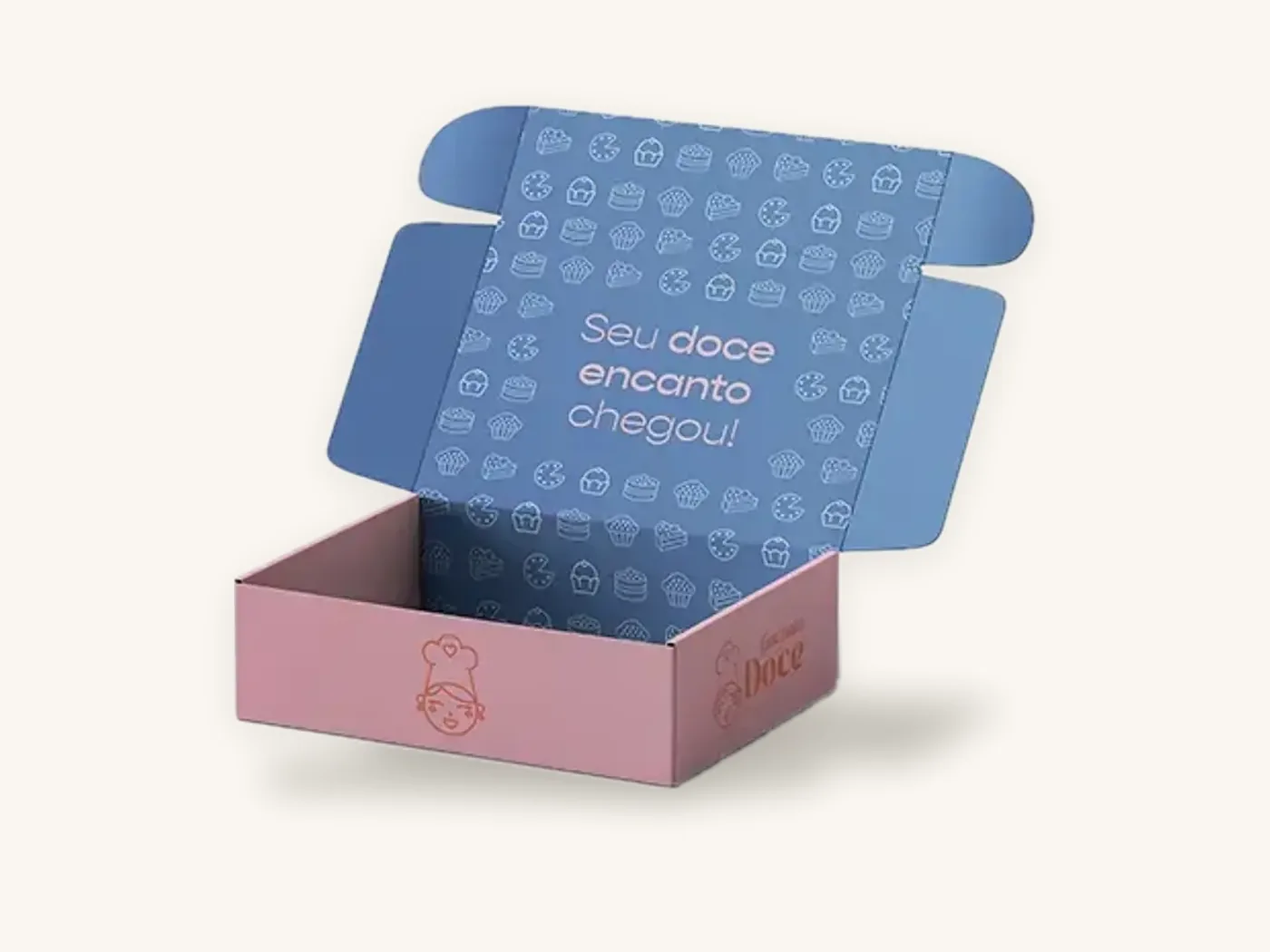
Custom cake boxes should be sized from the cake board outward, not from the cake itself: take the board diameter, add roughly 1/2 in of clearance on each side, then set the height by the tallest decoration plus about 1 in. Get those two numbers right and the box protects the frosting, the car ride goes smoothly and your branding arrives intact.
The rest of the decisions follow from there: a folding paperboard box for single-tier cakes, a sturdier corrugated structure for heavy or tiered cakes, and a window only when it helps the sale. This guide gives you cake box sizes by cake diameter, explains cake boards and height clearance, compares structures, and closes with transport habits that prevent the classic smeared-side disaster.
Key takeaways
- Size from the board, not the sponge. The board is the widest rigid part, and it is what slides in and out of the box.
- Standard cake box sizes step in 2 in increments (8, 10, 12, 14 in footprints) to match common board sizes; a 10x10x5 in box fits an 8 in cake on a 10 in board.
- Height clearance is the most common sizing mistake. Measure to the top of the tallest topper, candle or sugar flower and add about 1 in.
- 18 pt SBS paperboard handles most single-tier cakes; move to E-flute corrugated for tiered, fruit-heavy or long-distance deliveries.
- Cake boxes with window lids help retail and display sales, but plan for condensation when cakes come out of the fridge.
- Box Sense makes custom cake boxes from 10 units, with free dielines and 3D proofs and 8–12 business day standard production.
Cake box sizes: a chart from cake diameter to box dimensions
Most bakeries work in round cakes of 6, 8, 10 and 12 in, plus quarter and half sheet cakes. The board is usually 2 in wider than the cake, which leaves a 1 in lip all around for piped borders and for fingers when lifting. The box then needs a small gap around the board so it slides in without catching.
The chart below uses those common conventions. Treat it as a starting point and confirm with your own boards, because board sizes vary slightly between suppliers.
| Cake | Typical board | Box footprint (inside) | Box height for a plain cake | Box height with toppers |
|---|---|---|---|---|
| 6 in round, 2 layers | 8 in round | 8x8 in or 9x9 in | 5 in | 6 to 7 in |
| 8 in round, 2 layers | 10 in round | 10x10 in | 5 in | 6 to 7 in |
| 8 in round, 3 layers | 10 in round | 10x10 in | 6 in | 7 to 8 in |
| 10 in round, 2 layers | 12 in round | 12x12 in | 5 to 6 in | 7 in |
| 12 in round, 2 layers | 14 in round | 14x14 in | 6 in | 7 to 8 in |
| Quarter sheet (about 9x13 in) | 10x14 in rectangle | 11x15 in | 5 in | 6 in |
| Half sheet (about 12x18 in) | 13x19 in rectangle | 14x20 in | 5 in | 6 in |
| Two-tier (6 in on 10 in) | 12 or 14 in drum | 14x14 in | 10 to 12 in | Custom tall box |
Why 10x10 for an 8 in cake? The 10 in board is what goes in the box, and a square box leaves corner space around a round board, so the fit is snug but workable.
Round cakes almost always go in square boxes: they fold from one sheet, stack cleanly in a van, and the corner gaps give fingers room to lift the board.
When a custom size beats a stock size
Stock sizes are built for the average cake. Choose a custom footprint when you sell a signature format, such as a heart cake, a long bar cake or a 7 in tall chiffon, or when you want the board to sit tight enough that it cannot slide. Because Box Sense has no die or plate charges, a custom footprint costs about the same per unit as a common one at the same size.
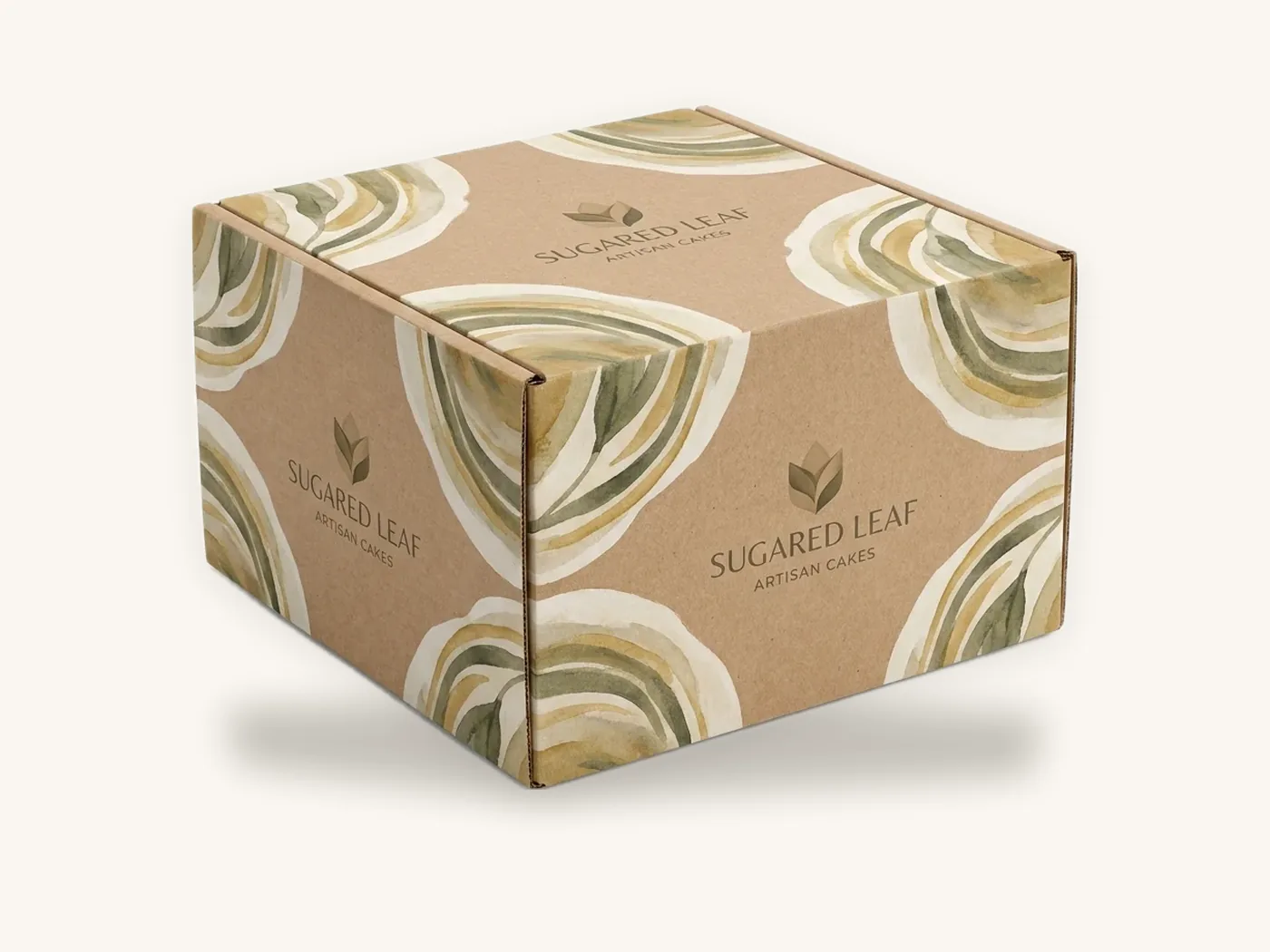
Cake boards, drums and why they set the box
A cake board does three jobs: it supports the cake, it lets you move the cake without touching it, and it defines the footprint your box must accept. Picking the board before the box saves a reprint.
| Board type | Typical thickness | Best for | Box implication |
|---|---|---|---|
| Thin corrugated round | about 1/8 in | Single-tier cakes, cheesecakes | Standard box height works |
| Double-wall corrugated round | about 1/4 in | Heavier layer cakes, fruit cakes | Add 1/4 in to height |
| Cake drum (foil-covered) | 1/4 to 1/2 in | Celebration and tiered cakes | Add the drum thickness to height; drum is often 2 to 4 in wider than the cake |
| Masonite or reusable board | 1/4 in or more | Wedding tiers, display cakes | Heavy; consider a corrugated box |
| Scalloped or shaped board | about 1/8 in | Heart, number and novelty cakes | Measure the widest point, not the nominal size |
Choose boards with a grease-resistant coated or foil top; uncoated rounds absorb butter, soften and stain the box base.
Securing the board inside the box
A board that slides in the box is the start of most transport damage. Three simple fixes work well:
- Size the box so there is no more than about 1/2 in of play per side.
- Put a small dab of buttercream or a non-slip mat under the board.
- Add a corrugated or paperboard base insert with a circular recess that locks the board in place. Our box inserts and dividers can be cut to your board diameter.
Watch out: a cake drum that is 4 in wider than the cake changes your box size by a full step. If you move to drums for celebration cakes, re-check every box size in your range before reordering.
Height clearance: toppers, drips and tall cakes
Box height is where cake box sizes most often go wrong. A 5 in box is fine for a two-layer 8 in cake with a flat top, but modern decorating adds height fast: drip edges, meringue kisses, macarons on top, fresh flowers, sugar sails and acrylic toppers.
How to measure height correctly
- Place the finished cake on its board on a flat counter.
- Measure from the counter to the highest point of any decoration, including candles if they go in before delivery.
- Add the board thickness if you measured from the board surface instead.
- Add about 1 in of clearance so the lid never touches frosting when the box flexes as it is carried.
- Round up to the nearest half inch and pick the box height.
A 3-layer 8 in cake stands roughly 5 to 6 in tall. Put a 2 in sugar flower arrangement on top and you need about an 8 in box. That is why many bakeries keep two heights of the same footprint in stock.
Tall acrylic toppers and delicate sugar work are safer packed separately with placement instructions, which lets you use a lower, stronger box.
Tall and tiered cakes
For two or more tiers, a standard folding box becomes a weak point. Tall panels bow outward, the lid sags and the whole box twists when lifted. Better options:
- Tall corrugated box with a front-opening panel, so the cake slides in horizontally instead of being lowered from above.
- Extension collar: a separate corrugated band that sits on the base and raises the lid height.
- Deliver tiers boxed individually and stack on site, which is the safest method for wedding cakes.
Cake box structures compared
"Cake box" covers several constructions. The right one depends on how fast your team assembles boxes, how heavy the cakes are and how much print space you want. The folding cartons style page shows how paperboard structures fold from one sheet.
| Structure | How it forms | Assembly speed | Best for | Limits |
|---|---|---|---|---|
| Lock-corner (four-corner) | Glued corners pop up; lid folds over and tucks | Very fast | High-volume bakeries, counter orders | Lid is part of the base, so opening lifts the whole front |
| Self-lock one-piece tuck | Die-cut sheet folds and locks without glue | Moderate | Short runs, custom sizes | Slower at the counter during a rush |
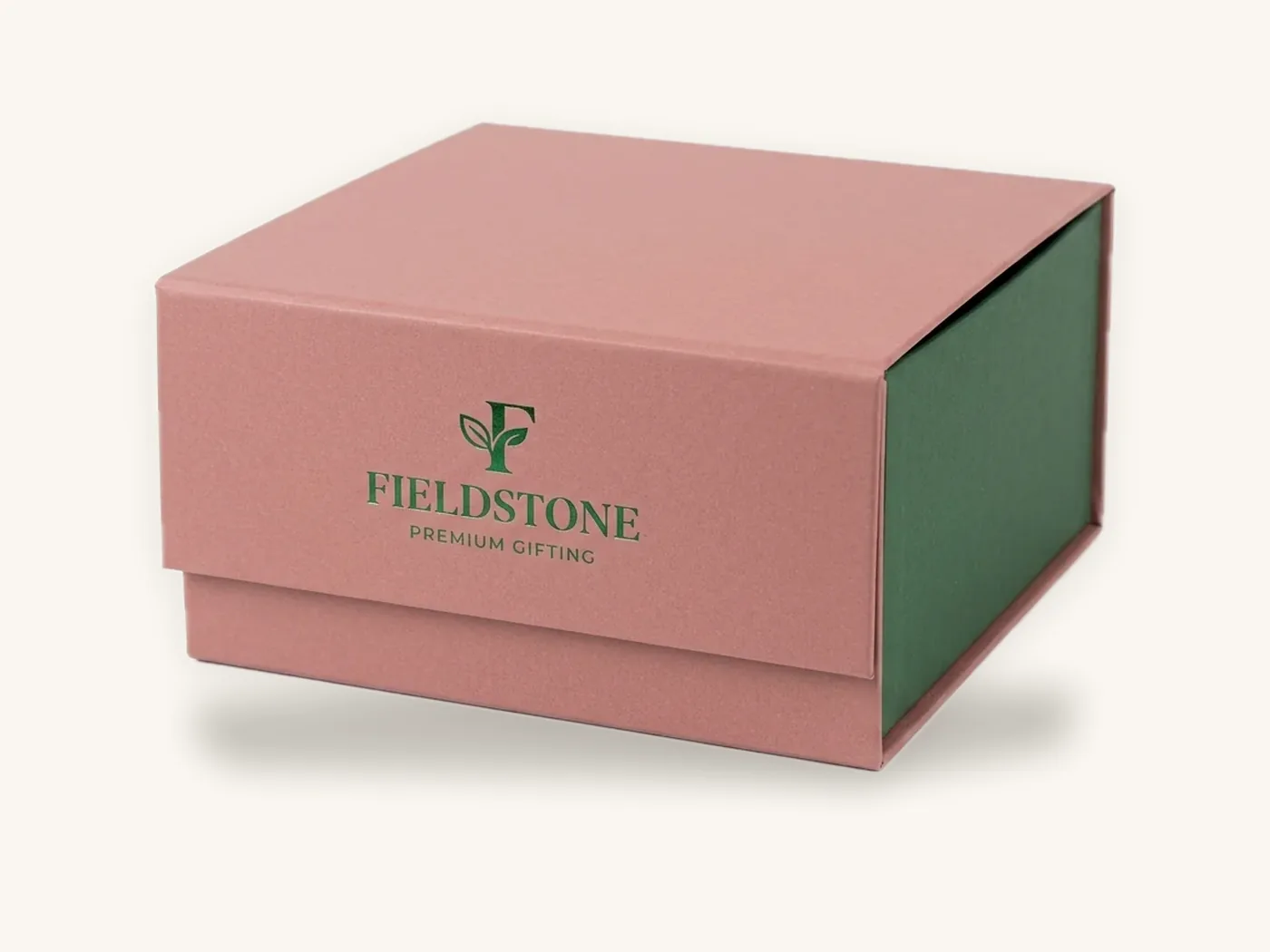
| Two-piece base and lid | Separate tray and lid | Fast once pre-formed | Premium cakes, display in shop | Two parts to store; lid can lift off if not taped |
| Front-opening tall box | Front panel folds down to slide cake in | Moderate | Tall and tiered cakes | Larger flat size, more board |
| Corrugated cake box | E-flute or B-flute, locking tabs | Moderate | Heavy cakes, delivery apps, shipping | Coarser print surface than SBS |
Lock-corner for speed
Pre-glued corners let staff pop a box into shape in seconds, which matters most on a busy Saturday morning.
Two-piece for presentation
A separate lid lifts straight up, which means frosting on the sides is never at risk from a front flap swinging in. It also gives a cleaner reveal when the customer opens it at a party. Pair it with a window in the lid for display.
Cake boxes with window: when it helps and when it hurts
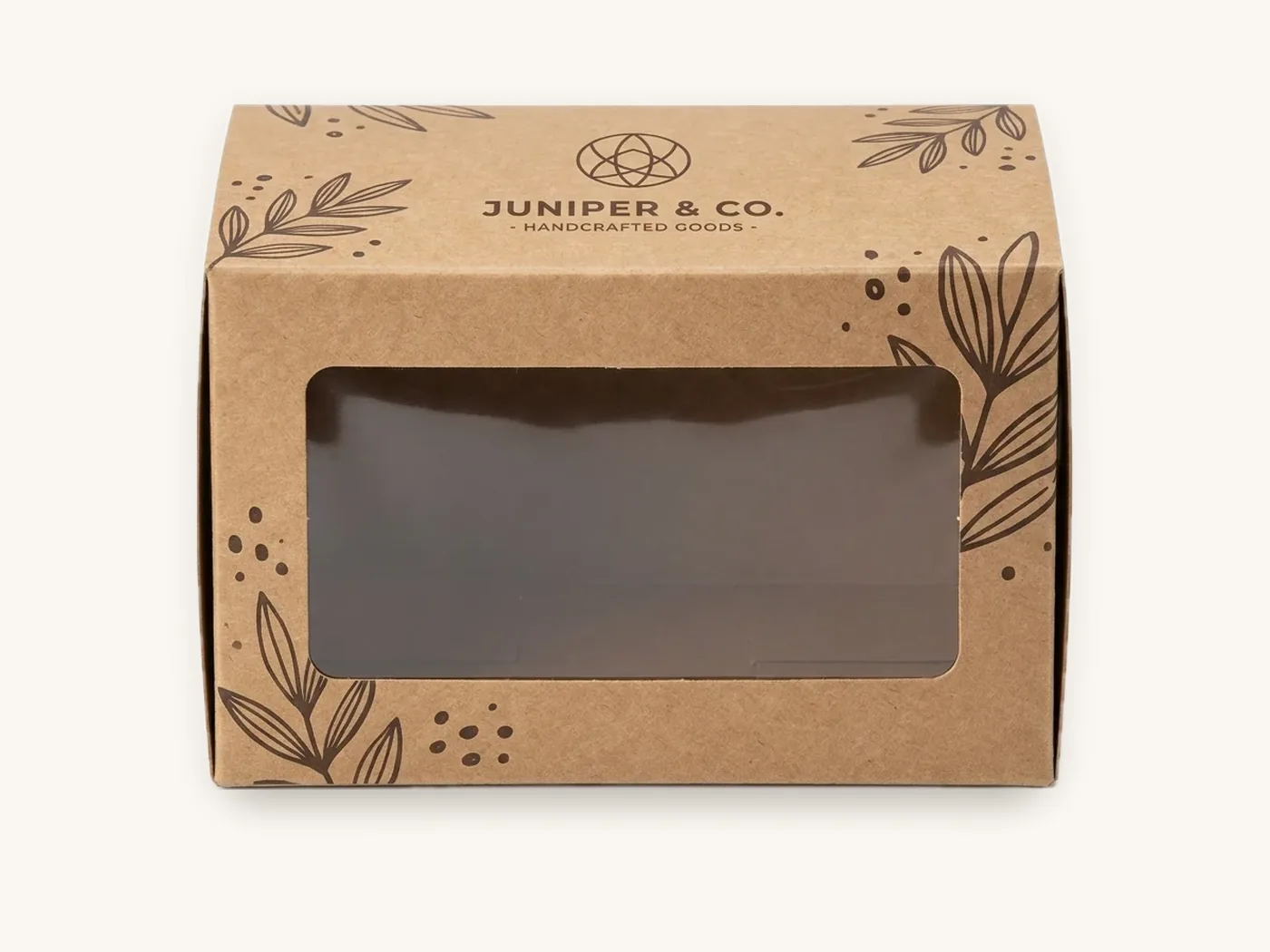
A window lets customers see the cake without opening the box, which helps in a retail case, at a farmers market and for grab-and-go celebration cakes. It also lets delivery drivers and customers check the cake is right before they leave the counter.
The window boxes style page covers window shapes in general. For cakes, a few specifics matter.
Window placement and size
- Lid windows show the decorated top, which is where most of the design is. They are the default for cake boxes.
- Side windows show layers and drips, but they weaken tall side panels. Keep at least 1 in of board around any side window.
- Wrap-around windows from the lid down the front look striking but reduce stiffness the most. Reserve them for smaller, lighter cakes.
Keep the window at least 3/4 in in from every fold and lock. Board near a crease has to flex, and a window there tears or pops its film.
PET or PLA film
Windows are usually PET film, which is clear, stiff and resists fogging reasonably well. Compostable PLA is available if your brand positions around sustainability, though it is less heat-tolerant, so keep boxes away from hot ovens and car dashboards in summer. Our guide to PET vs PLA window film explains the trade-offs in depth.
Tip: cakes taken straight from a fridge into a warm room will fog a window within minutes. Let chilled cakes stand for a few minutes before closing the box, or accept the fog as proof the cake is cold. Customers rarely complain when they understand why.
Choosing board: SBS paperboard or corrugated
The board grade decides how the box holds up in a car, in a fridge and under its own weight. SBS paperboard is bleached, smooth and prints beautifully. Corrugated board adds a fluted core for stiffness and crush resistance.
18 pt to 24 pt SBS for most single-tier cakes
An 18 pt SBS box (about 0.018 in thick) is enough for a typical 6 to 10 in two-layer cake. Step up to 24 pt for 12 in cakes or heavy cheesecakes, because larger panels flex more under the same weight. SBS takes full-color print, windows and aqueous coating well.
E-flute corrugated for heavy and delivered cakes
E-flute corrugated, about 1.5 mm thick, is the better choice when the cake weighs more than a few pounds, when boxes are stacked in delivery bags, or when you ship cakes through a courier inside an insulated outer. The base resists sagging when the box is lifted from one side, which is how most people actually pick up a cake box.
Moisture and grease
Paperboard softens in humid, refrigerated conditions. A coating on the inside surface slows moisture and grease uptake. For anything that touches food directly, choose materials and coatings specified for food contact; our overview of food-safe inks and coatings explains how that works in general terms. The best practice for cakes is to keep the cake on its board so the board, not the printed box, is the food-contact surface.
Transport tips that keep cakes intact
Most cake damage happens between the counter and the table, not in the kitchen. Good packaging helps, but it works best alongside a few handling habits you can print on the box or share with customers.
The cake delivery checklist
- Chill first. A cold cake with firm buttercream survives bumps far better than a room-temperature one.
- Lock the board. Use a board insert, a non-slip mat or a dab of frosting so the board cannot slide.
- Fit the box. No more than about 1/2 in of play per side and at least 1 in above the tallest decoration.
- Flat surface only. Car floors are flatter than seats, which tilt backward. A non-slip mat under the box helps.
- Cool car. Run the air conditioning before loading. Buttercream softens quickly in a hot car.
- Carry from underneath. Lift with both hands under the base, never by the lid or one side.
- Tape the lid, not the base. A small strip or branded seal sticker stops the lid lifting without making the box hard to open.
- Separate toppers. Pack tall or fragile toppers separately with placement instructions.
Handles and carry features
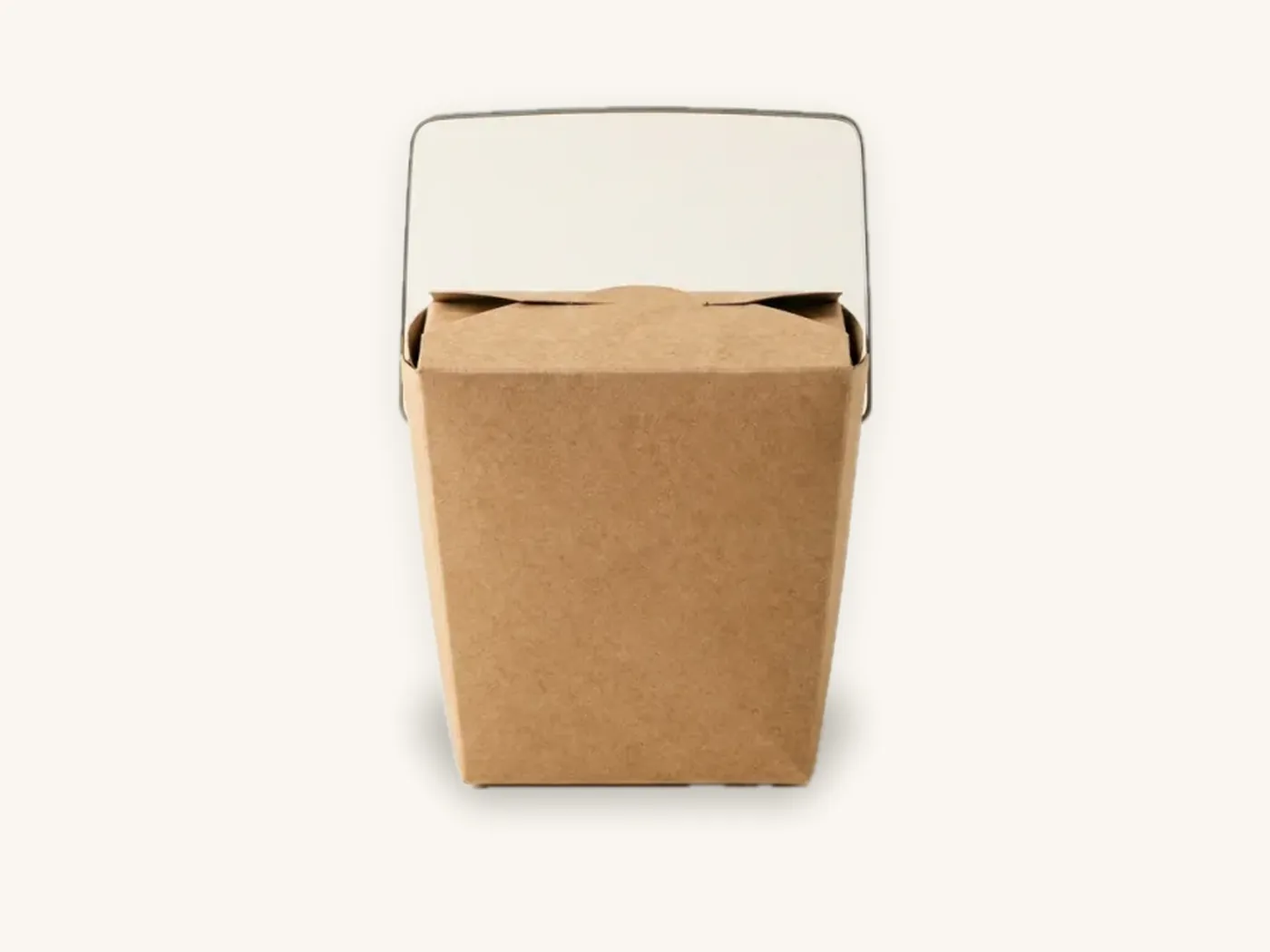
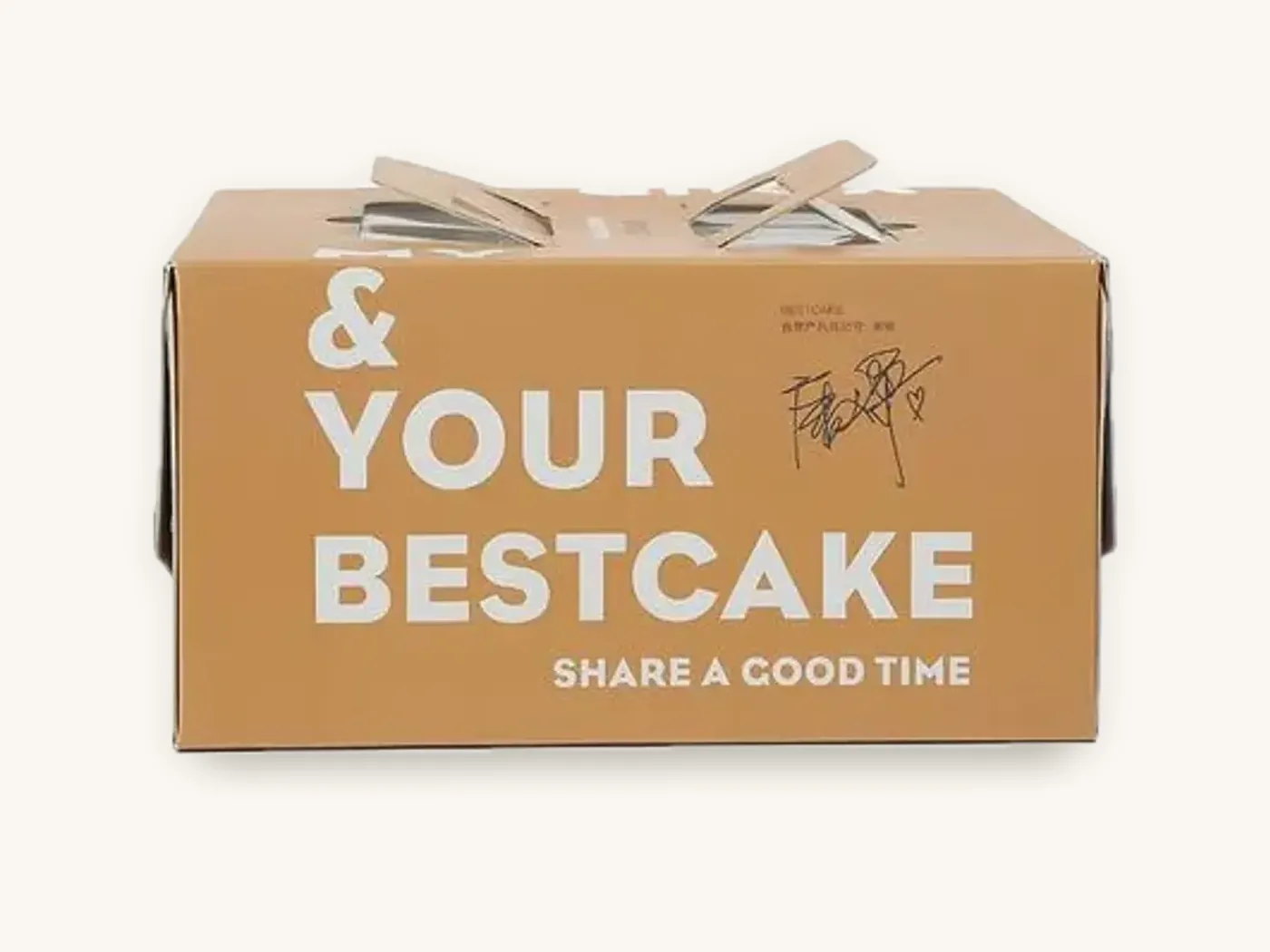
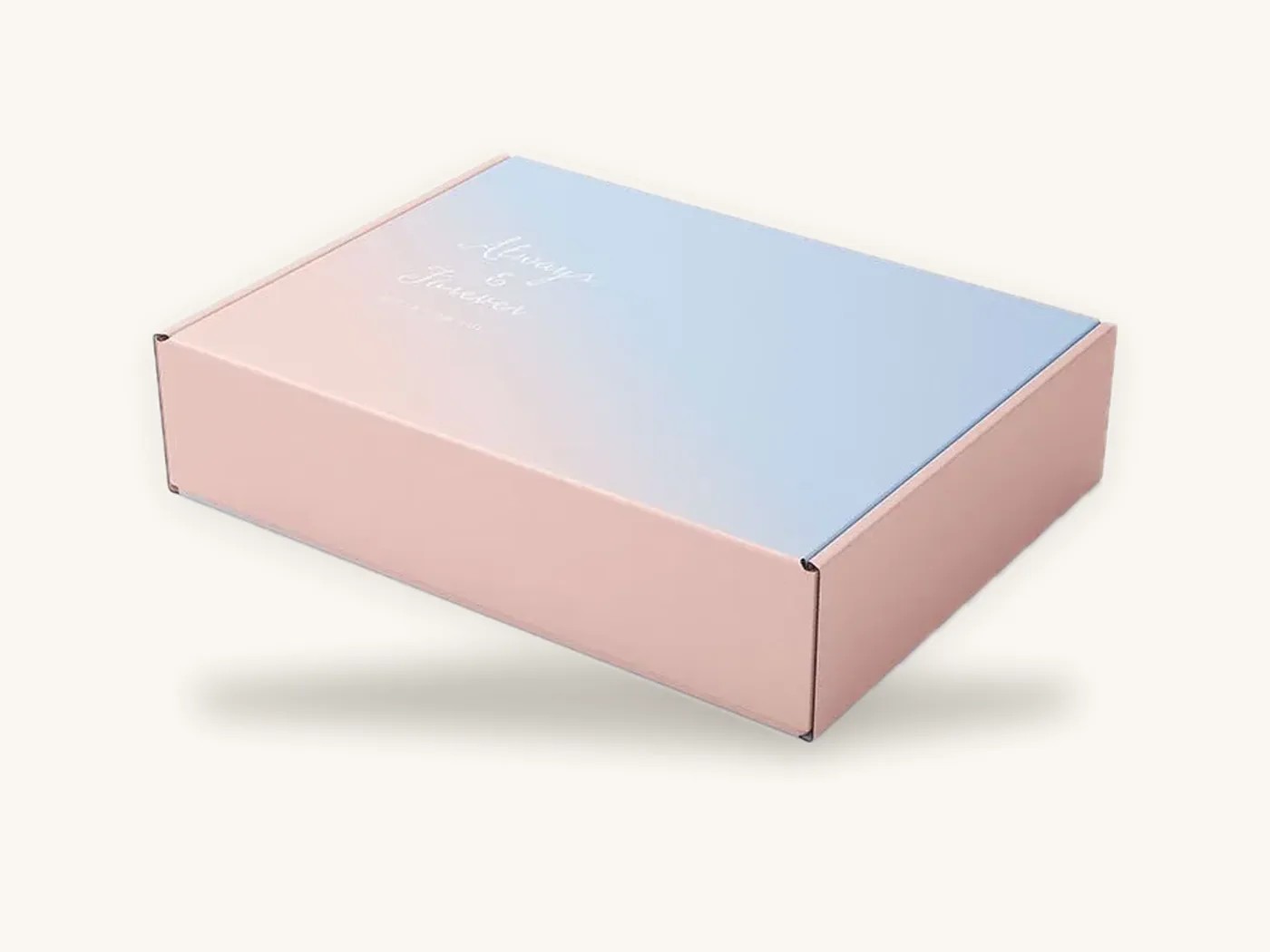
Gable-style handles are common on smaller cake and pastry boxes, but a handle concentrates the whole weight on two thin tabs and tilts the cake as it swings. For anything larger than about a 6 in cake, a flat box carried from underneath is safer. If you want a handle for walk-in customers, use it on slice boxes and mini cakes and see our cupcake boxes for small formats.
Delivery apps and third-party drivers
Drivers carry cakes in insulated bags that are rarely flat or level. For delivery orders, choose a corrugated box, pack the cake cold, and print "Keep flat, carry from underneath" on the lid. That one line of copy often does more than a heavier board. If you are building a wider delivery range, our takeout packaging guide covers the rest of the order.
Printing and branding a cake box
A cake box is photographed at almost every celebration, so the lid is valuable print space. Keep the design simple enough to read in a photo from across the room.
- Full-color lid, plain sides is a common balance of cost and impact.
- Kraft board with one dark color suits rustic and artisan bakeries.
- Inside-lid printing with a message or social handle is seen at the moment the cake is revealed.
- Aqueous coating protects against scuffs and fingerprints without affecting recyclability as much as plastic lamination.
- Foil stamping on a logo adds a premium signal for wedding and celebration ranges; it carries a one-time tooling charge of about $60.
The printing and finishes page shows each option. If you are building a complete range, the bakery packaging guide shows how cake boxes fit with pastry, bread and slice packaging, and our bakery and confectionery page shows the full product family.
What custom cake boxes cost
Price per box depends on size, board grade, print coverage, windows, finishes and quantity. Quantity has the largest effect, because setup spreads over more units.
For a reference spec, a 10x10x5 in bakery cake box with a window in 18 pt SBS, printed full color, costs roughly:
| Quantity | 10 | 100 | 250 | 500 | 1,000 | 2,500 | 5,000 |
|---|---|---|---|---|---|---|---|
| Price per box, US shipping included | about $6.17 | about $4.09 | about $2.91 | about $2.18 | about $1.82 | about $1.54 | about $1.29 |
Larger footprints, taller boxes and corrugated board cost more; smaller boxes and one-color print cost less. Run your own sizes through the instant price estimator.
To keep costs down, reuse one lid design across sizes, limit each footprint to two heights, buy your best-selling size at a higher tier, and skip the window on delivery-only boxes.
How to order custom cake boxes from Box Sense
You do not need a finished spec to start. Send what you know and our structural team will recommend the rest.
What to send
- Cake and board sizes for each box, including the tallest decorated height.
- Structure preference: lock-corner, self-lock tuck, two-piece or front-opening tall box, or ask for a recommendation.
- Board: 18 pt or 24 pt SBS, kraft, or E-flute corrugated.
- Window: yes or no, lid or side, PET or PLA.
- Print and finish: full color or one color, inside lid printing, aqueous coating, foil.
- Inserts: board-locking base insert or none.
- Quantities per size and your target in-hand date.
- Artwork, or a note that you want help from our design services team.
From quote to delivery
We confirm pricing within 24 hours. Design support is free: we supply the dieline, set up your artwork and send a 3D digital proof with two revision rounds. Unprinted structural samples are free, so you can test your real cakes and boards before committing, and a printed sample of approved artwork is free on orders of 100 or more; see samples for details.
Standard production takes 8–12 business days after proof approval, with rush in 5 business days on most paperboard and corrugated styles. The minimum order is 10 boxes, US shipping is free, and defective boxes reported within 14 days are reprinted free. Browse the cake boxes product page and window boxes for structure photos.
Frequently asked questions
What size cake box do I need for an 8 inch cake?
Most 8 in round cakes sit on a 10 in board, so use a 10x10 in box. For a standard two-layer cake with a flat top, 5 in tall is enough. For three layers, drips or toppers, measure the tallest point and add about 1 in, which usually means a 6 to 8 in tall box. Always measure your own board before ordering.
Should a cake box be bigger than the cake board?
Yes, slightly. Leave around 1/4 to 1/2 in of space on each side so the board slides in and out without scraping the walls. More than that and the board can slide during transport, which smears the sides of the cake. A base insert with a circular recess or a non-slip mat keeps a larger box from being a problem.
Are cake boxes with a window worth it?
A window is worth it when customers see the box before buying, such as in a display case, at markets or for pre-made celebration cakes. It is less useful for delivery-only orders. Windows reduce panel stiffness slightly, so keep them away from folds, and expect fogging when a chilled cake meets warm air. PET and compostable PLA films are both available.
What material is best for cake boxes?
For most single-tier cakes, 18 pt SBS paperboard is strong enough and prints very well. Choose 24 pt SBS for 12 in cakes and heavy cheesecakes. For tiered cakes, delivery apps or shipping, E-flute corrugated resists sagging and crushing better. Keep the cake on a grease-resistant board so the board, rather than the printed box, touches the food.
How do you transport a tall cake without it falling?
Chill it thoroughly, support tiers with dowels, and secure the board in a box that fits closely. Use a front-opening tall box or deliver tiers in separate boxes and stack them on site. Place the box on a flat car floor on a non-slip mat, keep the car cool, and drive gently around corners and speed bumps.
How much do custom cake boxes cost?
As a reference, a 10x10x5 in windowed cake box in 18 pt SBS printed full color costs about $4.09 each at 100 units and about $1.82 at 1,000, with US shipping included. Larger, taller or corrugated boxes cost more, and simpler print costs less. Use the Box Sense pricing estimator to price your exact sizes.
Can I order a small quantity of custom cake boxes?
Yes. Box Sense produces custom cake boxes from 10 units, printed digitally so there are no plate or die charges. Small runs are useful for testing a new size, a seasonal design or a wedding range before committing to larger quantities. Unit prices fall as quantity rises, so compare several tiers before placing a reorder.
Next steps
Measure your boards and your tallest decorated cakes, then choose two or three core box sizes to cover most orders. Price those sizes in the cake box price estimator, and when you are ready, request a custom cake box quote and we will confirm pricing within 24 hours and send dielines for your artwork.
Boxes in this guide
Order the packaging we covered
Written by the Box Sense Packaging Team
Our structural designers, prepress technicians and production staff print and convert custom boxes every day for brands in the United States, United Kingdom and UAE. Questions about this guide? Talk to us.