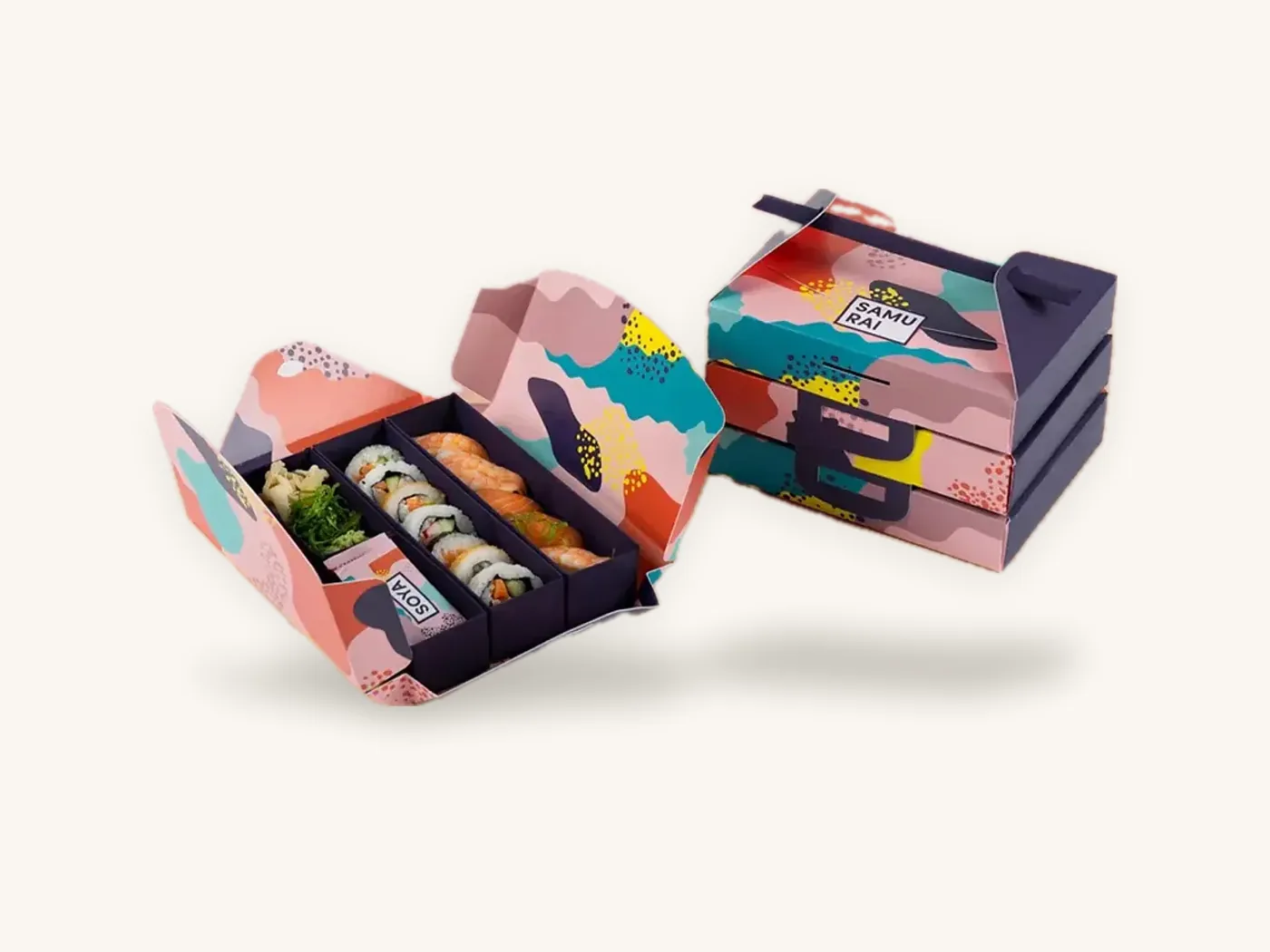
Custom food packaging has to meet a higher bar than almost any other printed box: every material that can touch the food, including the board, the coating, the adhesive and sometimes the ink, needs to be suitable for that contact under US FDA food-contact rules. After that, the box has to handle the food's grease, moisture and heat, and still work at speed on a busy line or in a delivery bag.
The simplest way to get it right is to describe the food before you describe the box. Is it dry or oily, hot or cold, wrapped or touching the board directly? Those answers decide the material and barrier. Style, print and branding come after. This guide follows that order, from food-contact basics through formats, kitchen workflow, labeling and cost.
Key takeaways
- "Food safe packaging" is not a single certification. It means each component that can contact the food is made from substances permitted for that use, under the conditions of use.
- Separate direct contact (food touches the board) from indirect contact (food is wrapped, bagged or behind a liner). Indirect contact gives you far more freedom on print and finish.
- Grease, water and heat each need a different barrier. Plain paperboard handles dry food; oily, saucy and steaming food needs a barrier coating or liner.
- Print on the outside, keep ink off food-contact surfaces, and ask for food-contact documentation for anything on the inside.
- Packaged retail foods carry FDA labeling requirements that restaurant takeout usually does not; know which side of that line your product sits on.
- Box Sense makes custom food boxes from 10 units with free design support, free US shipping and standard production of 8–12 business days after proof approval.
What "food-safe" really means for a food box
In the US, materials that come into contact with food are regulated by the Food and Drug Administration as food contact substances. For paper and paperboard, FDA regulations list components that may be used in contact with dry food, and components that may be used in contact with aqueous and fatty food, with conditions attached. A board that is suitable for dry cookies may not be suitable for hot, oily fries.
That is why food safe packaging is always a combination of material and use. When you ask a supplier whether a box is food safe, the useful follow-up questions are: safe for what food type, at what temperature, and for how long?
The four parts of a food box that matter
- The board. Virgin paperboard is the usual choice for direct contact. Recycled fiber is widely used too, but its suitability depends on the recycling process and intended food, so ask for documentation.
- The coating or liner. Barrier coatings, poly linings, PLA linings or a separate sheet of greaseproof paper sit between the food and the board.
- The adhesive. Glue seams on the inside of a box can be near the food, so the adhesive needs to be suitable for indirect contact.
- The ink and exterior finish. Inks and coatings belong on the outside, away from the food, and must not transfer to the inside when boxes are stacked flat.
This guide explains the principles. It is not legal advice, and the rules for specific substances change, so confirm your use case with your supplier's compliance documentation, the FDA or a food-contact specialist.
Direct contact vs indirect contact food packaging
This distinction drives more decisions than any other, including cost. If the food sits in a wrapper, pouch or liner, the outer box is in indirect contact and behaves much like any other retail carton.
| Situation | Contact type | What touches the food | What that means for the box |
|---|---|---|---|
| Burger placed straight into a clamshell | Direct | Inside board surface | Board and inside coating must suit fatty, hot food |
| Fries scooped into a fry box | Direct | Inside board surface | Grease barrier needed; no ink on inside |
| Cookies sealed in a film bag, then boxed | Indirect | The film bag | Outer box can be printed inside and out |
| Chocolates in a paper cup inside a tray | Mostly indirect | Paper cups | Tray and lid follow standard carton rules |
| Noodles in a lined takeout pail | Direct | Liner or coated interior | Leak and heat resistance matter most |
| Sandwich wrapped in paper, then placed in a box | Indirect | The wrap | Box can be lighter and more decorative |
| Dry pasta or cereal in an inner bag | Indirect | The inner bag | Box focuses on retail print and labeling |
Using liners to simplify the box
A greaseproof paper sheet, a glassine bag or a food-safe film pouch turns a direct-contact problem into an indirect one. That lets you use a standard printed carton, add inside printing or choose a lamination that would not be appropriate for contact with food. The tradeoff is an extra component and a packing step.
Our guide to food-safe inks and coatings goes deeper into ink systems, low-migration options and barrier coatings for each contact type.
Matching the barrier to the food
Different foods attack paperboard in different ways. Grease soaks in and shows through; water softens fibers and weakens folds; steam condenses and makes lids soggy; freezing and thawing adds moisture as condensation.
| Food condition | Examples | What goes wrong | Typical barrier approach | Board choice |
|---|---|---|---|---|
| Dry, low fat | Crackers, dry pasta, tea, cereal | Very little | None needed, or an inner bag | SBS or kraft paperboard |
| Dry, high fat | Shortbread, pastries, nuts | Grease spots through the board | Grease-resistant coating or liner | SBS with barrier, or liner |
| Hot and oily | Fries, fried chicken, burgers | Grease soak, soft walls | Grease-resistant interior, vents | Coated SBS or kraft, E-flute for large items |
| Wet or saucy | Noodles, curries, salads with dressing | Leaks at seams and corners | Poly or PLA lined board, leak-resistant fold design | Lined paperboard |
| Steaming hot | Dumplings, rice dishes, pizza | Condensation, soggy lids | Vent holes, corrugated board, absorbent pad | Corrugated or heavy paperboard |
| Chilled or frozen | Desserts, meal components | Condensation, weakened folds | Moisture-resistant coating, film liner | Coated SBS |
Grease resistance and PFAS
Historically, many grease-resistant paper products used PFAS chemistry. In recent years the FDA has announced that grease-proofing substances containing PFAS are no longer being sold for food-contact use in the US market, and several states have passed laws restricting intentionally added PFAS in food packaging. Most current grease-resistant boards rely on other barrier coatings, denser fiber or liners.
If a customer or retailer asks, you should be able to state what gives your box its grease resistance. Ask your supplier to confirm the barrier chemistry in writing, and check the rules in each state where you sell.
Heat and microwaves
Paperboard boxes are generally fine for holding hot food for delivery. Reheating is different. A box with a poly lining, metallic ink, foil stamping or a metal handle should not be labeled microwave-safe unless the full construction has been tested for that use. Leave "microwave safe" and "ovenable" off the box unless you have evidence for it.
Watch out: foil stamping and metallic inks look great on dessert and gift boxes, but they are a poor choice on any box a customer might put in a microwave. If reheating is likely, keep metallic finishes off the design or print a clear "do not microwave" note.
Food box formats, organized by menu
Once the barrier is decided, pick the format that suits the food and the service style. The food and beverage industry page shows the full range; these are the formats most restaurants and food brands start with.
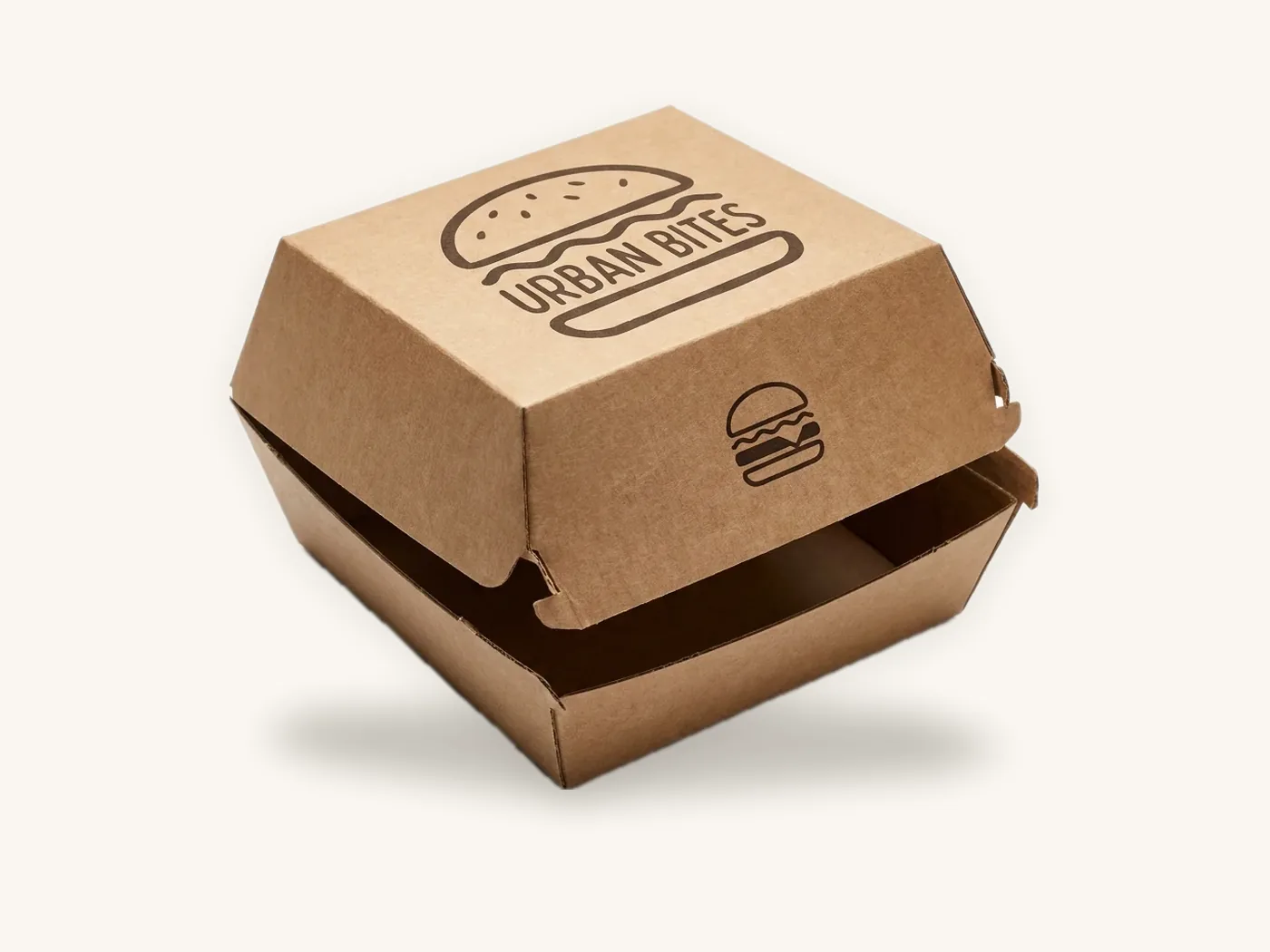
Clamshells for burgers and sandwiches
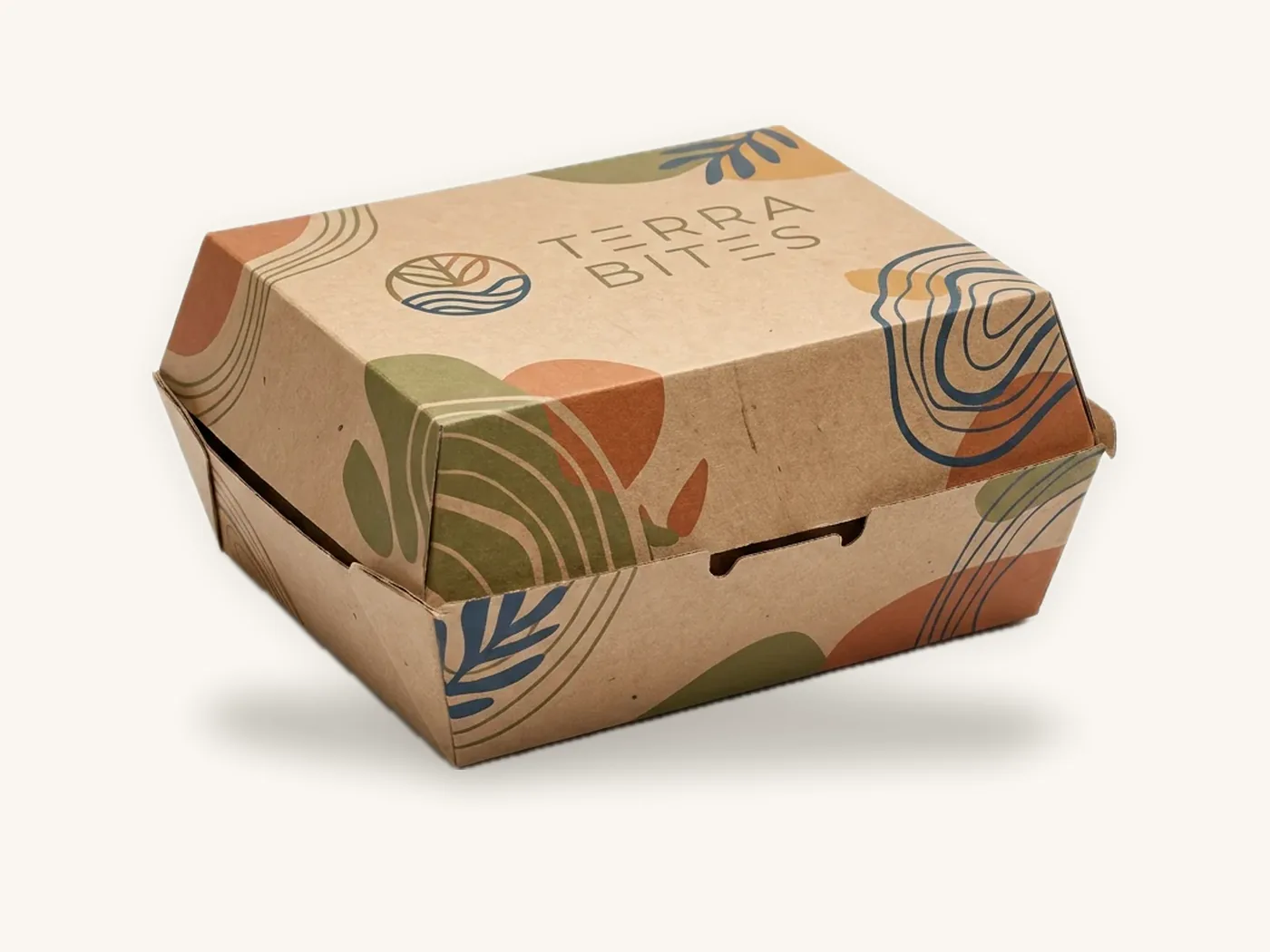
A hinged clamshell folds from one blank, closes with a tab and holds its shape when stacked in a delivery bag. Burger and sandwich boxes are usually direct-contact, so the interior needs grease resistance. Add small vents if the food is served very hot, otherwise steam softens the bun.
Takeout pails and noodle boxes
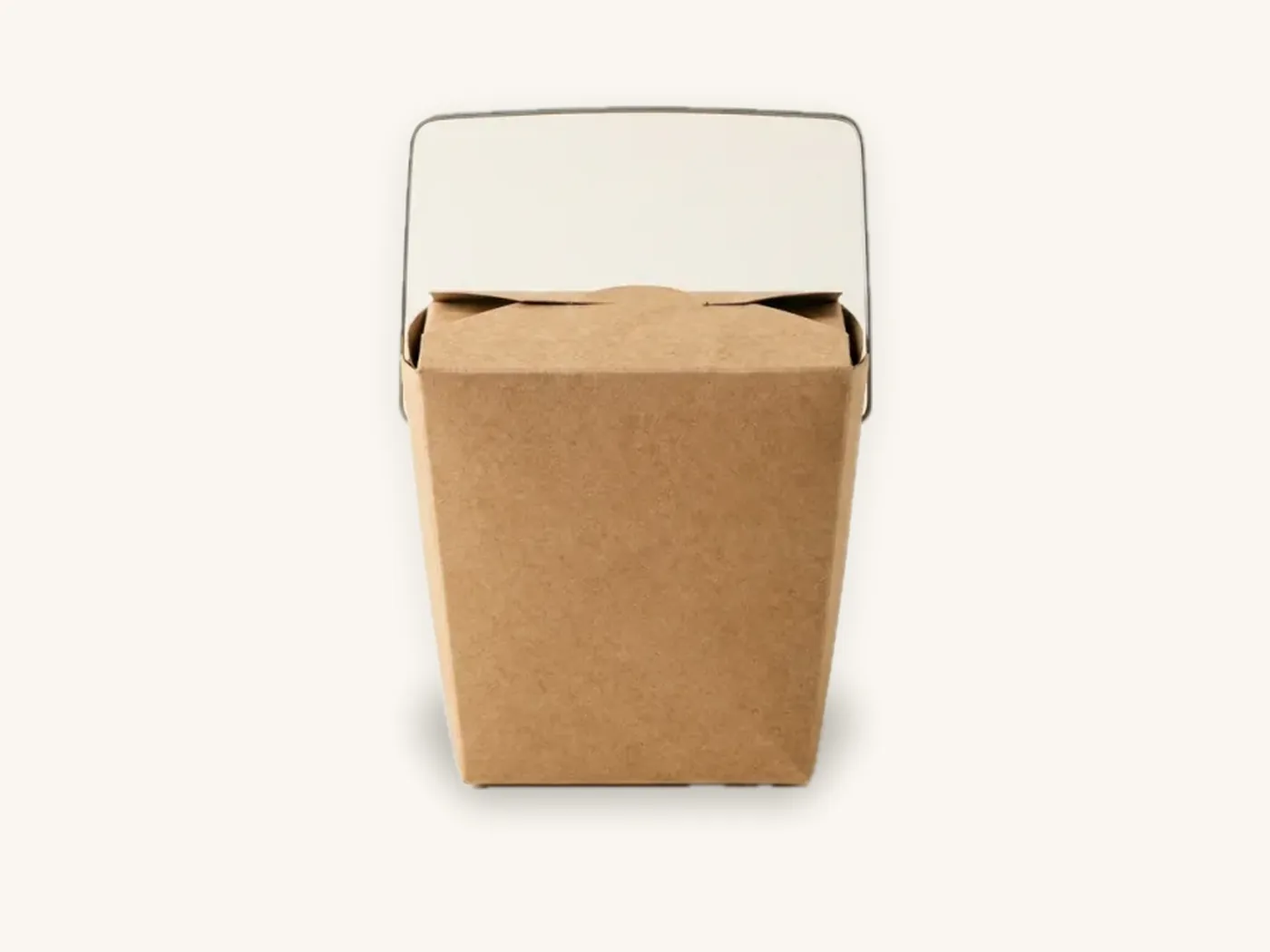
The folded pail with a wire-free locking top is recognizable instantly. Takeout and noodle boxes need a leak-resistant interior and folds designed so sauce cannot wick out through corners. Our takeout packaging guide compares pails, trays and clamshells for delivery.
Scoops and snack cartons
French fry and snack boxes are open scoops that hold food upright for eating on the go. They are simple and cheap, but they are always direct contact and usually hot and oily, so they need a grease barrier.
Gable and handle boxes
Gable boxes carry well, stack neatly and suit picnic meals, kids' meals and bakery items. They can be direct or indirect contact depending on whether food is wrapped. The gable boxes page covers sizes and handles.
Pizza boxes
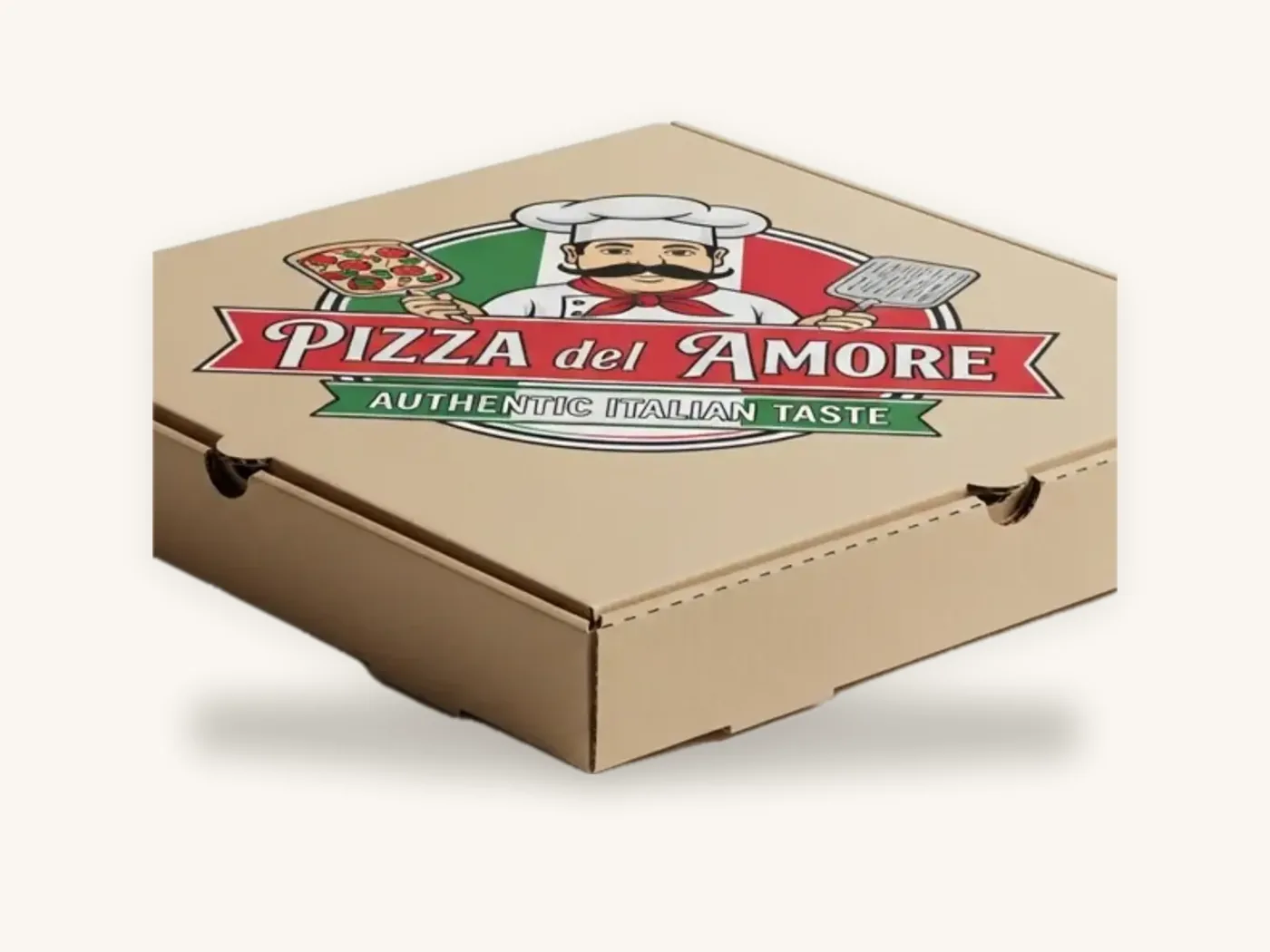
Pizza is hot, oily and steaming all at once, so pizza boxes are usually E-flute corrugated with vents. The pizza box guide covers flute choice, sizing and printing in depth.
Retail cartons for packaged food
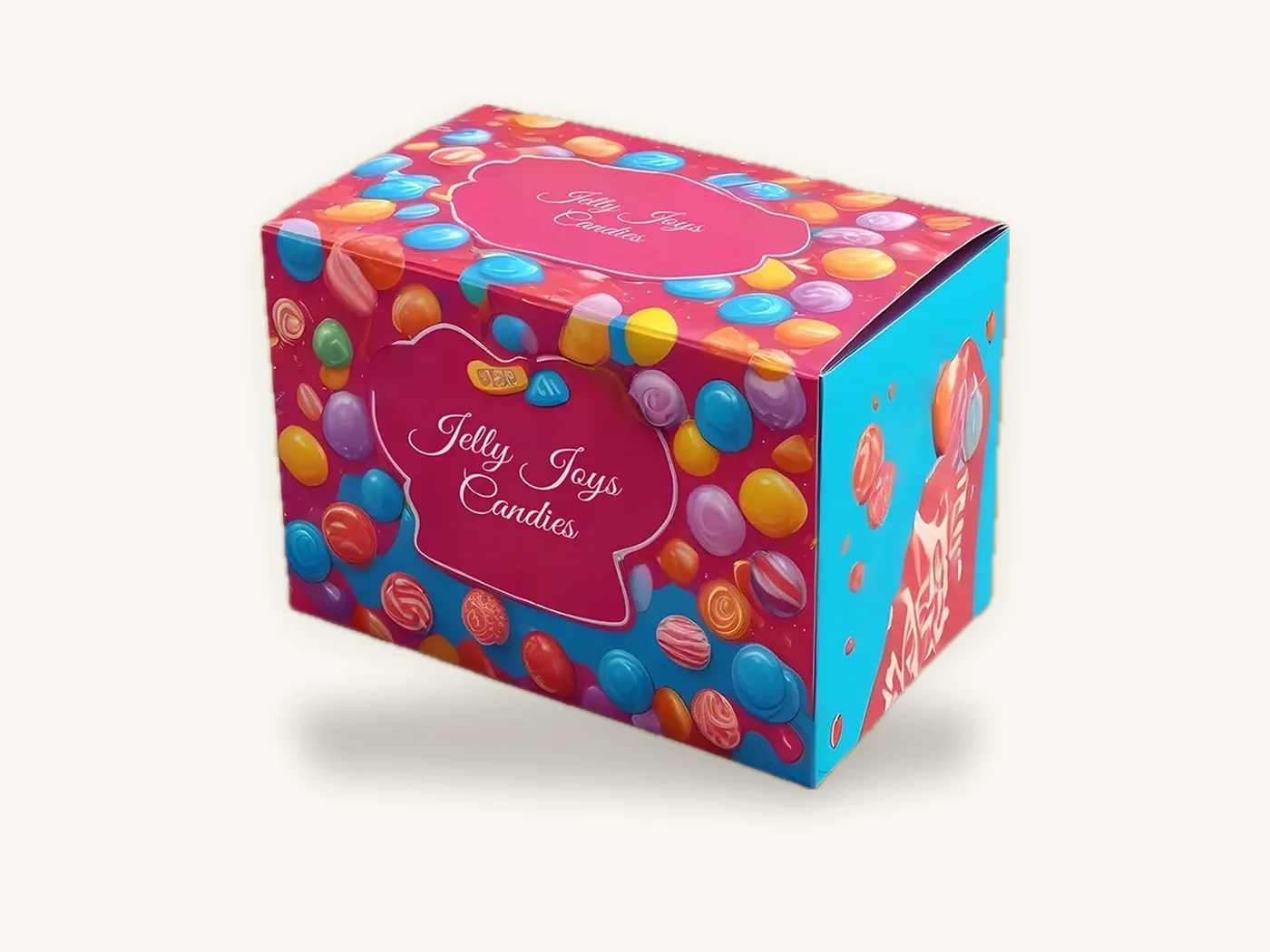
For packaged goods sold on shelves, the food is usually in an inner bag or wrapper and the carton is indirect contact. Cereal boxes, tea cartons and snack boxes fall into this group, and their priorities are shelf impact, labeling panels and efficient filling lines. Confectionery brands can find category detail in the candy packaging guide, and bakeries in the bakery packaging guide.
Designing food boxes that work in a real kitchen
A beautiful food box that takes twenty seconds to fold will not last a Friday dinner rush. Kitchen and fulfillment workflow should shape the design as much as branding does.
Food box design checklist
- Assembly speed: can staff pop the box open and close it with one hand? Pre-glued and crash-lock bottoms save seconds per order.
- Flat storage: does a stack of 100 flat blanks fit on the shelf above the pass?
- Nesting and stacking: do closed boxes stack square in a delivery bag without crushing each other?
- Venting: does hot food need small vents to release steam and keep crisp items crisp?
- Leak path: where would sauce go if the box tipped, and is that corner sealed or folded?
- Tamper evidence: would a sticker seal, tear strip or locking tab show if a delivery box has been opened?
- Hand feel: is the outside cool enough to hold when the food is hot? Corrugated insulates better than thin paperboard.
- Label space: is there a flat area for order stickers, allergen notes or a pickup name?
- Disposal: is it obvious to the customer whether the box goes in recycling, compost or trash?
Sizing for portions, not plates
Size the box around the portion as it is served, including sauces, garnishes and any side cup, and leave little empty space. Food that slides around arrives looking worse and loses heat faster. Measure your five highest-volume menu items in their final form before choosing sizes.
Printing and branding on food boxes
Where the ink goes
For direct-contact boxes, print the outside only and keep the food-contact side unprinted or covered by the barrier. Stacked flat blanks can transfer ink from the printed face of one sheet to the inside face of the next, a problem called set-off, so your printer should manage drying and stacking to avoid it.
Soy and water-based inks are available and pair naturally with kraft and aqueous-coated boards. Low-migration inks are worth discussing for primary packaging where any doubt exists. The food-safe inks and coatings guide explains the options and questions to ask.
Designs that survive grease and handling
- Put your logo where hands do not hold the box, such as the lid top or front face.
- Favor darker, patterned or kraft designs for greasy foods; a small grease mark disappears on a pattern and stands out on flat white.
- Use one or two spot colors on high-volume takeout boxes; they print consistently and keep costs predictable.
- Leave a clear, uncoated area if staff will write on boxes by hand.
Board options, including kraft paperboard and eco-friendly and compostable materials, are shown with real print samples on the printing and finishes page.
Labeling: restaurant packaging vs packaged food
Labeling rules depend on what you sell and where. Food prepared in a restaurant and handed to a customer or delivery driver is generally treated differently from food packaged in advance for retail sale.
Packaged foods sold at retail usually need an FDA-compliant label with a statement of identity, net quantity, ingredient list, allergen declaration, the name and place of business of the manufacturer, packer or distributor, and Nutrition Facts unless an exemption applies. Restaurant menus, chain-restaurant calorie disclosure and local health codes follow their own rules.
The FDA food labeling and packaging guide walks through panel layout and the principal display panel in more detail. These requirements are specific and they change, so confirm current rules with the FDA, your state or local health department, or a food regulatory consultant before printing.
Sustainability and end-of-life for food boxes
Food packaging is harder to recycle than a clean shipping box because food residue contaminates paper recycling. That makes the end-of-life story more important, not less.
Recycling vs composting
A clean paperboard carton with aqueous coating is widely recyclable. A heavily greased takeout box often is not accepted, and a poly-lined box is recyclable only where facilities handle lined paper. Compostable options, such as PLA-lined board, only compost properly in facilities that accept them, and access varies widely by city.
Making claims you can support
If you print "recyclable" or "compostable" on a food box, the claim needs to be accurate and appropriately qualified. The FTC Green Guides set out how environmental claims should be made in the US, and some states have their own rules for compostable labeling. Our guide to compostable packaging covers certifications and wording.
FSC-certified boards, soy and water-based inks, aqueous coatings and PLA windows are all available, and the sustainability page explains the tradeoffs.
What custom food packaging costs
Food-service boxes are highly specification-driven, so we price them from your exact size, board, barrier and quantity rather than quoting a generic figure. These are the factors that move the number most.
| Cost driver | Lower cost | Higher cost | Why it matters |
|---|---|---|---|
| Board | Standard kraft or SBS paperboard | Corrugated, heavy caliper or specialty board | Board is most of the material cost at volume |
| Barrier | None, or an inner liner you already use | Poly, PLA or specialty barrier coating | Barriers add a material and a process step |
| One or two spot colors outside | Full color inside and out | Coverage and color count add press time | |
| Finish | Uncoated or aqueous | Lamination, foil, spot UV | Some finishes are also unsuitable for food contact |
| Structure | Standard clamshell, pail or tuck | Custom shapes, windows, handles | New dielines and more gluing |
| Quantity | Thousands, reordered regularly | Short runs of many SKUs | Setup is spread across more units |
For reference on packaged retail food, a straight tuck end carton in 18 pt SBS at 3x2x5 in, printed full color outside with aqueous coating, runs about $1.15 each at 100 units and about $0.51 at 1,000. That suits dry goods in an inner bag, such as tea or spices. For service boxes, use the instant price estimator or ask for a quote with your menu sizes.
Ways to keep food packaging costs in check
- Standardize on two or three box sizes that cover most of the menu.
- Print one design across all sizes rather than item-specific artwork.
- Use liners for the few greasy items instead of barrier-coating every box.
- Reorder in larger batches once the design is settled, and keep short runs for seasonal items.
How to order custom food boxes from Box Sense
What to tell us
- The food: dry, oily, wet, hot or chilled, and whether it touches the box directly
- The format: clamshell, pail, scoop, gable, tray, window carton or retail carton
- Portion dimensions as served, including sauces and sides
- Barrier needs, and any customer or state requirements you must meet
- Print colors and whether any printing is needed inside
- Quantities per size and your expected reorder frequency
- Target in-hand date and delivery location
- Artwork, or a request for help from our design services team
How it works
- We confirm a quote within 24 hours.
- We supply dielines and set up artwork, then send a 3D digital proof with two revision rounds included.
- Free unprinted structural samples let you test fit, leaks and stacking with real food. A printed sample of approved artwork is free on orders of 100 or more; see samples.
- Standard production takes 8–12 business days after proof approval, with rush in 5 business days on most paperboard and corrugated styles.
- Shipping is free on every US order.
The minimum order is 10 boxes, there are no die or plate charges, and defective boxes reported within 14 days are reprinted free. Restaurants planning a full rollout can also read our guide to packaging for restaurants.
Frequently asked questions
What makes packaging food safe?
Food safe packaging uses materials permitted for contact with the specific food type, temperature and duration involved. In the US, the FDA regulates food contact substances, including paper components, coatings and adhesives. A box suitable for dry cookies may not suit hot, oily food. Ask your supplier for documentation that matches your use, and confirm details with the FDA or a specialist.
Can custom food boxes be printed inside?
Only with care. For direct-contact boxes, the food-contact side should normally stay unprinted or be covered by a suitable barrier. If food is wrapped, bagged or placed on a liner, the box becomes indirect contact and inside printing is usually practical. Discuss ink systems and low-migration options with your supplier before designing interior artwork.
What is the difference between direct and indirect food contact?
Direct contact means the food touches the packaging surface, such as fries in a scoop or a burger in a clamshell. Indirect contact means something sits between them, such as a film bag, wrap or liner. Direct-contact surfaces need materials suitable for that food, while indirect-contact boxes have more freedom on print and finish.
How do I stop grease soaking through food boxes?
Use a grease-resistant board or coating on the food-contact side, or add a greaseproof liner sheet or bag for the oiliest items. Darker or patterned designs also hide minor marks. Ask your supplier what provides the grease resistance, because several US states restrict PFAS-based treatments in food packaging.
Are kraft food boxes food safe?
Kraft paperboard is widely used for food boxes, including direct contact, when the board and any coating are suitable for the food involved. Uncoated kraft works well for dry foods; greasy, wet or hot foods usually need a barrier coating or liner. As with any food box, request food-contact documentation for your specific use.
Do restaurant takeout boxes need labels?
Restaurant takeout generally does not need the full FDA packaged food label required for retail products, but local health codes, allergen practices and chain-restaurant menu rules can still apply. Food packaged in advance for retail sale usually needs a complete label. Confirm with your local health department and the FDA before relying on an exemption.
Can I order custom food packaging in small quantities?
Yes. Box Sense produces custom food boxes from 10 units, which is useful for testing a new menu format, a pop-up, or a sample for a retail buyer. Short runs are printed digitally without plate charges. Unit prices fall as quantity grows, so most restaurants test small and reorder in larger batches once sizes are settled.
Next steps
List your highest-volume menu items, note whether each touches the box directly, and try your sizes in the food packaging estimator. Then request a custom food packaging quote and we will confirm pricing within 24 hours and send structural samples for a real-food test.
Boxes in this guide
Order the packaging we covered
Written by the Box Sense Packaging Team
Our structural designers, prepress technicians and production staff print and convert custom boxes every day for brands in the United States, United Kingdom and UAE. Questions about this guide? Talk to us.