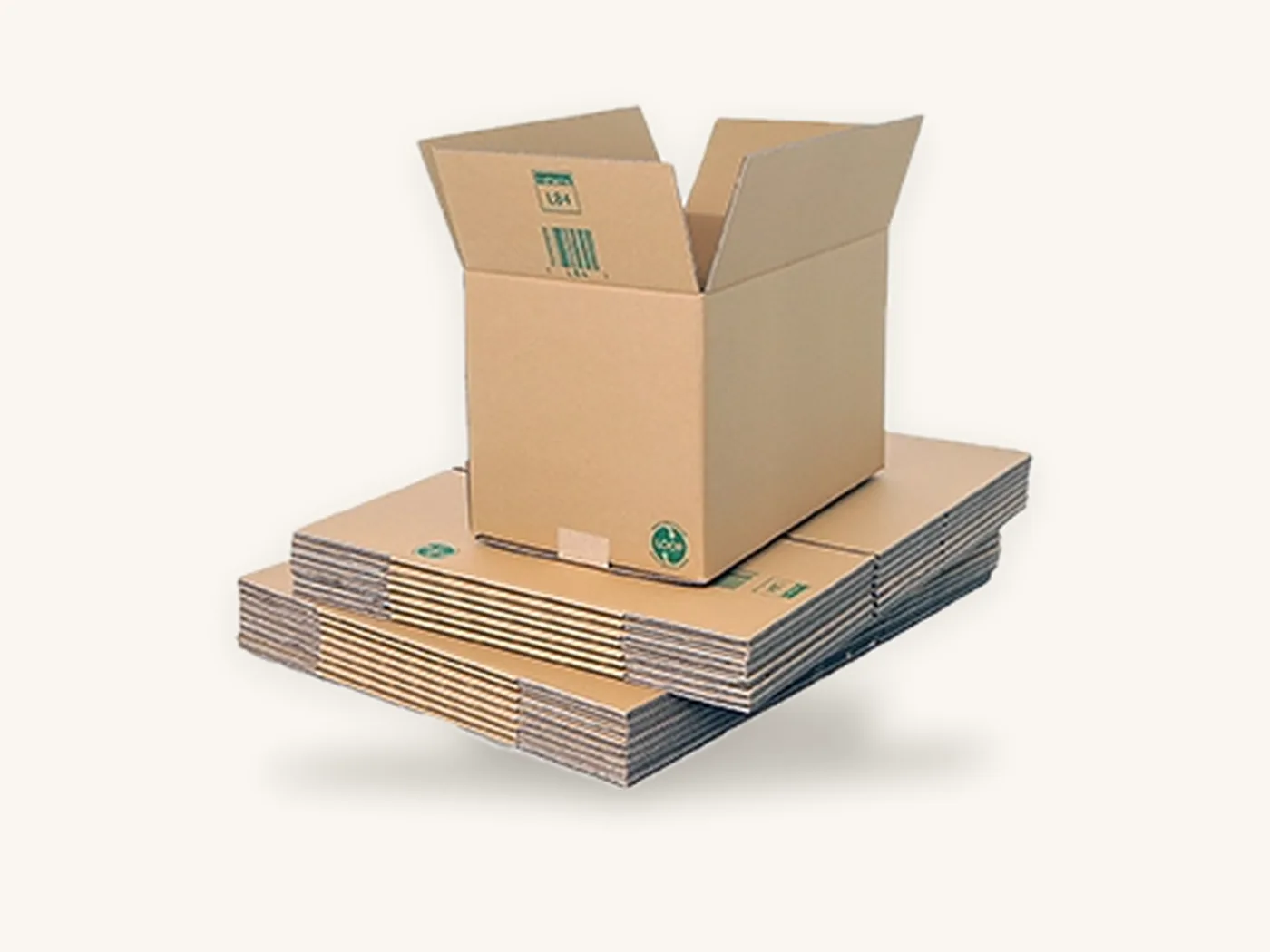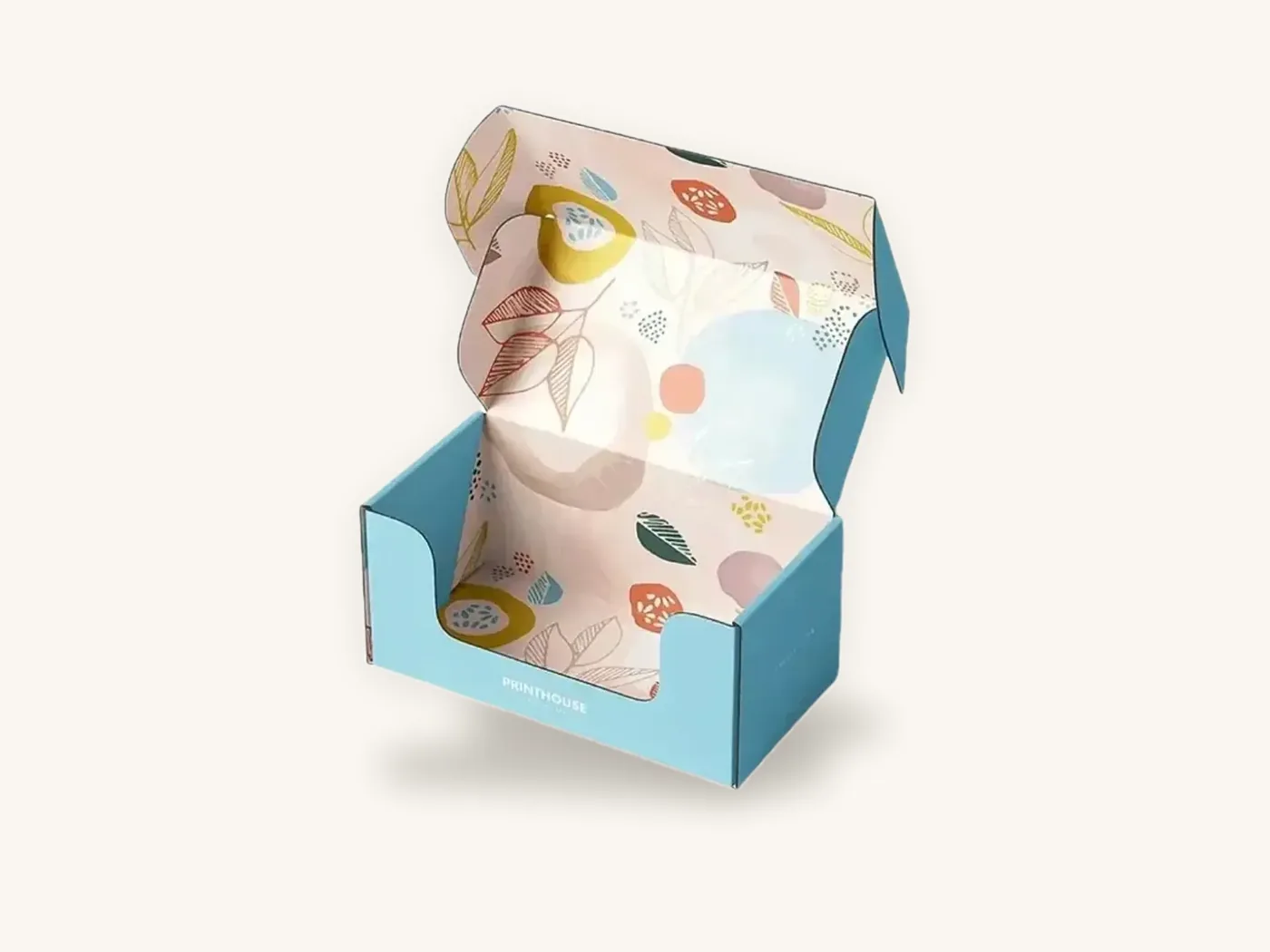
The right Shopify packaging depends on how many orders you ship. At a few orders a week, a plain mailer with a custom sticker is plenty. Past a few hundred orders a month, two or three custom-sized printed mailers usually cut shipping cost and packing time. At thousands of orders, packaging becomes a system: a box family, reorder points, offset printing and often a 3PL.
Whatever the stage, Shopify needs accurate package dimensions and weights to calculate shipping rates and buy labels. Wrong package data quietly costs you money on every order, either by undercharging customers at checkout or by triggering carrier adjustments later.
This guide walks through packaging for an online store stage by stage, shows how to build a small set of Shopify shipping boxes that covers your catalog, and explains how to set that packaging up in your Shopify admin.
Key takeaways
- Add your real boxes as saved packages in Shopify and set the most common one as your default package, with outside dimensions and empty box weight.
- Enter accurate product weights. Shopify combines product weight and package weight when it calculates rates and labels.
- Start small: a stock or short-run custom mailer plus custom labels and stickers brands your first orders without a big commitment.
- As volume grows, consolidate to a family of two to four box sizes that fit most orders, then print them.
- Match packaging to the channel: mailers for direct orders, shipping boxes for heavy or multi-item orders, and retail-ready cartons when you add wholesale or marketplaces.
- Plan reorders around production time (8–12 business days at Box Sense) and your usage, so growth never outpaces your box supply.
What Shopify needs to know about your packaging
Shopify does not care what your box looks like, but it relies on its size and weight. Those two facts flow into checkout rates, label purchases and packing workflows.
Saved packages and the default package
In your Shopify admin, shipping settings let you save the boxes and mailers you use, with their dimensions and empty weight, and choose a default package. Shopify uses the default package when calculating carrier-calculated rates at checkout and pre-fills it when you buy a label, so you can switch to a different saved package for a larger order. Menu names and features change over time and depend on your plan, so check Shopify's current help documentation for the exact steps.
Why accurate package data protects your margin
If the default package in Shopify is smaller or lighter than the box you actually use, live rates at checkout will be too low and you absorb the difference. If you buy labels with the wrong dimensions, carriers can re-measure the parcel and bill an adjustment weeks later.
Always enter outside dimensions, because carriers measure the outside. Our guide to shipping box sizes for USPS, UPS and FedEx explains how board thickness and rounding change what you are billed.
Product weights
Weigh every product variant as it will ship, including its own retail carton or pouch, and enter that weight in the product settings. Weigh the empty box and any inserts separately and enter that as the package weight. The two add together for each order.
The components of a Shopify packaging setup
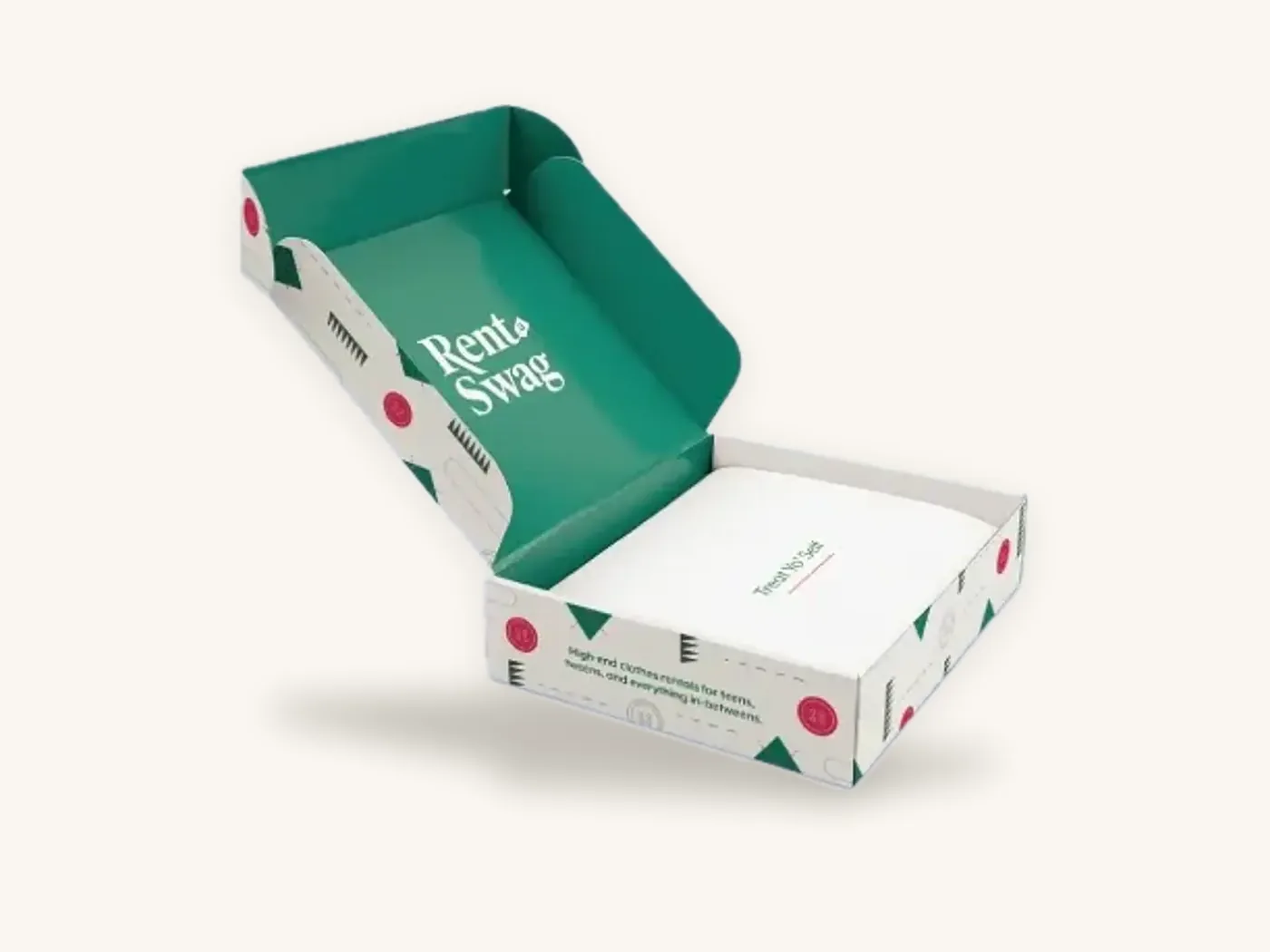
Most stores use more than just a box. Here is what each component does and when it earns a place.
| Component | Job | When to add it | What drives its cost |
|---|---|---|---|
| Mailer box | Protects and presents direct-to-consumer orders | From the start for most products | Size, board, print coverage, quantity |
| Shipping box (RSC) | Heavier, bulkier or multi-item orders | When orders exceed what a mailer handles | Size, flute, print colors |
| Labels and stickers | Branding, sealing, variant or batch info | From day one; cheapest brand layer | Size, material, finish, quantity |
| Packaging tape | Sealing RSCs; branded tape adds recognition | When you ship taped boxes | Width, print, material |
| Tissue paper | Wraps apparel and gifts; fills small gaps | When presentation matters | Sheet size, print colors |
| Inserts | Holds products in place, separates items | Fragile, multi-item or premium kits | Material, cavity complexity |
| Printed card or packing slip | Thank-you, care, reorder or referral info | Early; costs little | Paper, print |
Poly mailers can also suit soft, non-fragile goods. The poly mailer vs mailer box guide compares both honestly.
Packaging by growth stage
Stores do not need the same packaging at 20 orders a month as at 2,000. The order-volume ranges below are rough guides, not rules; your product mix matters as much as your count.
| Stage | Monthly orders (rough) | Typical packaging | Print method | Typical order quantity | Main risk |
|---|---|---|---|---|---|
| Launch | Up to about 100 | Stock or short-run custom mailer, sticker, tissue | Digital or none | 10 to 250 | Overspending before fit is proven |
| Growth | About 100 to 1,000 | Two or three printed custom mailers | Digital, moving to offset | 250 to 2,500 | Too many sizes, stockouts |
| Scale | About 1,000 to 5,000 | Box family, inserts, branded tape | Offset | 2,500 to 10,000 | Storage, packing speed |
| Multi-channel | Any volume plus wholesale or marketplaces | Mailers plus retail cartons and master cartons | Offset and digital | Varies by channel | Channel requirements |
Stage 1: launching a store
At launch you are still learning what sells and what customers order together, so keep packaging flexible.
- Use one mailer size that fits your best seller, or a short run of 10 to 100 custom mailers to prove fit.
- Brand with a sticker, a printed card and tissue rather than full box coverage.
- Save the box in Shopify immediately, even if you only use one.
- Ship a test order to a friend in a distant state and see how it arrives.
A short digital run costs more per box, but it avoids locking cash into a size that might change after your first few months of sales. The digital vs offset printing guide explains the tradeoff.
Stage 2: steady growth
Once you have a few months of order data, you can see which products and combinations dominate. This is the point to commit to printed boxes.
- Group orders by packed size and pick two or three mailer sizes that cover most of them.
- Print the most-used size fully and keep secondary sizes simpler if their volume is low.
- Set a reorder point for each box so a promotion does not empty your shelves. The packaging inventory guide shows the calculation.
- Update Shopify's saved packages whenever a size changes.
Stage 3: scaling up
At this volume, seconds per order and cents per box add up quickly.
- Move high-volume sizes to offset printing for better unit pricing and color consistency.
- Add inserts so packers place items the same way every time.
- Replace generic tape with a tear strip or custom packaging tape.
- Consider a third-party warehouse. The guide to packaging for 3PLs covers labeling and receiving requirements.
Stage 4: adding wholesale, marketplaces or retail
New channels bring new packaging rules. Retailers may need barcoded retail cartons and case packs. Marketplace fulfillment programs set their own carton, labeling and prep requirements. If you add Amazon fulfillment, see Amazon FBA boxes and confirm current requirements in Amazon's seller documentation.
Building a box family that covers your catalog
The most useful packaging exercise for a growing store is mapping every common order to a small set of boxes. Fewer sizes mean simpler packing, easier reorders, better quantity pricing and cleaner Shopify package data.
A worked example
Say you run a hypothetical stationery store on Shopify selling notebooks, pen sets, planners and gift bundles. You export the last three months of orders and measure how each common order packs.
| Common order | Packed size (in) | Assigned box | Inside the box |
|---|---|---|---|
| One notebook or planner | 9 x 6.5 x 1 | Book-style mailer, 9.5 x 7 x 1.5 | Nothing extra; wraps tight |
| Pen set | 7 x 3 x 1.5 | Book-style mailer, 9.5 x 7 x 1.5 | Paperboard insert keeps it centered |
| Notebook plus pen set | 9 x 6.5 x 2.5 | Mailer, 10 x 7.5 x 3 | Tissue |
| Gift bundle (planner, two pens, stickers) | 10 x 8 x 3.5 | Mailer, 10.5 x 8.5 x 4 | Printed tissue and a card |
| Bulk or wholesale order | Varies | RSC shipping box, 16 x 12 x 8 | Kraft paper fill |
Three mailer sizes plus one shipping box now cover almost every order. The pen set shares a box with the notebook, which costs a little extra board on pen-only orders but saves a whole SKU to stock and reorder.
How to build your own box family
- Export orders from Shopify for the last 90 days, including line items.
- List the most common order combinations that account for most of your volume.
- Pack and measure each combination, including any carton, pouch or wrap.
- Cluster orders whose packed sizes are within about half an inch of each other.
- Set internal box sizes for each cluster with modest clearance.
- Plan inserts for smaller items that share a larger box, so they do not rattle.
- Check shipping cost for each size at your most common zones; resize if a dimension crosses a billing line.
- Order structural samples and pack real orders in them.
- Add the final sizes as saved packages in Shopify with outside dimensions and weights.
- Review quarterly as your catalog changes.
The right-sized packaging guide and dimensional weight guide go deeper on sizing for cost.
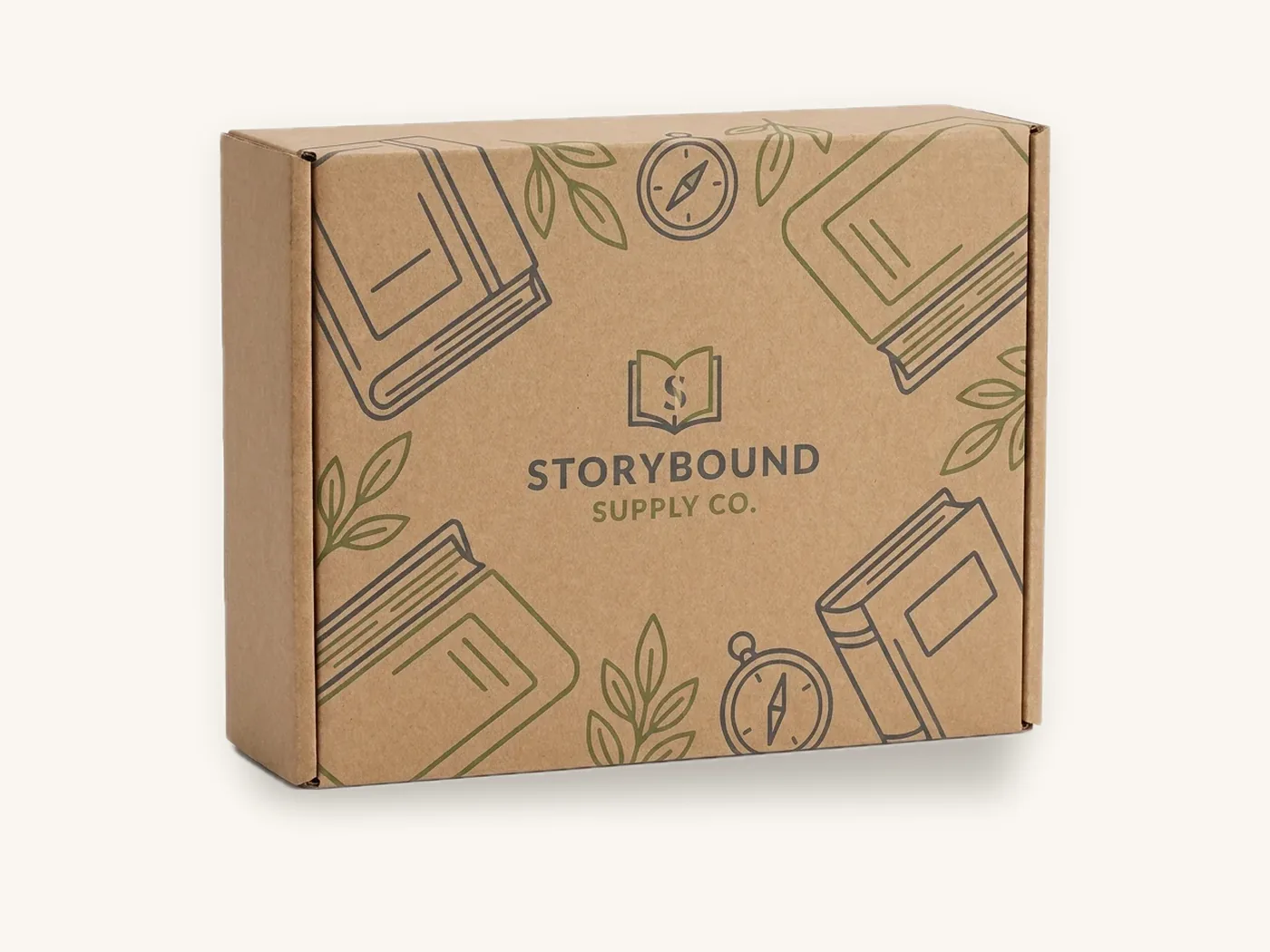
Mailer boxes, shipping boxes or poly mailers for Shopify orders
Each format has a clear place. Choose by product, not by habit.
Choose a mailer box when
- the product is under a few pounds and ships directly to a customer
- presentation matters, especially for gifts, beauty, accessories and subscriptions
- you want a box that assembles without tape and can be printed inside
Custom mailer boxes are the default for most Shopify stores. Tuck top mailer boxes add a tear strip for tamper evidence.
Choose a shipping box when
- orders are heavy, bulky or contain many items
- you ship wholesale cases or overbox retail cartons
- the parcel needs taped flaps and heavier flutes for stacking strength
Custom shipping boxes in the regular slotted container style are the most material-efficient choice for these orders.
Choose a poly mailer when
- the product is soft, flat and not fragile, such as folded apparel
- presentation is less important than cost and weight
Many stores use all three: mailers for most orders, shipping boxes for large orders and poly mailers for single apparel items.
Setting up a packing station that keeps up with orders
A good packing station matters as much as the box. Messy stations slow packing, cause wrong-box choices and create damage.
Packing station checklist
- Flat, assembled-on-demand stock of each box size within arm's reach
- A size guide posted at the station listing which order types go in which box
- Stickers, tape, tissue, cards and inserts in labeled bins
- A scale for checking weight against Shopify's calculated weight on unusual orders
- A thermal label printer and packing slip printer set up for your Shopify label workflow
- A spot for damaged boxes, so they are logged instead of used
- A reorder card at each box's reorder point
- A photo of a correctly packed order for each box, so new packers match the standard
Using order tags and notes
Shopify order tags can flag gift orders, fragile items or orders that need a specific box. Packers then see packaging instructions without memorizing rules. Keep tag names short and consistent so they can be filtered and reported on.
Tip: print the box-size guide as a laminated card and tape it to the packing bench. The most common packaging error in growing stores is not a weak box but the wrong box: a small order in a large carton, which wastes fill and raises shipping cost.
Branding a Shopify store's packaging on any budget
Branding does not have to mean full-coverage printing from day one. Layer it as you grow.
Low budget
A plain kraft or white mailer, a round logo sticker to seal it, and a printed thank-you card. Custom labels and stickers are inexpensive, and a single design works across every box size.
Medium budget
A one-color or full-color printed mailer for your main size, with a printed inside lid, plus printed tissue paper for giftable orders.
Higher budget
Fully printed mailers inside and out for every size, custom inserts, branded tape and a tear strip. Before you spend at this level, measure whether it pays back; our guide to branded packaging ROI gives a testing framework.
Protecting Shopify orders in transit
Damaged orders cost you a replacement, a second shipment, support time and sometimes a review. Packaging choices prevent most of them.
- Fit first. A product that cannot move is rarely damaged. Use inserts or tissue to remove empty space.
- Board second. Move from E-flute to B-flute for heavier items, and to double wall for dense or high-value orders.
- Test before scaling. Drop a packed box from waist height onto a hard floor on each face, edge and corner. The ISTA drop testing guide explains formal procedures.
- Track damage. Tag "arrived damaged" support tickets by product and box so patterns are visible.
The guide to reducing shipping damage covers inserts, void fill and sealing in more depth.
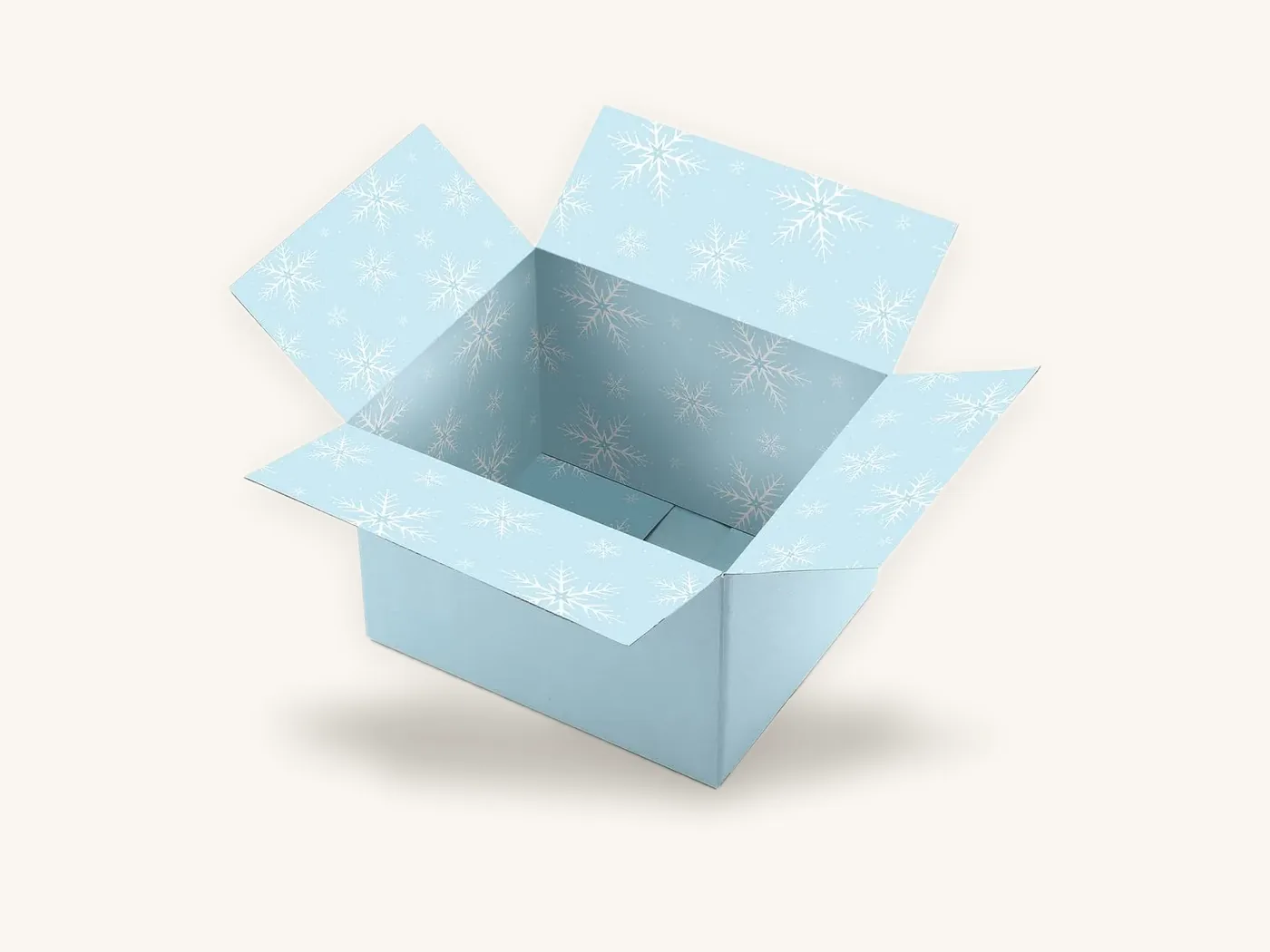
What Shopify shipping boxes cost at different stages
These indicative per-unit prices include free US shipping. Use the instant price estimator for your own sizes.
| Spec | 10 | 100 | 1,000 | 2,500 |
|---|---|---|---|---|
| Mailer box, E-flute, 8x6x3 in, full color outside | about $3.99 | about $2.64 | about $1.17 | about $1.00 |
| Mailer box, E-flute, 10x8x4 in, full color inside and outside | about $6.54 | about $4.33 | about $1.92 | about $1.63 |
| Subscription mailer, E-flute, 12x9x4 in, full color both sides, insert and tear strip | about $8.83 | about $5.85 | about $2.60 | about $2.21 |
| Shipping box RSC, B-flute, 12x10x6 in, 1-color | about $7.08 | about $4.69 | about $2.08 | about $1.77 |
The jump from launch quantities to growth quantities is where unit price falls fastest. That is why proving fit with a small run, then committing to a larger order once sizes are stable, is the most cost-effective path.
Ordering Shopify packaging from Box Sense
We make custom mailers, shipping boxes and labels for online stores at every stage, from a first run of 10 boxes to high-volume offset programs.
What to send
- Your common order combinations and their packed dimensions, or the box sizes you want
- Product weights and whether any items are fragile
- Box style preferences: mailer, tuck top mailer, book mailer or shipping box
- Print coverage, inside printing, inserts and labels
- Quantities for each size
- Artwork, or a request for help from our design services team
How it works
- Quote confirmed within 24 hours.
- Free design support: dieline, artwork setup and a 3D digital proof with two revision rounds.
- Samples: unprinted structural samples are free to test fit, and a printed sample of approved artwork is free on orders of 100 or more. See samples.
- Production in 8–12 business days after proof approval, or 5 business days on rush for most corrugated styles.
- Delivery: free on every US order; international shipping quoted at cost.
There are no die or plate charges, and defective boxes reported within 14 days are reprinted free. Our e-commerce and subscription packaging page shows popular setups for online stores.
Frequently asked questions
What packaging do Shopify stores use?
Most Shopify stores ship in corrugated mailer boxes for direct-to-consumer orders, shipping boxes for heavier or multi-item orders, and poly mailers for soft goods like apparel. Branding usually comes from printed boxes, custom stickers, tissue paper and inserts. The right mix depends on product weight, fragility, order volume and how much presentation matters to your customers.
How do I add box sizes in Shopify?
In your Shopify admin, open the shipping and delivery settings and add saved packages with each box's outside dimensions and empty weight, then choose a default package. Shopify uses that data for carrier-calculated rates and label purchases. Exact menu names and options can change and vary by plan, so check Shopify's current help center for step-by-step instructions.
How many box sizes should an online store stock?
Most small and mid-sized stores cover the large majority of orders with two to four sizes. Map your most common order combinations, group those with similar packed dimensions and use inserts or tissue to handle small differences. More sizes improve fit but add storage, reorder admin and packing errors, so only add a size when volume justifies it.
When should a Shopify store switch to custom printed boxes?
Switch once your best-selling products and order combinations are stable, usually after a few months of consistent sales. At that point, a custom-sized printed mailer can reduce shipping cost, void fill and damage while adding branding. Before then, a short run of custom boxes or a plain mailer with custom stickers keeps your options open.
Does package weight affect Shopify shipping rates?
Yes. Shopify combines product weights and the saved package weight when calculating carrier-calculated shipping rates and labels. If weights are missing or too low, customers may be undercharged at checkout, and carriers may bill adjustments later. Weigh every variant as it ships, weigh each empty box with any inserts, and enter both accurately.
Are mailer boxes or poly mailers better for a Shopify store?
Mailer boxes protect better, present better and suit fragile, rigid or giftable products. Poly mailers are lighter and cheaper and suit soft, non-fragile items like folded clothing. Many stores use both: mailer boxes for most orders and poly mailers for single apparel items. Choose by product and customer expectations rather than using one format for everything.
What is the minimum order for custom boxes for a new Shopify store?
Box Sense makes custom boxes from a minimum of 10 units, with no die or plate charges. Short runs are printed digitally, which suits new stores testing box sizes and designs. The unit price drops significantly as quantity rises, so many stores start with a small run to confirm fit, then order larger quantities once sizes are settled.
Next steps
Export your last 90 days of Shopify orders, map the common combinations to two or three box sizes and save them in your shipping settings. Then price those sizes in the box price estimator, and when your sizes are settled, request a quote and we will confirm pricing within 24 hours.
Boxes in this guide
Order the packaging we covered
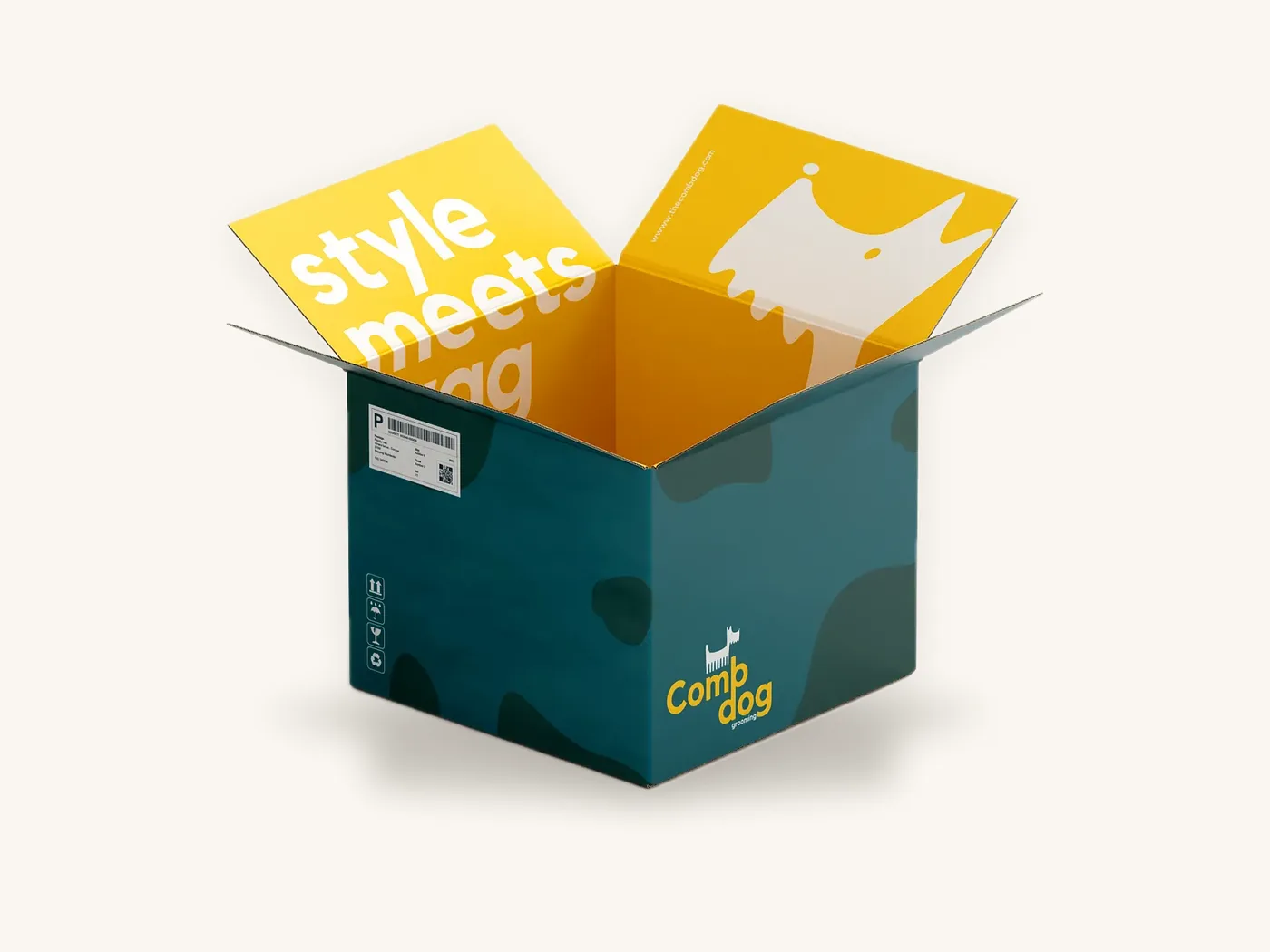
Written by the Box Sense Packaging Team
Our structural designers, prepress technicians and production staff print and convert custom boxes every day for brands in the United States, United Kingdom and UAE. Questions about this guide? Talk to us.