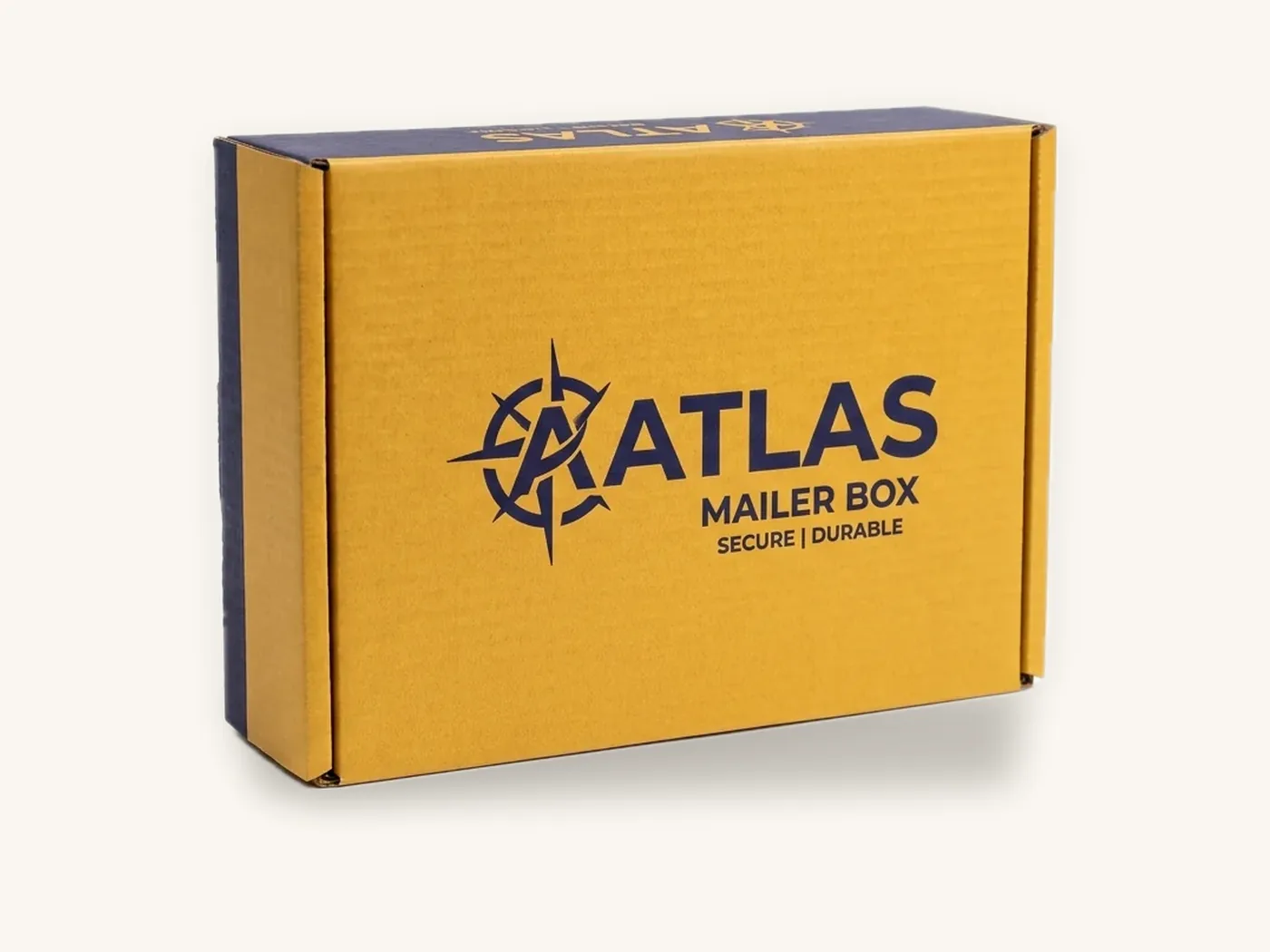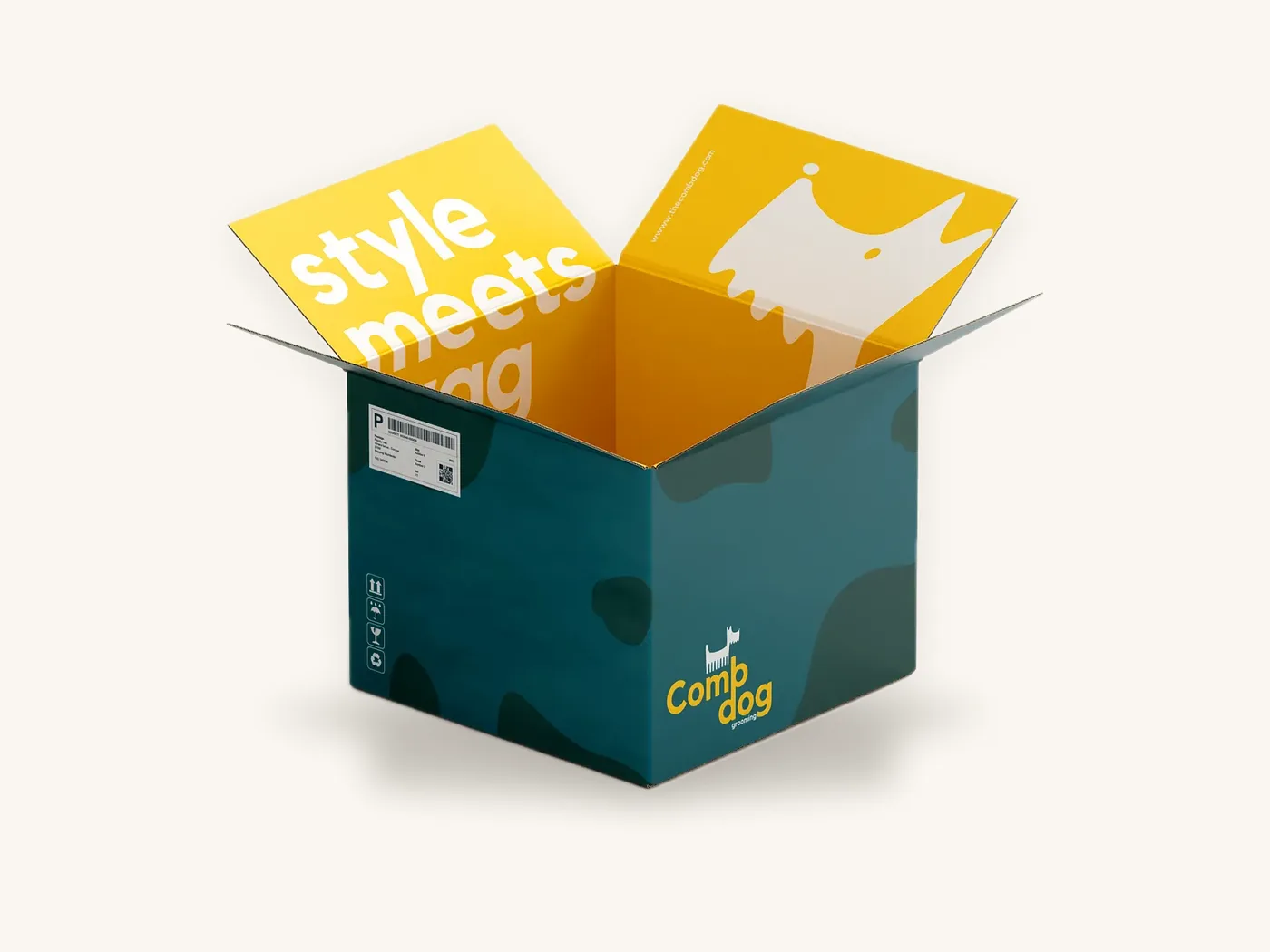
Scaling packaging is less about buying more boxes and more about changing how you buy them. At 100 boxes you are buying flexibility: short digital runs, frequent artwork changes, and a spec you can still adjust. At 100,000 boxes a year you are buying predictability: locked specs, offset print, forecast-driven reorders, safety stock and a backup plan if a supplier slips.
The brands that scale smoothly move through those stages deliberately. They consolidate sizes before volume makes every extra SKU expensive, they switch print methods at the right quantity, and they build a simple reorder model instead of placing panic orders. This guide walks through each stage with worked math from real price tiers, so you can see where the savings actually come from.
Key takeaways
- Treat packaging procurement as four stages: prove the spec, standardize, optimize for volume, then protect supply. Each stage has different priorities.
- The steepest unit-price drops happen early. An 8x6x3 in E-flute mailer printed full color outside falls from about $2.64 at 100 units to about $1.17 at 1,000, then only to about $0.75 at 10,000.
- Fewer box sizes usually saves more than negotiating harder. Consolidating five carton SKUs into one structure can move a run from the 1,000 tier to the 5,000 tier.
- Set a reorder point from real inputs: weekly usage, total replenishment time and a safety buffer. Do not reorder when the shelf "looks low."
- Dual sourcing only works when the spec is documented well enough that a second plant can match it. Write the spec sheet before you need it.
The four stages of a growing packaging program
Every growing brand passes through the same basic shift, whether it sells candles, supplements or apparel. What changes is the order size, the print method, how often artwork changes and how much risk a late delivery carries.
| Stage | Typical order size | Print method | Main goal | Biggest risk |
|---|---|---|---|---|
| 1. Prove the spec | 10–250 boxes | Digital | Confirm fit, look and carrier performance | Committing to a size before testing it |
| 2. Standardize | 250–1,000 boxes | Digital or offset | Lock dimensions, board and artwork rules | SKU sprawl as products multiply |
| 3. Optimize for volume | 1,000–10,000 per order | Offset | Lower unit cost through tiers and consolidation | Overbuying stock that becomes obsolete |
| 4. Protect supply | 50,000+ per year | Offset, scheduled | Reliable replenishment, backup capacity | Single-supplier dependency |
The quantity boundaries are not rules. A beauty brand with ten shades might hit Stage 3 problems at modest volume, while a single-product brand can stay simple far longer. Use the goals column to diagnose which stage you are really in.
Why stages matter more than volume
A common mistake is jumping straight from Stage 1 buying habits to Stage 3 order sizes. The brand orders 5,000 boxes of a size it has only shipped 200 times, then discovers the product is being reformulated into a taller bottle. Standardizing first means the big order is placed against a spec that has already survived real customers and real carriers.
If you are still at the very beginning, our packaging for startups guide covers first-order decisions in more depth, and packaging for Etsy sellers covers the handmade, very-low-volume end.
Stage 1: Proving the spec with short digital runs
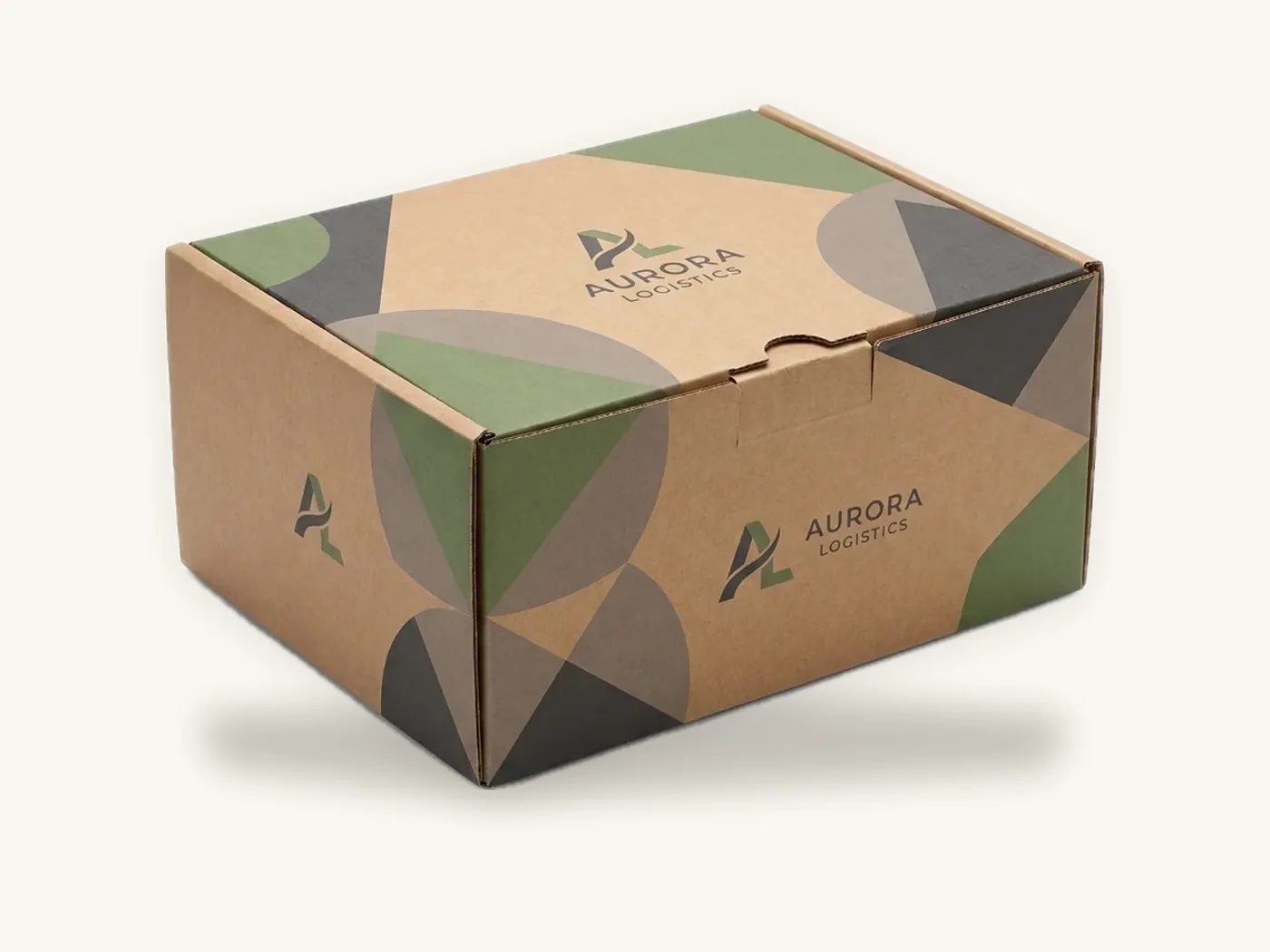
At low volume, the most valuable thing a packaging supplier can give you is the freedom to be wrong cheaply. Digital printing needs no plates, so a run of 10 or 50 boxes with a new size or new artwork costs only what the boxes cost.
What to test before ordering more
Use Stage 1 to answer the questions that become expensive later:
- Fit: does the product, plus any insert, tissue or card, sit snugly without forcing the lid?
- Carrier performance: do packed boxes arrive with square corners and intact print after a real shipment?
- Packing speed: how long does one person take to build, pack and seal a box? At 50 orders a day this barely matters; at 2,000 a day it drives labor cost.
- Customer response: do customers mention the packaging, photograph it, or complain about it?
Order a few quantity tiers in the instant price estimator even at this stage. Knowing that the same box costs less than half as much at 1,000 as at 100 helps you plan when to commit.
What Stage 1 costs in practice
Say you ship a skincare set in an 8x6x3 in E-flute custom mailer box printed full color outside. At 100 units it is about $2.64 per box, a little over two hundred sixty dollars for the order. That is a reasonable price to confirm a spec. It is not a reasonable price to keep paying once you are shipping several hundred orders a month.
Stage 2: Standardizing sizes, board and artwork
Standardizing is the stage most brands skip, and it is where the biggest long-term savings are decided. Once you have more than a handful of products, box sizes tend to multiply: one per product, one per bundle, one for the holiday set. Each extra size fragments your volume and pushes every order into a more expensive tier.
SKU rationalization: the math
Imagine a brand selling five products that each ship in their own straight tuck end carton of roughly similar size. Each product sells about 1,000 units per reorder cycle.
| Approach | Structure | Quantity per run | Indicative unit price | What changes |
|---|---|---|---|---|
| Five separate cartons | Five sizes, five dielines | 1,000 each | about $0.51 (3x2x5 in, 18 pt SBS, full color, aqueous) | Five runs, five inventories |
| One shared carton | One 3x2x5 in structure | 5,000 total | about $0.36 | One inventory; product identified by artwork version or label |
On paper, the shared carton saves roughly fifteen cents per unit, or about seven hundred fifty dollars per cycle across 5,000 units. How different artwork versions on one size are priced depends on the run, so ask for both scenarios on the same quote. Even if multiple versions do not combine into one tier, a shared structure still cuts dielines, inserts and shelf space.
The savings in the table are only part of the story. One carton size means one insert, one case pack count, one pallet pattern and one reorder calculation instead of five.
When not to consolidate
Consolidation fails when it creates a box that is wrong for most products. A carton that is a half inch too wide for three of five products needs an insert or void fill, and that can erase the savings. It also fails for retail products where shelf presence depends on proportion. A rule of thumb: if consolidation requires fill or an insert for more than one or two products, keep separate sizes.
Tip: before consolidating, lay every product on a table with its current box and sort them into groups whose dimensions differ by less than about 1/4 in in any direction. Those groups are your realistic shared sizes.
Write the spec sheet now
At Stage 2 you should turn every box into a written specification, even if you only have one supplier. A good spec sheet lists:
- Style and internal dimensions (length x width x depth)
- Board grade and flute, or paperboard caliper in points
- Print method, color references (CMYK or named PMS colors) and printed surfaces
- Coating or lamination, and any foil, embossing or spot UV
- Insert type and dimensions
- Approved artwork file name and version date
- Packing: units per bundle, bundles per carton, cartons per pallet
- Acceptable tolerances and what counts as a defect
That document is what makes Stages 3 and 4 possible. Our packaging quality control guide goes further into defect definitions and incoming inspection.
Stage 3: Moving from digital to offset and buying by tier
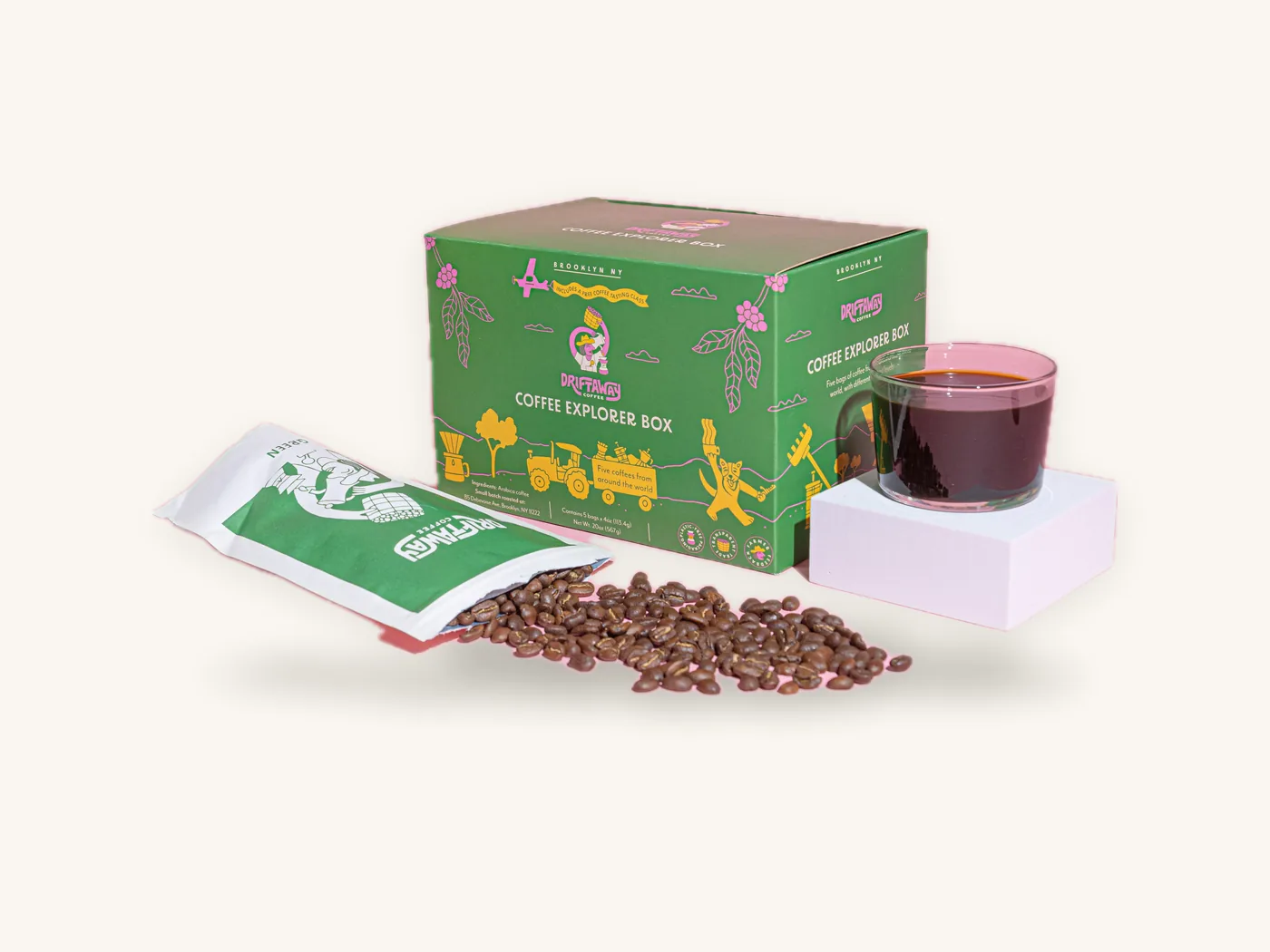
Somewhere between a few hundred and a thousand units per run, offset printing starts to make sense. Box Sense prints short runs of roughly 10 to 500 digitally and uses offset for larger runs, and the price curve reflects that shift. The digital vs offset printing guide explains the technical differences; here is what it means for a buying plan.
Reading the price curve
The indicative prices below include free US shipping and show where each doubling of quantity pays off.
| Spec | 250 | 1,000 | 2,500 | 5,000 | 10,000 |
|---|---|---|---|---|---|
| Mailer, E-flute, 8x6x3 in, full color outside | $1.88 | $1.17 | $1.00 | $0.83 | $0.75 |
| Shipping box RSC, B-flute, 12x10x6 in, 1-color | $3.33 | $2.08 | $1.77 | $1.48 | $1.33 |
| Straight tuck end carton, 18 pt SBS, 3x2x5 in, full color, aqueous | $0.82 | $0.51 | $0.43 | $0.36 | $0.33 |
Two patterns stand out. First, going from 250 to 1,000 cuts unit cost by roughly 35–40% on every row. Second, going from 5,000 to 10,000 saves only about ten percent or less. Past a few thousand units, board and ink dominate the cost, so doubling your order mostly doubles your inventory.
Worked example: one year of mailers
Suppose you ship about 10,000 mailer orders a year. Here are three ways to buy them, using the 8x6x3 in mailer row:
- Ten orders of 1,000: about $1.17 each, roughly eleven thousand seven hundred dollars for the year. Low storage need, but ten production cycles to manage.
- Four orders of 2,500: about $1.00 each, roughly ten thousand dollars. Three months of stock at a time.
- One order of 10,000: about $0.75 each, roughly seven thousand five hundred dollars. The lowest unit price, but a full year of boxes on your shelves and cash tied up for months.
The single annual order looks best on unit price, yet it is often the wrong call. It assumes the artwork, dimensions and product will not change for twelve months. It needs pallet space. And it locks up cash that a growing brand usually needs for inventory of the product itself. For most brands in this range, quarterly orders at the 2,500 tier are the practical middle ground.
Hidden costs that change the answer
- Storage: flat corrugated takes real space. Price your pallet positions or 3PL storage fees before choosing a larger tier. Our packaging storage and inventory guide has a method for estimating it.
- Obsolescence: a regulatory label change, a new logo or a reformulated product can scrap a warehouse of boxes.
- Damage in storage: humidity and crushed pallets degrade boxes held too long.
- Cash flow: money in packaging inventory is money not spent on product or marketing.
For a fuller cost model, see the packaging landed cost guide.
Forecasting packaging demand
Packaging forecasts do not need to be sophisticated, but they need to exist. The simplest workable model ties box usage to your sales forecast and adds known events.
Build a packaging forecast in four steps
- Start from order volume, not product volume. A customer who buys three items may ship in one box. Pull the last three to six months of shipped orders by box size from your fulfillment system.
- Calculate average weekly usage per box size. Use weekly rather than monthly numbers so you can see short spikes.
- Layer in known events. Holiday peaks, product launches, wholesale orders and promotions. Add them as separate line items rather than inflating the average.
- Review monthly. Compare forecast to actual usage and adjust. A forecast that is never checked becomes a guess with a spreadsheet around it.
Include the whole replenishment time
Your replenishment time is not just production time. For a repeat order with approved artwork, it includes the time to place the order and confirm the quote, production, transit and receiving. At Box Sense, quotes are confirmed within 24 hours and standard production is 8–12 business days after proof approval, with rush in 5 business days on most paperboard and corrugated styles. Add your own internal approval time and transit to your warehouse on top.
New artwork adds proofing and revision rounds, so treat a design change as a separate, longer timeline. The custom packaging lead times guide breaks down every step.
Safety stock and reorder points
Safety stock is the buffer that covers the gap between what you forecast and what actually happens: a sales spike, a delayed truck, a proof that needs another round.
A simple reorder point formula
A widely used approach is:
Reorder point = (weekly usage x replenishment weeks) + safety stock
Say you use about 400 mailers a week and your total replenishment time is roughly three weeks. That is 1,200 boxes consumed while the next order is on its way. If your weekly usage sometimes runs 50% higher during promotions, you might hold two extra weeks of normal usage, or 800 boxes, as safety stock. Your reorder point is then 2,000 boxes. When stock drops to 2,000, you place the next order.
| Input | Example value | Where it comes from |
|---|---|---|
| Weekly usage | 400 boxes | Shipped orders by box size |
| Replenishment time | about 3 weeks | Internal approval + production + transit + receiving |
| Demand during replenishment | 1,200 boxes | Usage x replenishment weeks |
| Safety stock | 800 boxes | Judgment based on how volatile demand is |
| Reorder point | 2,000 boxes | Demand during replenishment + safety stock |
How much safety stock is enough
There is no universal percentage. Hold more when demand is spiky, when the box is unique to one supplier, or when running out means shipping in a plain carton that damages the customer experience. Hold less when a stock box can substitute temporarily or when storage is tight.
Watch out: safety stock for a box that is about to be redesigned is waste. Before any artwork or size change, run the old stock down deliberately and time the new order to arrive as the buffer is consumed.
Stage 4: Dual sourcing and supply risk
At high volume, the question shifts from "what does a box cost" to "what happens if boxes do not arrive." A stockout of a primary shipper can stop fulfillment entirely, which costs far more than any unit-price saving.
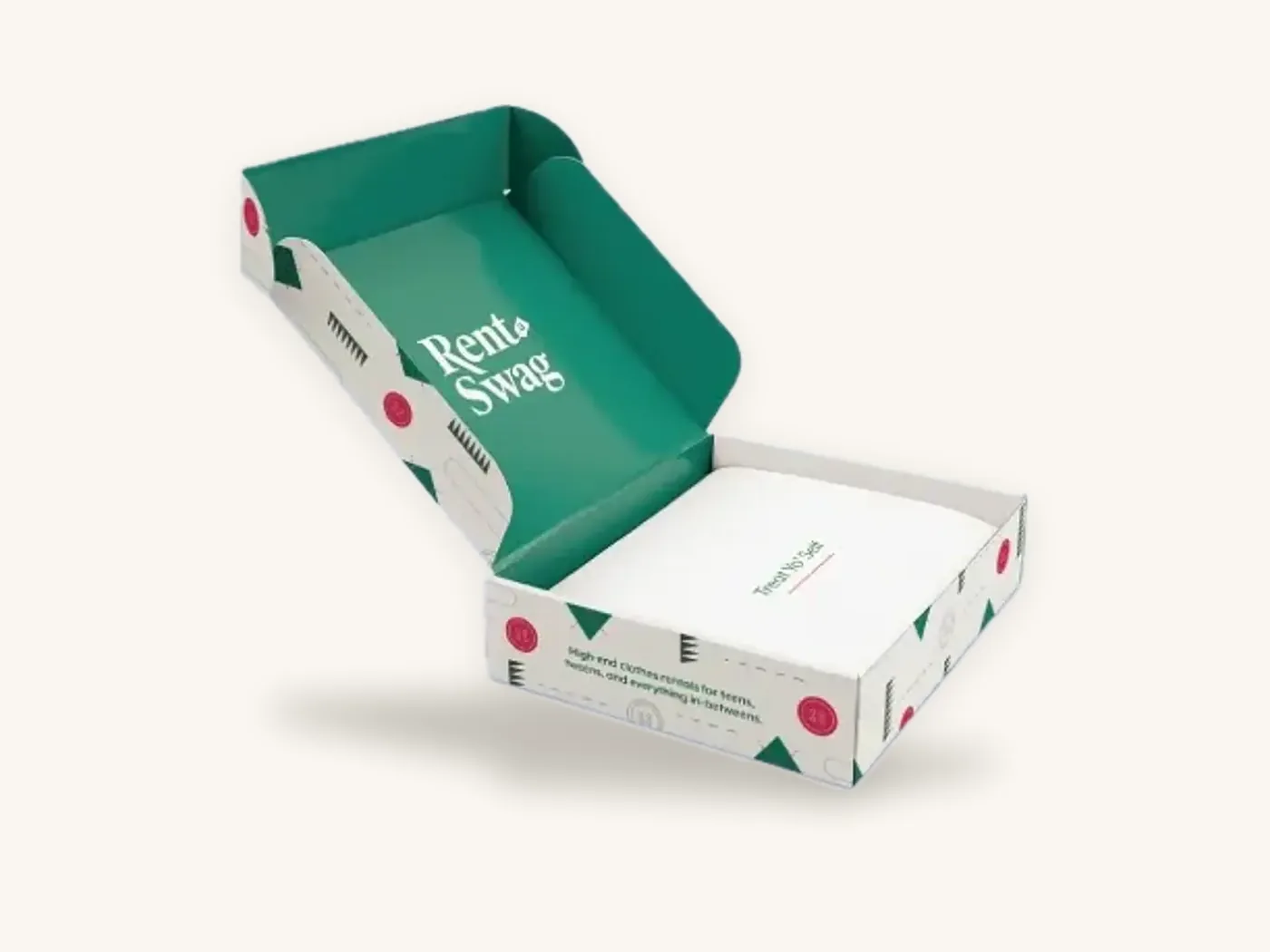
Options for reducing supply risk
- Higher safety stock with one supplier. The simplest option. Works well when demand is predictable and storage is cheap.
- A qualified backup supplier. A second plant that has produced a sample or small run to your spec sheet, so an emergency order is not a first order.
- Split volume. Some brands place a meaningful share of volume with each of two suppliers so both stay familiar with the spec. This can raise unit costs slightly because each order is smaller.
- A fallback stock box. A plain custom shipping box or unprinted version of your mailer that can ship in an emergency with a branded label or tape.
What makes dual sourcing actually work
A backup supplier is only useful if their box matches yours closely enough that packing lines, inserts and customers do not notice. That requires the spec sheet from Stage 2, shared dielines, named PMS colors rather than "match the last run," and a physical approved sample kept on file as the color and structure reference.
Qualify the backup before you need it. Order a small run, inspect it against your standard, and ship some real orders in it. Our packaging supplier red flags guide lists the warning signs to check for when qualifying any new source.
Packaging procurement habits that scale
As volume grows, packaging moves from the founder's inbox to an operations or procurement role. A few habits keep the program from drifting.
Quarterly packaging review checklist
- Compare actual box usage by size against forecast
- List any box sizes used for fewer than a few hundred orders in the quarter and consider retiring them
- Check damage and return reasons that mention packaging
- Review inventory on hand against reorder points
- Confirm upcoming launches, redesigns or regulatory label changes
- Request updated quotes at the next quantity tier for your highest-volume boxes
- Check that your backup supplier or fallback box is still viable
Keep the brand consistent as volume grows
Cost pressure at scale tempts brands to strip finishes, switch board, or drop inside printing. Some of those cuts are sensible; others quietly weaken the experience customers bought into. Before cutting, decide which elements carry the brand. Our guide on why custom packaging matters is a useful frame for that conversation. Often the better trade is trimming a finish on a secondary carton while keeping the primary shipper intact.
Growing brands selling through both online and retail channels will also find the e-commerce and subscription packaging page and the folding cartons range useful for matching shipper and retail box families.

How to scale your packaging program with Box Sense
Box Sense is built to cover every stage, from a 10-box test to large offset runs, from one manufacturer with in-house printing, die-cutting, gluing and finishing.
What to send for a scaling quote
- Your current box sizes, board and print specs, or samples of boxes you use now
- Annual and per-order volume estimates for each size
- Which products might share a size, so we can price consolidated and separate options
- Target delivery cadence (monthly, quarterly) and your warehouse location
- Any upcoming artwork or product changes
How the process works
- Quote within 24 hours, priced at the quantity tiers you name. Ask for two or three tiers so you can see the curve.
- Free design support: dieline, artwork setup, a 3D digital proof and two revision rounds.
- Samples: unprinted structural samples are free, and a printed sample of approved artwork is free on orders of 100 or more. See samples.
- Production: standard 8–12 business days after proof approval; rush in 5 business days on most paperboard and corrugated styles.
- Delivery: free shipping on every US order; international shipping quoted at cost.
The minimum order is 10 boxes, and there are no die or plate charges. One-time tooling applies only to foil, embossing, spot UV and custom inserts. Defective boxes reported within 14 days are reprinted free. The how it works page shows the full order flow.
Frequently asked questions
When should a growing brand switch from digital to offset printing for boxes?
Digital printing suits runs of roughly 10 to 500 boxes because it needs no plates and makes artwork changes cheap. Offset becomes the better value once per-run quantities reach the high hundreds or more, where its lower unit cost and consistent color pay off. Price both ends of that range for your exact box before deciding, since size and finish shift the crossover.
How many box sizes should a brand have?
As few as your products allow without adding void fill or inserts to most shipments. Many direct-to-consumer brands run well on two to four shipper sizes plus retail cartons. Group products whose dimensions differ by less than about a quarter inch, test a shared size, and retire boxes used for only a small number of orders each quarter.
How do I calculate a reorder point for packaging?
Multiply your average weekly box usage by your total replenishment time in weeks, then add safety stock. Replenishment time includes internal approvals, quoting, production, transit and receiving. For example, 400 boxes a week with a three-week replenishment time and 800 boxes of safety stock gives a reorder point of 2,000 boxes.
Is it cheaper to order a year of boxes at once?
The unit price is usually lowest on the largest order, but the total cost may not be. A year of stock ties up cash, needs storage space, risks damage and becomes waste if artwork or product dimensions change. Many brands find quarterly orders at a mid-level quantity tier balance unit price against storage and obsolescence risk.
Should I use two packaging suppliers?
At high volume, a qualified backup supplier reduces the risk of a stockout halting fulfillment. It only works if your spec sheet, dielines, color references and an approved physical sample are documented well enough for a second plant to match. Qualify the backup with a small run before you need it rather than placing an emergency first order.
What is SKU rationalization in packaging?
SKU rationalization means reducing the number of distinct box sizes and structures you buy. Fewer sizes let you order larger runs at better quantity tiers, simplify inserts and storage, and make forecasting easier. The tradeoff is fit: a shared box must suit most of its products without extra fill, or the savings disappear into void fill and damage.
How much safety stock should I keep for shipping boxes?
It depends on how volatile your demand is and how hard a stockout would hurt. Brands with steady sales and a substitute box can hold a week or two of usage. Brands with promotion-driven spikes, unique branded shippers or long replenishment times usually hold more. Review the buffer quarterly and reduce it before any redesign.
Next steps
Pull your last few months of shipped orders by box size, sketch which products could share a structure, and run two or three quantity tiers through the packaging price estimator. When you have a plan, request a scaling quote with your annual volumes and we will price separate and consolidated options within 24 hours.
Boxes in this guide
Order the packaging we covered
Written by the Box Sense Packaging Team
Our structural designers, prepress technicians and production staff print and convert custom boxes every day for brands in the United States, United Kingdom and UAE. Questions about this guide? Talk to us.