Good startup packaging is bought in stages, not all at once. Order 10 to 50 boxes to validate fit and design, 100 to 250 for launch, and 500 or more only once sell-through and the product itself have stopped changing. That sequence keeps cash in the business, lets you fix mistakes cheaply and still gets a professionally printed box in customers' hands on day one.
The trap for packaging for new brands is the minimum order. Traditional offset printing rewards large quantities, so founders buy thousands of boxes for a product that changes size, name or formula three months later. Short-run digital printing removes that pressure. This guide shows how to plan a first packaging order around your real launch milestones, what to specify, what the numbers look like and how to avoid the costly surprises that catch first-time buyers.
Key takeaways
- Stage quantities to match risk: a validation batch, a launch batch, then a scale batch once the product and design are stable.
- Decide early whether you need a shipper, a retail carton or both; many direct-to-consumer launches need only one.
- Lock the product's final dimensions before approving a dieline. Packaging built around a prototype that later changes is a classic early write-off.
- An 18 pt straight tuck end carton, 3x2x5 in, full color, costs about $1.73 each at 10 units and about $0.82 at 250; an 8x6x3 in printed mailer is about $3.99 at 10 and about $1.88 at 250.
- Work backward from launch day: artwork, proof, sample, production and transit all need calendar time.
- Box Sense prints from 10 boxes with no die or plate charges, which makes small validation runs affordable.
Why startups should stage their first packaging order
A startup's packaging problem is uncertainty, not price. At launch you do not yet know which variant will sell, whether retailers will ask for a different format, or whether customer feedback will push a product change. Every box printed before those questions are answered is a bet.
The three risks a staged order reduces
Design risk. The first printed box almost always reveals something: a logo that is too small on the lid, a color that looks different on board than on screen, a claim that needs rewording. Fixing that on a 25-box run is a minor cost. Fixing it on 2,000 boxes is a write-off.
Product risk. Early products change. A bottle supplier switches to a different shoulder, a formula needs a larger fill, or a bundle gains an extra item. Packaging sized to the old version may not close.
Cash risk. Packaging inventory is cash sitting on a shelf. Money tied up in boxes is money not spent on ads, inventory or hiring.
When a larger first order does make sense
Staging is not a rule for everyone. If you have confirmed retail purchase orders, a fixed product that has been manufactured for months, or a crowdfunding campaign with known backer numbers, you already know your demand. In those cases, the lower unit price of a 500 or 1,000 run is worth taking from the start.
Choosing what to package first: shipper, carton or both
Before comparing quotes, decide which layer of packaging your launch actually needs. The answer depends on where the product is sold.
| Sales channel | Packaging you need | Why | Can wait until later |
|---|---|---|---|
| Direct-to-consumer website only | Printed mailer box | The mailer is the first branded thing customers touch | Retail carton, display box |
| Marketplaces like Amazon | Retail carton plus a plain or lightly printed shipper | Marketplace rules and warehouse handling favor protective, labeled units | Printed shipper |
| Boutique and specialty retail | Retail carton or window box | Shelf presence and required on-pack information matter most | Printed mailer |
| Subscription or kit brand | Mailer with insert | The box is the product experience | Individual cartons per item |
| Mixed channels from day one | One carton design plus a simple shared shipper | One retail design keeps the SKU count manageable | Channel-specific shippers |
Direct-to-consumer launches
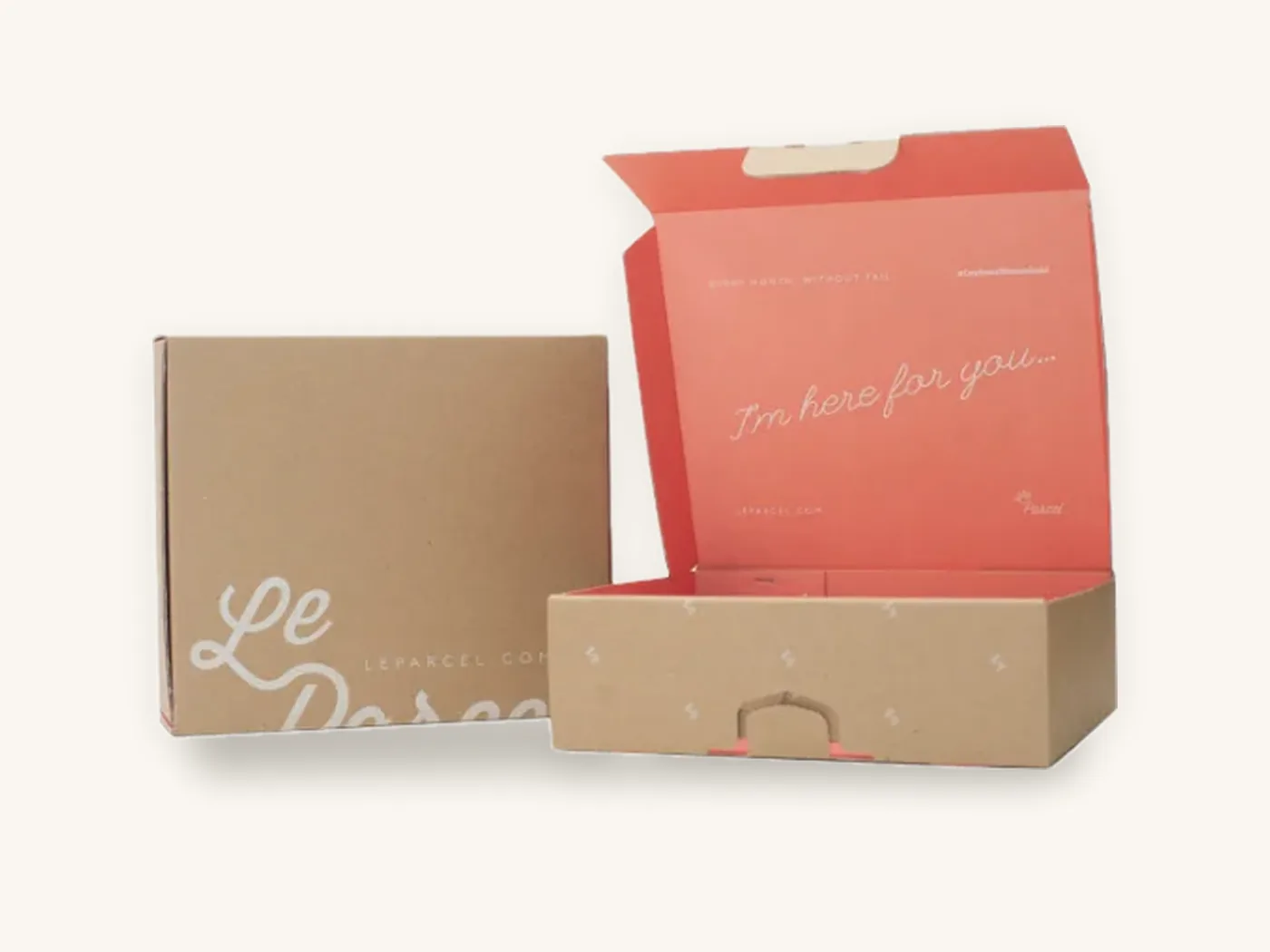
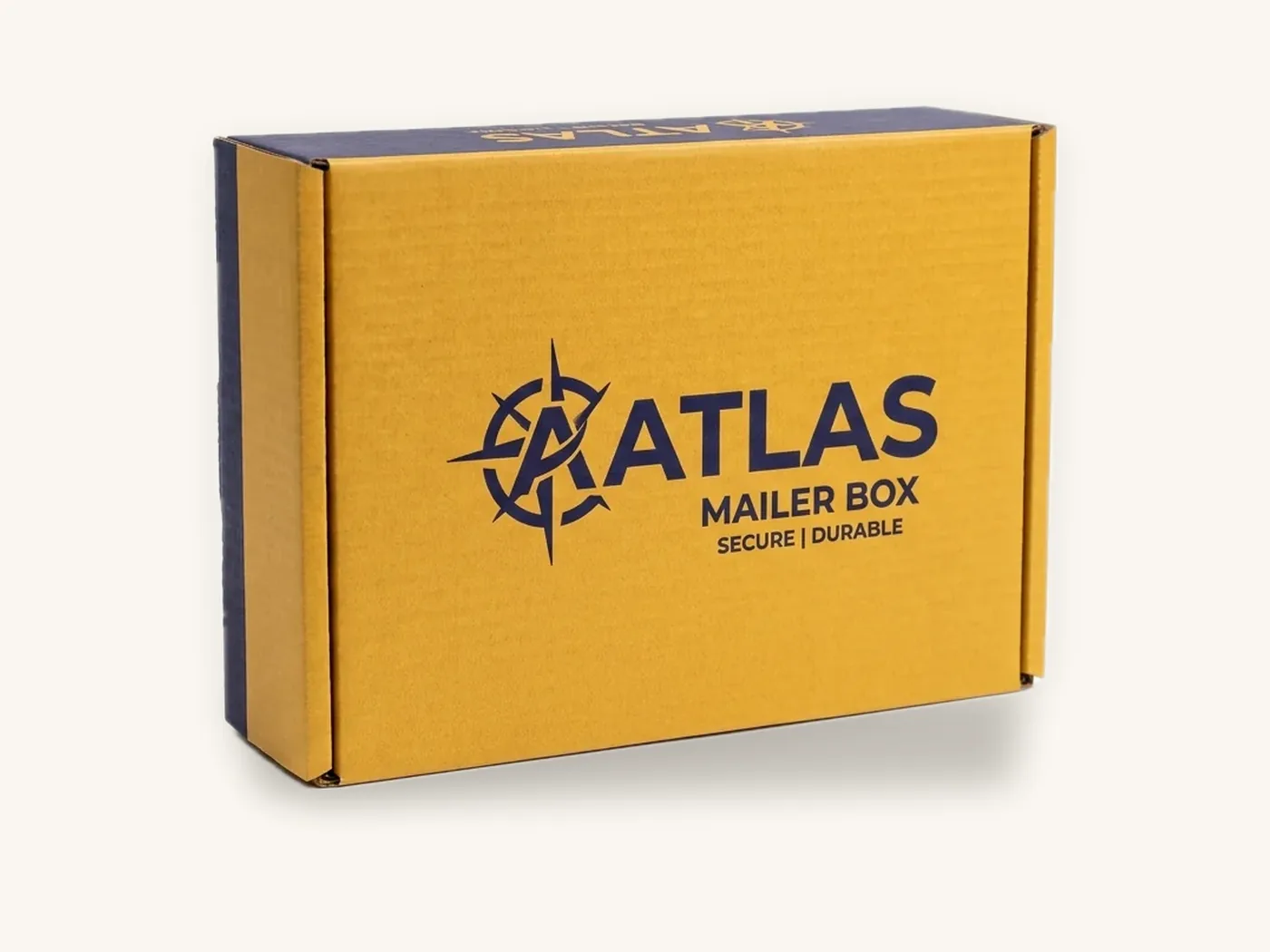
If you only sell online, the custom mailer box does double duty as protection and presentation. A carton inside the mailer adds cost and waste unless the product needs it for protection or regulatory labeling.
Retail-first launches
Retail buyers look at a custom product box on a shelf from a few feet away. Front-panel hierarchy, a barcode and required labeling matter more than inside printing. If a retailer is involved, ask the buyer for their packaging requirements before designing; the answers often change the structure. Our guide to UPC barcodes on packaging covers placement and print quality.
Labels as a bridge
When you have several flavors, scents or shades, one printed box with a custom label for the variant keeps you from ordering a separate box design for each SKU. Once a variant proves itself, it can graduate to its own printed box.
A staged ordering plan from 10 to 500 boxes
Here is a practical three-stage plan. Quantities are guides; adjust them to your sales forecast and storage space.
Stage 1: validation batch (10 to 50 boxes)
Purpose: prove the fit, the print and the opening experience with real product. Use these boxes for photography, influencer and press send-outs, investor meetings, retailer pitches and friends-and-family orders.
What to test: does the product fit snugly, does the lid close flat, does the artwork read clearly, does the box survive a trip through the mail, and do the colors match the brand?
Stage 2: launch batch (100 to 250 boxes)
Purpose: cover the first weeks or months of real orders. By now the dieline and artwork are proven, so the reorder is a repeat of an approved file.
What to watch: weekly usage, damage reports, customer photos and comments about the box, and whether any variant sells much faster than the rest.
Stage 3: scale batch (500 boxes and up)
Purpose: lower unit cost once demand and design are stable. This is also the stage to consider premium additions you skipped earlier, such as inside printing, soft-touch lamination or foil, because tooling costs are spread over more units.
What to decide: whether to switch to offset printing, whether to split into variant-specific designs, and how much storage you can dedicate to flat-packed inventory.
Watch out: do not approve a dieline until the product's final dimensions are confirmed in writing by your product manufacturer. A change of a few millimeters in a bottle or jar can stop a lid closing or leave a gap that lets the item rattle.
What startup packaging costs at each stage
Unit price drops steeply over the first few quantity tiers, then flattens. The table below uses indicative Box Sense rates, with free US shipping included, for two specs that cover many launches. Check your exact spec in the instant price estimator.
| Spec | 10 | 50 | 100 | 250 | 500 |
|---|---|---|---|---|---|
| Straight tuck end carton, 18 pt SBS, 3x2x5 in, full color outside, aqueous | $1.73 | $1.32 | $1.15 | $0.82 | $0.61 |
| Mailer box, E-flute, 8x6x3 in, full color outside | $3.99 | $3.05 | $2.64 | $1.88 | $1.41 |
| Mailer box, E-flute, 10x8x4 in, full color inside and outside | $6.54 | $5.00 | $4.33 | $3.08 | $2.31 |
Reading the table as a founder
The higher per-unit price at 10 or 50 boxes is the cost of flexibility. Think of it as paying for information: you learn whether the design works before committing to the lower-priced, larger order.
Going from 250 to 500 on the 8x6x3 in mailer drops the unit price from about $1.88 to about $1.41. Whether that is a saving depends on how quickly you use the boxes and whether the design will survive long enough to use all 500.
Hidden costs that catch first-time buyers
- Tooling for finishes. Foil and embossing each carry a one-time charge of about $60, spot UV about $40 and a custom insert die about $45. On a 10-box run, tooling can exceed the cost of the boxes.
- Freight and duties. Overseas quotes often exclude shipping, customs and warehouse fees. Our landed cost guide shows how to compare quotes on an equal basis.
- Storage. Flat boxes still take space. A few hundred mailers can fill a closet; a few thousand need pallet space.
- Reprints for avoidable errors. A missed typo or a wrong barcode costs a full reprint, which is why proofing matters so much.
For a deeper breakdown of how quantity drives price, read packaging MOQs explained.
Specifying your first packaging order correctly
Clear specifications get accurate quotes and prevent disagreements later. Even if you are not sure of every answer, write down what you know.
The spec sheet every startup should prepare
- Product details. Final dimensions of the product as packed, weight and any fragile parts.
- Box style. Mailer, tuck end carton, window box or rigid box. If unsure, describe how the box will be used.
- Internal dimensions. Length x width x depth, measured on the inside.
- Material. E-flute corrugated for mailers; 14 to 18 pt SBS or kraft paperboard for cartons. The SBS paperboard page explains grades.
- Print. Full color, one color or PMS; outside only or inside too.
- Finish. Aqueous coating, matte or gloss lamination, soft-touch, foil or spot UV.
- Extras. Inserts, windows, tear strips.
- Quantities. Price at least three tiers, such as 50, 250 and 500.
- Timeline. Your required in-hand date and delivery address.
Board and finish choices that fit a startup budget
Aqueous coating is an inexpensive default that protects print and keeps boxes recyclable. Matte lamination adds scuff resistance and a premium feel for a modest increase. Save foil, embossing and soft-touch for Stage 3, or use one of them only on the logo if brand positioning demands it at launch.
On corrugated mailers, E-flute handles most products under a few pounds. Upgrade to B-flute only if your product is heavy, dense or sharp-edged.
Planning the launch timeline backward from ship date
Packaging is often the last item founders think about and the first to delay a launch. Build the schedule backward from the day the first order must ship.
| Step | Typical time | Notes |
|---|---|---|
| Brief and quote | 1 day | Quotes confirmed within 24 hours |
| Dieline and artwork setup | a few days to a week or more | Depends on how ready your artwork is |
| 3D digital proof and revisions | a few days | Two revision rounds included |
| Structural or printed sample (optional) | allow at least a week | Recommended before a large run |
| Production | 8–12 business days after proof approval | Rush in 5 business days on most paperboard and corrugated styles |
| Transit and receiving | depends on destination | US shipping is free |
| Packing test with real product | 1 to 2 days | Do not skip this before launch |
The founder's packaging calendar
- Eight weeks out: finalize product dimensions with your manufacturer and choose box style.
- Seven weeks out: request quotes and order an unprinted structural sample.
- Six weeks out: finalize artwork on the supplied dieline.
- Five weeks out: approve the 3D proof after checking every panel, barcode and claim.
- Four weeks out: production begins on the validation or launch batch.
- Two weeks out: boxes arrive; test pack, photograph and ship test orders.
- Launch week: hold a small buffer of boxes in reserve for replacements.
This calendar leaves slack for a revision round and a sample. If you are compressing it, rush production helps, but proofing and artwork time cannot be rushed without risk. Our product launch packaging guide covers launch-day logistics in more detail.
Design decisions that help a startup scale
A startup's first design should be built to evolve. The choices you make now determine how easily you can add products, channels and markets later.
Build a system, not a single box
Define a consistent layout: logo position, product name placement, a color band or pattern that changes per variant, and a fixed spot for regulatory text and barcodes. When the next product arrives, it slots into the system rather than requiring a new design from scratch.
Keep the changeable parts changeable
Promotional messages, launch-offer codes and seasonal artwork date quickly. Put them on inserts or labels. Keep the printed box itself timeless.
Get the required information right
Depending on your category, US packaging may need specific statements. Food labeling falls under the FDA, cosmetics labeling under the FDA as well, and many consumer products have requirements from the FTC or CPSC. Confirm current requirements with the relevant agency or counsel before approving artwork. Our guide to packaging mistakes to avoid covers the errors that most often force reprints.
Measure how packaging performs
Track damage rates, customer comments and social posts featuring the box. That evidence tells you whether upgrading to inside printing or a premium finish is worth it at Stage 3. The packaging marketing strategy guide explains how to connect packaging decisions to marketing goals, and packaging for customer retention shows how inserts and reorder prompts can support repeat purchases.
When your startup outgrows its first box
Several signals tell you it is time to revisit packaging rather than simply reorder:
- You are placing reorders every few weeks and storage is not a constraint, so a larger run would lower cost.
- Customers or retailers keep asking for a feature you do not have, such as a window, a hang tab or a gift-ready presentation.
- Damage reports are rising as order volume or shipping distance grows.
- You have added enough products that the variant-label system looks cluttered.
- You are entering a new market, such as the UK or UAE, with different labeling rules or retail expectations.
At that point, a structured redesign often pays off. If you sell handmade goods or run a small shop alongside the main brand, our packaging guide for Etsy sellers offers a budget-focused approach for that side of the business.
How to order startup packaging with Box Sense
Box Sense is built for exactly the staged approach above. The minimum order is 10 boxes, digital printing handles short runs of roughly 10 to 500, and offset printing takes over for larger runs.
What to send for your first quote
- Your spec sheet (even if some answers are "not sure")
- Product samples or exact dimensions and weight
- Logo and artwork files, or a note that you need help from our design services team
- Quantities for each stage, for example 25, 250 and 500
- Your launch date and delivery address
What you get
- A quote within 24 hours for each quantity tier.
- Free design support: a dieline, artwork setup and a 3D digital proof with two revision rounds.
- Free samples: unprinted structural samples at no charge, and a free printed sample of approved artwork on orders of 100 or more. See samples.
- Production in 8–12 business days after proof approval, or rush in 5 business days on most paperboard and corrugated styles.
- Free shipping on every US order, with international shipping quoted at cost.
There are no die or plate charges; one-time tooling applies only to foil, embossing, spot UV and custom inserts. Defective boxes reported within 14 days are reprinted free. The how it works page walks through each step.
Frequently asked questions
How many boxes should a startup order first?
Most startups do well with a validation batch of 10 to 50 boxes, followed by a launch batch of 100 to 250. That tests fit, print and shipping performance before committing more cash. Move to 500 or more once the product dimensions are locked, the design has been proven with customers and you have a reliable sales forecast.
How much does startup packaging cost?
It depends on style, size, print, finish and quantity. As a reference, an 18 pt straight tuck end carton at 3x2x5 in with full-color print is about $1.73 per box at 10 units and about $0.61 at 500. An 8x6x3 in printed E-flute mailer is about $3.99 at 10 and about $1.41 at 500, with US shipping included.
What is the minimum order for custom packaging for new brands?
Minimums vary widely between suppliers, from a few hundred to several thousand units for offset-only printers. Box Sense has a minimum of 10 boxes because short runs are printed digitally without plates. That makes it practical for new brands to order samples, pitch retailers or launch with small quantities before scaling.
Should a startup use a mailer box or a product box?
Use a mailer box if you sell mainly direct-to-consumer online, since it protects the product and delivers the brand experience in one piece. Use a product box or folding carton if you sell through retail or marketplaces, where shelf presence and on-pack information matter. Brands selling through both often start with a carton and a simple shared shipper.
How long does a first packaging order take?
Plan for several weeks from brief to boxes in hand. Quotes arrive within 24 hours, artwork and proofing take days to a week or more, and production at Box Sense takes 8–12 business days after proof approval. Add time for an optional sample and transit. Rush production in 5 business days is available on most paperboard and corrugated styles.
What should I include in my first packaging order specification?
Include the product's packed dimensions and weight, the box style, internal dimensions, material, print method and coverage, finishes, any inserts or windows, the quantities you want priced and your in-hand date. If you are unsure about material or style, describe how the box will be used and ask the supplier to recommend options.
Do I need a barcode on my startup's packaging?
You need one if you sell through retailers or marketplaces that scan products, and many require it on the retail carton. Direct-to-consumer brands selling only on their own website often do not need one at launch. If retail is in your plans, reserve a barcode area in the design now so it does not force a layout change later.
Next steps
Write down your launch date, your sales channels and your product's final dimensions, then price a validation batch and a launch batch side by side in the instant packaging price estimator. When you are ready to move, request a startup packaging quote with your spec sheet, and we will confirm pricing within 24 hours and send a dieline for your first design.
Boxes in this guide
Order the packaging we covered
Written by the Box Sense Packaging Team
Our structural designers, prepress technicians and production staff print and convert custom boxes every day for brands in the United States, United Kingdom and UAE. Questions about this guide? Talk to us.