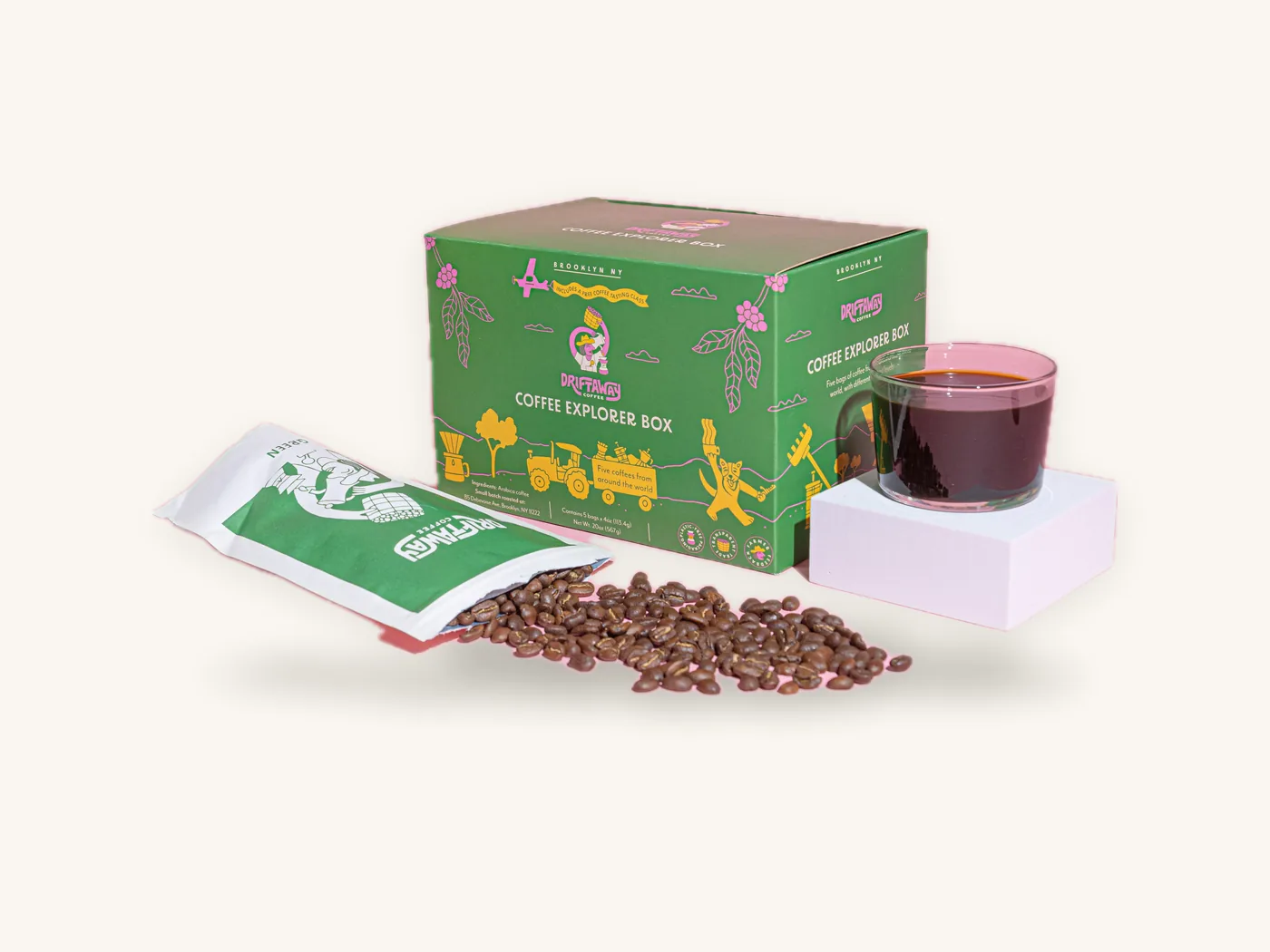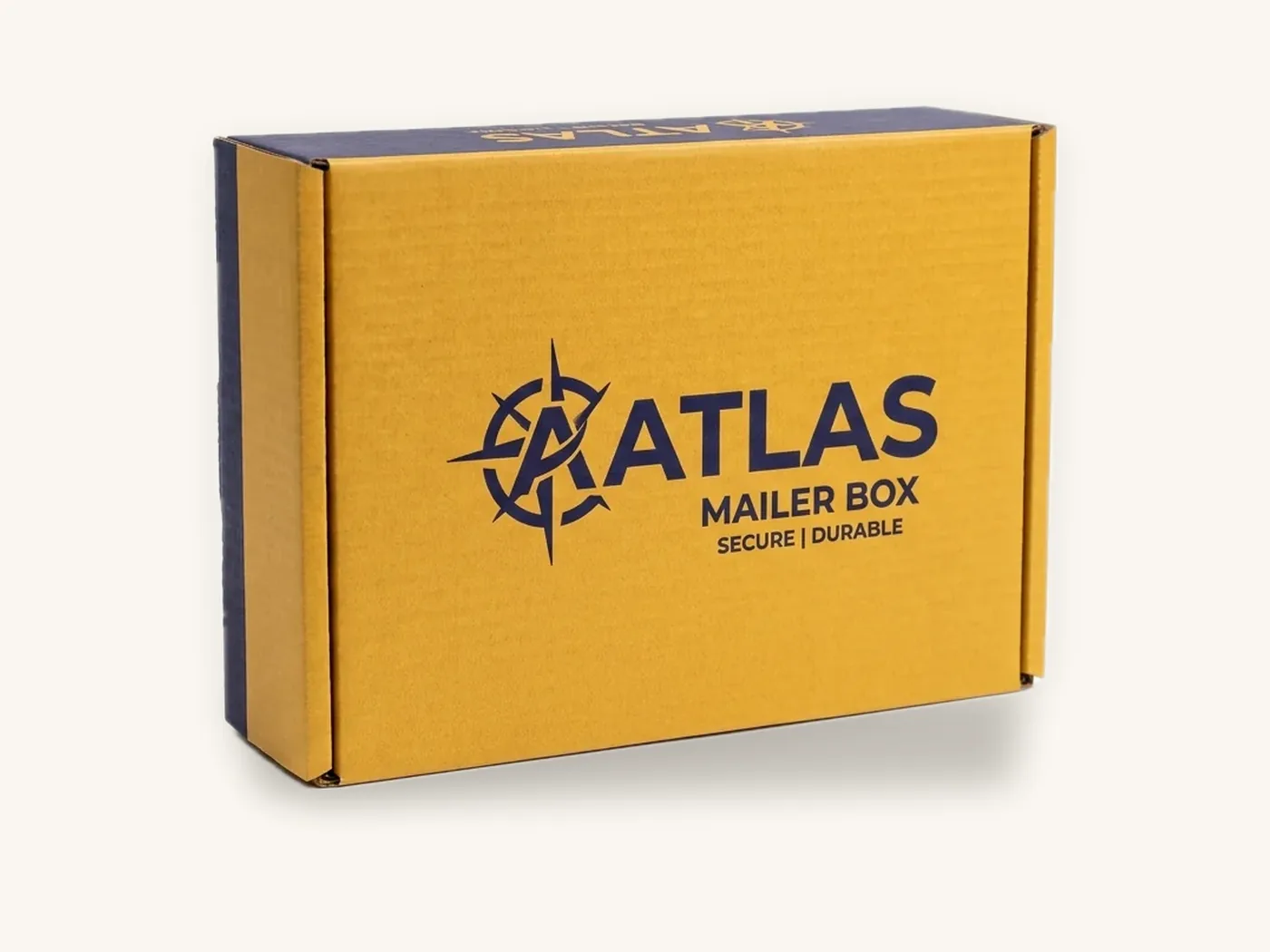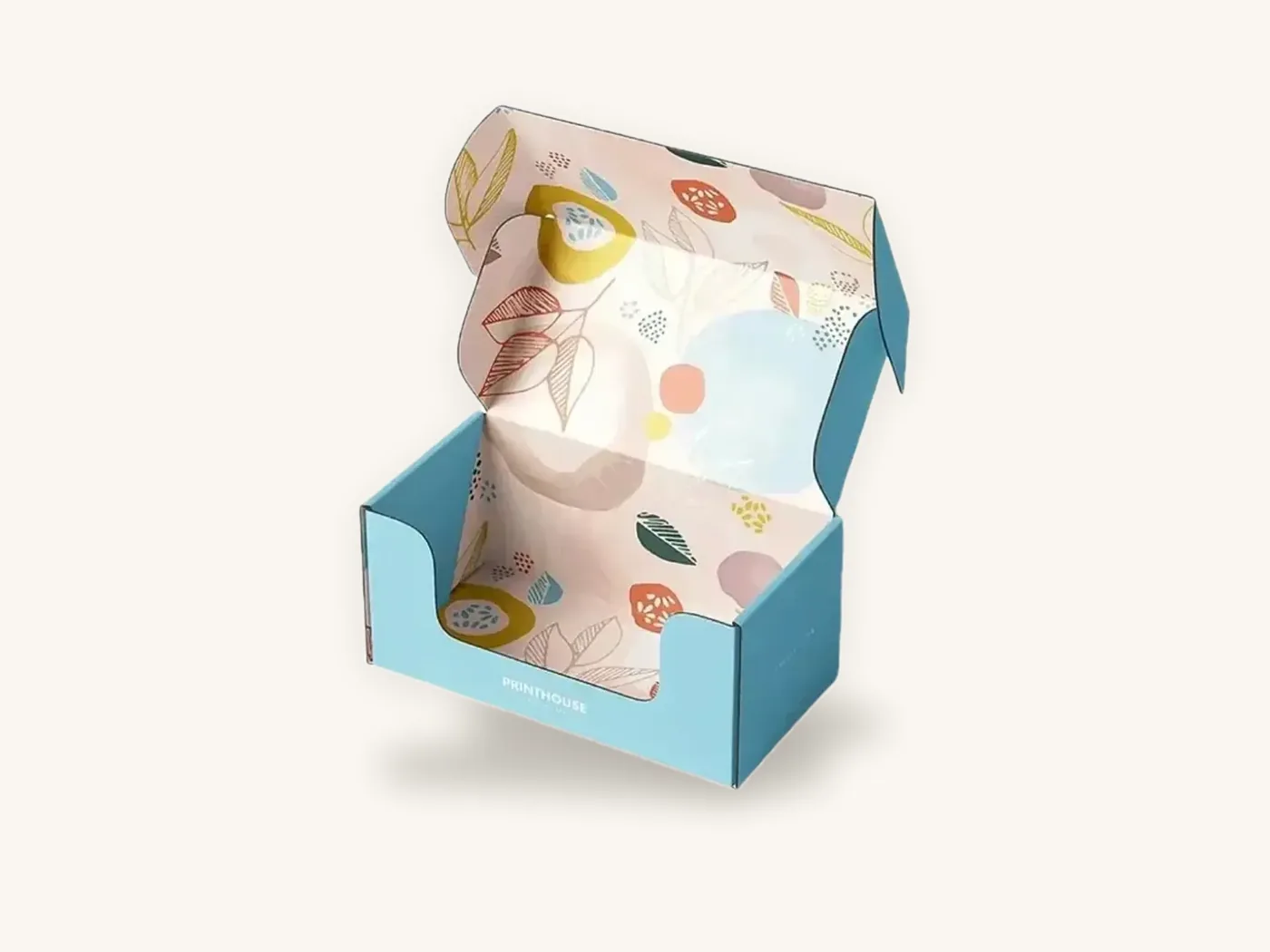
Packaging marketing means using the box, the insert and everything inside it as a sales channel, with a defined audience, a message and a measurable action, rather than as a cost you minimize. The audience is the best one you will ever get: a person who has already paid you, who is holding your product, and who is about to decide whether to buy again.
Most brands design the box once, for looks, and never think about it again. This guide treats packaging as marketing in the operational sense: which surface does which job, how to push customers toward a second order, how to run campaigns without reprinting, and how to measure whether any of it works. The examples are hypothetical and the arithmetic is yours to replace with your own numbers.
Key takeaways
- A shipped box is owned media with guaranteed delivery to a paying customer, so judge it like an ad placement: audience, message, action, result.
- Give every surface one job. The outside survives transit and identifies you; the inside lid carries the main message; an insert card drives the next action.
- Design for the second order, not the first impression. Reorder timing, refill prompts and a direct path back to your store matter more than decoration.
- Keep the box itself stable and run campaigns through cheap, changeable layers: cards, stickers, tissue and sleeves.
- Measure with unique codes and tagged QR links, and compare customers who received a new pack against those who did not.
- Box Sense prints from 10 boxes, which makes it practical to test packaging ideas on a small batch before committing a full run.
Why packaging is a marketing channel, not a cost line
Every other channel you pay for has leakage. Ads are shown to people who scroll past, emails land in promotions tabs, and social posts reach a fraction of followers. A box has none of that. It is delivered to a specific person, at a known address, who opens it on purpose.
That changes how you should budget for it. The question is not "how cheap can this box be?" but "what is one impression on a paying customer worth, and is this box earning it?"
Three moments a box controls
- The doorstep. The outside of the parcel is seen by the customer, often by people in the same household, and sometimes by neighbors or coworkers in a mailroom.
- The opening. For a few seconds the customer's full attention is on the inside of your box. No other channel gets that.
- The afterlife. A good box gets kept for storage, reused for gifting or photographed. A printed insert card stays on a fridge or desk long after the email is deleted.
What packaging cannot do
Packaging will not rescue a weak product, a slow delivery or a confusing website. It amplifies an experience that already works. If customers are returning items or complaining about fit, fix that first; a beautiful box on a bad experience only makes the disappointment more memorable. Our list of packaging mistakes to avoid covers the traps that waste money before marketing even enters the picture.
Map every surface of the box to one job
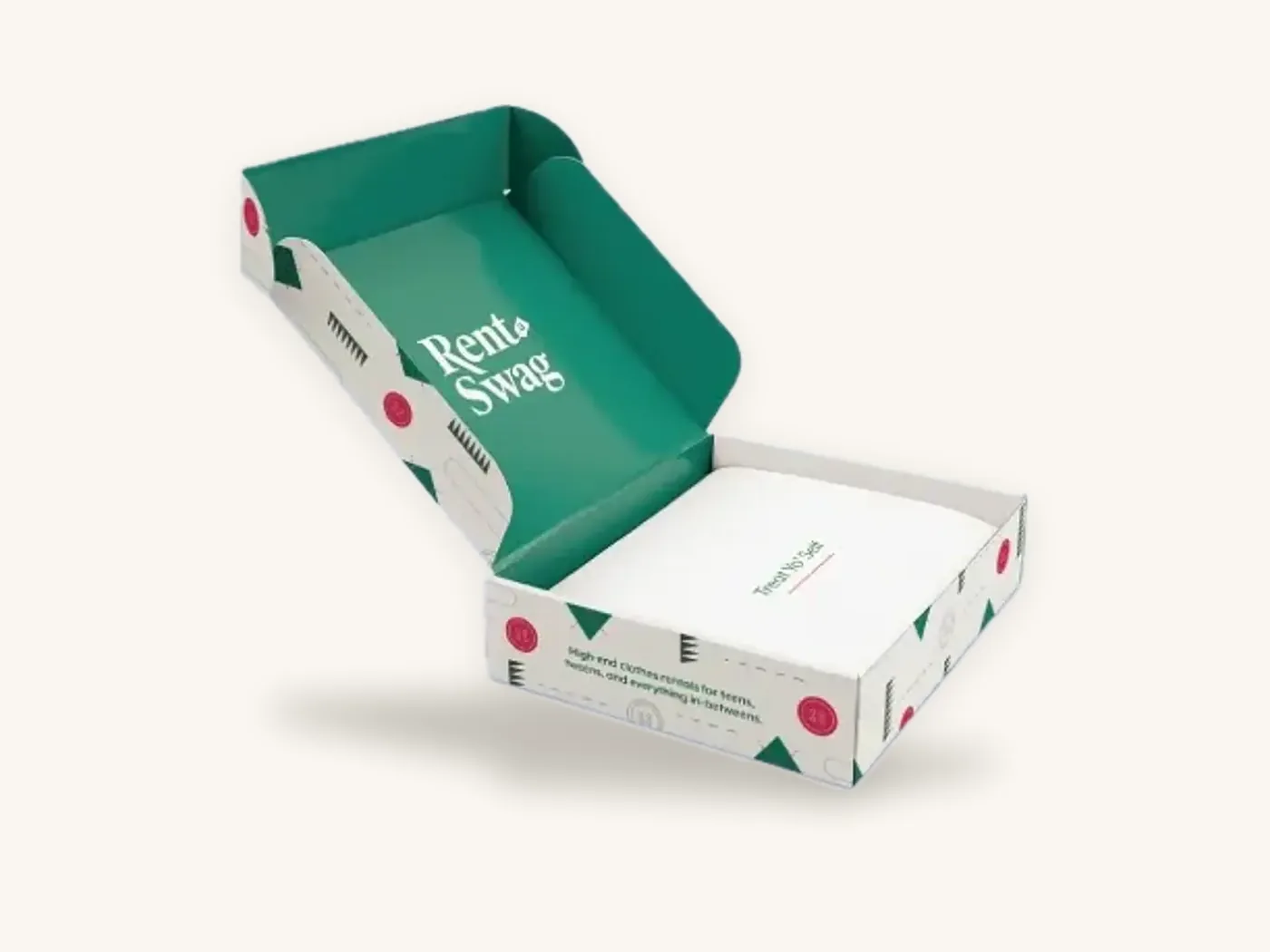
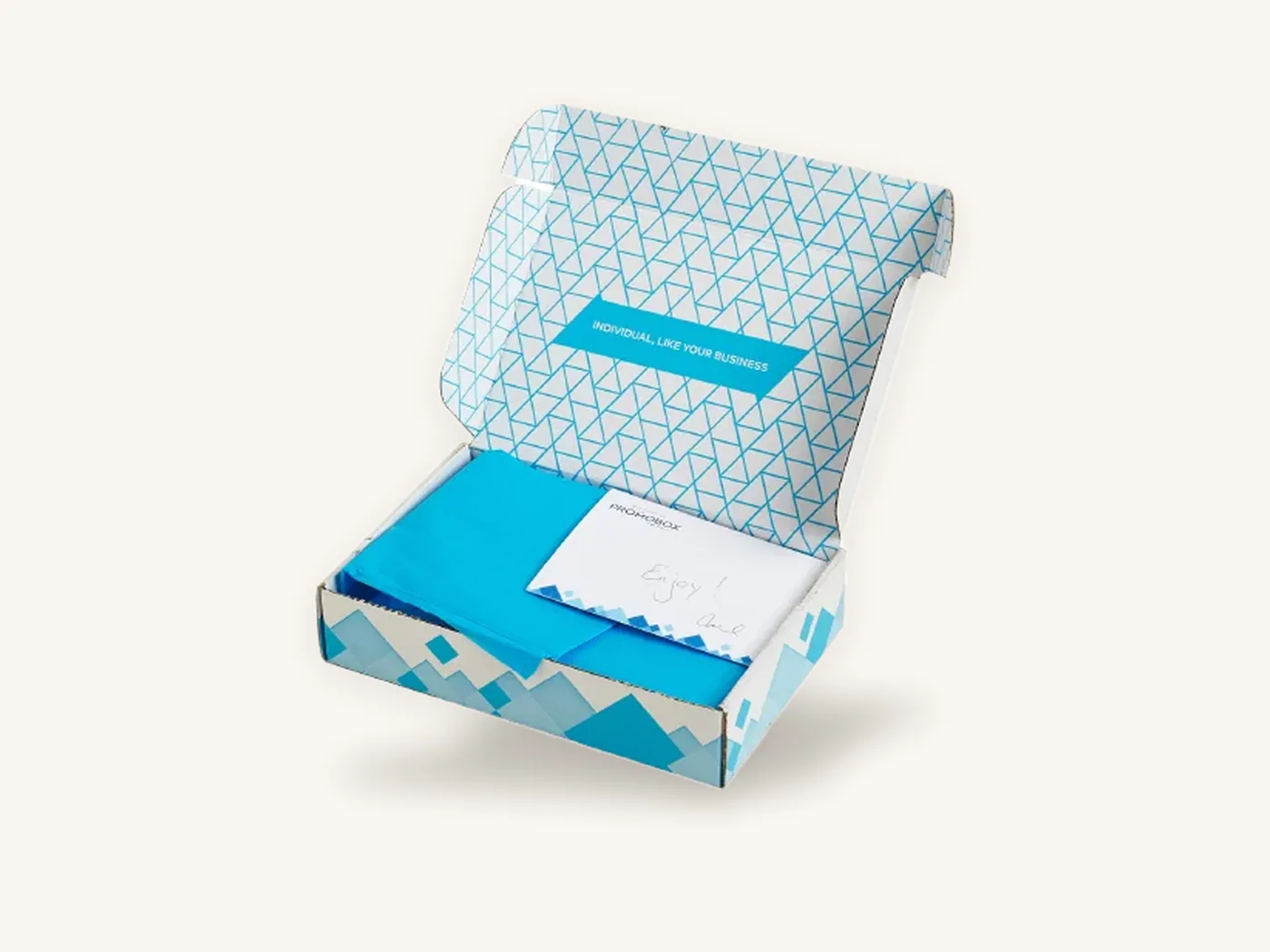
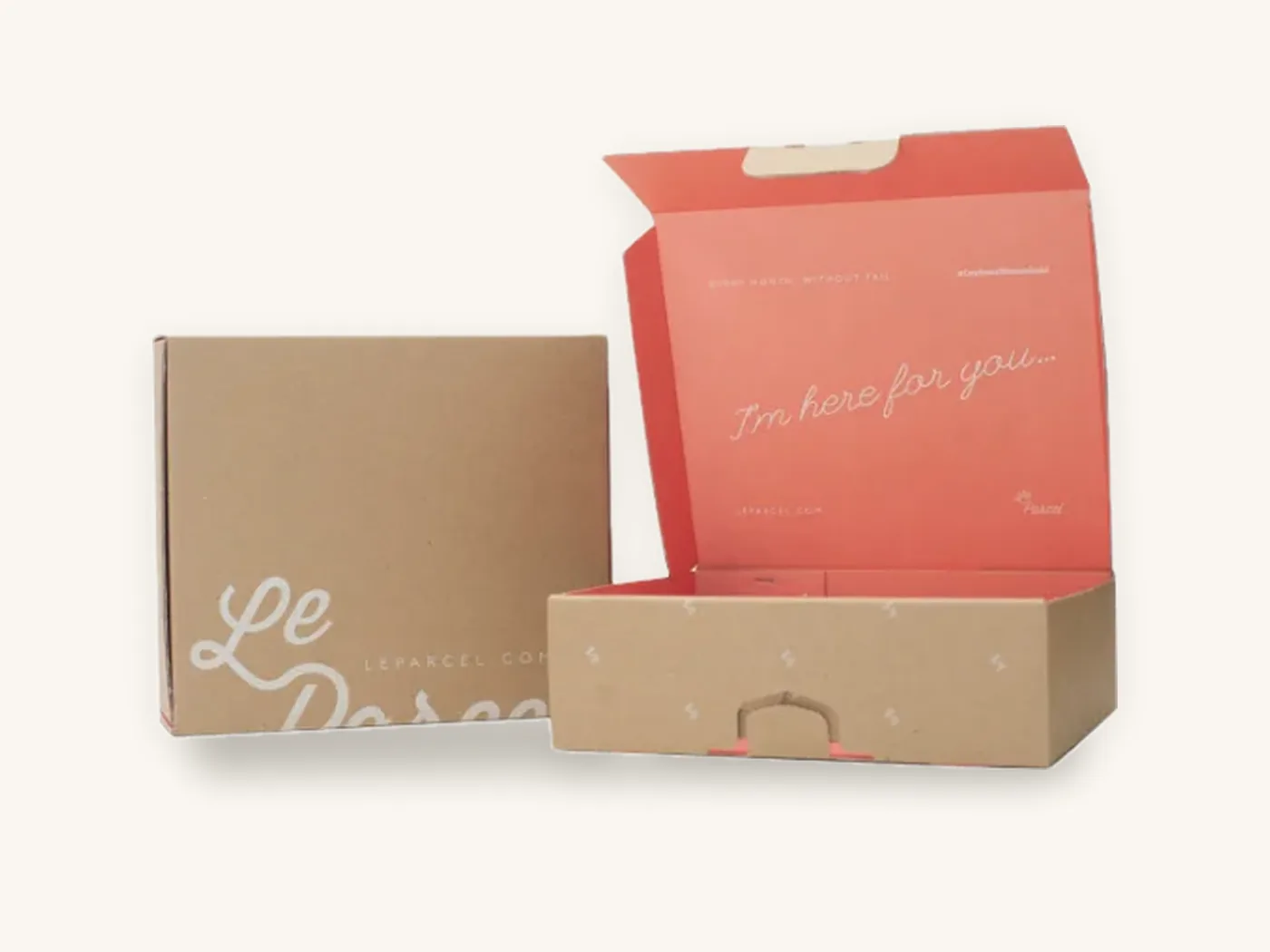
The fastest way to improve packaging as marketing is to stop putting the logo everywhere and start assigning jobs. A custom mailer box has at least five distinct print areas, each seen at a different moment by a different person.
| Surface | Who sees it | When | Best job | Keep off it |
|---|---|---|---|---|
| Outer lid and sides | Customer, household, carrier staff | Delivery | Recognition: logo, one brand color, a simple pattern | Product names for high-theft or private items |
| Inside lid | Customer only | First second of opening | The one message you most want remembered | Dense copy, legal text |
| Inner base or tray | Customer | After product is lifted | Usage tip, social handle, care note | Anything covered by the product |
| Insert card | Customer, sometimes a gift recipient | Unpacking and later | The action: reorder, review, refer | Five competing calls to action |
| Tissue, sticker, tape | Customer, anyone watching an unboxing | Unwrapping | Texture and reveal, not information | Long messages |
The outside: recognition, not persuasion
The exterior gets scuffed, labeled and handled by conveyors. Design it to be recognized from across a room: one strong color field or pattern, a logo sized for a quick read, and nothing that depends on fine detail. If the contents are valuable or private, consider a plain exterior with all the branding inside. Discretion is also a brand message.
The inside lid: your headline
Printing the inside of the lid usually delivers more attention per square inch than anything on the outside. Use it for a single line: a thank-you that sounds like your brand, a one-sentence promise, or an instruction for the first use. Our guide to inside printing on boxes explains how to do it without printing every interior surface.
The insert card: your call to action
The card is where marketing becomes measurable. It can change every batch, it costs little to print, and it can carry a unique code. Give it exactly one primary action.
Design for the second order
The first purchase is the expensive one. You paid to acquire that customer. The second purchase is where margin lives, and packaging is the only channel guaranteed to be in the customer's hands at the moment they are forming an opinion.
Match the prompt to the product's usage cycle
Think about when the customer will run out, outgrow or want more, and put that timing in front of them.
- Consumables (coffee, skincare, supplements, candles): print an approximate "you will run low around..." cue on the card or inside lid, with a short link to reorder.
- Collectibles and series (apparel drops, prints, books): show the rest of the collection so the customer sees the set they are building.
- Durable goods (electronics, kitchenware): point to accessories, care products or a warranty registration that captures an email address.
- Gifts: include a second card addressed to the recipient that invites them to shop, since they are a brand-new customer you did not pay to reach.
Make the path back one step long
A QR code that goes to your home page wastes the moment. Link directly to a reorder page, a prefilled cart or a subscription signup. Keep the URL short enough to type as a fallback. For tracking and placement advice, see QR codes on packaging.
Tip: put the reorder prompt somewhere the customer will see it again when they are running out, such as a card designed to be kept, a sticker on the product itself, or the inner tray of a box people tend to reuse for storage. A message seen only at unboxing is seen weeks too early.
Reward the behaviors that grow you
Decide which action is worth the most to your business and build one incentive around it. For some brands that is a review, for others a referral, and for subscription brands it is simply not canceling. Trying to ask for all of them on one card usually gets none.
Run campaigns without reprinting the box
A common mistake is treating each promotion as a reason to redesign the box. That ties up cash in inventory, creates obsolete stock, and makes the brand look inconsistent. A better structure is a stable base with changeable layers.
The layered packaging system
- Base box (changes rarely). Brand color, logo, inside-lid message. Order in larger quantities for a lower unit price.
- Seasonal layer (changes a few times a year). A printed sleeve, a belly band or a sticker that seals the lid.
- Campaign layer (changes every batch). Insert cards, discount codes, collaborator notes.
- Personal layer (changes every order). A handwritten note, a name, a picking slip with a message.
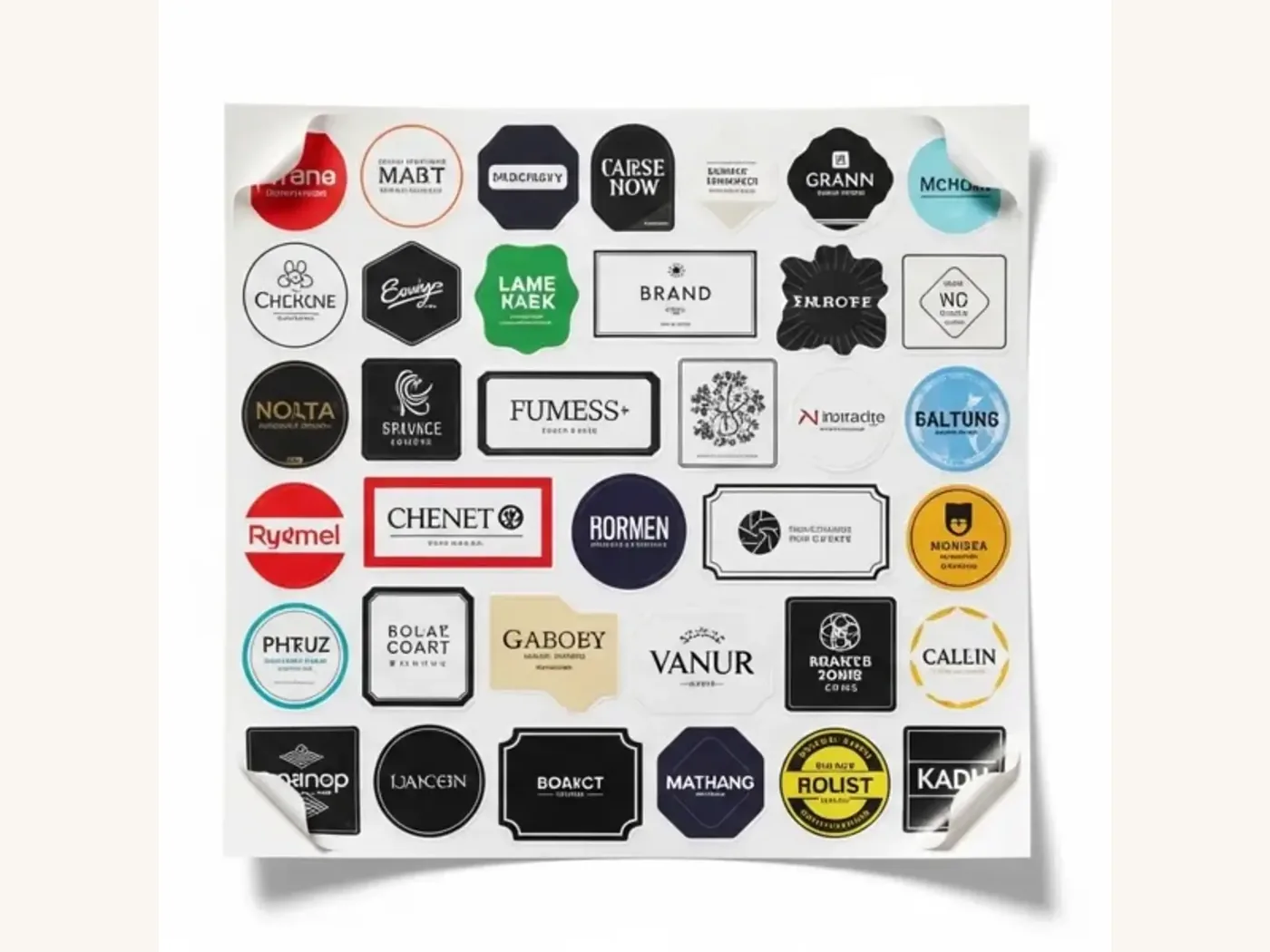
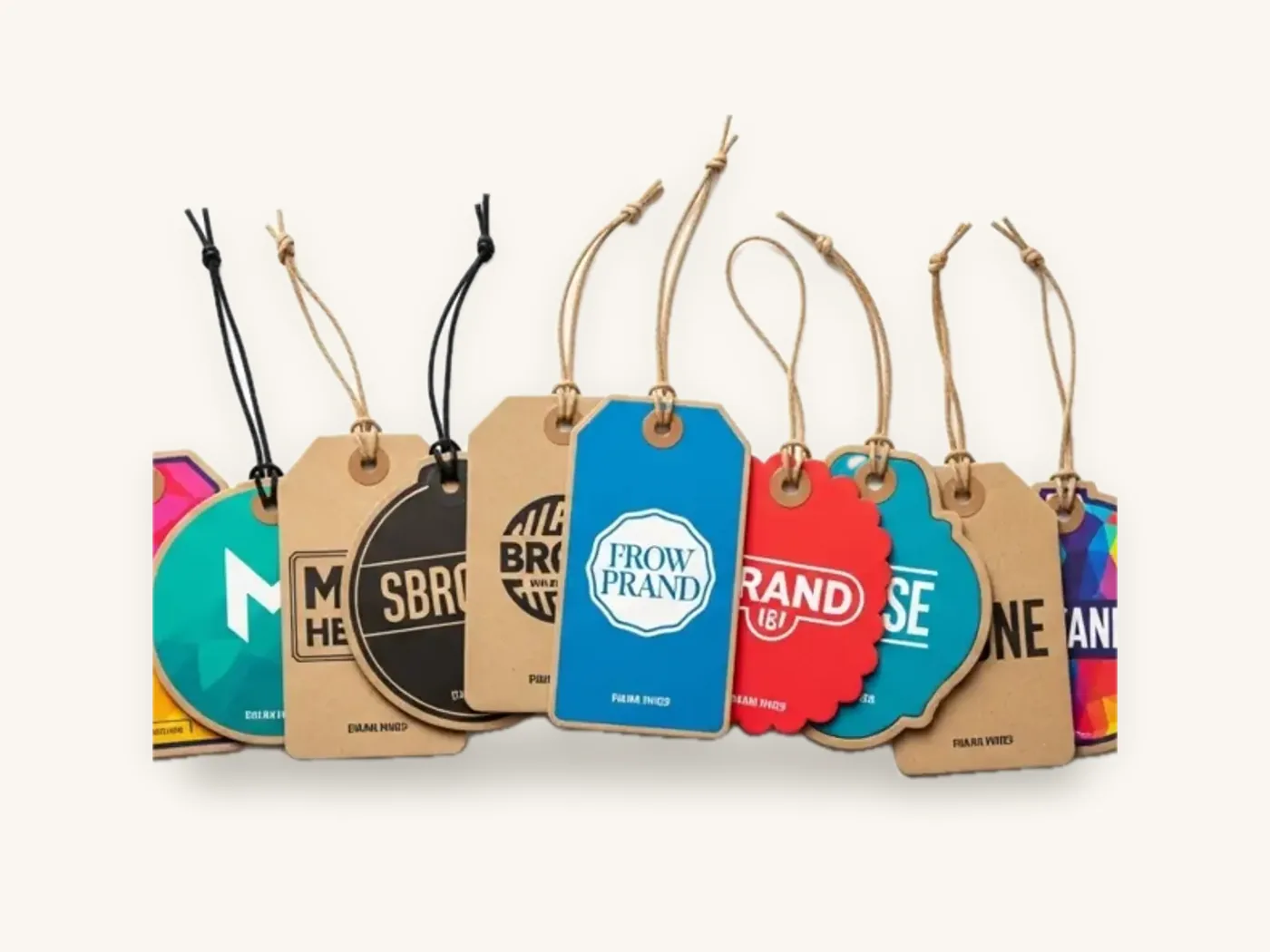
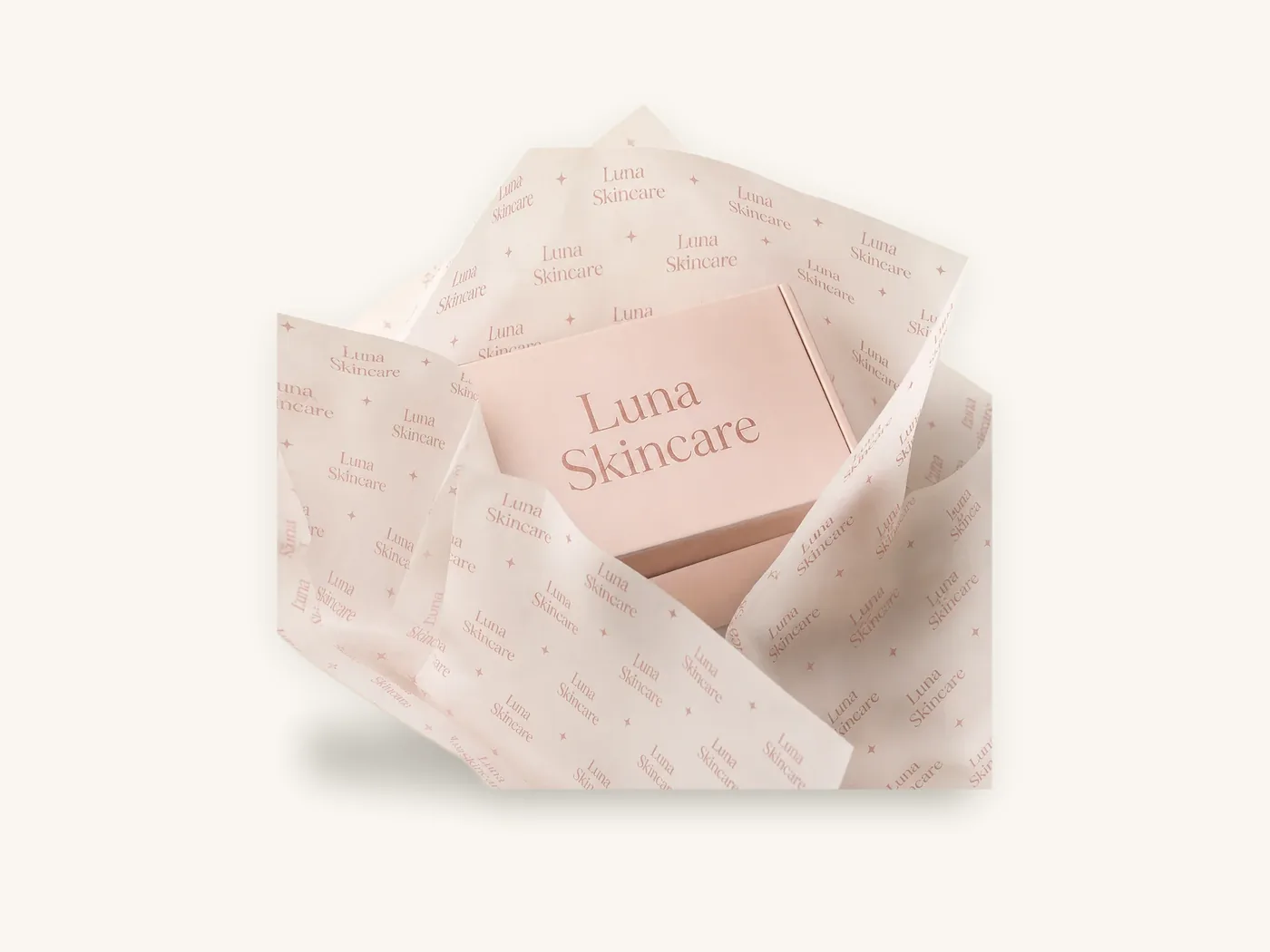
Custom labels and stickers are the cheapest way to change the look of a box for a holiday or a collaboration. Printed tissue paper adds a reveal without changing the structure. Hang tags and cards carry the campaign itself.
When a limited-edition box is worth it
A special box earns its cost when the box is part of the product: a holiday gift set, an anniversary edition, a collaboration where the packaging is the collectible. Because Box Sense prints short runs digitally from 10 boxes, a small limited run is realistic. Order it separately rather than replacing your base box, so the leftover stock problem stays contained.
Measuring packaging marketing results
Packaging feels unmeasurable only because most brands never set up a way to measure it. You do not need a survey or an agency. You need an identifier on the pack and a comparison group.
What to track
| Tool | What it measures | How to set it up | Limitation |
|---|---|---|---|
| Unique discount code on insert card | Redemptions traced to the pack | One code per card version or batch | Codes leak to coupon sites |
| QR code with tagged URL | Scans and onsite behavior | Add campaign parameters to the link | Scans are not purchases |
| Holdout group | Change in repeat purchase rate | Ship the new pack to some orders, old pack to others | Needs enough orders to compare |
| Review or photo prompts | Review volume and user photos | Ask on the card with a direct link | Timing matters; too early gets fewer reviews |
| Customer service notes | Qualitative feedback | Tag tickets that mention packaging | Anecdotal |
A worked example
Say you ship about 400 orders a month. For one month you send half with your current plain card and half with a new card that has a replenishment reminder and a unique reorder code. Everything else stays the same.
Sixty days later, you count how many customers in each half placed a second order, and how many used the code. If the new-card group reorders noticeably more, you divide the extra orders by the extra printing cost to get a cost per incremental reorder, and compare that with what you pay to acquire a new customer through ads. If the difference is within normal month-to-month noise, the card did not work, and you have learned that for the price of a few hundred cards.
Watch out: do not change the box, the card, the product and the price in the same month. If repeat orders move, you will not know which change caused it. Test one packaging variable at a time.
Budgeting packaging as marketing spend
Once you think of the box as a placement, the budget question gets clearer. Split the cost of a branded pack into the part that is pure logistics, which you would pay anyway, and the part that is marketing.
Separating logistics from marketing cost
A plain shipper and a printed mailer do the same protective job. The difference between them, plus the insert card and tissue, is your marketing spend per order. Divide that by the number of customers who see it, which is every customer, and you have a cost per impression that no paid channel can match for attention quality.
For reference, an 8x6x3 in E-flute mailer printed full color outside is about $2.64 per box at 100 units and about $1.41 at 500, including US shipping. A 10x8x4 in mailer printed inside and outside runs about $1.92 at 1,000. Run your exact size through the packaging price estimator to see how quantity changes the math.
Where to spend first
| Priority | Upgrade | Why it pays |
|---|---|---|
| 1 | Insert card with one clear action | Lowest cost, fully measurable, changes every batch |
| 2 | Inside-lid print | Highest attention per square inch |
| 3 | Branded exterior in one or two colors | Recognition at the door and in shared spaces |
| 4 | Tissue or sticker seal | Adds a reveal step and texture |
| 5 | Premium finishes such as foil or soft-touch | Worth it when price point and gifting justify it |
Foil, embossing, spot UV and custom inserts carry one-time tooling at Box Sense. Everything else has no die or plate charge, so the first three priorities cost only the print itself.
Packaging marketing plays by business model
The mechanics above apply everywhere, but the highest-value play changes with how you sell.
Direct-to-consumer stores
Focus on the second order. A consistent base box builds recognition, and a rotating insert card drives replenishment. The e-commerce and subscription packaging page shows how mailers, cards and tissue fit together.
Handmade and marketplace sellers
Marketplace platforms limit how you can contact customers after a sale, which makes the package one of the few brand touchpoints you fully control. Keep any off-platform prompts within the marketplace's rules. Our guides to packaging for Etsy sellers and packaging for handmade products cover affordable ways to do this at low volumes.
Subscription boxes
Every shipment is a retention event. The job of the packaging is to make the next month feel worth waiting for: preview the next theme inside the lid, rotate insert art, and design the box so subscribers want to keep it. Subscription boxes with a tear strip and insert give you both structure and a clean reveal.
Startups and launches
Early on, packaging doubles as a proof point for investors, retailers and press. Order small, test the insert strategy with real customers, and only scale the box once the message is proven. The packaging for startups guide covers staging those decisions.
Wholesale and B2B
The buyer is a store or a business, but the end user still opens the product. Brand the unit box for the shelf and use the shipper for clear handling and receiving information rather than decoration.
A packaging marketing plan in eight steps
- Define the one outcome you want from the pack: reorders, reviews, referrals, or reduced cancellations.
- Audit your current unboxing. Open your own package as a customer would and write down what you see, in order.
- Assign a job to each surface using the surface map above.
- Write the inside-lid line and the card copy before touching the design. If the copy is weak, the design will not save it.
- Choose the stable base box and order it in a quantity that lowers unit cost without creating dead stock.
- Build the changeable layers: cards, stickers and tissue, in smaller runs.
- Set up measurement: a unique code, a tagged QR link and a holdout group.
- Review after one full purchase cycle and change one variable for the next test.
How to order marketing-ready packaging from Box Sense
You can bring a finished design or just an idea. Our design services team supplies the dieline, sets up artwork for inside and outside printing, and sends a 3D digital proof, with two revision rounds included at no charge.
Specs to send
- Product dimensions and weight, packed the way it ships
- Box style, for example a mailer from the mailer boxes range, or a request for a recommendation
- Which surfaces to print: outside, inside lid, full interior
- Any cards, stickers or tissue you want printed alongside the box
- Quantities for the base box and for the campaign layers
- Your target in-hand date
What to expect
Quotes are confirmed within 24 hours, and the instant estimator gives you a starting figure immediately. The minimum order is 10 boxes, with digital printing for short runs and offset for larger ones. Unprinted structural samples are free, and a printed sample of approved artwork is free on orders of 100 or more; see samples. Standard production is 8–12 business days after proof approval, with rush in 5 business days on most paperboard and corrugated styles. Shipping is free on every US order, and defective boxes reported within 14 days are reprinted free. The full range of print options is on the printing and finishes page.
Frequently asked questions
What is packaging marketing?
Packaging marketing is the practice of using a product's box, inserts and wrapping as a deliberate sales channel. Instead of treating packaging only as protection, each surface is given a job, such as brand recognition outside, a key message inside the lid and a call to action on an insert card, and the results are tracked with codes or QR links like any other campaign.
What are the benefits of branded packaging?
Branded packaging reaches every paying customer at a moment of full attention, which no paid channel guarantees. It builds recognition at delivery, makes the product feel worth its price, encourages sharing and gifting, and can carry prompts that drive reorders, reviews and referrals. Its value is highest when the box is paired with a clear, measurable action rather than decoration alone.
How do I measure whether packaging increases sales?
Put a unique discount code or tagged QR link on an insert card, then compare customers who received the new packaging with a group who did not, over one full purchase cycle. Track second-order rate, code redemptions and scans. Change only one packaging variable per test so any difference can be traced to that change.
Should I print the inside or the outside of my box?
If budget allows only one, many brands get more value from the inside lid, because the customer sees it at the exact moment of opening and it stays clean in transit. The outside builds recognition at delivery and in shared spaces. A common middle ground is a simple one or two color exterior with a single strong message printed inside the lid.
How often should I change my packaging design?
Keep the base box stable for a year or more so customers learn to recognize it. Change seasonal elements such as sleeves or stickers a few times a year, and change insert cards and codes as often as every batch. This layered approach lets you run campaigns without throwing away printed box inventory.
Is custom packaging worth it for a small business?
It can be, if you start small and focus on the elements that drive action. An insert card and an inside-lid message cost far less than a fully printed box with premium finishes, and they are easy to measure. With a 10-box minimum and digital printing, small businesses can test packaging ideas before investing in larger runs.
What should an insert card say?
One primary action and the reason to take it. Examples include a reorder link timed to when the product runs out, a referral offer, or a request for a review with a direct link. Add a short thank-you in your brand voice. Avoid stacking several competing requests, which tends to reduce how many customers act on any of them.
Next steps
Pick the one outcome you want your packaging to drive, then map your surfaces and draft the card copy. Check costs for your base box and campaign layers in the price estimator, and when you are ready, request a packaging quote with your dimensions and quantities. We confirm pricing within 24 hours and send a dieline and 3D proof for your artwork.
Boxes in this guide
Order the packaging we covered
Written by the Box Sense Packaging Team
Our structural designers, prepress technicians and production staff print and convert custom boxes every day for brands in the United States, United Kingdom and UAE. Questions about this guide? Talk to us.