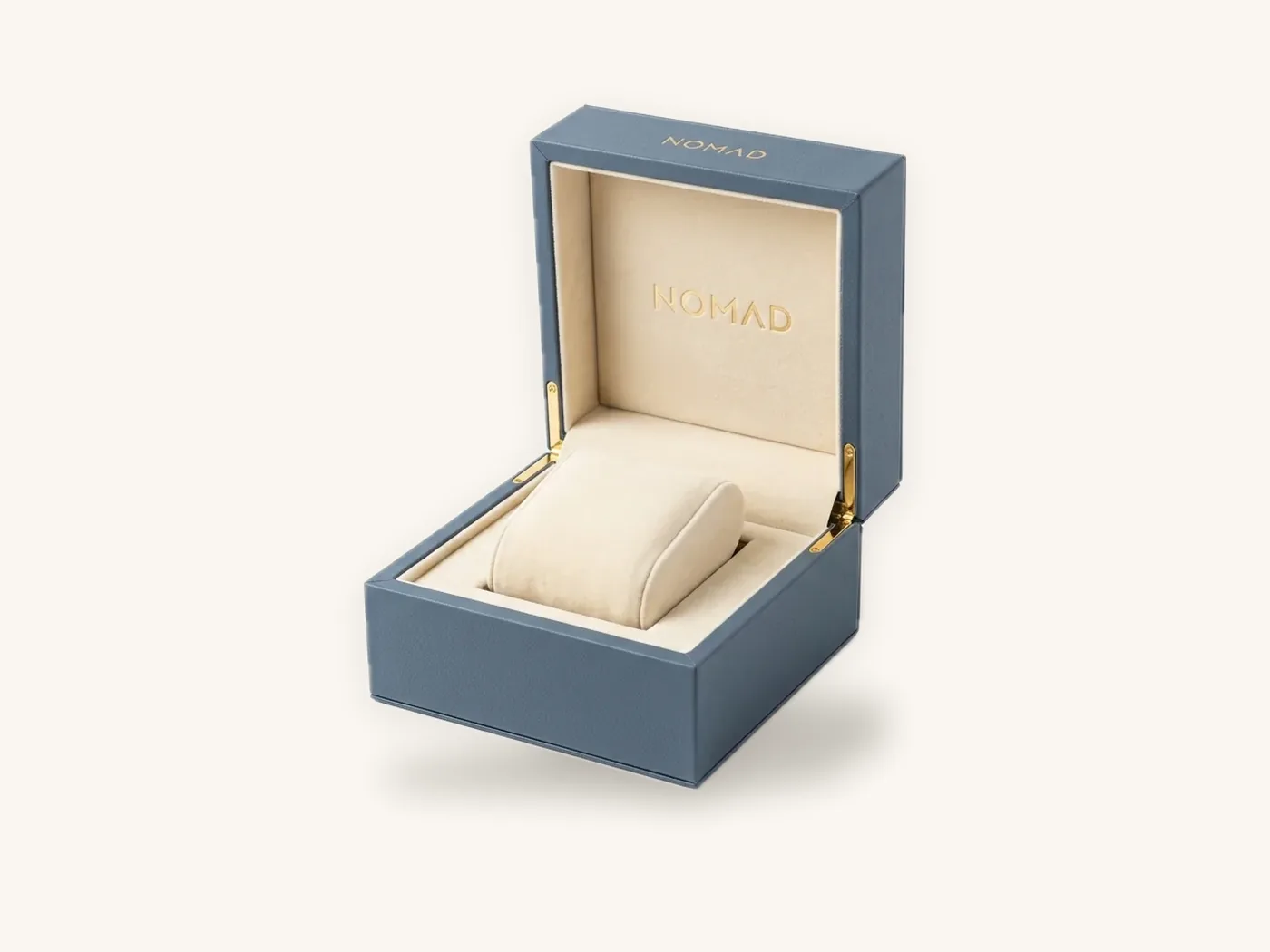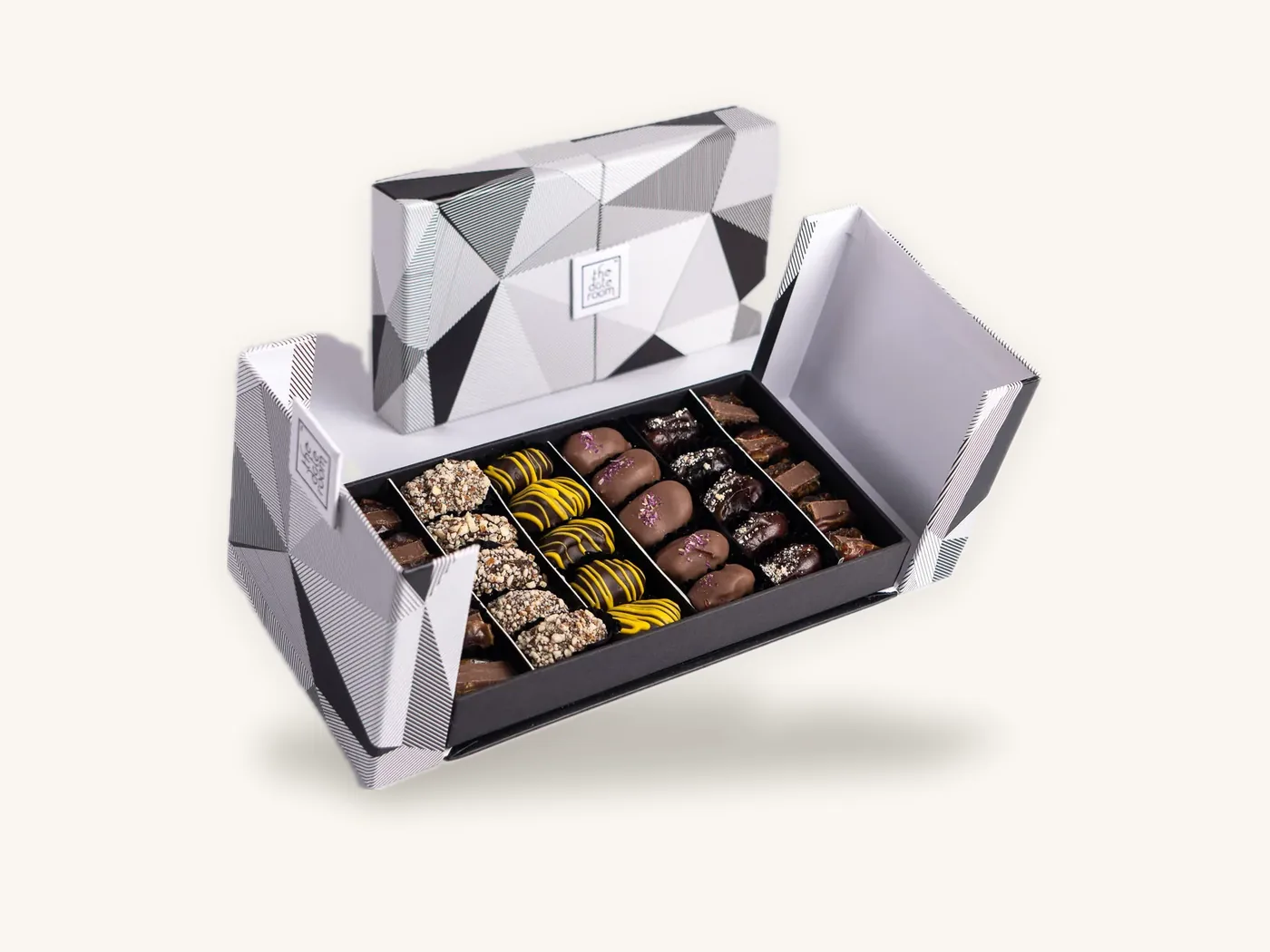
Jewelry packaging has one job that other packaging does not: it has to hold something very small, often very valuable, in exactly one position so it looks right the moment the lid opens. The best choice depends on the piece. Rings want a slot, earrings want a card or pad with pierced holes, necklaces want a hook or a long pad so chains do not tangle, and bracelets want a cushion or a flat bed.
Around that insert you choose a box format: a small rigid lid-and-base box for fine jewelry and gifting, a slide-out drawer box for a more tactile reveal, a pillow box for fashion jewelry and add-ons, or a pouch for pieces that travel with the owner. This guide goes piece by piece, then covers formats, materials, tarnish, shipping and cost, so you can spec custom jewelry boxes that fit your line and your price point.
Key takeaways
- Choose the insert first, then the box. The insert decides whether a ring stands upright, earrings stay paired and chains stay untangled.
- Rigid greyboard boxes (around 2 mm board) suit fine jewelry and gifting; paperboard drawer and pillow boxes suit fashion jewelry and lower price points.
- A single box size with interchangeable inserts can cover rings, earrings and pendants and keep inventory simple.
- Keep silver away from materials that can speed tarnish, and test your packaging with the actual metal before a large run.
- Small jewelry boxes should ship inside a padded or snug outer mailer, never loose with a label stuck on.
- A 3x3x1.5 in rigid jewelry box with matte wrap, foil and insert is about $3.35 each at 100 units and about $1.49 at 1,000.
Jewelry packaging by piece
Every category of jewelry fails in its own way when packaging is wrong. A ring tips over, an earring back falls off, a chain knots, a bangle rolls. Start with the piece.
| Piece | Common failure | Insert that fixes it | Box formats that work |
|---|---|---|---|
| Ring | Tips over or slides out of view | Slotted pad or single ring slit | Small rigid lid-and-base, drawer box |
| Stud earrings | Backs come loose, pair separates | Card or pad with pierced holes | Rigid box, drawer box, pillow box with card |
| Drop or hoop earrings | Tangle with each other | Card with hooks or slits, spaced apart | Rigid box, drawer box |
| Pendant necklace | Chain knots, pendant flips | Hook at top plus long pad or card | Taller rigid box, drawer box |
| Chain or layered necklace | Multiple chains tangle | Card with individual notches per chain | Flat rigid box, pouch inside box |
| Bracelet or bangle | Rolls, scratches against box walls | Cushion, round pillow or recessed bed | Deeper rigid box, magnetic box |
| Charm or small pendant | Lost in a large box | Small slit card or foam cavity | Pillow box, small drawer box |
| Matching set | Pieces collide | Multi-cavity insert | Larger rigid or magnetic box |
Ring boxes
Ring boxes are the most recognizable jewelry packaging, and the most unforgiving. The ring should stand upright and centered with the top of the band at a consistent height across sizes. A slotted pad with one slit holds a single ring; a double slit holds a stacking pair. For engagement and heirloom-style pieces, a small rigid box with a lift-off lid or a hinged-style magnetic lid gives the reveal most buyers expect.
Earring packaging
Studs need a surface with pierced holes so the post goes through and the back holds it. Hoops and drops need hooks, slits or a wider card so they hang apart. An earring card is also the most efficient way to package earrings for retail, because the same card can go inside a box for gifting or hang on a peg by itself.
Necklace packaging
Chains tangle when they are coiled loosely. A card or pad with a notch at the top for the clasp and a slit lower down for the pendant keeps the chain straight. Longer chains need a taller or longer box; forcing a 20 in chain into a ring box format invites knots.
Bracelets and bangles
Soft bracelets can wrap around a cushion. Bangles need a bed or recess that stops them rolling and keeps the metal off the box walls. Watches fall into this family structurally, and the watch box guide covers cushions for those in detail.
Custom jewelry box formats compared
Once you know the insert, pick the box around it. The format sets the opening experience, the unit cost and how the box performs on a shelf or in a parcel.
| Format | Construction | Opening experience | Price position | Best for |
|---|---|---|---|---|
| Rigid lid-and-base | Greyboard wrapped in printed or textured paper | Lid lifts off to reveal the piece | Mid to high | Fine jewelry, bridal, gifts |
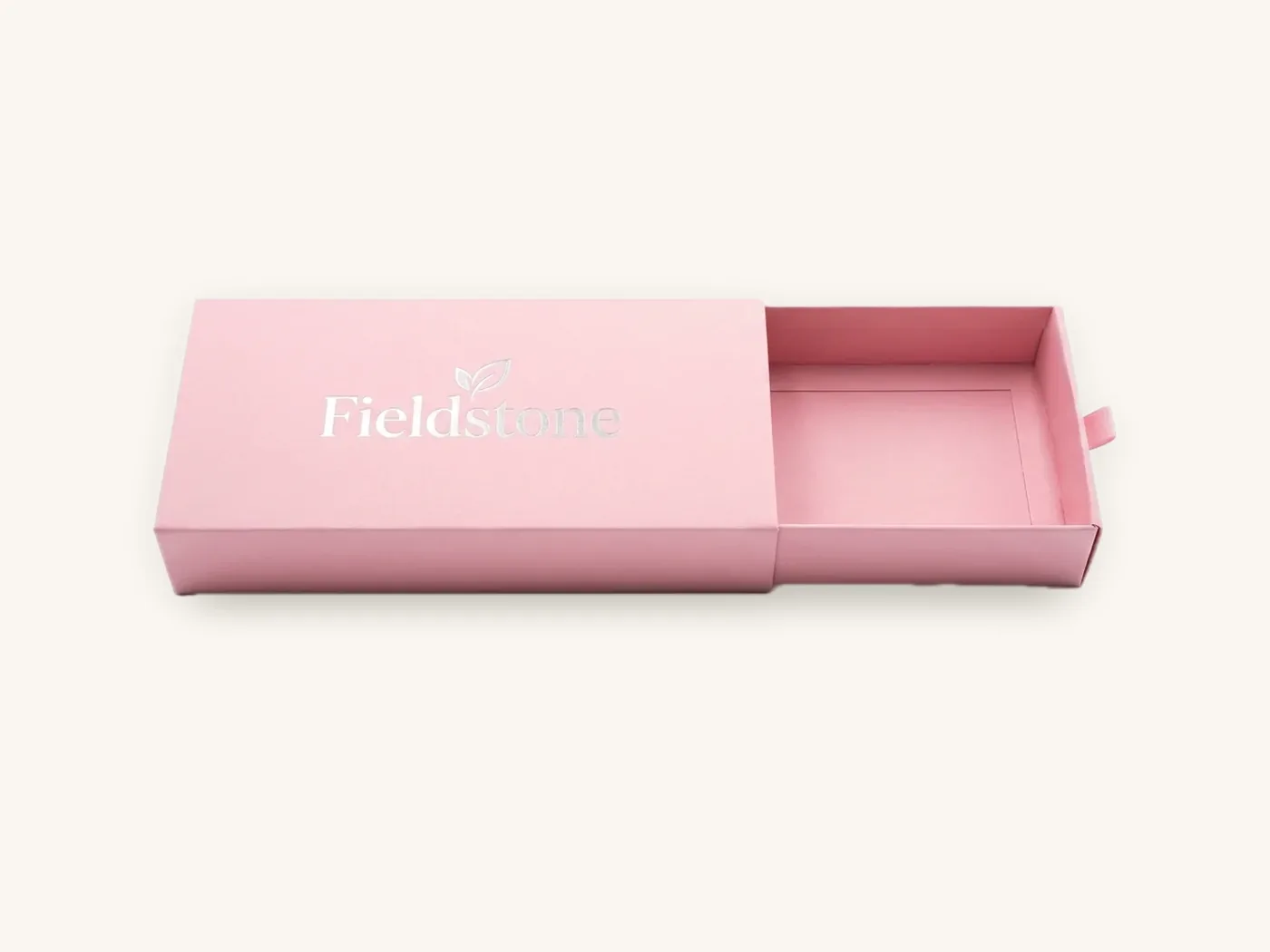
| Rigid drawer box | Rigid sleeve with a slide-out tray and pull | Drawer slides out, often with a ribbon tab | Mid to high | Gift sets, earrings, pendants |
| Paperboard drawer box | Folding board sleeve and tray | Same slide action, lighter feel | Low to mid | Fashion jewelry, subscription add-ons |
| Magnetic closure box | Rigid box with hidden magnets in a book-style flap | Flap snaps shut | High | Sets, bangles, premium launches |
| Pillow box | Single sheet with curved tuck ends | Squeeze the ends to open | Low | Fashion jewelry, charms, event favors |
| Two-piece paperboard box | Folding lid and base | Lid lifts off | Low | Retail basics, bulk gifting |
Rigid lid-and-base boxes
These are the workhorse of fine jewelry boxes. Greyboard, typically around 2 mm thick, is wrapped in paper, so the box feels solid in the hand and does not flex. The wrap can be printed, textured or foil-stamped. Our rigid boxes page shows lid depths and wrap options. A shallow lid that covers only part of the base looks lighter; a full-depth lid feels more protective.
Drawer boxes
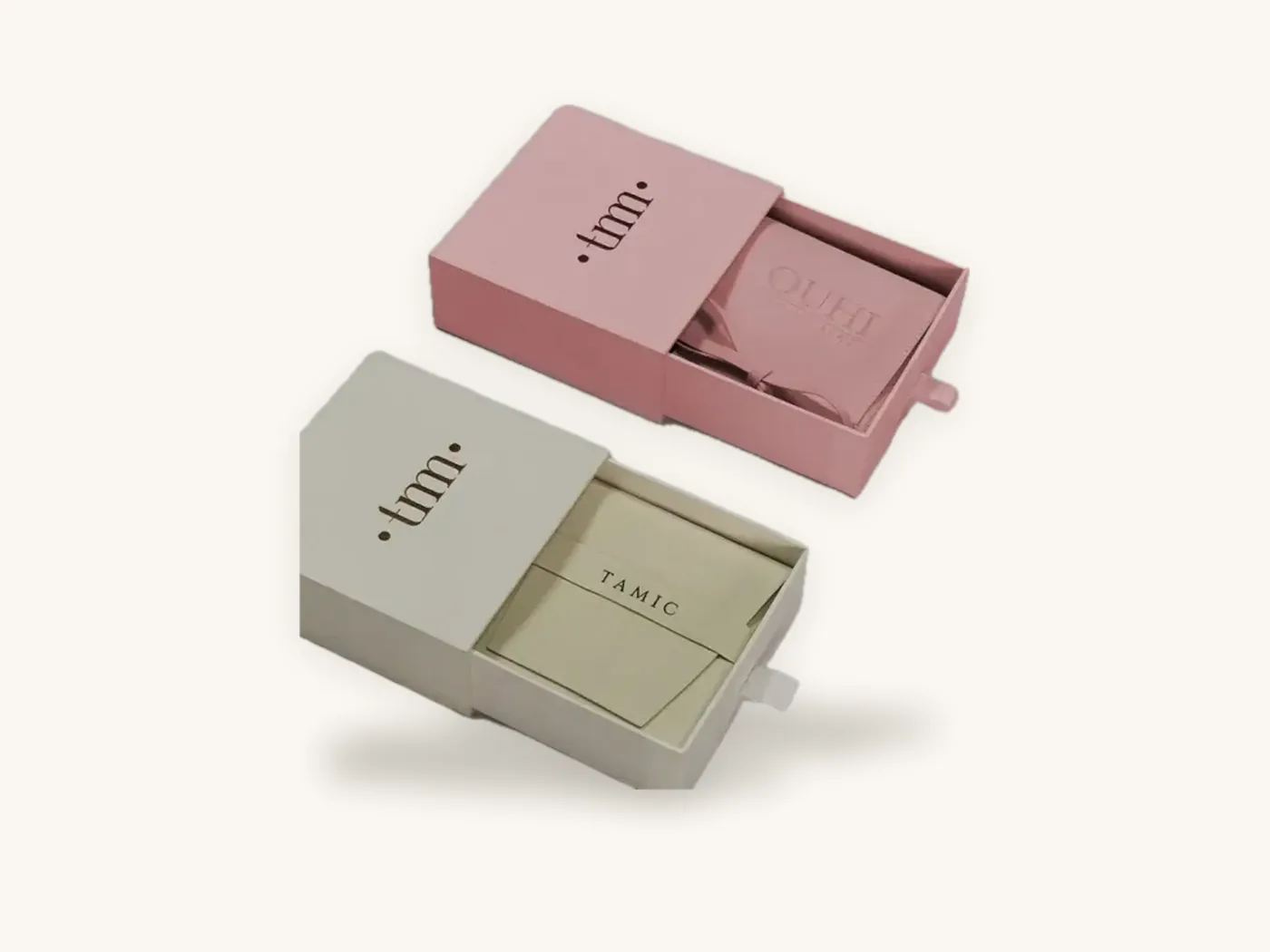
A drawer box turns opening into a small ritual. A ribbon or thumb notch on the tray gives the customer something to pull. Drawer boxes work particularly well for earrings and pendants on cards, because the tray presents the card flat. The drawer boxes guide covers sleeve tolerances, which matter: too tight and the tray sticks, too loose and it slides out in the bag.
Pillow boxes
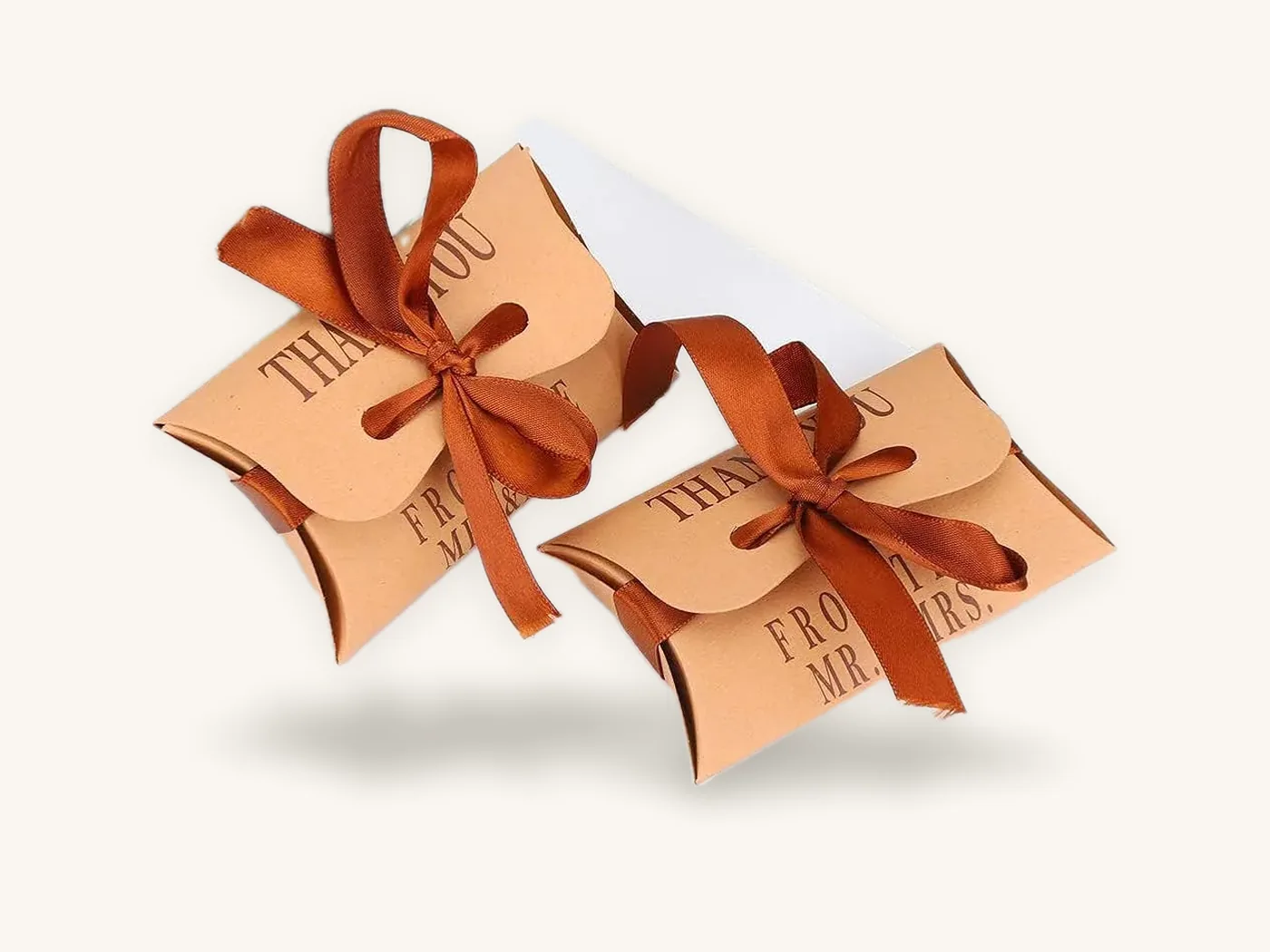
Pillow boxes are formed from one sheet of paperboard with curved ends that tuck closed. They ship flat, assemble in seconds and cost very little, which makes them good for fashion jewelry, charms, market stalls and add-on items. They do not hold an insert as precisely as a rigid box, so pair them with an earring card or a small pouch. The pillow boxes guide goes deeper on sizes.
Where pouches fit in
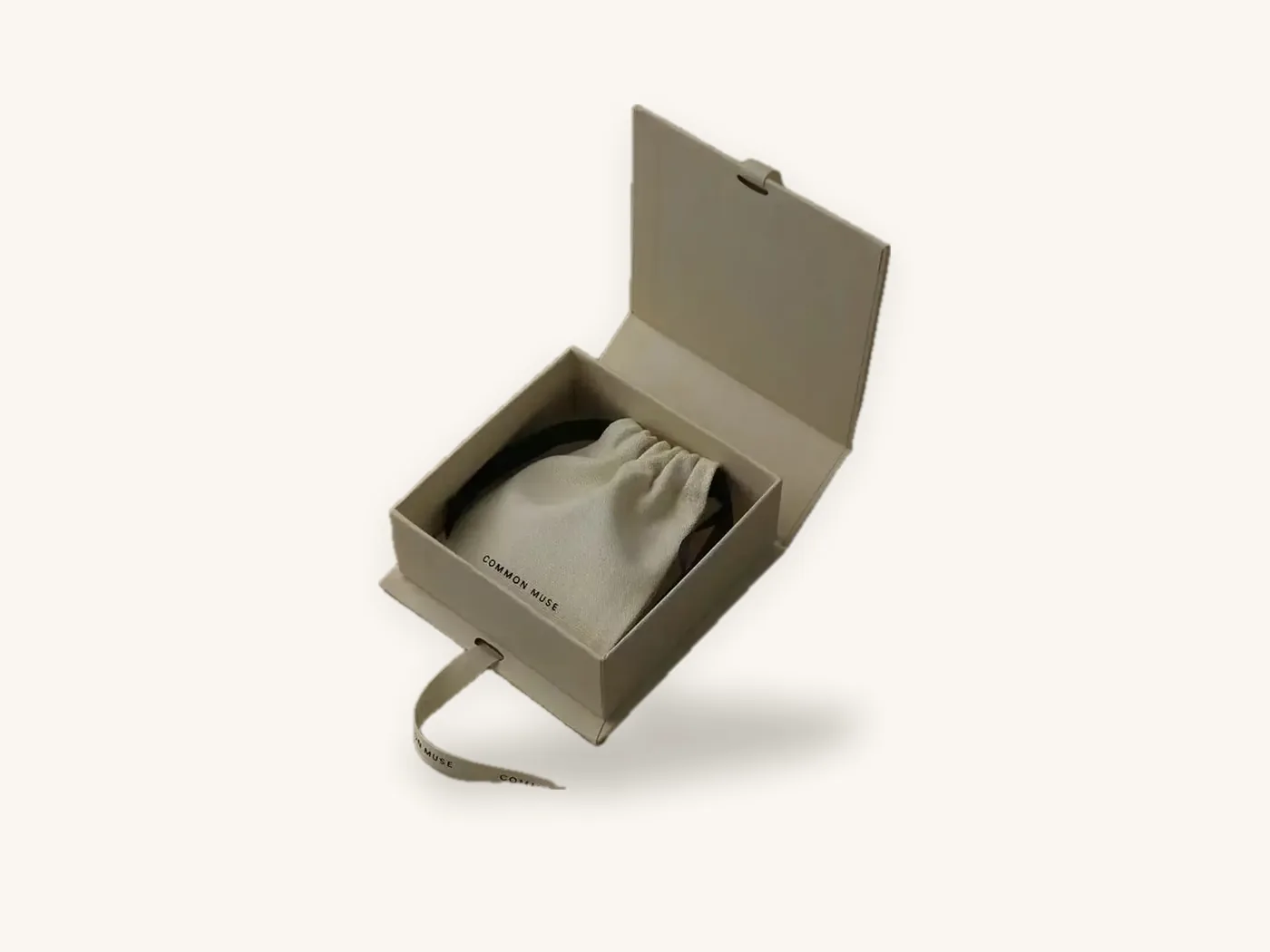
A pouch is not a replacement for a box so much as a second layer. Fabric or paper pouches protect a piece from scratches when the owner carries or stores it, and they add a reveal when placed inside a box. If you use pouches, size the box around the filled pouch, not the bare piece, and check that the pouch does not push the lid up.
Inserts for jewelry boxes: materials and fit
The insert is where jewelry packaging succeeds or fails. It holds the piece in place, frames it visually and protects it from knocks.
Insert materials
- Paperboard inserts: die-cut slots and cards, printable and fully recyclable. Good for earrings, pendants on cards and fashion jewelry.
- Wrapped pads: a foam or board core wrapped in fabric-look or specialty paper, with slits for rings or earrings. The classic look for fine jewelry.
- Foam inserts: EVA or PU foam cut to a precise cavity. Best for sets, bangles and anything heavy or oddly shaped.
- Cushions: a rounded pad a bracelet wraps around, usually sized to a wrist circumference.
- Molded pulp: plastic-free trays, better for larger items than for delicate rings.
Our box inserts and dividers page shows these options, and the inserts and packaging fillers page covers them by style.
Designing a universal insert system
Brands with dozens of SKUs often choose one or two outer box sizes and swap inserts. For example, a 3x3 in rigid box could take a ring slit pad, a stud earring pad or a pendant card. The outer box is ordered in larger quantity for a better unit price; inserts are ordered per category. This keeps storage simple and presentation consistent across the line.
Fit tolerances
Inserts need to sit snugly in the base without being forced. A pad that is too tall stops the lid closing; one that is too short leaves the piece sunk out of sight. Order an unprinted structural sample, fit the real jewelry and close the lid before approving artwork.
Tip: photograph each piece in its sample box from the angle a customer sees when opening. If the ring looks off-center or the chain sits crooked in the photo, adjust the slit position now, before the insert die is made.
Materials, wraps and finishes for small boxes
Jewelry boxes are small, so every finish is seen up close. Details that look fine on a large mailer can look clumsy on a 2 in lid.
Board and wrap paper
Rigid boxes use rigid greyboard as the structure. The wrap paper sets the look: smooth printed art paper for full-color designs, textured and specialty papers for a linen, leather-grain or felt feel, and metallic and holographic board for fashion lines that want shine. Paperboard drawer and pillow boxes use SBS paperboard or kraft.
Finishes that work at small scale
- Foil stamping: a logo in gold, silver or rose gold foil is the most common jewelry box finish. Keep line weights reasonably heavy; very fine serifs can fill in at small sizes.
- Embossing or debossing: a blind debossed logo on a textured wrap is subtle and upscale.
- Soft-touch lamination: adds a velvety feel to printed wraps.
- Spot UV: a gloss logo on a matte background, better on smooth papers than textured ones.
Foil, embossing and spot UV each carry one-time tooling. The printing and finishes page shows examples, and the luxury packaging guide explains how to combine finishes without overloading a small surface.
Keeping silver bright
Silver and some plated metals react with sulfur compounds in the air, and some papers, adhesives, rubber bands and felts can contribute. If you sell sterling silver, ask for low-sulfur or acid-free materials where available, avoid rubber components inside the box, and consider anti-tarnish strips or pouches. Then test: leave a polished piece sealed in a sample box for a few weeks and compare it with one stored in the open.
Shipping jewelry safely and discreetly
A 3 in jewelry box is too small to ship on its own. Carriers can lose tiny parcels, a label barely fits, and the box has no crush protection against heavier parcels.
The two-layer approach
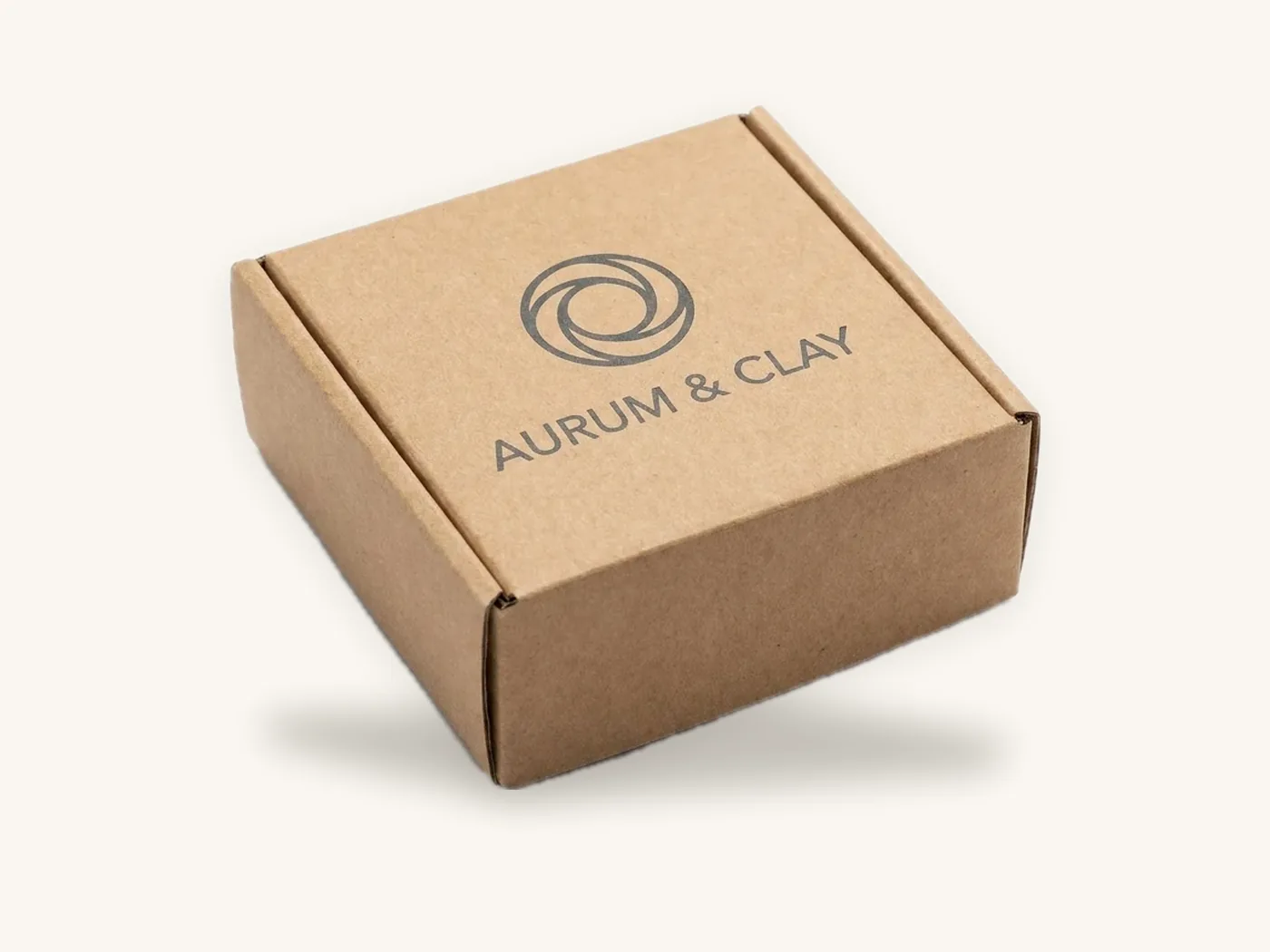
Put the presentation box inside an outer shipper. A small corrugated custom mailer box with a snug insert or paper fill works well for DTC brands, and it adds a second unboxing moment. A padded envelope works for low-value fashion pieces, but it offers little crush protection.
Discretion for valuable pieces
For fine jewelry, keep the outer shipper plain or lightly branded. Save the logo, foil and color for the inner box, which is seen only by the customer. A tear strip or tamper-evident seal on the outer box shows whether it was opened before delivery.
A packing checklist for jewelry orders
- Clean and inspect the piece; attach any tag or certificate card.
- Seat it in the insert and check it sits centered and secure.
- Add a pouch or anti-tarnish strip if you use one.
- Close the presentation box and add a ribbon or sticker seal if part of your design.
- Place the box in a snug outer mailer with paper fill so it cannot shift.
- Add the receipt, care card and any return information.
- Seal the outer mailer, apply the label and record the tracking number.
What custom jewelry boxes cost
Jewelry boxes have a wide price range because a pillow box and a foil-stamped rigid box with a wrapped insert are very different products. The biggest drivers are construction (paperboard vs rigid), wrap and finishes, insert type and quantity.
| Spec | 10 | 50 | 100 | 500 | 1,000 | 5,000 |
|---|---|---|---|---|---|---|
| Jewelry rigid box, 2 mm, 3x3x1.5 in, matte, foil, insert | $5.06 | $3.87 | $3.35 | $1.79 | $1.49 | $1.06 |
| Rigid magnetic box, 2 mm, 10x8x3 in, soft-touch, foil, insert | $21.50 | $16.44 | $14.23 | $7.59 | $6.32 | $4.49 |
Prices are indicative per box with US shipping included. The magnetic box row reflects a larger gift-set size, such as a necklace, earring and bracelet set with a multi-cavity insert. Pillow boxes and paperboard drawer boxes cost considerably less than rigid formats; enter your size in the instant price estimator for an exact figure.
How to control jewelry packaging cost
- Standardize outer sizes and vary only the insert.
- Use one foil color rather than foil plus embossing plus spot UV.
- Reserve rigid boxes for pieces above a certain price and use paperboard formats for everything else.
- Order ahead of peak season. Gifting spikes can make rush production tempting; planning lets you use standard timelines and bigger quantity tiers.
Tiering packaging by price point
A common structure: pillow boxes or cards for entry-level fashion pieces, paperboard drawer boxes for the middle of the range, rigid lid-and-base boxes for fine jewelry, and magnetic boxes for sets and signature collections. Keeping the same logo treatment and color across all tiers makes the line feel related even as the packaging steps up.
Retail display and gifting considerations
Jewelry sold in stores or at markets has different needs from jewelry shipped direct.
Counter and case display
In a display case, the box is often shown open. That means the insert and inside lid carry the presentation, not the outside. Consider printing or foil-stamping the inside of the lid, and choose an insert color that contrasts with the metal: a dark pad for silver and diamonds, a lighter or neutral pad for gold.
Gift wrap and bags
Many jewelry buyers are shopping for someone else. A box that already looks gift-ready saves a step. A ribbon, a belly band or a small branded bag, such as our luxury shopping bags, completes the purchase in store. The jewelry and accessories page shows combinations that work together.
How to order jewelry packaging from Box Sense
Jewelry packaging depends on precise insert fit, so the more you tell us about the pieces, the better the first sample.
What to send
- The piece types you need to package, with dimensions: ring band width and head height, earring drop length, chain length and pendant size, bangle diameter
- How many pieces go in each box
- Preferred format: rigid lid-and-base, drawer, magnetic, pillow, or a request for a recommendation
- Insert style: slit pad, card, foam cavity or cushion
- Wrap and finish ideas: textured paper, foil color, embossing
- Whether boxes ship direct, sit in a case or go to wholesale buyers
- Quantities to price per size, for example 100, 500 and 2,500
- Target in-hand date, especially for holiday or wedding season
Process and timeline
- Quote within 24 hours for your specs and quantities.
- Free design support: dieline, artwork setup and a 3D digital proof with two revision rounds.
- Structural samples. Unprinted samples are free, so you can test insert fit with real pieces. A printed sample of approved artwork is free on orders of 100 or more. See samples.
- Production: 8–12 business days after proof approval for standard orders. Rigid boxes take hand assembly, so plan with standard timing even though rush production in 5 business days is available on most paperboard and corrugated styles.
- Delivery: free shipping to US addresses and international shipping at cost.
Orders start at 10 boxes. There are no die or plate charges; one-time tooling applies only for foil, embossing, spot UV and custom inserts. Defective boxes reported within 14 days are reprinted free.
Frequently asked questions
What is the best packaging for jewelry?
It depends on the piece and price point. Fine jewelry usually goes in a small rigid lid-and-base box with a wrapped slit pad or card insert. Fashion jewelry works well in paperboard drawer boxes, pillow boxes or on earring cards. Whatever the format, the insert should hold the piece centered and secure, and small boxes should ship inside an outer mailer.
What size should a ring box be?
Most single ring boxes are small cubes or near-cubes, roughly 2 to 3 in on each side, with enough depth for a slotted pad plus the height of the ring head. Measure the tallest ring you sell, add the pad height, and leave a little space under the lid. A structural sample confirms that the lid closes without touching the stone.
How do I stop necklaces tangling in the box?
Hold the chain straight. Use a card or pad with a notch or hook at the top for the clasp and a slit lower down for the pendant, and choose a box long enough for the chain to lie without coiling. For layered or multiple chains, use a card with separate notches for each chain so they cannot cross.
How much do custom jewelry boxes cost?
As a reference, a 3x3x1.5 in rigid jewelry box with matte wrap, foil logo and insert is about $3.35 per box at 100 units and about $1.49 at 1,000, including US shipping. Paperboard pillow and drawer boxes cost less, while magnetic gift-set boxes cost more. Use the Box Sense pricing estimator with your size for an exact figure.
Can jewelry packaging cause silver to tarnish?
It can contribute. Silver reacts with sulfur compounds, which can come from the air and from some papers, adhesives, rubber and felts. Ask for acid-free or low-sulfur materials where available, avoid rubber components inside the box and consider anti-tarnish strips or pouches. Test by sealing a polished piece in a sample box for several weeks before ordering a large run.
Should I use a pouch or a box for jewelry?
Many brands use both. A box protects the piece in transit and on display and creates the unboxing moment. A pouch is something the owner keeps for storage and travel. If you only use one, choose a box for fine jewelry and gifts, and a pouch or pillow box for low-cost fashion pieces sold in volume.
How do I ship jewelry boxes safely?
Never ship a small jewelry box on its own. Place it in a snug outer mailer or shipper with paper fill so it cannot move, then seal and label the outer box. For valuable pieces, keep the outer box plain for discretion, use a tamper-evident seal and choose a trackable service with insurance appropriate to the piece.
What is the minimum order for custom jewelry boxes?
Box Sense makes custom jewelry boxes from 10 units. Short runs are practical for launches, collections or testing a new insert design, and there are no die or plate charges. Unit prices fall significantly as quantity rises, so compare tiers such as 100, 500 and 1,000 in the estimator before deciding.
Next steps
List the pieces you sell, measure the largest in each category, and decide which get rigid boxes and which get paperboard formats. Then check numbers in the jewelry box price estimator and request a jewelry packaging quote; we will confirm pricing within 24 hours and send structural samples so you can test insert fit with your real pieces.
Boxes in this guide
Order the packaging we covered
Written by the Box Sense Packaging Team
Our structural designers, prepress technicians and production staff print and convert custom boxes every day for brands in the United States, United Kingdom and UAE. Questions about this guide? Talk to us.