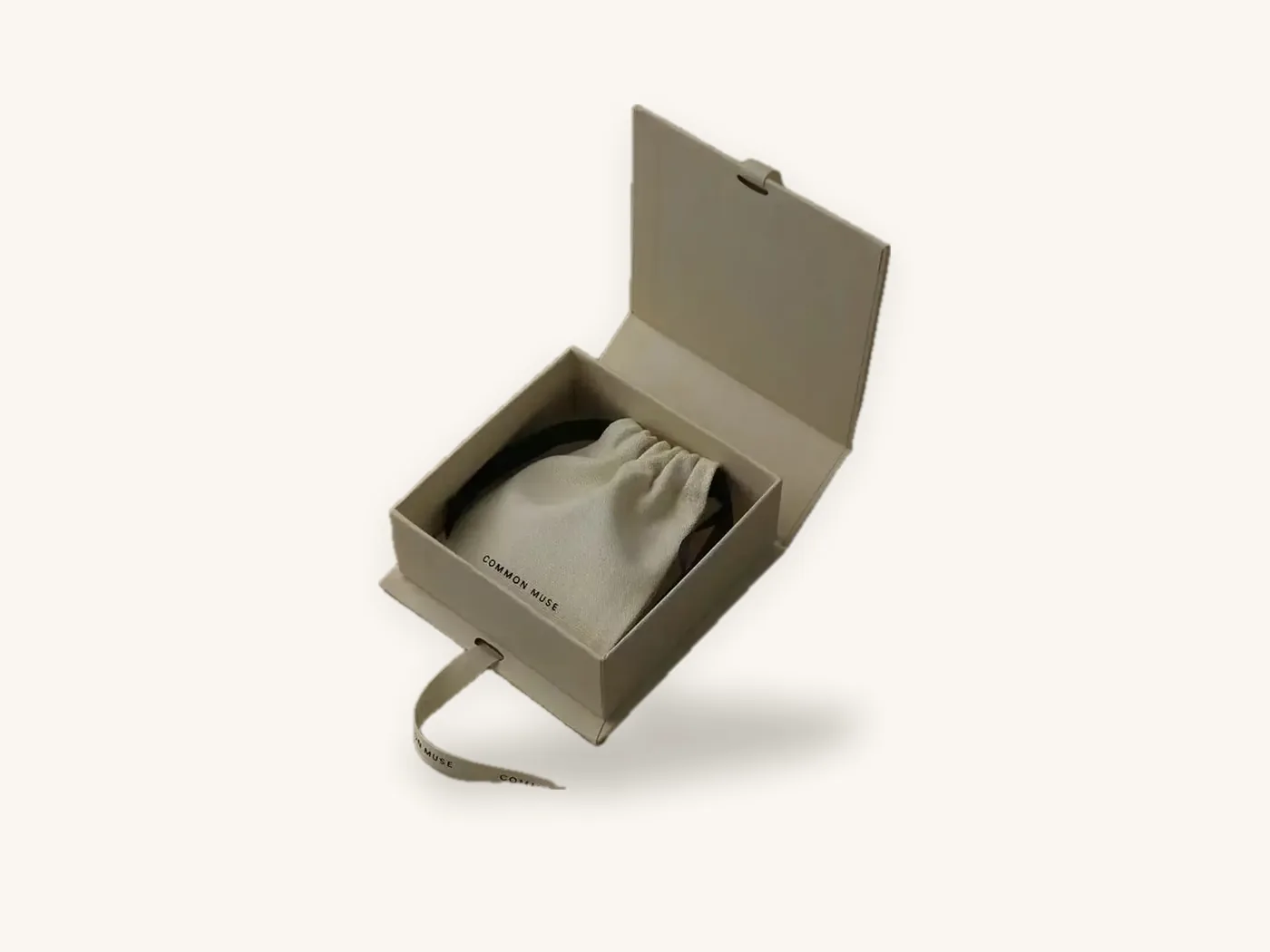
Custom watch boxes are small rigid boxes built around one critical part: the cushion or insert that holds the watch closed on its strap, dial facing up, without letting the case touch anything. Around that cushion sits a greyboard structure, a wrap paper that sets the look, and a closure, most often a magnetic book-style flap or a lift-off lid.
Getting watch packaging right is mostly engineering. The strap has to wrap a cushion of the right circumference, the case has to clear the lid, a warranty booklet has to fit somewhere, and the whole box has to survive a parcel network while still opening with a satisfying snap. This guide walks through each layer from the inside out, then covers sizing by watch type, shipping, cost and ordering.
Key takeaways
- The cushion decides everything. Size it to the strap's closed circumference so the watch sits snug without stretching a leather strap or forcing a metal bracelet.
- Magnetic closure boxes give the most premium feel; two-piece lift-off lids are simpler and cost less; drawer boxes suit slim fashion watches.
- Rigid greyboard around 2 mm thick is the standard structure for a luxury watch box; wrap paper and finishes carry the brand.
- Plan a hidden compartment or under-tray space for the warranty card, manual and spare links.
- Watch boxes ship inside an outer mailer; the presentation box alone does not have enough crush protection.
- A 10x8x3 in rigid magnetic box with soft-touch wrap, foil and insert runs about $14.23 each at 100 units and about $6.32 at 1,000, including US shipping.
Anatomy of a watch box
A well-made watch box is a stack of parts, each doing one job. Understanding the layers makes it much easier to write a clear spec and compare quotes.
| Layer | What it is | Its job | What to specify |
|---|---|---|---|
| Structure | Rigid greyboard base and lid or flap | Stiffness, crush resistance, weight in the hand | Board thickness, box style |
| Wrap | Printed, textured or specialty paper glued over the board | Look and feel | Paper type, print, lamination |
| Closure | Magnets, lift-off lid, drawer or ribbon | Opening experience, security | Closure type, magnet placement |
| Insert base | Foam, board or wrapped platform inside the base | Lifts and positions the watch | Material, height, cavity shape |
| Cushion | Removable pad the strap closes around | Holds the watch in wearing shape | Circumference, width, cover material |
| Document space | Under-tray, lid pocket or separate compartment | Warranty, manual, spare links | Size of the booklet and parts |
| Outer shipper | Corrugated mailer or carton | Transit protection | Size, board, fill |
Structure and wrap
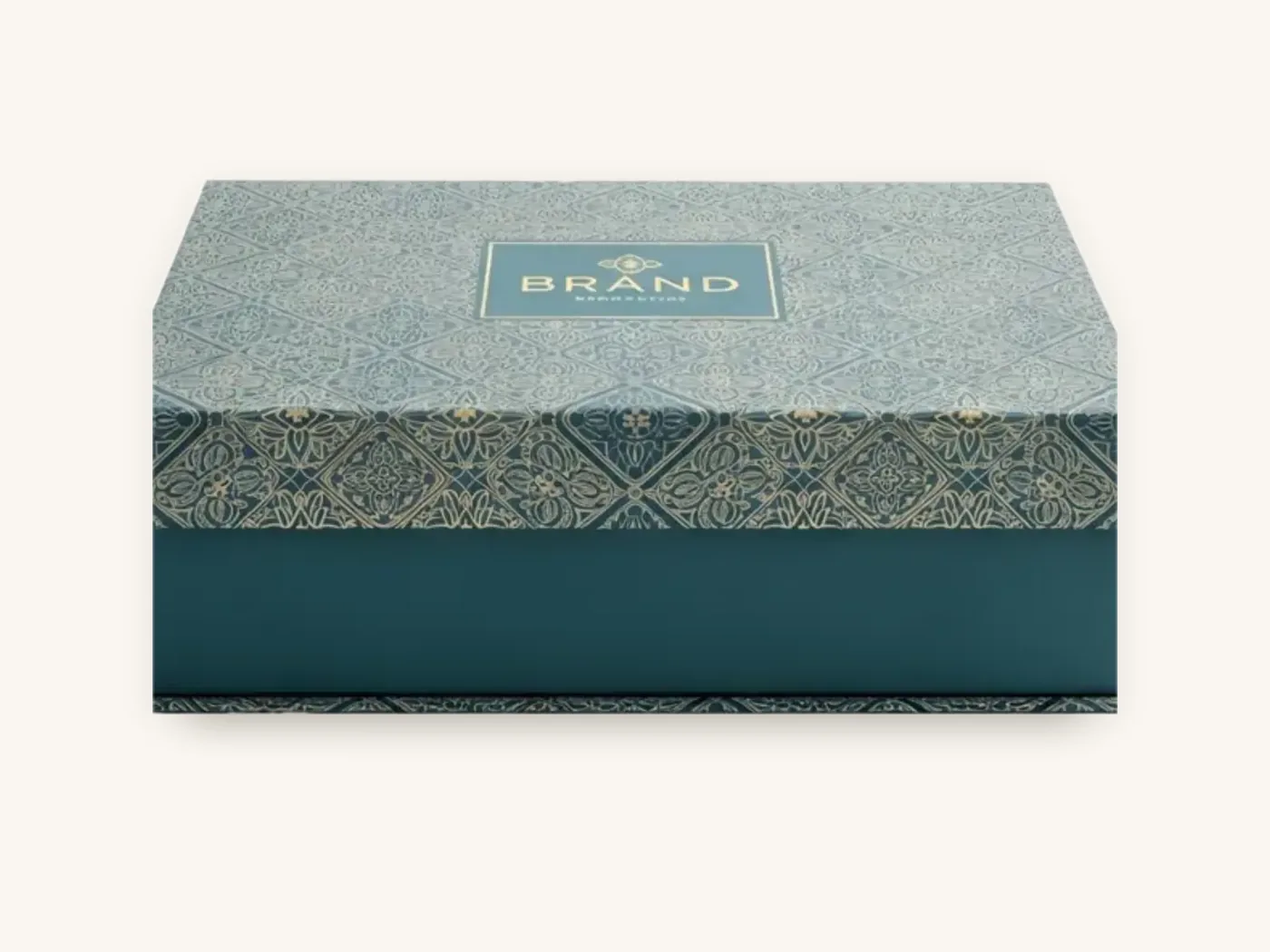
Watch boxes use rigid greyboard, a dense board that does not flex or fold. The board is cut, assembled into a base and lid, and wrapped by hand or machine in a printed or textured paper that folds neatly around every edge. The rigid boxes style page shows the range of constructions.
The insert and cushion
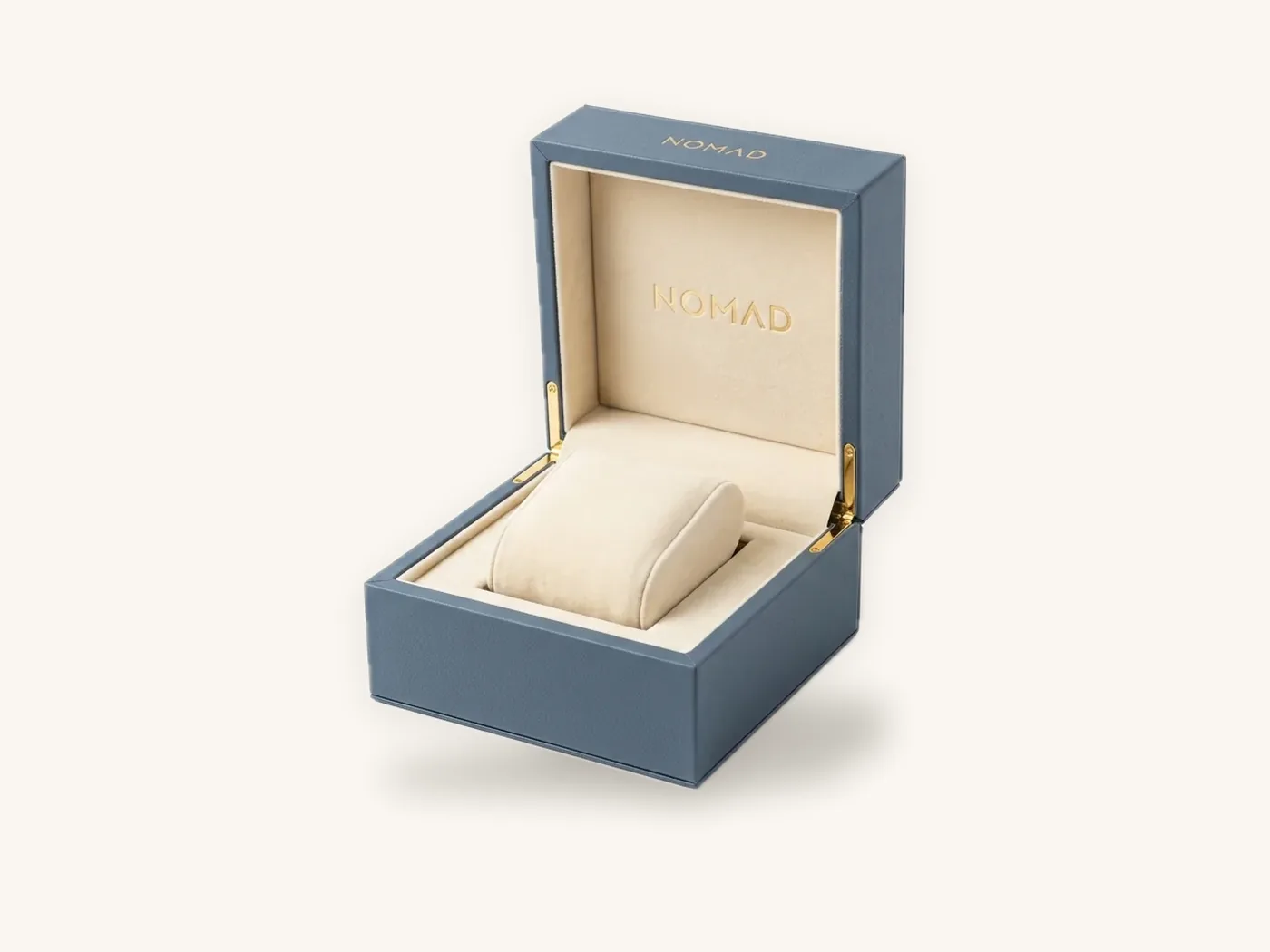
Inside, a platform or foam block raises the watch so the dial sits near the top of the box, where the eye lands when the lid opens. The cushion slots into this platform. When the customer lifts the cushion out, the strap slides off it ready to wear.
Watch cushions and inserts
The cushion is the most watch-specific part of the box and the part most often gotten wrong. It needs to match the strap, look good and come out easily.
Types of watch inserts
| Insert type | How it holds the watch | Best for | Watch for |
|---|---|---|---|
| Removable C-cushion | Strap wraps a half-round pad set in a slot | Leather, fabric and rubber straps | Circumference must match the strap |
| Oval pillow cushion | Closed bracelet slides over a soft oval pad | Metal bracelets, mesh straps | Too large stretches clasps; too small rattles |
| Flat pad with strap slits | Strap ends tuck through two slits, case lies flat | Slim dress and fashion watches | Case can scratch against the lid if too shallow |
| Foam cavity | Watch sits in a cut-out shaped to the case and strap | Heavy dive and sport watches, smartwatches | Needs accurate dimensions for every model |
| Multi-watch roll or bed | Several cushions in a row | Collector sets, gift sets, strap bundles | Box gets long and heavy quickly |
| Wrapped board platform | Printed board platform with a slot for a cushion | Brands wanting a recyclable, paper-based insert | Less shock absorption than foam |
Sizing the cushion
Close the strap or bracelet on a middle hole or a typical wrist size and measure the inside circumference. The cushion's outside circumference should match it closely so the watch holds its shape without strain. For brands shipping one model with different strap options, one cushion size often works for leather and rubber, while metal bracelets need their own.
Foam or paperboard
Foam absorbs impact better and holds heavy cases firmly. Paperboard platforms are lighter, printable and easier to recycle. Many brands combine them: a paperboard or wrapped platform with a small foam cushion. The foam vs paperboard inserts comparison explains the trade-offs in detail, and our box inserts page shows the materials we cut.
Cover materials
Cushions are usually wrapped in a fabric-look paper, faux suede, or a material that matches the box wrap. Choose a cover that will not scratch polished cases and will not shed fibers onto a dial. A contrasting cushion color makes the watch stand out: dark for steel and silver, lighter or warm tones for gold and rose gold.
Tip: send us the actual watch, or at least an accurate spec sheet with case diameter, case thickness including the crown and crystal, lug width and strap length. A cushion designed from a product photo almost always needs a second sample.
Choosing a closure: magnets, lids and drawers
The closure is what a customer remembers about opening a luxury watch box. It also affects cost, assembly and how securely the box stays shut in a bag.
| Closure | Opening feel | Security | Relative cost | Best for |
|---|---|---|---|---|
| Magnetic book flap | Flap swings open and snaps shut | Good, holds shut in a bag | Higher | Premium and luxury watches, gift sets |
| Two-piece lift-off lid | Lid lifts slowly off the base | Moderate, lid can slide off if dropped | Moderate | Fashion and mid-range watches |
| Shoulder neck lid | Lid lifts to reveal a contrasting inner neck | Good, snug friction fit | Higher | Signature editions, collector pieces |
| Drawer with pull | Tray slides out of a sleeve | Moderate | Moderate | Slim watches, strap sets |
| Collapsible magnetic | Ships flat, pops into shape with magnets | Good once assembled | Moderate | Brands shipping large volumes |
Magnetic closure boxes
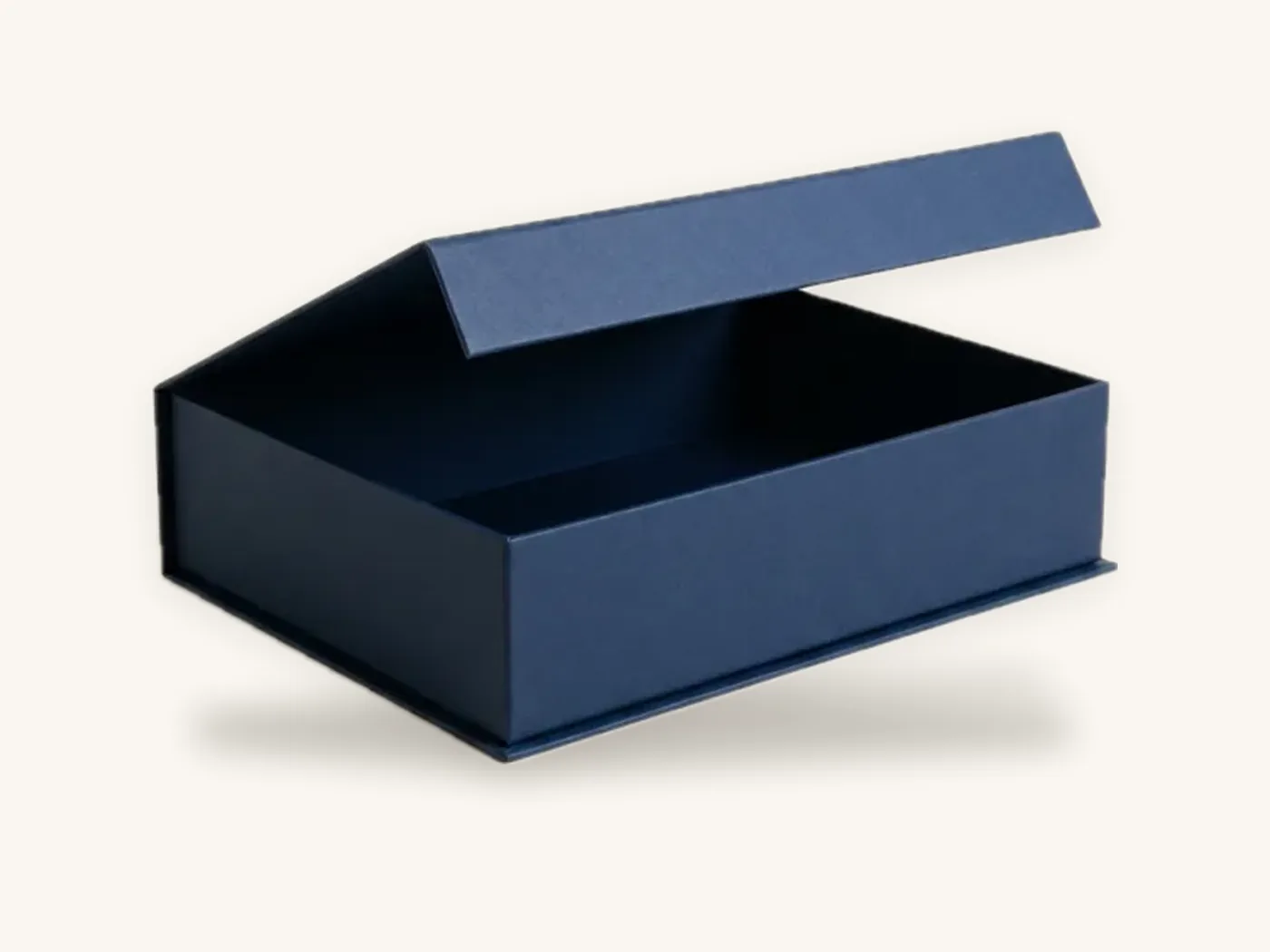
Magnetic closure boxes hide thin magnets under the wrap in the front flap and base wall. The flap opens like a book cover, and the magnets pull it closed with an audible snap. Magnet placement matters: too weak and the flap drifts open, too strong and customers struggle to open it with one hand. The magnetic closure boxes guide covers magnet layout and hinge construction.
Lift-off and shoulder neck lids
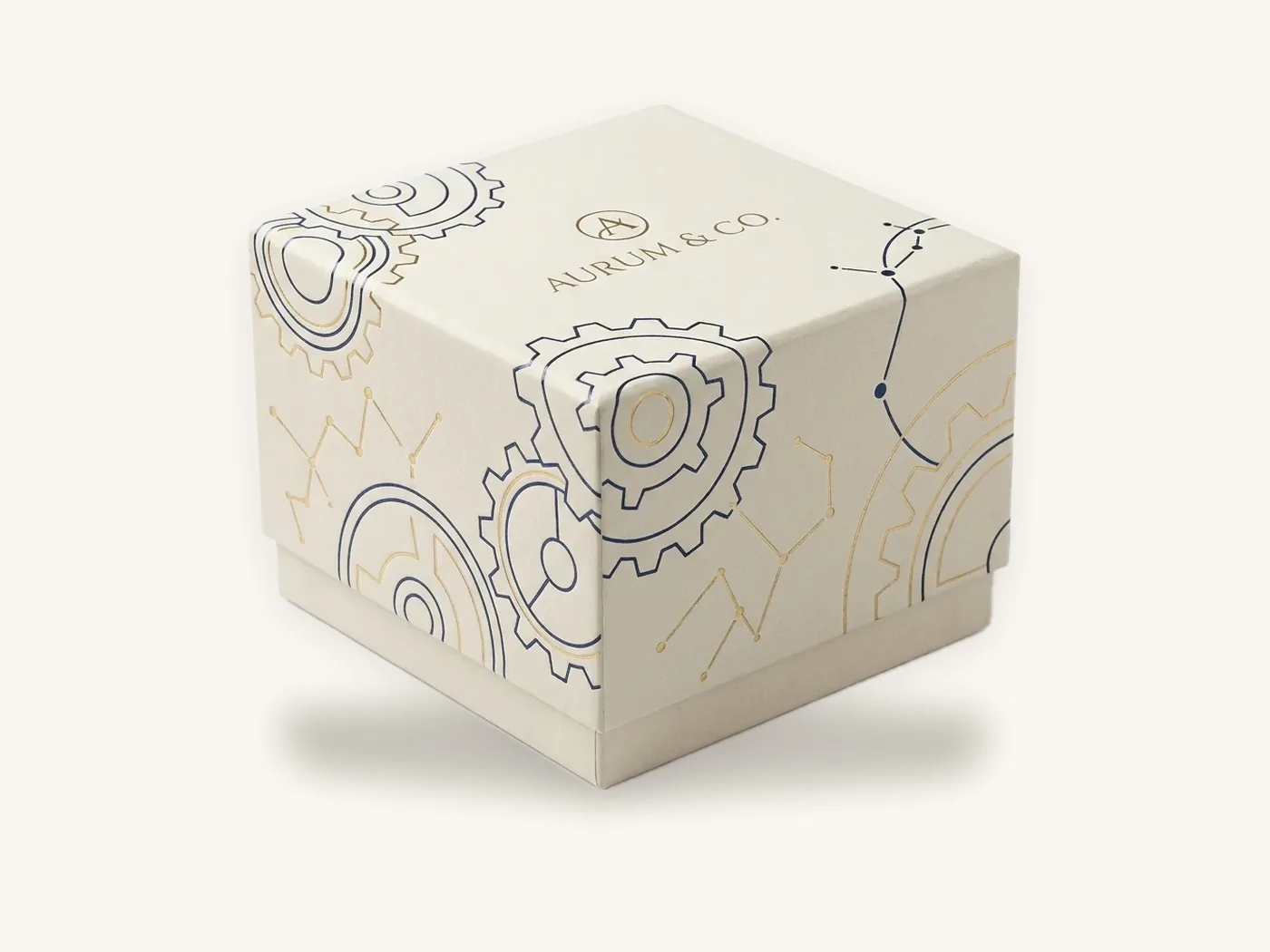
A two-piece lid-and-base box is the simplest rigid construction and is often the right choice for mid-range watches. Adding a shoulder neck, an inner wall that shows when the lid lifts, creates a two-tone reveal. Our shoulder neck boxes are built this way.
Drawers and collapsible formats
Slim fashion watches and strap bundles present nicely in a drawer box. Collapsible rigid boxes arrive flat and click into shape, which saves storage and freight for brands ordering thousands of units. Assembly adds a step for your packing team, so test it before committing.
How to size a custom watch box
A watch box that is too large looks empty and lets the cushion shift. One that is too small presses the lid onto the crystal. Size from the watch outward.
Step-by-step sizing process
- Measure the watch. Case diameter, total case thickness including the crystal, crown guard and crown, lug-to-lug length and strap width.
- Size the cushion. Close the strap and measure the inside circumference; choose cushion dimensions to match.
- Set the platform height. The top of the watch should sit a few millimeters below the underside of the lid, close enough to be seen immediately but never touching.
- Add space around the case. Leave a clear margin around the strap and case so fingers can reach in and lift the cushion.
- Plan document space. Measure the warranty booklet, manual and any spare links or tools, and decide whether they go under a lift-out tray or in a lid pocket.
- Add wall and wrap thickness. Each rigid wall adds its board thickness plus wrap; your supplier converts internal sizes to external sizes.
- Check the outer shipper. Choose a mailer size that fits the finished box with fill, and check dimensional weight for your carrier.
- Approve a structural sample with the real watch before artwork is finalized.
Typical proportions by watch type
A single-watch box is usually roughly square in footprint with enough depth for a cushion and platform. Chunky dive and sport watches need more depth than dress watches. Smartwatches often need a compartment for a charging puck and cable. Boxes for two or more watches, or a watch with spare straps, grow in length more than in depth.

Premium materials and finishes for a luxury watch box
Buyers of higher-priced watches judge the box by touch as much as sight. The materials should feel consistent with the watch itself.
Wrap papers
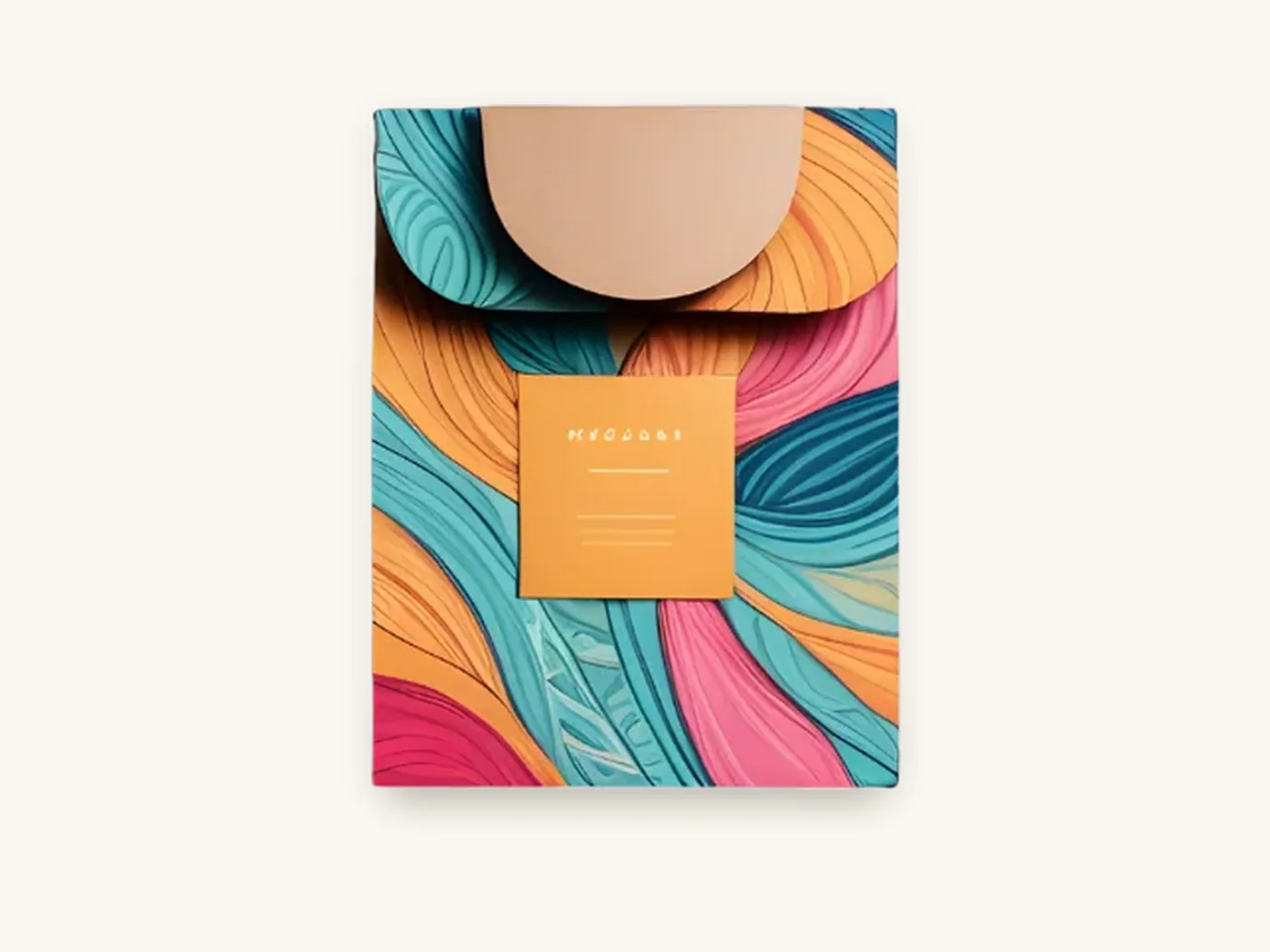
- Printed art paper: smooth, prints full color and gradients accurately, usually laminated.
- Textured and specialty papers: linen, leather-grain, felt and fine-grain finishes. See textured and specialty papers.
- Soft-touch laminated paper: a velvety surface that feels expensive and hides minor scuffs, but can show fingerprints on very dark colors.
- Metallic papers: brushed-metal and pearl effects that echo a steel case. See metallic and holographic board.
Decoration
A foil-stamped logo on the lid is the classic treatment. Blind debossing on a textured wrap is quieter and often more upscale. Spot UV can add a gloss logo on soft-touch. Embossing gives a raised logo that customers run a thumb over. Foil, embossing and spot UV each involve one-time tooling. The printing and finishes page shows examples.
Inside surfaces
The inside of the flap is prime space for a short brand line, the model name or a foil pattern. Wrap the inside in a contrasting color to frame the cushion.
Watch packaging by watch type and channel
A luxury mechanical watch, a fashion quartz watch and a smartwatch share a wrist but not a box. Match the watch packaging to the price point and where the watch is sold.
Luxury and mechanical watches
These buyers expect a heavy rigid box, a magnetic or shoulder neck closure, a wrapped cushion and a separate space for certificates. Many brands use an outer printed sleeve or a paperboard carton over the rigid box so the presentation box stays pristine in storage and transit.
Fashion and mid-range watches
A two-piece rigid box or a drawer box with a simple cushion gives a quality feel at a lower cost. A single foil color and a printed wrap are usually enough. For volume retail, a paperboard sleeve with a barcode panel can sit over the box.
Smartwatches and fitness trackers
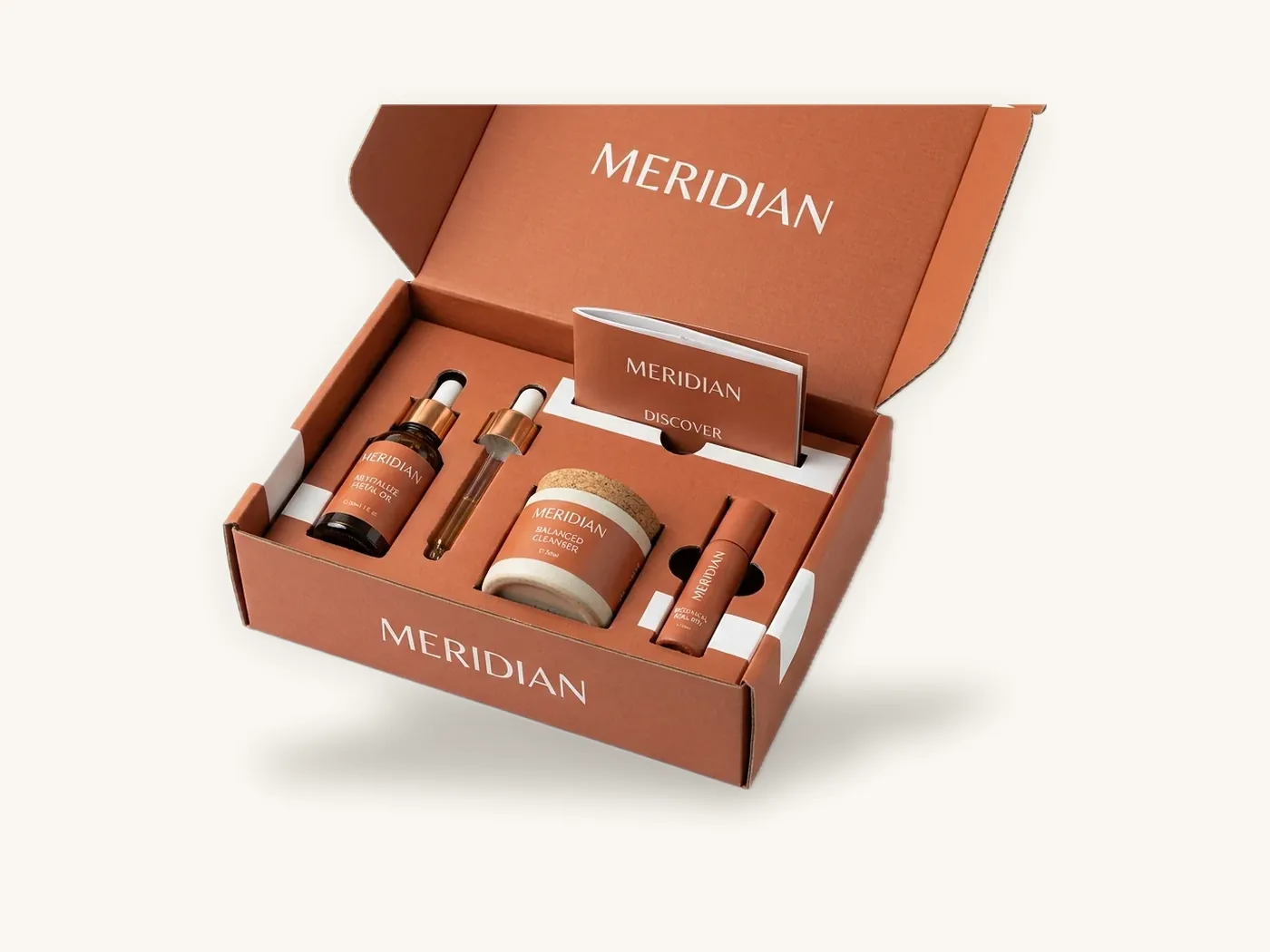
These need cavities for the charger and cable and often a spare strap. Foam or paperboard cavities hold these parts better than a traditional cushion alone. Our electronics boxes page covers tech-style packaging if the product leans more gadget than jewelry.
Straps and accessories
Strap sets and watch rolls often use drawer or sleeve-and-tray formats with slits or elastic-free slotted inserts. They make good add-ons in the same branded look as the main watch box.
Protecting watches in transit
A rigid box resists crushing but not the full force of a parcel network. Watches are dense and high value, so ship in two layers.
Outer packaging
Place the watch box in a snug corrugated custom mailer box or shipper with paper fill on every side. Keep the outer box plain or lightly branded for discretion, and use a tamper-evident seal or tear strip.
Inside the presentation box
Check that the cushion is fully seated and cannot pop up when the box is inverted. For heavy cases, a foam cushion or foam platform helps. A slip of tissue over the crystal can prevent micro-scratches from the cushion cover. Before a large run, pack a sample and drop it from waist height onto a hard floor, then check the cushion, magnets and corners.
Returns and repairs
Customers reuse the original box to send watches back for service. A durable box with a secure cushion makes those returns safer, which is one more reason not to under-spec the insert.
What custom watch boxes cost
Watch boxes cost more than most small packaging because rigid construction, wrapping, magnets and inserts all involve material and handwork. Size, closure, wrap, finishes and quantity move the price.
| Spec | 10 | 50 | 100 | 500 | 1,000 | 5,000 |
|---|---|---|---|---|---|---|
| Rigid magnetic box, 2 mm, 10x8x3 in, soft-touch, foil, insert | $21.50 | $16.44 | $14.23 | $7.59 | $6.32 | $4.49 |
| Rigid box, 2 mm greyboard wrapped, 8x6x3 in, full color, matte | $13.76 | $10.52 | $9.10 | $4.85 | $4.05 | $2.87 |
| Jewelry rigid box, 2 mm, 3x3x1.5 in, matte, foil, insert | $5.06 | $3.87 | $3.35 | $1.79 | $1.49 | $1.06 |
Prices are indicative per box with US shipping included. The 10x8x3 in magnetic box fits a two-watch set or a watch with spare straps and a document pocket. The 8x6x3 in rigid box suits a watch with accessories. The 3x3x1.5 in rigid box shows the price range for a compact box with a flat insert, suitable for a slim fashion watch or bracelet. A single-watch box is priced to its exact size in the instant price estimator.
Main cost drivers
- Closure: magnets and flaps add material and assembly over a lift-off lid.
- Wrap: specialty and textured papers cost more than printed art paper.
- Insert: foam cavities and wrapped cushions add material and a one-time insert die.
- Finishes: each of foil, embossing and spot UV adds one-time tooling.
- Quantity: the unit price on the magnetic box above falls by more than half from 100 to 1,000 units.
Watch out: keep the box proportional to the watch price. An expensive box around an entry-level watch squeezes margin, while a thin box around a high-end piece undermines the product. Decide on a packaging budget as a share of the retail price before choosing finishes.
How to order custom watch boxes from Box Sense
Because watch boxes depend on precise cushion fit, send accurate dimensions or a sample watch with your request.
What to include
- Case diameter, total thickness, lug-to-lug length, strap width and closed strap circumference
- Number of watches per box and any spare straps, tools, chargers or links
- Warranty booklet and card dimensions
- Closure preference: magnetic, lift-off lid, shoulder neck or drawer
- Wrap and finish ideas: textured paper, soft-touch, foil color, debossing
- Insert preference: foam, paperboard platform, wrapped cushion
- Quantities to price, for example 100, 500 and 1,000
- Target in-hand date and whether you also need outer shippers
How the process works
- Quote within 24 hours for your spec and quantity tiers.
- Free design support: dieline, artwork setup and a 3D digital proof with two revision rounds. Our design services team can adapt your logo to foil and debossing.
- Samples: unprinted structural samples are free so you can test the cushion with the real watch. A printed sample of approved artwork is free on orders of 100 or more. See samples.
- Production: 8–12 business days after proof approval. Rigid boxes are hand-finished, so plan around standard timing; rush in 5 business days applies to most paperboard and corrugated styles, such as outer mailers.
- Delivery: free US shipping; international shipping quoted at cost.
The minimum order is 10 boxes, with no die or plate charges. One-time tooling applies only for foil, embossing, spot UV and custom inserts, and defective boxes reported within 14 days are reprinted free. For other small luxury items, the jewelry packaging guide covers ring, earring and necklace boxes, and the custom rigid boxes guide explains rigid construction in more depth.
Frequently asked questions
What is inside a luxury watch box?
A luxury watch box typically contains a raised platform or foam insert, a removable cushion the strap wraps around, and a compartment for the warranty card, manual and spare links. The structure is rigid greyboard wrapped in printed or textured paper, and the closure is usually a magnetic flap, a lift-off lid or a shoulder neck lid.
How do I size a watch cushion?
Close the strap or bracelet on a typical wrist size and measure the inside circumference. The outside of the cushion should match that circumference so the watch holds its shape without stretching the strap or leaving slack. Metal bracelets and leather straps often need different cushion sizes. Confirm the fit with a free structural sample using the real watch.
Are magnetic watch boxes worth the extra cost?
For premium and luxury watches, usually yes. A magnetic flap holds the box shut in a bag, opens smoothly and closes with a snap customers associate with quality. For fashion watches at lower price points, a two-piece lift-off lid gives a solid rigid feel for less. Match the closure to the watch price so packaging stays a sensible share of the retail price.
How much do custom watch boxes cost?
It depends on size, closure, wrap, insert and quantity. As a reference, a 10x8x3 in rigid magnetic box with soft-touch wrap, foil and insert is about $14.23 per box at 100 units and about $6.32 at 1,000, including US shipping. Smaller single-watch boxes cost less. Use the Box Sense estimator for your exact dimensions.
Should watch inserts be foam or paperboard?
Foam absorbs impact better and holds heavy watches and smartwatches firmly in shaped cavities. Paperboard platforms are lighter, printable and easier to recycle. Many brands use a wrapped paperboard platform with a small foam or fabric-covered cushion. Choose foam for heavy or high-value watches that ship often, and paperboard for lighter fashion watches.
How should I ship a watch box?
Place the rigid watch box inside a snug corrugated mailer or shipper with paper fill on all sides, so it cannot move. Keep the outer box plain for discretion and use a tamper-evident seal. Make sure the cushion cannot lift out if the box is inverted, and test a packed sample with a drop from waist height before a large run.
Can I get custom watch boxes in small quantities?
Yes. Box Sense makes custom watch boxes from 10 units, which suits new watch brands, limited editions and prototypes. There are no die or plate charges, though foil, embossing, spot UV and custom inserts carry one-time tooling. Unit prices fall significantly at higher quantities, so compare a few tiers before ordering.
What is the difference between watch packaging and a watch storage box?
Watch packaging is the box a new watch is sold in, designed for presentation, transit and a single model. A watch storage box or case is a larger organizer an owner buys to store a collection, usually with multiple cushions and a lid window. Brands sometimes design retail packaging good enough to keep, but the two products serve different purposes.
Next steps
Gather your watch dimensions, strap circumference and booklet size, then check a few sizes and quantities in the watch box price estimator. When you are ready, request a custom watch box quote and we will confirm pricing within 24 hours and send a structural sample so you can test the cushion with the real watch.
Boxes in this guide
Order the packaging we covered
Written by the Box Sense Packaging Team
Our structural designers, prepress technicians and production staff print and convert custom boxes every day for brands in the United States, United Kingdom and UAE. Questions about this guide? Talk to us.