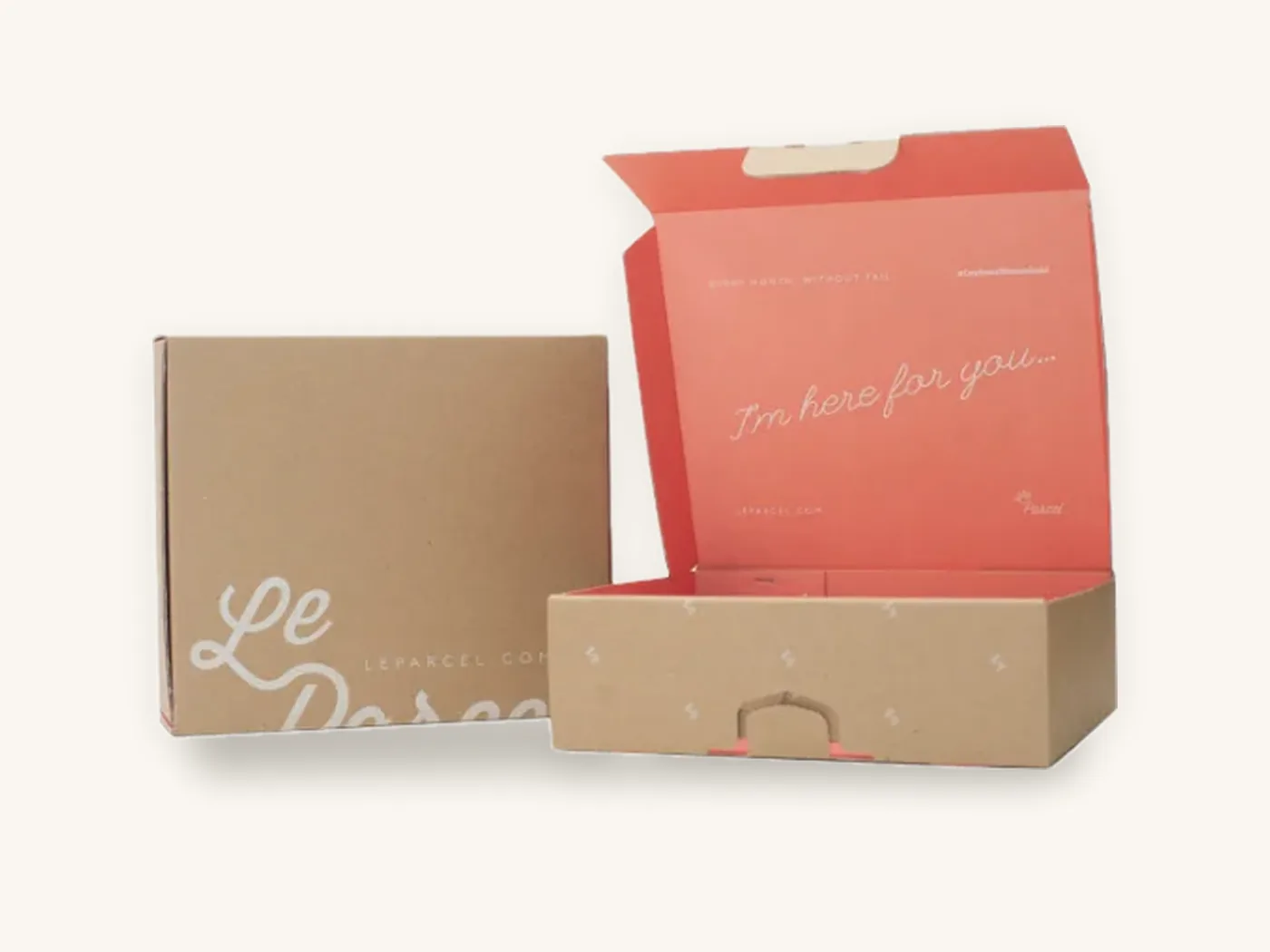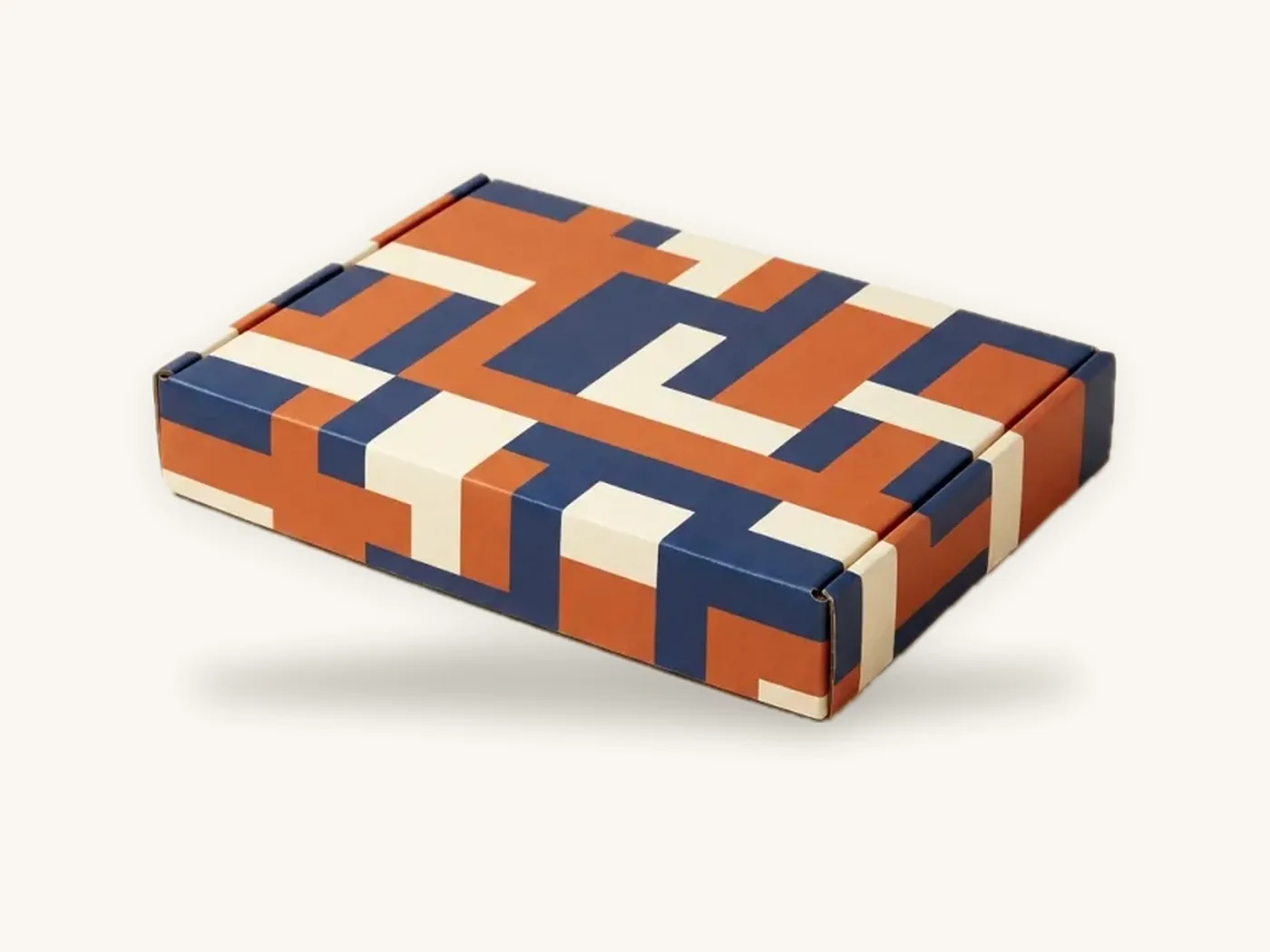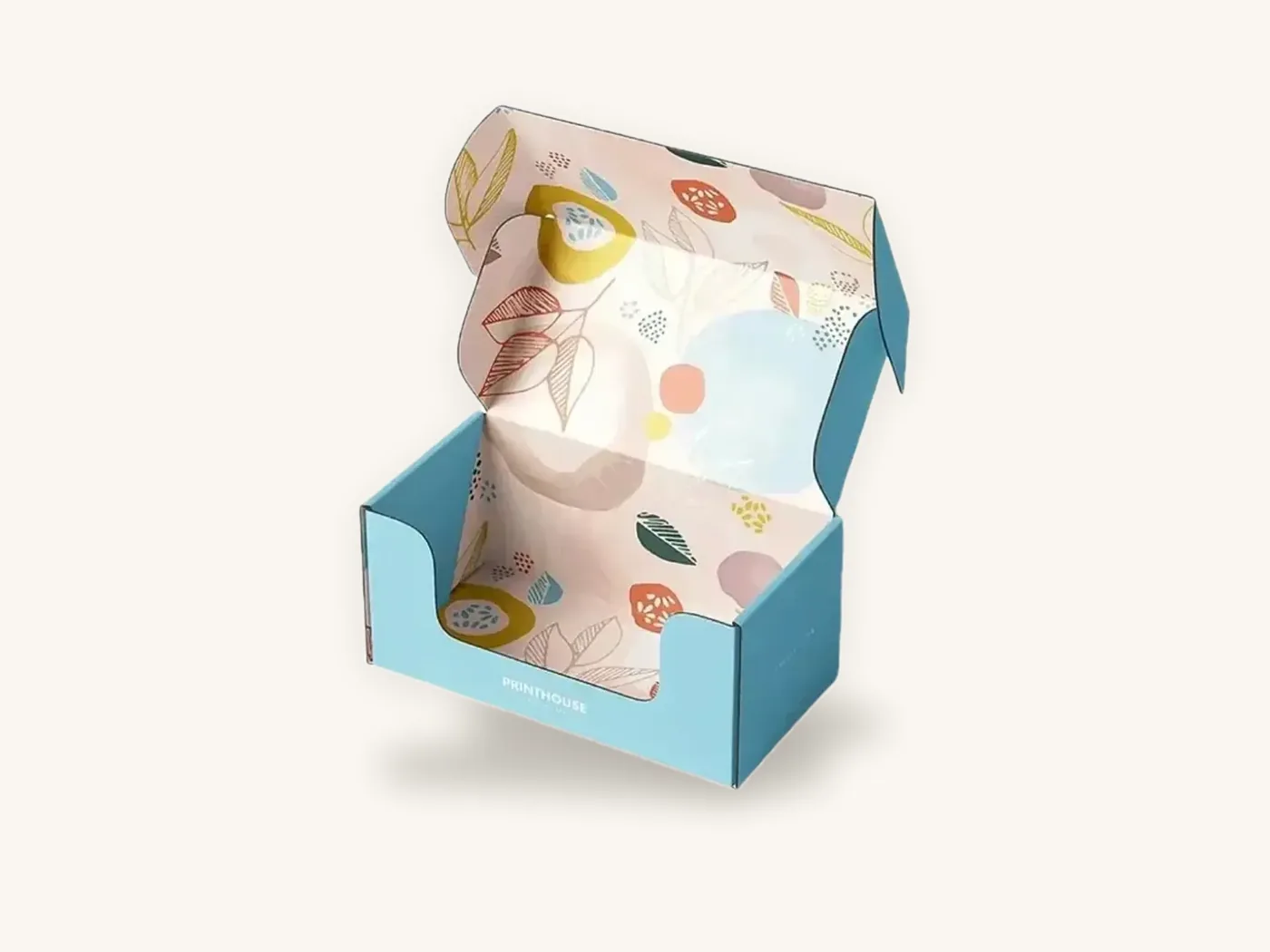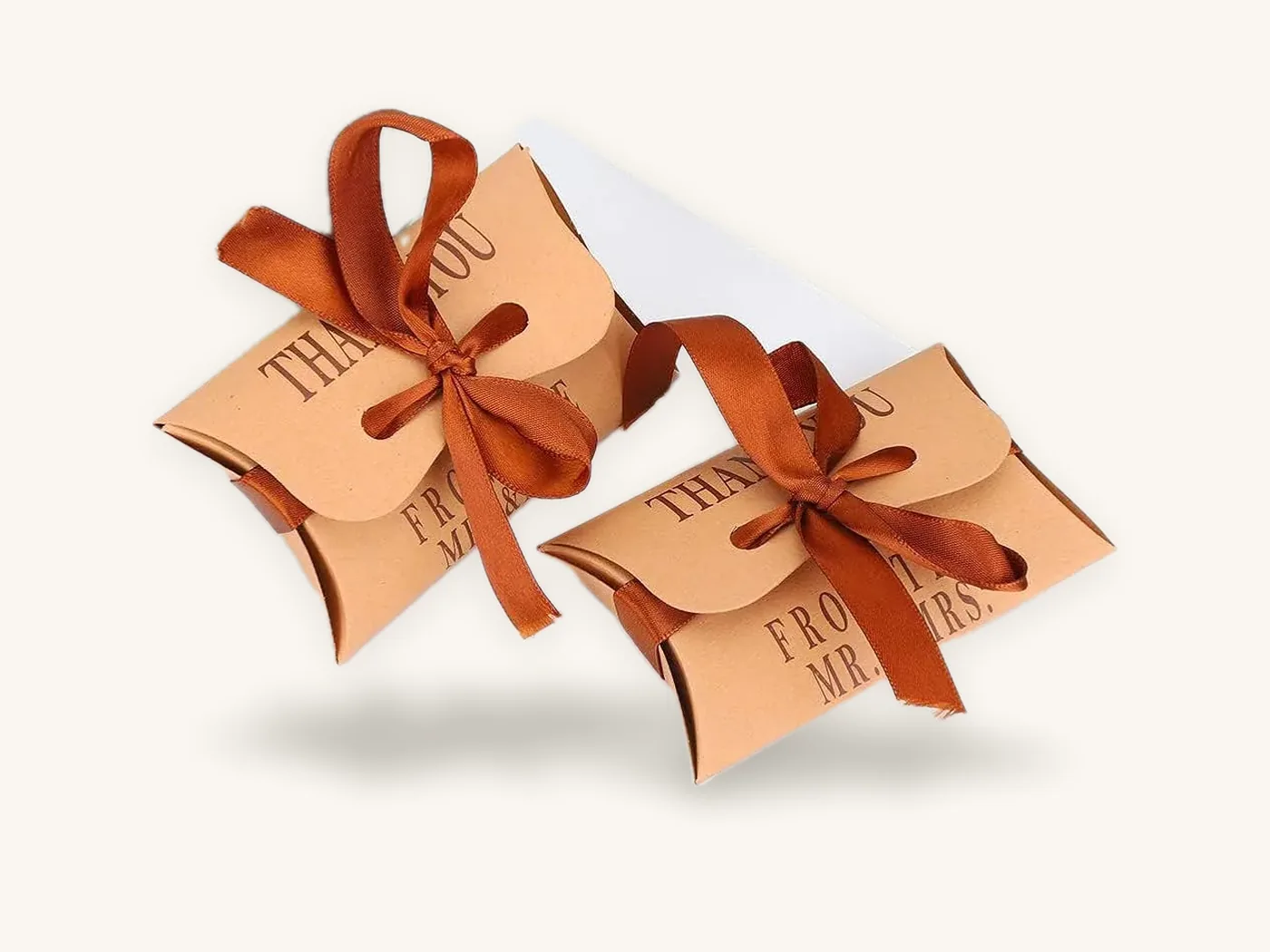
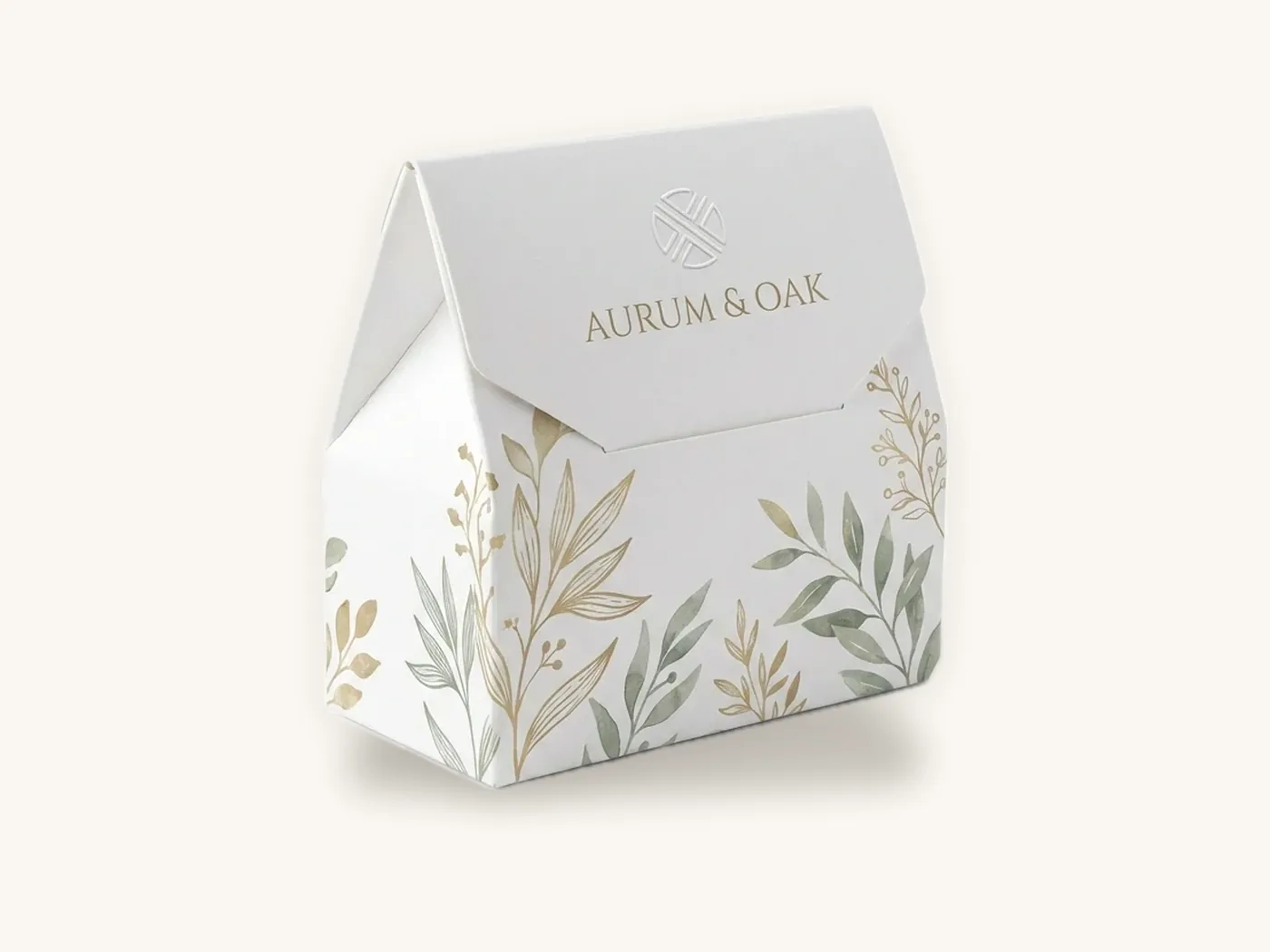
Custom pillow boxes are small paperboard boxes with curved, scored ends that fold inward to close, giving a soft, cushion-like shape. They are made from a single flat sheet with one glued seam, ship completely flat and pop into shape in a couple of seconds. For jewelry, hair extensions, gift cards, scarves, soaps and party favors, pillow box packaging delivers a gift-wrapped look without the cost or bulk of a rigid box.
The shape is also its main constraint. Pillow boxes hold flat, light, fairly soft or small items well, and struggle with tall, heavy or sharp-cornered products. This guide explains how the curves work, what fits, which boards and papers suit the format, how to decorate a pillow box so it feels like a gift, what drives cost and how to order.
Key takeaways
- A pillow box is a one-piece, glued paperboard sleeve whose curved end flaps fold in to close both ends; no tape or glue is needed at assembly.
- Best for flat or low-profile, lightweight items: jewelry, hair bundles, gift cards, small textiles, soap, candy and favors.
- The usable interior is smaller than the outer dimensions suggest, because the box tapers toward both curved ends. Size using the flat middle section.
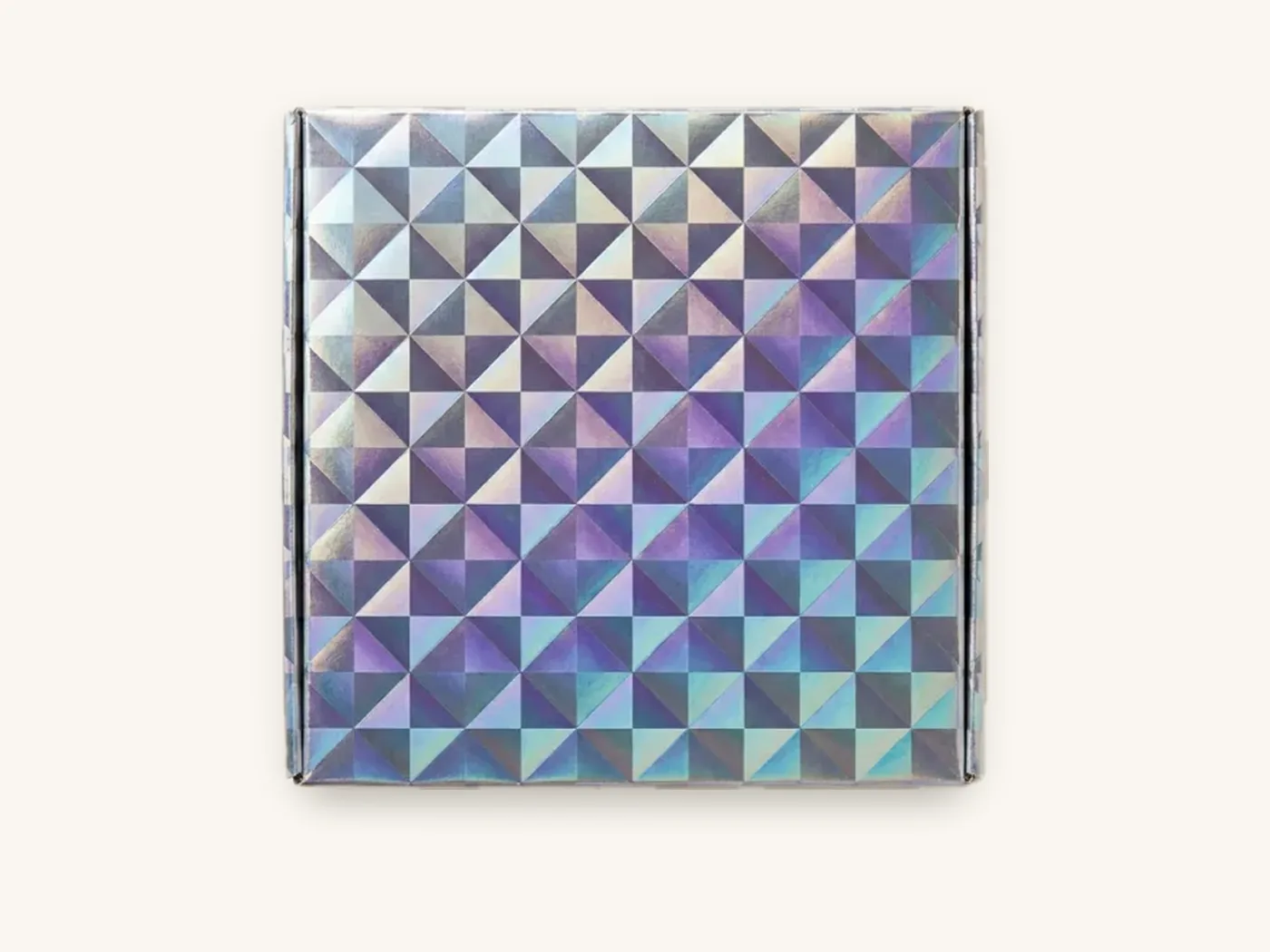
- 14–18 pt SBS or kraft is typical; metallic, holographic and textured papers are popular because a pillow box has few panels and every one is visible.
- Ribbons, belly bands, hang tags and small windows turn a simple pillow box into a finished gift with little extra cost.
- Box Sense makes pillow gift boxes from 10 units, with free dielines, a 3D proof, free structural samples and no die or plate charges.
How a pillow box is built
A pillow box starts as a flat blank with two long panels, a glue flap and four curved end flaps. The curves are created by arc-shaped crease lines on each end rather than straight folds.
The curved crease
When you squeeze the sides of an assembled pillow box, the front and back panels bow outward and the arc creases pull the end flaps inward, where they overlap and hold closed by tension. That is why a pillow box needs no tabs or glue at the ends. It is also why crease quality matters: a clean, consistent arc score lets the ends fold smoothly, while a weak score makes the ends crack or spring open.
Assembly in three steps
- Pop open the flat, pre-glued box by pressing the long edges toward each other.
- Fold one end inward, pressing the two curved flaps down one after the other.
- Insert the product through the open end, then fold the second end closed.
Because both ends open the same way, the customer can open either end, and the box can be closed again for reuse.
Common pillow box variations
- Standard pillow box: curved ends on the short sides, the classic shape.
- Long pillow box: stretched for hair bundles, ties, scarves, pens or cosmetic brushes.
- Pillow box with handle: a die-cut handle along one long edge for favors and small gifts carried by hand.
- Pillow box with window: a small film window on one face to show jewelry or candy. The custom window boxes guide explains how to place windows safely, which matters more on a curved panel.
- Pillow box with sleeve: a printed band slid over the middle to add branding or a label to a plain or patterned box. Our sleeve boxes guide covers sleeve fit in detail.
What fits in a pillow box (and what does not)
The curved ends mean a pillow box is widest and tallest at the center and tapers to a flat edge at each end. Products need to sit comfortably in that middle zone.
| Product | Fit | Why | Tips |
|---|---|---|---|
| Earrings, pendants, bracelets on a card | Excellent | Flat, light, and the card keeps pieces centered | Use a small printed backing card sized to the flat middle |
| Hair extension bundles and wigs | Very good in long formats | Soft, compressible, lies flat | Choose a long pillow and a thicker board for weight |
| Gift cards, vouchers, event tickets | Excellent | Completely flat | A small pillow is a quick gift-card holder |
| Scarves, ties, socks, small textiles | Very good | Soft goods conform to the curve | Fold the item and wrap in tissue first |
| Soap bars, bath products | Good | Moderate weight, flat profile | Keep the bar thin; thick bars strain the ends |
| Candy, chocolates, cookies (wrapped) | Good | Light, small pieces | Consider a food-contact surface or keep items individually wrapped |
| Wedding and party favors | Excellent | Small, light, decorative | Pair with a ribbon or tag for names |
| Glass bottles, jars, candles in glass | Poor | Heavy, rigid, tall | Use an auto-lock bottom box or tuck carton |
| Electronics, boxed items with sharp corners | Poor | Corners press into the curves | Use a tuck end or drawer box |
A quick fit test
If your product is thicker than roughly a third of the box's width at the center, or heavier than it looks like the box should hold, it probably belongs in a different structure. The best way to know is a free unprinted structural sample: load it, close both ends and squeeze gently to see whether the ends stay shut.
Sizing custom pillow boxes
Pillow box sizes are usually listed as length x width x depth, where length runs between the curved ends, width is across the face and depth is the thickness at the widest point in the middle. Suppliers differ on whether they quote the flat blank or the assembled box, so always confirm.
Why the usable space is smaller than the listed size
Because the box tapers, an item as long as the box will not fit. The ends curl inward and take up space. As a working rule, plan the product to occupy the flat middle portion, leaving a margin toward each curved end, and check with a sample.
Starting sizes by use
These are practical starting ranges for assembled boxes, not fixed standards. Your structural designer will adjust the arc depth for the product.
| Use | Starting size (L x W x D at center) | Board starting point |
|---|---|---|
| Earrings, rings, small charms | about 3x2x0.75 in to 4x3x1 in | 14–16 pt SBS, kraft or metallic |
| Necklaces and bracelets on cards | about 5x3x1 in to 6x4x1.25 in | 16–18 pt SBS or specialty paper |
| Gift cards and vouchers | about 5x3.5x0.75 in | 14–16 pt SBS |
| Favors, candy, small soaps | about 4x3x1.25 in to 6x4x1.5 in | 16–18 pt SBS or kraft |
| Scarves, ties, socks | about 8x4x1.5 in to 10x4x2 in | 18 pt SBS or kraft |
| Hair extension bundles | about 10x4x2 in to 14x5x2.5 in | 18–24 pt board |
Tip: measure a hair bundle, scarf or other soft item after folding and wrapping it the way you will pack it, then gently compress it with your hand. Soft goods can go in slightly snug; the curve holds them in place and stops them sliding toward the ends.
Materials and papers for pillow box packaging
A pillow box has two large faces and almost nothing else, so material choice changes the look more than on a multi-panel carton.
SBS paperboard
SBS paperboard is the default for full-color printing. Its bright white surface makes photography, gradients and pastels look accurate. It also takes the arc crease cleanly. For small jewelry boxes, 14–16 pt keeps the curves soft; larger boxes and heavier contents benefit from 18 pt or more.
Kraft paperboard
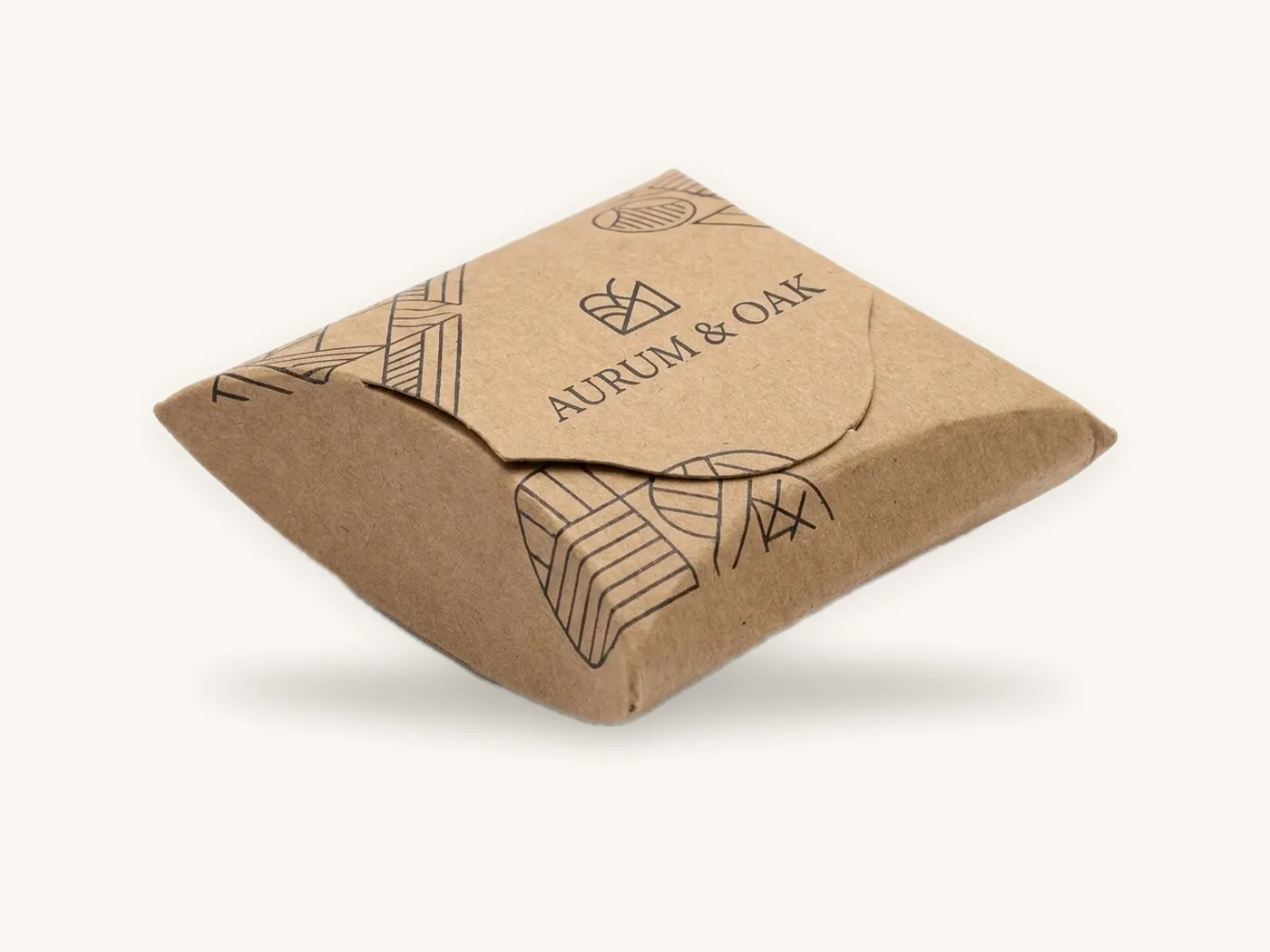
Kraft paperboard gives a natural, handmade look that suits soap makers, candle brands, farmers' markets and rustic weddings. It prints best with one or two dark colors, or with opaque white ink for lighter tones.
Metallic and holographic board
Metallic and holographic board catches light as the curve bends, which is why it is so common for jewelry, cosmetics and hair extension brands. Printing on metallic board works best with bold graphics and areas of white ink to control where the shine shows.
Textured and specialty papers
Textured and specialty papers, such as linen-embossed, felt-marked or colored-through stocks, add a tactile quality that reads as premium even with a simple one-color logo. Some heavy textures crease less cleanly, so check a sample before committing.
Decorating a pillow box so it feels like a gift
Because pillow boxes are inexpensive to make, small additions deliver a lot of perceived value. These are the add-ons that work best with the shape.
Print and finish ideas
- Edge-to-edge pattern. A repeat pattern hides the glue seam and looks the same from either face.
- Centered logo on one face, message on the other. The front says who it is from; the back can say thank you or give care instructions.
- Foil stamping. A foil logo on a matte or soft-touch face is striking on jewelry and beauty packaging. Foil carries a one-time tooling charge. See printing and finishes for options.
- Spot UV or embossing. Adds contrast or texture to a logo. Keep embossed areas in the flat center, away from the curves.
- Inside print. A pattern inside is visible when the end opens and costs less than you might expect on short digital runs.
Add-ons outside the box
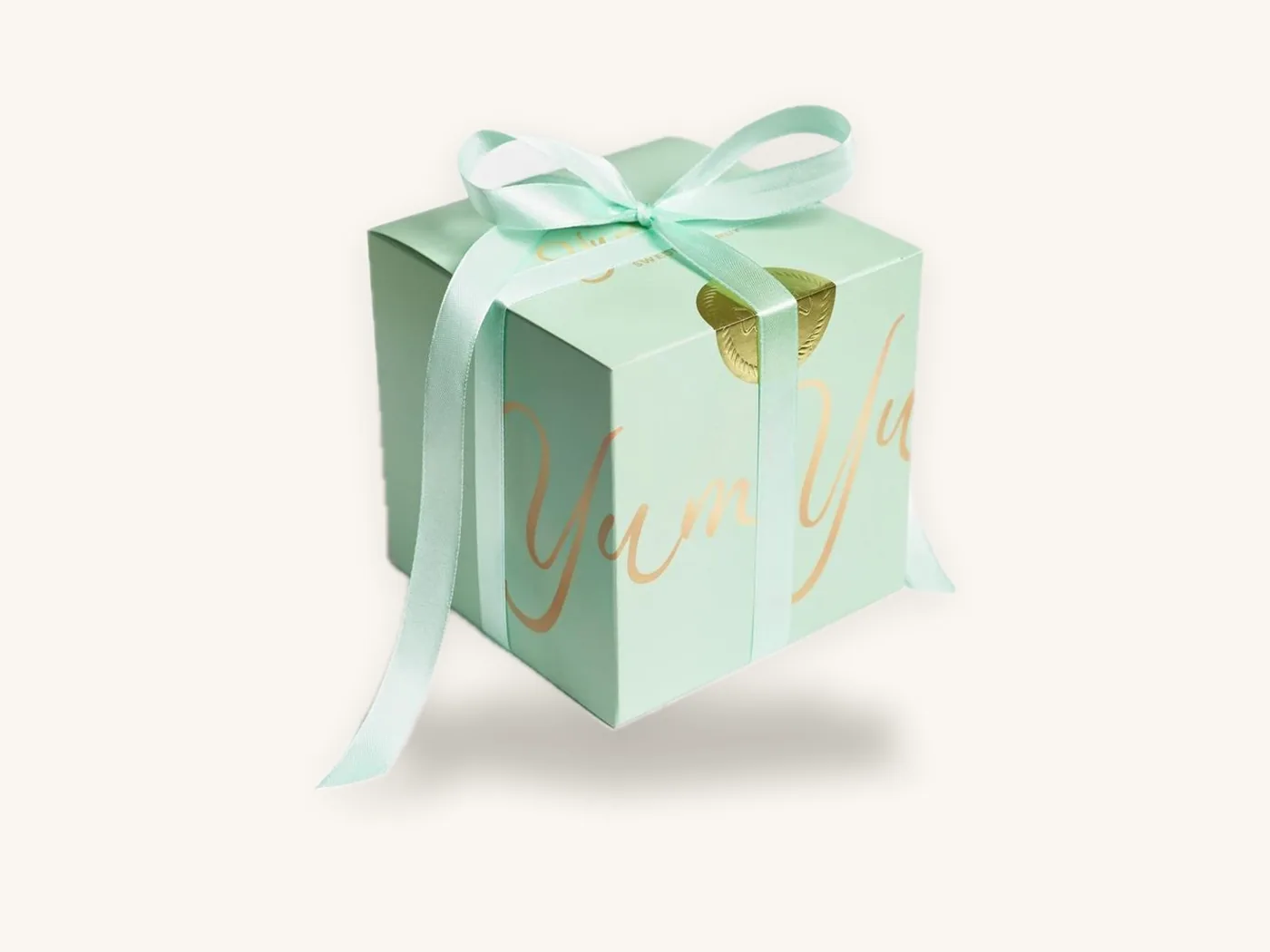
- Ribbon or twine tied around the middle, which also stops the ends opening in a bag.
- Printed belly band carrying the brand or product name over a patterned box.
- Hang tag threaded through a small punched hole near one end, for names at events or product details at retail. Our hang tags come in matching papers.
- Sticker seal across the end flap to keep it shut and add a logo.
- Tissue wrap inside for textiles and jewelry.
Artwork setup for curved panels
- Place artwork on the dieline we supply, which shows the arc creases and glue flap.
- Keep text and logos in the flat center of each face and at least 1/8 in away from the arc creases, where the board bends and ink can crack.
- Extend backgrounds 1/8 in (3 mm) beyond the cut line as bleed, including around the curved ends.
- Remember the glue flap is hidden under the opposite panel, so do not place text there.
- Check the 3D proof to confirm the logo sits in the middle of the curved face, not drifting toward an end.
Pillow boxes by industry
Pillow gift boxes cross a lot of categories. Here is how the main ones use them.
Jewelry and accessories
Pillow boxes are a lower-cost alternative to hinged or rigid jewelry boxes for fashion jewelry, charms and gift-with-purchase pieces. A printed card insert keeps earrings centered. For higher-value pieces, the jewelry packaging guide compares rigid and drawer structures, and the jewelry and accessories packaging page shows the range.
Hair extensions and beauty
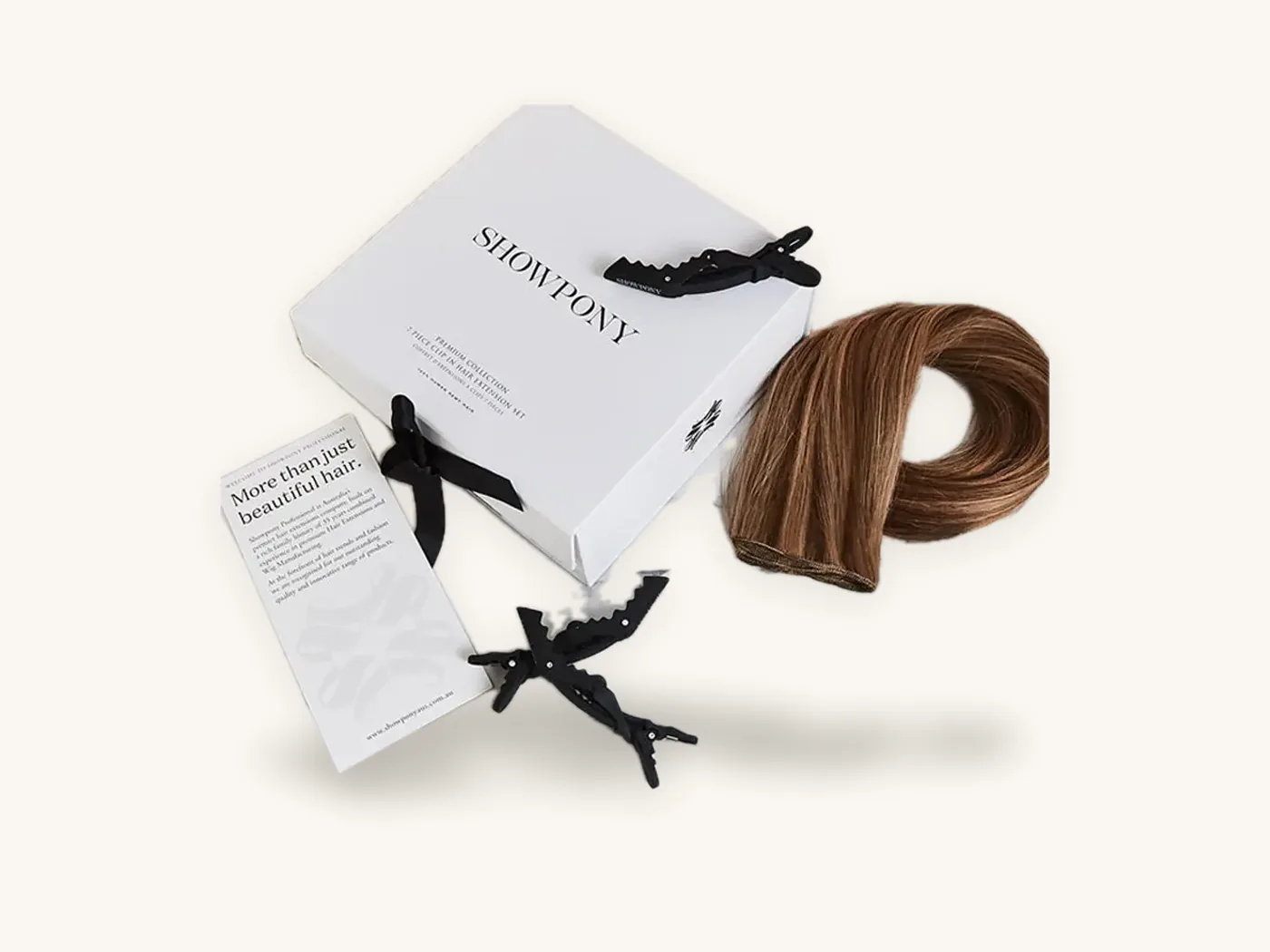
Long pillow boxes on metallic or soft-touch printed board are a staple for hair extension boxes, often with a small window or a belly band showing length and texture. For full bundles and wigs, compare with magnetic and window formats in the hair extension packaging guide.
Weddings, parties and events
Favor boxes in pillow form are easy to assemble in bulk and set out on tables. A ribbon, a name tag or a date printed on the face turns a simple box into a keepsake. The wedding favor boxes guide covers quantities and planning.
Retail add-ons and gift cards
Retailers use small pillow boxes for gift cards, samples and small add-on items at checkout. They stack flat under the counter and assemble on demand.
Pillow boxes compared with other small boxes
If you are deciding between small formats, this comparison helps narrow it down.
| Structure | Assembly | Protection | Presentation | Best for |
|---|---|---|---|---|
| Pillow box | Pops up, ends fold in, no glue | Low to moderate | Soft, gift-like shape | Flat, light, soft items and favors |
| Tuck end carton | Folds up, tuck flaps at ends | Moderate | Retail standard, easy to stack | Shelf products, bottles, jars |
| Drawer box | Tray slides into a sleeve or shell | Moderate to high | Reveal as the drawer opens | Jewelry, watches, stationery sets |
| Two-piece box | Lid lifts off a base | Moderate to high | Classic gift box | Apparel, gifts, keepsakes |
| Small mailer box | Folds up, locks without tape | High | Opening sequence, inside print | Items shipped directly to customers |
The main strength of a pillow box is cost and assembly speed for a gift-like result. If protection or shelf stacking matters more, a tuck end box or a drawer box is usually better. The drawer boxes guide explains that format.
What drives the cost of custom pillow boxes
Pillow boxes use a small amount of board per unit and have one glued seam, so they sit among the more economical custom boxes. Rather than quote a figure for a style that varies widely in size and material, here are the factors that move the price. Enter your spec in the instant price estimator for a number.
| Cost driver | Effect | How to manage it |
|---|---|---|
| Quantity | Largest effect; setup spreads over more units | Price two or three tiers and compare total spend |
| Size | More board per unit | Size to the product's flat middle, not generously |
| Material | Metallic, holographic and textured papers cost more than SBS or kraft | Use specialty board where it shows, or add a foil logo instead |
| Print coverage | Inside printing and full flood color add cost | Print the outside and keep the inside plain or one color |
| Finishes | Lamination adds per-unit cost; foil, embossing and spot UV add one-time tooling | Choose one hero finish rather than three |
| Add-ons | Windows, handles, sleeves, tags and ribbons | Add at the event or packing stage where practical |
Shipping pillow boxes
Pillow boxes are presentation packaging, not shipping containers. The curved faces dent under pressure and the ends can open in transit.
- For e-commerce, pack filled pillow boxes inside a snug custom mailer box or padded mailer. The custom mailer boxes guide explains sizing an outer box.
- For flat items like prints or cards packed with a pillow gift, a wrap-style mailer protects the corners; see the book mailer boxes guide.
- For wholesale, pillow boxes can travel assembled and filled in case packs inside custom shipping boxes, with dividers if needed. The custom shipping boxes guide covers case pack sizing.
- For subscription kits, a pillow box is a neat way to group small items inside a larger box, as described in the subscription boxes guide.
Watch out: a ribbon or sticker seal is not just decoration on a shipped pillow box. Without one, the ends can work loose inside the outer box and small items like earrings can slip out into the void fill.
How to order custom pillow boxes from Box Sense
Pillow boxes are quick to spec, but the arc depth and end curves are tuned to your product, so a few details make the first proof accurate.
What to send
- The product, or its dimensions and weight as packed, including any card, tissue or pouch
- Preferred style: standard, long, with handle, with window or with sleeve
- Board or paper: SBS, kraft, metallic, holographic or textured
- Print: one color, full color, inside printing, and any finishes like foil or soft-touch
- Add-ons: ribbon holes, hang tag holes, window film
- Quantities to price and your target delivery date
- Artwork, or a request for our free design services
From quote to delivery
- We confirm your quote within 24 hours.
- We supply the dieline, set up artwork and send a 3D digital proof, with two revision rounds included.
- An unprinted structural sample is free, so you can check the fit and how the ends close. A printed sample of approved artwork is free on orders of 100 or more; see samples.
- Standard production is 8–12 business days after proof approval, with rush in 5 business days on most paperboard styles.
- Shipping is free on every US order. The minimum is 10 boxes, there are no die or plate charges, and defective boxes reported within 14 days are reprinted free.
Frequently asked questions
What are pillow boxes used for?
Pillow boxes are used for small, light and fairly flat items that benefit from a gift-like presentation: jewelry, hair extensions, gift cards, scarves, ties, socks, soap, wrapped candy and party or wedding favors. Retailers also use them for samples and checkout add-ons. They are not a good fit for heavy, tall or sharp-cornered products like glass jars or electronics.
How do you assemble a pillow box?
Pillow boxes arrive flat and pre-glued. Press the long edges toward each other to pop the box open, fold the curved flaps at one end inward one after the other, insert the product, then fold the other end closed. The curved creases hold the ends shut by tension, so no tape or glue is needed.
What size pillow box do I need?
Measure the product as packed, including any card or tissue. Because a pillow box tapers toward its curved ends, the product needs to fit in the flat middle section, not the full listed length. Small jewelry pillows start around 3x2x0.75 in, while hair extension boxes run 10 in long or more. A free structural sample confirms the fit.
Can pillow boxes hold heavy items?
Only moderately. Pillow boxes are held closed by the tension of their curved ends, so heavy items can force the ends open or dent the faces. For soap bars or hair bundles, choose 18 pt board or heavier and test a sample. For glass, candles in jars or electronics, choose a tuck end, auto-lock or drawer box instead.
Can I print on metallic or kraft pillow boxes?
Yes. Kraft pillow boxes suit natural and handmade brands and print best with one or two dark colors or opaque white ink. Metallic and holographic boards are popular for jewelry and beauty; bold graphics and areas of white ink control where the shine shows. Textured papers add a premium feel with a simple one-color or foil logo.
How much do custom pillow boxes cost?
Pillow boxes are among the more economical custom boxes because they use little board and have one glued seam. The price depends mainly on quantity, size, material, print coverage and finishes, with specialty papers and foil adding the most. Enter your size and options in the Box Sense instant estimator for a figure, or request a quote.
Can you ship products in pillow boxes?
Pillow boxes should travel inside a mailer box, padded mailer or shipping carton rather than on their own, because the curved faces dent and the ends can open in transit. Add a ribbon or sticker seal so the ends stay closed inside the outer box, and fit the outer box snugly to limit movement.
Next steps
Pick the style that suits your product, measure it the way you will pack it, and see how quantity affects price in the pillow box price estimator. Then request a quote for custom pillow boxes and we will confirm pricing within 24 hours, send a dieline and prepare a free structural sample so you can check the curves with your product inside.
Boxes in this guide
Order the packaging we covered
Written by the Box Sense Packaging Team
Our structural designers, prepress technicians and production staff print and convert custom boxes every day for brands in the United States, United Kingdom and UAE. Questions about this guide? Talk to us.