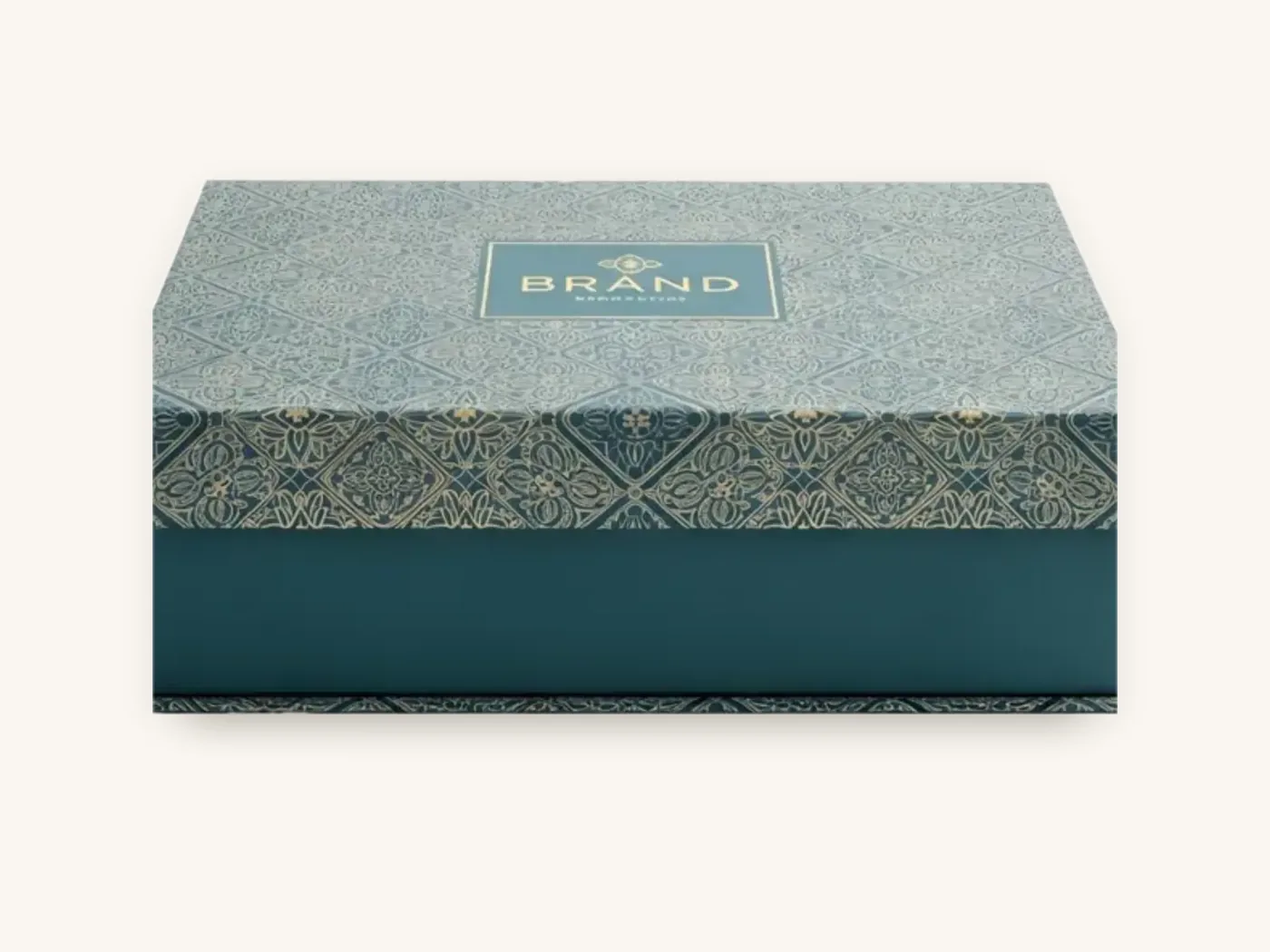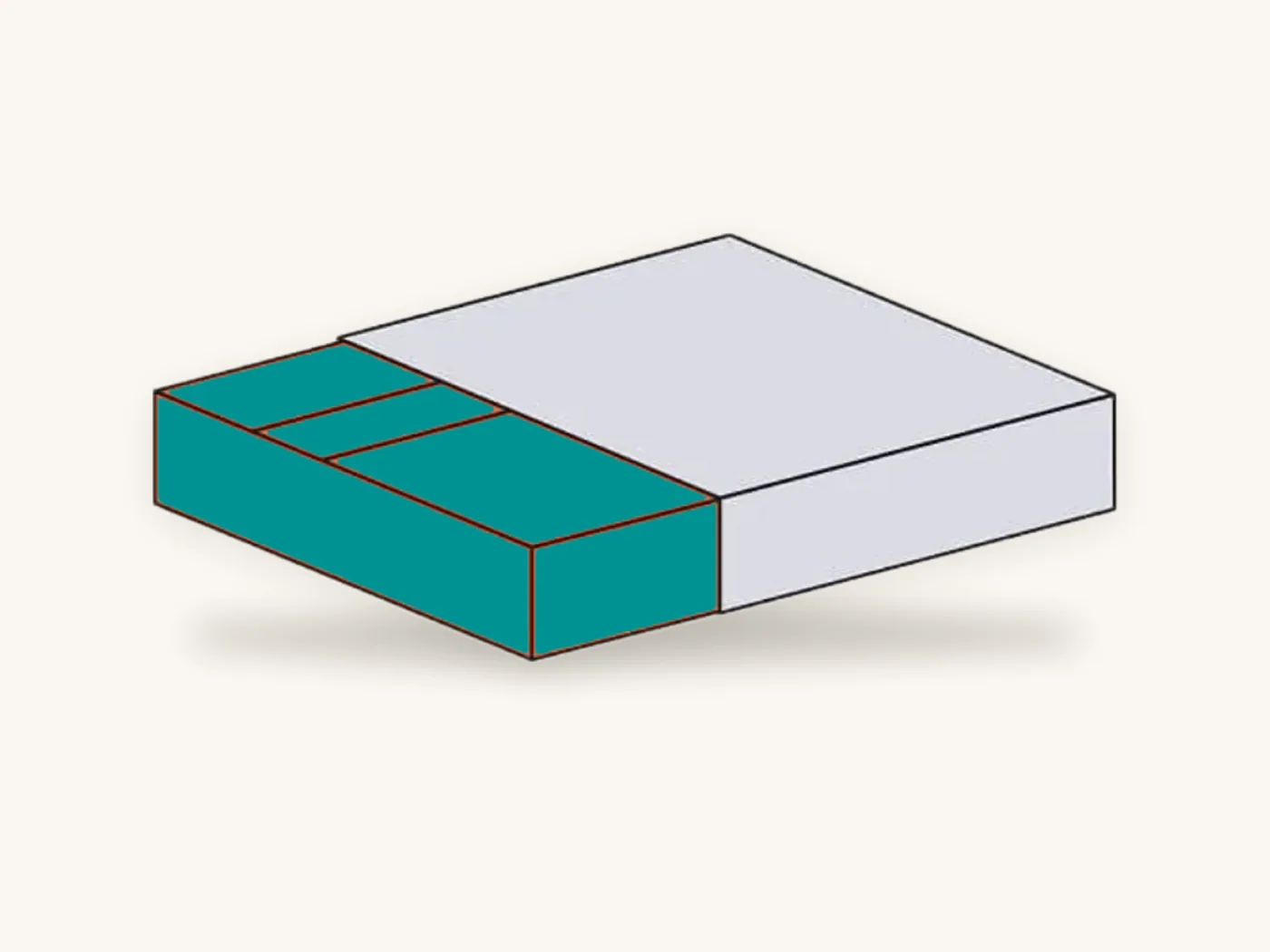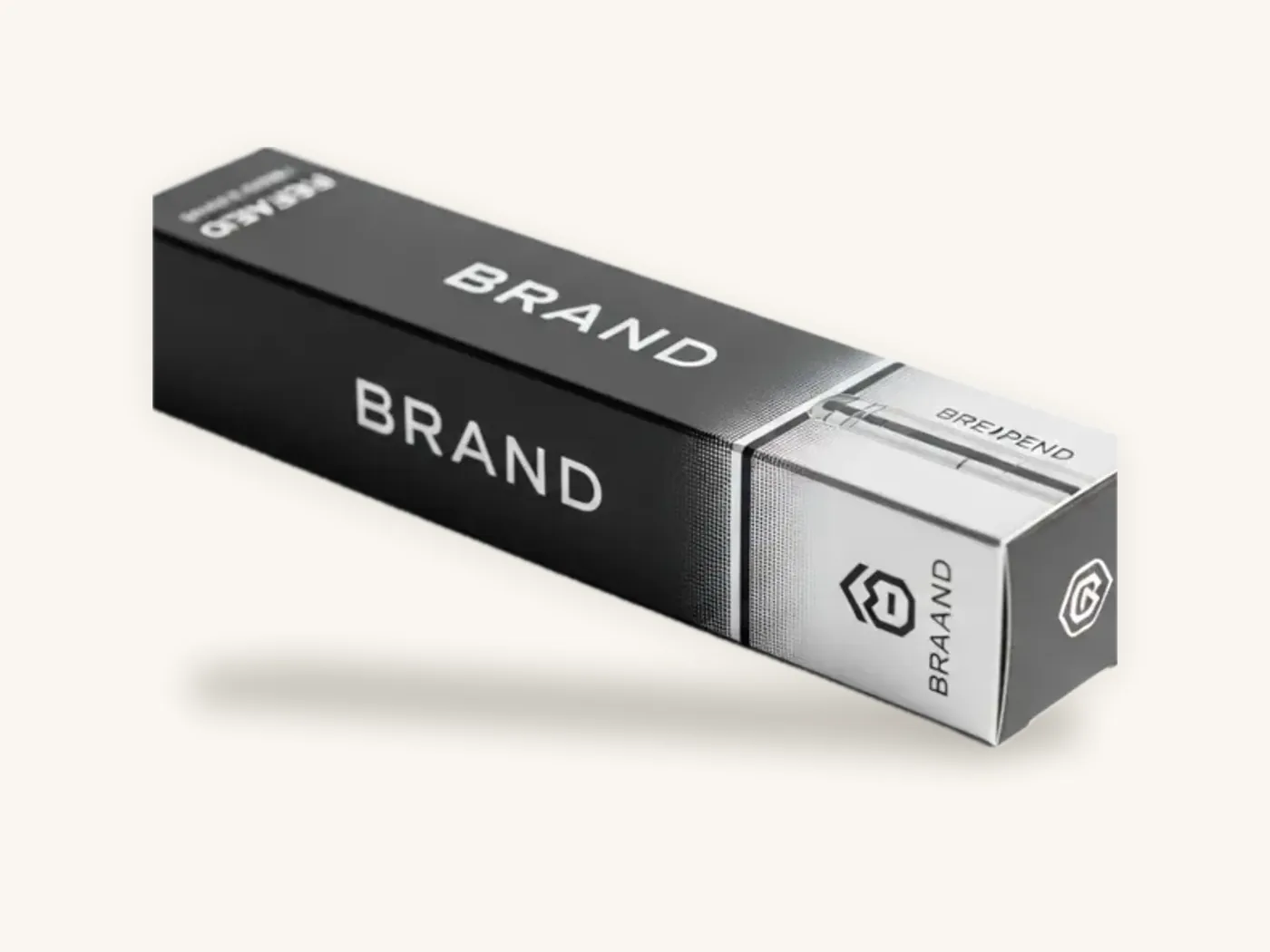
Stationery packaging has to protect products that are easy to damage in quiet ways: a notebook with a dented corner, a greeting card with a scuffed face, a fountain pen that rolls loose and chips its cap. The best format follows the shape of the item. Long, slim pens suit drawer boxes and narrow tuck cartons; flat notebooks and planners suit sleeves and book mailers; card sets suit two-piece or window boxes that keep the stack square.
Paper brands also face a design problem most categories do not. Customers who buy good stationery notice paper, so the packaging is judged as a paper product itself. This guide covers packaging by item type, how to choose board and texture, what retail and online channels each demand, and what stationery boxes cost at realistic run sizes.
Key takeaways
- Package by shape: pen boxes need a fitted cavity or insert, notebook packaging needs flat, corner-safe protection, and card sets need a box that keeps the stack from shifting.
- Drawer and sleeve boxes are the natural premium formats for stationery, because the slow slide-out reveal suits a considered purchase.
- Ship notebooks, planners and prints in wrap-style book mailers; a deep box lets flat items slide and crush their corners.
- Textured, uncoated or recycled-look papers suit stationery brands, but they reproduce color more softly than coated white board.
- A 2x2x6 in reverse tuck end carton in 14 pt SBS with gloss lamination runs about $0.52 each at 1,000 units, and a 10x8x4 in mailer printed inside and outside runs about $1.92 at 1,000.
- Box Sense makes stationery boxes from 10 units with free design support, no die or plate charges and standard production of 8–12 business days after proof approval.
Stationery packaging by product type
Stationery covers a wide spread of shapes, weights and price points. Start by grouping your range by the physical problem each item presents.
| Product | Main packaging risk | Recommended primary pack | Premium upgrade |
|---|---|---|---|
| Ballpoint and gel pens, pencils | Rolling, clip bending, loose multipacks | Narrow tuck carton or window carton | Drawer box with insert |
| Fountain pens and luxury writing instruments | Scratches, cap damage, high value | Rigid box with foam or wrapped insert | Magnetic or hinged rigid box |
| Notebooks and journals | Dented corners, scuffed covers | Printed sleeve or belly band | Rigid slipcase or two-piece box |
| Planners and diaries | Weight, corner crush in transit | Sleeve plus book mailer for shipping | Rigid slipcase |
| Greeting card and notecard sets | Stack shifting, envelope creasing | Two-piece or window box | Rigid two-piece box with ribbon lift |
| Sticky notes, washi tape, stickers | Small loose items, retail visibility | Hang tab box, header card or window carton | Drawer box assortment |
| Desk sets and gift bundles | Mixed shapes rattling | Box with die-cut insert | Magnetic rigid box |
| Art markers and colored pencils | Sorting by color, lid staying closed | Tuck carton or tray with lid | Tin-style rigid box or drawer |
Consumable vs keepsake stationery
Everyday pens and sticky notes are replenishment purchases, so their packaging must be cheap, protective and easy to shelve. Journals, fountain pens and boxed card sets are often gifts. Their packaging is part of what the customer pays for, and it is frequently kept for storage afterward.
That split tells you where to spend. Put money into structure and finish for keepsakes; put it into efficiency and legibility for consumables.
Pen boxes: holding slim items securely
Pens are one of the most common stationery items to package badly. They are light, cylindrical and easily bent at the clip, and they roll inside any box that is even slightly too big.
Choosing a pen box structure
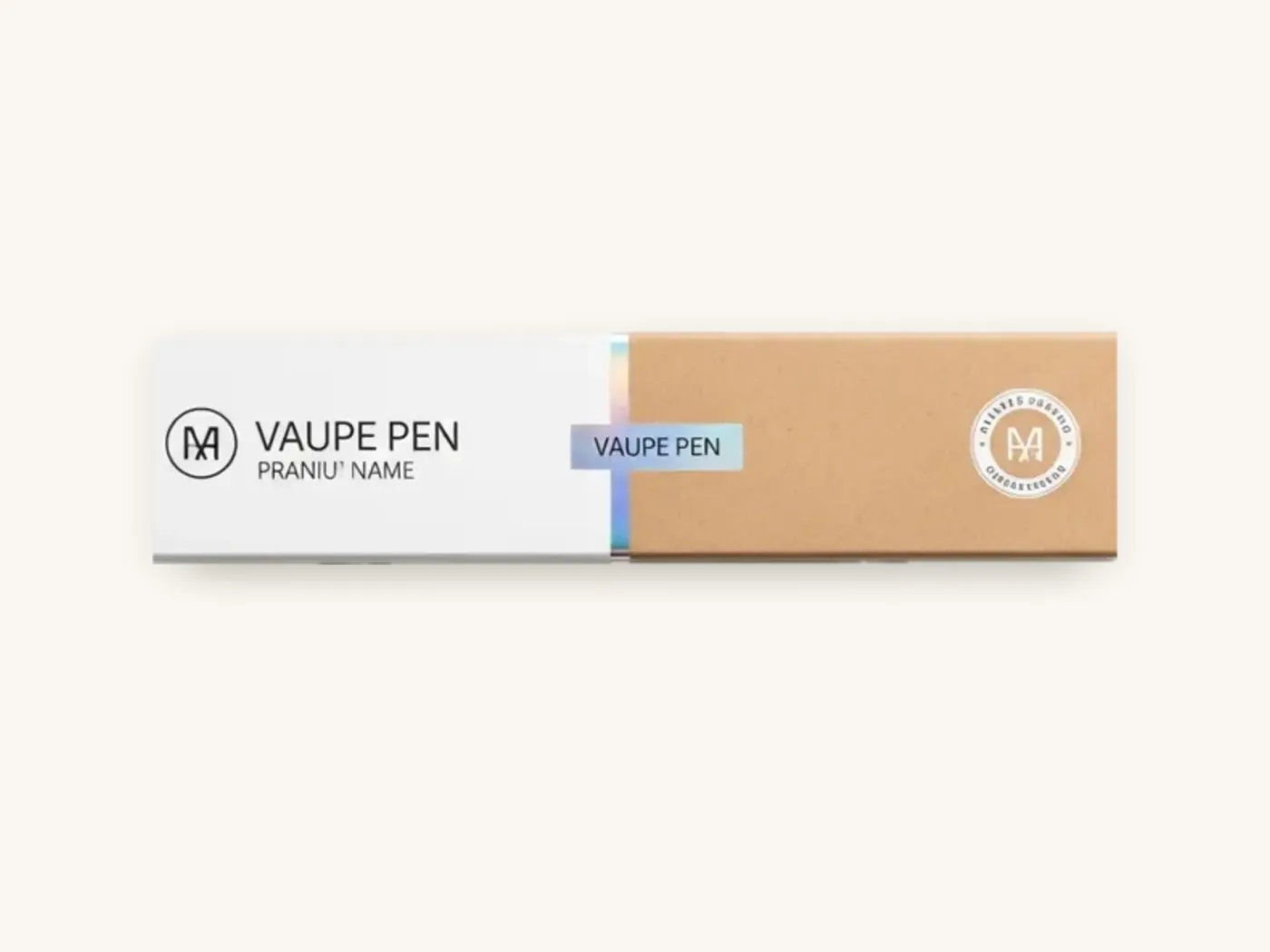
- Narrow tuck carton. A reverse tuck end carton around 2x2x6 in suits a single pen or a small multipack. It is economical, prints cleanly on all four sides and fits a peg hook with a hang tab.
- Window carton. A die-cut window with a PET or compostable PLA film shows pen color and finish without letting shoppers open the box.
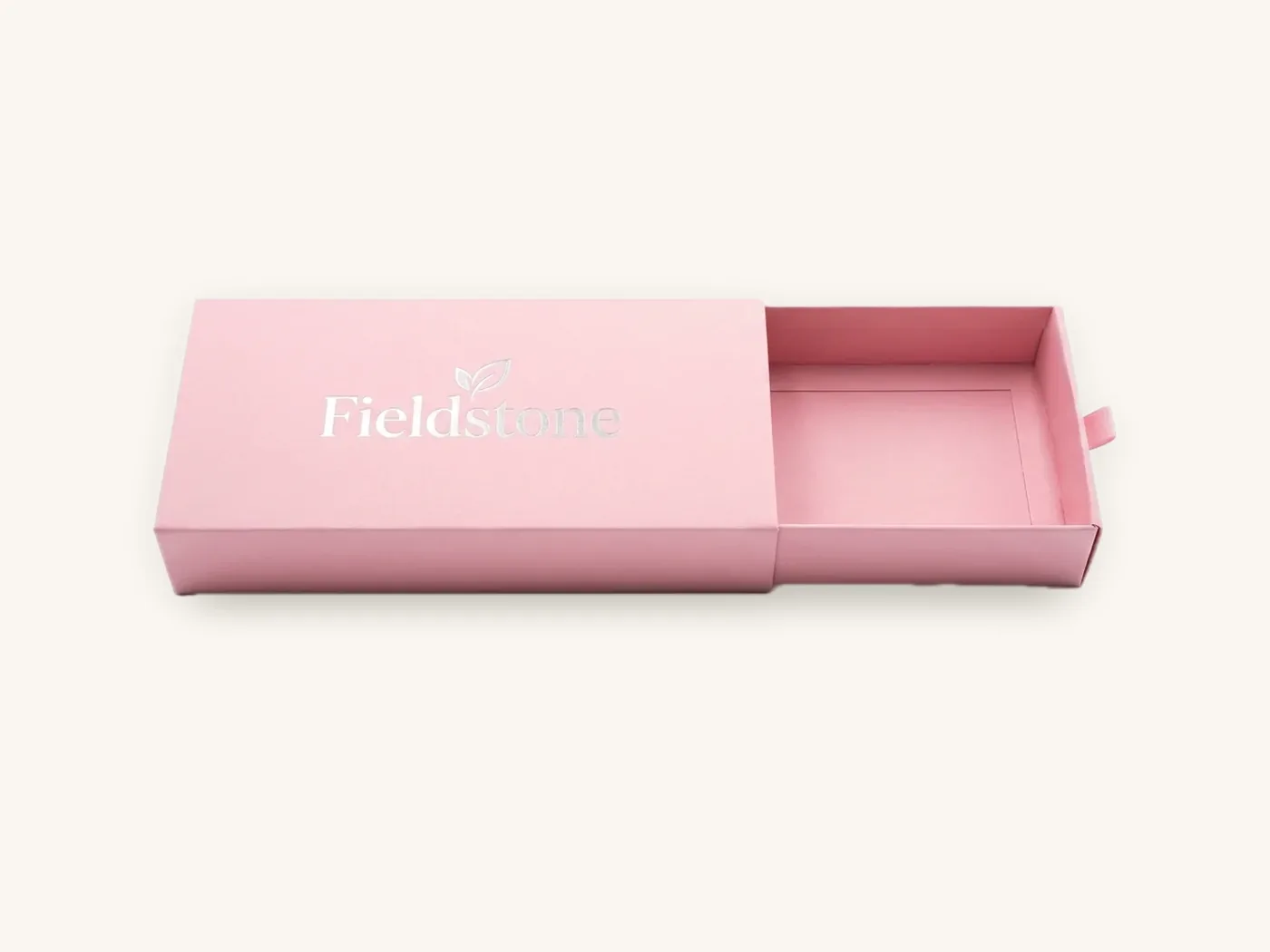
- Drawer box. A drawer box slides open to reveal a pen resting in a cradle. It is the most satisfying format for gift pens and pen-and-refill sets.
- Hinged or magnetic rigid box. For fountain pens and luxury writing instruments, a rigid box with a fitted insert signals value and protects nibs and caps.
Insert options for pens
A pen box needs something to stop the pen moving. Paperboard cradles with a die-cut slot are light and printable. A wrapped platform with a cutout looks more premium. EVA foam gives a precise cavity for heavier metal pens. For multi-pen sets, a divider insert keeps pens separated so clips and barrels do not scratch each other.
The drawer boxes guide covers drawer tolerances, ribbon pulls and thumb notches, which matter a great deal for slim pen drawers.
Watch out: measure pens with the cap posted and unposted, and at the clip, not just the barrel. A clip that sits 2 mm proud of the barrel is enough to stop a pen dropping into a slot cut to barrel width.
Notebook packaging: protecting flat products
Notebooks and journals look sturdy, but their corners and cover edges are the first things to show wear in a warehouse, a shop display or a parcel.
Retail notebook packaging
For shelves, many brands leave notebooks unboxed and use a printed sleeve or belly band. A sleeve wraps around the cover, carries the barcode and product details, and slides off without marking the cover. It uses little material and lets customers feel the cover texture. Shrink wrap is common but hides the texture that sells a good notebook, and many paper-focused customers prefer to avoid plastic.
A sleeve and tray box or rigid slipcase suits premium journals, notebook sets and planners sold as gifts. The sleeve boxes guide compares sleeve constructions.
Shipping notebooks and planners
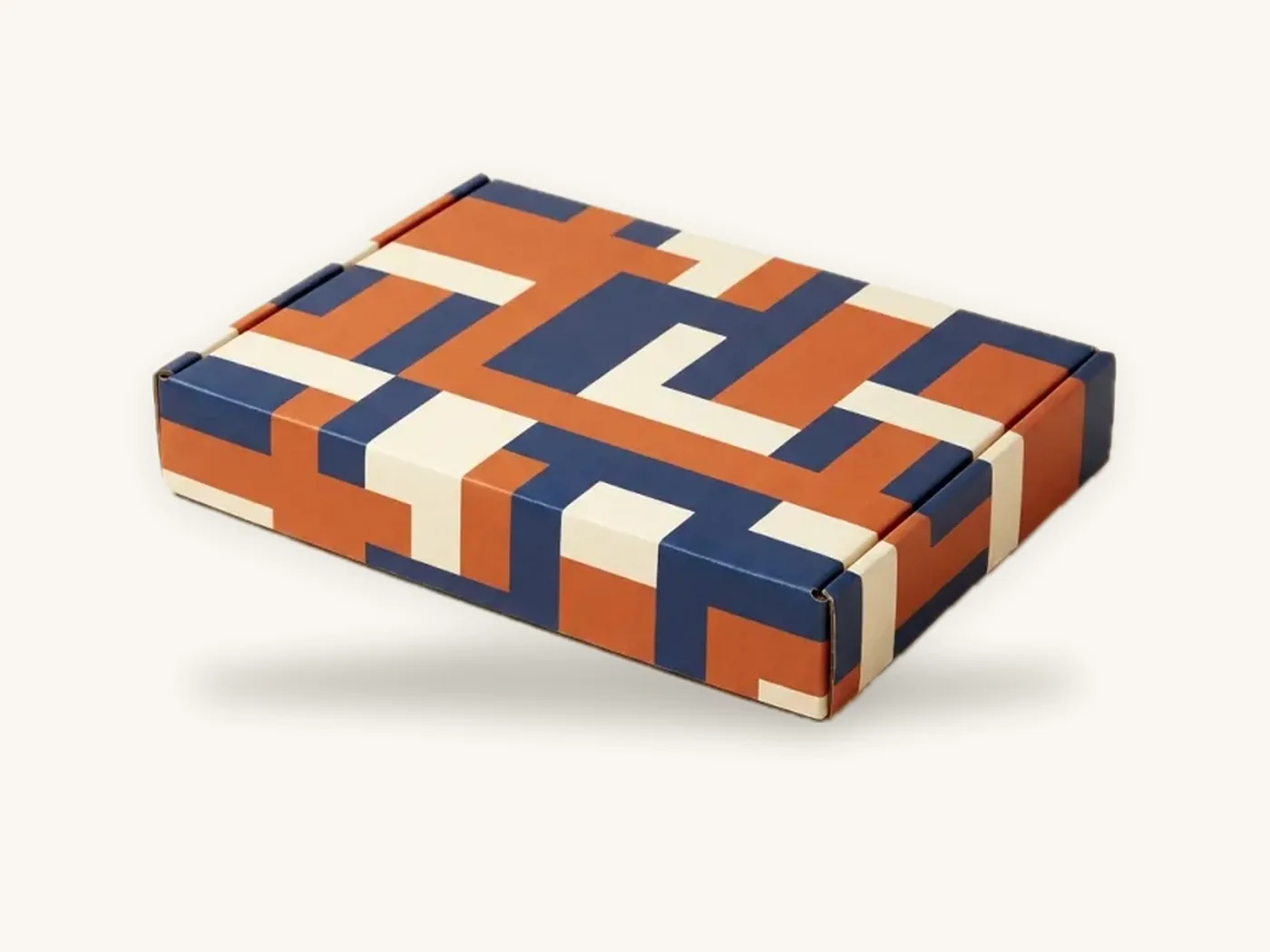
For e-commerce, a wrap-around book mailer box is the strongest option. The flat tray and fold-over flaps hug the notebook on all sides, so there is no empty space for it to slide into during a drop. Corner crush, the most common damage for flat items, mostly happens when a book moves inside an oversized box and hits the wall edge-first.
Size book mailers closely. Add roughly 1/8 in to length and width for a hardcover notebook, and set the depth to the product thickness plus any sleeve. If you ship multiple notebooks, a bundle that is squared up with a band ships better than loose stacked items. The book mailer boxes guide covers flap styles and board choices.
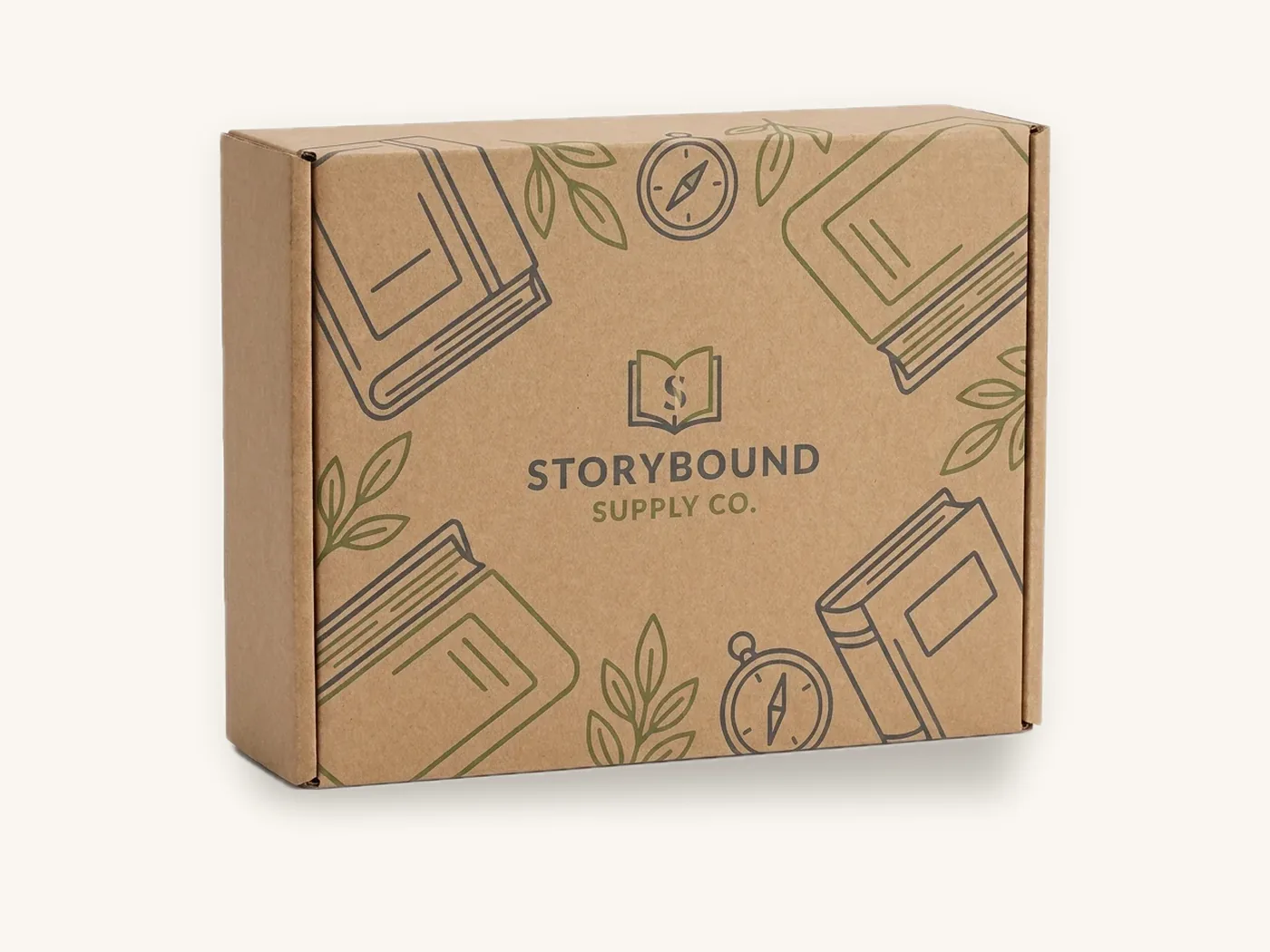
Card sets, stationery gift sets and assortments
Boxed card sets are a large part of many stationery brands' gift business, and they have their own packaging logic.
Keeping cards and envelopes square
A box of notecards needs a cavity sized to the envelope stack, not the card, since envelopes are slightly larger. Measure a full stack of cards and envelopes together, then add a little clearance in length and width. Too much depth and the stack slumps; too little and the lid bulges.
Popular card set formats
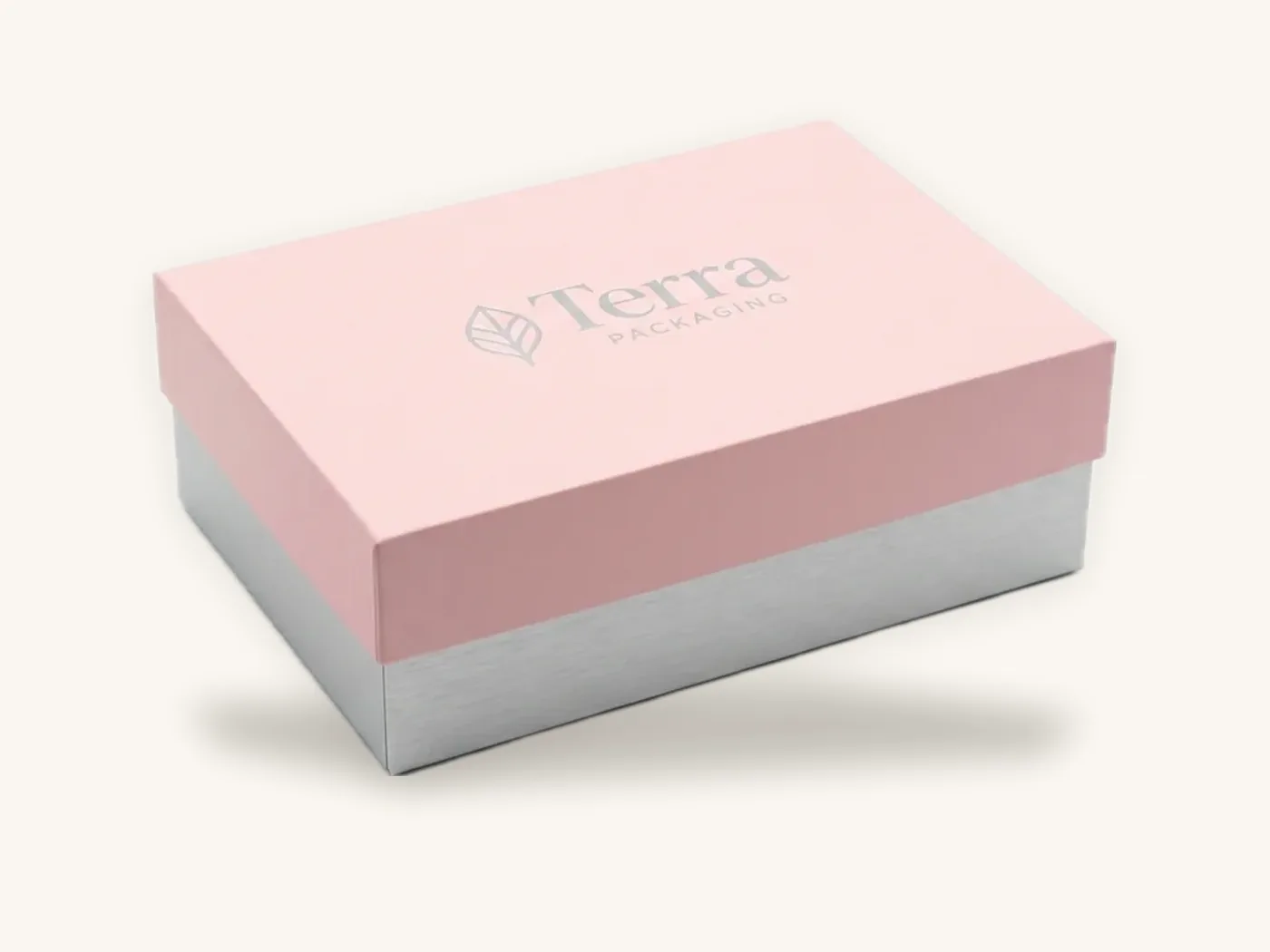
- Two-piece rigid box. A lift-off lid with a thumb cut or ribbon lift, the classic premium card box.
- Window box. Shows the top card design, useful for retail where shoppers choose by illustration.
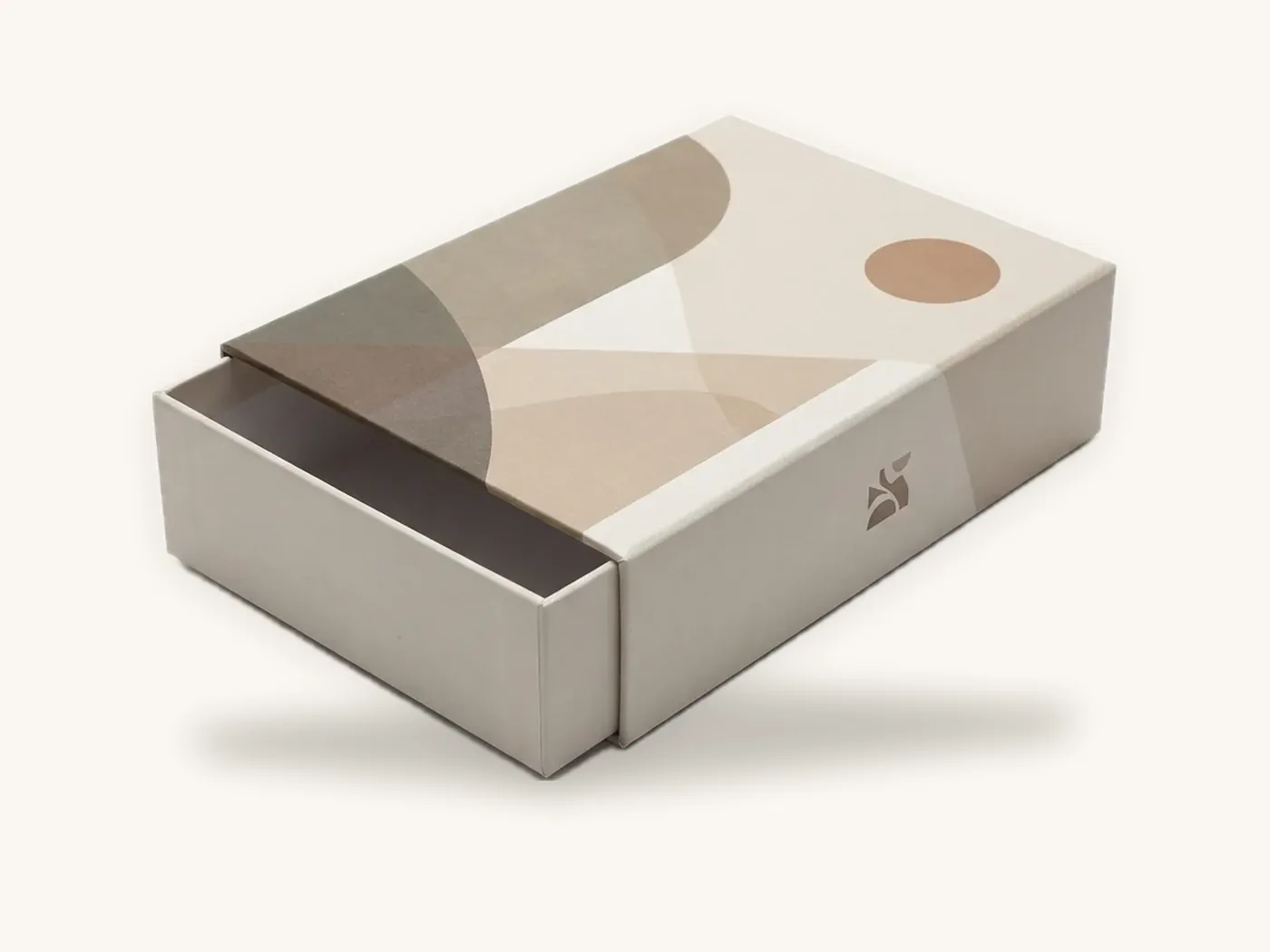
- Drawer box. A slide-out tray with a ribbon pull suits letterpress and foil-stamped sets.
- Folding carton with tray. A lighter, more economical option for everyday notecards.
Building a desk or gift set
Gift sets combining a notebook, pen, card set and perhaps a small accessory need a die-cut insert. Lay the items out in the box footprint, place the heaviest one centrally, and give each piece its own cavity with a finger notch. Custom inserts carry a one-time tooling charge of about $45.
Board, paper and texture choices for stationery brands
Stationery customers notice paper. The packaging should feel consistent with the product inside.
| Material | Look and feel | Print behavior | Best stationery use |
|---|---|---|---|
| SBS paperboard | Smooth, bright white | Sharpest full-color print | Pen cartons, card set boxes, retail packs |
| Kraft paperboard | Natural brown, handmade | Muted color, suits one or two inks or white ink | Recycled notebooks, eco ranges |
| Textured specialty paper | Linen, felt or laid texture | Softer color, excellent for foil and deboss | Journals, luxury card sets, rigid wraps |
| Rigid greyboard wrapped | Heavy, keepable | Depends on the wrap paper | Fountain pens, gift sets, slipcases |
| E-flute corrugated | Tough, lightweight | Good color, slightly coarser detail | Book mailers, shipping sets |
Why coated and uncoated papers look different
Coated boards hold ink on the surface, so colors look saturated and fine detail stays crisp. Uncoated and textured papers absorb ink into the fibers, which softens colors and slightly spreads fine lines. Neither is wrong. Uncoated stock suits the tactile, understated look many stationery brands want. Just expect proofs on textured paper to look a little different from your screen, and avoid hairline type in reversed-out areas.
For more on wrap papers and textures, see our specialty papers guide.
Finishes that suit stationery
- Blind debossing of a logo or pattern, which echoes letterpress. One-time tooling of about $60.
- Foil stamping on textured stock for titles and monograms. One-time tooling of about $60.
- Matte or soft-touch lamination on smooth board for a quiet, fingerprint-resistant finish.
- Aqueous coating to keep paperboard cartons recyclable while reducing scuffs.
Retail display, gift shops and online channels
Stationery sells through a wide range of channels, and each one puts different demands on the box.
Independent gift shops and bookstores
Buyers in gift shops want packaging that stands upright, faces forward and shows the product. Window boxes, belly bands and slim spines with clear product names help. For small items such as washi tape or sticker packs, counter display boxes hold a dozen or more units at the register.
Peg hooks and big-box retail
Pens, markers and multipacks often hang on peg hooks. Add a hang tab to a tuck carton or use a five-panel hanger design. Retailers generally require a scannable UPC barcode in a consistent location, and many have their own packaging specifications, so ask your buyer for the vendor guide before artwork starts.
E-commerce and marketplaces
Online orders often combine a notebook, pens and cards in one parcel. A printed mailer with a simple insert or a book mailer sized for your most common bundle cuts damage and packing time. The stationery and office industry page shows common kit formats.
Labeling reminders
Most stationery is general consumer merchandise, but a few categories carry specific rules. Art materials such as markers, paints and colored pencils sold in the US are subject to the Labeling of Hazardous Art Materials Act, which the Consumer Product Safety Commission enforces, and products for children have additional requirements. Country of origin marking also applies to imported goods. Confirm current rules with the CPSC or your compliance advisor, and leave panel space for any required statements.
Sizing stationery boxes step by step
Many stationery reprints come down to a few millimeters. Use this process for every new SKU.
- Collect final production samples. Prototype notebooks and pens often differ in thickness from the production run.
- Measure the item at its largest point. For notebooks, include elastic closures, pen loops and ribbon markers; for pens, include clips and caps.
- Decide what surrounds the item. A sleeve, tissue wrap, insert or envelope stack adds its own thickness.
- Add clearance. Roughly 1/16 to 1/8 in in length and width for rigid items; less for sleeves that should grip.
- Check the reveal. For drawer boxes, make sure a ribbon pull or thumb notch lets the drawer slide without tipping the item out.
- Consider the shipping unit. Check how many retail boxes fit into your standard shipping carton without gaps.
- Order a structural sample and test it with the real item, including a drop from table height inside its shipping carton.
Tip: if you sell notebooks in A5 and B5 or several page counts, design one sleeve or box depth that fits the thickest version with a thin card spacer for the others. One die size across the range lets you combine quantities for a lower unit price.
What stationery packaging costs
Stationery box pricing depends on structure, size, board, print coverage, finishes and quantity. The table gives indicative per-unit prices from our current rates for specs that match common stationery uses, with free US shipping included. Sleeves, drawer boxes and custom sizes are priced in the instant price estimator or by quote.
| Spec (stationery use) | 100 | 250 | 1,000 | 2,500 |
|---|---|---|---|---|
| Reverse tuck end carton, 14 pt SBS, 2x2x6 in, full color, gloss lamination (pen or marker pack) | $1.17 | $0.83 | $0.52 | $0.44 |
| Straight tuck end carton, 18 pt SBS, 3x2x5 in, full color, aqueous (sticky notes, small card packs) | $1.15 | $0.82 | $0.51 | $0.43 |
| Rigid box, 2 mm greyboard wrapped, 8x6x3 in, full color, matte (notebook and pen gift set) | $9.10 | $6.47 | $4.05 | $3.44 |
| Mailer box, E-flute, 10x8x4 in, full color inside and outside (planner or stationery bundle) | $4.33 | $3.08 | $1.92 | $1.63 |
Where the savings are
- Standardize sizes. A common pen carton for several colors, or one card box for several designs, pushes you into higher quantity tiers.
- Use sleeves on notebooks instead of full boxes where the cover itself is the display.
- Limit tooled finishes. A single blind deboss can do as much as foil plus spot UV on textured paper.
- Print the variation, not the box. A short digital run of design-specific sleeves over a stock box keeps artwork flexible.
How to order stationery boxes from Box Sense
Whether you are launching a first notebook or packaging a full seasonal collection, the process is the same.
What to include
- Each item with production dimensions, including clips, closures and envelopes
- Preferred structure: tuck carton, drawer, sleeve, two-piece rigid, window box or book mailer
- Sales channels: gift shops, peg retail, online or all three
- Board or wrap paper preference, including textured or kraft stocks
- Print, finish and insert requirements
- Quantities per SKU and whether sizes can be shared across SKUs
- Target in-hand date
- Artwork files, or a request for help from our design services team
From quote to delivery
- Quote within 24 hours for your spec and quantity tiers.
- Free design support, including a dieline, artwork setup and a 3D digital proof with two revision rounds.
- Samples: unprinted structural samples are free, which is the easiest way to test slim pen slots and notebook fit. A printed sample of approved artwork is free on orders of 100 or more. See samples.
- Production: 8–12 business days after proof approval, with rush in 5 business days on most paperboard and corrugated styles.
- Delivery: free shipping on every US order; international shipping quoted at cost.
The minimum order is 10 boxes, which suits limited-edition card sets, trade show samples and small-batch journal launches. Browse formats on the stationery and pen boxes page.
Frequently asked questions
What is the best packaging for pens?
For everyday pens, a narrow tuck carton or window carton is economical and retail-friendly. For gift pens, a drawer box with a paperboard or wrapped cradle creates a satisfying reveal. Fountain pens and luxury writing instruments suit a rigid hinged or magnetic box with a foam or wrapped insert. Always measure at the clip and cap, not just the barrel.
How should I package notebooks for retail?
Many brands use a printed sleeve or belly band rather than a full box. A sleeve protects the cover, carries the barcode and product details, and still lets shoppers see and feel the cover. For premium journals or sets, use a rigid slipcase or sleeve and tray box. Shrink wrap protects but hides texture, which is often the main selling point.
How do I ship notebooks without damaging the corners?
Use a wrap-style book mailer sized closely to the notebook. Its fold-over flaps hold the notebook on every side, so it cannot slide and hit a wall corner-first. Add about 1/8 inch to length and width for clearance. If shipping several notebooks, band them into a squared bundle before packing so they move as one unit.
What size box do I need for a greeting card set?
Size the box to the envelopes, which are slightly larger than the cards, not to the cards alone. Measure a full stack of cards and envelopes together, then add a small clearance in length and width. Set the depth to the stack height so it does not slump or bulge the lid. A free structural sample confirms fit before printing.
How much do custom pen boxes cost?
It depends on size, board, print and quantity. As a reference, a 2x2x6 inch reverse tuck end carton in 14 pt SBS with full-color print and gloss lamination is about $1.17 per box at 100 units and about $0.52 at 1,000, including US shipping. Drawer and rigid pen boxes cost more; price your spec on the pricing page.
Can I use textured paper for stationery boxes?
Yes. Textured and specialty papers are popular for stationery because they match the tactile quality of good paper goods. They are commonly used as wraps on rigid boxes and pair well with foil stamping and debossing. Expect colors to look softer than on coated white board, and avoid very fine reversed-out type, which can fill in.
What is the minimum order for stationery packaging?
Box Sense produces custom stationery boxes from a minimum of 10 units. Short runs are printed digitally with no plate charges, so small launches, limited-edition card sets and trade show samples are practical. One-time tooling applies only to foil, embossing, spot UV and custom inserts, and unit prices fall as quantity increases.
Next steps
Group your stationery range by shape, measure final production samples, and decide which items need retail packs, gift boxes or shipping mailers. Then price the formats in the stationery box price estimator and request a stationery packaging quote. We confirm pricing within 24 hours and send free structural samples so you can test pen slots and notebook fit first.
Boxes in this guide
Order the packaging we covered
Written by the Box Sense Packaging Team
Our structural designers, prepress technicians and production staff print and convert custom boxes every day for brands in the United States, United Kingdom and UAE. Questions about this guide? Talk to us.