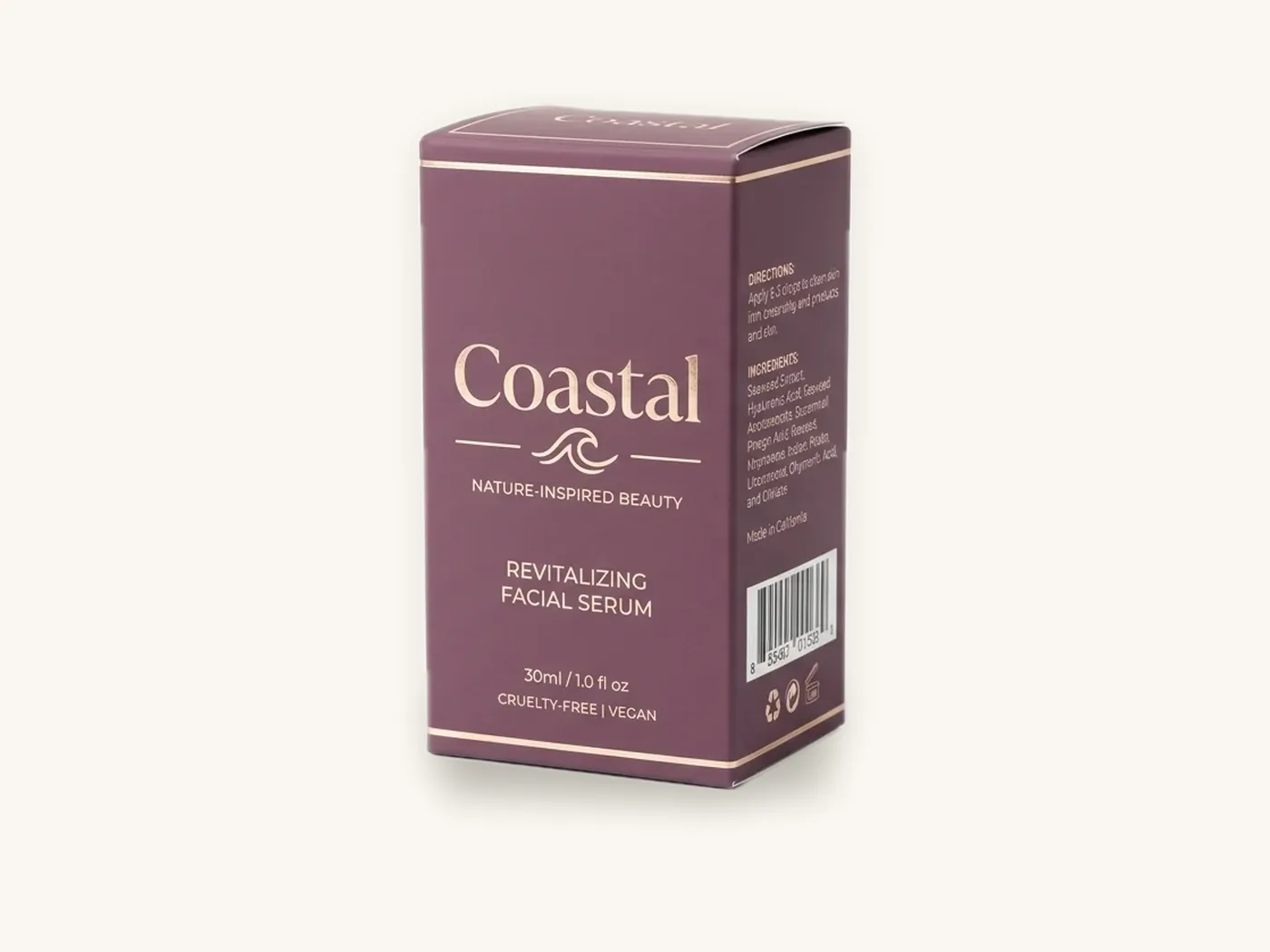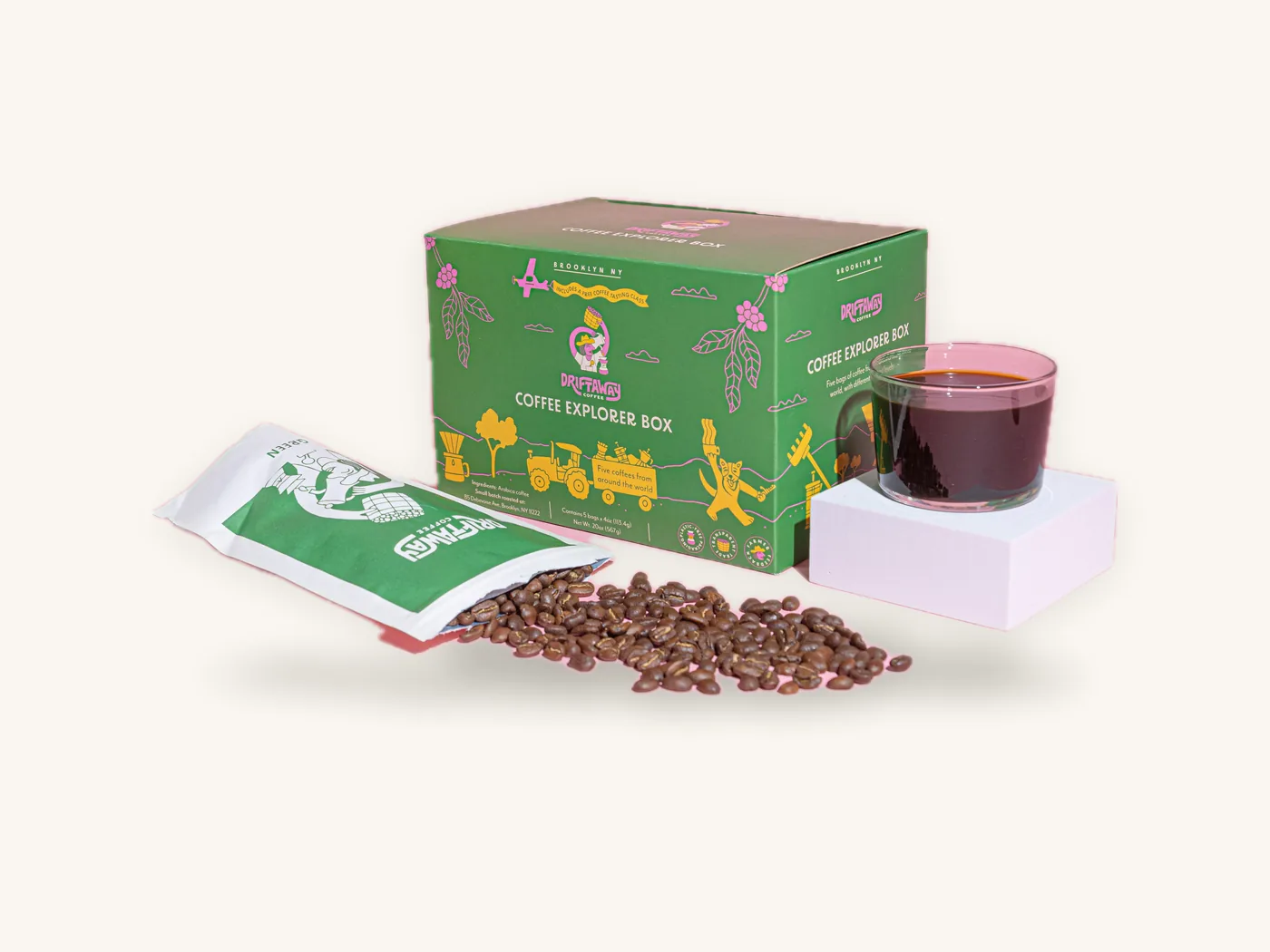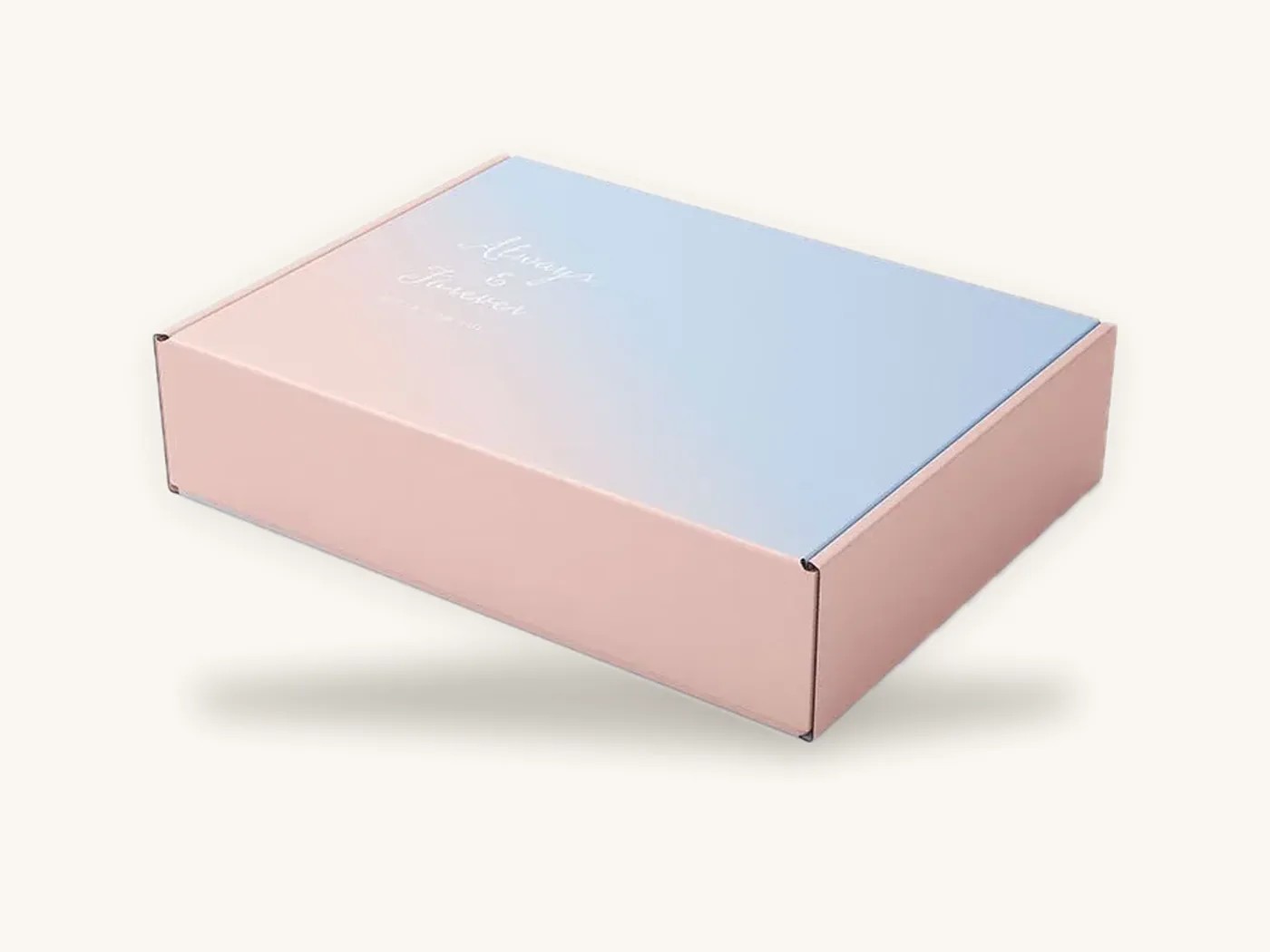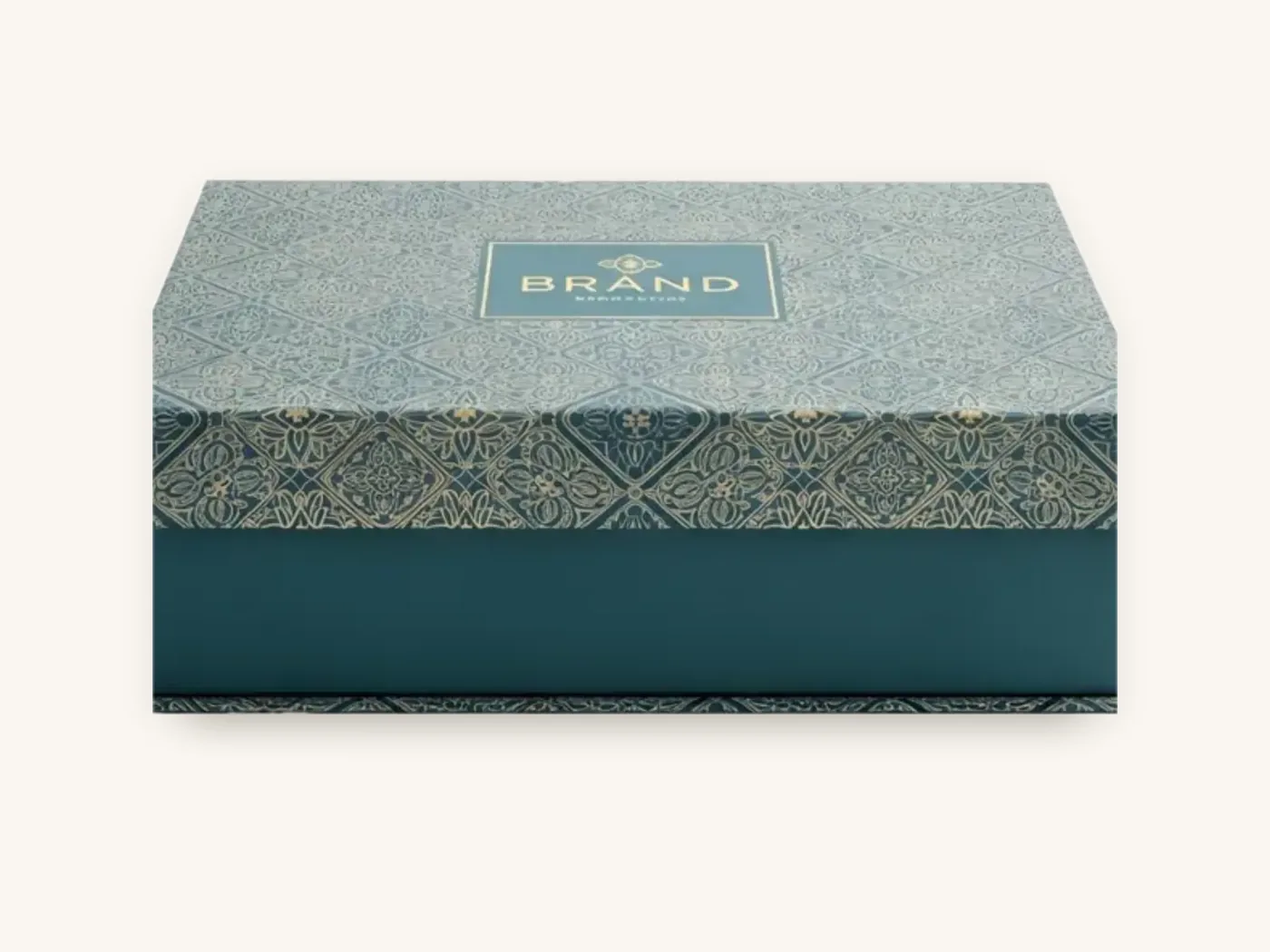
Textured paper packaging uses specialty wrapping papers, such as linen-finish, felt-marked, leather-grain, laid or pearlescent stocks, to cover rigid boxes, sleeves and presentation cases. The texture is felt the moment someone picks up the box, and it signals craft and cost before a word of branding is read. That is why fragrance, jewelry, spirits and high-end stationery lean on it.
The catch is that texture changes everything downstream. Fine print breaks up, some foils do not stick evenly, dark papers show scuffs, and heavy stocks crack at the corners of a wrapped box. This guide explains the main specialty paper families, how each behaves when printed, foiled and wrapped, and how to specify one without surprises.
Key takeaways
- Specialty wraps for rigid boxes are usually around 100 to 150 gsm, laid over 1.5 to 3 mm greyboard.
- Linen and fine embossed textures are the most forgiving: they print reasonably well, take foil and hide fingerprints.
- Deep textures, felts and leather-grain papers look richest but need simple artwork, larger type and usually foil or deboss instead of fine color printing.
- Dyed-through colored papers keep their color at scuffed corners and cut edges, which printed white paper cannot.
- Texture affects foil, spot UV and embossing differently; always test decoration on the actual paper.
- Box Sense wraps custom rigid boxes in textured and specialty papers from 10 units, with free design support and unprinted structural samples.
Why texture works on luxury packaging
People judge value through their hands as much as their eyes. A smooth printed box communicates through graphics. A textured box communicates through resistance under the fingertips, the way light rakes across a linen weave, and the soft give of a felt surface. Those cues are hard to fake with printing alone, which is what makes specialty paper boxes feel distinct from mass-market packaging.
Texture also does practical work. It diffuses light, so it hides minor wrapping imperfections and fingerprints better than a flat matte sheet. It reduces the need for large printed areas, since the surface itself is the decoration. And it pairs naturally with foil and blind debossing, the two decorations that look most expensive.
When texture is the wrong choice
Texture fights detailed imagery. If the box needs photography, gradients, small legal copy or a full-bleed illustration, a smooth coated art paper with a soft-touch lamination will reproduce it far better while still feeling premium. Texture is also a poor fit for packaging that will be handled roughly in transit without an outer shipper, because raised fibers and dark dyed surfaces show abrasion.
The main families of specialty papers
Specialty papers are sold under hundreds of mill names, but they fall into a handful of families. Knowing the family tells you most of what you need about print and wear.
| Paper family | Surface and look | Print behavior | Best decoration | Typical uses |
|---|---|---|---|---|
| Linen finish | Fine crosshatch weave pressed into the sheet | Good for bold graphics and medium type | Foil, deboss, simple spot color | Linen paper box for jewelry, stationery, gift sets |
| Felt-marked | Soft, irregular felt pattern | Fair; fine detail softens | Blind deboss, foil on bold marks | Spirits, artisan food, invitations |
| Leather-grain | Embossed grain mimicking hide | Limited; best with solid colors | Foil, deboss | Watches, pens, men's grooming, cases |
| Laid | Parallel lines like handmade paper | Good for type and line art | Letterpress-style deboss, foil | Heritage, tea, stationery |
| Pearlescent and metallic | Shimmering coated surface | Good; colors take on the shimmer | Foil, spot UV, deboss | Fragrance, cosmetics, bridal |
| Uncoated colored (dyed-through) | Smooth or vellum finish, color throughout | Good for 1–2 color inks | Foil, white foil, deboss | Minimal luxury, fashion, candles |
| Soft-touch or suede-feel papers | Velvety coated surface | Good; muted color | Foil, spot UV contrast | Beauty, tech accessories |
| Recycled and fiber-inclusion | Visible flecks or natural fibers | Fair to good | Deboss, kraft-tone inks | Eco-luxury, wellness, organic brands |
Linen: the safe starting point
If you are trying specialty papers for the first time, start with a linen finish. The weave is shallow enough that logos, headlines and moderate body copy print cleanly, it takes hot foil evenly, and it looks premium in both white and dark colors. A linen paper box works across jewelry, fragrance and corporate gifts without looking tied to one category.
Deep textures: felt and leather-grain
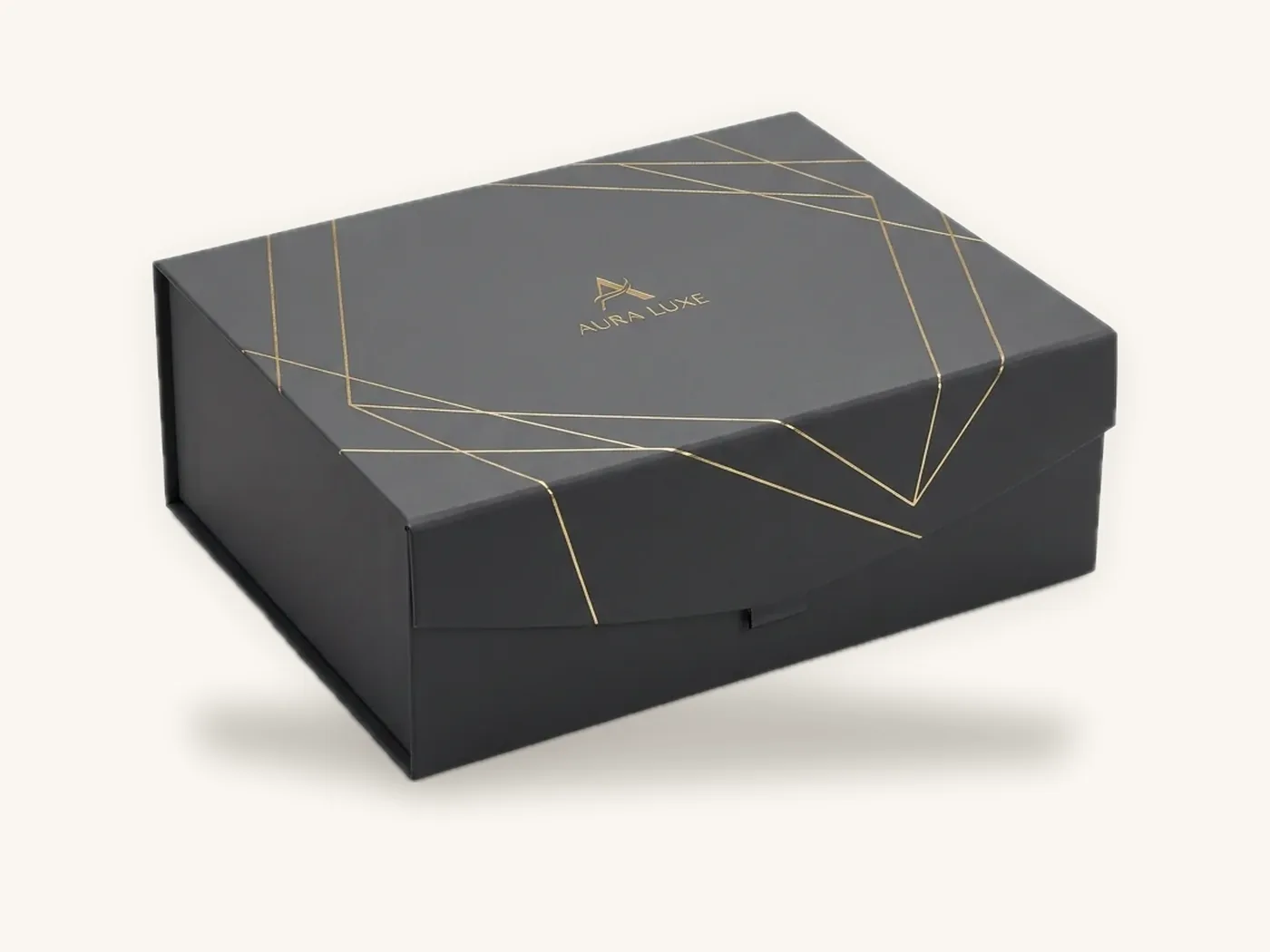
Felt and leather-grain papers have deeper peaks and valleys. Ink sits on the peaks and misses the valleys, so halftone images look speckled and small type loses its edges. Designs on these papers work best as solid shapes, a single large logo, and foil or debossing. The payoff is a surface that feels unmistakably crafted.
Pearlescent and metallic papers
These papers have a mica or metallized coating that shifts with viewing angle. They suit fragrance and beauty, where shimmer supports the product. Printed colors take on some of the sheen, so proof brand colors on the actual paper. Fingerprints can show on some pearlescent grades more than on linen.
How specialty papers behave on a rigid box
A rigid box is made by gluing a wrap sheet around greyboard trays and lids, then folding the wrap over the edges and into the inside. That process puts stresses on paper that a flat print never sees. Here is what to watch.
Corners and folds
At each corner, the wrap folds over a sharp board edge. Heavy or stiff specialty papers can crack there, and textured papers can show whitening where the fibers stretch. Lighter wraps in the 100 to 120 gsm range fold more cleanly; heavier stocks in the 140 to 150 gsm range feel more substantial but need careful corner design. Dyed-through papers hide minor corner stress because the color continues through the sheet.
Grain direction
Paper has a grain, the direction most fibers run. It folds more easily and cleanly along the grain. For long boxes, the wrapping team orients the grain so the main folds run with it. You do not need to specify this, but it is one reason samples on the actual paper matter.
Adhesive and moisture
Rigid boxes are wrapped with water-based glues. Some uncoated and felt papers absorb moisture and can stretch slightly, then shrink as they dry, which occasionally shows as bubbling or tight corners. Coated and pearlescent papers are more dimensionally stable. Experienced wrapping lines adjust glue for each paper, and a sample confirms the result.
Board wrap-around and inside lining
Most wraps turn over the box edge and finish inside, where a liner paper covers the join. The liner can be plain, printed or a contrasting specialty paper. A contrasting inside liner is an inexpensive way to add surprise without changing the outer stock.
Watch out: very dark textured papers, especially deep black felts and leather-grains, show pale scuff marks when boxes rub together in cartons. Ask for boxes to be packed with interleaving sheets or individual poly sleeves for shipping, and handle samples with clean hands before judging them.
Decoration on textured stocks: what works
Specialty papers are rarely printed heavily. Most of the design is done with decoration. How each technique performs depends on texture depth.
| Technique | Smooth specialty (pearl, uncoated colored) | Fine texture (linen, laid) | Deep texture (felt, leather-grain) |
|---|---|---|---|
| Full-color CMYK | Good | Fair; images soften | Poor; images look speckled |
| Spot color / PMS | Good | Good for solids and type | Fair for large solids only |
| Hot foil stamping | Excellent | Very good | Good on bold shapes; fine lines may break |
| Blind embossing or debossing | Very good | Excellent | Excellent; deboss flattens texture for contrast |
| Spot UV | Good | Fair; gloss follows the texture | Poor; uneven sheen |
| White ink or white foil | Good on dark papers | Good | Foil preferred over ink |
Foil stamping on texture
Hot foil works by heat and pressure pushing a metallic layer onto the paper. On deep textures, the valleys may not make full contact, which leaves a slightly broken, antique look on fine lines. That can be charming, but it is a problem for thin serif logos. Increasing line weight, simplifying the mark, or debossing and foiling together (so the foil is pressed into a flattened area) solves it. Our foil stamping guide covers foil colors and minimum line weights.
Debossing as the signature move
Debossing presses the design into the paper and flattens the texture inside the shape. On felt or leather-grain, that creates a smooth recessed logo inside a textured field, which reads as expensive without any ink. Embossing and debossing both carry one-time tooling for the plate.
Lamination and texture do not mix
Laminating a textured sheet flattens and hides the texture, which defeats the purpose. If you want protection and a premium feel on a printed box, compare smooth art paper with matte or gloss lamination or soft-touch instead.
Matching specialty paper boxes to brand stories
A paper should reinforce what the product is about. These hypothetical pairings show how brands usually reason about it.
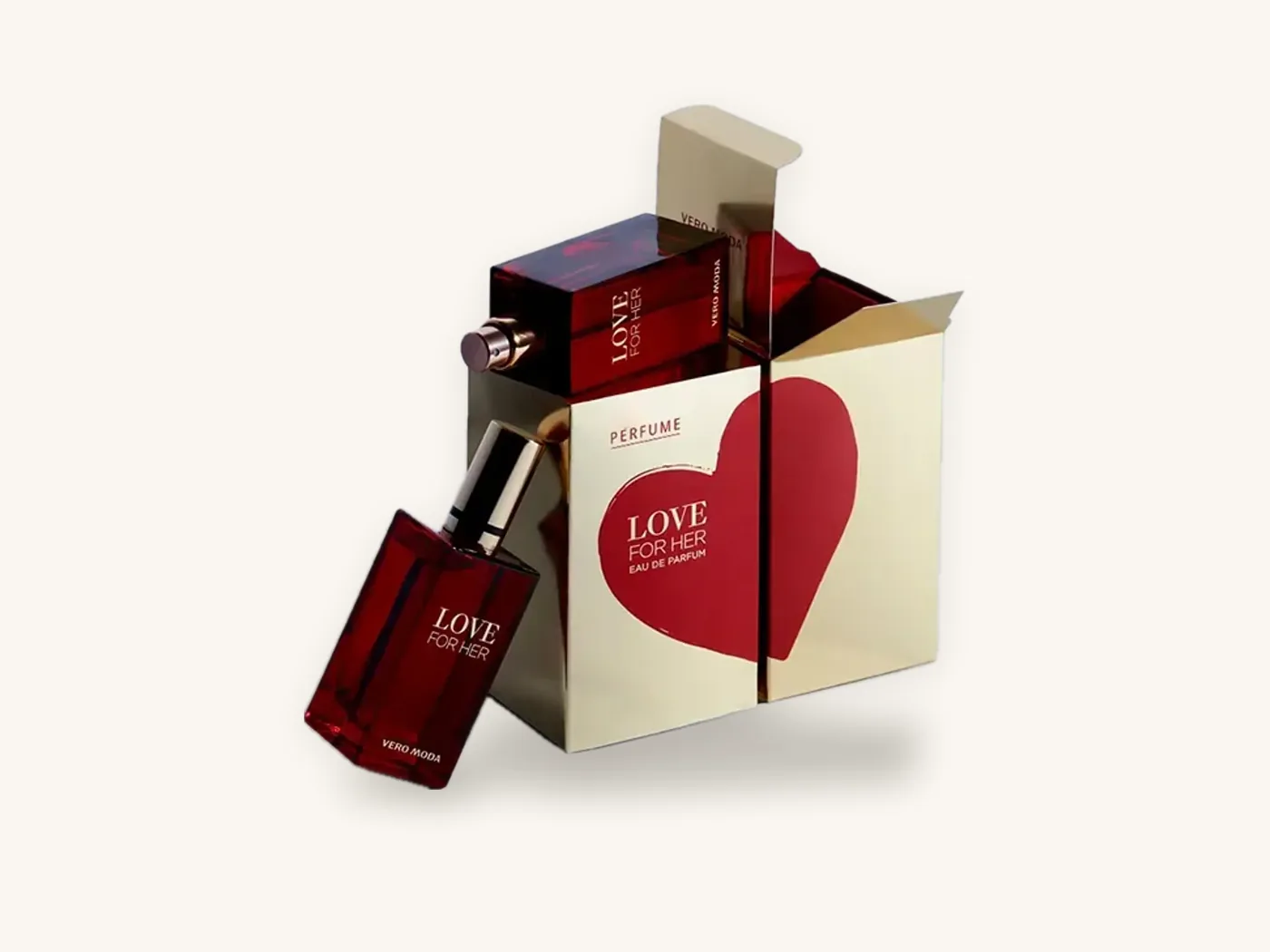
- A small-batch fragrance house selling a 50 ml bottle might choose an ivory pearlescent wrap with a single gold foil wordmark and a contrasting inside liner. Shimmer echoes the glass bottle, and the foil carries the brand. See perfume boxes.
- A fine jewelry brand might choose a navy linen wrap with a blind-debossed monogram on a magnetic closure box. Linen hides fingerprints from repeated opening.
- A whisky or spirits gift set often suits black felt or leather-grain with copper foil, using a sturdy two-piece box and a molded or foam insert.
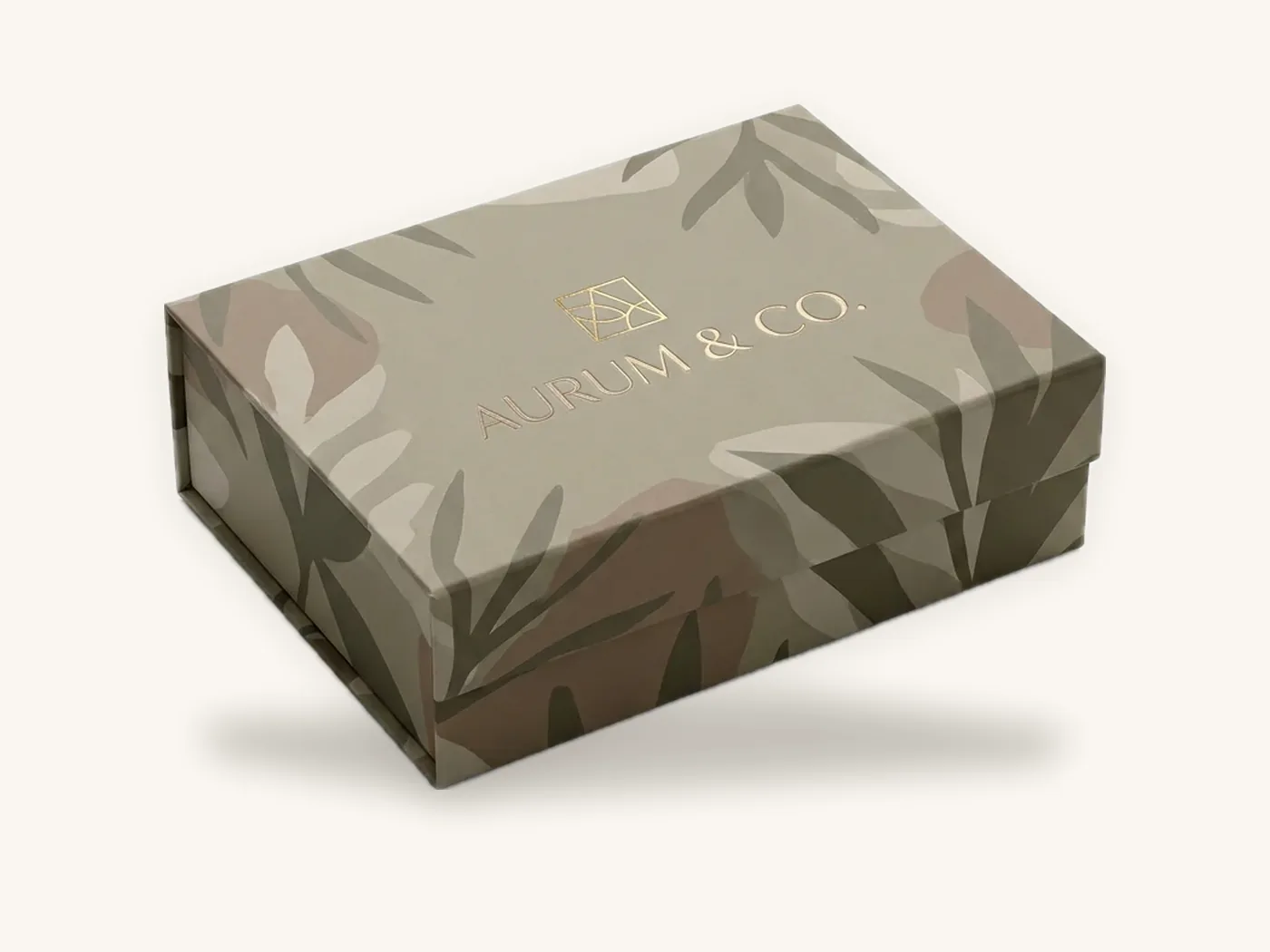
- An organic tea or wellness line might use a recycled fiber-inclusion paper with a one-color print, which signals natural materials without looking plain.
- A stationery or pen brand might use a laid paper with a deboss, recalling traditional writing papers.
For more on building a full premium unboxing sequence, our luxury packaging guide covers structure, inserts and finishing together. Fragrance brands can also browse fragrance and perfume packaging.
Durability, consistency and practical limits
Specialty papers are beautiful, but they come with trade realities worth planning for.
Color and lot variation
Dyed papers can vary slightly in shade between production lots at the mill. For a single run, this is invisible. Across reorders months apart, a navy may read a touch warmer or cooler. If exact color continuity matters, reorder in larger quantities or accept small variation as part of a natural material.
Fading and light
Some dyed uncoated papers fade with long exposure to direct sunlight or strong store lighting. For window displays, ask about lightfastness, or choose coated and pearlescent grades, which usually hold color better.
Scuffing and fingerprints
Linen and fine textures are the most forgiving. Smooth dark uncoated papers and deep blacks show handling marks most. Pearlescent papers vary by grade.
Availability for short runs
Specialty stocks are sold by paper merchants in sheet quantities, and not every color is always in stock. For short runs, choosing from readily available colors keeps lead time predictable. Your quote confirms paper availability for your chosen stock.
What textured rigid boxes cost
Wrapping paper is only part of a rigid box price. Greyboard, box size, wrapping labor, inserts, decoration and quantity usually matter more. As a baseline, here are wrapped rigid specs from our current rates, with free US shipping included.
| Spec | 10 | 100 | 500 | 1,000 | 5,000 |
|---|---|---|---|---|---|
| Jewelry rigid box, 2 mm, 3x3x1.5 in, matte, foil, insert | $5.06 | $3.35 | $1.79 | $1.49 | $1.06 |
| Rigid box, 2 mm greyboard wrapped, 8x6x3 in, full color, matte | $13.76 | $9.10 | $4.85 | $4.05 | $2.87 |
| Rigid magnetic box, 2 mm, 10x8x3 in, soft-touch, foil, insert | $21.50 | $14.23 | $7.59 | $6.32 | $4.49 |
A specialty wrap in place of printed art paper changes the price by a margin that depends on the specific stock and how much printing it replaces. On a texture-led design with no full-color printing, the difference can be modest. Run your size through the rigid box estimator, then ask us to price the exact paper in your quote.
Ways to get the texture for less
- Use texture only on the lid and a standard paper on the base.
- Keep the outside texture and use a plain liner inside.
- Pick a fine linen rather than a rare deep felt, which is often easier to source.
- Replace printing with one foil and a deboss, which suits texture better anyway.
- Try a textured sleeve over a simpler box, as with sleeve and tray boxes.
Sustainability of specialty papers
Many specialty papers are paper-only and recyclable in the same stream as the greyboard beneath them, which is typically made from recycled fiber. Recycled and fiber-inclusion papers, and FSC-certified options, are available. Metallized, film-laminated and some pearlescent papers include non-paper layers, and fabric or faux-leather wraps are not paper at all, so check how they affect recyclability before making a claim. Magnets, ribbons and foam inserts should be removable. The FTC's Green Guides set expectations for environmental claims, so review current guidance before printing one.
How to order textured paper packaging from Box Sense
We wrap rigid boxes, magnetic closure boxes, drawer boxes and sleeves in specialty papers at our own facility.
What to send
- Box style and internal dimensions, or product dimensions and weight
- Paper family and color, or the mood you want so we can suggest stocks
- Decoration: foil color, deboss or emboss, spot color or none
- Inside liner and insert preferences
- Quantities to price, for example 100, 500 and 1,000
- Target in-hand date and shipping destination
- Logo files as vector artwork, or a request for help from our design services team
The process
- Quote within 24 hours, including paper availability for your stock.
- Free design support: dieline, artwork setup and a 3D digital proof, with two revision rounds.
- Samples: unprinted structural samples are free. A printed sample of approved artwork is free on orders of 100 or more. See samples.
- Production: standard production takes 8–12 business days after proof approval.
- Delivery: free shipping on every US order, and international shipping quoted at cost.
The minimum order is 10 boxes. There are no die or plate charges; foil, embossing and custom inserts carry one-time tooling. Defective boxes reported within 14 days are reprinted free. See textured and specialty papers and rigid greyboard for material details.
Frequently asked questions
What is textured paper packaging?
Textured paper packaging uses specialty papers with a tactile surface, such as linen, felt, laid or leather-grain finishes, to wrap rigid boxes, sleeves and cases. The texture adds a premium feel before any printing is seen. It is common for fragrance, jewelry, spirits and luxury gifts, and it usually pairs with foil stamping or debossing rather than heavy full-color print.
Can you print full color on textured paper?
You can, but results depend on texture depth. Fine textures such as linen reproduce bold graphics and moderate type reasonably well. Deep textures like felt and leather-grain cause halftone images to look speckled and fine type to lose sharpness. For photographic artwork, a smooth art paper with lamination is usually the better choice, while textured papers suit logos, solid colors and foil.
What is a linen paper box?
A linen paper box is a rigid or folding box wrapped or made with paper that has a fine crosshatch pattern resembling linen cloth. It is one of the most popular specialty finishes because it looks refined, hides fingerprints, takes foil stamping cleanly and still prints bold graphics. Linen papers come in many colors and are widely used for jewelry, stationery and gift packaging.
Does foil stamping work on textured paper?
Yes, foil stamping works well on most specialty papers. On fine textures, results are crisp. On deep textures, foil may not reach the valleys of the surface, so very thin lines can look broken. Thicker line weights, simplified logos or combining foil with a deboss, which flattens the texture under the design, give clean results. Always test on the actual paper.
Are specialty paper boxes recyclable?
Many are. Paper-only specialty wraps over recycled greyboard can usually be recycled as paper once magnets, ribbons and foam inserts are removed. Metallized papers, film-laminated stocks, fabric and faux-leather wraps contain non-paper materials and may not be accepted. Recycling rules vary by local program, so check before making a recyclable claim on the packaging.
Why do black textured boxes get scuffed?
Dark dyed and textured papers show abrasion as pale marks because rubbing lifts or polishes surface fibers, which reflect light differently. It happens when boxes rub together in cartons or during handling. Interleaving sheets or individual sleeves during shipping help. If scuffing is a concern, a fine linen finish or a mid-tone color is more forgiving than deep black felt.
How much more does specialty paper cost than standard paper?
It depends on the stock, its availability, and how much printing it replaces. On rigid boxes, greyboard, size, labor, inserts and quantity usually drive price more than the wrap. For reference, a 2 mm wrapped 8x6x3 in rigid box printed full color with matte finish is about $4.05 each at 1,000 units. Ask for a quote on the exact paper.
Next steps
Pick a paper family and one decoration, then check your size in the rigid box price estimator. When you are ready, request a quote for textured rigid boxes and we will confirm paper availability and pricing within 24 hours, then send a free structural sample.
Boxes in this guide
Order the packaging we covered
Written by the Box Sense Packaging Team
Our structural designers, prepress technicians and production staff print and convert custom boxes every day for brands in the United States, United Kingdom and UAE. Questions about this guide? Talk to us.