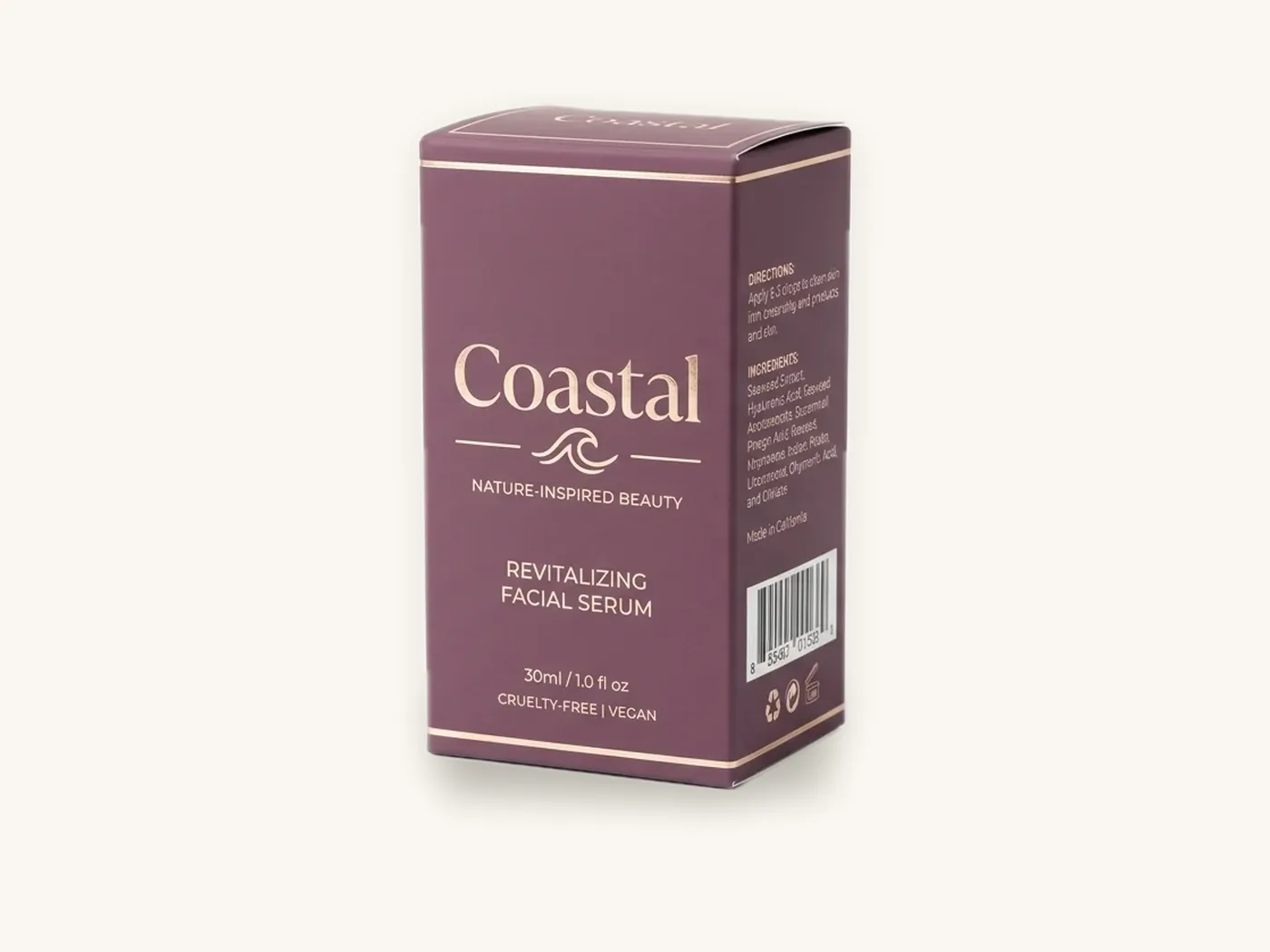
Soft touch lamination is a thin polypropylene film with a specially treated surface that gives printed packaging a velvety, almost suede-like feel and a deep, low-glare look. It is bonded over the printed sheet before the box is cut and folded, so the whole outer surface feels the same wherever a customer picks it up.
Brands choose it because feel is processed before the eye has finished reading the box. A soft-touch carton or rigid lid tells the customer "this was considered" in the first second of handling. The tradeoffs are real, though: it costs more than standard film, it softens color, and on dark designs it can show rub marks. This guide covers all of it, including how to pair soft touch with foil so both look their best.
Key takeaways
- Soft touch lamination is a film; a soft touch coating is a liquid. The film is more consistent and durable, the coating is thinner and simpler.
- The velvet feel comes from a micro-textured surface that scatters light, which also makes colors look softer and darks slightly lighter than on gloss.
- Soft touch can burnish or show pale rub marks, especially on dark solid colors in shipping. Plan artwork and outer packaging with that in mind.
- It is an excellent base for foil stamping and spot UV, but always check foil adhesion and edge sharpness on a printed sample.
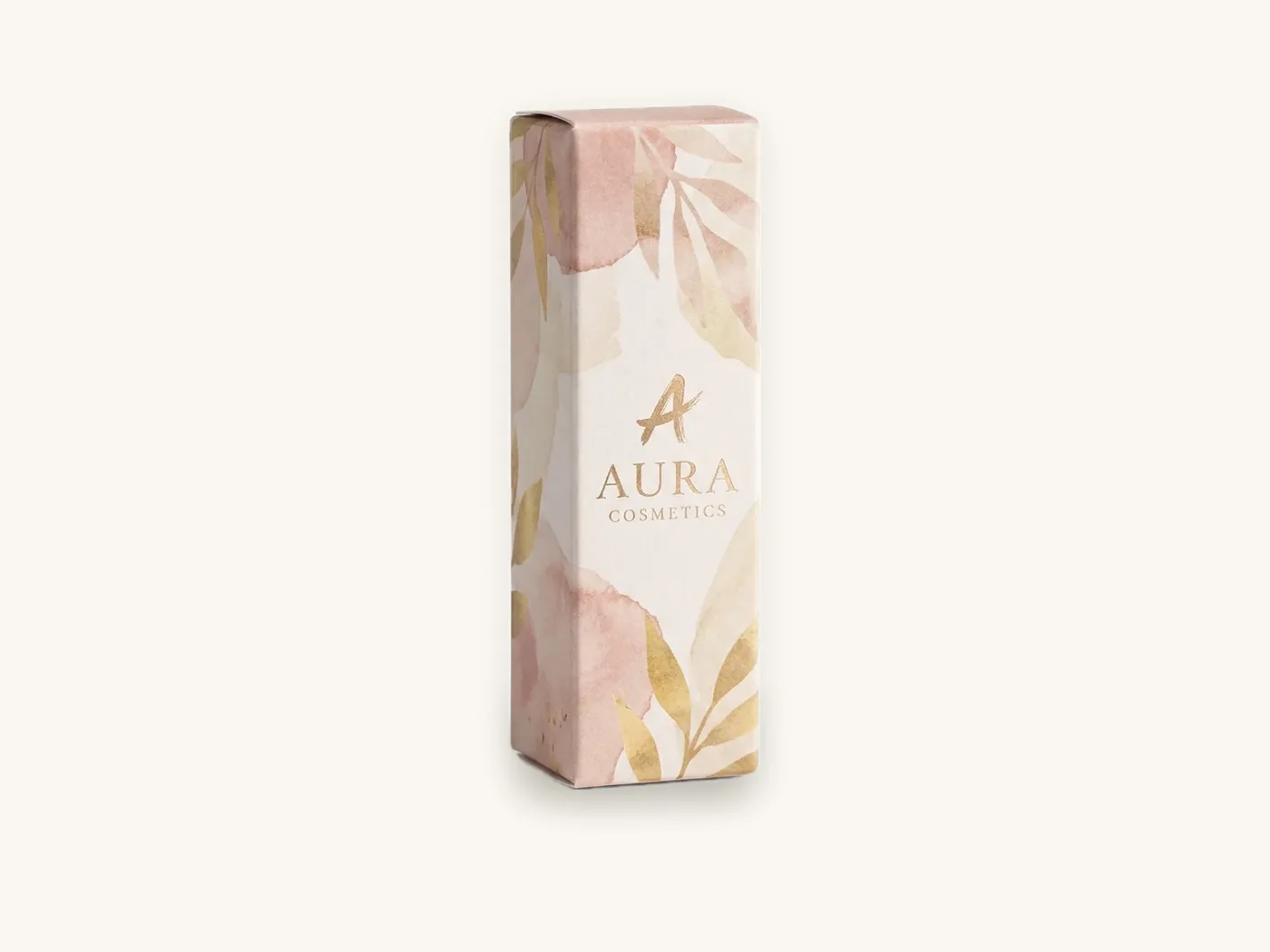
- A cosmetic carton, 18 pt SBS, 2.5x2.5x6 in, full color with soft-touch and foil runs about $1.93 each at 100 units and about $0.86 at 1,000.
- Best on SBS cartons and rigid box wraps; rarely the right choice for kraft or direct-printed corrugated.
What soft touch lamination actually is
Standard lamination bonds a clear polypropylene film to a printed sheet. Soft-touch film uses the same base but has a surface layer engineered to feel soft and slightly grippy. Under magnification the surface is not smooth; it has a fine, uniform texture that both changes the friction against your fingertips and diffuses reflected light.
The film goes on after printing and before die-cutting. Heat and pressure activate the adhesive, the sheet is trimmed, and only then is it cut into the box shape. That order matters: it is why the finish wraps evenly over panels and folds on a carton, and why the whole printed side gets the same feel.
Soft touch coating vs soft touch lamination
You will hear both terms, sometimes used interchangeably. They are different products.
| Soft touch lamination (film) | Soft touch coating (liquid) | |
|---|---|---|
| How applied | Film bonded with adhesive and heat | Liquid applied on press or on a coater, then cured |
| Feel | Consistent velvet feel across the sheet | Soft feel, can vary with coat weight |
| Scuff and moisture resistance | Higher; film is continuous | Lower; closer to a heavy varnish |
| Fold behavior | Good on well-scored board | Very good; almost no added thickness |
| Typical use | Premium cartons, rigid box wraps | Short digital runs, some specialty papers |
| Recyclability | Adds a plastic layer | Less non-paper material |
For most premium boxes, lamination is the better buy. The feel is more reliable from the first box to the last, and the film protects the print underneath. A coating makes sense when you need a softer hand on an uncoated or textured stock where film would flatten the texture.
Why the velvet finish feels premium
Touch is the least crowded sense in packaging. Most boxes on a shelf are either glossy or papery, so a surface that feels warm and soft stands apart before the customer reads a word of copy.
The sensory mechanics
A glossy surface is smooth and cool, and your fingers slide across it. A soft-touch surface has slightly more drag and feels warmer because the textured layer reduces direct contact area. People describe it as velvet, suede, peach skin or rubbery. The first three are what you want; "rubbery" usually means a coat that is too heavy or a film that picked up oils.
Where velvet finish packaging earns its cost
- Handled at point of sale. Skincare, fragrance and color cosmetics are picked up and turned over in-store, so the feel is experienced repeatedly.
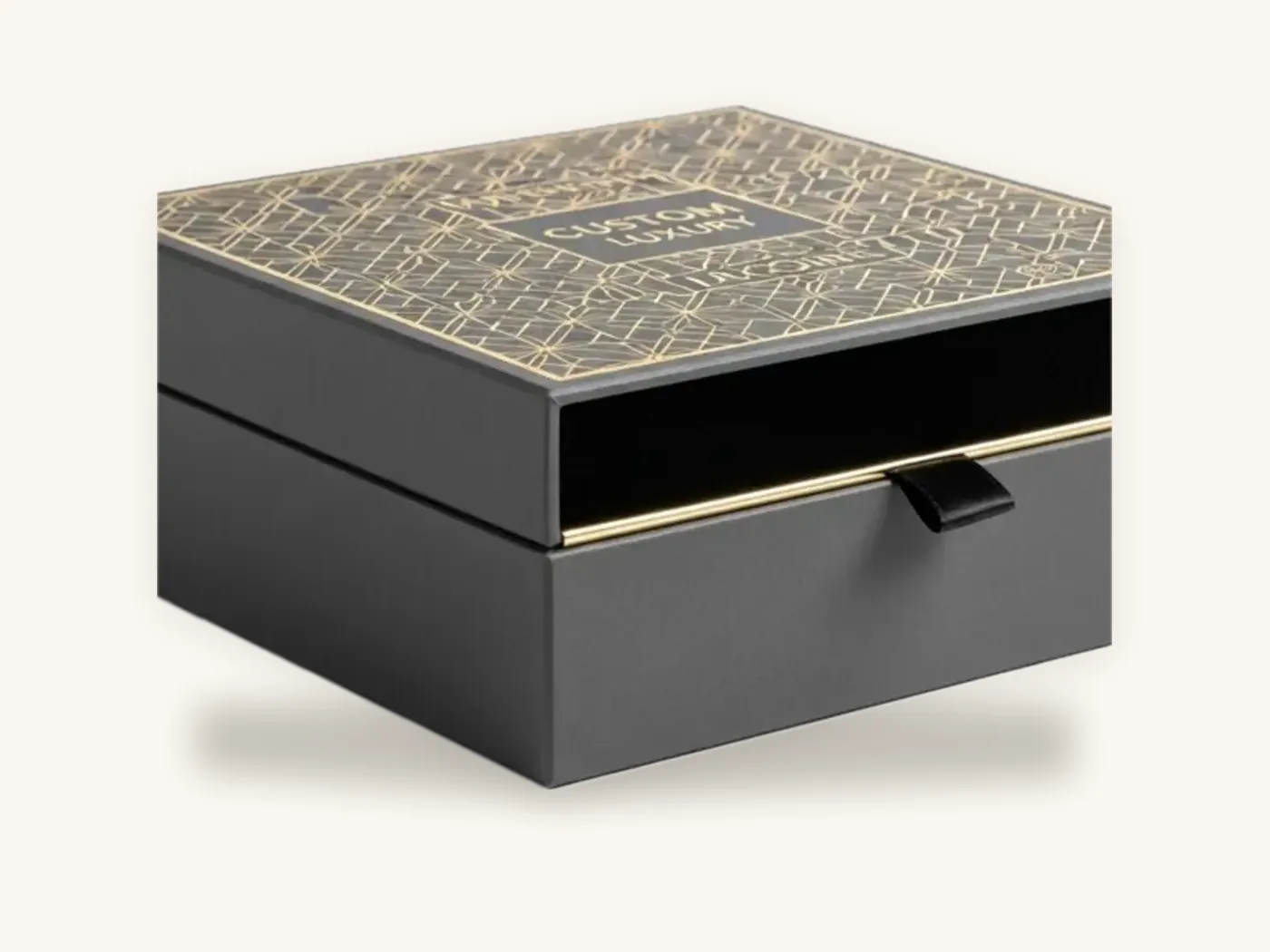
- Gifted or kept. A magnetic closure box or jewelry box is opened many times, and the soft feel becomes part of owning the product.
- Minimal designs. When artwork is sparse, finish carries more of the brand story. A one-color logo on a soft-touch black carton does a lot with very little ink.
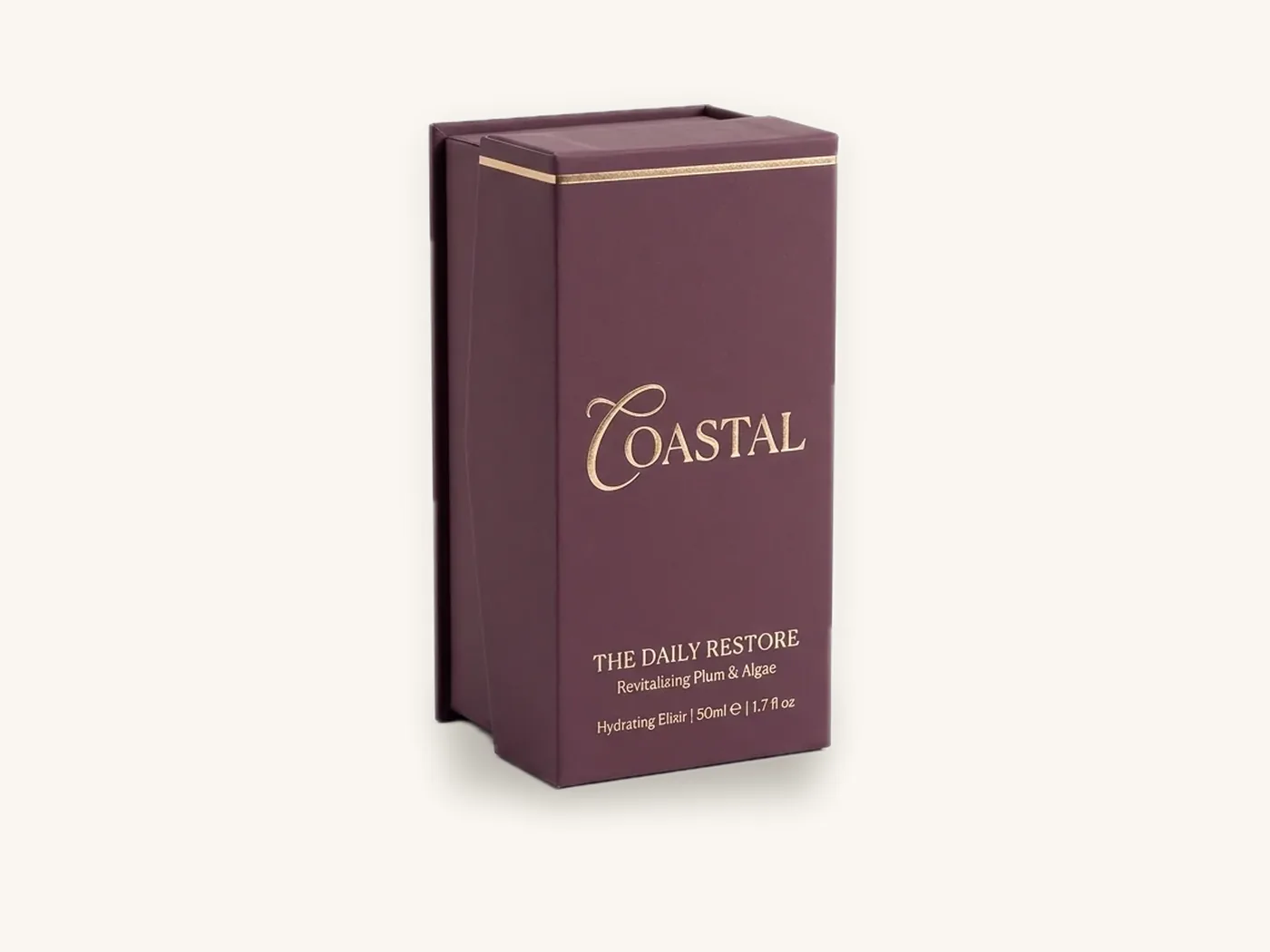
- Dark and deep palettes. Soft touch turns black, navy, forest green and burgundy into rich, matte fields without the glare of gloss.
It earns less on boxes that live in a warehouse, get overboxed, or are thrown away within seconds of opening.
How soft touch lamination changes your colors
Every clear layer changes color, and soft touch changes it more than most. Understanding the direction of the shift lets you design for it instead of being surprised on the sample.
The direction of the shift
Because the surface diffuses light, fewer reflections reach the eye directly. The practical results:
- Saturation drops slightly. Bright reds, magentas and oranges look calmer and less electric than on gloss.
- Deep solids can lift. A rich black can read as very dark charcoal, and navy can look a touch dustier.
- Pastels soften further. Light pinks and pale blues can look chalky if they were already low in saturation.
- Metallic inks lose sparkle. Printed metallic effects under the film look flat; foil stamped on top keeps its shine.
Designing around the shift
Push dark solids a little richer in the artwork, for example with a rich black build rather than 100% black ink alone, so the finished surface still reads as black. Proof important brand colors with the film applied rather than on a bare print. If a brand color must hold exactly across different boxes and finishes, read our guide to CMYK vs Pantone for packaging, which covers matching and proofing across boards.
Tip: when you approve a soft-touch sample, look at it under the lighting where it will be sold or unboxed. Warm retail spots, daylight and cool office LEDs all change how the diffused surface reads, and dark colors shift the most.
Scuffing, burnishing and fingerprints: the honest drawbacks
Soft touch has a reputation problem that comes almost entirely from one issue: marking. Knowing why it happens is the best way to prevent it.
What burnishing is
When a soft-touch surface is rubbed hard against another surface, the fine texture is locally flattened. The flattened area reflects more light, so it shows up as a shiny or pale streak. On a black or navy panel it can be very visible. It is not a tear in the film; it is a change in texture.
Where marks come from
- Box-on-box rubbing in transit. Cartons packed tightly in a shipper vibrate against each other for hours.
- Conveyor and chute contact. Unprotected retail cartons in parcel networks drag across surfaces.
- Oily hands and lotion. Skin oils and cosmetic residues can leave darker fingerprints that are hard to wipe off without leaving a mark.
- Sharp stacking edges. A corner of one box pressing into the face of another leaves a line.
How to reduce marking
| Risk | What to do |
|---|---|
| Rubbing in shipper cartons | Use dividers, tissue or a sleeve; pack cartons snugly so they do not vibrate |
| Dark flood colors on large panels | Break up the field with a pattern, a spot UV motif or a lighter secondary color |
| Direct-to-consumer shipping | Put the soft-touch carton inside a printed custom mailer box rather than shipping it bare |
| Handling in-store | Choose a mid-tone base; light and mid tones hide marks far better than black |
| Cleaning | Wipe gently with a dry microfiber cloth; avoid solvents and heavy pressure |
Newer anti-scuff soft-touch films are more resistant than older generations, but none is marking-proof. If your design is a large black panel and the box ships bare, consider matte lamination instead and use a tactile accent for the premium cue.
Watch out: a soft-touch box packed face to face in a master carton without separation can arrive with pale rub lines, even when every box left the line perfect. Specify dividers or sleeves at the quote stage, not after the first delivery.
Pairing soft touch with foil, spot UV and embossing
Soft touch is one of the best bases for decoration because it is so understated. A metallic or glossy accent has nothing competing with it. The pairing still needs some care.
Soft touch and foil stamping
Foil on soft touch is the signature luxury combination: a bright, crisp metallic logo sitting on a deep velvet field. The contrast is stronger than foil on gloss because the surrounding surface absorbs light.
The textured surface can make foil adhesion less forgiving than on a smooth matte film. What helps:
- Use a foil suited to laminated surfaces. Your printer selects this; ask whether it has been run on the specific soft-touch film.
- Keep fine detail reasonable. Very thin serifs, hairlines and tiny type can fill in or break up. Bold marks foil more cleanly.
- Avoid very large solid foil areas. Big foil blocks are more prone to small voids on textured film. Patterns and outlines usually look better anyway.
- Check on a printed sample. Rub the foil gently with a thumb and check the edges under a loupe or phone camera zoom.
The foil stamping guide covers foil colors, holographic options and minimum line weights in detail.
Soft touch and spot UV
Spot UV over soft touch creates a strong feel-and-look contrast: glossy, smooth areas against velvet. Customers often run a finger over the logo to feel the change. Registration and file setup are covered in the spot UV design guide. The main point for soft touch is adhesion: the UV varnish needs to be compatible with the film, so this is another reason to confirm with a sample.
Soft touch and embossing
Embossing works well on soft-touch cartons and rigid wraps. The film stretches with the relief, and the velvet surface catches soft shadows at the edges. Keep relief moderate on thin cartons so the film does not stress at sharp edges. See the embossing and debossing guide for depth and board advice.
Which boxes and boards suit soft touch
Soft touch performs best on smooth, bright paperboard and on the wrap paper of rigid boxes. It is less suited to natural and fluted surfaces.
| Board or box type | Suitability | Notes |
|---|---|---|
| SBS folding cartons | Excellent | Smooth surface, crisp folds; ideal for cosmetic boxes |
| Rigid box wrap paper | Excellent | Film protects corners; feel is experienced every opening |
| Magnetic and drawer rigid boxes | Excellent | Frequently handled, kept long term |
| E-flute mailers with printed liner | Good | Works on laminated outer liners; watch flute lines on dark solids |
| Direct-printed corrugated | Poor | Surface is too uneven for a consistent feel |
| Uncoated kraft | Poor | Film hides the natural texture that makes kraft attractive |
| Textured specialty papers | Fair | A soft touch coating may preserve texture better than film |
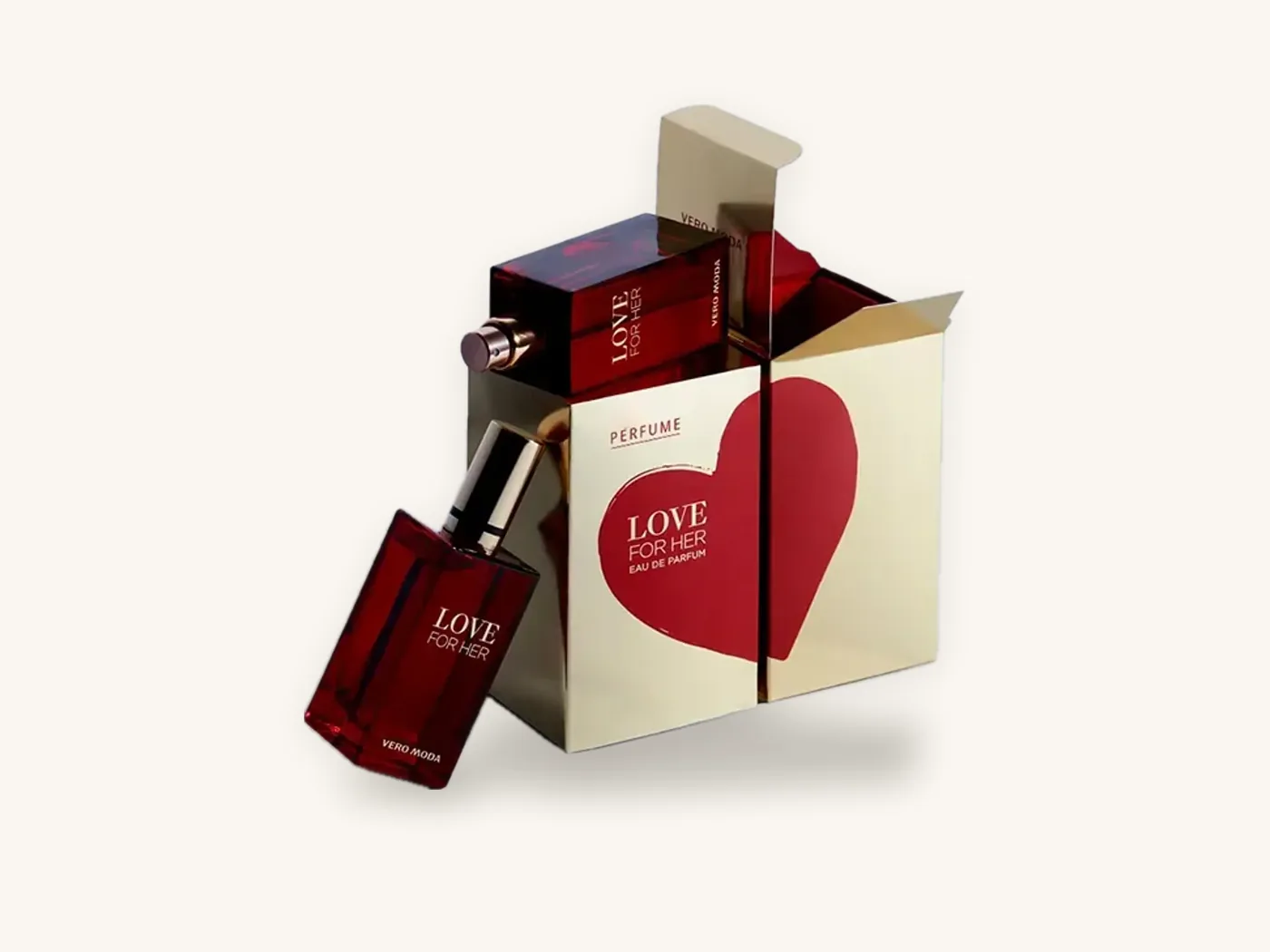
Our SBS paperboard page lists calipers that fold well under film, and the rigid boxes style page shows the constructions most often wrapped in soft-touch paper. For fragrance specifically, perfume boxes commonly combine soft touch, foil and a fitted insert.
Scoring and fold quality
Film adds a little stiffness. On paperboard cartons, correctly set scoring rules prevent the film from lifting or whitening at the fold. If you see cracking along a crease on a sample, that is a scoring adjustment, not a reason to abandon the finish. Tolerances for creases and cuts are explained in packaging print tolerances.
Soft touch lamination cost and when it is worth it
Soft-touch film costs more than matte or gloss film, and it runs a little more slowly. There is no tooling for the lamination itself. Foil, embossing and spot UV, if added, carry one-time tooling at Box Sense of about $60, $60 and $40.
Price examples
These indicative per-unit prices include free US shipping. Get your own spec from the price estimator.
| Spec | 10 | 100 | 500 | 1,000 | 5,000 |
|---|---|---|---|---|---|
| Cosmetic carton, 18 pt SBS, 2.5x2.5x6 in, full color, soft-touch + foil | $2.91 | $1.93 | $1.03 | $0.86 | $0.61 |
| Rigid magnetic box, 2 mm, 10x8x3 in, soft-touch, foil, insert | $21.50 | $14.23 | $7.59 | $6.32 | $4.49 |
A quick worth-it test
Say you sell a 30 ml serum at a mid-premium price point in boutiques and online. The carton is picked up in-store, photographed by customers and kept on a bathroom shelf. Soft touch passes every test below. Now say you sell a refill pouch carton that ships inside a mailer and goes straight into recycling. It fails most of them, and aqueous coating is the smarter choice.
- Will customers handle the box before or after buying it?
- Is the product priced where perceived quality affects conversion?
- Is the design minimal or dark enough that finish carries the look?
- Can you protect the box from rubbing in transit?
- Does the box stay in view after opening, on a shelf or dresser?
Three or more yes answers usually justify the upgrade.
Sustainability considerations
Soft-touch film is a plastic layer bonded to paper. Many recycling programs accept laminated paperboard, but acceptance varies by location and facility. If sustainability messaging is central to your brand, compare soft touch with an aqueous or soft touch coating, and read our guide to food-safe inks and coatings for the paper-first options.
Do not print recyclability or compostability claims on a laminated box without checking. The FTC's Green Guides explain how environmental claims should be qualified in the US; confirm current guidance or ask counsel. FSC-certified boards and soy or water-based inks are available under the film if responsible sourcing matters to you.
How to order soft-touch boxes from Box Sense
We laminate, foil, spot UV and emboss in-house, so a soft-touch box with decoration stays in one facility and one proofing cycle.
What to include in your request
- Box style and internal dimensions
- Board, for example 18 pt SBS carton or 2 mm rigid greyboard with wrap
- "Soft-touch lamination, outside" plus any foil color, spot UV or emboss and its location
- Whether the box ships bare or inside an outer mailer, so we can advise on rub protection
- Quantities to compare, for example 100, 500 and 1,000
- Target delivery date and location
- Artwork, with foil and spot UV on separate named layers, or a request for design services
Proofing a tactile finish
A 3D digital proof confirms layout, but it cannot show feel or diffused color. For soft touch, a physical sample is worth it. Unprinted structural samples are free, and a printed sample of approved artwork is free on orders of 100 or more; see samples.
Timeline and terms
Quotes are confirmed within 24 hours. Standard production takes 8–12 business days after proof approval, with rush production in 5 business days on most paperboard styles. Orders start at 10 boxes, shipping is free on every US order, and defective boxes reported within 14 days are reprinted free.
Frequently asked questions
What is soft touch lamination?
Soft touch lamination is a polypropylene film with a micro-textured surface that is bonded to printed packaging to give it a velvety feel and a low-glare, matte look. It is applied to the printed sheet before die-cutting, so the whole outside of the box feels consistent. It is widely used on cosmetic cartons, fragrance boxes and rigid gift boxes.
Is soft touch lamination the same as matte lamination?
No. Both are low-glare films, but matte lamination feels smooth and slightly papery, while soft touch has a distinctly velvety, grippy feel. Soft touch usually looks a little deeper and softer in color, costs more and is more prone to burnish marks on dark colors. Matte is the more practical choice for boxes that ship unprotected.
Does soft touch lamination scratch easily?
It does not tear easily, but it can show rub marks. Hard rubbing flattens the fine surface texture, leaving a shiny or pale streak that is most visible on black and other dark solids. Packing boxes with dividers, choosing mid-tone colors and shipping inside an outer mailer greatly reduces the problem.
Can you foil stamp on soft touch lamination?
Yes, and foil on soft touch is a classic luxury combination because the metallic foil contrasts sharply with the velvet surface. Adhesion is less forgiving than on smooth films, so keep fine detail reasonable, avoid very large solid foil areas and approve the result on a printed sample before the full run.
How much does soft touch lamination cost?
It costs more than matte or gloss film and has no tooling on its own. As a reference, an 18 pt SBS cosmetic carton, 2.5x2.5x6 in, with full color, soft-touch and foil runs about $1.93 per box at 100 units and about $0.86 at 1,000, including US shipping. Use the pricing estimator for your size.
Is soft touch packaging recyclable?
Soft-touch lamination adds a thin plastic film to paperboard. Many programs accept laminated paperboard, but not all, so acceptance depends on the local facility. For a paper-first option, consider aqueous coating or a soft touch coating instead of film, and follow the FTC Green Guides before printing any recyclability claim on the box.
Does soft touch change the color of my artwork?
Yes, slightly. The textured surface diffuses light, so bright colors look calmer, pastels can look chalky and deep blacks may read as very dark charcoal. Designers usually build dark solids richer to compensate. Approve brand-critical colors on a sample with the soft-touch film applied, under the lighting where the box will be seen.
Next steps
If your box is handled, gifted or kept, soft touch is one of the most effective upgrades you can make. Price your carton or rigid box with and without the finish in the packaging price estimator, then request a soft-touch box quote. We will confirm pricing within 24 hours, advise on rub protection for your shipping route and prepare a 3D proof with every finish layer marked.
Boxes in this guide
Order the packaging we covered
Written by the Box Sense Packaging Team
Our structural designers, prepress technicians and production staff print and convert custom boxes every day for brands in the United States, United Kingdom and UAE. Questions about this guide? Talk to us.