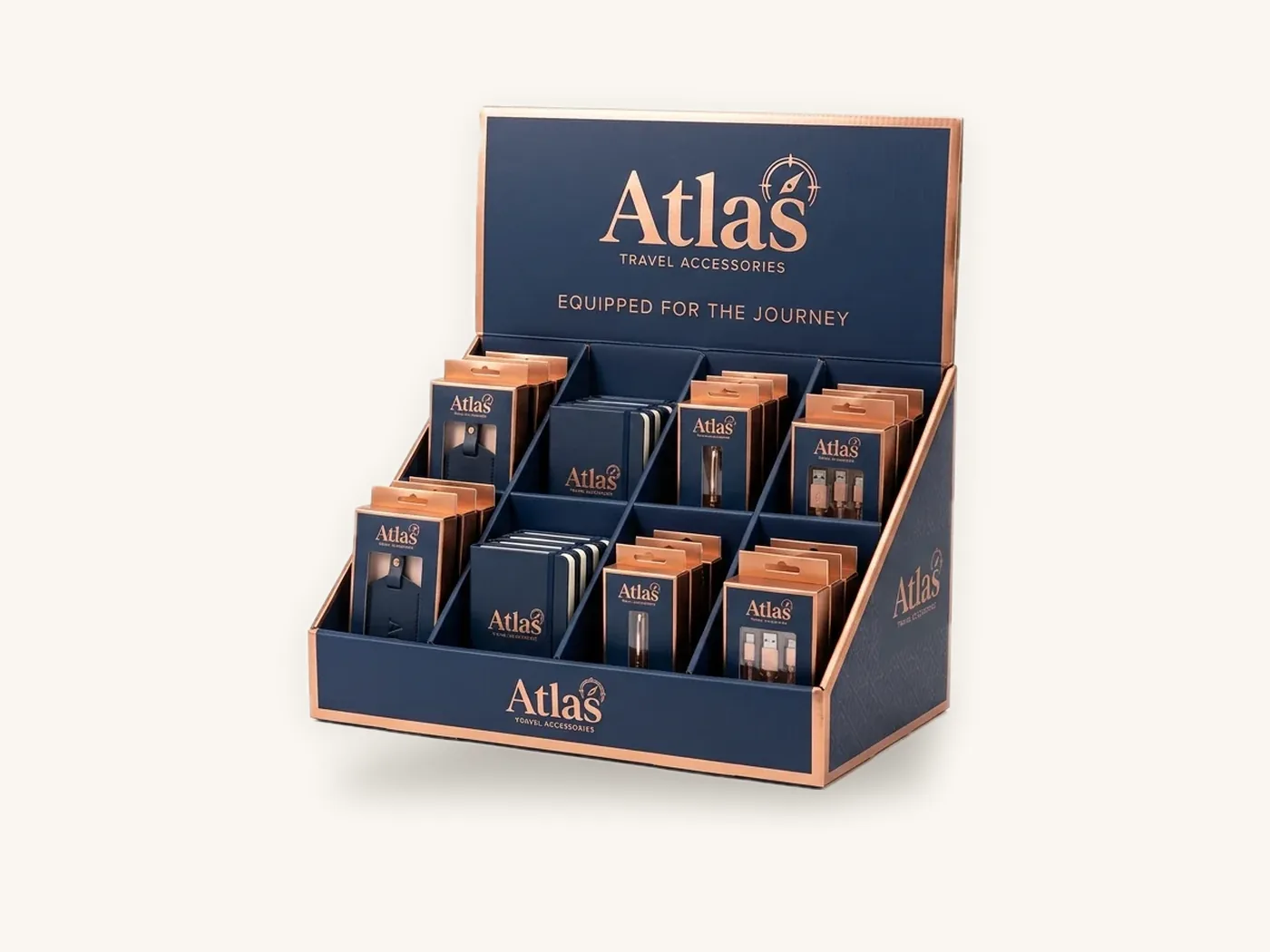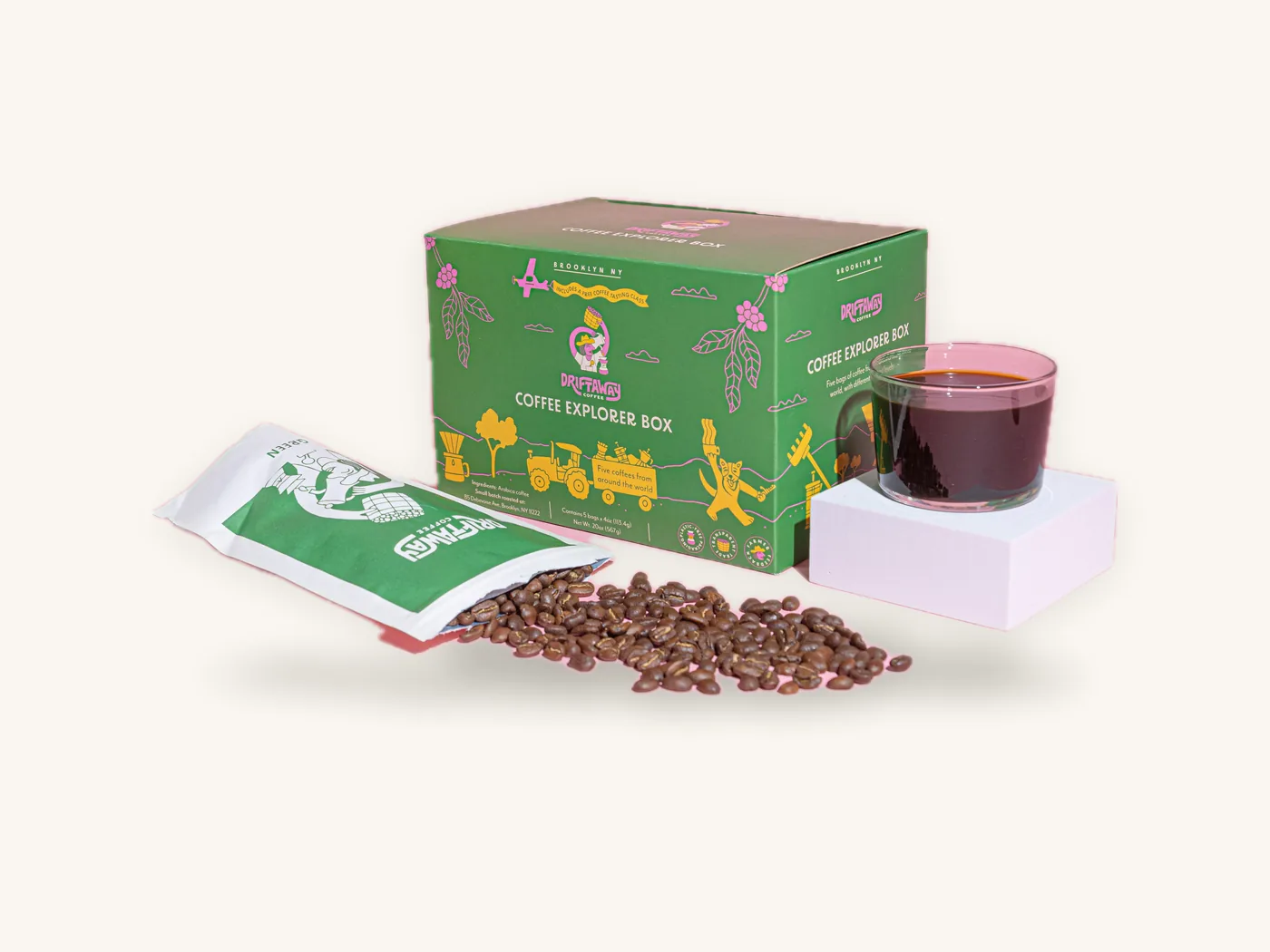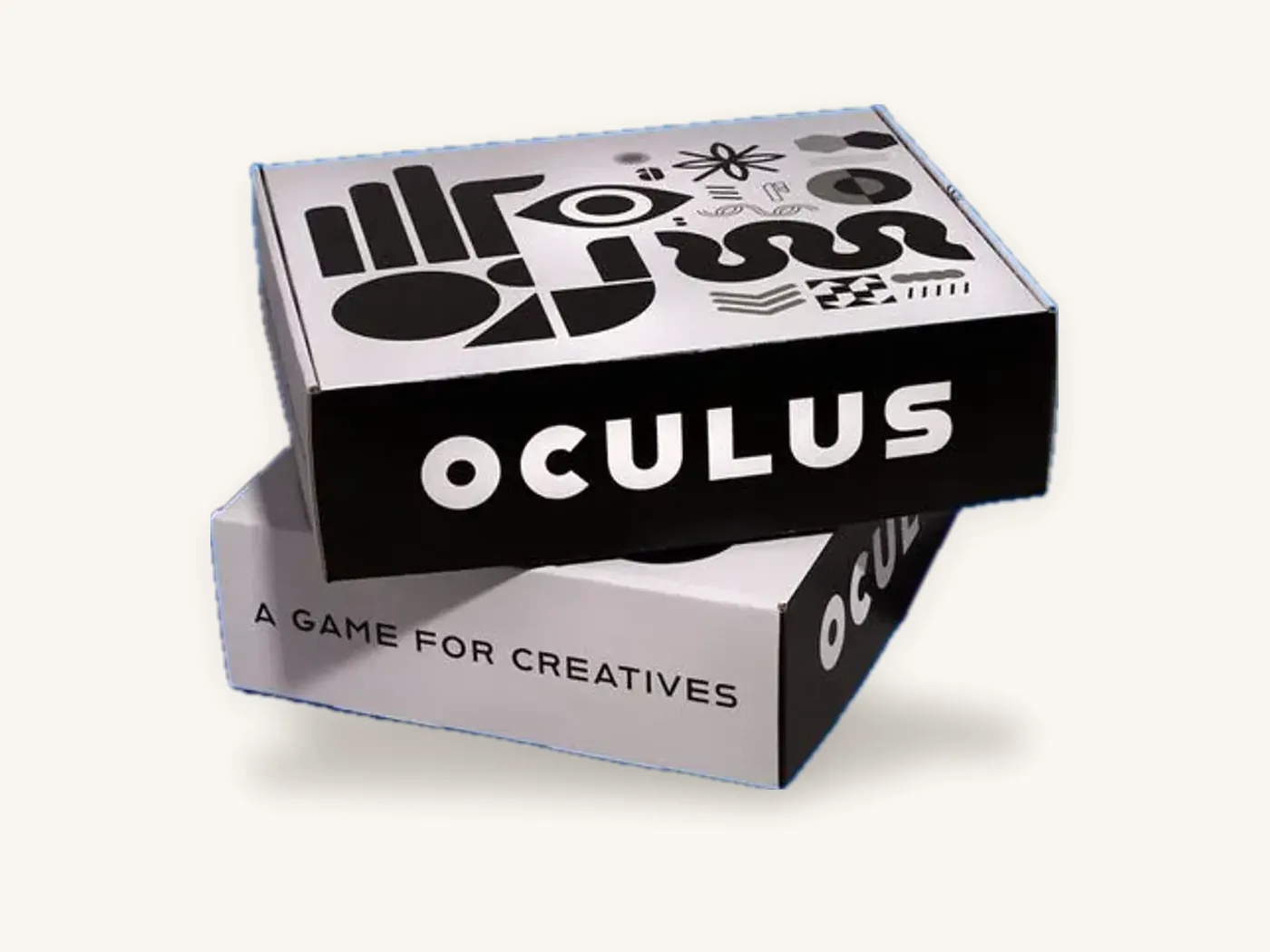
Board game packaging is almost always a two-piece rigid box: a greyboard base and a lid, each wrapped in printed paper, with an insert inside that organizes the board, cards, tokens and pieces. The box size is set by the components, not the other way around, and the most expensive mistakes in game production come from choosing a box size before the component list is final.
This guide follows the order a publisher actually works in. It starts with the component inventory, moves through box formats and lid construction, covers inserts and artwork, then planning samples, fulfillment and cost. Whether you are self-publishing a card game or preparing a crowdfunded strategy game, it will help you write a clear spec for a custom game box.
Key takeaways
- Finalize components before sizing the box. The folded game board usually sets the footprint, and the thickest stack of components sets the depth.
- Two-piece rigid boxes with greyboard of roughly 1.5 to 2.5 mm are the standard for board games; tuck boxes and small two-piece boxes suit card games.
- A full-depth lid protects corners and stacks better; a shallow lid shows more of the base wrap and costs a little less board.
- Paperboard inserts are recyclable and printable; foam suits miniatures; plan card wells for sleeved cards if your players sleeve.
- Game boxes need an outer shipper for parcel delivery and crowdfunding fulfillment.
- An 8x6x3 in wrapped rigid box printed full color with matte finish runs about $9.10 each at 100 units and about $4.05 at 1,000, including US shipping.
Start with the component inventory
Before you ask anyone for a quote, build a complete list of what goes in the box, with sizes and quantities. This is the document your packaging supplier sizes the box and insert from.
What to measure
| Component | What to record | Why it matters for the box |
|---|---|---|
| Game board | Folded size and folded thickness | Usually sets the box footprint |
| Rulebook | Size, page count, thickness | Often lies flat on top under the lid |
| Card decks | Card size, count per deck, sleeved or not | Sets card well width and depth |
| Punchboards and tokens | Sheet size before punching, token volume after | Unpunched sheets need flat space |
| Player boards | Size and thickness | Lie flat, often under the rulebook |
| Miniatures or wooden pieces | Largest dimensions, quantity | Drive insert height and cavity shape |
| Dice, timers, bags | Quantity and size | Small wells or a shared tray |
| Expansion space | Components planned for later releases | Leaves room to grow |
Stack the layers
Lay components in the order they would sit in the box: tray or insert on the bottom, player boards and punchboards above, the folded board and rulebook on top. Add up the thicknesses. That stack, plus a small allowance so the lid closes flat, is your internal depth.
Choosing footprint from the board
A folding board is often the largest flat item. Square boards typically fold into quarters, and the folded board dictates the box footprint. If the board is not yet printed, choosing the fold pattern with the box size in mind can save material across the whole run.
Tip: build a rough mock box from plain cardboard at your intended internal size and physically pack every component into it, including punched tokens in bags. Tokens take far more room punched and bagged than they do on an unpunched sheet.
Game box formats by game type
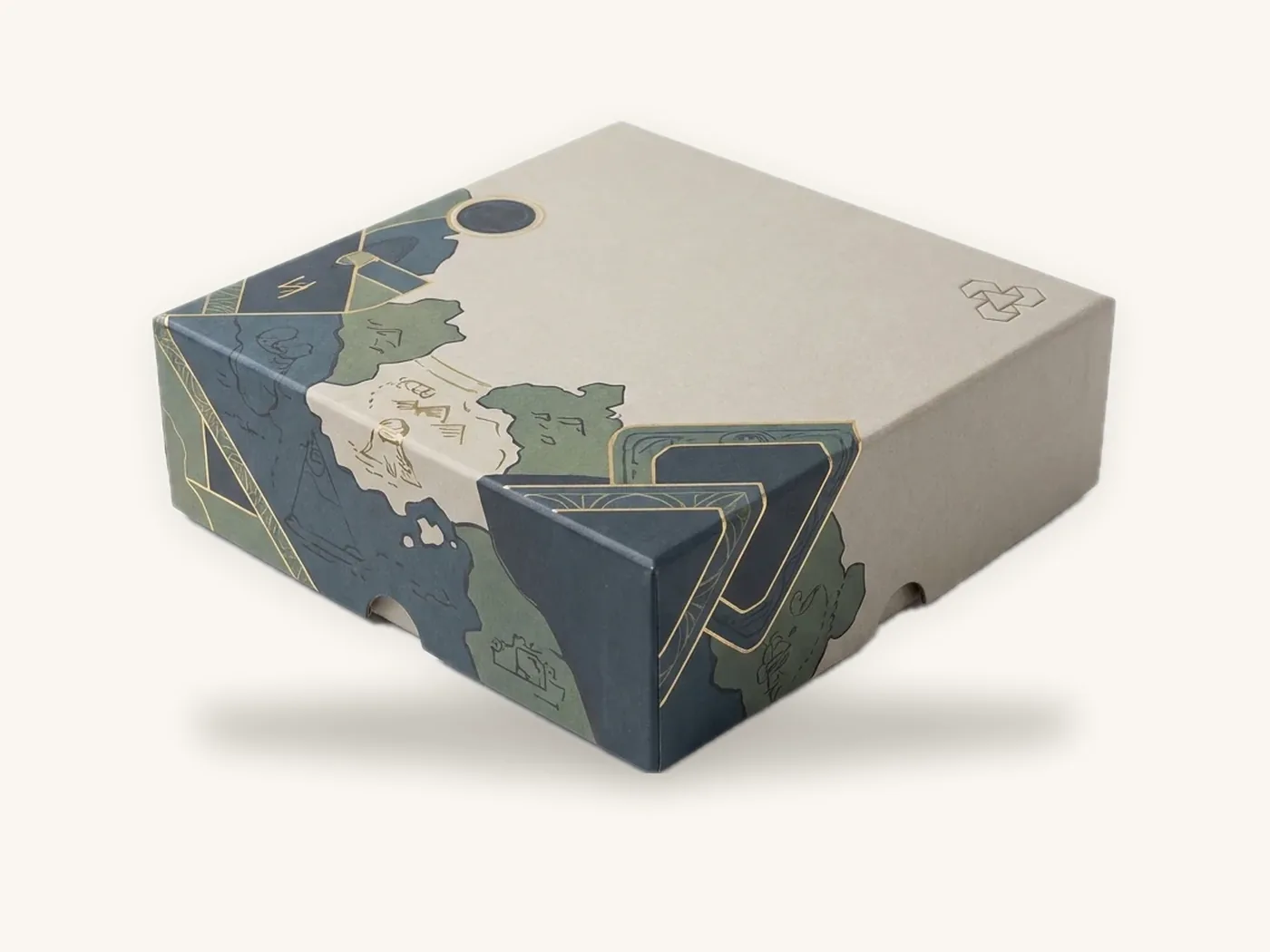
Not every game needs a large rigid box. The format should match the component count, retail price and where the game is sold.
| Game type | Typical format | Construction | Notes |
|---|---|---|---|
| Card game, small | Tuck box or small two-piece box | Paperboard or thin rigid | Pocket-friendly, low cost |
| Card game with tokens | Small two-piece rigid box | Rigid greyboard | Card wells plus a token tray |
| Family and party game | Medium two-piece rigid box | Rigid greyboard, shallow or full lid | Board plus cards and pieces |
| Strategy or big-box game | Large two-piece rigid box | Thicker greyboard, full-depth lid | Heavy; needs strong corners |
| Jigsaw puzzle | Two-piece rigid or paperboard box | Rigid or folding board | Bag inside; image on lid |
| Deluxe or collector edition | Magnetic closure or oversize rigid box | Rigid with magnets or a sleeve | Premium materials and inserts |
| Expansion | Smaller two-piece box in the same style | Rigid, matched artwork | Shelf consistency with the base game |
Card games
Small card games can use a tuck end carton or a small two-piece box. A tuck box is cheaper and fits a pocket but wears quickly. A small rigid two-piece box feels more substantial, protects cards better and holds a rulebook and a few tokens.
Standard board games
Most board games use a two-piece box: a base and a lid that lifts off. Our board game and puzzle boxes are built this way in rigid greyboard with printed wraps and inserts.
Deluxe editions and collector sets
For premium editions, a magnetic closure box or a rigid box inside a printed sleeve sets the edition apart from the retail version. These cost more but are often expected by backers who pay for a deluxe tier.
Two-piece rigid game box construction
A two-piece rigid box looks simple, but a few construction choices decide whether it feels solid, stacks well and survives years of play.
Greyboard thickness
Game boxes are built from rigid greyboard, a dense chipboard. Small and medium games often use board around 1.5 to 2 mm; large, heavy games benefit from thicker board around 2 to 2.5 mm so the base does not bow and the lid resists crushing in stacks. Ask for a sample in your intended thickness and press on the lid center to check for flex.
Lid depth: full telescope or shallow lid
A full-depth lid reaches all the way down to the table and covers the base completely. It stacks strongly, protects the base wrap and is common on larger games. A shallow lid covers only the top portion of the base, leaving the lower base wrap visible. It uses slightly less board and makes the lid easier to grip.
Fit and air
A snug lid is part of the quality feel, but a lid that is too tight traps air and drops slowly or will not close without force. Too loose and the lid slides off when the box is carried. Your supplier sets clearances for the board and wrap thickness; approve them on a physical sample, not a drawing.
Wrap and turn-ins
The printed wrap paper folds over the edges of the board and turns in onto the inside walls, typically by roughly 1/2 to 3/4 in. Artwork and background color need to extend onto this turn-in so no raw board shows at the rim. Corners are where wraps split first, so a clean, tight corner is a good quality check.
Finishes
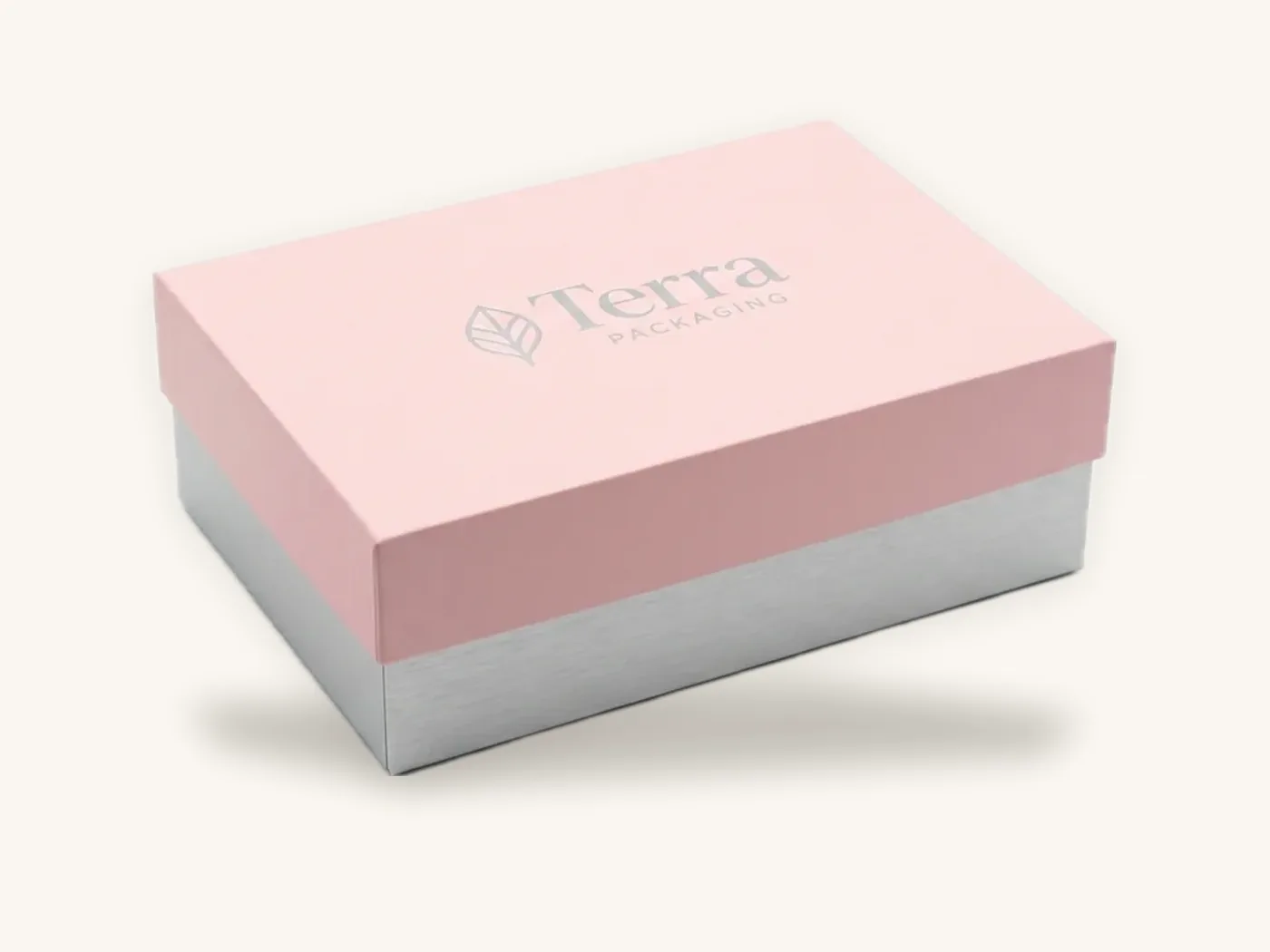
Matte lamination is the most common game box finish because it resists scuffs and fingerprints. Gloss lamination makes cover art more saturated. Spot UV on the title and foil on a logo are popular for special editions, and each carries one-time tooling. The two-piece boxes guide and the printing and finishes page cover these options.
Inserts that organize game components
A good insert makes setup faster, keeps components from scattering in transit and becomes part of the player experience. A poor one gets thrown away on first play.
Insert materials compared
| Insert type | Strengths | Weaknesses | Best for |
|---|---|---|---|
| Paperboard dividers and trays | Recyclable, printable, low cost | Less protection for fragile pieces | Card games, family games, most board games |
| Corrugated inserts | Stronger, supports heavy lids | Thicker walls take space | Big-box games, heavy components |
| Foam inserts | Precise cavities, excellent protection | Higher cost, not paper-based | Miniatures, collector editions |
| Molded pulp trays | Plastic-free, protective | Less crisp detail | Brands avoiding plastic, chunky pieces |
| No insert, bags only | Simplest and cheapest | Components shift, box looks empty | Small card games, puzzles |
Designing card wells
Card wells should fit the cards as players will store them. Sleeved cards are noticeably thicker and slightly larger than unsleeved ones, so if your audience sleeves cards, measure a sleeved deck. Add a finger notch or a sloped end so players can lift the deck out.
Token and piece storage
Small wells for tokens work best with lids or with the rulebook resting on top, so pieces do not mix when the box is stored on its side. Many game shelves store boxes vertically, so test the packed box on its edge and see what moves.
Leaving space for expansions
If expansions are planned, an insert with a removable section or extra space lets future components fit. Players value a base box that holds everything.
Our box inserts and dividers are cut to your component layout, and the inserts and packaging fillers page shows material options. For a deeper comparison, read foam vs paperboard inserts.

Artwork for game boxes: lid, sides and back
A game box works as a shelf billboard, a product description and a storage label for years. Plan artwork for every face.
Lid top
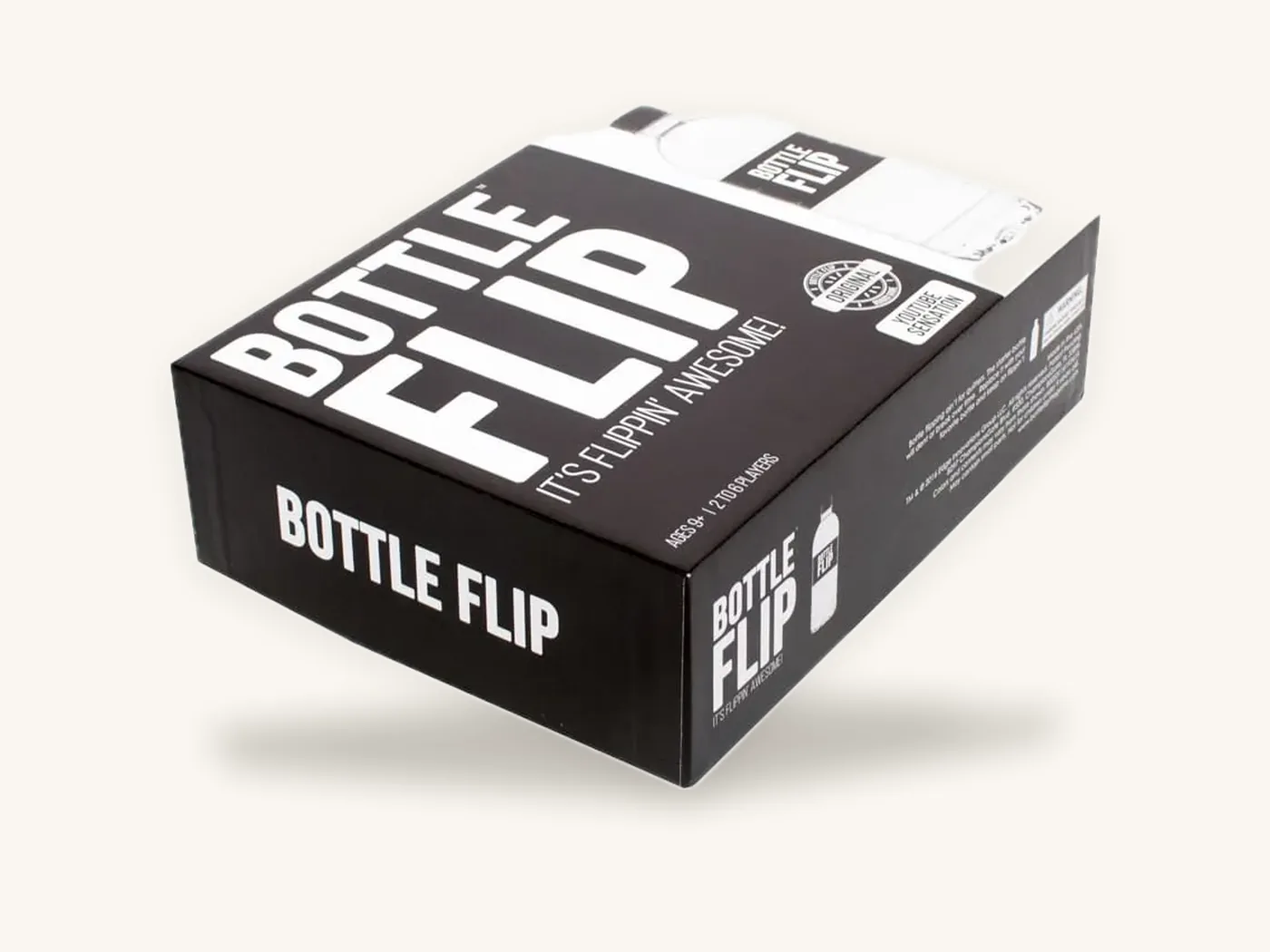
The cover art and title. Keep the title large enough to read from across a store. Leave clear space away from the lid edges, since the wrap bends over the rim and artwork near the edge wraps onto the sides.
Box sides (the spines)
Game shelves in homes and stores often store boxes on edge. Put the title and a recognizable element on at least two long sides so the game can be found whichever way it is shelved. Player count and play time icons on a side panel are useful in stores.
Base or back panel
The bottom of the base or the back of a full-depth lid carries the sell-in: a gameplay photo, a short description, player count, play time, age grade, contents list, publisher information, barcode and any required warnings.
Inside the lid
An inside lid print or setup diagram is a nice touch that helps players and costs relatively little.
Artwork setup checklist
- Use the supplier's dieline for the lid wrap and base wrap separately
- Extend background artwork past the fold and onto the turn-in area
- Keep text and critical art at a safe distance from folds and corners
- Supply cover art at full resolution for the final printed size
- Place the barcode on a flat panel away from folds
- Check that side panel text reads the right way when the box is shelved
Safety labeling for games
Games aimed at children fall under US children's product rules, and games with small pieces, dice, marbles or balloons may need specific choking hazard statements on the packaging. Games intended only for teens and adults face different expectations, but the age grade still needs to be clear and accurate.
Labeling requirements depend on the product and its intended age, so confirm them with the US Consumer Product Safety Commission or an accredited testing lab. Our toy safety labeling guide explains choking hazard statements and tracking labels in general terms, and the toy packaging guide covers window boxes and retail formats for toys. Reserve space for any required statements on the back panel before artwork is finalized.
Sampling, production and fulfillment planning
Game packaging involves more steps than most packaging, because the box, insert and components have to come together. Plan the sequence so packaging never holds up the launch.
A production sequence that avoids surprises
- Finalize the component list with sizes, including sleeved card sizes and punched token volumes.
- Request a quote for the box, insert and outer shipper together.
- Approve a structural sample. Pack every final or prototype component into an unprinted box and insert; check lid fit and component movement.
- Set up artwork on the approved dielines for lid wrap, base wrap and insert print.
- Approve a 3D digital proof, then a printed sample if timing allows.
- Produce packaging in line with component manufacturing so they meet at the assembly point.
- Assemble and pack components into boxes, then boxes into shippers.
- Test-ship a few finished games to different regions before bulk fulfillment.
Crowdfunded games
Crowdfunding adds pledge tiers, add-ons and a fixed backer expectation date. Price packaging for several quantity levels early so your campaign tiers cover it, and plan shippers for each tier size. The packaging for Kickstarter guide covers budgeting and fulfillment in more detail.
Shipping and outer cartons
A wrapped rigid box shows every dent and scuffed corner, so ship it inside a corrugated shipper with corner protection or fill. Single games ship in snug custom shipping boxes; retail orders ship several games in a master carton. Check dimensional weight with your carrier, since game boxes are large relative to their weight.
Watch out: never let the insert die be cut before components are final. A late change to card count, board fold or miniature size can make the insert unusable and force a new one, delaying production far more than the box itself.
What custom game boxes cost
Game box costs depend on box size, greyboard thickness, lid style, wrap and finishes, insert type and quantity. For crowdfunded games, add outer shippers to the budget.
| Spec | 10 | 100 | 250 | 500 | 1,000 | 5,000 |
|---|---|---|---|---|---|---|
| Rigid box, 2 mm greyboard wrapped, 8x6x3 in, full color, matte | $13.76 | $9.10 | $6.47 | $4.85 | $4.05 | $2.87 |
| Rigid magnetic box, 2 mm, 10x8x3 in, soft-touch, foil, insert | $21.50 | $14.23 | $10.12 | $7.59 | $6.32 | $4.49 |
| Straight tuck end carton, 18 pt SBS, 3x2x5 in, full color outside, aqueous | $1.73 | $1.15 | $0.82 | $0.61 | $0.51 | $0.36 |
| Shipping box RSC, B-flute, 12x10x6 in, 1-color | $7.08 | $4.69 | $3.33 | $2.50 | $2.08 | $1.48 |
Prices are indicative per unit with US shipping included. The 8x6x3 in rigid box fits a card game with tokens or a compact family game. The magnetic box shows the range for a deluxe edition with an insert. The tuck end carton suits a slim card deck or expansion pack, and the RSC is a typical outer shipper for a single game. Larger board game sizes are priced to your dimensions in the instant price estimator.
Where game box costs add up
- Size: a large strategy game box uses several times the board and wrap of a card game box.
- Lid depth: a full-depth lid uses more material than a shallow lid.
- Inserts: foam and complex multi-level inserts cost more than simple paperboard dividers.
- Finishes: spot UV and foil add one-time tooling on top of lamination.
- Quantity: unit prices fall steeply from short prototype runs to production volumes.
How to order board game packaging from Box Sense
Short runs make it practical to produce prototypes, review copies and convention demo boxes before committing to a full print run.
What to send
- Your component inventory with sizes, quantities and sleeved card dimensions
- Preferred box format: two-piece rigid, magnetic, tuck box
- Lid depth: full telescope or shallow
- Insert type and layout sketch, if you have one
- Wrap finish and decoration: matte, gloss, spot UV, foil
- Outer shipper requirements
- Quantities for prototypes and production, for example 10, 250 and 2,500
- Target dates for review copies, campaigns or retail launch
Process and timeline
- Quote within 24 hours for box, insert and shipper.
- Free design support: dielines for wraps and inserts, artwork setup and a 3D digital proof with two revision rounds. Our design services team can adapt cover art to the wrap layout.
- Samples: unprinted structural samples are free, ideal for testing component fit. A printed sample of approved artwork is free on orders of 100 or more. See samples.
- Production: 8–12 business days after proof approval. Rigid game boxes involve wrapping and assembly, so plan on standard timing; rush in 5 business days is available on most paperboard and corrugated styles such as tuck boxes and shippers.
- Delivery: free US shipping, with international shipping quoted at cost.
The minimum order is 10 boxes, with no die or plate charges. One-time tooling applies only to foil, embossing, spot UV and custom inserts, and defective boxes reported within 14 days are reprinted free. The toys and games industry page shows related formats.
Frequently asked questions
What kind of box is used for board games?
Most board games use a two-piece rigid box: a greyboard base and a lift-off lid, each wrapped in printed paper, with a paperboard, corrugated or foam insert inside. Small card games often use tuck boxes or small two-piece boxes. Deluxe editions sometimes use magnetic closure boxes or a rigid box inside a printed sleeve.
How do I choose the right size for a board game box?
Build a full component list first. The folded game board usually sets the footprint, and the combined thickness of the insert, player boards, punchboards, board and rulebook sets the depth. Pack every component into a plain mock-up at your intended internal size, including punched tokens in bags, and confirm with a free structural sample.
How thick should game box board be?
Small and medium game boxes commonly use rigid greyboard around 1.5 to 2 mm, while large, heavy games benefit from roughly 2 to 2.5 mm so the base does not bow and the lid resists crushing. Check a sample by pressing on the center of the lid and stacking a few filled boxes to see whether anything flexes.
Should my game use a full-depth or shallow lid?
A full-depth lid covers the whole base, protects the wrap, and stacks strongly, making it a good choice for heavy and big-box games. A shallow lid uses slightly less material, is easier to grip and shows more of the base wrap. For most mid-size games either works; pick based on weight, shelf look and budget.
What is the best insert for a board game?
Paperboard inserts suit most games because they are recyclable, printable and affordable. Corrugated inserts handle heavier components. Foam inserts protect miniatures and collector pieces with precise cavities. Whatever you choose, size card wells for sleeved cards if players sleeve, and test the packed box stored on its edge.
How much does a custom game box cost?
It depends on size, board thickness, lid style, insert, finishes and quantity. As a reference, an 8x6x3 in wrapped rigid box with full color print and matte finish is about $9.10 per box at 100 units and about $4.05 at 1,000, including US shipping. Enter your dimensions in the Box Sense pricing estimator for your exact size.
Can I order a small run of game boxes for prototypes?
Yes. Box Sense produces custom game boxes from 10 units, which suits prototypes, review copies, playtest kits and convention demos. Short runs are printed digitally, and there are no die or plate charges. Unprinted structural samples are free, so you can check component fit before ordering printed boxes.
Do board games need safety warnings on the box?
Games intended for children can be subject to US children's product rules, and those with small parts, small balls, marbles or balloons may need specific choking hazard statements on the packaging. Requirements depend on the product and age grade, so confirm with the CPSC or an accredited testing lab and reserve panel space early.
Next steps
Finish your component inventory, build a quick mock-up to confirm the internal size, and compare quantities in the game box price estimator. Then request a board game packaging quote for the box, insert and shipper together, and we will confirm pricing within 24 hours and send structural samples for fit testing.
Boxes in this guide
Order the packaging we covered
Written by the Box Sense Packaging Team
Our structural designers, prepress technicians and production staff print and convert custom boxes every day for brands in the United States, United Kingdom and UAE. Questions about this guide? Talk to us.