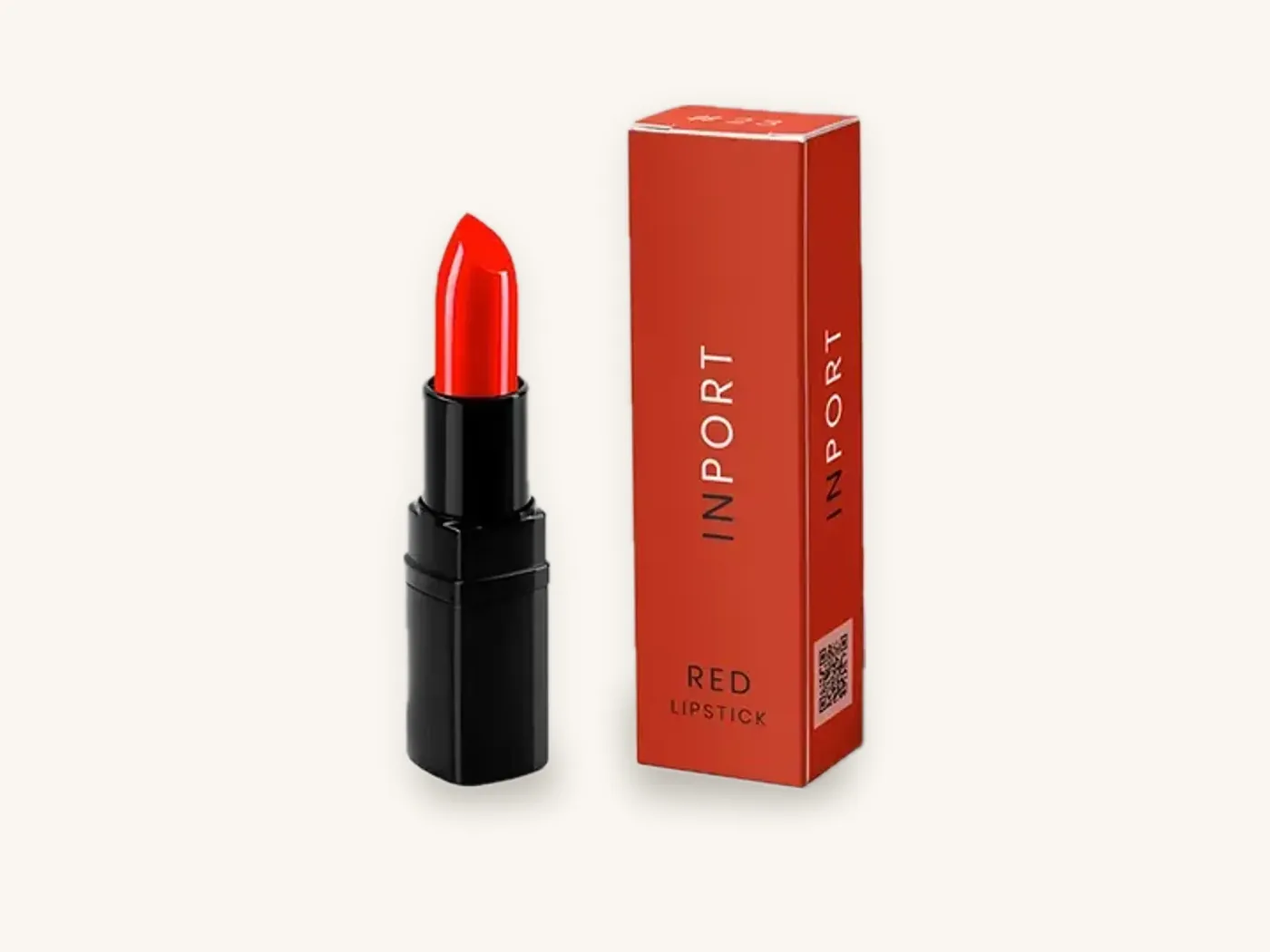
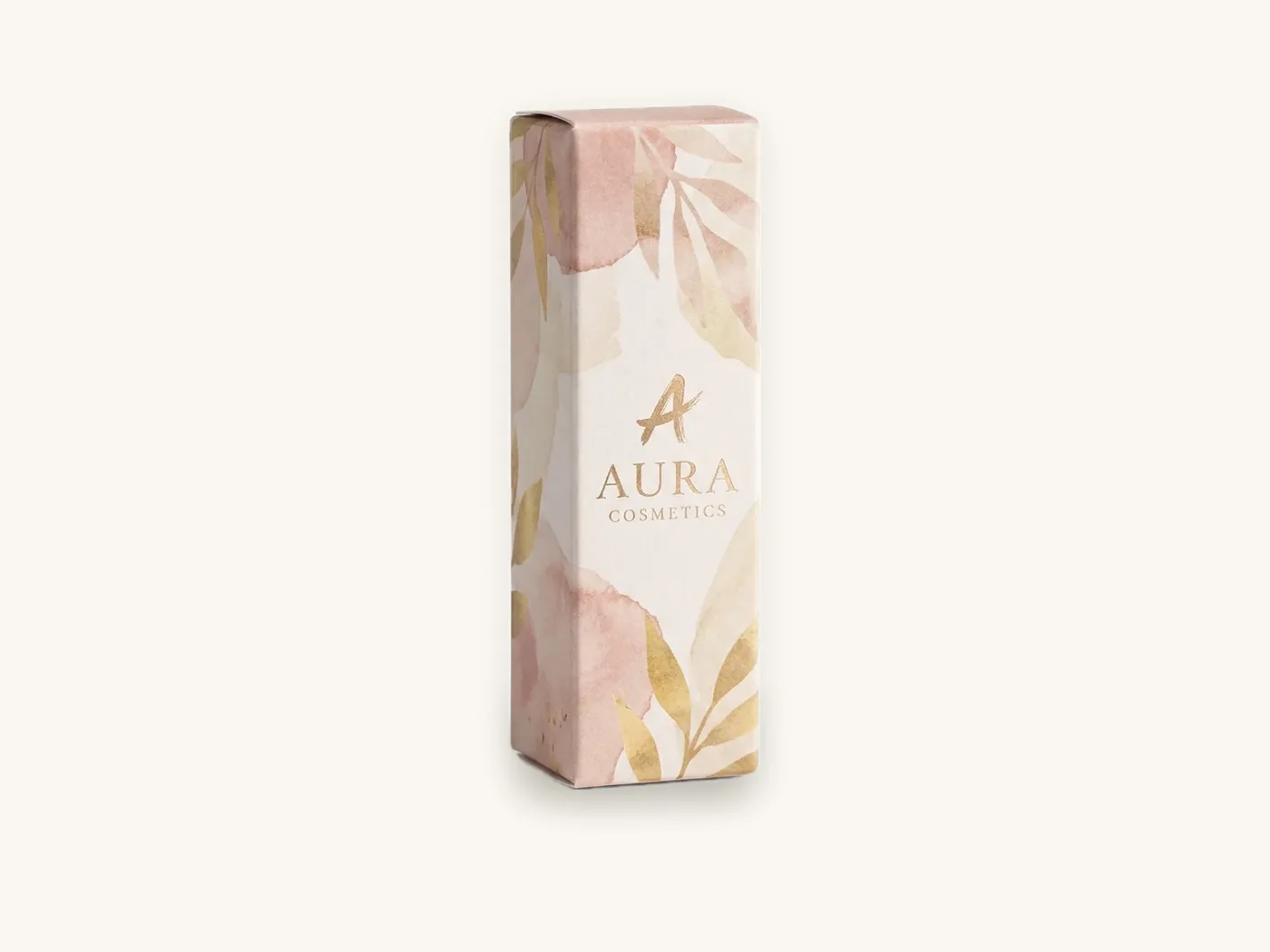
Custom lipstick boxes are small folding cartons, usually 14 pt to 18 pt SBS paperboard in a tuck end style, sized a few millimeters larger than the tube and printed with your brand, shade name and required label copy. The best ones fit the component so closely that the tube cannot rattle, open with a clean tuck, and carry one or two premium finishes that read well on a panel barely an inch wide.
That tiny footprint is what makes lipstick packaging different from almost every other beauty carton. Tolerances matter more, fine type fills in, foil detail has a lower size limit, and a range of twenty shades can turn one design into twenty SKUs. This guide works through sizing by lip product type, carton styles, inserts for singles and sets, board and finish choices, shade systems, cost, and how to order.
Key takeaways
- Most lipstick packaging is a reverse or straight tuck end carton in 14 pt to 18 pt SBS; rigid boxes are reserved for gift sets and limited editions.
- Size the carton from the capped tube's widest point, adding roughly 1 to 2 mm of clearance per side; lip gloss boxes need extra height for the wand cap.
- Single tubes rarely need an insert if the carton is sized well; duos, trios and gift sets almost always do.
- On a panel under an inch wide, keep foil lines and reversed-out type above practical minimums, or the detail will close up.
- A reverse tuck end carton in 14 pt SBS with gloss lamination at 2x2x6 in runs about $1.17 per unit at 100 and about $0.52 at 1,000.
- Box Sense prints custom lipstick boxes from 10 units, so you can launch a full shade range without committing to thousands of cartons per shade.
What makes lipstick packaging its own category
A lipstick carton does the same jobs as any retail box: protect, identify and sell. The difference is scale. A bullet lipstick carton might have a front panel roughly 7/8 in wide, and on that strip you need a logo, a product name, a shade name and often a swatch.
Two consequences follow. Print tolerances that are invisible on a mailer become visible here, so a 1 mm shift in the die-cut can push a logo off-center. And because most brands sell a shade range, the design system matters as much as the single box. Get final production tubes before ordering a dieline; a supplier changing cap height by a couple of millimeters can make a whole run too tight.
Sizing custom lipstick boxes by lip product type
Lip products come in a handful of component shapes, and each one pushes the carton in a different direction. The table below shows typical component forms and how to approach the carton for each. Component sizes vary a lot between suppliers, so treat the notes as a starting point and measure your own parts.
| Lip product | Typical component shape | Carton approach | Sizing watch point |
|---|---|---|---|
| Bullet lipstick | Round or square tube with a lift-off cap, short and wide | Square-profile tuck end carton | Measure across the widest point of the cap, not the base |
| Slim lipstick | Narrow tube, taller than a standard bullet | Very slim tuck end carton | Front panel is tiny; plan type and swatch first |
| Liquid lipstick | Tall bottle with a wand cap | Tall reverse tuck end carton | Cap is often wider than the bottle; size for the cap |
| Lip gloss | Clear tube or bottle with a doe-foot wand | Tall carton or window carton | Add height for the wand cap and any collar |
| Lip balm stick | Short, narrow twist-up tube | Small carton, sleeve or blister card | Often sold unboxed; a sleeve can be enough |
| Lip oil or plumper | Glass or heavy plastic bottle | Carton with a paperboard insert | Weight and glass call for a snug insert |
| Lip liner | Long, thin pencil | Long sleeve or tuck carton, often multi-pack | Very long and narrow; watch panel warp |
A sizing process that avoids reprints
- Get final production components. A prototype tube and a production tube can differ in cap height or diameter.
- Measure the capped product at its widest and tallest points. Use calipers, not a ruler, and measure three units to catch variation.
- Add clearance. For a single tube in a carton with no insert, add roughly 1 mm to each cross-section dimension and 1.5 to 2 mm to height. Tighter than that and cartons will jam on the filling line; looser and the tube rattles.
- Decide whether the tube goes in cap-up or cap-down. It changes which end panel is the "top" and which way your front artwork reads.
- Allow for board thickness. Internal dimensions are what matter. 18 pt board is about 0.46 mm thick, so the outside of the carton is slightly larger than the inside on every side.
- Request a plain structural sample. Drop five real tubes into five sample cartons, close them, shake them and pull them out again.
Watch out: a carton sized tightly around a cap that is slightly oval, or has a raised logo, will pass a sample fit and then jam on some units in production. Measure several components and size for the largest one you receive.
Carton styles for lipstick and lip gloss boxes
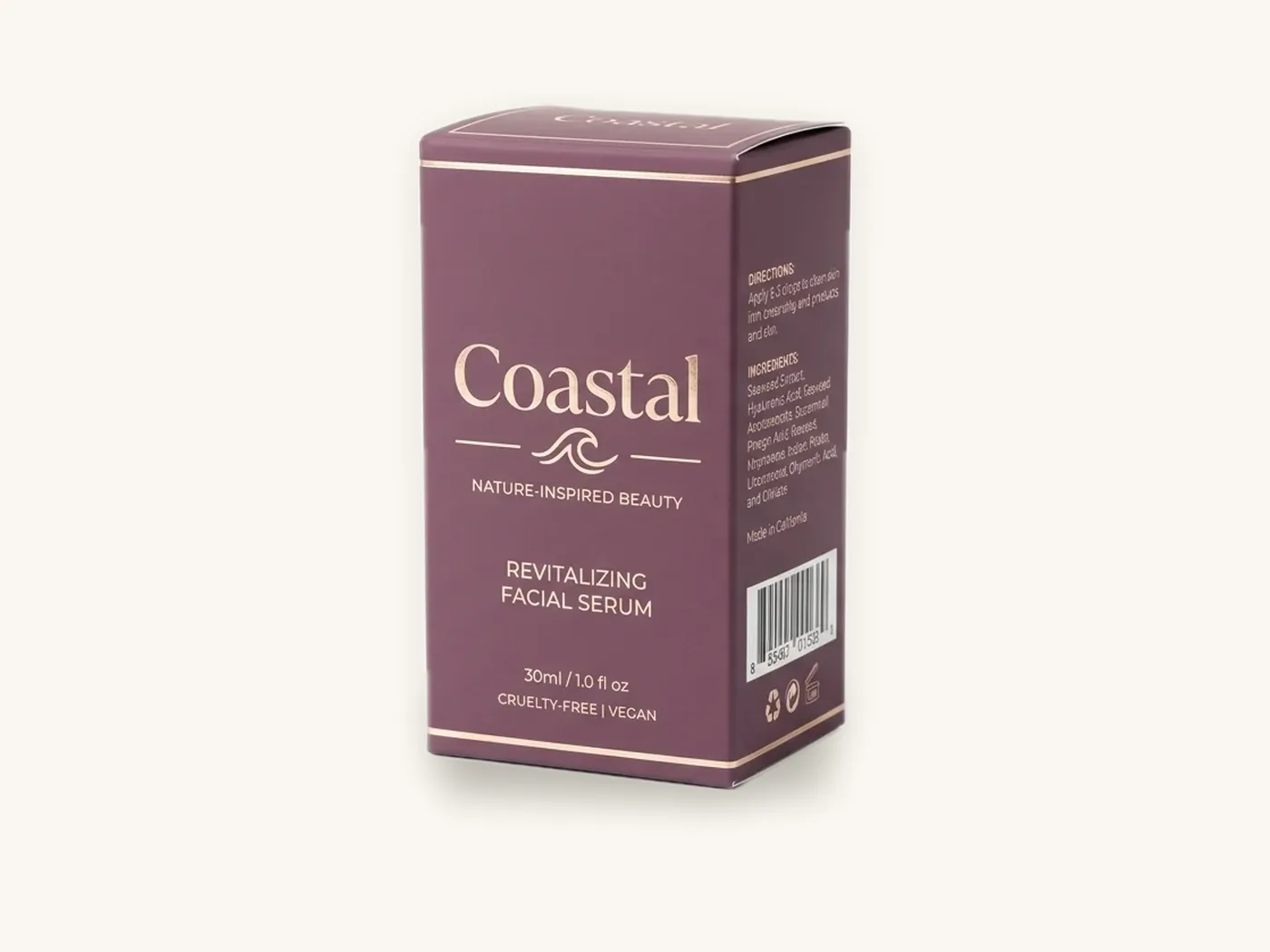
Almost every lipstick sold at retail sits in some form of folding carton. The choice between styles comes down to how the box is filled, how it opens and how premium it needs to feel. The tuck end boxes style page shows the standard family.
| Style | How it closes | Best for | Tradeoff |
|---|---|---|---|
| Reverse tuck end | Top tuck from the back, bottom tuck from the front | Most single lipsticks and liquid lips | Tucks sit on opposite panels, so check the artwork orientation |
| Straight tuck end | Both tucks from the same panel | A cleaner front when the back carries all copy | Slightly more board per unit |
| Sleeve over tray | Printed sleeve slides over an inner tray | Duos, trios and gift sets | More parts and assembly time |
| Window carton | Tuck end with a die-cut PET or PLA window | Glosses where the formula color sells | Window film adds a step and cost |
| Two-piece or rigid | Lift-off lid or magnetic flap over greyboard | Collector editions, holiday sets | Much higher unit price and storage space |
When to choose reverse tuck vs straight tuck
Reverse tuck end boxes are the default for a reason: the tucks alternate, which lets the carton nest efficiently on the press sheet and keeps unit cost low. The front panel stays clean, because the top tuck folds in from the back.
Straight tuck end boxes put both tucks on the same side. Some brands prefer them because the back panel, where ingredient lists and barcodes live, becomes one continuous surface. Choose straight tuck when your label copy is dense, and reverse tuck when you are cost-sensitive at scale.
Window cartons for lip gloss boxes
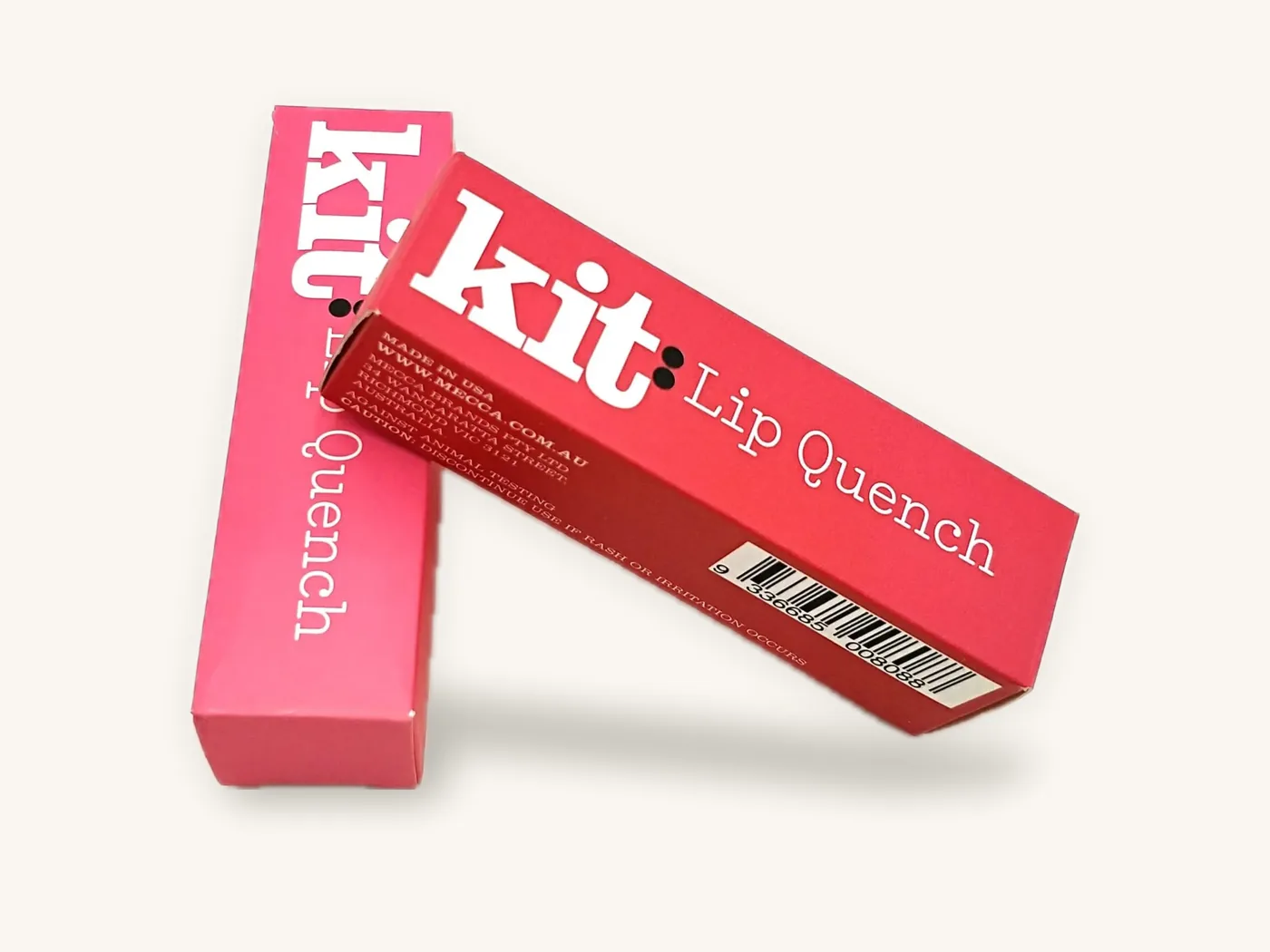
A die-cut window lets a customer see a gloss or liquid lip shade before buying, which reduces the need for a printed swatch. PET film is clear and rigid; PLA film is a compostable alternative with a slightly softer look. Keep the window away from the fold lines by a few millimeters so the film does not wrinkle when the carton is erected. The custom window boxes guide goes deeper on window placement.
Inserts for singles, duos and gift sets
A well-sized single carton usually needs no insert. The walls hold the tube. Once you package more than one product, or add a heavy glass lip oil, an insert becomes the thing that keeps the set looking deliberate.
Insert options compared
- Paperboard die-cut insert: a folded card with round or square cut-outs. Light, printable, recyclable and inexpensive. The best default for duos and trios.
- Corrugated insert: thicker, with better cushioning. Worth it for glass components that ship direct to consumers.
- Molded pulp tray: plastic-free, with a natural texture. Good for eco-positioned brands, though cavity edges are softer than die-cut board.
- Foam insert: EVA or PU foam with precise cavities. Suits rigid gift boxes where the tubes should look displayed rather than packed.
Box Sense does not charge die fees on standard cartons, but a custom insert carries a one-time insert die charge of $45. If your set uses the same cavity layout across several color stories, that one die covers every version.
Designing a lipstick set layout
Say you are launching a trio of bullet lipsticks as a holiday set. Lay the three tubes side by side with roughly 6 to 10 mm between them. Closer than that and the insert board between cavities is too thin to hold its shape; further apart and the box grows with no visual benefit. Decide whether caps face the customer or point up, because that decides the depth of the box.
A makeup and palette box in sleeve-and-tray format works well for sets that mix a lipstick with a liner and a gloss, since the tray can carry cavities of different lengths. For a broader beauty range, our cosmetic boxes cover the same finishes in larger formats.
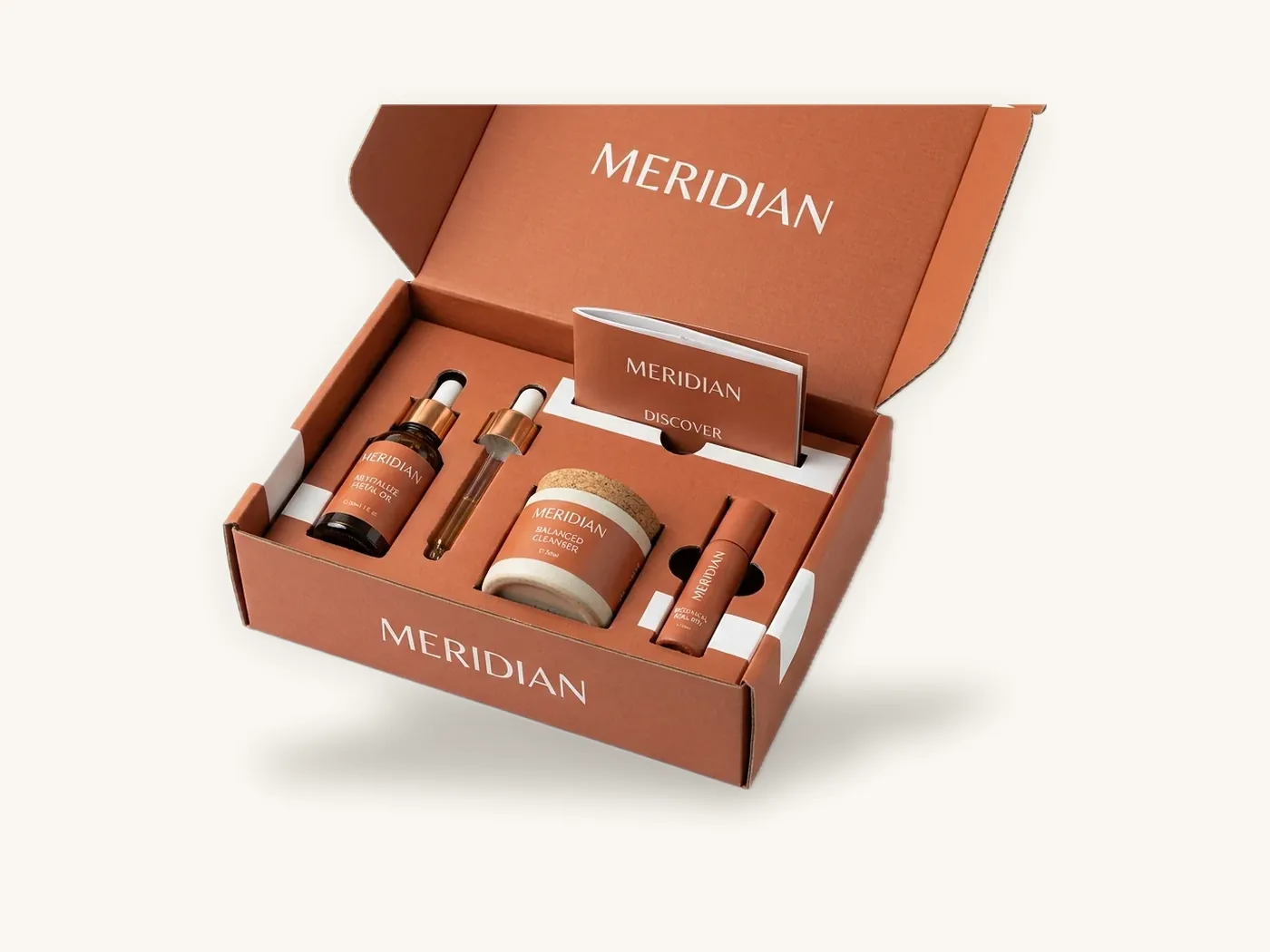
Tip: photograph your insert layout from above before approving the dieline. What looks balanced in a flat drawing can look crowded once caps and collars are in the cavities, and a photo shows it immediately.
Board choices: SBS, metallic and holographic stock
The board sets both the print quality and much of the perceived value. For a carton this small, you are choosing between three families.
SBS paperboard
Solid bleached sulfate board has a bright white, smooth coated surface that reproduces color accurately. It is the standard for lipstick packaging. 14 pt (about 0.36 mm) is enough for most single cartons and folds crisply around tight dimensions. 18 pt (about 0.46 mm) feels noticeably sturdier in the hand and resists crushing in a makeup bag. Our SBS paperboard page lists the calipers we run.
On very small cartons, thicker is not automatically better. A 24 pt board folded around a 7/8 in panel can show a visible rounded corner and fight the tuck. For most lipstick cartons, 14 pt or 18 pt is the right range.
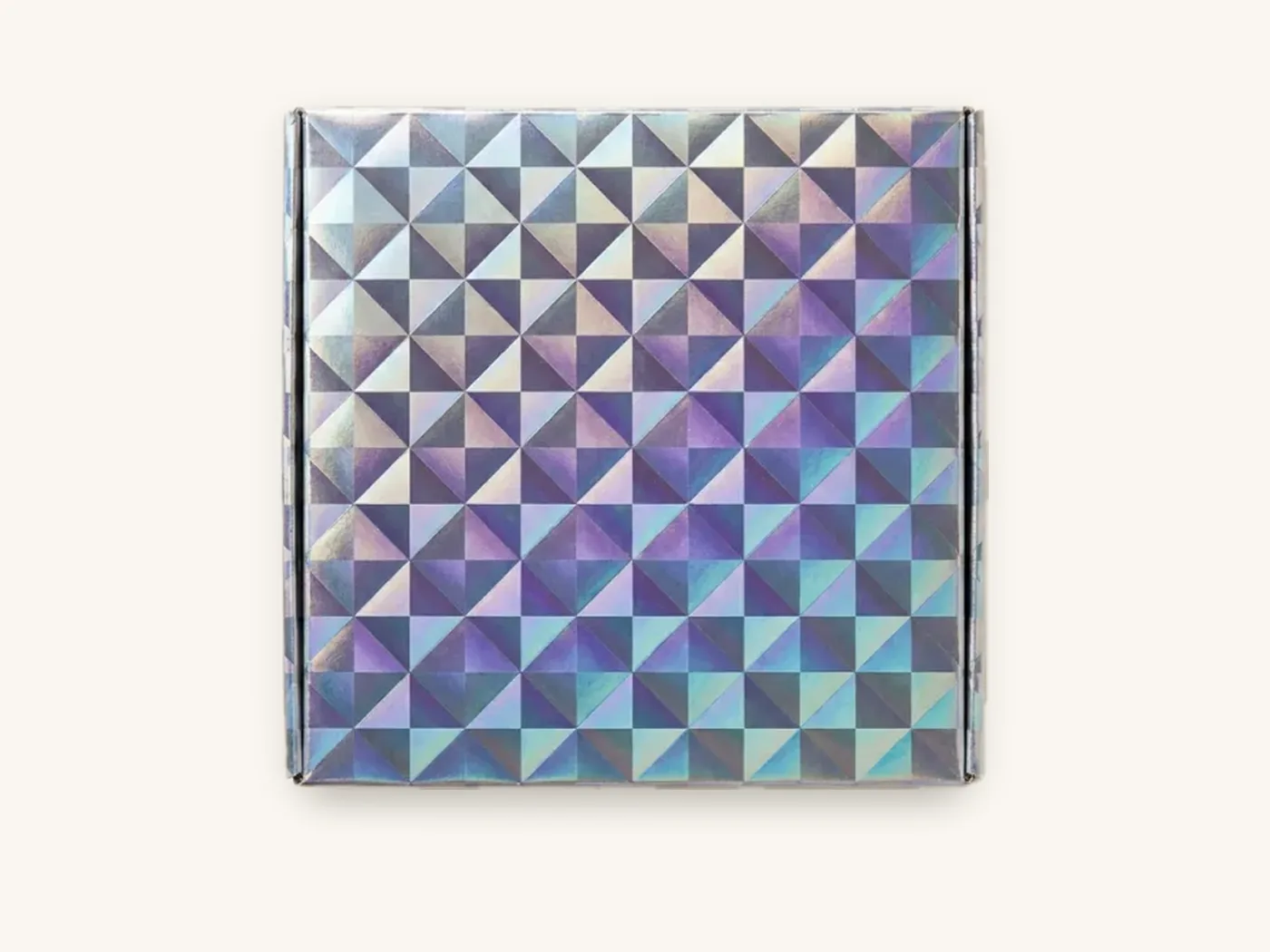
Metallic and holographic board
A metallized board has a reflective foil layer laminated to its surface. Printing over it with opaque white ink in some areas and leaving others unprinted creates a mirror effect across the whole carton, not just on a foil-stamped logo. It is popular for lip products because it echoes the shine of a metal tube. See metallic and holographic board for how the effect is built.
Premium finishes that work on a small carton
Finishes carry a lot of weight on lipstick packaging because there is little room for graphics. The trick is choosing finishes that stay crisp at small sizes. The printing and finishes page shows every option, and the foil stamping guide covers artwork prep in detail.
| Finish | Effect on a lipstick box | Small-size guidance | One-time tooling |
|---|---|---|---|
| Soft-touch lamination | Velvety, matte, premium feel | Works at any size; darkens colors slightly | None |
| Gloss lamination | High shine, saturated color | Shows scuffs less than uncoated; fingerprints show | None |
| Foil stamping | Metallic logo or shade name | Keep lines and gaps above about 0.3 mm | $60 |
| Embossing or debossing | Raised or recessed logo | Needs a simple, bold shape; fine serifs flatten | $60 |
| Spot UV | Glossy highlight on a matte base | Great for a shade swatch dot or pattern | $40 |
| Aqueous coating | Light protective layer | Keeps the carton easy to recycle | None |
Combining finishes without clutter
A common premium combination is soft-touch lamination with a foil logo. Soft-touch gives a matte, tactile base, and foil catches light against it. Adding embossing under the foil (called foil-and-emboss) makes a small logo feel substantial, but it needs a bold design to register cleanly.
Resist the urge to add everything. On a 7/8 in front panel, foil plus spot UV plus embossing plus a metallic board can look busy rather than luxurious. Pick one tactile finish and one visual finish.
Type legibility on tiny panels
Small reversed-out white type on a dark flood fills in first, so set fine copy in a single solid color rather than a four-color build, avoid hairline serifs in foil, and keep critical text at least 1/8 in from every crease and cut.
Building a shade system across a lipstick range
This is where many lipstick brands either save or waste a lot of money. A range of 16 shades can be packaged as 16 fully different cartons, as one carton with a shade sticker, or as one base design with a small printed variable area.
Three ways to handle shades
- One carton, shade label. Print a single carton design, then apply a small printed shade sticker on the end panel. Lowest cost and fastest to scale, but less polished. Custom labels and stickers can be printed in matching finishes.
- Shared design with a variable swatch. The layout stays identical and only the shade name and a color swatch change. With digital printing, variable elements do not add plate costs, so a small quantity of each shade is practical.
- Fully different cartons per shade. Each shade gets its own color flood. The most striking on shelf, but it multiplies artwork files, proofs and inventory counts.
Why short-run printing suits shade ranges
Digital printing covers roughly 10 to 500 units with no plates, so you can print 50 cartons each for a dozen shades instead of 1,000 of each, then move proven shades to a larger run.
Shade swatch accuracy
A printed swatch is an approximation. Paperboard, lamination and lighting all shift how a color looks. If swatch accuracy is central to your brand, specify the swatch as a PMS spot color, request a printed sample, and check it against the actual formula under daylight and store lighting. A window carton avoids the problem entirely for glosses.
Labeling and compliance considerations
Lipstick cartons often carry most of the required label information because the tube has too little space. In the US, cosmetics labeling is overseen by the FDA, and the outer carton typically needs the product identity, net quantity, ingredient declaration and the name and place of business of the manufacturer or distributor. Color additives used in lip products must also be permitted for that use.
Our cosmetic labeling requirements guide explains the panels and terms at a practical level. Rules change and details depend on your product, so confirm current requirements with the FDA or a regulatory advisor before approving artwork. Lay out the carton with the ingredient list and business details on the back or side panels, and leave room for a barcode if you plan to sell at retail.
What custom lipstick boxes cost
Carton price depends on size, board caliper, print coverage, finishes, inserts and quantity. Quantity has the largest effect by far. The rows below are the closest price-sheet specs to a lipstick carton. A real lipstick carton is usually smaller than these, which pulls cost down slightly, while added finishes push it up. Use the instant price estimator for your exact spec.
| Spec | 10 | 100 | 500 | 1,000 | 5,000 |
|---|---|---|---|---|---|
| Reverse tuck end carton, 14 pt SBS, 2x2x6 in, full color, gloss lamination | $1.77 | $1.17 | $0.63 | $0.52 | $0.37 |
| Straight tuck end carton, 18 pt SBS, 3x2x5 in, full color outside, aqueous | $1.73 | $1.15 | $0.61 | $0.51 | $0.36 |
| Cosmetic carton, 18 pt SBS, 2.5x2.5x6 in, full color, soft-touch + foil | $2.91 | $1.93 | $1.03 | $0.86 | $0.61 |
Prices include free US shipping. Foil stamping adds a one-time $60 tooling charge, and embossing another $60.
To keep costs down, pick one premium finish, share a dieline across tubes of similar size, and move proven shades to the next quantity tier.
How to order custom lipstick boxes from Box Sense
You do not need a finished dieline to start. Send what you have, and our structural and design team fills in the rest.
What to send
- Tube or bottle dimensions (or a physical sample), and whether it goes in cap-up or cap-down
- Product type: bullet, slim, liquid lip, gloss, oil, liner or set
- Preferred style: reverse tuck, straight tuck, window carton, sleeve and tray, or a recommendation
- Board: 14 pt or 18 pt SBS, metallic, or kraft
- Finishes: lamination type, foil, embossing, spot UV
- Number of shades and quantity per shade
- Label copy, barcodes and any retailer requirements
- Your target in-hand date
The process
- Quote within 24 hours, including quantity tiers if you ask for them.
- Free design support: we supply the dieline, set up artwork, and send a 3D digital proof with two revision rounds. The design services page explains what is included.
- Samples: unprinted structural samples are free, so you can test the tube fit. A printed sample of approved artwork is free on orders of 100 or more units. See samples.
- Production: 8–12 business days after proof approval as standard, or rush in 5 business days on most paperboard styles.
- Delivery: free on every US order; international shipping quoted at cost.
The minimum order is 10 boxes, with no die or plate charges on standard cartons. Defective boxes reported within 14 days are reprinted free. If you are building out a wider beauty line, the cosmetics and beauty page and our cosmetic packaging guide show how lip cartons fit alongside skincare and makeup packaging.
Frequently asked questions
What size box do I need for a lipstick?
Measure the capped tube at its widest and tallest points, then add roughly 1 mm of clearance to the width and depth and 1.5 to 2 mm to the height. Always size for the cap if it is wider than the base. Because tube dimensions vary between suppliers, use your final production components and test the fit with a free unprinted structural sample before ordering a printed run.
What material is best for lipstick packaging?
SBS paperboard in 14 pt or 18 pt is the standard. It has a smooth, bright surface for accurate color and folds crisply at small sizes. 18 pt feels sturdier and resists crushing in a bag. Metallic board creates a reflective carton that suits lip products, while kraft paperboard fits unbleached, clean-beauty positioning with simpler one- or two-color graphics.
Do lipstick boxes need an insert?
A single lipstick in a correctly sized carton usually does not, because the carton walls hold it in place. Inserts become important for duos, trios and gift sets, for heavy glass lip oils, and for rigid presentation boxes. Die-cut paperboard inserts are the lightest and most recyclable choice; foam or molded pulp suit higher-end or plastic-free sets.
How much do custom lipstick boxes cost?
Cost depends on size, board, finishes and quantity. For reference, a reverse tuck end carton in 14 pt SBS with gloss lamination at 2x2x6 in is about $1.17 per unit at 100 and about $0.52 at 1,000, including US shipping. A lipstick carton is usually smaller than that spec, while soft-touch and foil add cost. The pricing page gives your exact figure.
Can I order lipstick boxes in small quantities for each shade?
Yes. Box Sense prints from a minimum of 10 boxes, and short runs are printed digitally without plates. That makes it practical to order a small quantity of cartons for each shade in a range, test limited editions, or change a shade name without leftover inventory. Larger runs for proven shades then bring the unit price down significantly.
What is the difference between lipstick boxes and lip gloss boxes?
Lip gloss boxes are usually taller and narrower, because gloss tubes and bottles are longer and carry a wand cap that is often wider than the bottle. Gloss is also frequently packaged in window cartons so the formula color shows. Lipstick boxes for bullet tubes tend to be shorter with a square profile. The structure and finishes are otherwise very similar.
Which finishes look most premium on a lipstick box?
Soft-touch lamination combined with foil stamping is the most common premium pairing, because the matte base makes metallic foil stand out. Embossing adds depth to a bold logo, and spot UV works well for a shade swatch. On a very small carton, choose one tactile and one visual finish rather than stacking several, which can look cluttered.
Next steps
Gather your final tube dimensions, the number of shades and a rough quantity per shade, then check costs in the lipstick box price estimator. When the spec is settled, request a custom lipstick box quote and we will confirm pricing within 24 hours and prepare a dieline and 3D proof sized to your components. You can also browse the full lipstick boxes range for style ideas.
Boxes in this guide
Order the packaging we covered
Written by the Box Sense Packaging Team
Our structural designers, prepress technicians and production staff print and convert custom boxes every day for brands in the United States, United Kingdom and UAE. Questions about this guide? Talk to us.