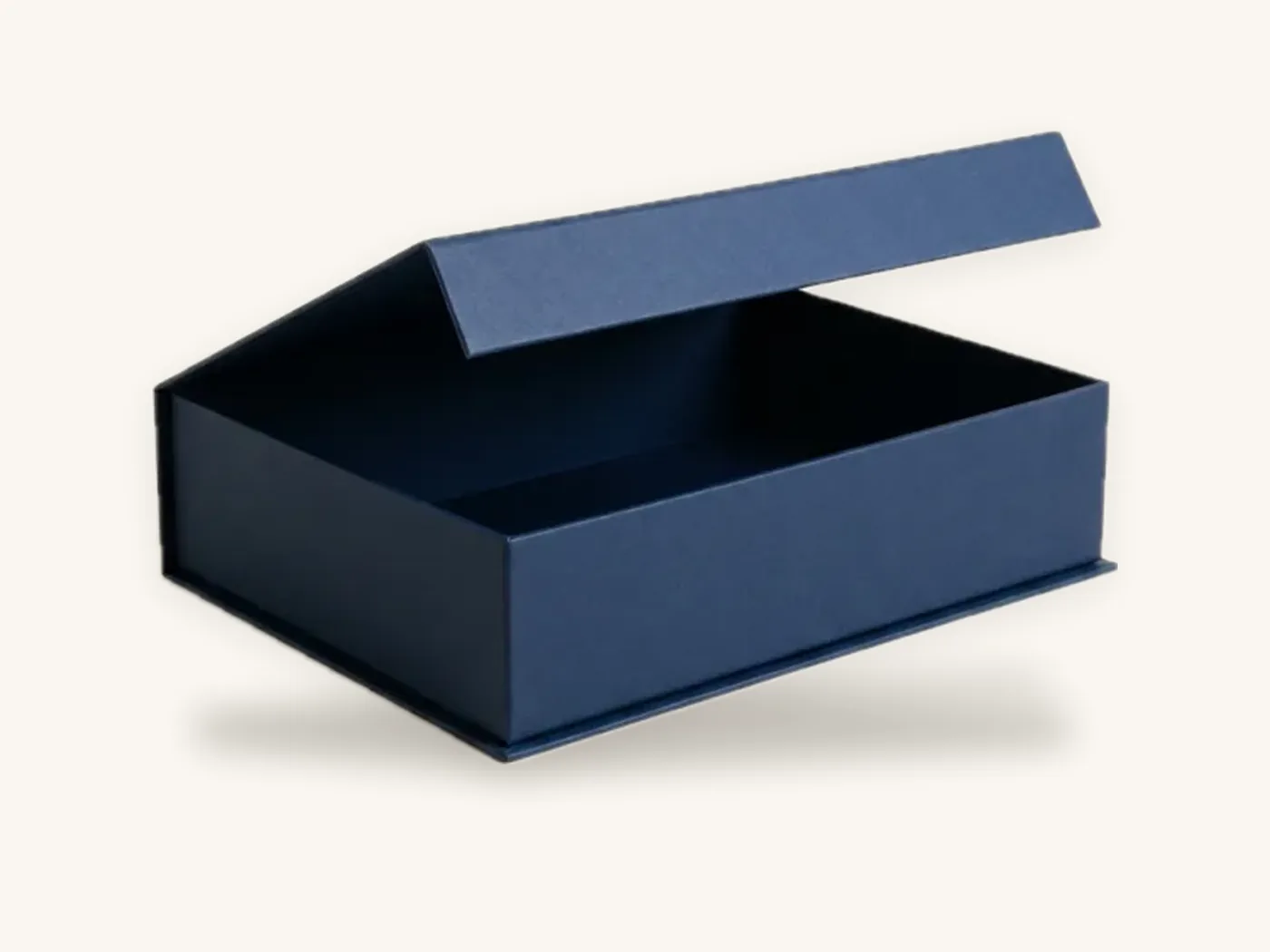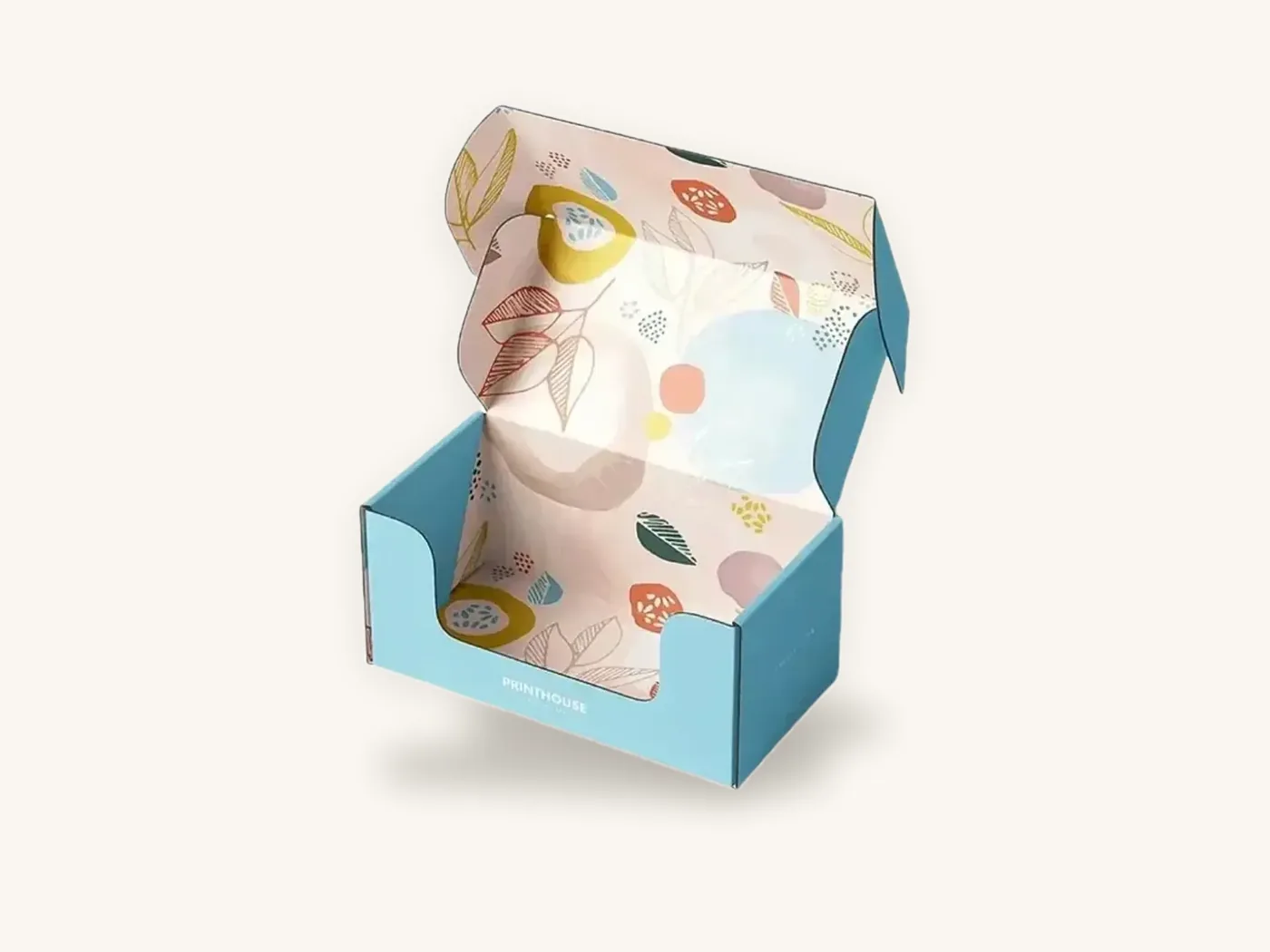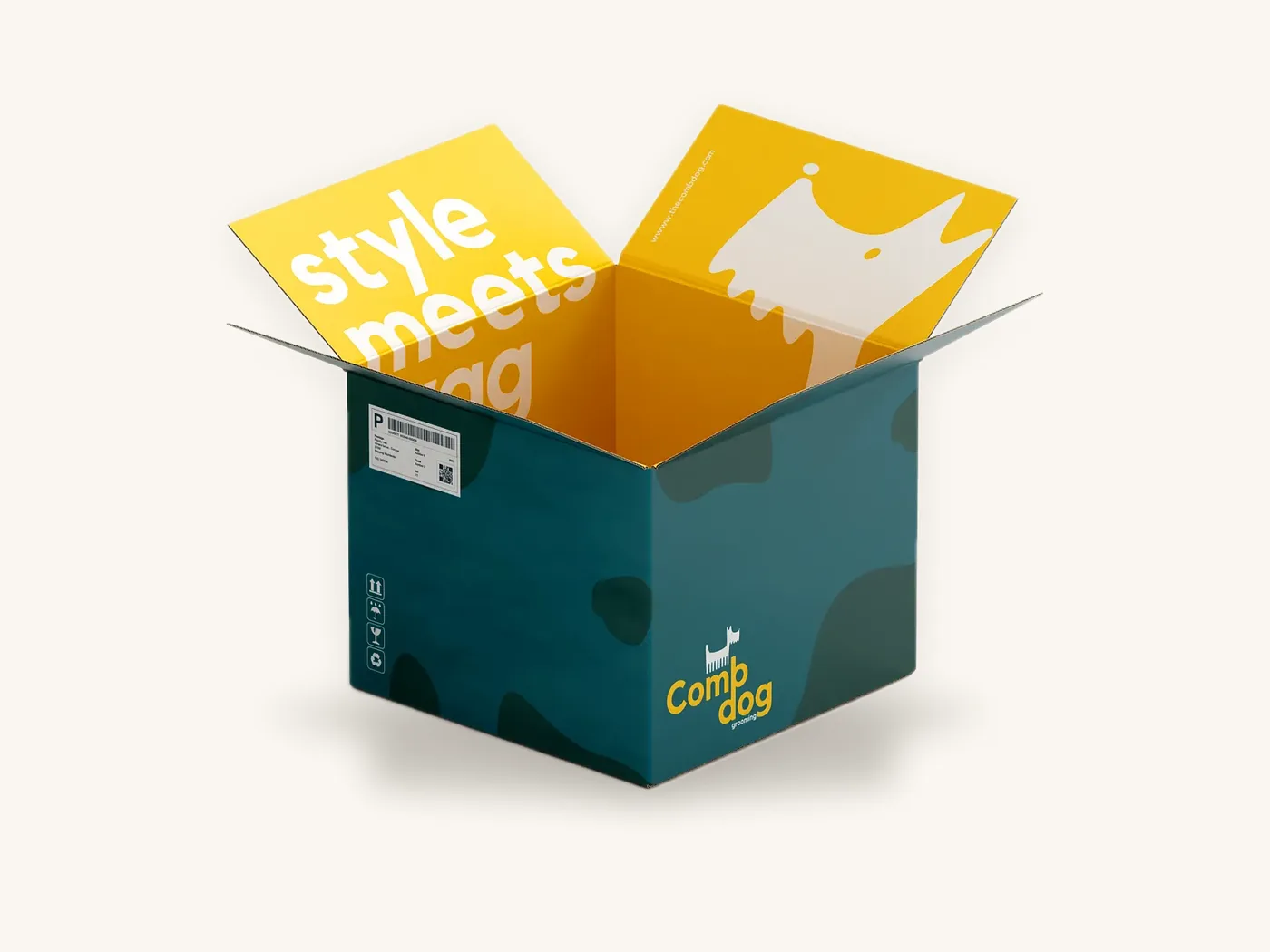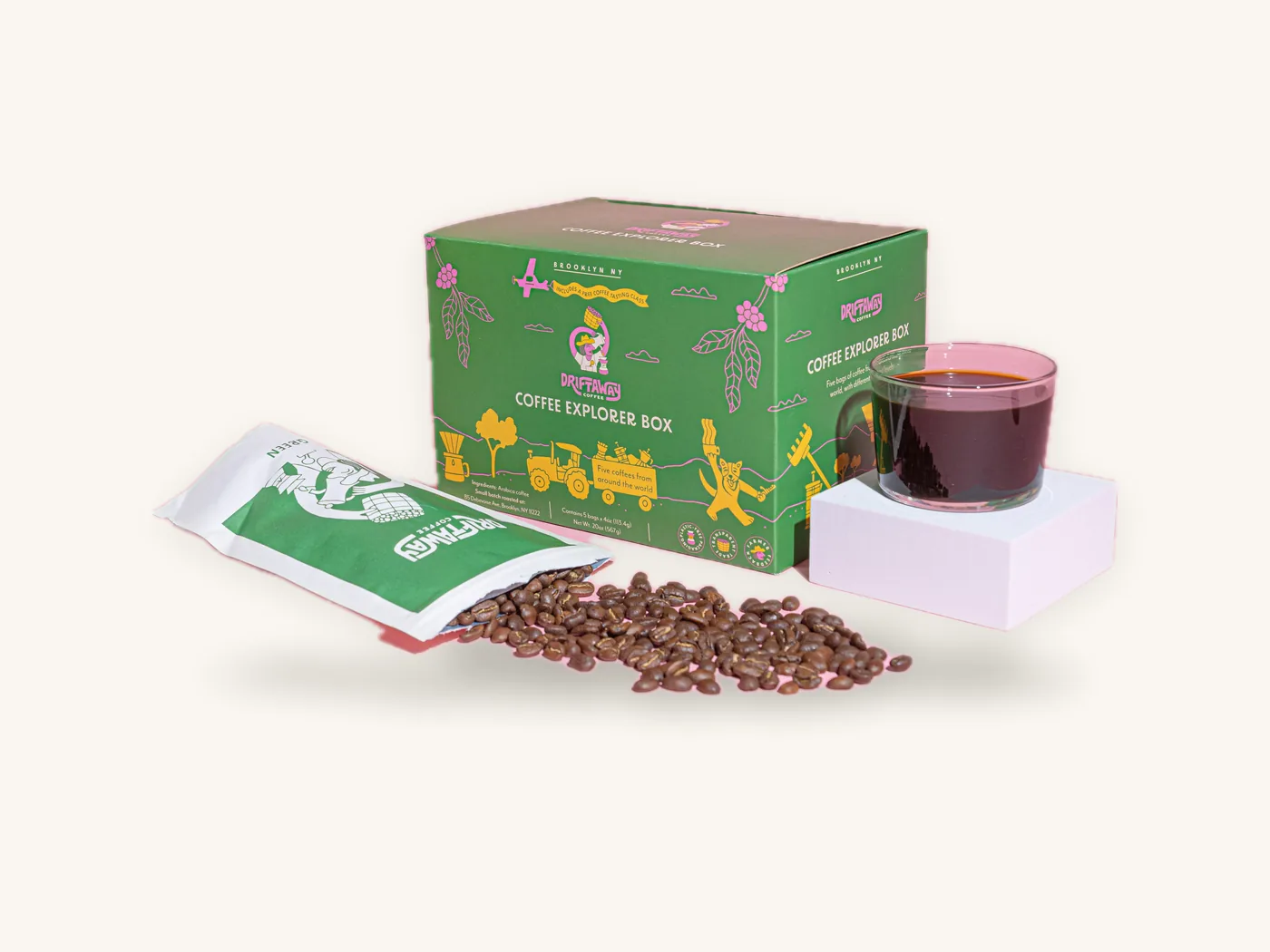
Custom product boxes are the printed boxes a product is sold in: the carton on a store shelf, the box on a peg hook, the package a customer picks up and turns over before deciding. Most are folding cartons made from 14 to 24 pt paperboard, with rigid boxes used for premium items and window, hang-tab or display versions for specific retail settings.
A product box that sells does four jobs at once. It gets noticed from a distance, tells the shopper what the product is and why it is worth the price, carries the information the law and the retailer require, and protects the product from the warehouse to the checkout. This guide works through those jobs in the order you should plan them: channel, structure, panel layout, finish and testing.
Key takeaways
- Plan the retail channel first. A shelf box, a peg-hook box, a counter display and an online-only box need different structures.
- Build the structure around the product and its insert, then design the artwork on the dieline, not the other way around.
- The front panel (principal display panel) should answer three questions at arm's length: what brand, what product, which variant.
- Match finishes to price positioning: aqueous for value, lamination for mid-range, soft-touch and foil for premium.
- An 18 pt straight tuck end carton at 3x2x5 in, full color with aqueous coating, is about $1.15 each at 100 units and about $0.51 at 1,000.
- Box Sense produces retail product boxes from 10 units, with a free dieline, artwork setup and 3D proof.
Start with where the box will be sold
The same product can need very different packaging depending on where a shopper meets it. Decide the channel before anyone opens a design file, because it sets the structure, the size and even which panel matters most.
| Retail channel | What the box must do | Structures that work | Watch for |
|---|---|---|---|
| Shelf, facing forward | Stand upright, show a strong front panel, stack neatly | Tuck end cartons, auto-lock bottom boxes, window boxes | Shelf height and depth limits set by the retailer |
| Peg hook | Hang straight without tearing | Hang tab boxes, five-panel hanger boxes | Hang hole placement and product center of gravity |
| Counter or checkout | Sell small units from a shared display | Small cartons inside a counter display box | Display footprint and unit count |
| Boutique or gift shop | Look premium when handled and gifted | Rigid boxes, magnetic boxes, sleeves | Scuffing from repeated handling |
| Online only | Survive shipping, photograph well, delight on opening | Mailers, or a carton inside a mailer | Crush in transit; product photo accuracy |
Shelf cartons
A standard shelf carton shows one wide face to the aisle. Shoppers often see only that face and the side panel when the box is next to others, so both must identify the product. Tuck end cartons are the most economical shelf format; the tuck end boxes guide compares straight and reverse tuck versions.
Peg-hook boxes
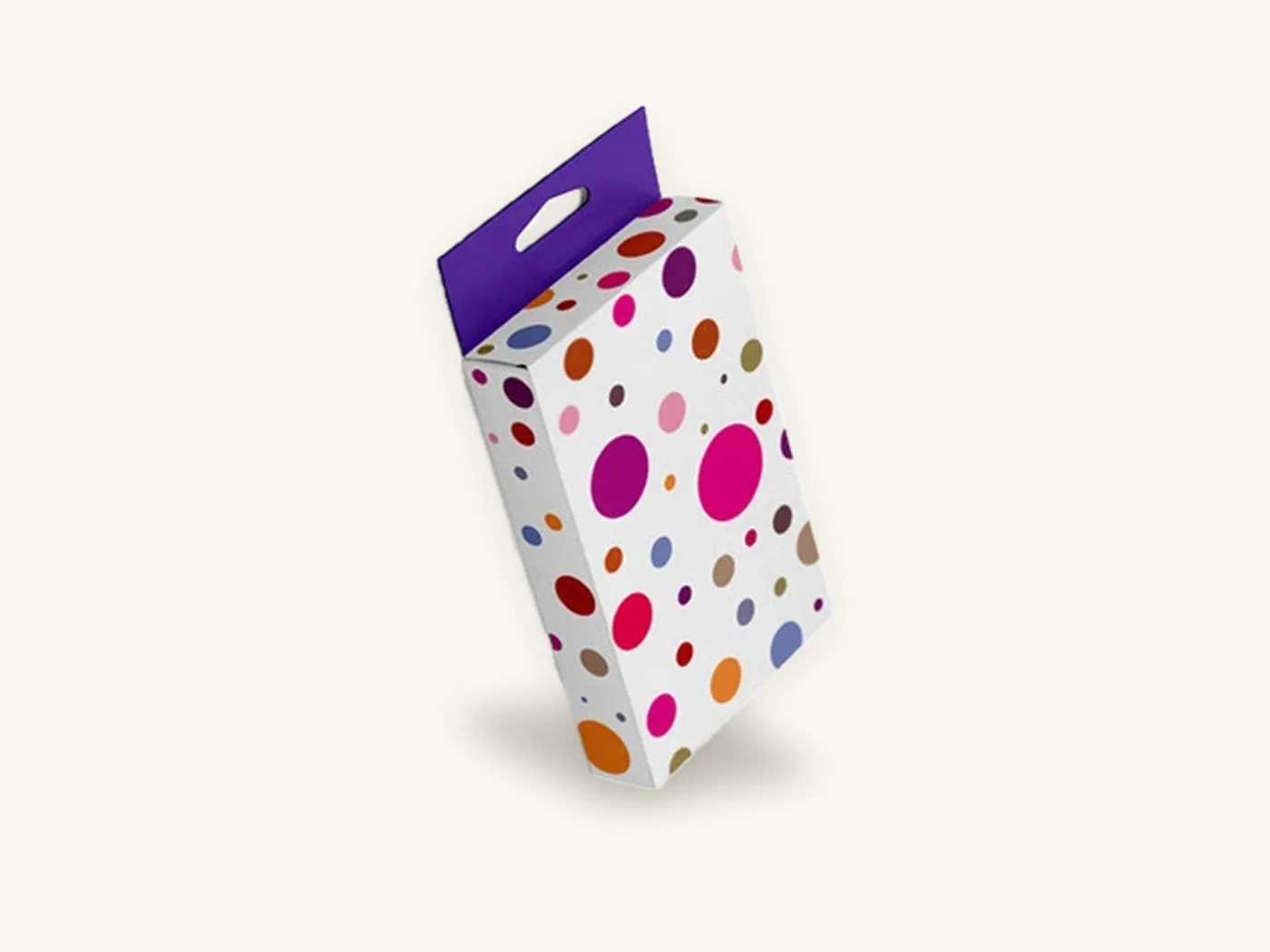
On a peg wall, a box hangs rather than stands, and the hang hole sets its angle. A hang tab box adds a reinforced tab above the carton. A five panel hanger box folds a double-thickness fifth panel up from the back, which is stronger for heavier items.
Counter and display boxes
Small, impulse-priced products often sell from a counter display box that holds a set of individual cartons. The display does the attention-getting, so the individual cartons can be simpler.
Choose the structure around the product
Once you know the channel, the product's shape, weight and fragility decide the structure. Measure the actual product, including caps, pumps and any pouch or leaflet, before choosing.
| Product | Suggested structure | Board | Insert |
|---|---|---|---|
| Lipstick, lip balm, small tube | Reverse or straight tuck end | 14 to 18 pt SBS | Usually none |
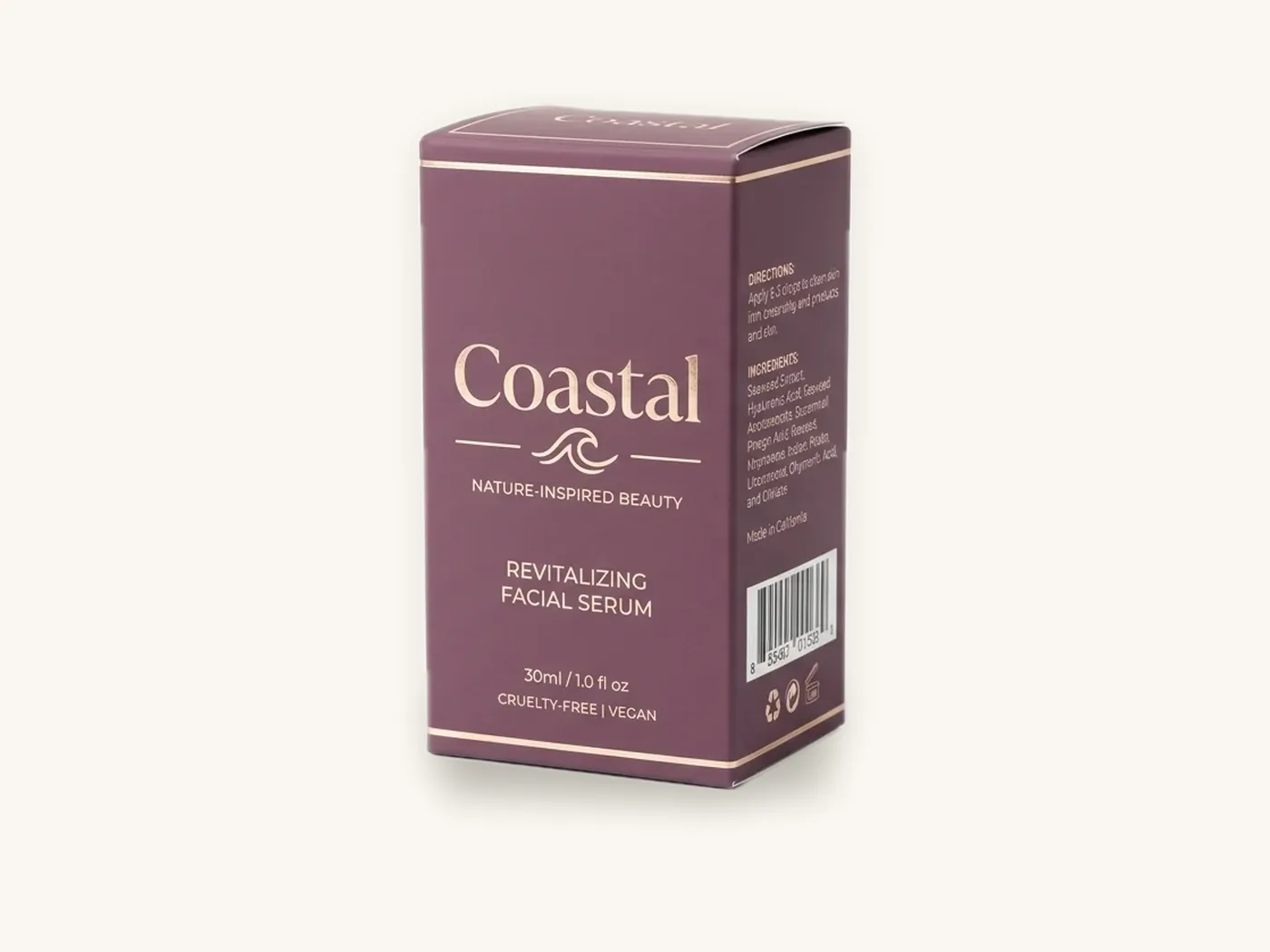
| Serum or dropper bottle | Straight tuck end | 18 pt SBS | Paperboard neck insert |
| Cream jar | Tuck end or auto-lock bottom | 18 to 24 pt SBS | Die-cut cradle for glass |
| Supplement bottle | Tuck end with auto-lock bottom | 18 to 24 pt SBS | Optional |
| Earbuds, small device | Tuck end, sleeve and tray, or rigid | SBS or 2 mm greyboard | Die-cut paperboard or foam cavity |
| Multi-item kit | Two-piece or magnetic rigid box | 2 mm greyboard | Multi-cavity insert |
| Product customers must see | Window box | 18 pt SBS | Card to hold position behind window |
Tuck end or auto-lock bottom
A tuck end carton closes with flaps at both ends. It is quick to fold, cheap and ideal for light items. An auto-lock bottom (also called crash lock) is pre-glued so the bottom snaps into place as you open the carton. It carries heavier products, like glass jars and bottles, without the bottom flap giving way, and it speeds up packing. See auto lock bottom boxes.
When a rigid box earns its cost
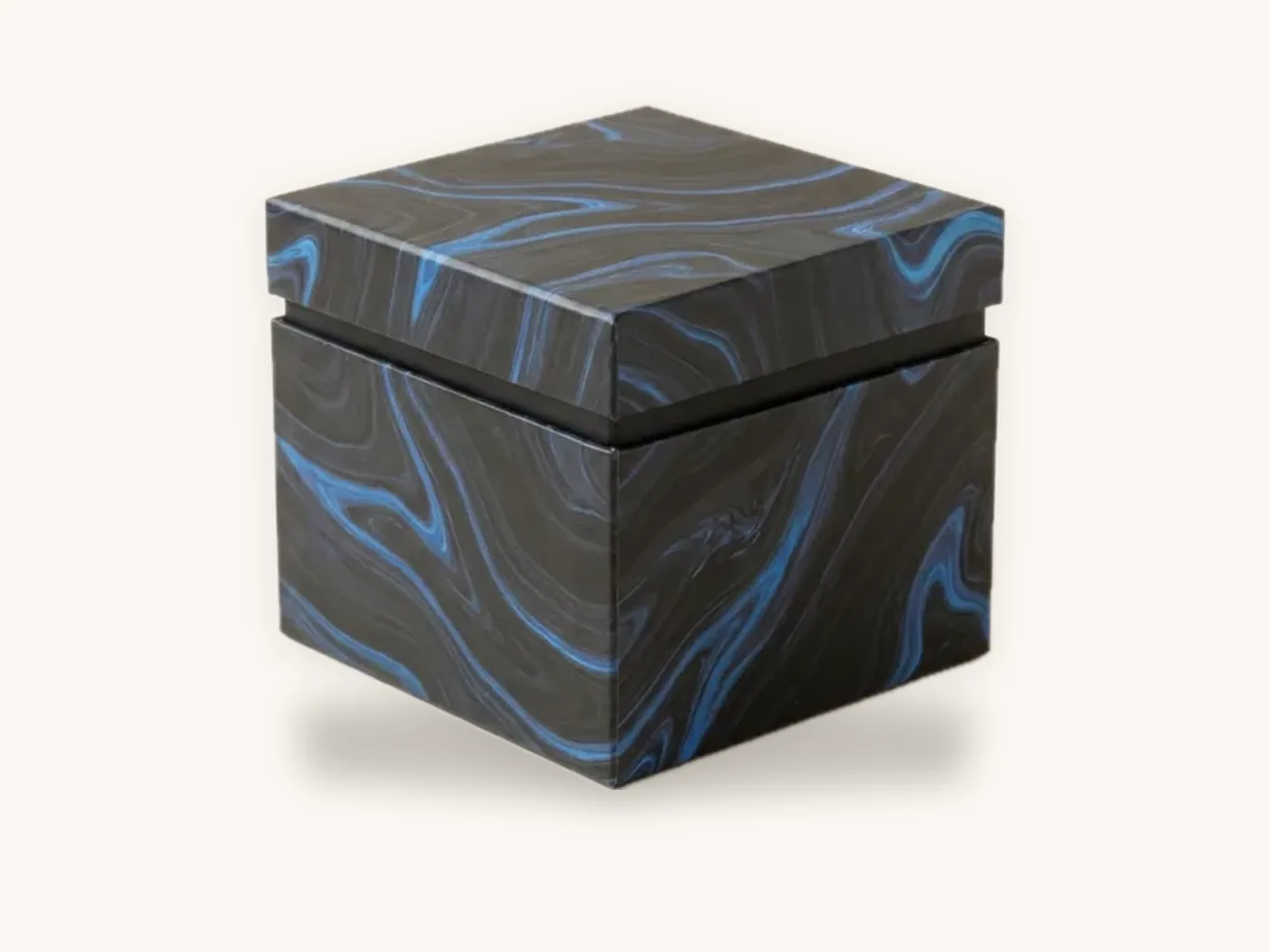
Rigid boxes cost several times more than folding cartons, so they need a reason: a high price point, a gift purchase, or a product customers keep the box for. Electronics, fragrance and premium skincare often qualify. The magnetic closure boxes guide covers the most popular premium format.
Inserts that keep the product facing forward
An insert does more than protect. It holds the product in a planned position so it faces the window, sits level when opened, and does not rattle. Design the insert and the box together, because the insert's board thickness changes the inside dimensions. Our box inserts and dividers page shows the options.
Tip: measure products from the production line, not a pre-production prototype. Bottles, caps and pumps often change by a millimeter or two between samples and final tooling, and a tuck carton sized to the prototype can end up too tight to close.
Lay out every panel with a job
A folding carton has six outer panels, and each one has a role. Designing panel by panel stops the common problem of a beautiful front with a cramped, unreadable back.
| Panel | Primary job | Typical content |
|---|---|---|
| Front (principal display panel) | Win attention and identify the product | Brand, product name, variant, key benefit, net quantity where required |
| Side panels | Identify the product when shelved sideways; secondary selling | Product name repeated, flavor or shade cue, icons |
| Back | Close the sale and inform | Benefits, directions, ingredients, warnings, company details |
| Top | Identify the product from above in drawers and bins | Brand and variant |
| Bottom | Operations | Barcode, batch or lot code area, recycling guidance |
| Inside | Optional surprise or instructions | Thank-you message, usage steps |
The front panel at arm's length
Print your front panel at actual size, stand at the distance a shopper would, and ask three questions: what brand is it, what is it, and which one is it? If any answer takes effort, the hierarchy needs work. Shade, scent or flavor cues should differ clearly across a range, using color blocks, a band or a large label, so a shopper can find their variant quickly.
Regulatory and retailer requirements
Many product categories have labeling rules in the US. For example, the FDA regulates labeling for foods, cosmetics and dietary supplements, including where the net quantity statement goes, and the FTC enforces rules on consumer commodity labeling and marketing claims. Retailers and marketplaces add their own requirements, such as scannable UPC barcodes in a clear area. These rules are specific and change over time, so confirm current requirements with the relevant agency, your retailer's vendor guide, or counsel before finalizing artwork.
Practical layout advice that helps with any requirement:
- Reserve space for mandatory text before designing decorative elements.
- Keep ingredient and warning text in a dark ink on a light background, at a size that is easy to read.
- Place barcodes on a flat panel, away from folds and edges, with a clear quiet zone around them.
- Leave a blank area for batch codes or expiry dates if they are added on the packing line.
Design principles for product packaging boxes that sell
Retail packaging design is less about decoration and more about making choices obvious. Work through these steps with your designer.
- Write the message hierarchy first. List everything the box must say, then rank it. Only the top three items belong on the front.
- Pick one dominant visual. A product photo, an illustration, a bold color field or a large logo. Several competing heroes cancel each other out.
- Design a range system, not a single box. Decide which elements stay fixed (brand block, layout grid, typeface) and which change per variant (color, image, name).
- Place artwork on the dieline. Keep text at least 1/8 in (3 mm) inside every cut and fold, and extend background color 1/8 in past the cut as bleed.
- Check the box closed and in a row. View a 3D proof from the front, side and top, and imagine six boxes side by side. A strong brand block repeated across a shelf builds its own display.
- Test readability of small text. Print the back panel at actual size.
- Match color to the substrate. SBS paperboard reproduces bright color accurately; kraft paperboard darkens it. If a brand color must be exact, specify a PMS spot color.
Our design services team handles dieline setup and artwork preparation for free, and can apply your existing brand files to a new structure.
Finishes by price positioning
Finishes change how a retail product box feels in hand and how it holds up to handling. Spend where the shopper will notice. The printing and finishes page has examples of each.
| Positioning | Board and finish | What it signals | Indicative price, 1,000 units |
|---|---|---|---|
| Value, high volume | 14 pt SBS, full color, gloss lamination, reverse tuck (2x2x6 in) | Bright, clean, efficient | about $0.52 each |
| Everyday retail | 18 pt SBS, full color, aqueous, straight tuck (3x2x5 in) | Solid, professional | about $0.51 each |
| Show the product | 18 pt SBS, full color, aqueous, window (4x4x4 in) | Confidence, transparency | about $0.74 each |
| Premium beauty | 18 pt SBS, full color, soft-touch plus foil (2.5x2.5x6 in) | Luxury, care, detail | about $0.86 each |
| Flagship or gift | 2 mm greyboard rigid box, full color, matte (8x6x3 in) | Keepsake, high value | about $4.05 each |
Sizes differ between rows, so use the instant estimator to price your exact dimensions.
Using finishes well
- Soft-touch lamination gives a velvety feel that invites handling. It suits beauty and wellness.
- Foil stamping catches light on a shelf. Use it on the logo or product name, not everywhere. One-time tooling is about $60.
- Spot UV adds contrast between glossy and matte areas. One-time tooling is about $40.
- Embossing makes a logo tactile. One-time tooling is about $60.
- Aqueous coating protects against scuffs at the lowest cost and keeps cartons easy to recycle.
Category examples: cosmetics and electronics
Two categories show how differently the same principles play out.
Cosmetic boxes
Beauty shoppers compare shades, textures and claims, often while holding several products. Cosmetic boxes are usually 18 pt SBS tuck end cartons with color-critical print, a restrained front, and dense but orderly back panels for ingredients and directions. Soft-touch lamination, foil and embossing are common because the box is handled closely. A range of shades benefits from a consistent layout with one changing color band. Our cosmetics and beauty packaging page shows the full set of formats.
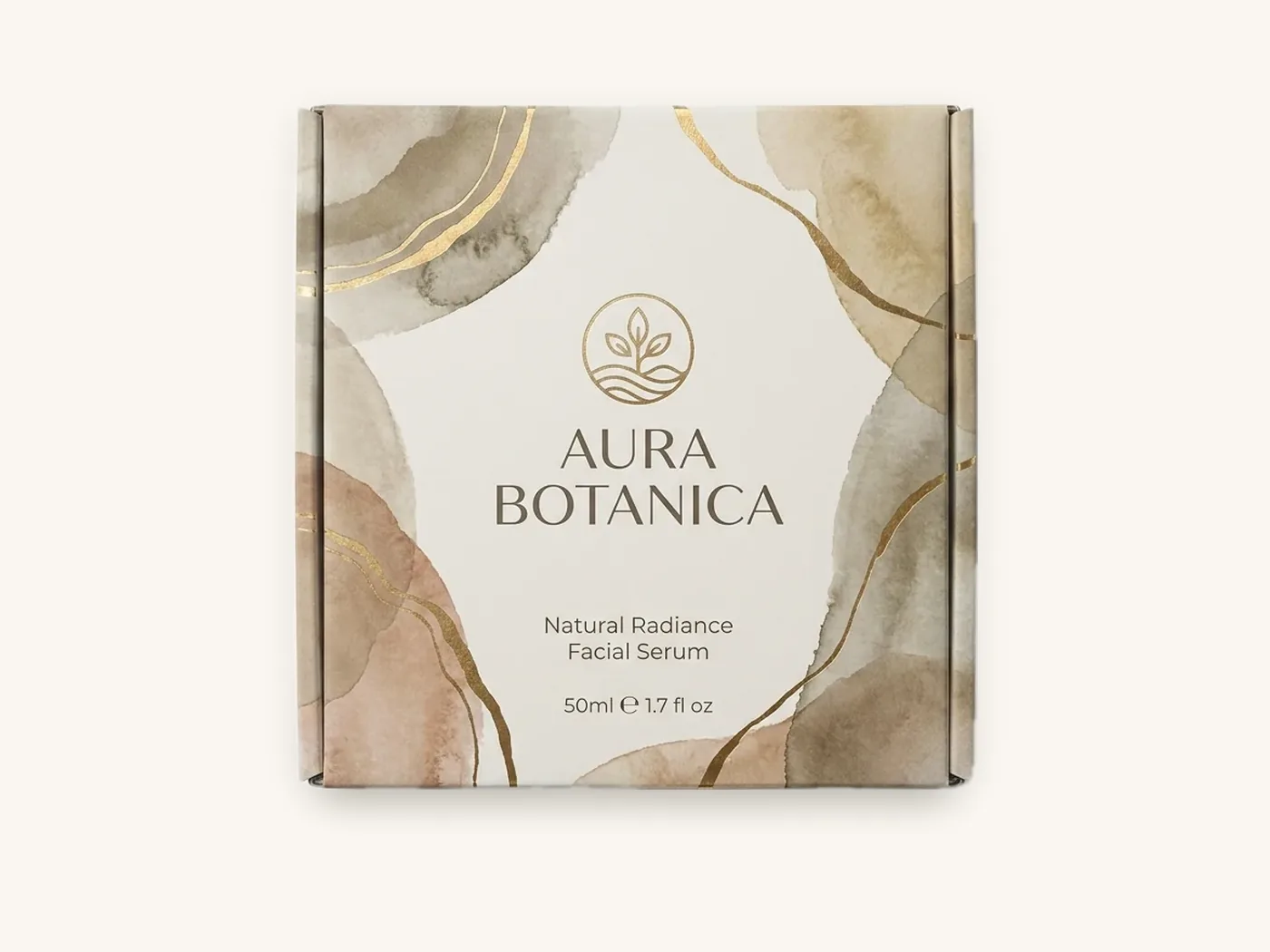
Hypothetically, a skincare brand launching three serums might use one 18 pt straight tuck carton size, a shared paperboard neck insert, a white front with the brand block top-left, and a different foil color for each serum's name. One dieline, one insert, three variants.
Electronics boxes
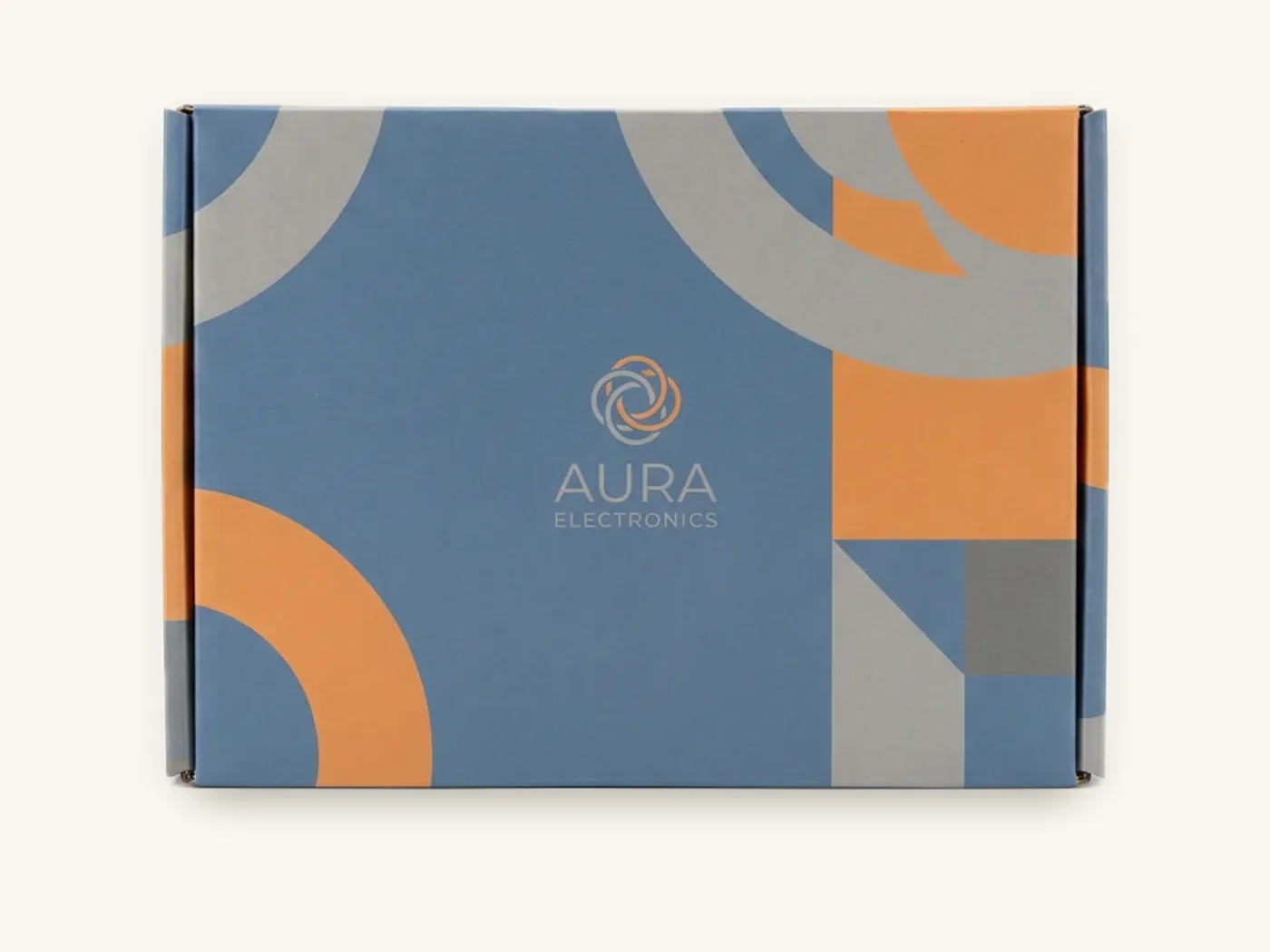
Electronics shoppers want to see the device, the key specs and what is included. Electronics boxes often use a sleeve over a tray, or a rigid box with a die-cut insert that shows the device the moment the lid lifts. The back panel carries specs, compatibility and a "what's in the box" list. Protective inserts matter more here because devices are dense and returns are expensive. See electronics and tech packaging for common builds.
Windows, inserts and add-ons
Some structural features pull more weight than any finish.
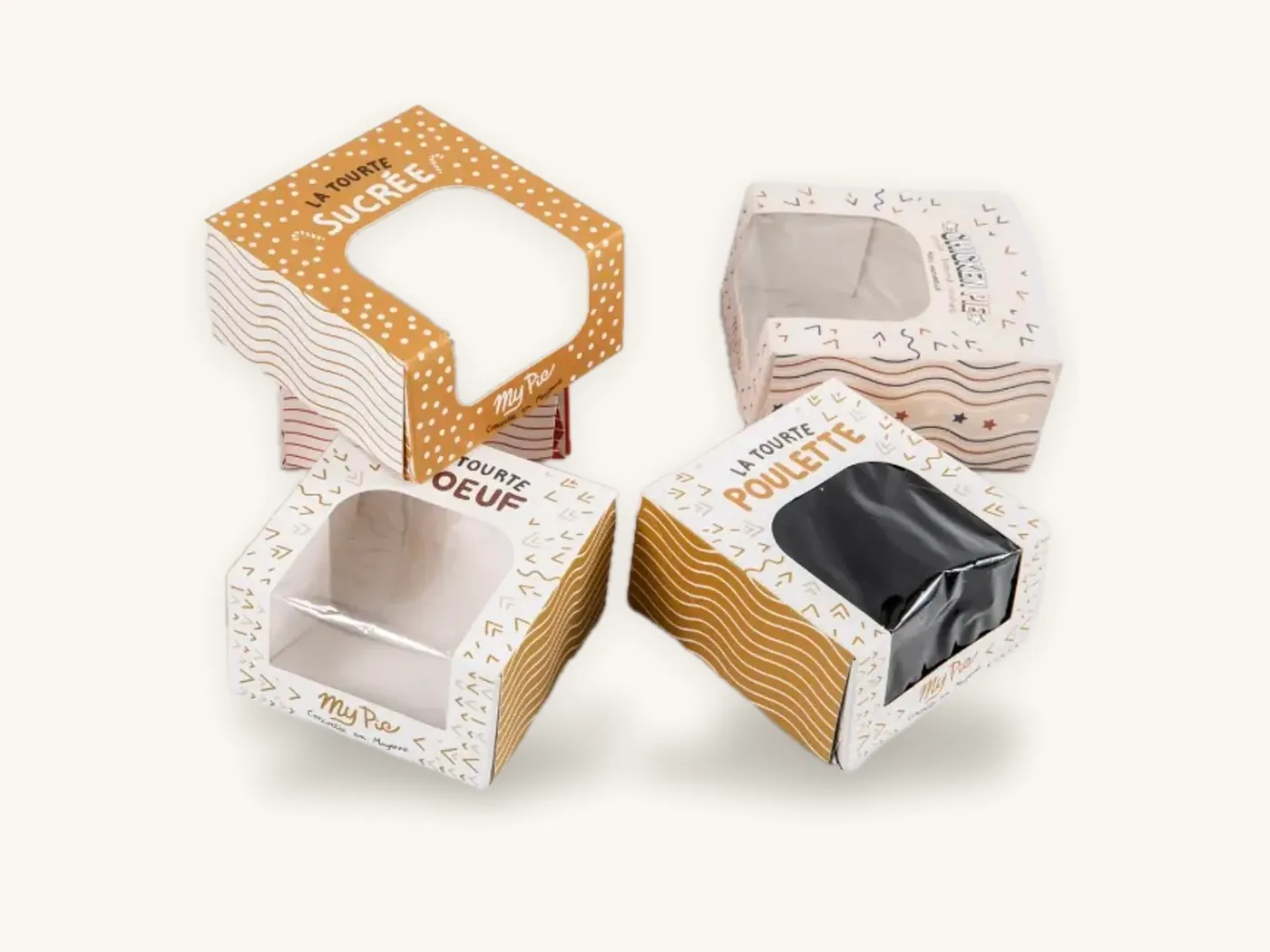
- Windows: a die-cut window lets shoppers see the product itself, which helps when texture, color or quality is the selling point. Windows can use PET or compostable PLA film. The custom window boxes guide covers sizing and placement, and window boxes shows the range.
- Tamper evidence: tear strips, perforated openings or seals show if a box has been opened, which matters for health, beauty and food.
- Inside printing: usage steps or a thank-you message printed inside the carton reaches customers after purchase at little extra cost.
- Sleeves: a printed sleeve over a plain carton lets you change seasonal or limited-edition artwork without reprinting the whole box.
Pre-launch checklist for retail product boxes
Before approving a full run, check each of these:
- The product fits the structural sample, and the tuck flaps or lock bottom close cleanly
- The box stands upright or hangs straight when filled
- The front panel identifies brand, product and variant at arm's length
- Barcodes scan from a printed sample
- Mandatory text has been reviewed against current regulations and retailer requirements
- Colors have been approved on a printed sample, not only on screen
- The box fits the retailer's shelf, peg or display dimensions
- Cartons fit efficiently inside your shipping case or mailer
- Batch code and date areas are clear for the packing line
Watch out: retailers sometimes specify case packs, shelf-ready trays or maximum carton dimensions in their vendor guides. Check those before sizing, because resizing after printing means reprinting.
How to order custom product boxes from Box Sense
We make folding cartons, window boxes, hang-tab boxes and rigid boxes under one roof, so one quote can cover a product box, its insert and the display it sells from.
What to send
- Product dimensions and weight (production samples if possible)
- Retail channel: shelf, peg, counter, boutique or online
- Preferred structure, or a request for a recommendation
- Board preference, such as 18 pt SBS or kraft
- Artwork status: finished files, brand assets only, or a design brief
- Finishes: lamination, foil, spot UV, embossing, window
- Inserts and add-ons
- Number of variants and quantity per variant
- In-hand date and ship-to location
What happens next
- Quote in 24 hours for each variant and quantity tier.
- Dieline and 3D proof: free, with artwork setup and two revision rounds.
- Samples: unprinted structural samples are free, and a printed sample of approved artwork is free on orders of 100 or more. See our samples page.
- Production: 8–12 business days after proof approval; rush in 5 business days on most paperboard styles.
- Delivery: free shipping on all US orders, international shipping at cost. Defective boxes reported within 14 days are reprinted free.
The minimum order is 10 boxes with no die or plate charges, which makes it practical to test packaging with a few stores before a wider rollout. If your products also ship direct, the custom mailer boxes guide and custom shipping boxes guide cover the outer packaging.
Frequently asked questions
What material are custom product boxes made from?
Most custom product boxes are folding cartons made from paperboard, usually 14 to 24 pt SBS for bright, accurate print or kraft paperboard for a natural look. Premium products often use rigid boxes made from greyboard wrapped in printed paper. Products sold only online may use a corrugated mailer instead of, or around, a retail carton.
What should go on the front of a product box?
The front panel should identify the brand, the product and the variant clearly at arm's length, plus one key benefit. Some categories also require specific information on the front, such as a net quantity statement for many foods and cosmetics. Move detailed claims, directions and ingredients to the back and side panels so the front stays uncluttered.
How much do custom product boxes cost?
Price depends on size, board, finishes and quantity. As a reference, an 18 pt SBS straight tuck end carton at 3x2x5 in, full color with aqueous coating, is about $1.15 each at 100 units and about $0.51 at 1,000, including US shipping. A cosmetic carton with soft-touch and foil is about $0.86 at 1,000. Use the pricing page for your spec.
What is the difference between a tuck end box and an auto-lock bottom box?
A tuck end box closes with tuck flaps at both ends and is the most economical choice for light products. An auto-lock bottom box has a pre-glued bottom that locks into place when the carton is opened, which supports heavier items such as jars and bottles and speeds up packing. Many brands use a tuck top with an auto-lock bottom.
Do I need a barcode on my product packaging?
Most major retailers and marketplaces require a scannable barcode, typically a UPC in the US, on retail product packaging. Place it on a flat panel away from folds, with clear space around it, and test-scan a printed sample. Barcode numbers are licensed through GS1 US, so confirm your retailer's current requirements before finalizing artwork.
Can I order product boxes for several product variants?
Yes. A common approach is one box size and dieline shared across a range, with artwork that changes per variant. Box Sense quotes each variant and quantity, and short runs are printed digitally, so small quantities of several designs stay affordable. The minimum order is 10 boxes, and there are no plate charges when artwork changes between variants.
How long does it take to produce retail product boxes?
Box Sense confirms quotes within 24 hours. After proof approval, standard production takes 8–12 business days, and rush production in 5 business days is available on most paperboard styles. Build in extra time for regulatory review of artwork, proof revisions and a printed sample if color accuracy matters for your launch.
Next steps
List your retail channels and measure a production sample of the product, then use the product box price estimator to compare structures and finishes. When you are ready, request a custom product box quote and we will confirm pricing within 24 hours, recommend a structure and prepare a dieline for your artwork.
Boxes in this guide
Order the packaging we covered
Written by the Box Sense Packaging Team
Our structural designers, prepress technicians and production staff print and convert custom boxes every day for brands in the United States, United Kingdom and UAE. Questions about this guide? Talk to us.