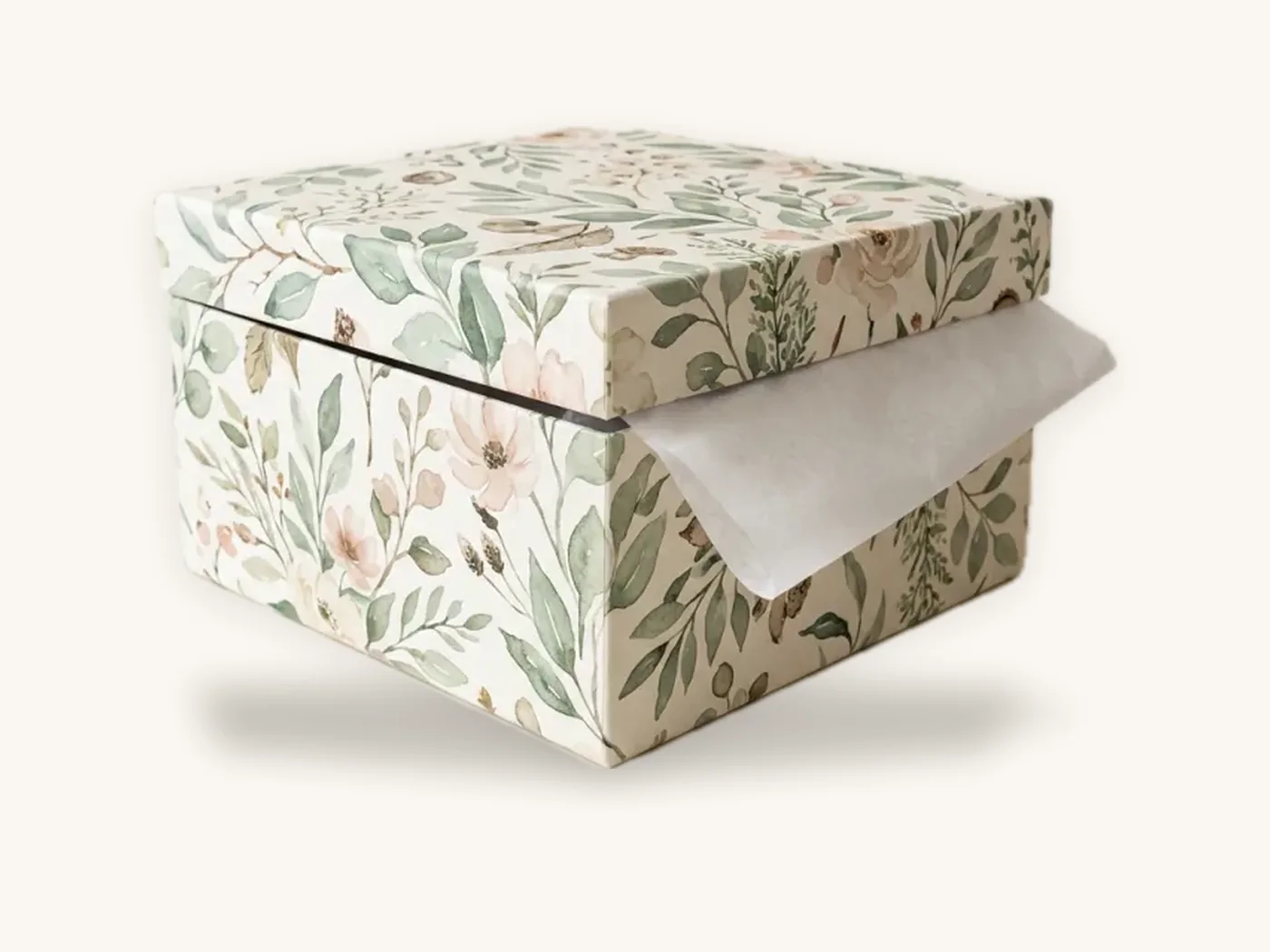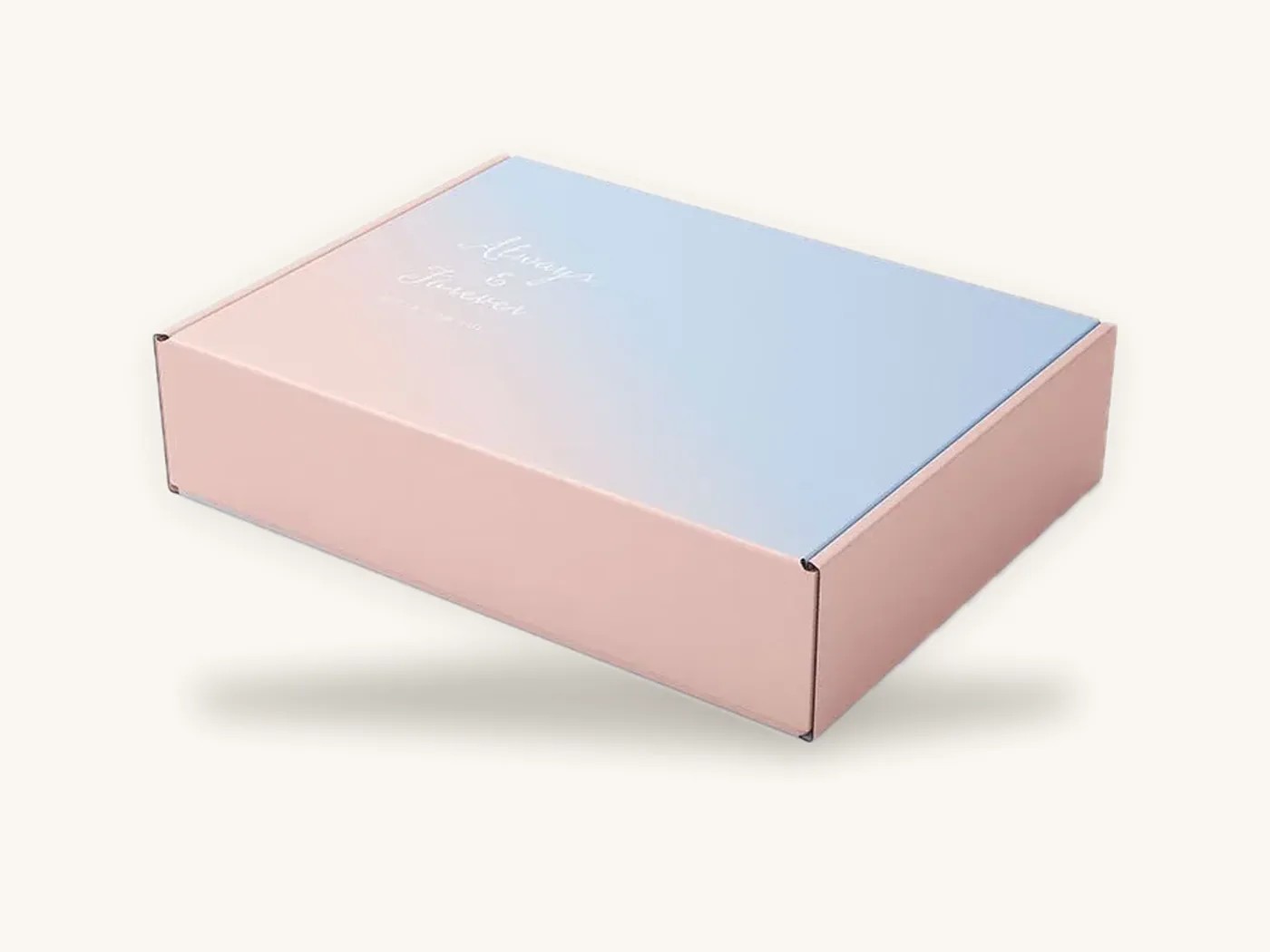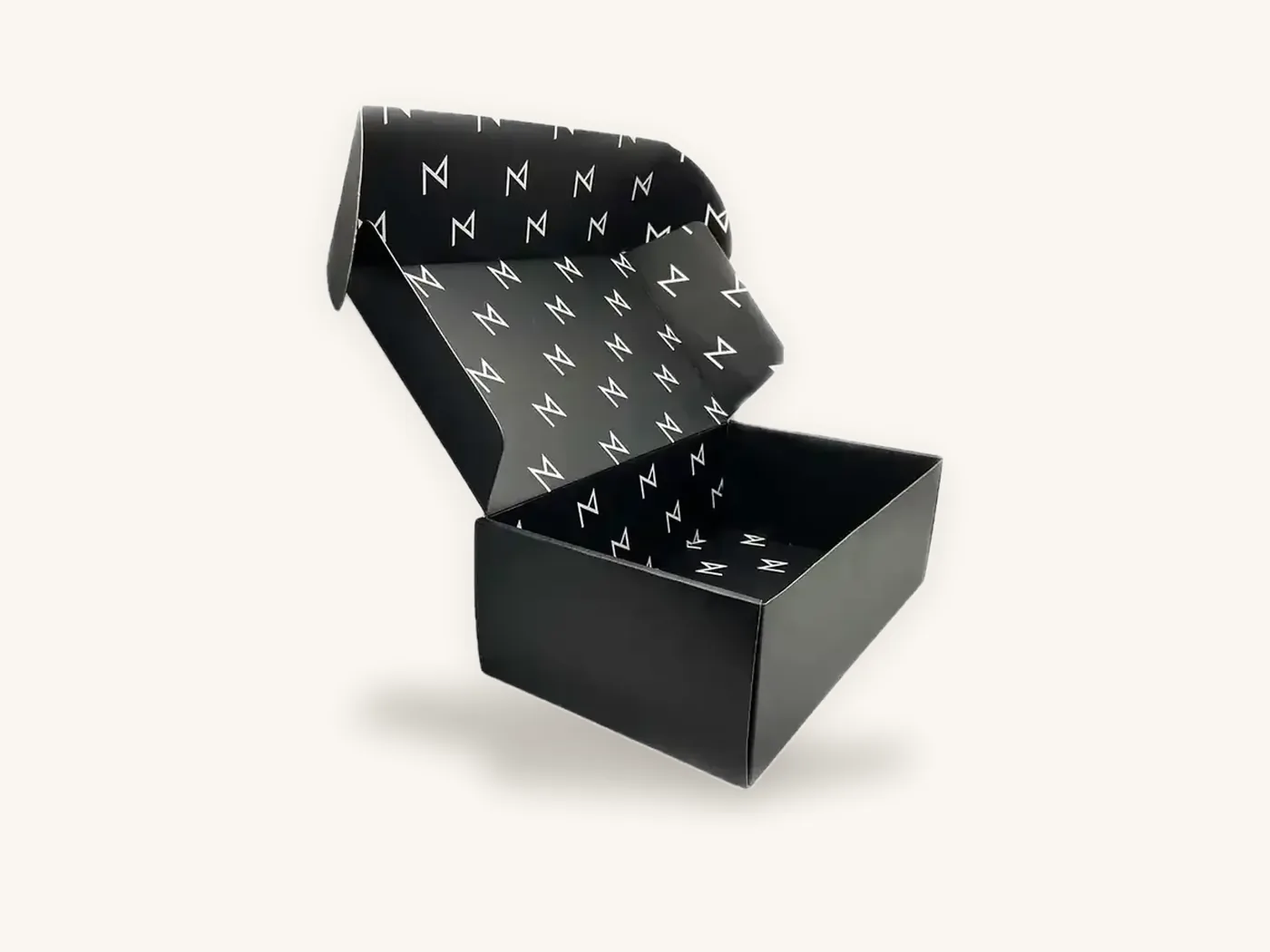
Custom shoe boxes are printed boxes built to a footwear brand's exact sizes, usually in E-flute or B-flute corrugated for everyday sneakers and shoes, or wrapped rigid board for premium and limited releases. A good one does three jobs at once: it keeps a pair's shape through a stockroom stack and a delivery truck, it identifies size and style from the end panel, and it gives the customer a reveal worth photographing.
The decisions that matter are size, structure, board and how the box will ship. A sneaker brand selling online and a boutique selling handmade leather shoes will make different choices at each step, and this guide shows what each option does so you can choose deliberately.
We cover shoe box sizes by footwear type, how to measure, the main shoe box packaging structures, board strength for stacking and shipping, the end label, unboxing design, costs and how to order.
Key takeaways
- Size the box around the pair as packed, including tissue or paper forms, then add a small clearance so the lid sits flat without squeezing toes.
- A two-piece lid and base is the classic shoe box; a one-piece hinged lid is faster to pack; a drawer box and magnetic rigid box suit premium releases.
- E-flute corrugated handles most shoe boxes; move to B-flute or rigid board for heavy boots, high stacks or collectible sneaker boxes.
- Plan the end panel for size, colorway and SKU labels, because shoe boxes are usually stored end out.
- Shoe boxes shipped to customers either need to be built as a shipper or placed in an overbox; collectors expect the box to arrive undamaged.
- Box Sense makes custom shoe boxes from 10 units with free structural samples and standard production of 8–12 business days after proof approval.
Shoe box sizes by footwear type
Shoe box dimensions are not standardized across the industry. Brands size to their own lasts, and the same shoe size can need different boxes depending on toe shape, sole thickness and shaft height. The ranges below are practical starting points for inside dimensions, written as length x width x depth.
| Footwear | Typical inside size to start testing | Notes |
|---|---|---|
| Baby and infant shoes | roughly 6x4x3 in | Often a small rigid or folding carton gift box |
| Toddler and kids shoes | roughly 9x6x4 in | Several sizes can share one box |
| Sandals and slides | roughly 11x7x3 in | Flat pairs; shallow boxes avoid air |
| Women's flats and low sneakers | roughly 11x7x4 in | Heels may need extra depth |
| Men's low sneakers and dress shoes | roughly 13x8x5 in | The most common adult box footprint |
| High-top and chunky sneakers | roughly 14x9x5 in | Thick soles and padded collars add width and depth |
| Ankle boots | roughly 13x9x5 in | Shaft often folded or laid heel to toe |
| Mid-calf and tall boots | roughly 18x13x5 in or larger | Consider a shaft support insert |
Grouping sizes
You rarely need a box for every shoe size. A common approach is three or four box sizes covering a whole run: one for small sizes, one for mid sizes and one for large sizes, with a fourth for high tops or boots. Fewer sizes lower your unit price, simplify packing and keep stockroom shelving uniform.
Test the largest shoe size in each group. If the biggest pair squeezes, move the break point down rather than making the box bigger for everyone.
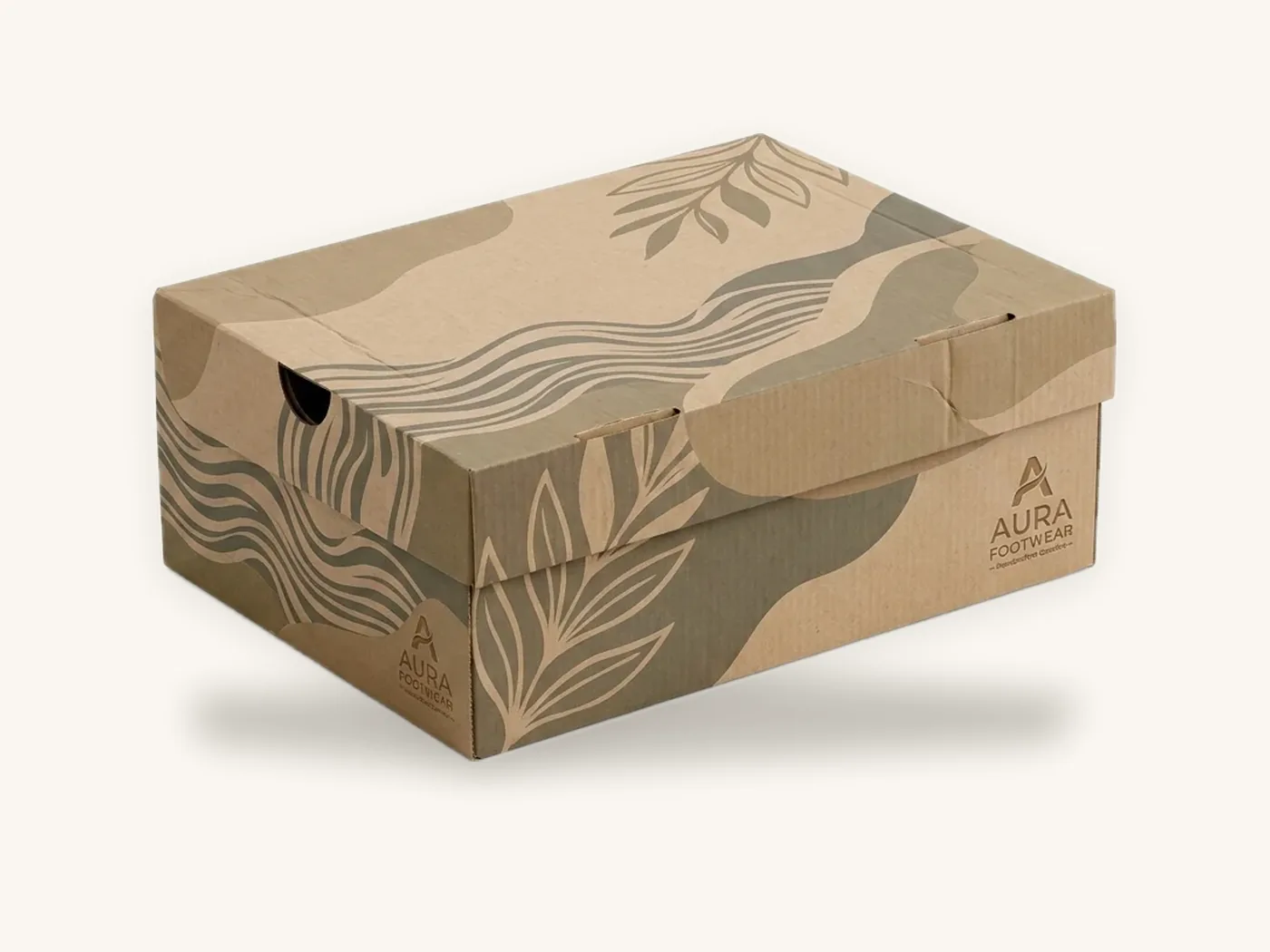
How to measure shoes for a custom box
Measuring the shoe on its own understates what the box needs. Measure the pair as it will be packed.
- Pack the pair the way it will ship. Place shoes heel to toe, add tissue, paper shoe forms, a dust bag or lace bag if you use them.
- Measure the longest point. Measure the packed pair from toe tip to the back of the opposite heel, including any pull tabs.
- Measure the widest point. Measure across both shoes at the ball of the foot, where they are widest when nested.
- Measure the tallest point. Measure from the base of the sole to the highest point of the collar, tongue or folded boot shaft.
- Add clearance. Add roughly 1/4 in to length and width and roughly 1/4 in to depth so the lid closes without pressing the toe box.
- Account for board thickness in lids. A lift-off lid sits outside the base, so its inside size is the base's outside size plus a little slip allowance. We calculate this on the dieline.
- Confirm with a structural sample. Pack your largest size in the group, close the lid and check for bulging or crushed toes.
Tip: leather dress shoes and structured sneakers can take a permanent crease across the toe if a lid presses down during storage. When in doubt, add depth rather than width; a little headroom protects shape more than a little side room.
Shoe box packaging structures compared
The structure sets the opening experience, packing speed, stacking strength and whether the box ships flat.
| Structure | How it opens | Ships flat | Packing speed | Best for |
|---|---|---|---|---|
| Two-piece lid and base, corrugated | Lift-off lid | Can be supplied flat and folded on site | Moderate | Classic retail shoe boxes |
| One-piece hinged lid, corrugated | Lid flips up, often with a tuck front | Yes | Fast | High-volume sneakers, direct-to-consumer |
| Drawer box | Tray slides out of a sleeve | Depends on board | Moderate | Premium sneakers, gift editions |
| Two-piece rigid box | Lift-off lid with slow reveal | No | Moderate | Luxury shoes, limited releases |
| Magnetic closure rigid box | Opens like a book | No, unless collapsible | Fast | Collectible and gift footwear |
| Shoe box mailer | Tuck-front mailer lid | Yes | Fast | Shoes that ship without an overbox |
Two-piece lid and base
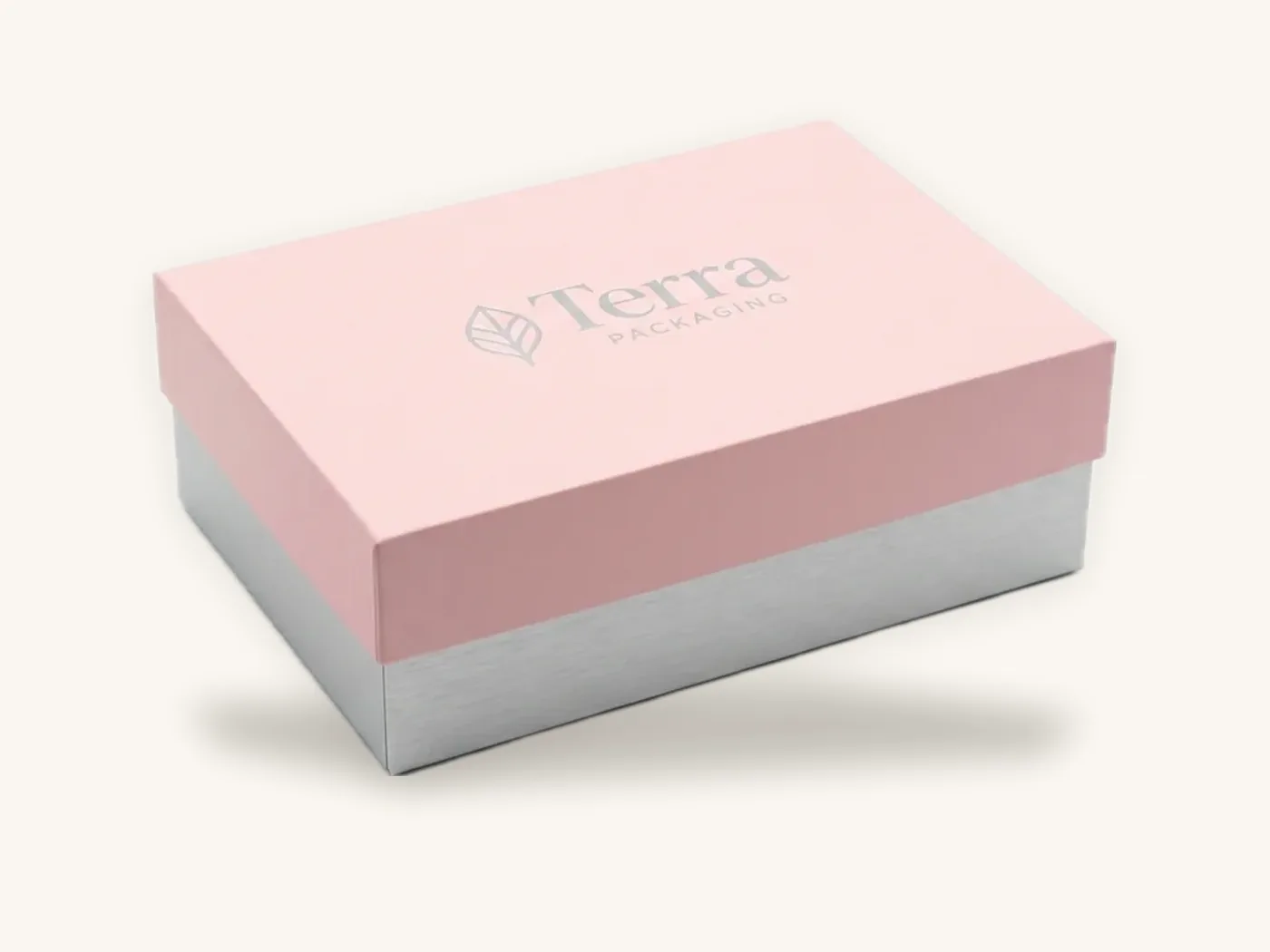
A two-piece box is what most people picture: a base and a separate lid that lifts off. In corrugated it is sturdy and economical; in rigid board it becomes a premium presentation box. The two-piece boxes guide covers lid depth and fit in detail. A full-depth lid covers the whole base and adds strength; a shallow lid shows more of the base and uses less board.
One-piece hinged lid
A one-piece corrugated shoe box has the lid attached to the back wall. It is die-cut from a single sheet, ships flat, assembles quickly and never gets separated from its base in a stockroom. For brands packing large volumes or shipping direct, it is often the most practical choice.
Drawer and rigid boxes
A drawer box slides a tray out of a printed sleeve, which makes a strong reveal for sneakers and gives two print surfaces: the sleeve and the tray interior. The drawer boxes page shows the structure. For luxury footwear, a rigid two-piece or magnetic closure box in 2 mm greyboard holds its shape through years of closet storage, which matters to collectors and buyers of formal shoes.
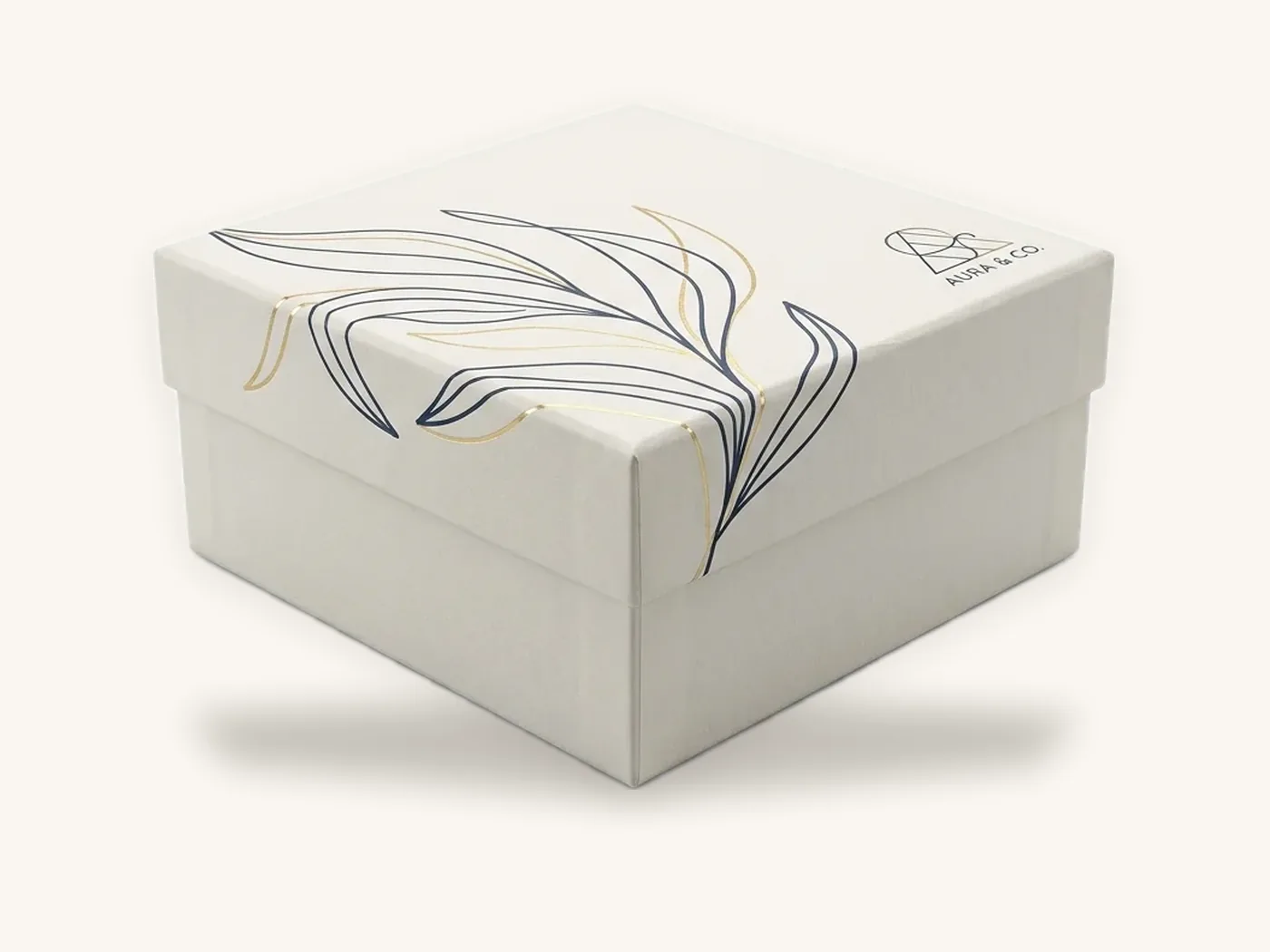
Board strength for stacking and shipping
Shoe boxes spend their lives stacked: in warehouses, on stockroom shelves and in customers' closets. Board choice decides whether the bottom box in a stack is still square after a season.
| Board | Thickness | Strengths | Choose it when |
|---|---|---|---|
| E-flute corrugated | about 1.5 mm | Crisp print, clean corners, light | Most sneakers and shoes, moderate stacks |
| B-flute corrugated | about 3 mm | Better crush and stacking strength | Heavy boots, tall stacks, boxes that ship alone |
| Kraft paperboard | 18 to 24 pt | Low cost, natural look | Very light footwear such as slippers or baby shoes |
| Rigid greyboard, wrapped | about 2 mm | Holds shape indefinitely, premium finish | Luxury, collectible and gift footwear |
Corrugated for everyday shoe boxes
Corrugated board gives the best strength for weight and cost. E-flute prints nearly as crisply as paperboard and suits most shoe box packaging. B-flute doubles the thickness, which pays off for boots and for boxes that must ship through carriers without an overbox. Our corrugated flutes explained guide compares grades in more depth.
Paperboard and rigid board
Light paperboard boxes, such as kraft paperboard, are economical for very light footwear but crush in tall stacks. Rigid greyboard is at the other end of the scale: it does not flex, holds a sharp corner and survives repeated opening, which is why premium shoe brands use it for boxes intended to be kept.
Watch out: a dark flood color on the long side panels of a corrugated shoe box shows scuffs from shelving and sliding. Matte lamination or a textured pattern hides handling marks far better than a gloss solid.
Designing the end panel: sizes, SKUs and barcodes
In stockrooms and warehouses, shoe boxes are usually shelved with one short end facing out. That end panel is how staff find a size in seconds, so it deserves its own design brief.
What usually goes on the end panel
- Brand logo or wordmark, small and consistent
- Style name and colorway
- Shoe size, often in more than one sizing system for international sales
- SKU or style code
- A UPC or other retail barcode where retailers require it
- Country of origin, where required for your markets
Most of this changes by size and colorway, so brands print the fixed branding on the box and apply a printed label for variable data. Reserve a flat, uncoated or lightly coated label area on the end panel, sized to your label with a margin, so labels sit straight and scan reliably. Our custom labels and stickers can match the box artwork.
Keep both ends consistent
Boxes do not always go on the shelf the same way round. Printing the logo on both ends and placing the label on one side, marked by a small printed guide, prevents half your stock showing a blank panel.
Shipping shoe boxes to customers
A retail shoe box is designed to sit on a shelf, not to take a parcel network's drops and conveyor impacts. Decide early whether your box ships on its own or inside another box.
Ship in its own container
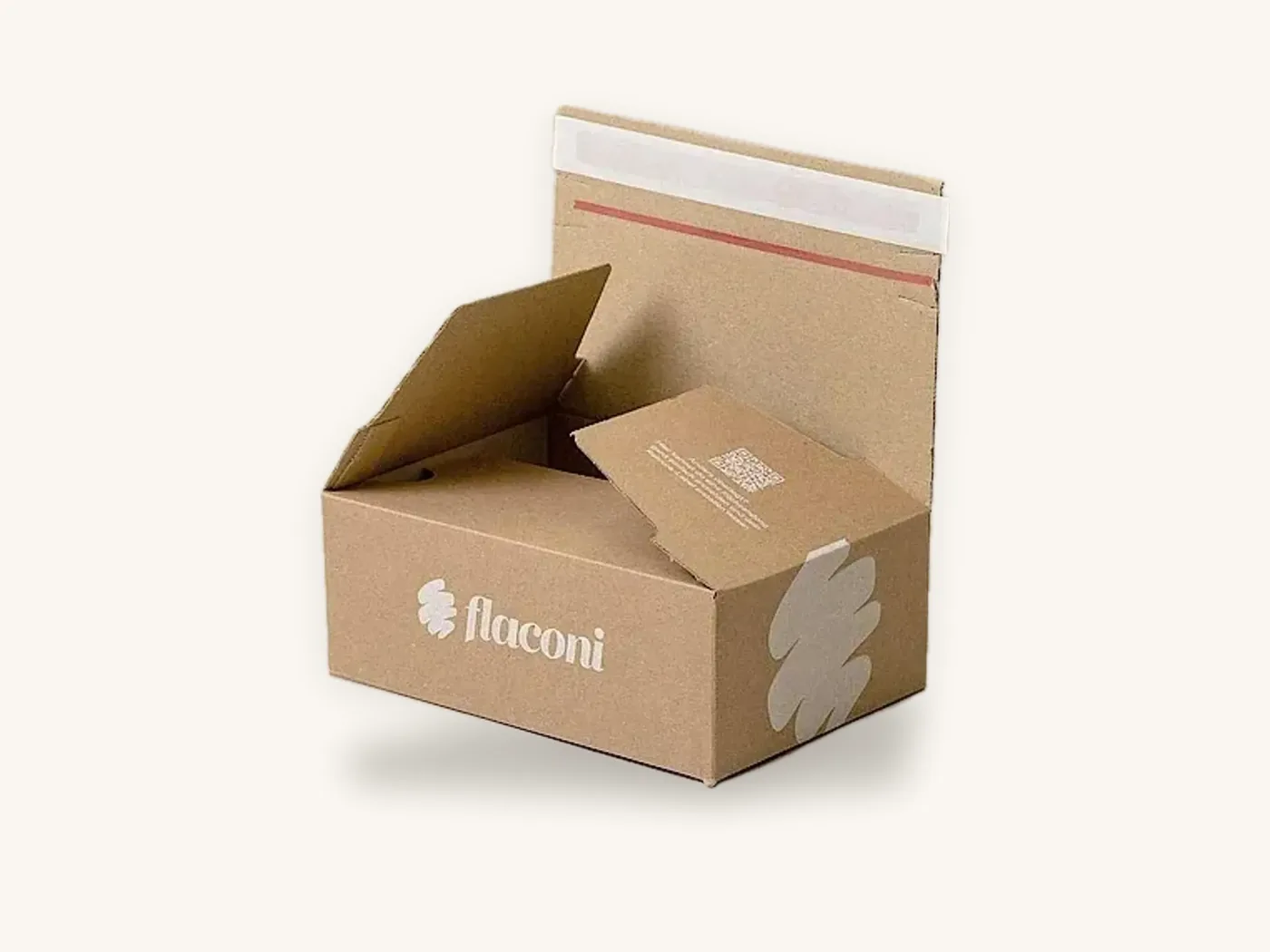
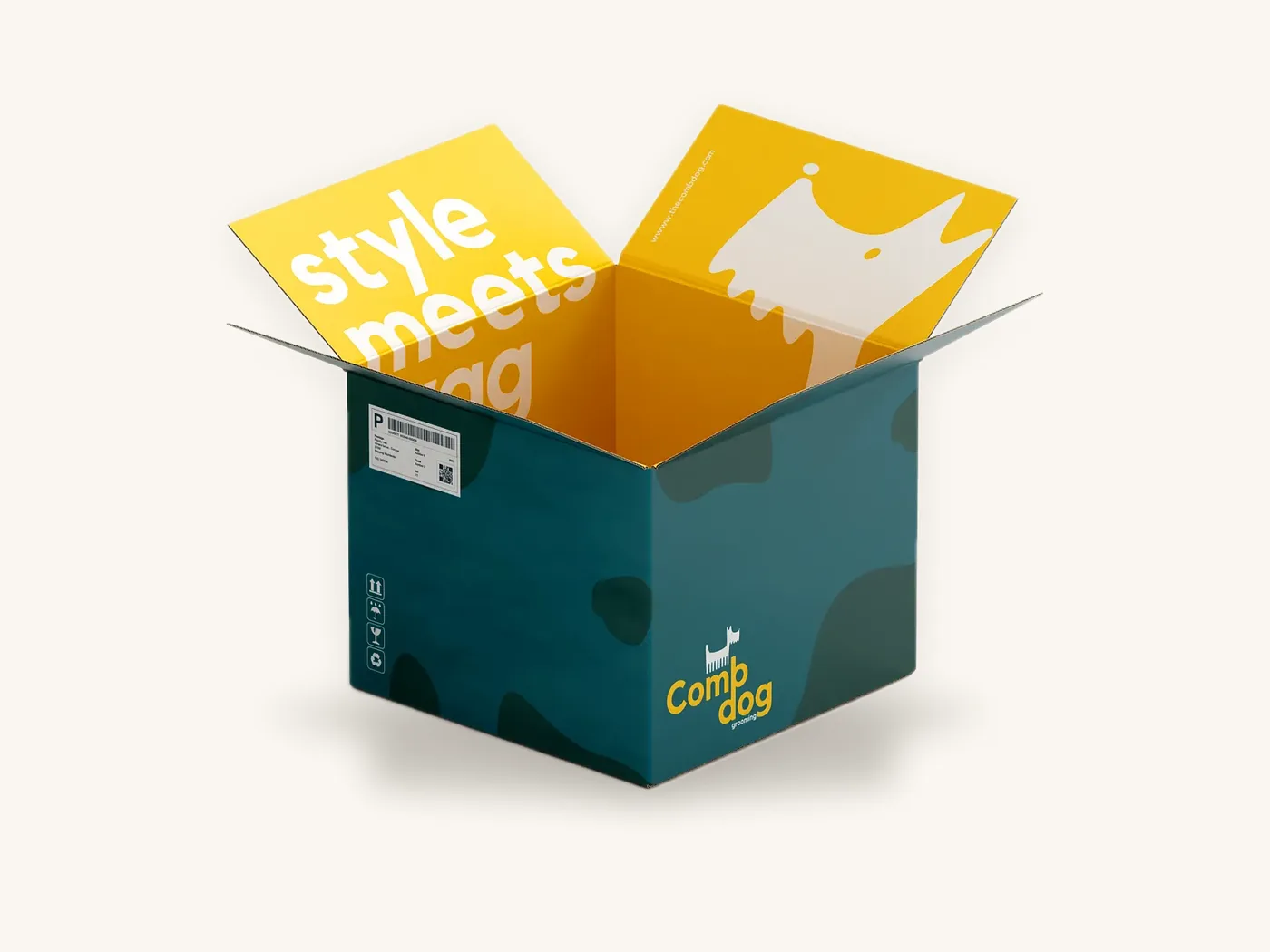
If the shoe box is your shipping box, build it for that: B-flute or a sturdy E-flute one-piece structure, a closure that stays shut, and a panel for the shipping label that does not cover your branding. A tuck-front mailer structure, similar to our custom mailer boxes, is often the most reliable way to do this.
Use an overbox
For sneaker boxes that customers keep, collect or resell, an overbox is the safer route. Labels, tape and scuffs land on the outer shipper, and the shoe box arrives clean. A plain or one-color custom shipping box in B-flute, sized with a small gap around the shoe box, does the job. Keep the gap tight; an oversized overbox lets the shoe box slide and raises dimensional weight charges, which the dimensional weight guide explains.
Unboxing design for sneakers and dress shoes
Footwear unboxing has well-understood rituals. Customers expect tissue, shoes placed toe to heel and a reveal as the lid lifts. The difference between a generic box and a memorable one is usually in the details inside.
Inside the lid and base
- Inside lid print. A pattern, message or the shoe's design story is visible the moment the lid comes off.
- Printed tissue. Printed tissue paper wrapped over the pair adds a second reveal and absorbs small movement.
- Paper shoe forms. Paper stuffing or card forms inside the shoes hold toe shape; paper keeps the package recyclable.
- Dust bags or lace bags. For premium footwear, a cloth bag signals care and gives the customer storage.
- A card. Care instructions, a fit note or the story of the collection, placed on top of the tissue.
Designing for limited releases and gifting
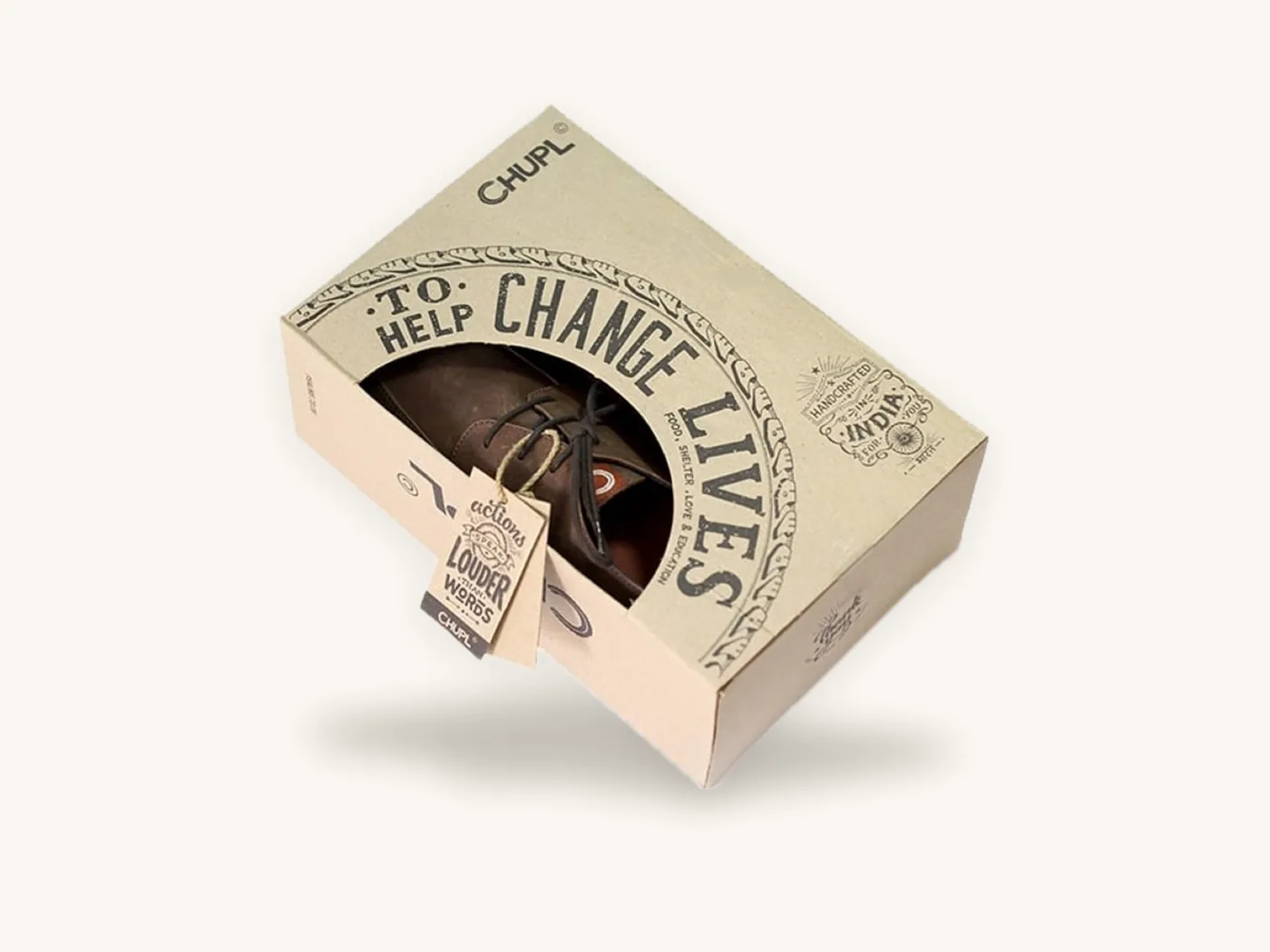
For limited-edition drops, a drawer box with a printed tray interior, a numbered sticker or a foil-stamped lid gives collectors reasons to keep the box. For holiday sets, a sleeve over a standard shoe box changes the look without a new structure; our holiday packaging guide covers seasonal sleeves and sets. If you also sell clothing, keep tissue and stickers consistent with your apparel packaging so every order looks like one brand.
What custom shoe boxes cost
Price depends on size, board, structure, print coverage, finishes and quantity. Standard adult shoe box sizes are not on our published price sheet, so use the instant price estimator for your exact dimensions. The specs below are useful reference points for smaller shoe boxes and overboxes, with US shipping included.
| Spec and typical footwear use | 100 | 500 | 1,000 | 5,000 |
|---|---|---|---|---|
| Rigid box, 2 mm greyboard, 8x6x3 in, full color, matte (baby shoe gift box) | about $9.10 | about $4.85 | about $4.05 | about $2.87 |
| Mailer box, E-flute, 10x8x4 in, full color inside and outside (kids shoes shipped direct) | about $4.33 | about $2.31 | about $1.92 | about $1.36 |
| Shipping box RSC, B-flute, 12x10x6 in, 1-color (overbox for small shoe boxes) | about $4.69 | about $2.50 | about $2.08 | about $1.48 |
| Shipping box RSC, B-flute, 16x12x8 in, 1-color (overbox for adult shoe boxes) | about $7.47 | about $3.99 | about $3.32 | about $2.36 |
Larger boxes use more board, so an adult sneaker box costs more than the kids-size reference above in the same spec. Foil stamping and embossing each carry one-time tooling of about $60 and spot UV about $40. There are no die or plate charges on standard boxes.
Where shoe box budgets go furthest
- Fewer box sizes reduce unit costs more than any finish decision.
- One-color or kraft outsides with printed insides keep shelf costs low while preserving the reveal.
- Labels for variable data let one printed box serve every size and colorway.
- Rigid boxes only where customers keep them, such as limited releases and luxury lines.
How to order custom shoe boxes from Box Sense
We make custom shoe boxes in lid-and-base and drawer styles, in corrugated or rigid board, plus overboxes, tissue and labels on the same order. Browse related options on our apparel and fashion packaging page.
What to send
- Packed pair dimensions for the largest shoe in each size group
- Number of box sizes and the shoe sizes each covers
- Structure: two-piece, one-piece hinged lid, drawer or magnetic rigid
- Board: E-flute, B-flute, kraft paperboard or rigid
- Whether the box ships on its own or in an overbox
- End panel content and label size
- Print and finishes, inside and outside
- Quantities per size and a target launch or delivery date
From quote to delivery
Quotes are confirmed within 24 hours. Our design services team prepares dielines for each size, sets up artwork and sends a 3D digital proof with two revision rounds. Unprinted structural samples are free, which is the right way to test your largest pairs, and a printed sample of approved artwork is free on orders of 100 or more; see samples.
Standard production is 8–12 business days after proof approval, with rush production in 5 business days on most corrugated and paperboard styles. Confirm timing for rigid boxes on your quote. The minimum order is 10 boxes, US shipping is free, and defective boxes reported within 14 days are reprinted free.
Frequently asked questions
What is the standard size of a shoe box?
There is no single standard. A common starting point for men's low sneakers is roughly 13x8x5 in inside, women's flats and low sneakers roughly 11x7x4 in, and kids shoes roughly 9x6x4 in. High tops and boots need more width and depth. Measure your largest packed pair in each size group and test a structural sample.
What material is best for custom shoe boxes?
E-flute corrugated suits most shoe boxes, combining crisp print, good stacking strength and low weight. B-flute is better for heavy boots, tall stacks and boxes that ship without an overbox. Rigid greyboard wrapped in printed paper is best for luxury and collectible footwear, where customers keep the box for years.
Should sneaker boxes ship inside another box?
If customers are likely to keep, collect or resell the box, yes. An overbox takes shipping labels, tape and scuffs, so the sneaker box arrives clean. If the box is purely functional, design it as a B-flute or mailer-style shoe box that ships on its own, with a panel reserved for the shipping label.
How many shoe box sizes does a footwear brand need?
Most brands cover a full size run with three or four box sizes: small, medium, large and an extra size for high tops or boots. Test the largest shoe in each group so every pair fits without pressure. Fewer sizes lower unit costs, simplify packing and keep stockroom shelving consistent.
What goes on the end of a shoe box?
The end panel usually shows the brand, style name, colorway, shoe size, SKU and a retail barcode, plus country of origin where required. Most brands print fixed branding and add a label for variable details so one box serves every size. Reserve a flat label area and repeat the logo on both ends.
How much do custom shoe boxes cost?
Cost depends on size, board, structure, print and quantity, and adult shoe box sizes are best priced in the estimator. As reference points, an E-flute 10x8x4 in mailer printed inside and outside is about $1.92 each at 1,000 units, and a B-flute 16x12x8 in overbox is about $3.32 at 1,000, with US shipping included.
What is the minimum order for custom shoe boxes?
Box Sense makes custom shoe boxes from 10 units, which suits sample pairs, small-batch makers, limited releases and pre-launch testing. Short runs are printed digitally without plates. Because each box size is a separate item, ask for pricing on each size group together to see the total order cost.
Next steps
Pack your largest shoe in each size group, measure it and decide whether your boxes will ship alone or inside an overbox. Then check your dimensions in the shoe box price estimator and request a custom shoe box quote to get dielines for every size, a 3D proof and a free structural sample.
Boxes in this guide
Order the packaging we covered
Written by the Box Sense Packaging Team
Our structural designers, prepress technicians and production staff print and convert custom boxes every day for brands in the United States, United Kingdom and UAE. Questions about this guide? Talk to us.