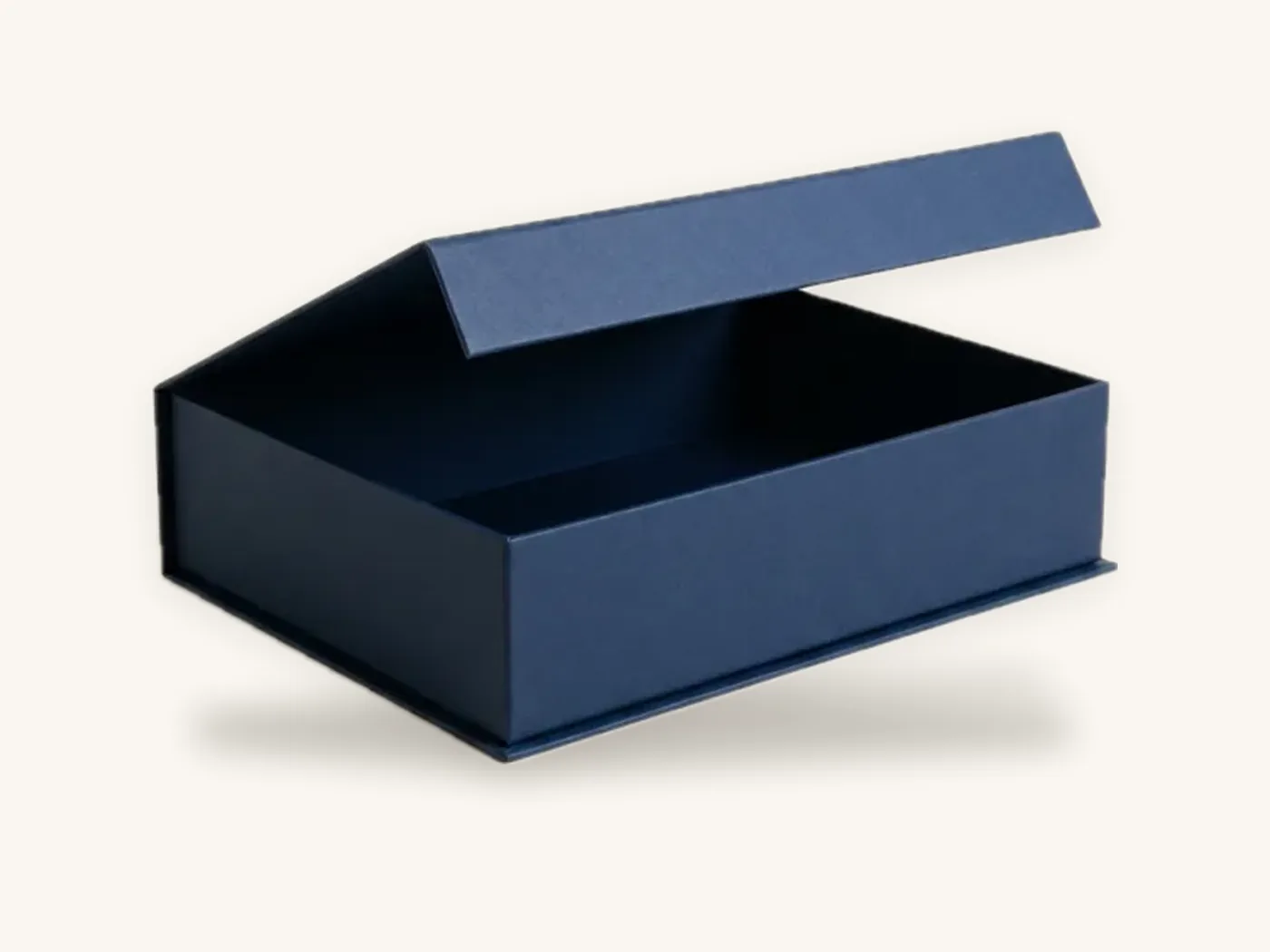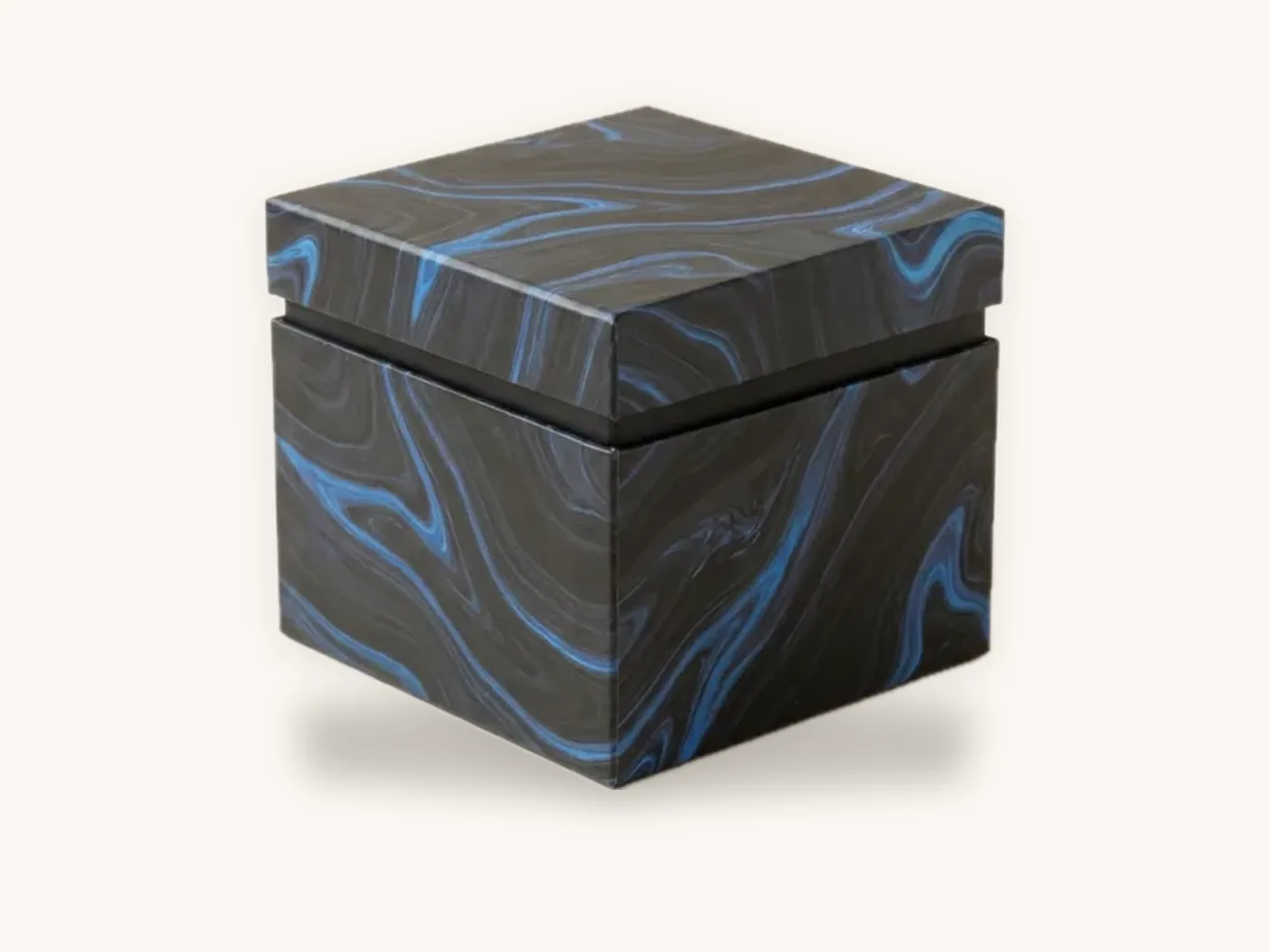
Good electronics packaging holds a device perfectly still, presents it the moment the lid comes off and keeps every cable, adapter and quick-start card in its own place. For most consumer tech that means a rigid lift-off or magnetic box, or a paperboard carton for lower-priced accessories, built around a fitted insert that is designed before the artwork.
The format you choose depends mostly on the product's price point and where it sells. A pair of wireless earbuds sold online and a pack of charging cables on a retail peg need very different boxes, even if the same brand makes both.
This guide works through electronics packaging by product type, then covers insert engineering, what the box can and cannot protect against, finishes that survive handling, costs and how to order custom electronics boxes.
Key takeaways
- Choose the box by product category and channel: rigid boxes for premium devices, sleeve and tray or tuck cartons for accessories, hang tab cartons for peg retail.
- Design the insert first. The device tray, cable well and accessory compartment set the box's inside dimensions.
- The box handles impact and presentation; static protection comes from a static-shielding bag, and lithium battery shipping follows separate carrier and hazmat rules.
- Dark flood colors and soft-touch finishes show scuffs and fingerprints; plan coatings with that in mind.
- A 2 mm rigid magnetic box at 10x8x3 in with soft-touch, foil and an insert runs about $14.23 each at 100 units and about $6.32 at 1,000.
- Box Sense makes custom electronics boxes from 10 units with free structural samples and standard production of 8–12 business days after proof approval.
Electronics packaging by product category
Start with what you are packing. The matrix below reflects common, practical pairings rather than rules, and most brands mix formats across a product line.
| Product | Typical format | Insert | What matters most |
|---|---|---|---|
| Wireless earbuds | Small rigid lift-off or magnetic box | EVA foam or paperboard tray with case recess | Premium reveal, compact size |
| Over-ear headphones | Magnetic book-style rigid box | Molded pulp or foam shaped to the headband | Holding a curved shape without pressure points |
| Phone cases and screen protectors | Window box, hang tab carton or slim drawer | Paperboard card or backer | Shelf visibility, peg display |
| Charging cables and adapters | Reverse tuck carton or sleeve and tray | Paperboard divider or cable card | Low unit cost, tidy coil |
| Power banks and small speakers | Rigid box or E-flute mailer | Die-cut foam or pulp | Drop protection for dense items |
| Smart home devices | Sleeve and tray or rigid lift-off lid | Two-tier paperboard or pulp | Device on top, mounts and screws below |
| Wearables and trackers | Small rigid box or window carton | Foam or paperboard pillow | Strap presentation, small components |
| Keyboards, mice and peripherals | Printed carton or E-flute mailer | Corrugated or pulp end caps | Crush resistance across long panels |
| Dev boards and kits | Two-piece box or tuck mailer | Foam with component cut-outs | Many loose parts, reusable storage |
Premium devices
When the device costs enough that customers keep the box, a rigid box is usually worth it. Rigid versions of our custom electronics boxes are built from 2 mm rigid greyboard wrapped in printed paper, and they hold their corners through shipping and years on a shelf. Headphone and earbud boxes typically use a magnetic book-style lid, which opens like a cover and shows the device on a raised tray.
Accessories and consumables
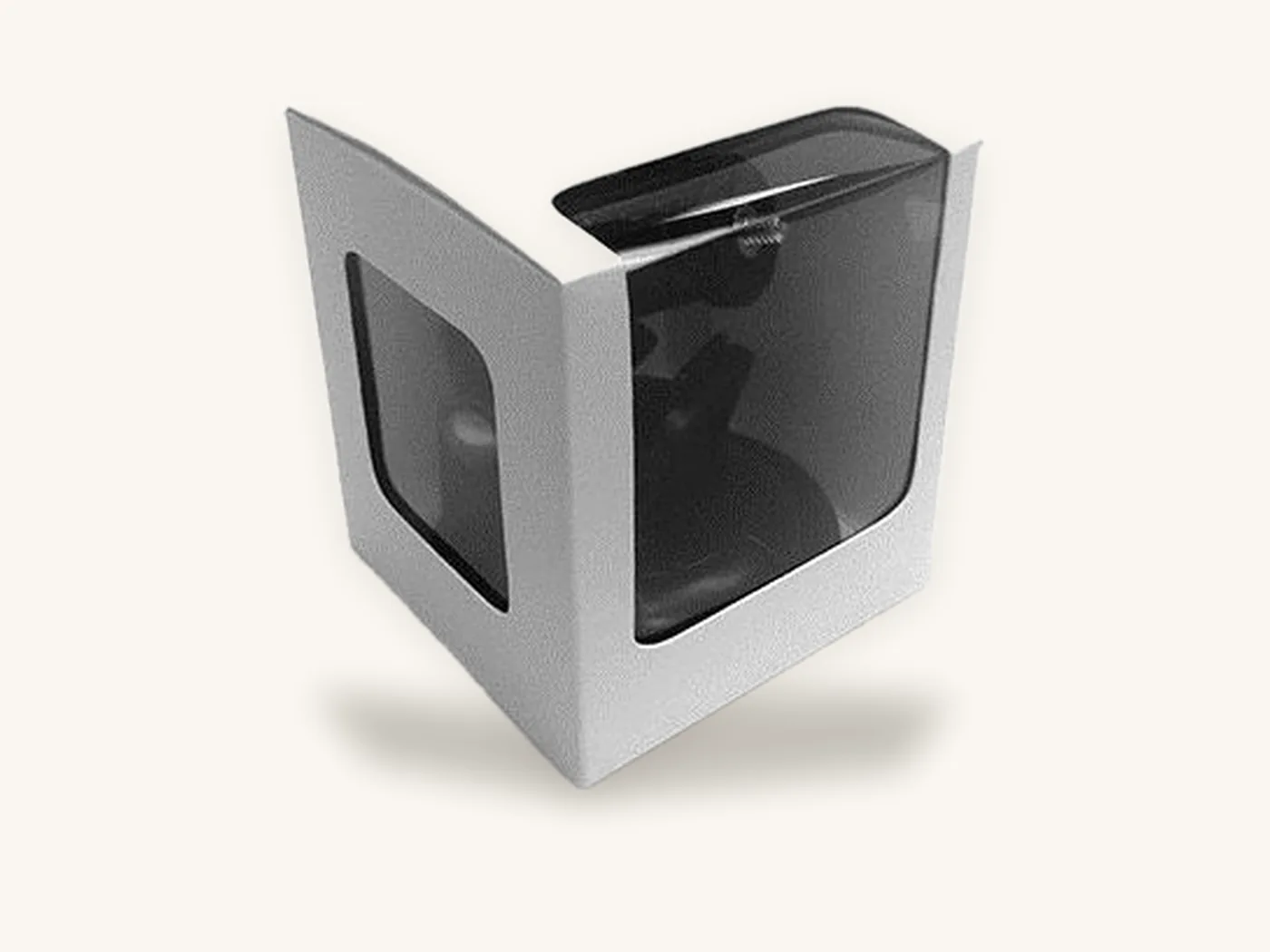
For accessories, box cost has to stay a small fraction of the retail price. A paperboard carton in 16 to 18 pt SBS paperboard prints crisp product photography and specifications at a much lower cost. Phone case boxes often add a window so the finish of the case sells itself, while hang tab boxes add a die-cut hole for retail pegs.

Box formats for gadget packaging compared
Once you know the category, choose the construction. Each format changes the opening experience, storage space and cost.
| Format | Opening experience | Ships flat | Relative cost | Choose it when |
|---|---|---|---|---|
| Two-piece rigid, lift-off lid | Slow lift with slight air resistance, very premium | No | High | Flagship devices, gift editions |
| Magnetic closure rigid | Opens like a book, snaps shut | No, unless collapsible | High | Headphones, wearables, reusable storage |
| Sleeve and tray | Slide the sleeve, lift the tray | Sleeve yes, tray depends | Medium | Smart home devices, accessory bundles |
| Tuck end carton | Flip the tuck, slide out | Yes | Low | Cables, adapters, replacement parts |
| Hang tab carton | Tuck opening with peg hole | Yes | Low | Retail peg accessories |
| Window box | Product visible before opening | Yes | Low to medium | Cases, visually distinctive accessories |
| Printed E-flute mailer | Lid lifts like a chest | Yes | Medium | Direct-to-consumer devices and bundles |
Two-piece and magnetic rigid boxes
A lift-off lid on a two-piece box creates a controlled, slow reveal that many tech brands use for flagship products. A magnetic closure box is faster to open and doubles as a storage case. The magnetic closure boxes guide covers magnet placement and wrap materials.
Sleeve and tray
A sleeve and tray box puts graphics on the sleeve and leaves the tray clean and functional. That split lets you run one tray structure for several product colors or regions and change only the printed sleeve, which keeps inventory flexible. The sleeve boxes guide explains the fit between sleeve and tray.
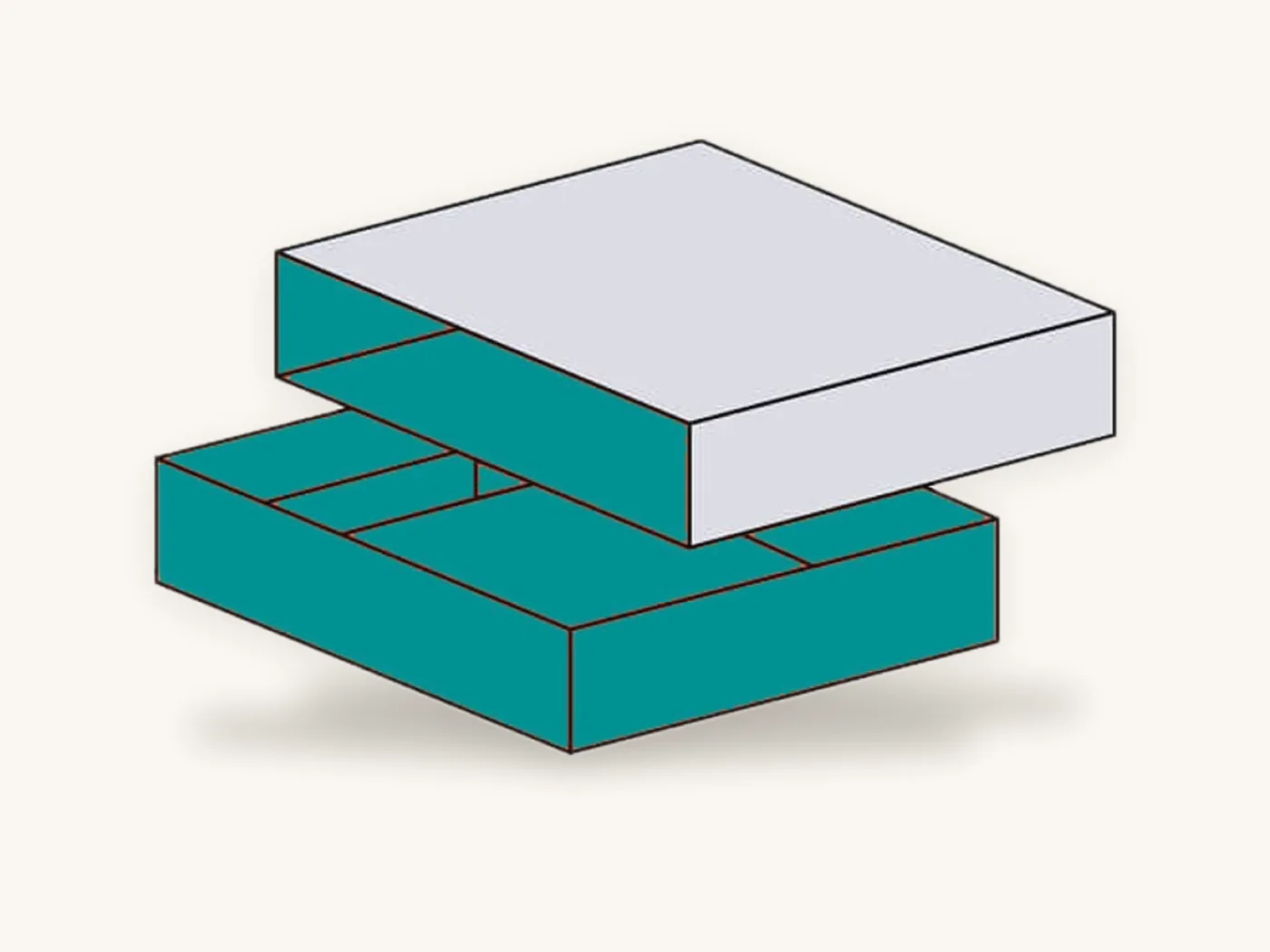
Tip: if one device ships in several colors, keep the box and insert identical and change a printed sleeve or a small label. One structure means one insert die, one sample approval and simpler reorders.
Engineering inserts for devices and accessories
In electronics packaging, the insert is where protection and presentation are decided. A beautiful box with a loose tray makes a device rattle, and a rattle on opening undermines everything else about the product. Our box inserts are cut to the exact product, and the foam vs paperboard inserts guide compares materials in detail.
Common insert layouts
- Single cavity tray. The device sits in a recess with a finger pull on one side. Best for earbuds, trackers and single devices.
- Two-tier layout. The device tray lifts out to reveal cables, adapters and documents underneath. Best for smart home devices and chargers with several accessories.
- Side-by-side compartments. Device on one side, accessories in a lidded well on the other. Best for shallow boxes where stacking would add too much depth.
- Raised plinth. The device sits on a platform at the height of the box rim, visible as soon as the lid lifts. Best for premium launches where the reveal matters.
Insert material by device
| Material | Holds shape tightly | Cushioning | Plastic-free | Typical use |
|---|---|---|---|---|
| EVA foam | Very precise cavities | Good | No | Earbuds, wearables, dev kits |
| PU foam | Softer, conforming | Very good | No | Fragile components, glass surfaces |
| Molded pulp | Good, slight texture | Good for moderate weight | Yes | Headphones, speakers, smart devices |
| Paperboard, die-cut | Good for flat or boxy items | Light | Yes | Cables, adapters, phone accessories |
| Corrugated end caps | Holds corners and edges | Good for long items | Yes | Keyboards, peripherals, larger devices |
Insert design checklist
- Measure the device with any protective film, bag or wrap it ships in, not the bare product
- Record the location of buttons, ports and cable exits that must not bear pressure
- Leave finger pulls or a lift ribbon on every item that sits below the rim
- Size cable wells for the cable coiled with its tie, not loose
- Keep printed documents flat in a lid pocket or under the tray
- Check that the lid closes without touching the device when the insert is fully loaded
- Test removal and replacement, since customers often repack devices for returns or travel

What the box does not protect against: static, batteries and moisture
A well-built box protects against impact, crushing and abrasion. Three other risks common to electronics need their own solutions, and it helps to plan them alongside the box rather than after.
Electrostatic discharge
Bare circuit boards and components can be damaged by static. That protection normally comes from a static-shielding or dissipative bag around the product, or from an insert material specified as static-safe. Standard paperboard, pulp and ordinary foam inserts are not static protective. Finished consumer devices in sealed housings usually do not need this, but if you ship bare boards or modules, ask your engineering team which ESD measures apply before choosing an insert.
Lithium batteries
Devices containing lithium batteries are subject to hazardous materials rules when shipped, set in the US by the Department of Transportation and for air by international aviation rules, plus each carrier's own policies. Depending on battery type, size and whether it is installed in the device, packages may need specific marks, documentation or packaging performance. Confirm current requirements with your carrier and hazmat advisor. Our hazmat shipping packaging guide outlines the basics.
Leave room on the outer shipper or mailer for any required marks so they do not have to be squeezed over your artwork later.
Moisture and condensation
Electronics shipped by sea or stored in humid warehouses can be affected by condensation. Brands often add a desiccant sachet inside a sealed bag. Leave a small, defined space in the insert for it rather than letting it float loose against the device.
Retail shelf vs direct-to-consumer electronics packaging
The same device can need different packaging depending on how it reaches the customer.
Retail requirements
Retail packaging has to communicate from a distance, fit a shelf or peg, and usually carry a UPC barcode, specifications, compatibility information and regulatory marks. Windows and hang tabs help accessories sell without staff. Retailers and marketplaces may also have their own packaging specifications for size, barcode placement and security features, so request their vendor guide early.
Regulatory marks such as FCC, CE, UKCA or the crossed-out wheeled bin for electronics recycling mostly belong on the device, but some markets expect information on packaging too. Your compliance team confirms which marks and statements appear on the box.
E-commerce requirements
A box that ships through parcel networks takes more impact than one sitting on a shelf. For direct sales, either design the retail box to survive on its own, typically an E-flute custom mailer box with a printed interior, or place the retail box in a plain corrugated shipper. Rigid boxes nearly always need an overbox, because a crushed rigid corner cannot be pushed back into shape.
A mailer with the device on a raised insert and a quick-start card in the lid is a strong setup for a direct-to-consumer launch. It also suits employee and client tech gifts; the corporate gift packaging guide covers kitting several items into one box.

Printing and finishes for tech brands
Tech packaging leans toward restraint: large solid colors, product photography, a clean logo and precise specifications. That aesthetic is unforgiving, so finish choice matters. The printing and finishes page shows every option.
- Black and dark floods. Striking, but they show scuffs, cracked folds and fingerprints. Use a matte lamination and consider a slightly textured wrap paper on rigid boxes.
- Soft-touch lamination. A velvety, premium feel that suits headphones and wearables, though it marks more easily than matte in heavy handling.
- Spot UV. A glossy product silhouette or logo on a matte background is one of the most common tech treatments and adds little cost after a one-time tooling charge.
- Foil stamping. Silver or holographic foil suits audio and gaming products. Keep foil lines thicker than hairline so they stamp cleanly.
- Embossing and debossing. A blind-debossed logo on a white rigid lid gives a minimalist look without ink.
- White SBS with aqueous coating. The economical choice for accessory cartons, bright and scuff-resistant enough for retail.
Specification panels
Keep compatibility, what is in the box, and required statements on a flat side or back panel, aligned to a grid. Specify minimum type sizes that stay legible after printing, and avoid reversing small type out of a dark flood, where fine strokes can fill in.
What custom electronics boxes cost
Price depends on format, size, board, print coverage, finishes, insert and quantity. These indicative per-unit figures come from our current rates with US shipping included; enter your exact size in the instant price estimator to compare options.
| Spec | 10 | 100 | 500 | 1,000 | 5,000 |
|---|---|---|---|---|---|
| Reverse tuck carton, 14 pt SBS, 2x2x6 in, full color, gloss lamination | about $1.77 | about $1.17 | about $0.63 | about $0.52 | about $0.37 |
| Window box, 18 pt SBS, 4x4x4 in, full color, aqueous, window | about $2.52 | about $1.66 | about $0.89 | about $0.74 | about $0.53 |
| Mailer box, E-flute, 8x6x3 in, full color outside | about $3.99 | about $2.64 | about $1.41 | about $1.17 | about $0.83 |
| Rigid box, 2 mm greyboard, 8x6x3 in, full color, matte | about $13.76 | about $9.10 | about $4.85 | about $4.05 | about $2.87 |
| Rigid magnetic box, 2 mm, 10x8x3 in, soft-touch, foil, insert | about $21.50 | about $14.23 | about $7.59 | about $6.32 | about $4.49 |
One-time tooling applies only to chosen features: spot UV about $40, foil or embossing about $60 each, and a custom insert die about $45. There are no die or plate charges otherwise.
Watch out: a rigid box plus foam insert at low volume can cost more than the accessory it holds. For accessories under a modest retail price, test a paperboard carton with a die-cut card insert before committing to rigid.
How to order electronics boxes from Box Sense
Our electronics and tech packaging range covers rigid, magnetic, sleeve, carton and mailer formats with fitted inserts. Here is how a typical project runs.
- Send the product. Share dimensions, weight and photos of the device and each accessory, or post us a sample so we can design the insert to the real item.
- Tell us the channel. Retail, e-commerce or both, plus any retailer packaging specification.
- Choose a starting format. Or ask for a recommendation based on price point and presentation.
- Get a quote within 24 hours. List the quantities you want priced, such as 100, 1,000 and 5,000.
- Review the dieline and insert layout. Our design services team supplies both free, with artwork setup and a 3D digital proof including two revision rounds.
- Test a structural sample. Unprinted structural samples are free, and a printed sample of approved artwork is free on orders of 100 or more. See samples.
- Approve and produce. Standard production is 8–12 business days after proof approval, with rush in 5 business days on most paperboard and corrugated styles.
- Receive and repack. US shipping is free, the minimum order is 10 boxes, and defective boxes reported within 14 days are reprinted free.
Frequently asked questions
What is the best packaging for electronics?
For premium devices, a rigid box with a fitted foam or molded pulp insert gives the best protection and presentation. For accessories such as cables and adapters, a paperboard tuck or sleeve carton keeps costs low. For direct-to-consumer shipping, use an E-flute mailer with an insert, or overbox the retail package in a corrugated shipper.
Are foam inserts better than molded pulp for electronics?
Foam gives tighter cavities and more cushioning for small, fragile or oddly shaped items, and it suits boxes customers reuse for storage. Molded pulp is paper-based and widely recyclable, and it protects moderately heavy devices such as headphones and speakers well. Choose by weight, fragility and sustainability goals, then test a packed sample.
Do electronics boxes need anti-static packaging?
Finished consumer devices in sealed housings usually do not need anti-static boxes. Bare circuit boards, modules and components can be damaged by static and typically ship in static-shielding bags or with static-safe materials. Standard paperboard, pulp and foam inserts are not static protective, so confirm ESD requirements with your engineering team.
How much do custom electronics boxes cost?
It depends on format, size, finishes, insert and quantity. A 2x2x6 in reverse tuck carton for a cable is about $0.52 each at 1,000 units. A 2 mm rigid box at 8x6x3 in with matte finish is about $4.05 at 1,000, and a 10x8x3 in magnetic box with insert about $6.32. Use the estimator for your spec.
Can I ship an electronics retail box without an outer carton?
Paperboard and rigid retail boxes usually need a corrugated shipper for parcel delivery, since corners crush and print scuffs. If you want the retail box to ship alone, design it as a printed E-flute mailer with an insert and test it through the carrier. Devices with lithium batteries may also need specific marks on the outer package.
What should be printed on an electronics box?
Most brands include the product name, product image, what is in the box, key specifications, compatibility, a UPC barcode and company details. Regulatory marks, recycling symbols and warnings depend on the product and market, and many belong on the device itself. Your compliance team confirms required content; the box should reserve clean panels for it.
What is the minimum order for custom gadget packaging?
Box Sense makes custom gadget packaging from 10 units, which suits prototypes, crowdfunding samples, influencer kits and small launches. Short runs are printed digitally without plates. Rigid boxes and inserts carry a higher unit cost at low volume, so compare quantity tiers before ordering, as prices often fall by more than half between 100 and 1,000 units.
Next steps
Gather your device and accessory dimensions, decide whether the box sells on a shelf, ships to the customer or both, and choose a starting format from the tables above. Then price your spec in the packaging price estimator and request an electronics packaging quote to get a dieline, insert layout and free structural sample.
Boxes in this guide
Order the packaging we covered


Written by the Box Sense Packaging Team
Our structural designers, prepress technicians and production staff print and convert custom boxes every day for brands in the United States, United Kingdom and UAE. Questions about this guide? Talk to us.