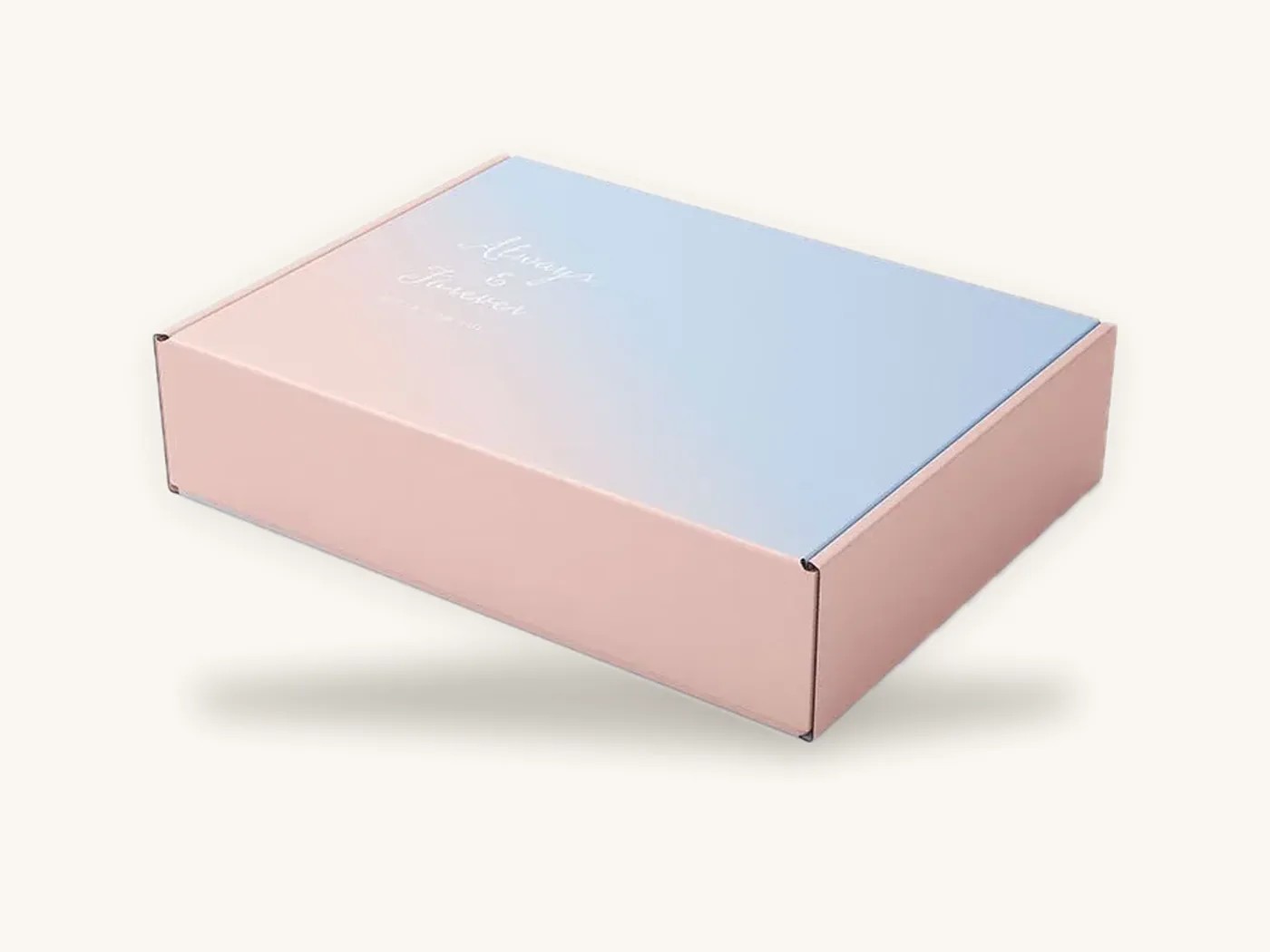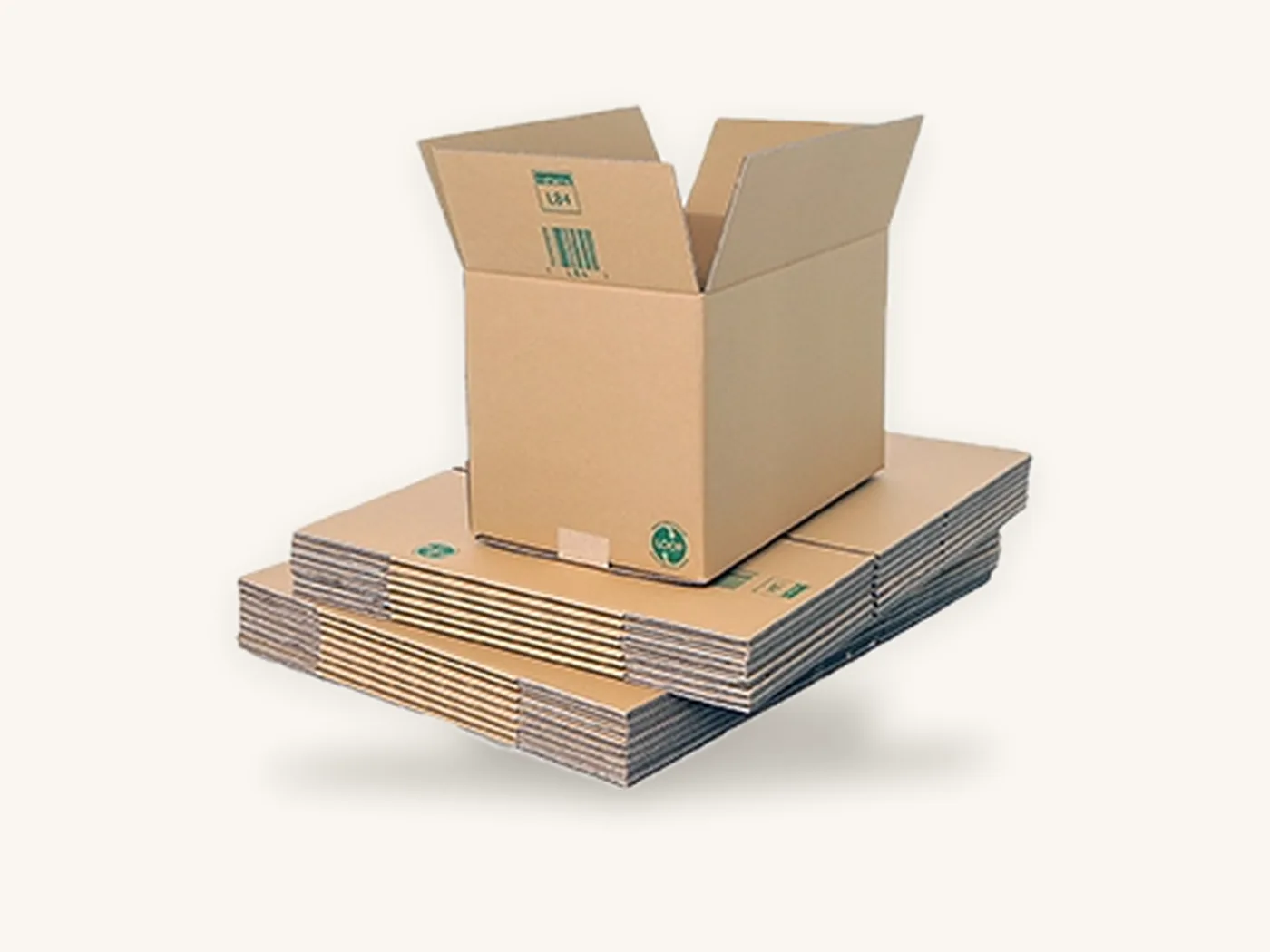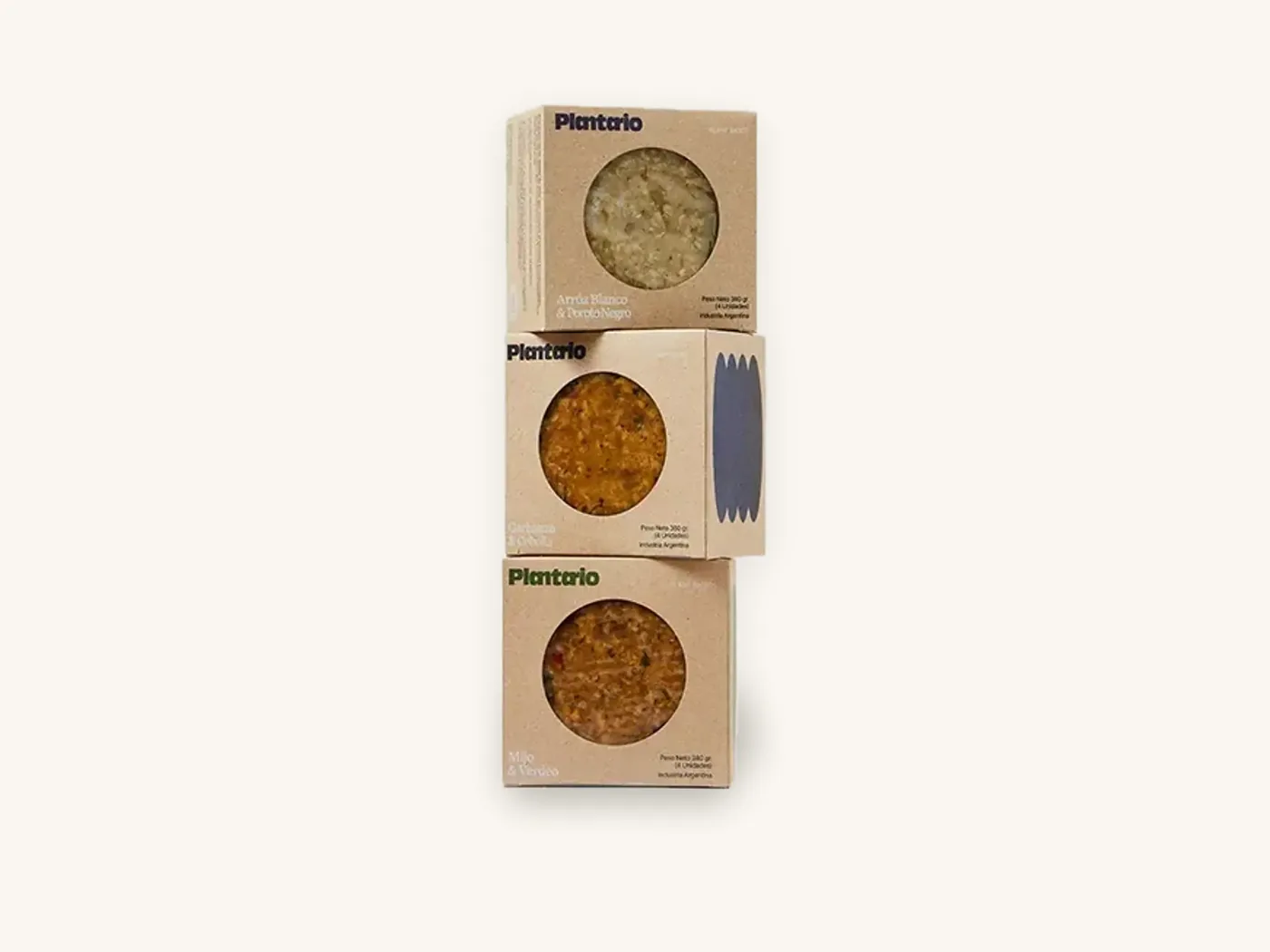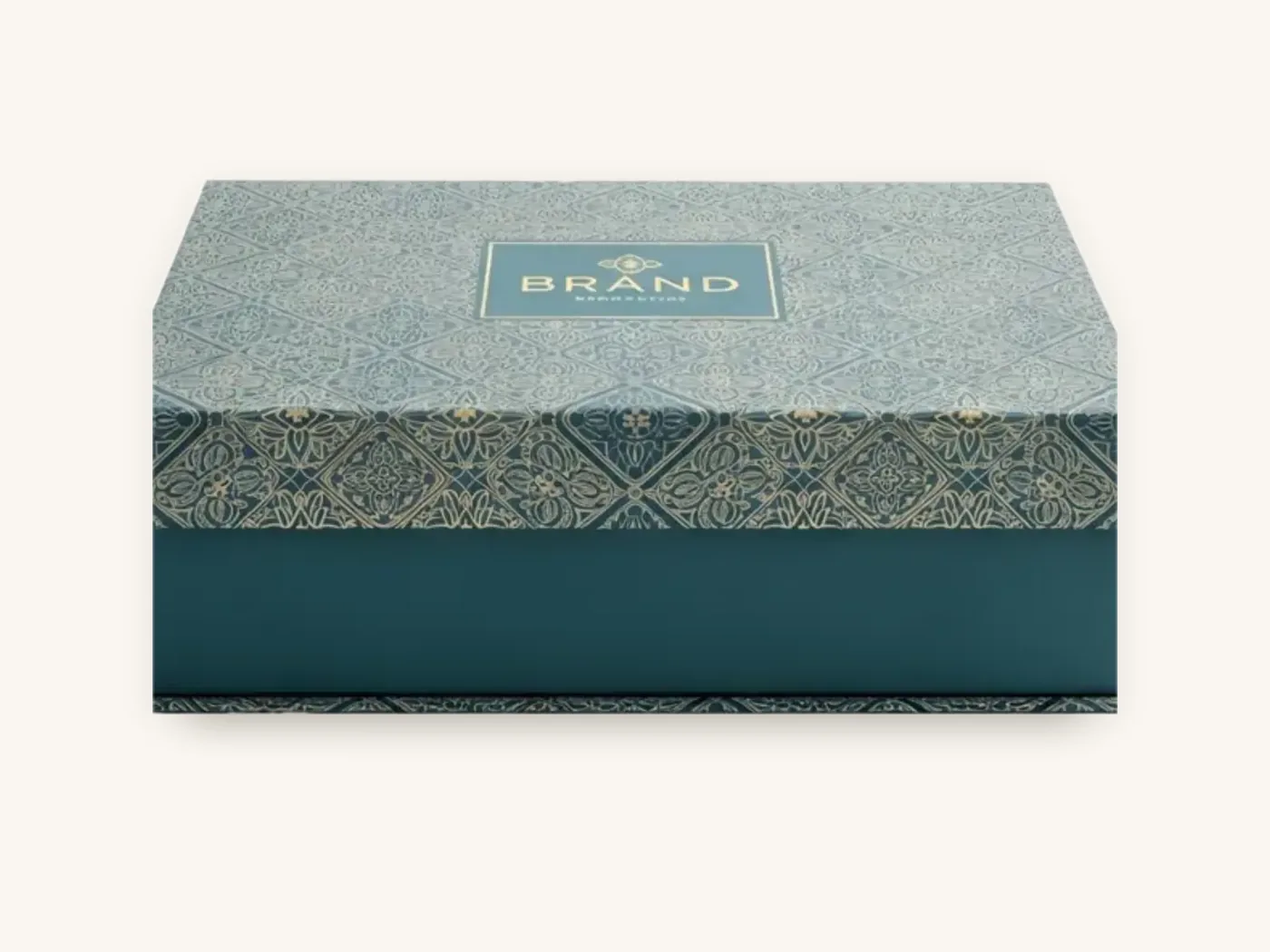
Rigid chipboard boxes are built from dense recycled board, usually called greyboard, that is roughly 1 to 3 mm thick and wrapped in printed or specialty paper. Most premium rigid boxes use about 2 mm greyboard; small jewelry boxes and inserts drop to about 1 to 1.5 mm, and large or heavy gift boxes move up to 2.5 or 3 mm. The wrap supplies the look, while the greyboard supplies the weight, stiffness and the solid feel customers associate with luxury packaging.
The word "chipboard" causes confusion, because in the US it also describes thin grey recycled carton board, like the back of a cereal box. This guide sorts out the terminology, gives you practical greyboard thickness choices for each part of a box, compares wrap materials, and explains the construction details that separate a crisp rigid box from one with lifting corners and a warped lid.
Key takeaways
- Greyboard (also called rigid chipboard or binder's board) is dense, recycled board used for set-up boxes. It is typically 1 to 3 mm, about 39 to 118 pt.
- About 2 mm is the standard rigid box material for most product and gift boxes; use 1 to 1.5 mm for small boxes and inserts, and 2.5 to 3 mm for large or heavy boxes.
- The wrap is a separate sheet glued over the board and turned in over the edges. Coated art paper around 120 to 157 gsm is the most common printed wrap; textured papers, linen-look stocks and leatherette are alternatives.
- Warping, lifting corners and exposed grey edges are construction problems, not board problems. Grain direction, liner balance and turn-in depth prevent them.
- Rigid boxes cost more than folding cartons because they use more board, more components and more manual or semi-automated wrapping.
- Box Sense makes custom rigid, magnetic and jewelry boxes from 10 units, with free design support and free unprinted structural samples.
Chipboard boxes vs greyboard: two meanings of one word
When a supplier says "chipboard," ask which kind they mean. The two materials look similar at the cut edge but produce completely different boxes.
| Thin chipboard (carton board) | Rigid chipboard (greyboard) | |
|---|---|---|
| Typical thickness | about 16–30 pt (0.4–0.8 mm) | about 1–3 mm (39–118 pt) |
| How the box is made | Die-cut, folded and glued; ships flat | Board panels wrapped in paper; usually ships assembled |
| Surface | Often grey or tan, sometimes with a white coated face | Raw grey, always covered by a wrap |
| Feel | Light, flexible | Heavy, stiff, keepsake quality |
| Common uses | Cereal cartons, backing boards, economical retail boxes | Luxury gift boxes, jewelry, electronics, fragrance |
| Related material | Coated recycled board, bux board | Rigid greyboard |
This guide is about the second meaning. If you are choosing between thin carton boards, the paperboard thickness guide covers calipers, and our SBS vs kraft vs CUK guide compares carton grades. If you want recycled board with a printable white face for folding cartons, see bux board.
How greyboard is made and specified
Greyboard is produced from recycled paper fiber, formed into multiple layers and pressed into a dense, uniform sheet. It is not designed to be printed or seen; its job is to be flat, stiff, dimensionally stable and easy to cut and score cleanly. The rigid greyboard material page describes the grades we use.
Thickness, weight and points
Greyboard is usually specified in millimeters. Some mills and overseas suppliers quote grams per square meter instead, and US buyers sometimes see points. Because density varies between mills, gsm-to-thickness figures are approximate.
| Nominal thickness | In points (exact) | Approximate grammage | Typical feel |
|---|---|---|---|
| 1.0 mm | about 39 pt | about 650–800 gsm | Firm but light; inserts and small drawers |
| 1.5 mm | about 59 pt | about 1,000–1,200 gsm | Solid small box |
| 2.0 mm | about 79 pt | about 1,300–1,600 gsm | Classic premium rigid box |
| 2.5 mm | about 98 pt | about 1,650–2,000 gsm | Heavy, very stiff |
| 3.0 mm | about 118 pt | about 2,000–2,400 gsm | Large boxes and heavy contents |
Density matters as much as thickness
Two 2 mm boards can behave differently. A denser, harder board cuts with cleaner edges, resists denting and holds magnets and hinges more securely. A softer, bulkier board is lighter but can show dents and crushed corners. If you are matching an existing box, send a sample rather than just a thickness.
Watch out: greyboard is highly sensitive to humidity. Board stored in damp conditions can bow before it is even wrapped. Reputable converters acclimatize board before production, and you should store finished rigid boxes flat or stacked squarely, away from damp floors and exterior walls.
Choosing greyboard thickness for each part of the box
A rigid box is several components, and they do not all need the same board. Using the right thickness for each part keeps the box stiff where it matters and avoids wasted weight.
| Component | Typical greyboard | Why |
|---|---|---|
| Base walls and floor, small box (under about 4 in) | about 1–1.5 mm | Small panels are stiff even when thin |
| Base walls and floor, medium box (about 4–12 in) | about 2 mm | Resists squeezing and holds a sharp corner |
| Base and lid, large box (over about 12 in) or heavy contents | about 2.5–3 mm | Long panels bow without extra thickness |
| Lift-off lid | Same as or slightly thinner than base | Must sit flat and square over the base |
| Magnetic book cover and spine | about 2 mm, sometimes 2.5 mm | Cover must stay flat and hold magnets |
| Drawer tray | about 1–1.5 mm | Keeps the tray light and the fit smooth |
| Drawer sleeve | about 1.5–2 mm | Carries the structure and presentation |
| Shoulder neck insert | about 1–1.5 mm | Sits inside the base walls without crowding |
| Platforms and wrapped inserts | about 1–2 mm | Supports the product without excess depth |
A worked example
Say you sell a boxed set of three fragrance bottles weighing a little under 2 lb, in a magnetic closure box roughly 10 x 8 x 3 in. Two millimeter board suits the base tray and cover. The long cover panel is the part most likely to bow, so a slightly thicker cover board is worth discussing if the design has a large, flat printed lid. A 1.5 mm wrapped platform with die-cut cavities holds the bottles. That combination keeps the box solid without making it needlessly heavy to ship.
Our magnetic closure boxes and custom rigid boxes are typically quoted in 2 mm greyboard, and we will recommend adjustments for size and weight.
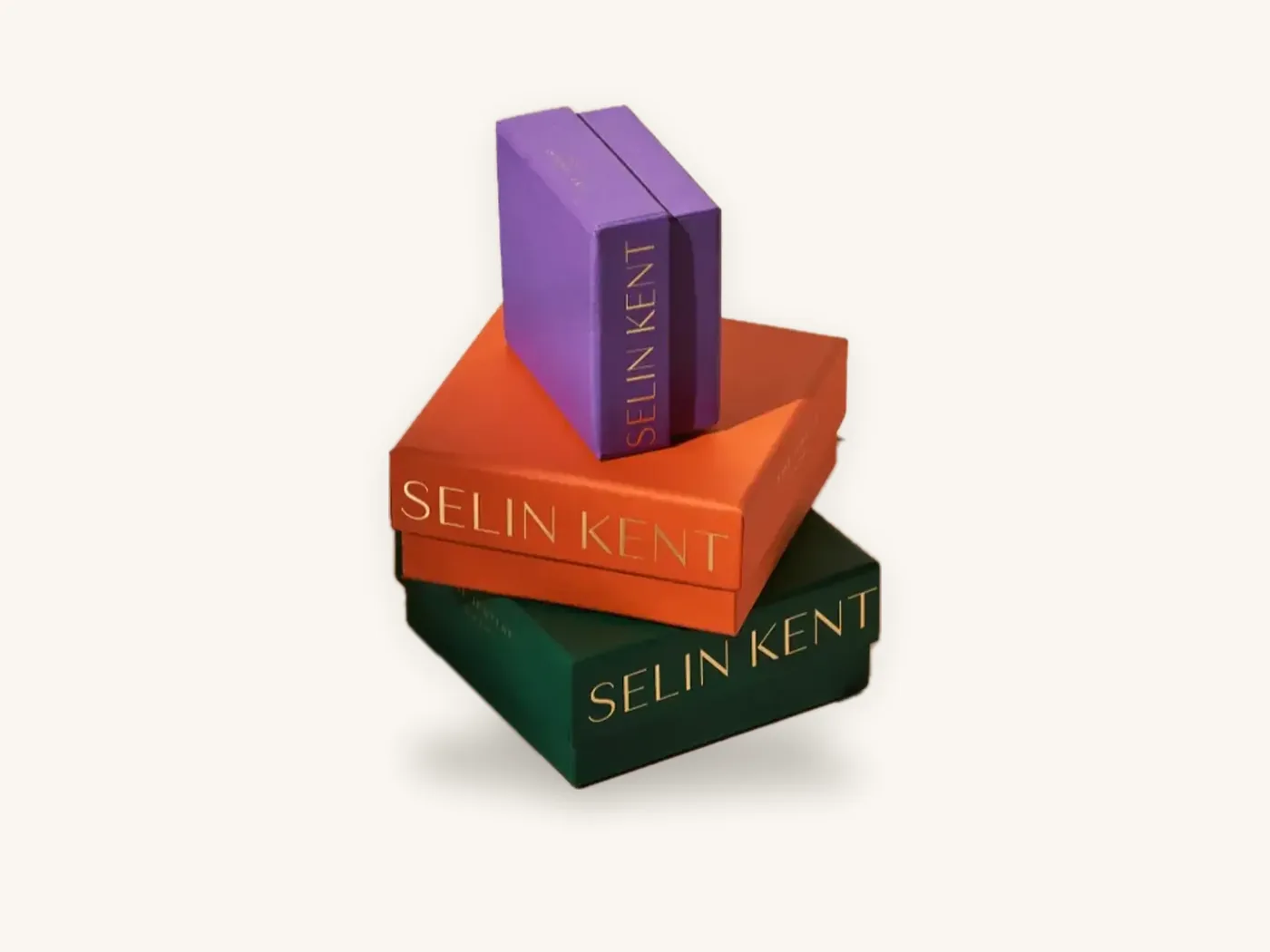
Anatomy of a wrapped rigid box
Cut through a rigid box and you will find more layers than the finished surface suggests.
- Greyboard shell: panels cut and scored or V-grooved so walls fold up at a clean right angle.
- Corner stays: strips of paper tape or glued paper that lock each corner before wrapping.
- Wrap: the printed or specialty paper glued over the outside, trimmed and folded over the top edge.
- Turn-in: the part of the wrap folded over the rim and down inside the walls, typically on the order of 10 to 20 mm deep depending on box size.
- Liner: a separate sheet glued inside the base or lid to cover the turn-ins and raw board, and to balance the tension of the outer wrap.
- Adhesive: water-based glue or animal glue applied by machine or by hand, chosen to bond cleanly without bleeding through the wrap.
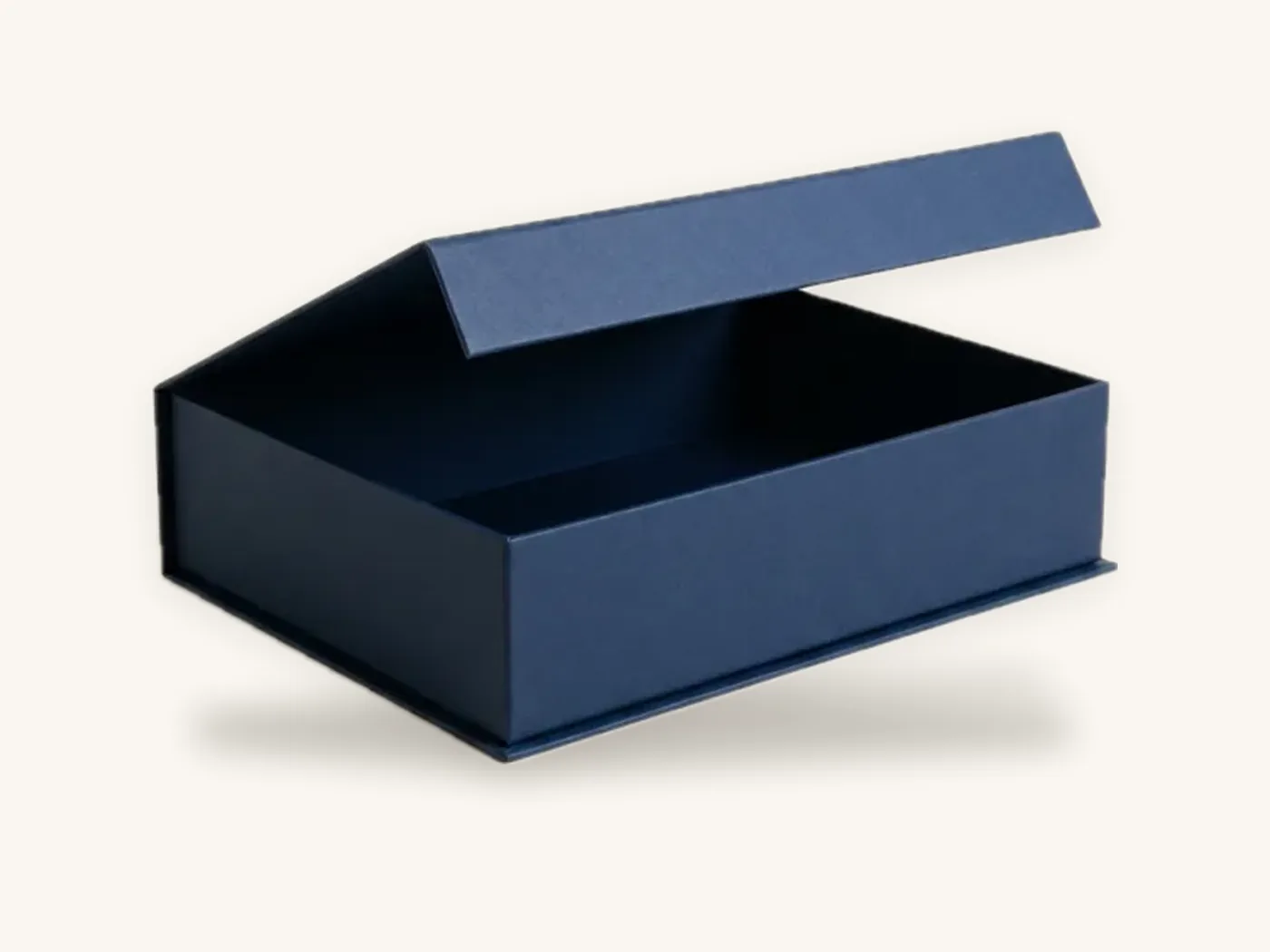
For hinged styles, the lid and base are glued into a case: a flat wrapped assembly of cover board, spine and back panel, much like a hardcover book. Magnets are set into shallow pockets cut into the board before wrapping, so they sit flush and invisible.
How rigid chipboard boxes are built, step by step
Knowing the sequence helps you understand why certain design choices raise cost or lead time.
- Board cutting. Greyboard sheets are cut to blanks for each component, with grain direction planned for stiffness.
- Grooving or scoring. Wall folds are V-grooved or scored so corners fold sharply without cracking.
- Forming and staying. Walls are folded up and corners locked with stay tape to create the raw shell.
- Wrap printing and finishing. The wrap sheet is printed, then laminated or coated, and foil, spot UV or embossing is applied while it is still flat.
- Wrap die-cutting. The printed wrap is cut to a shape that includes turn-ins and corner tabs.
- Gluing and wrapping. Adhesive is applied to the wrap, the shell is placed on it and the wrap is folded up the walls and turned in over the rim, by machine or by hand.
- Lining. An inner liner is glued in to hide turn-ins and balance the board.
- Case making for hinged boxes. Cover, spine and back boards are wrapped into a case, magnets are set, and the base is glued in.
- Inserts. Platforms, foam or wrapped inserts are fitted.
- Drying and inspection. Boxes dry under controlled conditions so they stay flat, then are checked for fit, corners and finish.
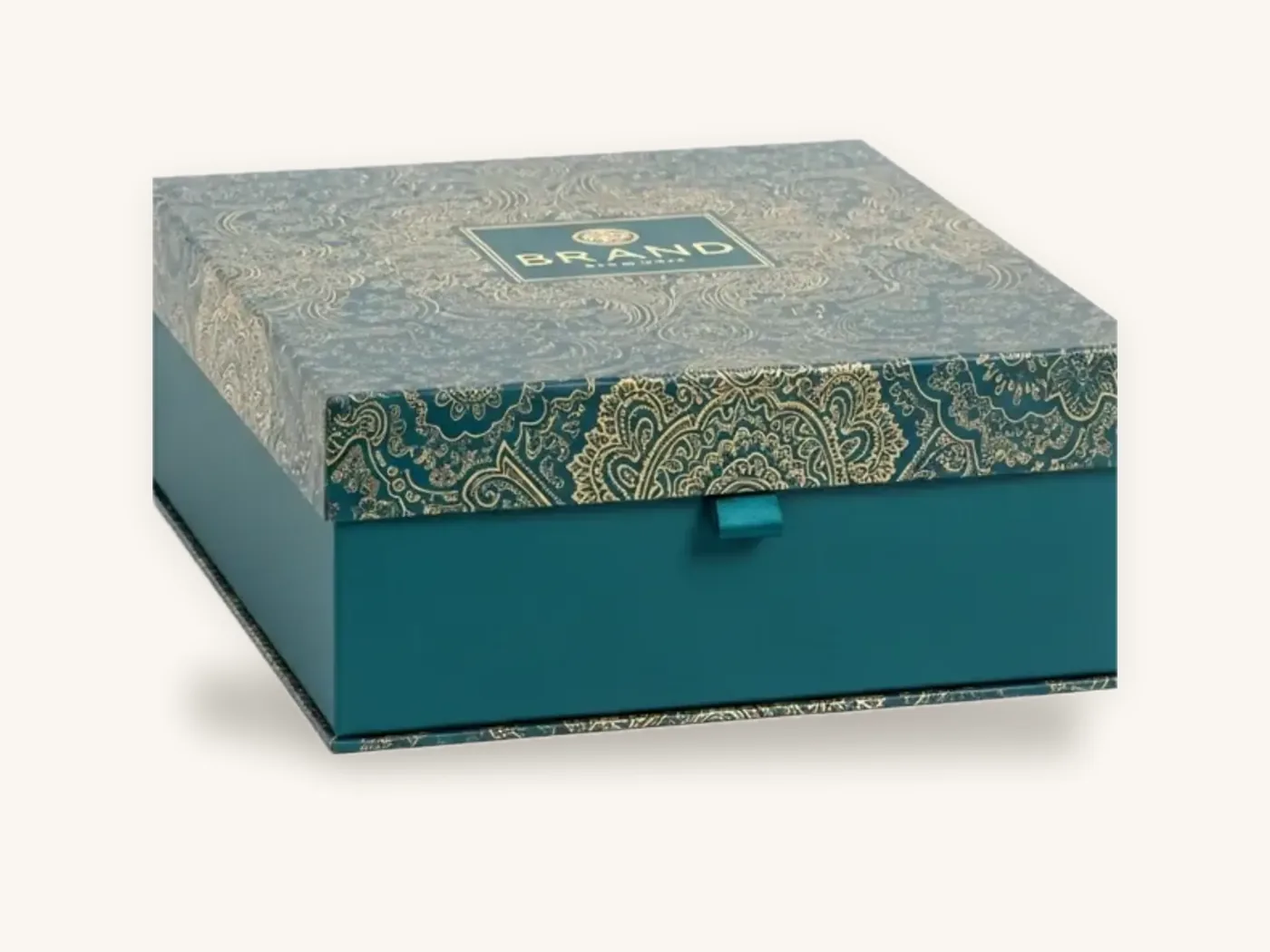
Wrap materials compared
The wrap is where brand, texture and durability are decided. It is typically much thinner than carton board, because it has to fold tightly around corners.
| Wrap | Typical weight or type | Look and feel | Strengths | Watch for |
|---|---|---|---|---|
| Coated art paper, printed | about 120–157 gsm | Smooth, any printed design | Full-color print, photography, gradients | Usually needs lamination to resist scuffs and corner cracking |
| Uncoated or textured specialty paper | about 120–150 gsm | Tactile, felt, linen or laid textures | Premium feel with one-color print or foil | Solid print coverage looks less saturated |
| Kraft paper wrap | about 100–150 gsm | Natural brown | Sustainable, understated look | Light colors need white ink or foil |
| Pearlescent or metallic paper | varies | Shimmer or mirror effect | Striking with simple foil or print | Shows fingerprints, fewer print options |
| Linen-look or cloth-finish paper | varies | Woven texture | Book-like, elegant | Fine detail softens on the texture |
| Leatherette (PU-coated paper) | varies | Leather grain | Durable, high perceived value | Better with debossing and foil than print |
Our textured and specialty papers page shows the range of wraps, and the specialty papers guide goes deeper on how each takes decoration.
Finishes on the wrap
Lamination protects printed art paper on rigid boxes that will be handled repeatedly. Matte lamination hides fingerprints, gloss makes color pop, and soft-touch lamination adds a velvety finish. Foil stamping, embossing and spot UV are applied to the wrap before wrapping. Each of those decorations carries a one-time tooling charge.
Turn-ins, grain direction and warping
Most rigid box defects come from how the wrap and board interact, not from the board itself.
Why lids warp
When wet glue and a paper wrap dry on one side of a greyboard panel, the wrap shrinks slightly and pulls the board toward it. A flat lid can dry into a shallow curve. The fix is balance: a liner on the inside that exerts matching tension, correct glue quantity, and controlled drying.
Grain direction
Greyboard and wrap papers both have a grain, the direction most fibers lie. Board is stiffer along its grain and expands more across it with moisture. Converters align grain so long panels resist bowing and hinged covers stay flat, and so the wrap and board move together rather than against each other.
Turn-in depth and corners
Too shallow a turn-in lets the wrap edge lift or the grey board show at the rim. Corners are the hardest area: the wrap must fold around a right angle with a small tab or mitered cut. Dark, heavy ink coverage on laminated art paper can crack at those folds, so designers often avoid critical artwork right at the corners.
Tip: if your design uses a dark flood color, ask for a structural sample wrapped in the actual paper and finish. A corner that looks perfect on a 3D proof can show hairline cracks in real board, and the fix is usually a small change in wrap or lamination, not in the artwork.
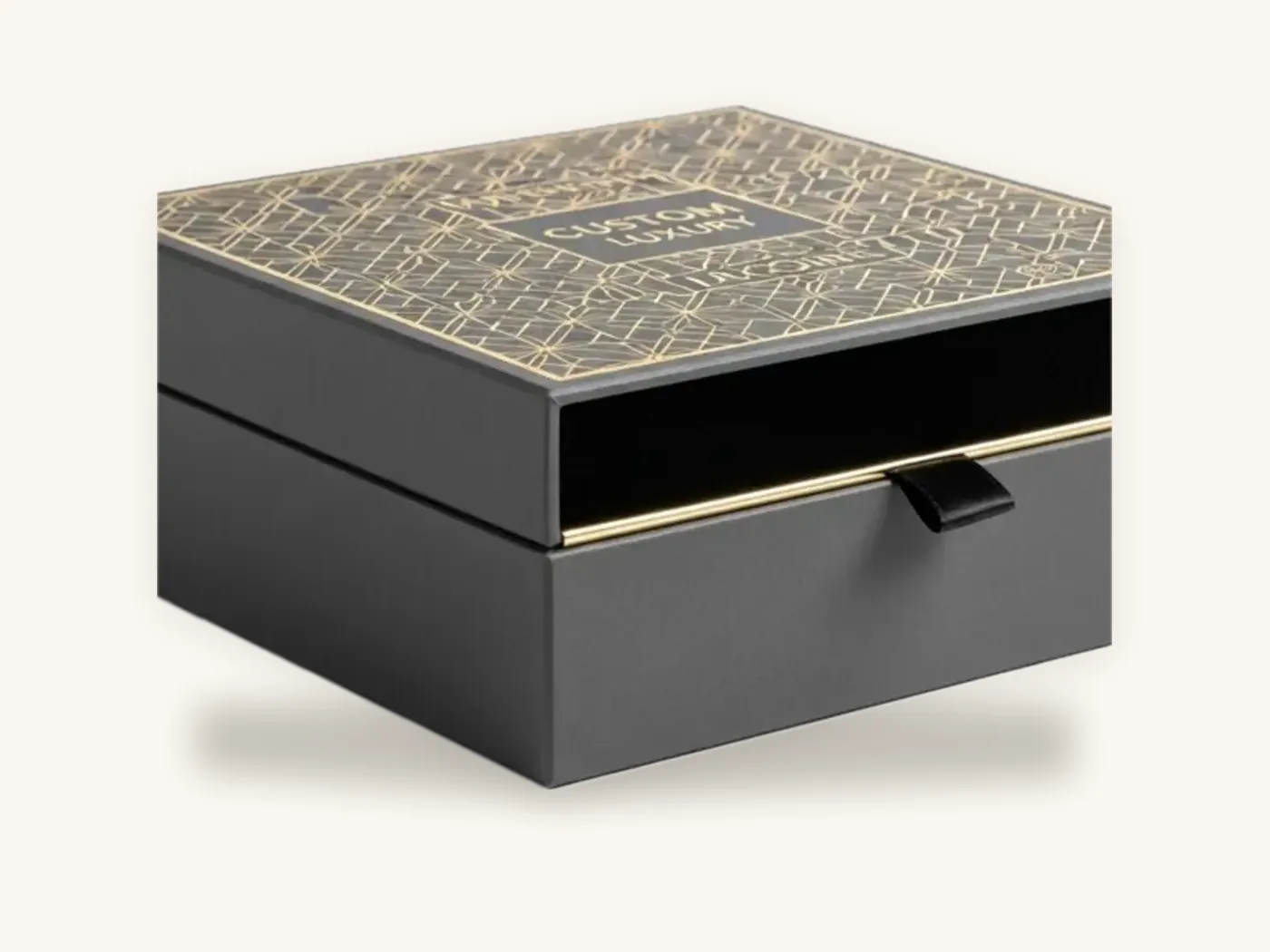
Magnetic, drawer and collapsible builds
Different styles use greyboard differently, and each has specific tolerances.
Magnetic closure
The front flap closes with thin magnets set into the cover board and a matching magnet or steel plate behind the base wall. Spine width must allow for board thickness on both sides plus the wrap, or the cover will not close flat. Stronger magnets hold better but make the box harder to open gently, so pull strength should match the box size.
Drawer boxes
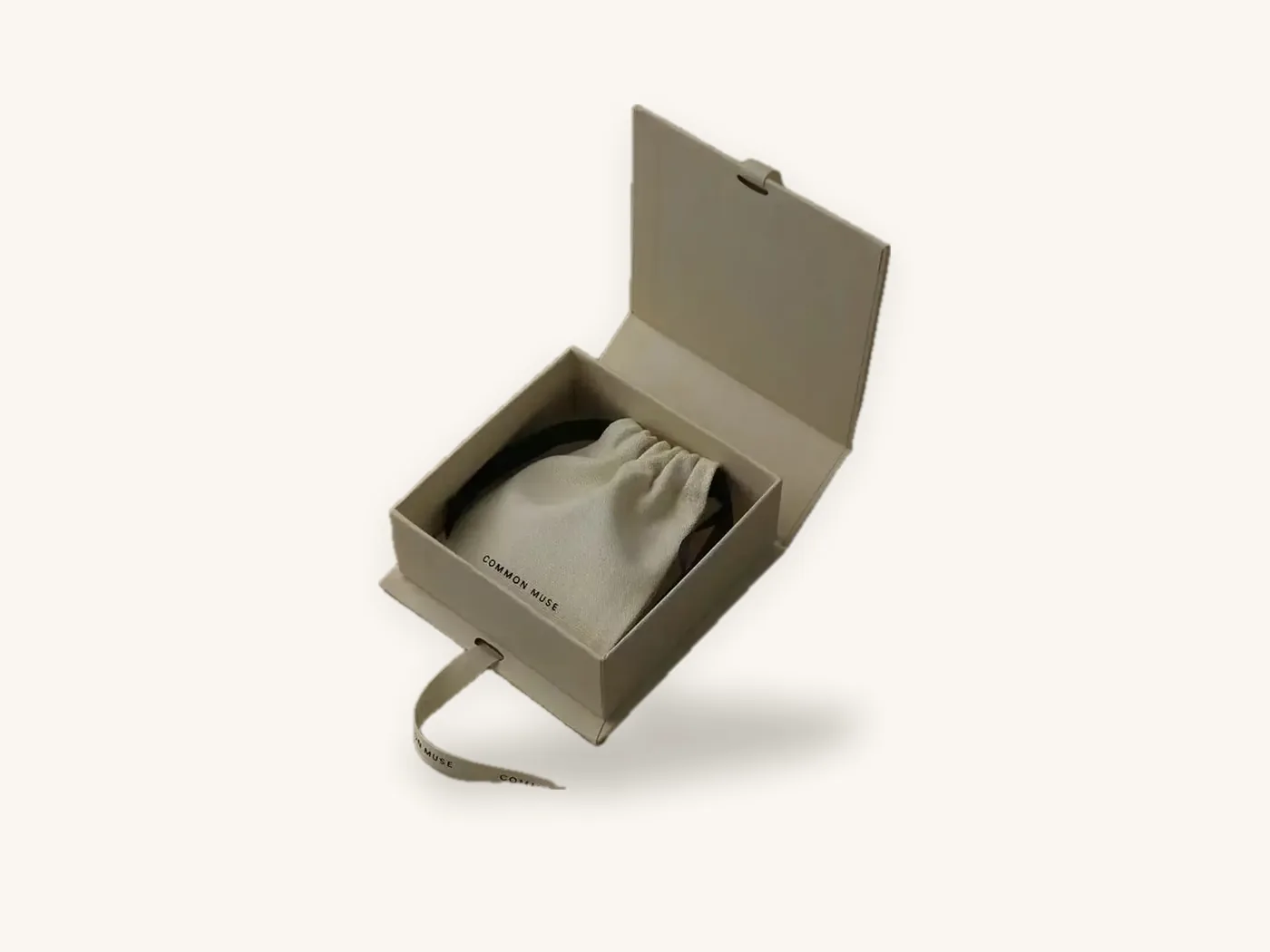
A drawer box is a sleeve and a tray. Clearance between them decides whether the drawer glides or sticks. Thicker wraps, lamination and humidity all reduce clearance, so drawer boxes need more careful sampling than lift-off lids. A ribbon pull or thumb notch helps customers open a snug drawer.
Collapsible rigid boxes
Collapsible rigid boxes use separate greyboard panels wrapped with small gaps between them so the walls fold flat. They arrive flat and are assembled with pre-applied adhesive tape or tabs. They save storage space and freight while keeping most of the rigid feel; the tradeoff is slightly less crisp corners than a fully set-up box.
Jewelry and small boxes
Small jewelry boxes use thinner greyboard, often about 1 to 1.5 mm, because tiny panels are stiff on their own and thick board makes a small box look chunky. Inserts with slots or foam cavities hold rings and earrings. The jewelry and accessories page shows common formats.
What to check in a rigid box sample
Use this checklist when your sample arrives. It catches the issues that are expensive to discover after a full run.
- Corners: no grey board visible, no lifting wrap, no cracked print at the folds.
- Flatness: lid and cover lie flat on a table with no rocking.
- Lid fit: a lift-off lid slides down smoothly and does not drop off when the box is lifted by the lid.
- Magnet closure: the flap closes flush and holds when the box is gently shaken.
- Drawer glide: the tray slides without catching, and does not fall out when tilted.
- Surface: no bubbles, wrinkles or glue marks under the wrap.
- Registration: print, foil and emboss line up with panel edges and with each other.
- Insert fit: the product sits snugly and can be lifted out without tearing the insert.
- Weight and feel: the box feels as solid as you expected for the brand and price point.
What drives the cost of rigid chipboard boxes
Rigid boxes cost more than folding cartons for mechanical reasons: they use far more board per box, involve multiple components, and require wrapping and drying time. Within rigid boxes, the main cost drivers are:
- Size: board and wrap area rise quickly as dimensions grow.
- Style: hinged magnetic cases and drawers have more parts than a two-piece lid and base.
- Wrap material: specialty papers and leatherette cost more than printed art paper.
- Decoration: foil, embossing and spot UV add one-time tooling (about $60 for foil or embossing and about $40 for spot UV) plus a per-unit cost.
- Inserts: a custom insert die is about $45 one time, plus the insert material.
- Quantity: the biggest lever; per-unit price drops steeply from tens to thousands.
Indicative per-unit prices, with free US shipping:
| Spec | 50 | 500 | 2,500 |
|---|---|---|---|
| Jewelry rigid box, 2 mm, 3x3x1.5 in, matte, foil, insert | about $3.87 | about $1.79 | about $1.27 |
| Rigid box, 2 mm greyboard wrapped, 8x6x3 in, full color, matte | about $10.52 | about $4.85 | about $3.44 |
| Rigid magnetic box, 2 mm, 10x8x3 in, soft-touch, foil, insert | about $16.44 | about $7.59 | about $5.37 |
For your exact size, wrap and finish, use the rigid box price estimator. If rigid is more than you need, our corrugated flutes guide and ECT vs burst strength guide cover the shipping-grade alternatives, and the packaging materials overview compares every major board family.
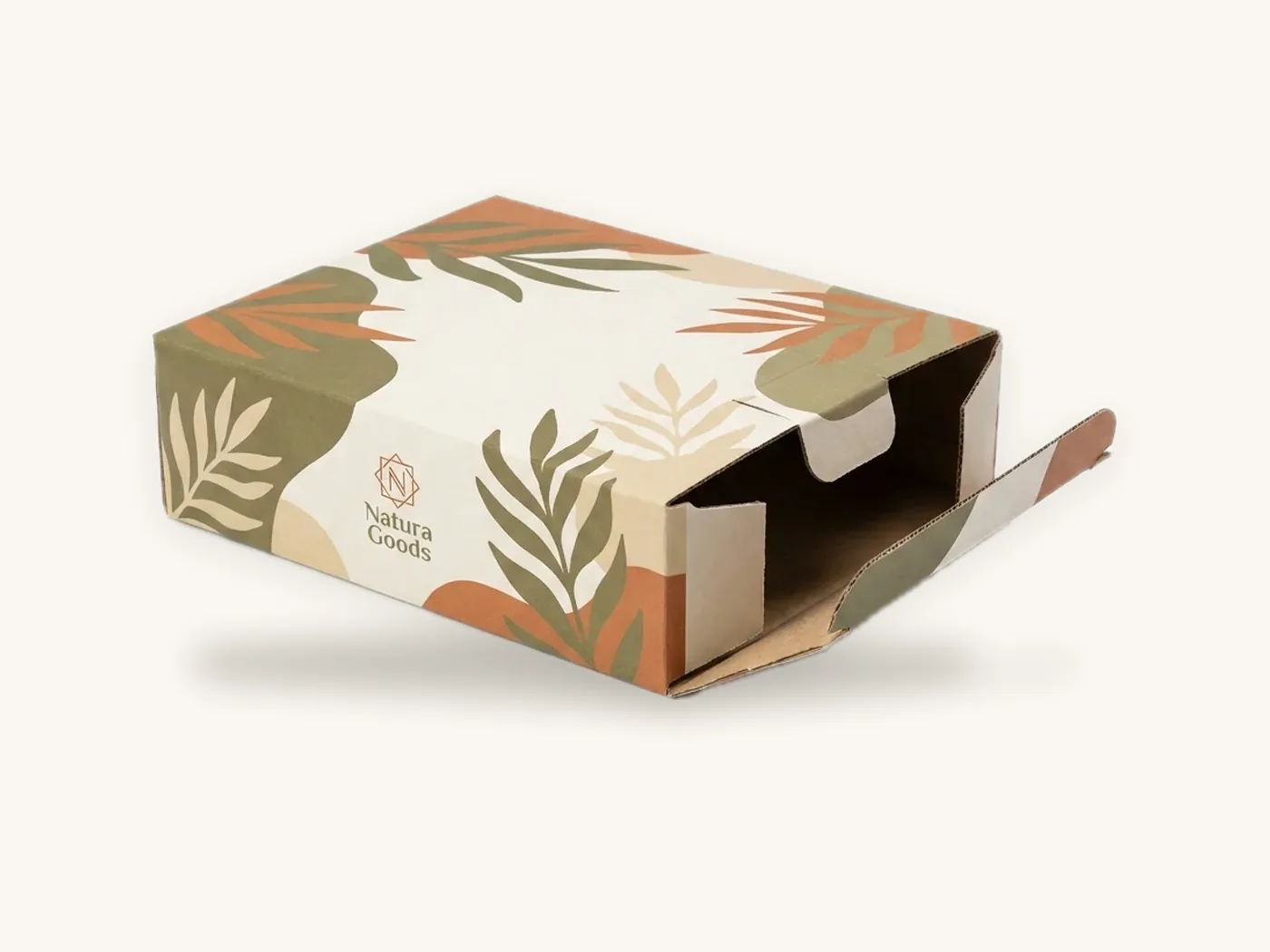
Ordering rigid greyboard boxes from Box Sense
We build rigid boxes in lift-off, magnetic, drawer, shoulder neck and collapsible styles, wrapped in printed art paper, specialty papers or kraft.
What to send
- Product dimensions and weight, and how many items go in the box
- Style: lift-off lid, magnetic closure, drawer, shoulder neck or collapsible
- Greyboard thickness preference, or a sample box to match
- Wrap: printed art paper, textured paper, kraft or another specialty stock
- Finishes: lamination type, foil, embossing, spot UV
- Insert type: wrapped board, foam or molded pulp
- If you want a window in a lid or insert, note it; our PET vs PLA window film guide compares the film options
- Quantities to price and your target in-hand date
Proofing, samples and timeline
Quotes are confirmed within 24 hours. Free design support covers the dieline for every component, wrap artwork setup, a 3D digital proof and two revision rounds; our design services team can also build the wrap artwork. Unprinted structural samples are free, which is the best way to judge board thickness and fit, and a printed sample of approved artwork is free on orders of 100 or more; see samples. Standard production is 8–12 business days after proof approval. Rush production in 5 business days applies to most paperboard and corrugated styles, so confirm timing for your rigid build when you request a quote. The minimum order is 10 boxes, US shipping is free, and defective boxes reported within 14 days are reprinted free.
Frequently asked questions
What are chipboard boxes made of?
Rigid chipboard boxes are made from greyboard, a dense board produced from recycled paper fiber, typically 1 to 3 mm thick. The greyboard is cut, scored and formed into walls, then wrapped in printed or specialty paper that covers the grey surface. In the US, "chipboard" can also mean thin recycled carton board, so confirm the thickness when comparing quotes.
What thickness of greyboard is best for rigid boxes?
About 2 mm greyboard is the standard for most product and gift boxes because it feels solid, holds sharp corners and stays reasonably light. Small jewelry boxes, drawer trays and inserts often use 1 to 1.5 mm. Large boxes over roughly 12 inches, or boxes holding heavy items, benefit from 2.5 to 3 mm to prevent panels from bowing.
Is chipboard the same as cardboard?
Not exactly. "Cardboard" is an informal term people use for almost any paper-based board, including corrugated and folding carton stock. Rigid chipboard, or greyboard, is a specific dense, non-fluted board used for set-up boxes. Corrugated board has a fluted core and is designed for shipping, while greyboard is designed for stiffness and a premium feel.
How is greyboard thickness measured?
Greyboard is usually specified in millimeters, such as 1.5 mm or 2 mm. Some suppliers quote grams per square meter, and US buyers may see points, where one point is a thousandth of an inch, so 2 mm is about 79 pt. Because board density varies, the same gsm can mean slightly different thicknesses, so ask for millimeters when comparing quotes.
What paper is used to wrap rigid boxes?
The most common wrap is coated art paper around 120 to 157 gsm, printed in full color and usually laminated for durability. Alternatives include uncoated textured specialty papers, kraft paper, pearlescent and metallic papers, linen-look papers and PU leatherette. Printed wraps suit detailed artwork, while textured wraps pair best with foil stamping, embossing or one-color printing.
Why do rigid box lids warp?
Lids warp when the outer wrap and glue shrink as they dry and pull the greyboard into a curve. Humidity during storage makes it worse. Good construction prevents it by aligning grain direction, applying the right amount of adhesive, adding an inner liner to balance tension, and drying boxes under controlled conditions. Store finished boxes flat and away from damp areas.
Are greyboard rigid boxes recyclable?
Greyboard itself is made from recycled fiber and is generally recyclable in paper streams. Recyclability of the finished box depends on the wrap and extras: plastic laminations, leatherette, magnets and foam inserts can complicate recycling. Choosing paper wraps with aqueous coatings, paper-based inserts and removable magnets makes the box easier to recycle. Check local program rules before making a claim.
Next steps
Settle the style and the greyboard thickness for each component, then choose a wrap that suits your artwork. Try your dimensions in the rigid box price estimator, or request a rigid box quote and we will recommend board and wrap, send dielines and confirm pricing within 24 hours.
Boxes in this guide
Order the packaging we covered
Written by the Box Sense Packaging Team
Our structural designers, prepress technicians and production staff print and convert custom boxes every day for brands in the United States, United Kingdom and UAE. Questions about this guide? Talk to us.