Good t shirt packaging does three jobs at once: it keeps a folded tee flat and clean in transit, it fits a parcel size that does not inflate your shipping bill, and it makes a cotton shirt feel like more than a commodity when the customer opens it. For most brands shipping direct to consumers, that means a slim E-flute mailer or a paperboard shirt box sized to one folded tee, with tissue and a sticker seal inside.
The right choice changes with the channel. A tee sold online, a tee hanging in a boutique, a limited drop sold at a concert table and a three-pack sold to a wholesaler each want a different package. This guide works through those channels, shows how to measure a folded shirt properly, compares t shirt boxes with poly mailers, and gives real prices for common specs.
Key takeaways
- A single folded adult tee usually lands somewhere around 8 x 10 to 9 x 12 in and under an inch thick, depending on fabric weight and fold style; measure your own fold before choosing a box.
- Slim shirt mailers (E-flute, 1 to 2 in deep) suit direct-to-consumer shipping; paperboard shirt boxes suit retail, gifting and overboxed wholesale orders.
- Keep depth tight. A half-empty box lets the fold collapse, and extra depth can push a light parcel into a higher dimensional weight bracket.
- One well-designed box with a changeable sleeve, sticker or card lets you run many colorways and drops without reprinting boxes each time.
- A 10x8x4 in E-flute mailer printed inside and outside runs about $4.33 each at 100 units and about $1.92 at 1,000, including US shipping.
- Box Sense makes t shirt boxes from 10 units with free dielines, 3D proofs and 8–12 business day standard production.
Match the package to how the tee is sold
Before picking a box style, decide where the shirt will be when the customer first sees it. That single question rules out half the options.
| Channel | What the package must do | Typical format | Nice to have |
|---|---|---|---|
| Online store, shipped direct | Survive parcel handling alone, open neatly | Slim E-flute mailer | Inside-lid print, tissue, sticker seal |
| Boutique or retail shelf | Stack, display the design, carry a size label | Paperboard shirt box or window box | Size sticker, hang tag, barcode panel |
| Gift, holiday or bundle | Look premium, hold multiple items | Two-piece box or sleeve and tray | Printed tissue, card, ribbon |
| Merch table or pop-up | Pack fast, stack by size, carry easily | Tuck-top mailer or folding shirt box | Size printed or stickered on the end |
| Wholesale or multi-pack | Protect several tees, reduce handling | Folding boxes inside a shipping carton | Carton labels by size and color |
Shipping direct to customers
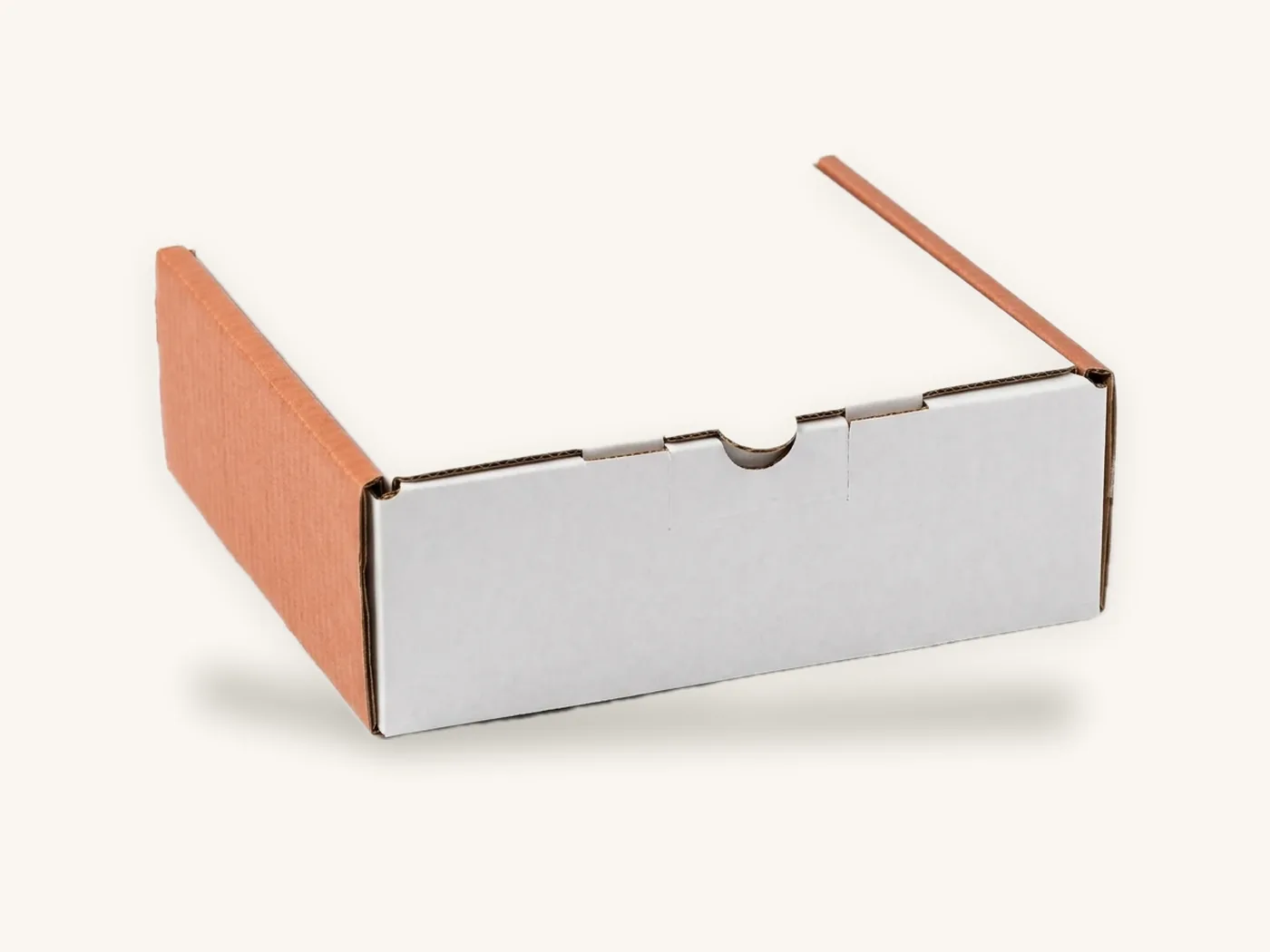
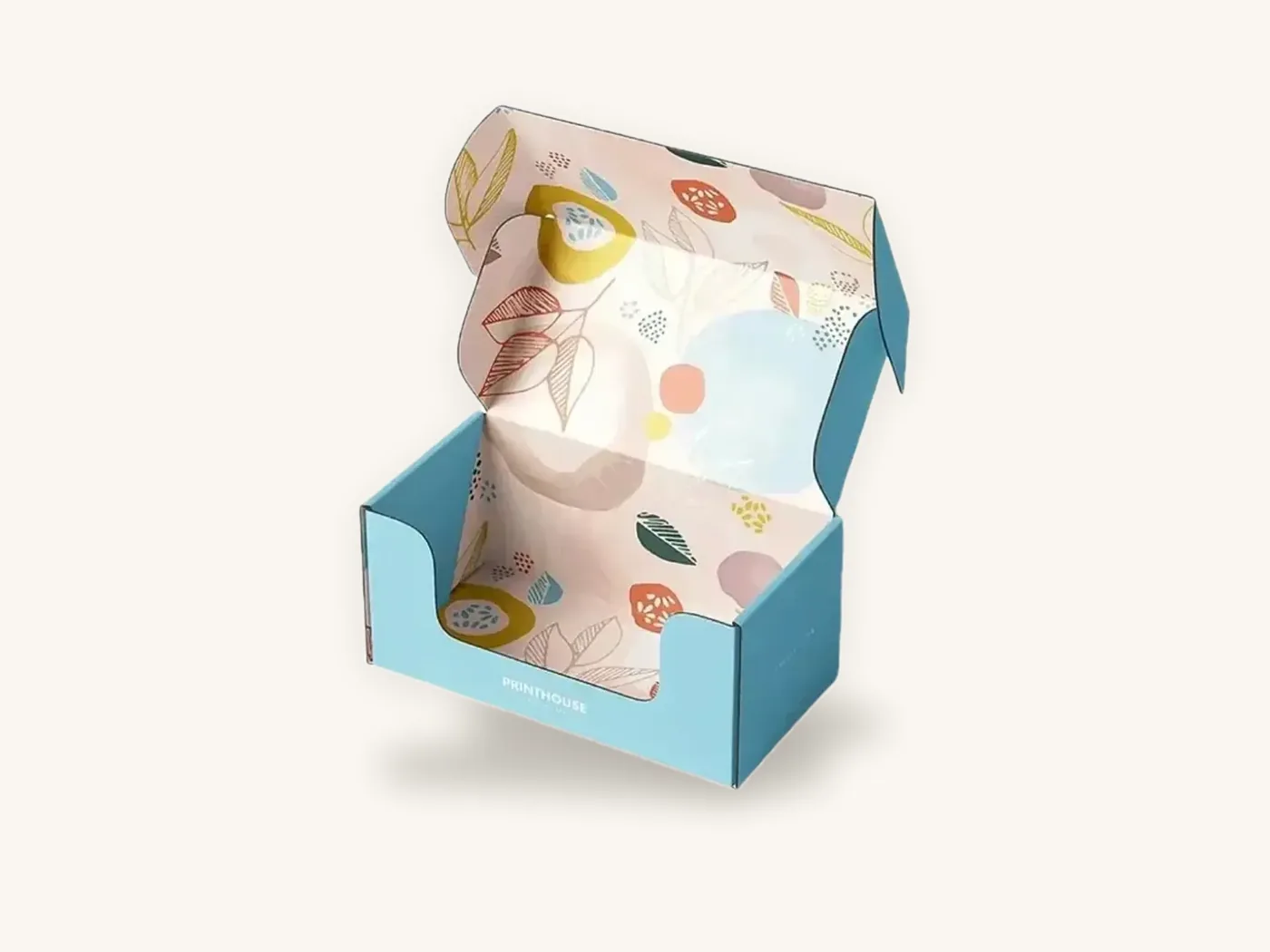
For e-commerce, the box travels through sorting machines and delivery vans by itself, so it needs corrugated board. A roll-end tuck-front mailer is the standard because the rolled side walls resist crushing and the lid opens like a chest, putting the folded shirt right under the customer's eyes. Our custom mailer boxes come in this style, and the mailer boxes style page shows the variations.
Selling on a shelf or rail
In a store, the tee does not need to survive a conveyor belt. It needs to look organized in a stack and communicate size quickly. Paperboard is lighter, prints more crisply and costs less per box than corrugated. A printed folding carton with the size on the end panel lets staff find a medium without unfolding anything.
Gifting and bundles
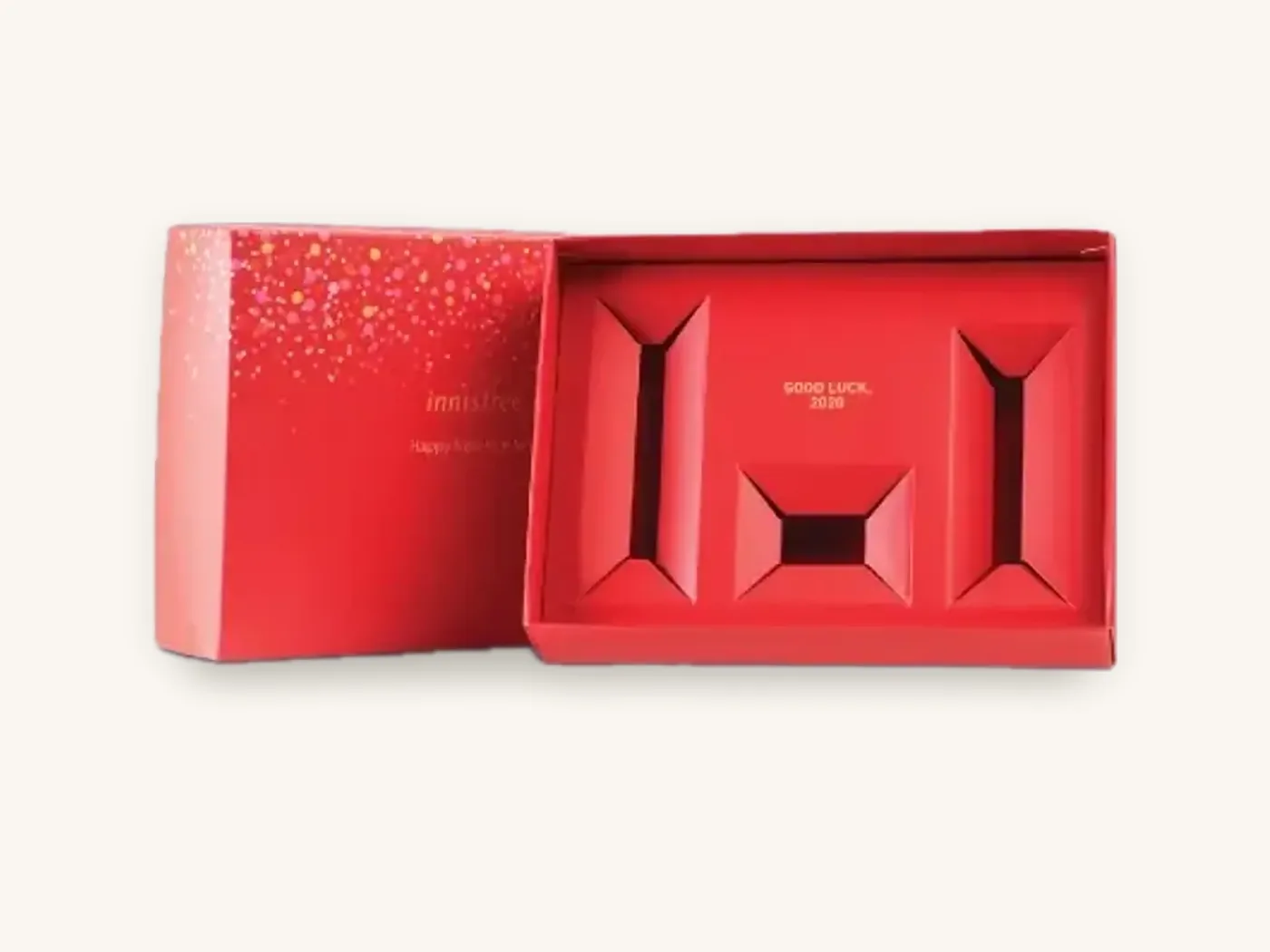
When the tee is a gift, part of a holiday set or a bundle with a cap and stickers, presentation beats shipping efficiency. A two-piece box with a lift-off lid feels deliberate, and it can go inside a plain shipper for delivery. The holiday packaging guide covers seasonal timing and gift-set formats.
How to measure a folded t-shirt for its box
Most sizing errors happen because someone measures a shirt folded on a table instead of a shirt folded the way the packing team will actually fold it. Lock the fold first, then measure.
Pick one fold and document it
Choose the fold you will use for every order. A common retail fold brings both sleeves and sides behind the body, then folds the length into thirds, producing a neat rectangle with the chest print facing up. A tighter e-commerce fold goes into quarters or uses a folding board to hit the same dimensions every time.
Document it with photos; boxes sized to a tight fold will not close over a loose one.
Measure the bundle, not the shirt
Measure the folded tee together with everything that ships with it: tissue wrap, care card, sticker sheet, hang tag. A folded sheet of tissue adds very little, but a thick card or a cardboard folding board adds noticeable depth.
Sizing reference by garment
These are typical folded footprints for adult garments. Fabric weight, cut and fold style all shift them, so treat them as a starting point for a structural sample, not a final spec.
| Garment packed | Approximate folded footprint | Approximate folded thickness | Box direction |
|---|---|---|---|
| Lightweight tee, quarter fold | 7 x 9 in | about 1/2 in | Slim mailer, 1 in deep |
| Standard tee, retail fold | 8 x 10 to 9 x 12 in | about 3/4 in | Shirt box or mailer, 1 to 1.5 in deep |
| Heavyweight tee | 9 x 12 in | about 1 in | Mailer, 1.5 to 2 in deep |
| Two tees stacked | 9 x 12 in | about 1.5 to 2 in | Mailer, 2 in deep |
| Three-pack | 9 x 12 in | about 2 to 3 in | Mailer or shirt box, 3 in deep |
| Hoodie or tee plus cap | 10 x 8 in and up | 3 to 4 in | 10x8x4 in mailer or larger |
Clearance rules for soft goods
Fabric compresses, so shirts need far less clearance than rigid products. For length and width, aim for roughly 1/8 to 1/4 in of room so the fold drops in without catching. For depth, go close to zero, or even slightly under the loose thickness, because a lid pressing lightly on the fold keeps it from shifting.
Tip: fold ten shirts in each size you sell, measure all of them, and size the box to the largest result. An XXL heavyweight tee can be noticeably thicker than a small, and one box that fits the full size range is simpler to stock than three.
T shirt boxes vs poly mailers vs paper tubes
Many apparel brands start with poly mailers because they are cheap and light. They work, but they give up protection and presentation. The poly mailer vs mailer box comparison goes deep on the trade-offs; here is the short version for tees specifically.
| Format | Protection | Presentation | Weight and size | Best for |
|---|---|---|---|---|
| Poly mailer | Keeps out moisture, no crush protection | Minimal, shirt arrives creased | Lightest, flexible | Low-price basics, returns |
| Corrugated shirt mailer | Holds the fold, resists crush | Strong, inside print and tissue | Light, rigid footprint | DTC brands, merch stores, gifting |
| Paperboard shirt box | Light protection, needs an outer shipper | Clean retail look, crisp print | Very light, thin | Retail shelves, gift sets, wholesale |
| Paper tube, rolled tee | Very strong, shirt arrives rolled | Distinctive, stands out | Round, less space-efficient | Limited drops, band merch, novelty |
When a box earns its cost
Choose a box when the shirt sells above basic price points, when the print is the product and you want it to arrive flat, or when you want the unboxing to prompt a photo or a repeat order. Choose a poly mailer when margins are thin and the customer buys purely on price.
When a tube makes sense
A rolled tee in a paper tube suits limited-edition graphic shirts and collector merch. The shirt unrolls with a slight curl that relaxes after a wash or a hang. Tubes use space less efficiently in cartons and on shelves, so treat them as a special edition format rather than your everyday pack.
Choosing board for shirt mailers and shirt boxes
The board decides whether a tee arrives crisp or crumpled. For shirts, the load is light, so the question is mostly about print quality, stiffness and shipping.
E-flute corrugated for shipping
E-flute is roughly 1.5 mm thick. It prints well, folds into sharp corners and is plenty strong for a folded tee or two. B-flute, at around 3 mm, is usually overkill for apparel unless you pack a heavy bundle or ship long distances in bulk. The corrugated board page lists grades.
Paperboard for retail and gifting
For shelf-ready shirt boxes, 18 pt to 24 pt paperboard keeps the box flat without adding bulk. SBS paperboard gives a bright white surface for full-color graphics. Kraft paperboard gives a natural brown look that pairs well with one or two ink colors or white ink, and it suits streetwear and outdoor brands that want an unbleached feel.
Kraft or white outside
Kraft hides scuffs from shipping and reads as understated. White makes artwork pop and reproduces brand colors closest to the screen. Many apparel brands split the difference with a kraft outside printed in one dark color and a white or printed inside lid.

Inside the box: tissue, seals, cards and tags
The inside of a shirt box is where a basic tee turns into a brand moment, and most of the elements cost little compared with the box itself.
Tissue wrap
Printed tissue paper serves a practical purpose: it keeps dye transfer and dust off the shirt and holds the fold together when the box is tipped. Wrap the folded tee in one or two sheets and close the wrap with a sticker. The custom tissue paper guide covers sheet sizes and printing.
Sticker seals and labels
A round sticker on the tissue is the cheapest way to add a logo inside a plain box. Printed custom labels and stickers can also carry size and colorway on the outside of the box, which is how many brands use one generic box for every SKU.
Cards and hang tags
A care card tucked on top of the fold can carry washing instructions, a size exchange policy or a discount for the next drop. Hang tags attached to the shirt matter more for retail, where they carry price and barcode, than for DTC shipments, where many brands skip them.
A packing sequence that holds up
- Fold the tee using your documented fold, print side up.
- Wrap in tissue, fold the ends under and seal with one sticker.
- Place the card on top, face up, so it is the first thing seen.
- Drop the bundle into the box and check that the lid closes flat without force.
- Close the tuck flap, then add a tear strip, sticker seal or branded tape if you want tamper evidence.
- Apply the shipping label to the lid top, away from printed brand panels where possible.
Printing t shirt boxes across drops and colorways
Apparel brands launch new designs constantly. If every drop needs a new printed box, packaging becomes a bottleneck. Plan the printing around how often your product changes.
A core box plus changeable elements
The most flexible setup is a core box printed with your brand identity only, no specific design or colorway. Each drop then gets its own sticker, belly band, card or tissue. You reorder the core box in larger quantities for a better unit price, while the small changeable items are cheap to reprint.
Short digital runs for limited editions
Digital printing handles runs of roughly 10 to 500 without plates, so a 150-piece collaboration can have its own fully printed box. Offset printing takes over on larger runs, where it gives the most consistent color and the lowest unit price. The printing and finishes page shows what each method looks like on board.
Inside-lid printing
Because a shirt box opens to reveal a flat, simple surface, the inside lid is prime space. A short message, a pattern or the drop name printed there gets seen at exactly the right moment. If budget is tight, print the outside in one color and the inside lid in full color rather than the reverse.
Finishes that suit apparel
Matte lamination and aqueous coating are practical defaults. Foil stamping on a logo reads premium on a black or kraft box. Soft-touch lamination suits higher-end basics.
What t shirt packaging costs
Shirt boxes are among the least expensive custom boxes because the load is light and the footprint is small. Price is driven by size, board, how many surfaces are printed, finishes and quantity.
| Spec | 10 | 100 | 250 | 500 | 1,000 | 5,000 |
|---|---|---|---|---|---|---|
| Mailer, E-flute, 8x6x3 in, full color outside | $3.99 | $2.64 | $1.88 | $1.41 | $1.17 | $0.83 |
| Mailer, E-flute, 10x8x4 in, full color inside and outside | $6.54 | $4.33 | $3.08 | $2.31 | $1.92 | $1.36 |
| Shipping box RSC, B-flute, 12x10x6 in, 1-color | $7.08 | $4.69 | $3.33 | $2.50 | $2.08 | $1.48 |
Prices are per box, indicative, with US shipping included. The 8x6x3 in mailer fits a tightly folded lightweight tee or a kids' shirt; the 10x8x4 in size fits a hoodie or a tee bundled with a cap. The RSC is a typical outer carton for sending a stack of retail shirt boxes to a store. Slim sizes built for adult tees, such as a 12x9x2 in mailer, are priced to your exact dimensions in the instant price estimator.
Where the money goes
- Depth: a 2 in deep shirt mailer uses less board than a 4 in one with the same footprint.
- Printed surfaces: inside printing adds cost; printing only the inside lid is a middle ground.
- Finishes: foil, embossing and spot UV each add a one-time tooling charge.
- Quantity: moving from 100 to 1,000 units cuts the unit price by more than half on the specs above.
Shipping cost is part of the package cost
Carriers bill larger parcels by dimensional weight, which uses outer box volume. A slim shirt mailer keeps a tee in the smallest practical footprint. Check current dimensional weight rules with your carrier, and read the dimensional weight guide before settling on a depth.
Watch out: a deep box ordered "to be safe" costs twice: once in board and again in shipping. Order a structural sample at your intended depth and pack real shirts into it before you commit to a full run.
Retail-ready and wholesale shirt packaging
Selling tees into stores brings requirements that DTC brands rarely think about until a buyer sends them a vendor guide.
Size and SKU identification
Stores need to find a size without opening the box. Print or sticker the size clearly on an end panel and, if the retailer asks for it, a barcode. Keep the size in a consistent location across all boxes so staff learn where to look. Confirm label placement and barcode requirements with each retailer.
Window boxes for the design
A die-cut window lets shoppers see the print or fabric without opening anything. Window boxes work well for kids' tees, gift sets and graphic shirts where the artwork sells the product. Keep the window over the chest print, not the fold line.
The broader apparel packaging guide covers garment bags, hangers and other clothing categories beyond tees, and our apparel and fashion page shows the full range of formats.
How to order t shirt boxes from Box Sense
You do not need a finished spec to start. Send what you have and our structural team will recommend a size and style.
What to send
- The folded dimensions of your largest size, with the fold style you will use
- Whether the box ships alone, sits on a shelf or goes inside another carton
- How many tees go in each box, plus any cap, tissue, card or sticker sheet
- Board preference: E-flute mailer or paperboard shirt box, kraft or white
- Print: outside only, inside lid, or full inside and outside
- Finishes: lamination, foil, window, tear strip
- Quantities to price, for example 100, 500 and 2,500
- The date you need boxes in hand, especially if it is tied to a drop
From quote to delivery
- Quote within 24 hours for your spec and quantity tiers.
- Free design support, including a dieline sized to your fold, artwork setup and a 3D digital proof with two revision rounds. Our design services team can build artwork from your logo if needed.
- Samples. Unprinted structural samples are free, so you can test your fold before printing. A printed sample of approved artwork is free on orders of 100 or more. See samples.
- Production takes 8–12 business days after proof approval. Rush production in 5 business days is available on most paperboard and corrugated styles.
- Delivery is free to any US address. International shipping is quoted at cost.
The minimum order is 10 boxes, there are no die or plate charges, and defective boxes reported within 14 days are reprinted free. For a drop, count back from launch day: proof approval, production, transit and time to pack orders before the first shipment goes out.
Frequently asked questions
What size box do I need for a t-shirt?
It depends on the fold and fabric weight. A standard adult tee in a retail fold is often around 8 x 10 to 9 x 12 in and under an inch thick, so a shirt mailer with those inside length and width dimensions and 1 to 1.5 in of depth usually fits. Fold your largest size, measure it with any tissue or card, and confirm with a free structural sample.
Are boxes better than poly mailers for shipping shirts?
Boxes protect the fold and create a better unboxing, while poly mailers are lighter and cheaper. For basic tees sold on price, a poly mailer is often enough. For graphic tees, premium basics, gifts and merch where the shirt should arrive flat and the brand should be noticed, a slim corrugated mailer is usually worth the extra cost per order.
How much do custom t shirt boxes cost?
Cost depends on size, board, print coverage and quantity. As a reference, a 10x8x4 in E-flute mailer printed inside and outside is about $4.33 per box at 100 units and about $1.92 at 1,000, including US shipping. Slimmer shirt mailers use less board. Enter your dimensions in the Box Sense pricing estimator for an exact figure.
Can I use one box for every shirt design?
Yes, and it is often the smartest setup. Print the box with your brand identity only, then use a sticker, belly band, printed tissue or card to identify each design or colorway. You can order the core box in larger quantities for a lower unit price and change the inexpensive elements for every drop without reprinting boxes.
What is a shirt mailer?
A shirt mailer is a slim, self-locking corrugated box sized for folded garments, usually E-flute board with a hinged lid and tuck front. It ships without an outer box, assembles without tape and can be printed inside and outside. Depths are typically 1 to 3 in, depending on whether it holds one tee or a multi-pack.
How do I keep a folded t-shirt from shifting in the box?
Size the box so the fold fits with only about 1/8 to 1/4 in of room on length and width, and set the depth so the lid rests lightly on the shirt. Wrap the tee in tissue sealed with a sticker to hold the fold together. If a box fits multiple sizes, a folded card or tissue layer can take up extra space.
How long does it take to get custom shirt boxes?
Box Sense confirms quotes within 24 hours. After you approve the digital proof, standard production takes 8–12 business days, and rush production in 5 business days is available on most paperboard and corrugated styles. Build in time for proof revisions and a structural sample if the launch date is fixed, and shipping is free within the US.
Are kraft t shirt boxes recyclable?
Kraft corrugated mailers and paperboard shirt boxes are widely accepted in curbside paper recycling. To keep the whole package recyclable, choose aqueous coating over plastic lamination, use paper tissue and paper-based stickers or tape, and skip plastic windows or use a compostable PLA film. FSC-certified board and soy or water-based inks are also available.
Next steps
Fold your largest shirt the way you will pack it, measure it with the tissue and card included, and run those dimensions through the t shirt box price estimator. When the numbers look right, request a quote for your shirt boxes and we will confirm pricing within 24 hours and send a dieline sized to your fold.
Boxes in this guide
Order the packaging we covered
Written by the Box Sense Packaging Team
Our structural designers, prepress technicians and production staff print and convert custom boxes every day for brands in the United States, United Kingdom and UAE. Questions about this guide? Talk to us.