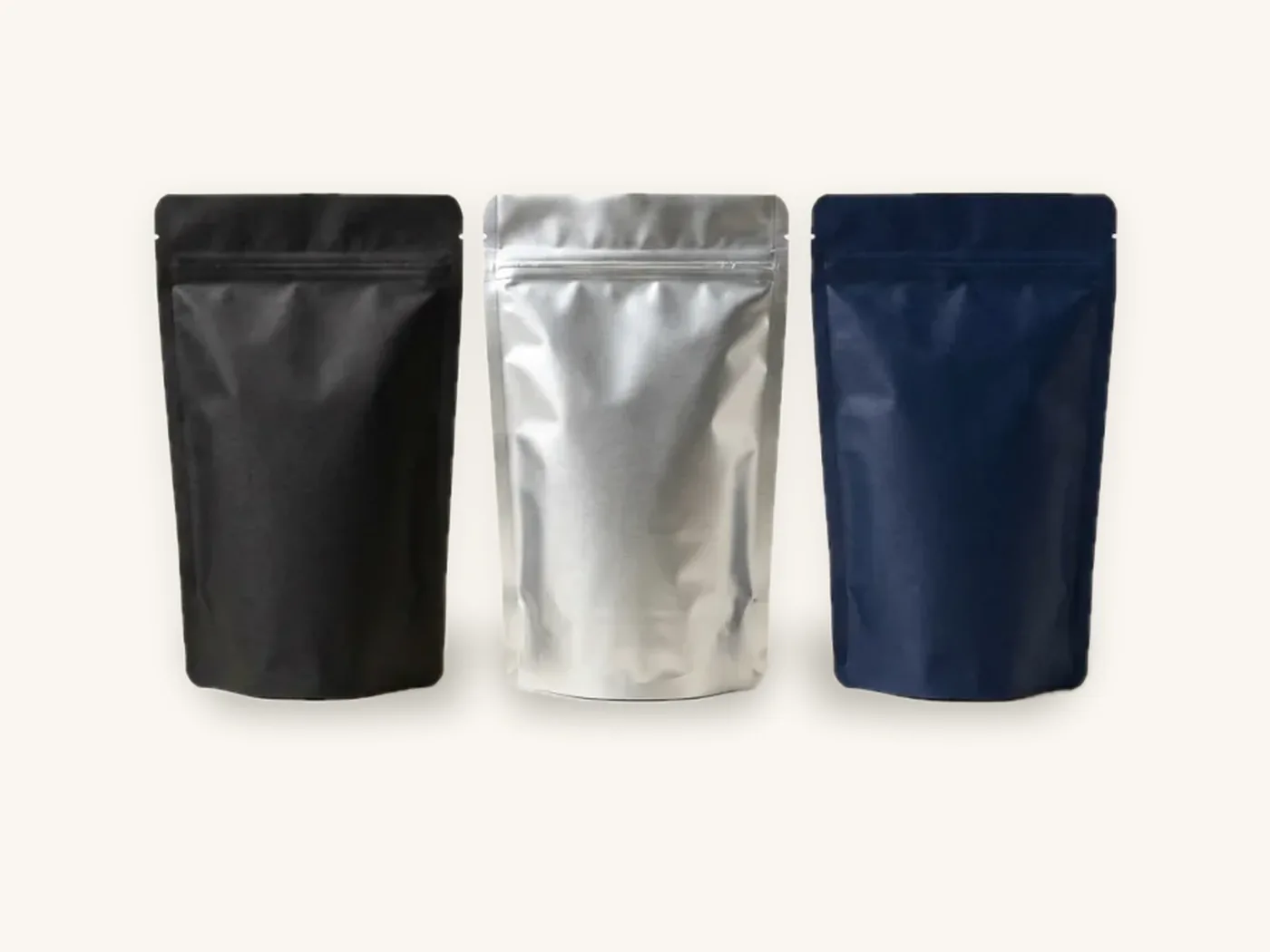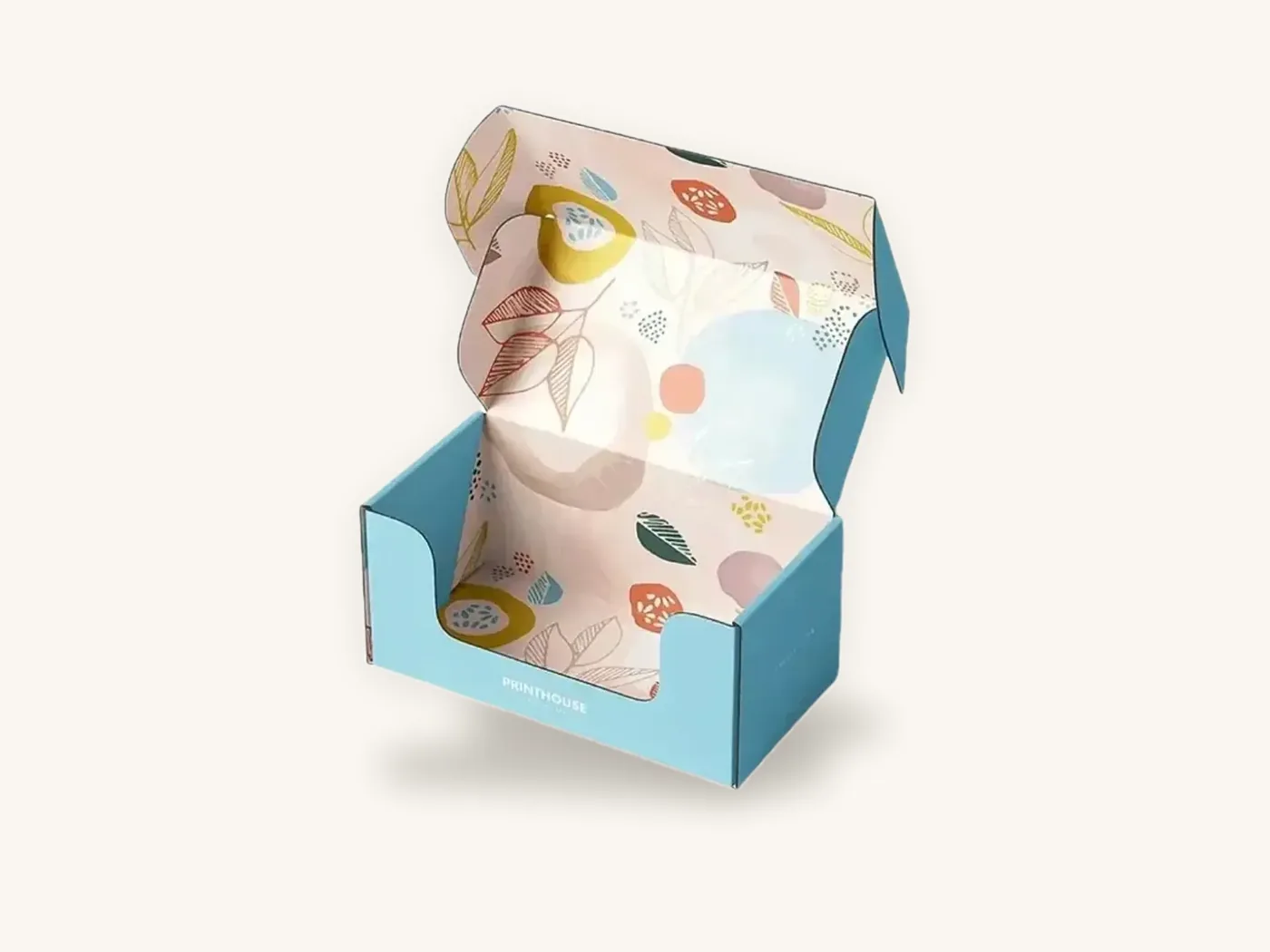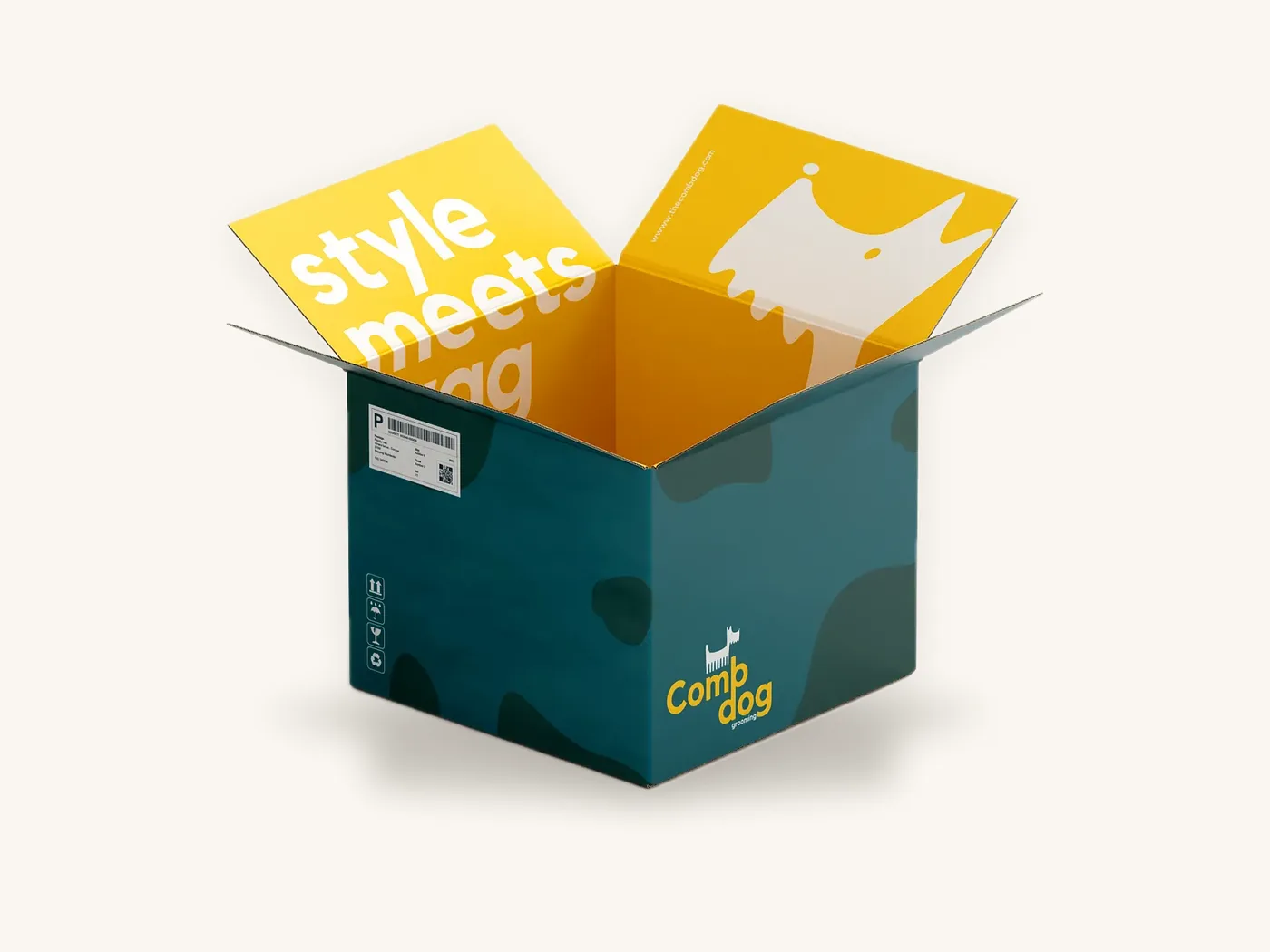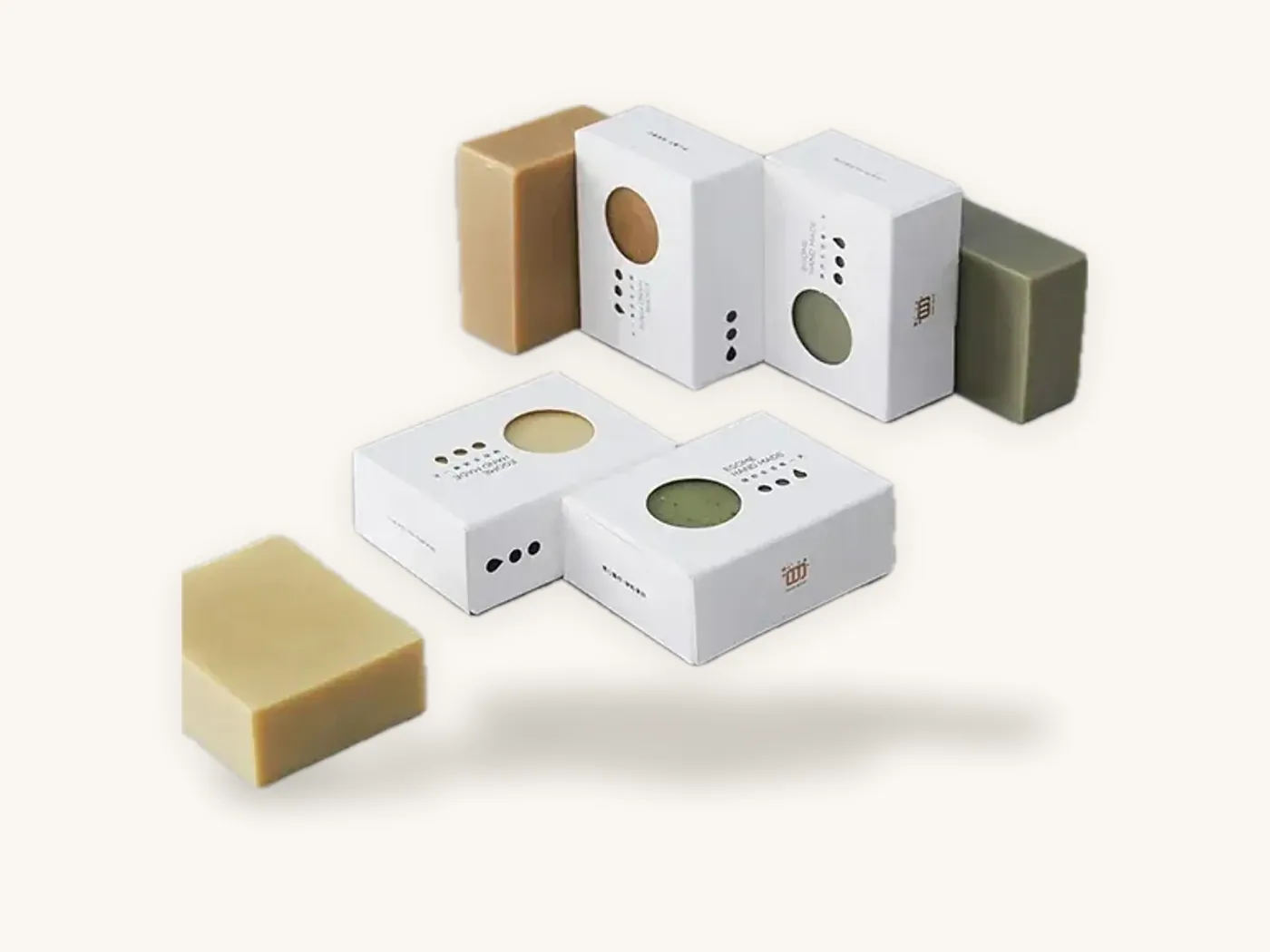
Custom die cut boxes are packaging structures designed from scratch for one product, rather than picked from a catalog of standard styles. A structural designer draws a flat pattern, called a dieline, that tells the cutting equipment where to cut, where to crease and where to perforate, so a single sheet of board folds into a box shaped around your product. The result can be a shaped gift box, a carton that locks without glue, a display that opens into a stand, or an insert with a cavity for every item in a kit.
Technically, almost every paperboard box is die cut. What makes die cut packaging "custom" is that the structure itself is new. This guide explains how that engineering works, step by step: how dielines are read, how board thickness shapes the design, the rules structural designers follow, how prototypes are tested and what actually drives cost.
Key takeaways
- A dieline is the engineering drawing of a box: solid lines cut, dashed lines crease, and dotted or dash-dot lines perforate. Every custom box structure starts there.
- Board caliper sets the rules. Crease allowances, tab widths and lock sizes all scale with thickness, so the board is chosen before the dieline is finalized.
- Grain direction matters. Folds across the grain are crisp; folds along it can crack or spring back.
- Prototype before printing. An unprinted structural sample tests fit, assembly time and closure strength for a fraction of the cost of a failed print run.
- Box Sense charges no die fee for custom structures. One-time tooling applies only to foil, embossing, spot UV and custom inserts.
- Minimum order is 10 boxes, and dieline design is part of our free design support.
What custom die cut packaging actually means
Die cutting is a process, not a style. A cutting die, or a digital cutting table on short runs, presses through a printed sheet to cut the outline and score the fold lines in one pass. Tuck end cartons, mailers and hexagon boxes are all die cut. When people search for custom die cut boxes, they usually mean one of four things.
The four kinds of custom structure
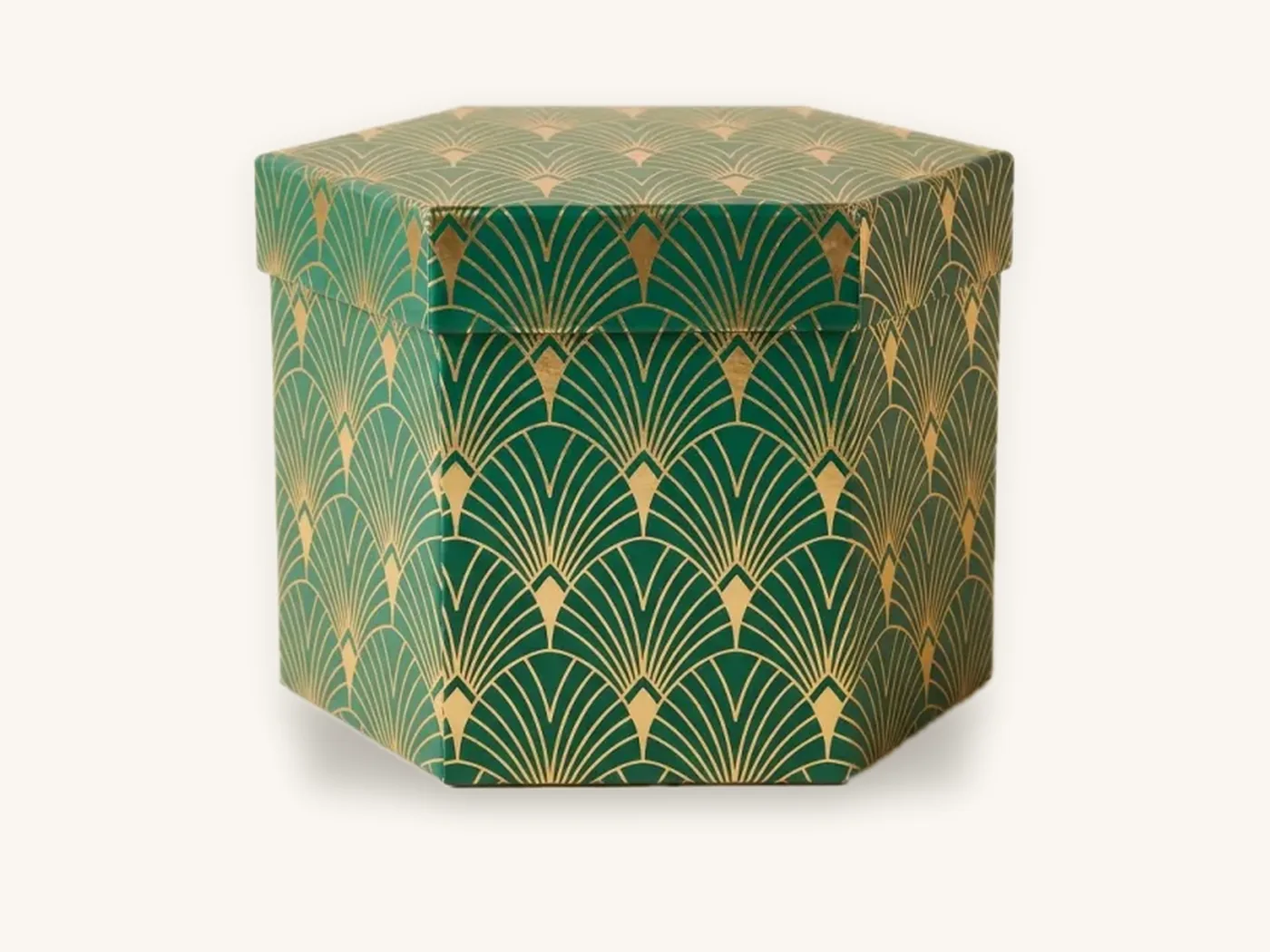
- Shaped boxes. Outlines that are not rectangular: hexagons, triangles, houses, pillow curves, handles cut into the top. The hexagon boxes guide covers the most popular shaped format in detail.
- Glue-free locking structures. Boxes that hold together with interlocking tabs and slots instead of adhesive, useful for flat-packed kits and plastic-free assembly.
- Integrated fitments. A single blank that folds into both the outer box and the internal holder, so no separate insert is needed.
- Convertible structures. A shipping or retail box that opens into a display tray, a stand or a dispenser.
Each of these starts from the product, not from the box. That is the key difference from ordering a standard style in a custom size.
From sketch to production: the engineering workflow
A custom structure moves through the same stages whether it is a simple shaped carton or a multi-part kit. Skipping a stage almost always shows up later as a fit problem or an assembly headache.
- Brief. Define the product, its weight and fragility, how it is packed (by hand or on a line), how it is sold (shelf, peg, parcel) and what the opening moment should feel like.
- Product capture. Measure the product at its widest points, or send a physical unit. For irregular items, a photo beside a ruler from three sides is the minimum.
- Board selection. Pick paperboard, corrugated or greyboard and a caliper, based on weight, protection and print needs.
- Structural concept. Sketch or model the folding sequence in 3D, deciding where the glue flap, closure and locks go.
- Dieline drafting. Draw the flat pattern with cut, crease and perforation lines, compensating for board thickness at every fold.
- Structural sample. Cut and fold an unprinted sample on the chosen board.
- Test and revise. Fit the real product, time the assembly, drop test, and adjust the dieline. Two or three revisions are normal for a new structure.
- Artwork on the dieline. Place graphics using the final dieline, with bleed and safe zones.
- 3D proof and approval. Review a digital render of the printed box from every side.
- Production. Print, cut, crease, strip waste, fold and glue.
At Box Sense, steps four through nine fall under our free design services: we draft the dieline, set up artwork on it and send a 3D proof with two revision rounds included.
Reading a dieline: line types and what they do
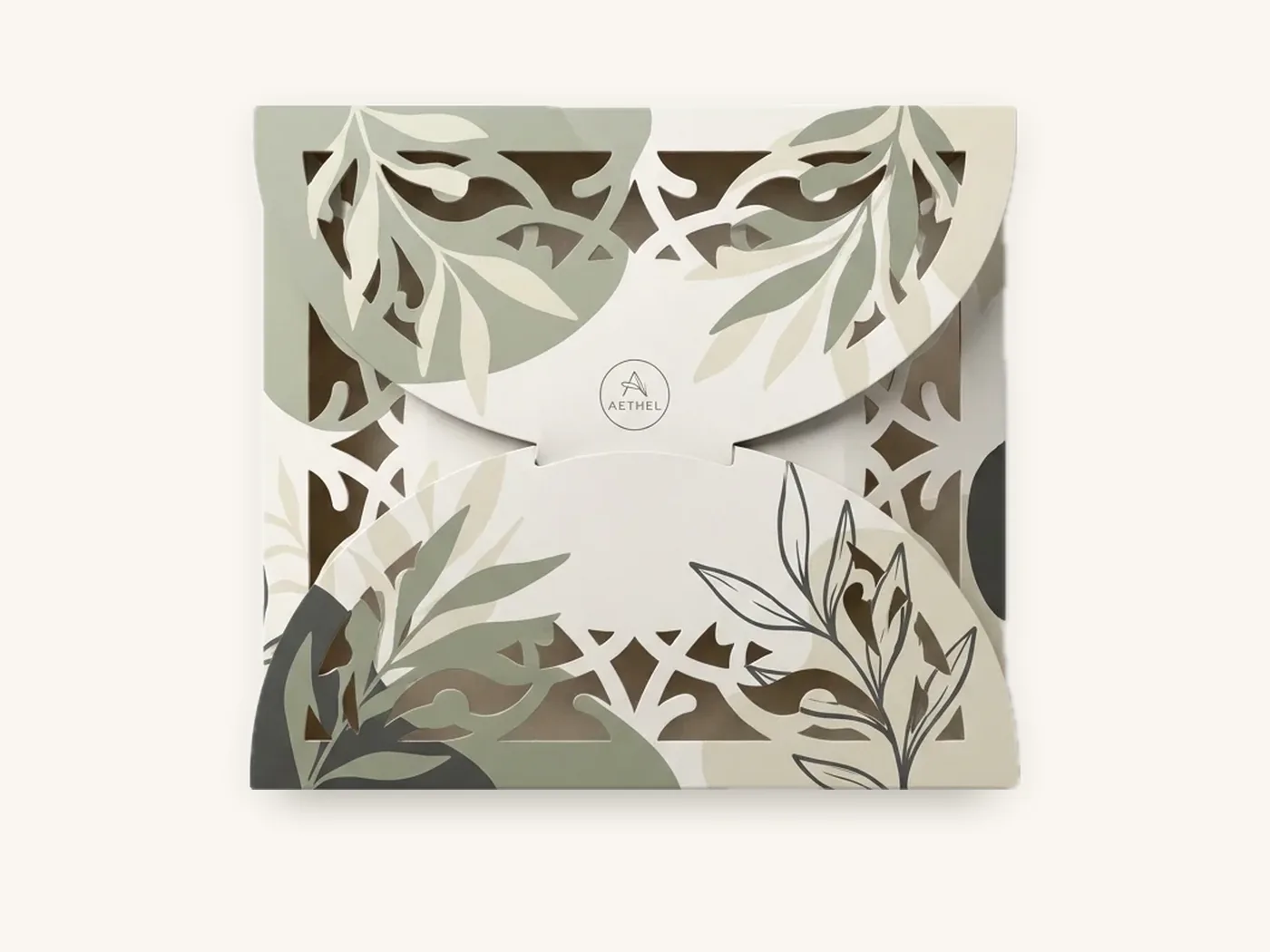
A dieline looks like a technical drawing because it is one. Every line tells the cutting equipment to do something different to the board. Conventions vary slightly between suppliers, so each dieline carries a legend, but these are the standard line types.
| Line type | Usual drawing | What it does | Typical use |
|---|---|---|---|
| Cut | Solid line | Cuts through the board completely | Outer edges, slots, windows, hang holes |
| Crease (score) | Dashed line | Compresses the board so it folds cleanly | Every panel fold |
| Reverse crease | Dashed line in a second color | Creases from the opposite side so the fold bends the other way | Tuck flaps, pop-up display parts |
| Perforation | Dotted or short dash-dot line | Alternating cuts and ties so it tears on purpose | Tear strips, dispenser openings, tamper evidence |
| Cut-crease (perf-score) | Long dash-short dash line | Partial cuts along a crease for easy folding in thick board | Corrugated folds, tight 180 degree folds |
| Glue area | Shaded or hatched zone | No ink or coating so adhesive bonds | Glue flaps, pre-glued bottoms |
| Bleed | Line outside the cut | Artwork extends here so no white edge shows | All printed edges, usually 1/8 in |
| Safe zone | Line inside the cut | Keep text and logos within it | All critical copy |
Why the glue area has to stay clean
Laminations and heavy coatings resist adhesive. A dieline marks glue areas as knock-outs, which means no film, varnish or heavy ink coverage there. If your artwork floods a glue flap with a flood color and a soft-touch film, the box can pop open after a few days on a warm shelf. Your supplier should handle this, but it is worth checking on the proof.
Board selection for custom box structures
The board decides what the structure can do. Thin paperboard allows small, detailed tabs and tight folds; corrugated allows strength but needs generous radii and wider tabs. The SBS paperboard and corrugated board pages list the grades we run.
| Board | Approximate thickness | Structural strengths | Design limits |
|---|---|---|---|
| 14 pt SBS | 0.014 in (about 0.36 mm) | Fine detail, small locking tabs, crisp print | Weak for products over a few ounces |
| 18 pt SBS or kraft | 0.018 in (about 0.46 mm) | The all-round choice for shaped retail cartons | Long unsupported panels can bow |
| 24 pt SBS | 0.024 in (about 0.61 mm) | Stiffer walls, stronger locks, premium feel | Needs larger crease allowances; tiny tabs crack |
| E-flute corrugated | about 1.5 mm | Shipping strength with a good print surface | Minimum tab widths and fold radii increase |
| B-flute corrugated | about 3 mm | Heavy products, displays that carry load | Detailed shapes lose crispness |
| Rigid greyboard | about 2 mm | Set-up boxes that hold shape empty | Cannot be folded from one blank; built and wrapped |
Matching board to product weight
As a working rule, 14 to 18 pt paperboard suits products under about a pound, 24 pt handles heavier retail items and anything with long unsupported panels, and E-flute is where you go once the box has to survive parcel shipping or carry weight as a display. If the product is heavy and the shape is complex, the usual solution is a simple corrugated outer with a detailed paperboard insert, rather than one complicated corrugated structure.
Structural design rules engineers follow
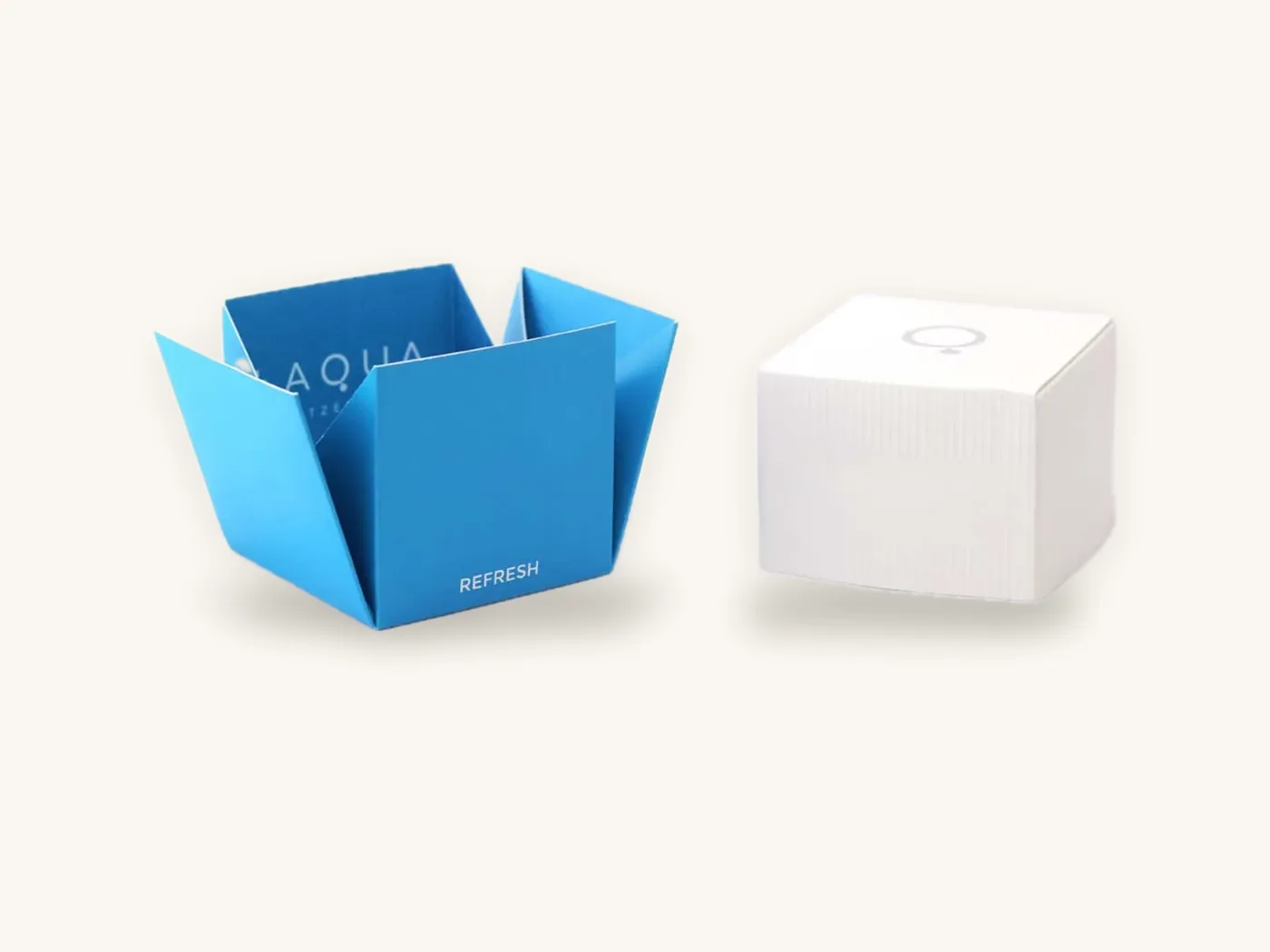
Good custom structures look effortless, but they follow rules that come straight from how board behaves. Knowing them helps you judge a concept before anything is cut.
Grain direction
Paperboard has a grain, set by the direction the fibers lie on the paper machine. A fold across the grain is crisp and holds its angle. A fold parallel to the grain tends to crack on the surface and spring back. Structural designers orient the main panel folds across the grain, which in turn affects how blanks are laid out on the sheet.
Thickness compensation
When board folds, the outside of the fold travels farther than the inside. On 14 pt board that difference is tiny; on E-flute it is significant. Each panel on a dieline is drawn slightly larger or smaller than the finished box dimension to compensate, which is why you cannot simply draw a box in a design program at its finished size and send it to be cut.
Tabs, slots and locks
- Minimum tab width grows with thickness. A tab that locks well in 18 pt board may tear off in 24 pt and will crush flat in corrugated.
- Slot length needs a small allowance beyond the tab so it enters without buckling, but not so much that it falls out.
- Rounded corners on tabs guide them into slots and reduce tearing.
- Relief cuts at the base of a fold stop the board from bunching where panels meet.
- Distance from crease to cut must be kept above a minimum so a fold near an edge does not rip through.
Common locking mechanisms
A custom structure usually borrows proven closures rather than inventing new ones. Tuck flaps with friction locks, crash-lock bottoms that pop open pre-glued, auto-lock bottoms that hold weight, butterfly locks for glue-free trays, and slot-and-tab interlocks for kits all appear across standard styles. See auto lock bottom boxes for the most common load-bearing base.
Watch out: a structure that folds perfectly by hand on a sample can be slow or awkward in volume. Time how long your packers take to assemble ten samples. A few extra seconds per box becomes hours on a run of several thousand.
Integrated inserts and fitments
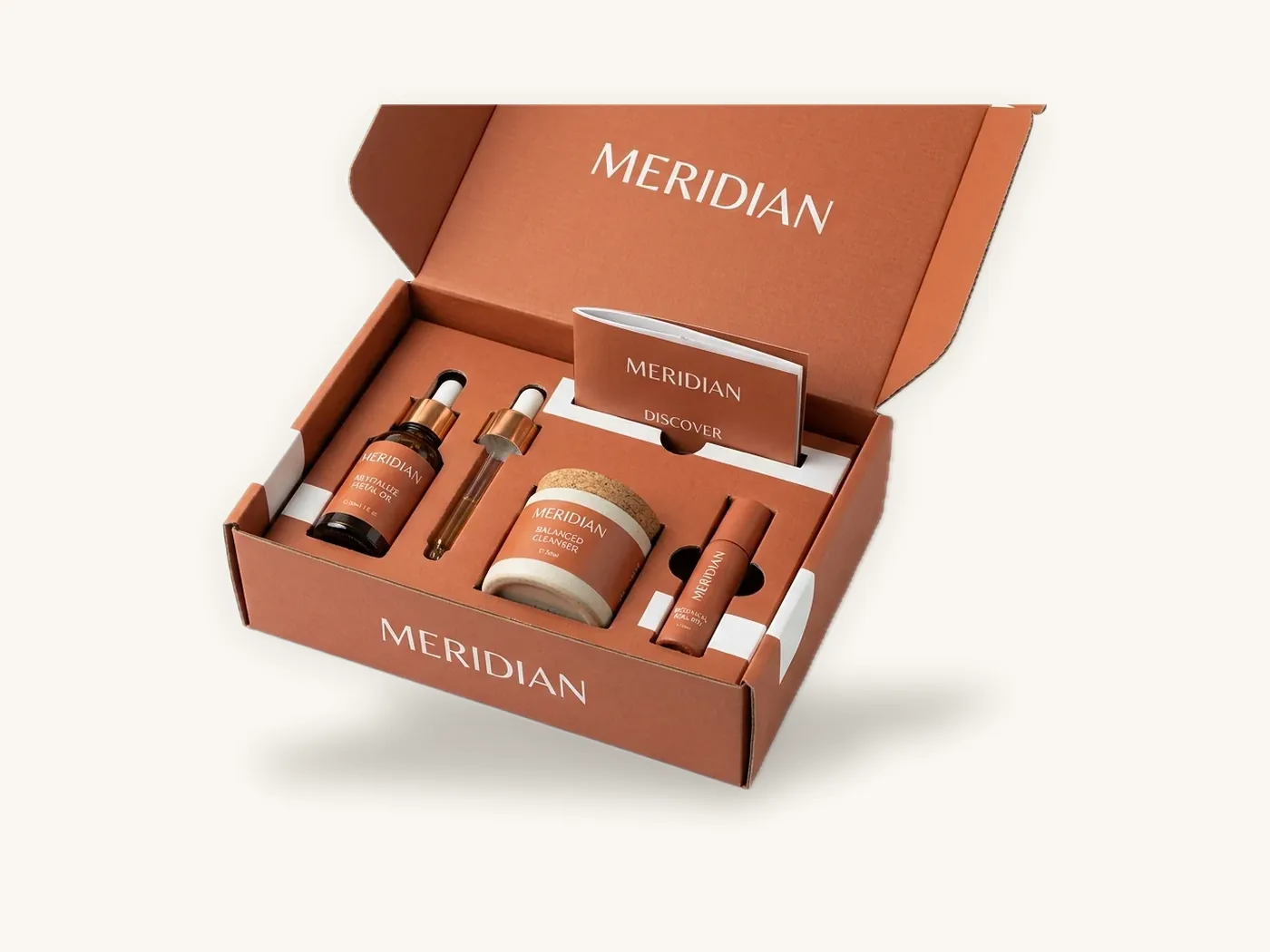
Many custom structures exist because of what goes inside. A kit with a bottle, a dropper and a card, or an electronics product with a charger and a cable, needs each item held in a specific place.
There are two ways to do it. A separate insert is a second die-cut piece that drops into a standard box; it is easy to redesign later and can be a different material from the box. An integrated fitment is folded from the same blank as the box, which saves a part and a packing step but makes the dieline more complex and ties the box and holder together permanently.
Paperboard inserts suit light kits. Corrugated inserts cushion glass. Foam gives precise cavities for high-value items, and molded pulp is a plastic-free alternative. Every custom insert carries a one-time insert die charge of about $45. Browse box inserts and dividers for materials.
For kits that combine a box with flexible packs, such as a sampler of coffee or snacks, the insert can hold pouches upright. The stand-up pouches guide and the custom mylar bags guide cover the flexible side.
Prototyping and testing a new structure
A structural sample is the cheapest insurance in packaging. Box Sense provides unprinted structural samples free, and a printed sample of approved artwork is free on orders of 100 or more; see samples.
What to test on a structural sample
- Fit: the product drops in without force and does not rattle when shaken.
- Closure: the lid or tuck stays shut when the box is lifted by the top and turned over.
- Assembly: a packer who has not seen the box can fold it from written instructions.
- Strength: the box survives a drop from waist height onto a hard floor, packed with the real product.
- Stacking: a few boxes stacked on top do not bow the walls over a day.
- Opening: the customer opens it in the intended order, without tearing a tab.
- Retail fit: it fits the shelf depth, peg hook or display it is meant for.
If the box ships through carriers, run the packed sample through a real shipment. The custom shipping boxes guide explains how outer cartons protect shaped retail boxes, and the custom mailer boxes guide covers structures that ship on their own.

What drives the cost of custom die cut boxes
Many buyers assume the cutting die is the expensive part. At Box Sense there is no die or plate charge, so the cost of a custom structure comes from material, labor and finishing instead.
- Sheet yield. How many blanks fit on a press sheet. An awkward shape with long arms nests poorly and wastes board, raising cost per box.
- Board grade. Thicker board and corrugated cost more per square foot.
- Gluing complexity. A single side seam is fast; multiple glue points, crash-lock bottoms or hand-applied glue add labor.
- Assembly steps at the factory. Pre-folded or pre-glued structures cost more to make but save your packing time.
- Print and finishes. Foil and embossing each carry about $60 in one-time tooling; spot UV about $40.
- Inserts. Material plus the one-time insert die.
- Quantity. Setup spreads over more units as the run grows.
For perspective on how simple structures price, a standard straight tuck end carton in 18 pt SBS at 3x2x5 in with full color and aqueous coating is about $1.15 each at 100 units and about $0.51 at 1,000. A custom structure in the same board will usually cost more, depending on yield and gluing. Use the instant estimator as a baseline and request a quote with a sketch for the exact figure.
When a standard style is the better answer
Custom engineering is not always the right move. If your product is rectangular, sells on a shelf and packs by hand, a standard straight tuck end box in a custom size gives you the same print surface for less. If the product hangs on a peg, a hang tab carton is proven and fast; see the hang tab boxes guide. If it runs on an automated cartoner, a glued carton is almost always better; the seal end boxes guide explains why. If you want a lift-off lid, the two-piece boxes guide covers that format.
Go custom when the shape itself sells the product, when a standard box would need several separate inserts, or when the packaging has to become a display.
How to order custom die cut boxes from Box Sense
You do not need a finished dieline to start. A clear brief and product measurements are enough for our structural team to propose a concept.
What to send
- Product dimensions and weight, or a physical sample if the shape is irregular
- A sketch, reference photo or description of the structure you imagine
- How it is packed, sold and shipped: shelf, peg, parcel or display
- Board preference, or a note asking for a recommendation
- Print coverage, finishes and any window or perforation
- Insert or fitment requirements
- Quantities to price and target delivery date
- Artwork if ready; otherwise we set it up on the dieline
What happens next
- Quote within 24 hours, including any one-time tooling for finishes or inserts.
- Structural concept and dieline, drafted for your board and product.
- Free unprinted structural sample, revised until the fit and closure work.
- Artwork and 3D proof, with two revision rounds included.
- Production in 8–12 business days after proof approval as standard; rush in 5 business days on most paperboard and corrugated styles.
- Free shipping on every US order; international shipping quoted at cost.
The minimum order is 10 boxes, and defective boxes reported within 14 days are reprinted free. See the custom die cut boxes product page, the die cut boxes style page and our printing and finishes options, or browse shaped formats like hexagon boxes. Toy and game brands can find related formats on the toys and games packaging page.
Frequently asked questions
What is a die cut box?
A die cut box is a box cut from a flat sheet of paperboard or corrugated using a cutting die or digital cutting table, which cuts the outline and creases the fold lines in one pass. Most folding cartons are made this way. A custom die cut box is one whose structure is designed specifically for a product, such as a shaped box, a glue-free locking box or a box with an integrated insert.
How much does a custom die cut box cost?
Cost depends on board grade, size, how efficiently the shape nests on a press sheet, gluing complexity, print, finishes and quantity. Box Sense charges no die fee for custom structures. As a baseline, a standard 3x2x5 in straight tuck end carton in 18 pt SBS is about $0.51 each at 1,000 units; a more complex custom structure in the same board usually costs more.
What is a dieline and do I need one?
A dieline is the flat technical drawing of a box, showing where the board is cut, creased and perforated, plus glue areas, bleed and safe zones. You need one to place artwork correctly, but you do not need to create it yourself. Box Sense drafts dielines as part of free design support, starting from your product dimensions and a sketch or description.
How long does it take to develop a custom box structure?
Timing depends mainly on how many sample revisions the structure needs. A shaped carton based on proven closures may be right on the first sample, while a multi-item kit can take two or three rounds. After you approve the final proof, standard production at Box Sense is 8–12 business days, with rush production in 5 business days on most paperboard and corrugated styles.
Can die cut boxes be made without glue?
Yes. Glue-free structures use interlocking tabs, slots, butterfly locks and tuck closures to hold their shape. They suit flat-packed kits, trays and brands avoiding adhesives. The tradeoff is that locking tabs need enough board thickness to hold, and glue-free boxes can take longer to assemble by hand, so time a packer folding samples before committing to a large run.
What board thickness is best for custom die cut packaging?
For shaped retail cartons holding products under about a pound, 18 pt SBS or kraft paperboard is the usual choice. Use 14 pt for very small, light items with fine tab details, 24 pt for heavier products or long unsupported panels, and E-flute corrugated when the box ships by parcel or carries weight as a display. Board is chosen before the dieline is finalized.
Can I get a sample of a custom die cut box before ordering?
Yes. Box Sense provides unprinted structural samples free, so you can test fit, closure, assembly and strength with your real product before printing. A printed sample of approved artwork is free on orders of 100 units or more. For a new structure, a sample is strongly recommended, because small dieline changes are easy before printing and costly after.
What is the minimum order for custom die cut boxes?
The minimum order at Box Sense is 10 boxes, including fully custom structures. Short runs are digitally printed and there is no die charge, which makes small quantities practical for prototypes, launches, influencer kits and retailer samples. Unit price falls as quantity rises, so compare several quantity tiers before choosing a run size.
Next steps
Gather your product dimensions, a sketch or reference of the structure you want, and how the box will be packed and sold. Get a baseline from the custom box price estimator, then request a custom die cut box quote. We will confirm pricing within 24 hours and start on your dieline.
Boxes in this guide
Order the packaging we covered
Written by the Box Sense Packaging Team
Our structural designers, prepress technicians and production staff print and convert custom boxes every day for brands in the United States, United Kingdom and UAE. Questions about this guide? Talk to us.