The choice of kraft vs white mailer boxes comes down to one question: does your design depend on accurate, bright color? If it does, choose white. If your brand is built on a natural, understated look and one or two ink colors, choose kraft. Almost every other difference between the two, including cost, scuffing and how photographs print, follows from the color of the board's surface.
This guide compares kraft and white mailer boxes on the points that matter when you order: how ink behaves on each, what each costs, how they hold up in the post, how they look in customers' photos and what they say about your brand. It ends with a short decision guide and the details to send for a quote.
Both are the same box. A mailer is a die-cut corrugated box with a hinged lid that locks without tape. The only thing that changes is the outer liner, the sheet of paper on the surface of the corrugated board.
Key takeaways
- White board shows color as designed. Kraft board darkens and warms every ink printed on it.
- Kraft hides scuffs and dirt better than white, which matters after a trip through a parcel network.
- The price difference is small. Size, print coverage and quantity move the cost far more than the liner color.
- White ink on kraft is possible but it prints as a soft off-white, not a bright white, and adds a step.
- You can mix them: kraft outside with a white or printed inside, or the reverse.
- Neither is automatically greener. Both are corrugated board and both are widely recyclable; recycled content depends on the board, not its color.
- Box Sense makes both from 10 boxes. Request a quote for the same box in kraft and white to compare.
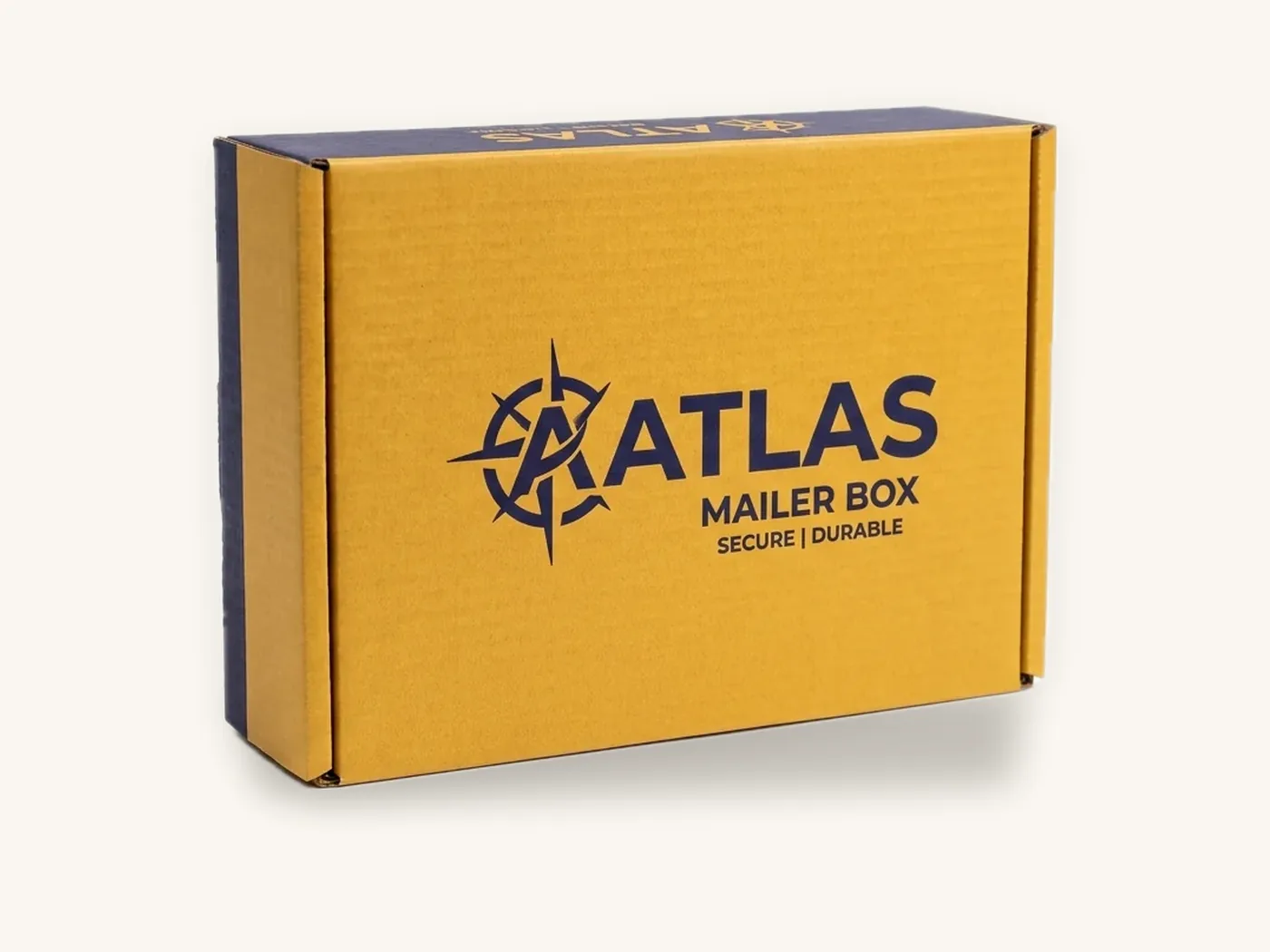
Kraft vs white mailer boxes at a glance
| Kraft mailer box | White mailer box | |
|---|---|---|
| Surface | Brown, unbleached paper | White paper, coated or uncoated |
| Color accuracy | Inks look darker and warmer | Inks look as designed |
| Best artwork | Logos, line art, one or two dark colors | Full color, photographs, light and bright colors |
| White in the design | Needs white ink, prints off-white | Comes from the board itself |
| Scuffs and marks | Hidden well | Show more easily |
| Brand feel | Natural, handmade, understated | Clean, bright, premium |
| Relative cost | Slightly lower in most cases | Slightly higher in most cases |
| Recyclable | Yes, widely | Yes, widely |
The cost row compares the two liners on the same box at the same quantity. The real price of either depends on size, print and quantity, and is quoted per order.
How ink behaves on each board
This is the difference that decides most orders, so it is worth understanding properly.
Printing on white
Printing inks are translucent. They rely on a white surface underneath to reflect light back through the ink, which is how you see the intended color. On white board, a pale blue prints as pale blue, yellow stays yellow, and skin tones in a photograph look natural.
White board comes in two surfaces. A coated white liner is smooth and gives the sharpest detail and the brightest color. An uncoated white liner is slightly more matte and absorbent, so colors are a little softer.
Printing on kraft
Kraft is brown. The same translucent inks now sit on a brown background, so every color shifts:
- Dark colors hold up well. Black, navy, forest green and burgundy stay strong.
- Mid-tones go darker and warmer. A bright red leans toward brick; a mid blue goes dusty.
- Light colors nearly disappear. Yellow, pale pink and light grey barely show.
- Anything white in the artwork becomes brown, because there is no ink there, only board.
None of this is a defect. Many brands choose kraft because of that muted, earthy result. It only becomes a problem when the design was made for a white background and is expected to match a screen.
Our guide to printing on kraft boxes shows what to expect color by color.
White ink on kraft
If a kraft box needs white lettering or needs brighter colors, a layer of white ink can be printed first. Two things to know:
- It prints as a soft, slightly off-white, because one layer of white ink does not fully cover brown board. It looks deliberate and attractive, but it is not the white of white paper.
- It adds a print step, which adds cost, and fine white text can look less crisp than black.
If your logo is white and must be bright, a white box with a brown or colored flood print is often the better route.
Tip: ask for a printed sample on kraft before a large order if color matters to you. A screen cannot show how ink sits on brown board.
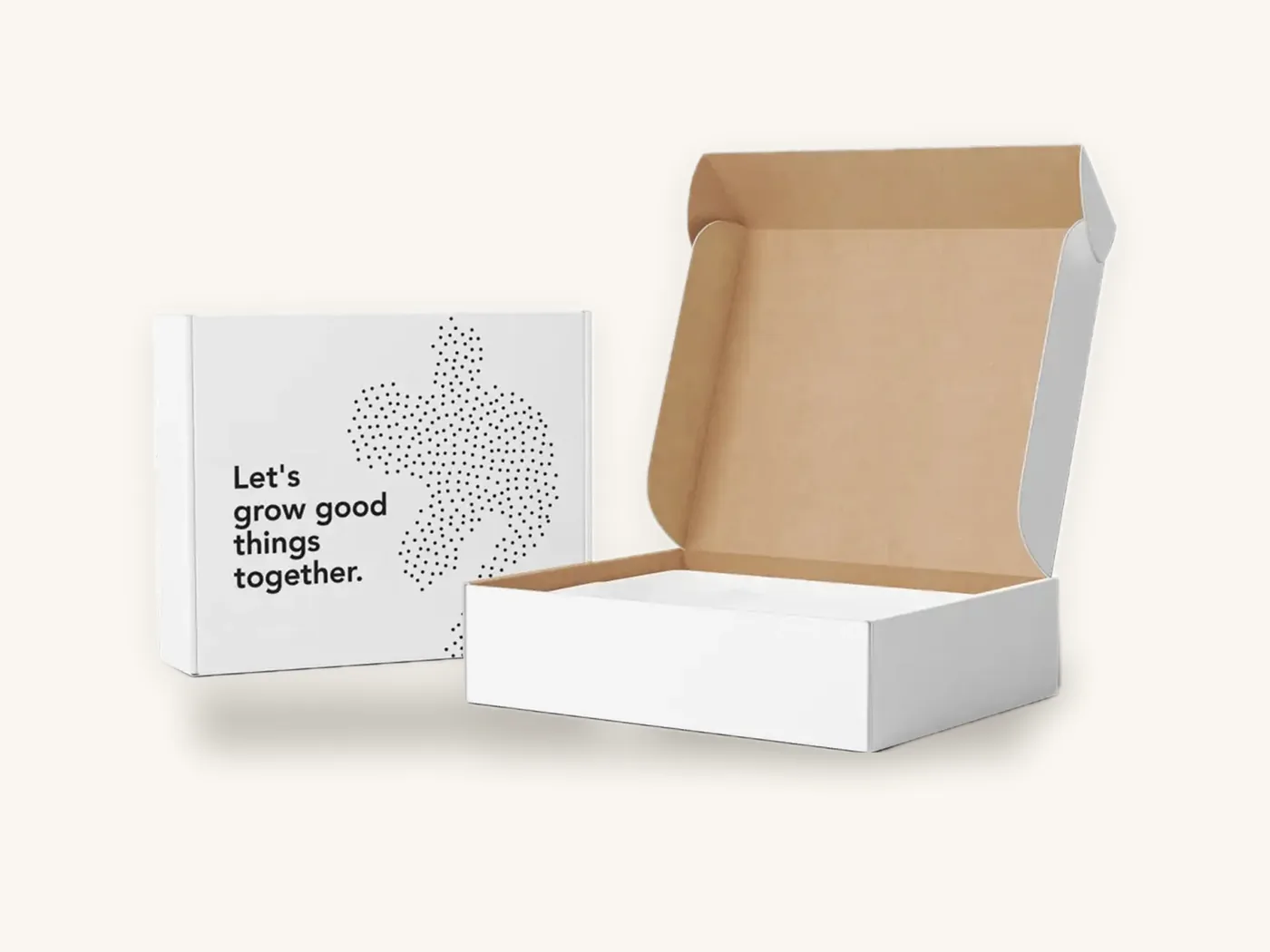
Brand fit: what each one says
A box is read in a second, and the board color is the first thing a customer notices.
What kraft signals
- Natural and honest. It suits soap, candles, coffee, food, wellness and handmade goods.
- Environmentally minded. Customers associate brown board with recycling, whether or not the white alternative is any less recyclable.
- Unfussy. It tells the customer the money went into the product.
What white signals
- Clean and precise. It suits beauty, skincare, tech and apparel.
- Premium. White space reads as confidence, and finishes show up better on it.
- Colorful. If your brand owns a bright color, white board is the only way to show it accurately.
There is no better choice in general, only a better choice for a given brand. A skincare brand with a pastel palette will be let down by kraft. A small-batch coffee roaster may look overdressed in glossy white.
The packaging branding guide covers how to turn a brand identity into packaging decisions.
Cost
Buyers often expect kraft to be much cheaper. It usually is cheaper, but only slightly, and the difference is easily outweighed by other choices.
What actually moves the price of a mailer, in rough order:
- Quantity. The cost per box falls steeply as the run grows.
- Size. A bigger box uses more board.
- Print coverage. Outside only costs less than outside and inside; one color costs less than full color on larger runs.
- Finishes and add-ons. Lamination, foil, inserts.
- Liner color. Kraft or white.
Two things can reverse the usual order. White ink on kraft adds a step, so a kraft box with white ink can cost more than a plain white box. And a simple one-color design costs about the same on either board.
So choose the liner for how it looks, then ask for both in the same quote. Our custom mailer boxes cost guide breaks the cost factors down in detail.
Durability and scuffing
Structurally, there is no meaningful difference. Strength comes from the flute and the board grade, not from the color of the liner. An E-flute kraft mailer and an E-flute white mailer protect the same.
Appearance after shipping is different:
- Kraft hides wear. Scuffs, light dirt and conveyor marks blend into the brown surface.
- White shows wear. Dark scuff marks and dirt stand out, especially on large unprinted areas.
If your mailers ship without an outer box, which most do, this matters. Ways to protect a white mailer:
- Print more of the surface. A flood of color hides marks better than bare white.
- Add a coating or lamination. Matte or gloss film resists scuffing and wipes clean.
- Use a pattern. A repeated pattern disguises small marks.
The reduce shipping damage guide covers protection for the contents, which matters more than the surface.
Inside printing
The inside of a mailer is a second canvas, and it does not have to match the outside.
- Kraft outside, kraft inside. The simplest and cheapest. A one-color message inside the lid works well.
- Kraft outside, printed white inside. A plain exterior that travels well, with a bright, colorful reveal on opening. This is a popular combination for subscription boxes.
- White outside, white inside. Full color on both sides for the most polished result.
- White outside, kraft inside. Less common, but it gives a clean exterior with a natural interior.
Corrugated board is made of an outer liner, a fluted middle and an inner liner, and each liner can be kraft or white. Ask for the combination you want when you request a quote. The inside printing guide explains the options and costs.
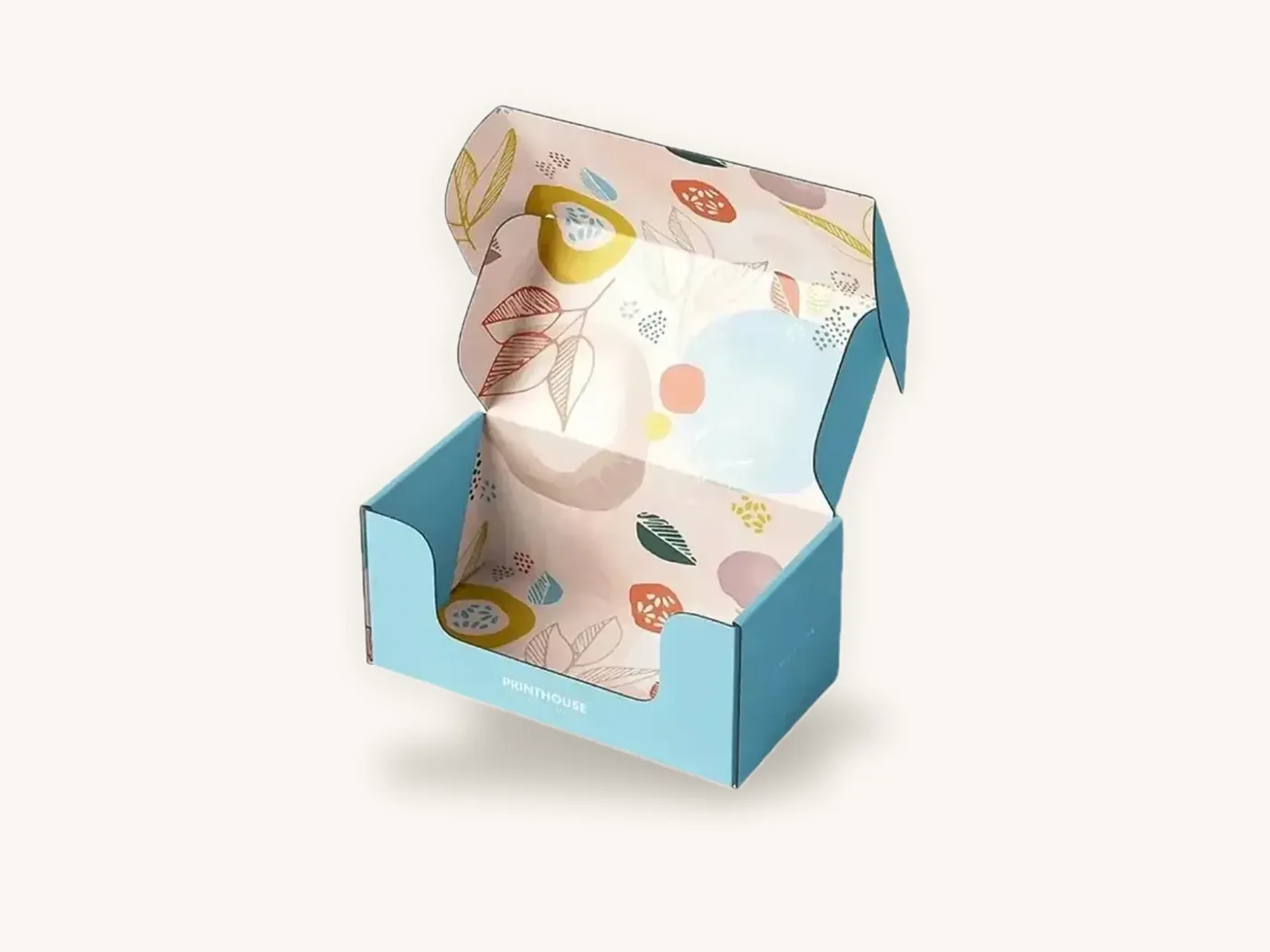
Photography and unboxing
Many customers first see your box in someone else's photo or video.
- White boxes photograph brightly and make product colors look true, but they can lose detail in strong light and show shadows and marks.
- Kraft boxes photograph warmly and are forgiving in poor light, but pale products can look dull against them.
Think about what sits inside. Colorful products look vivid against white. Natural, neutral products sit comfortably in kraft. Tissue paper in a brand color lifts either. For more on this, see the unboxing experience guide.
Which products suit each board
Some categories lean clearly one way. Use this as a starting point, not a rule.
Kraft usually suits:
- Soap, candles and bath products, where a natural look matches the product
- Coffee, tea and dry food, where brown board echoes the ingredients
- Handmade and craft goods sold through marketplaces
- Refill and low-waste products, where plain packaging supports the message
- Trade and wholesale shipments, where the box is handled more than it is admired
White usually suits:
- Skincare, makeup and fragrance, where pale and precise colors matter
- Apparel and accessories, where the box is part of a gift
- Electronics and gadgets, where a clean look signals quality
- Children's products, which rely on bright color
- Subscription boxes with a new illustrated design each month
A brand with several lines can use both: kraft for everyday orders and white for gift sets or seasonal editions. The dieline is the same, so changing the liner does not mean redesigning the box.
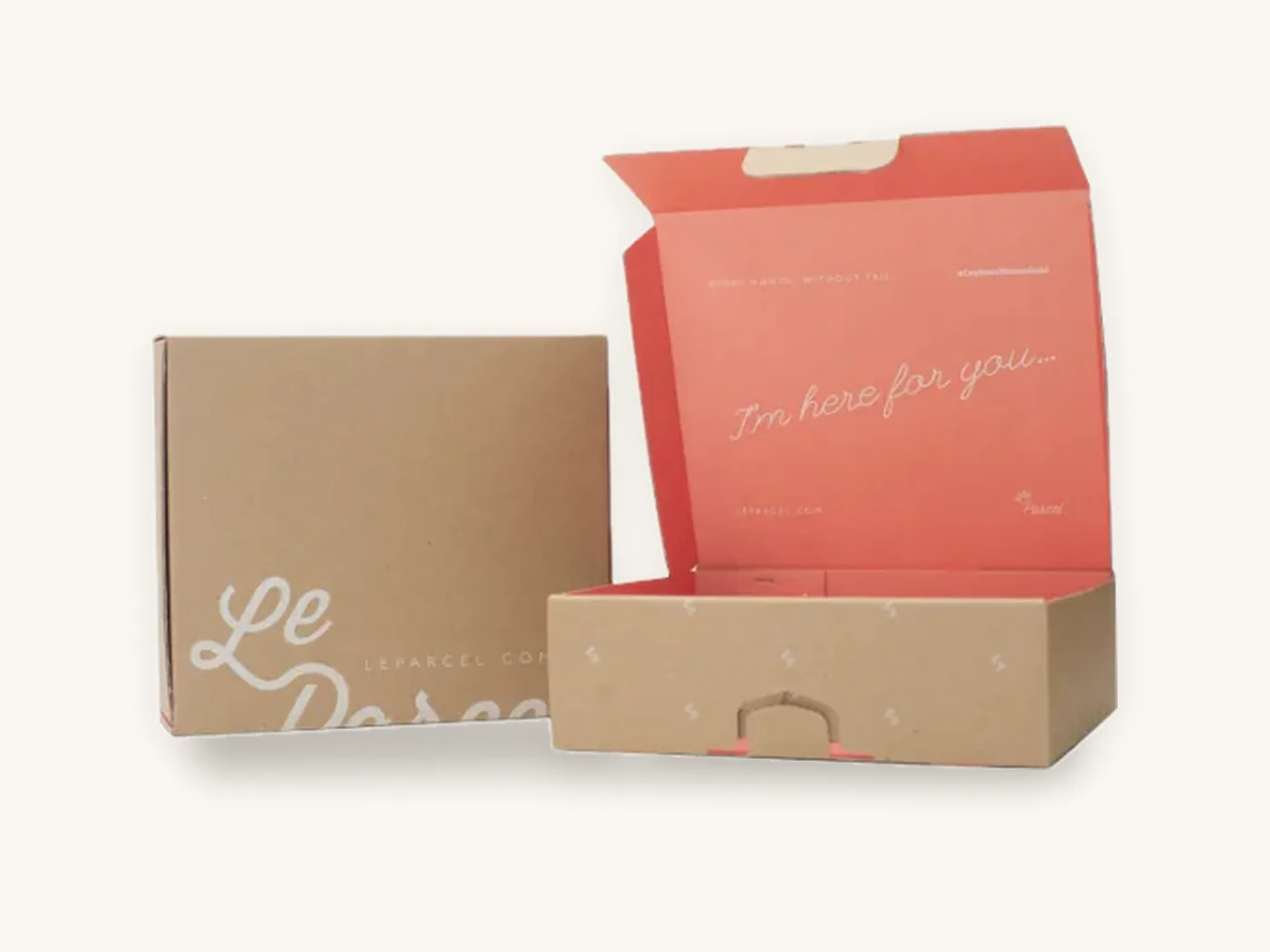
Sustainability: what is and is not different
Kraft is widely assumed to be the greener choice. The facts are more even than that.
- Both are corrugated board, and both are widely accepted in paper recycling.
- Recycled content depends on the board grade, not its color. Kraft liners are often made with recycled fiber, and white liners can be too. Ask for the recycled content in writing if it matters to your claims.
- White liners are either bleached or coated to get their color, which is an extra process. That is a real difference, though a modest one.
- Finishes matter more than liner color. A plastic film lamination affects recyclability more than choosing white over kraft. A water-based coating keeps either box easy to recycle.
- Right-sizing matters most of all. A box that fits the product uses less board and costs less to ship.
If you plan to print an environmental claim on the box, make sure you can back it up. The recyclable packaging guide and the green claims guide explain what you can and cannot say.
Which finishes work on each
| Finish | On kraft | On white |
|---|---|---|
| One-color print | Excellent | Excellent |
| Full-color print | Muted, earthy result | Accurate and bright |
| White ink | Soft off-white | Not needed |
| Matte or gloss lamination | Possible, but hides the natural texture | Common, protects the surface |
| Foil stamping | Works; metallic on brown is striking | Works well |
| Embossing or debossing | Subtle on corrugated | Subtle on corrugated |
| Spot UV | Rarely used | Works over lamination |
Kraft is usually left uncoated, because the texture of the paper is part of its appeal. White is more often coated or laminated, to protect the surface and deepen the color.
Common mistakes
- Designing on a white screen for a kraft box. Convert the artwork to dark, simple colors, or change the board.
- Expecting white ink to be bright white. It will not be on a single pass.
- Choosing kraft only to save money. The saving is small. Choose it because it suits the brand.
- Leaving large areas of bare white on a box that ships unprotected. Print, coat or pattern them.
- Using pale brand colors on kraft. They will not read.
- Ignoring the inside. A kraft exterior with a printed interior often gives the best of both.
How to choose: a short decision guide
- Does your design use photographs, gradients or light colors? Choose white.
- Does your brand color have to match exactly? Choose white.
- Is your design a logo or line art in one or two dark colors? Either works; choose by brand feel.
- Is your brand natural, handmade or eco-positioned? Choose kraft.
- Do your boxes ship without an outer carton and stay mostly unprinted? Kraft will arrive looking cleaner.
- Do you want a plain outside and a surprise inside? Kraft outside with a printed white inside.
- Still unsure? Order a short run of each and compare them in hand and in a photo.
What to send for a quote
- Inside dimensions: length, width and depth
- Product weight, so the right flute is chosen
- Outside liner: kraft or white, and the same for the inside
- Print: outside only or both sides, and the number of colors
- Whether the design includes white on kraft
- Any coating, lamination or foil
- Quantity, and two or three quantities to compare
- Artwork, or a note that you need design help
Box Sense replies to quote requests within 24 hours. Design support is free and includes the dieline, artwork setup, a 3D proof and two rounds of revisions through our design services team. Production takes 8–12 business days after proof approval, with a 5-day rush option on many styles, and shipping is free to any US address. See kraft mailer boxes, white mailer boxes and custom mailer boxes for sizes and options, or the mailer boxes style page for the whole range.
Frequently asked questions
Are kraft mailer boxes cheaper than white mailer boxes?
Usually a little, but the difference is small. Size, print coverage and quantity change the price far more. A kraft box with white ink can cost more than a plain white box.
Can you print full color on kraft mailer boxes?
Yes, but colors print darker and warmer because the board is brown, and light colors barely show. For accurate, bright color, white board is the better choice.
Can you print white on a kraft box?
Yes, with white ink. It prints as a soft off-white and adds a print step. If the white must be bright, use a white box.
Which is stronger, kraft or white?
Neither. Strength comes from the flute and board grade. The liner color does not change how well the box protects.
Which is more eco-friendly?
Both are widely recyclable corrugated board. Recycled content depends on the board grade, and finishes such as plastic lamination matter more to recyclability than the liner color.
Can a mailer box be kraft outside and white inside?
Yes. Each liner is chosen separately, so you can have kraft outside with a printed white interior, or the reverse.
What is the minimum order?
The minimum order at Box Sense is 10 boxes, in kraft or white, so you can order a small run of each to compare.
Next steps
Look at your artwork first. If it needs bright or exact color, choose white; if it is simple and dark and your brand is natural, choose kraft. Then request a quote for both liners on the same box, and we will reply within 24 hours.
Boxes in this guide
Order the packaging we covered
Kraft Mailer Boxes
White Mailer Boxes
PopularCustom Mailer Boxes
PopularSubscription Boxes
Written by the Box Sense Packaging Team
Our structural designers, prepress technicians and production staff print and convert custom boxes every day for brands across the United States. Questions about this guide? Talk to us.