Good trade show packaging does one job: it keeps your product in front of a buyer after they leave the booth. That means two different formats. A sample kit box is a considered, higher-value package for qualified buyers, distributors and press. An event giveaway box is a small, low-cost branded pack you can hand to dozens or hundreds of visitors without blowing the budget.
Most exhibitors get one of these wrong by treating them as the same thing. The kit ends up too cheap to impress a buyer, or the giveaway ends up too expensive to hand out freely. This guide covers how to choose structures for each tier, what goes inside, how to get boxes home through airport security and hotel lobbies, what they cost, and how to schedule production so boxes arrive before you fly out.
Key takeaways
- Split your trade show packaging into tiers: a premium sample kit for a short list of serious prospects and a small giveaway box for general booth traffic.
- Sample kit boxes should carry a clear next action: a price sheet, a reorder or wholesale contact, and a QR code to a landing page built for that show.
- Pick structures that ship flat and assemble fast. Mailers, tuck cartons and pillow boxes pack into a crate far better than pre-assembled rigid boxes.
- Plan backward from the show date: quote, proof, 8–12 business days of standard production, freight to the venue, plus a buffer. Rush in 5 business days exists on most paperboard and corrugated styles, but do not plan around it.
- A 10x8x3 in rigid magnetic box with an insert runs about $14.23 each at 100 units; an 8x6x3 in printed mailer is about $2.64 at 100. The gap is why tiering matters.
- Box Sense makes both tiers from 10 boxes, so you can build a small run of VIP kits without a large minimum.
What trade show packaging has to do that retail packaging does not
Retail packaging competes on a shelf and sells to a stranger. Packaging at a trade show works in a different context: the person already talked to you, probably scanned their badge, and walked away with a tote full of material from forty other exhibitors.
That changes the brief in three ways.
It must survive the tote bag and the flight home
Show attendees carry everything. A box that crushes in a canvas bag or gets separated from its lid on the plane is gone. Favor closed structures with locking tabs, magnetic lids or tuck flaps over open trays and loose lids. Keep it light and flat enough to slide into a laptop bag if possible.
It must explain itself a week later
At the booth, you did the talking. When the buyer opens the kit back in the office, the packaging has to do it. Put the product name, your company name and the reason to call on the box or on the first card they see. Many exhibitors leave the outside blank for a luxurious look and then realize nobody remembers whose box it was.
It must connect to a follow-up
A sample with no path back to you is a gift, not a sales tool. Every kit should include a way to reorder or talk to sales: a named contact, a show-specific offer, and a QR code that lands on a page made for that event. Our guide to packaging for product launches covers landing-page handoffs in more detail.
Sample kit boxes vs event giveaway boxes: build a two-tier plan
The simplest planning tool is a tier table. Decide who gets what before you design anything, because the audience sets the budget per unit.
| Tier | Who gets it | Typical quantity | Structure options | Goal |
|---|---|---|---|---|
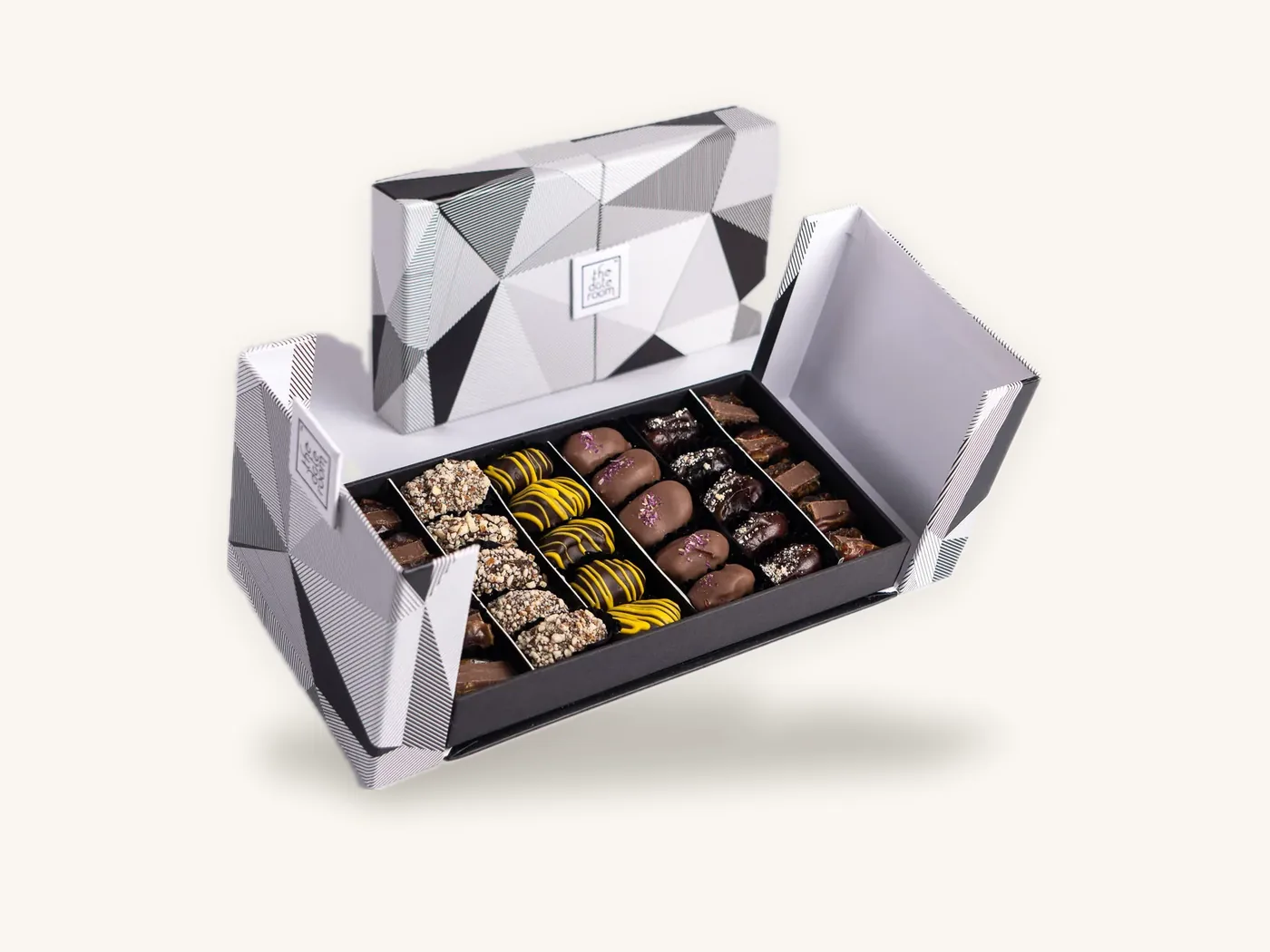
| VIP sample kit | Qualified buyers, distributors, key accounts, press | 10 to 100 | Rigid magnetic box, two-piece rigid box, printed mailer with insert | Make a considered product review happen after the show |
| Standard sample kit | Leads who asked for samples at the booth | 50 to 500 | Printed mailer box with a paperboard insert, tuck top mailer | Get the product tried and remembered |
| Giveaway box | General booth visitors | 250 to 2,500 | Pillow box, small tuck end carton, favor box, kraft tuck carton | Brand recall and a reason to stop at the booth |
| Post-show mailed kit | Leads scanned but not handed a kit | 25 to 500 | Mailer box that ships on its own | Follow-up that arrives while memory is fresh |
The post-show tier is underused. Rather than carrying hundreds of heavy kits to the venue, you can scan badges, hand out a lightweight giveaway, and mail the full kit the following week. The buyer receives it at their desk, not buried in a tote, and you avoid shipping crates of inventory both ways.
When a rigid box is worth it
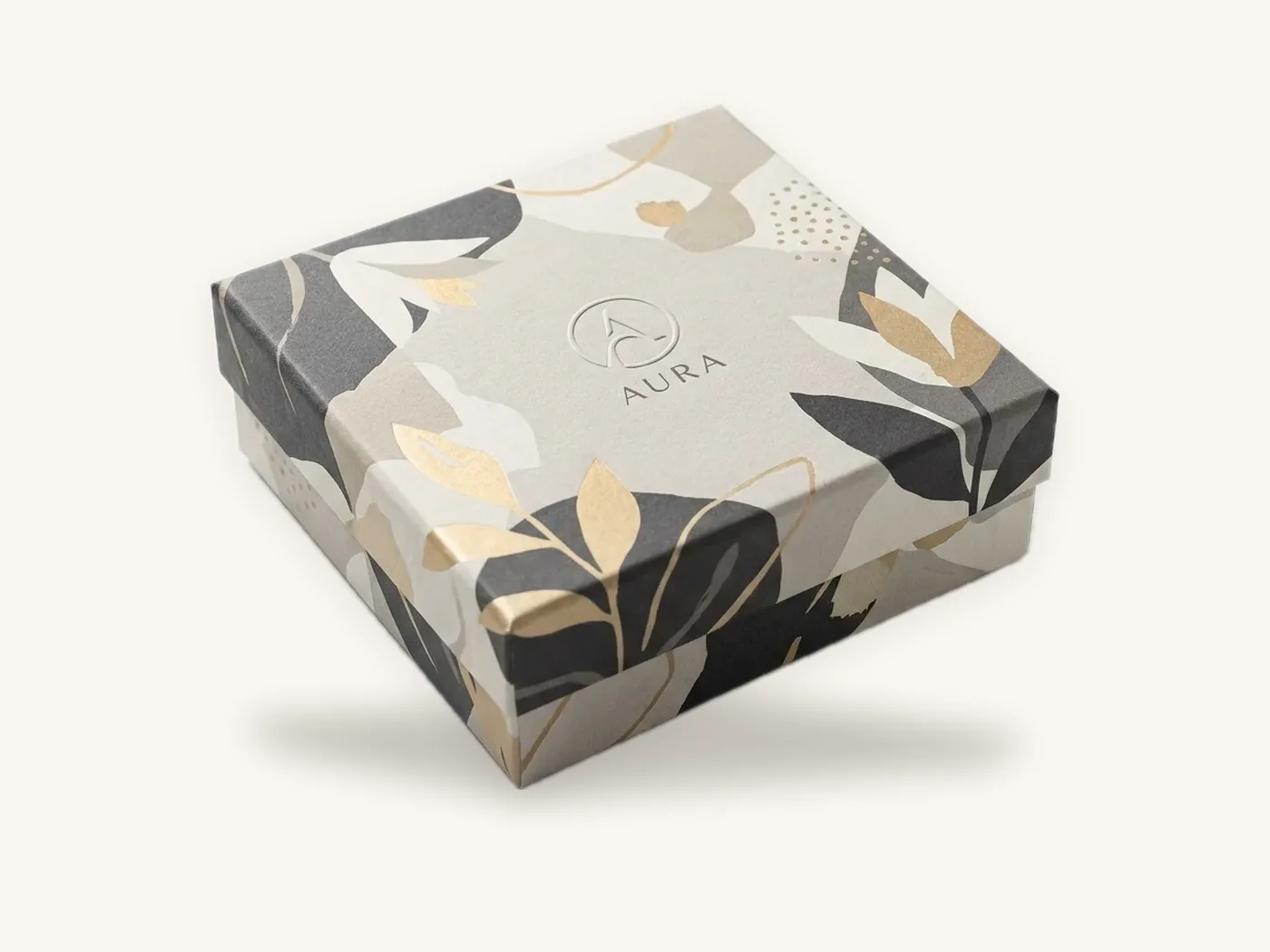
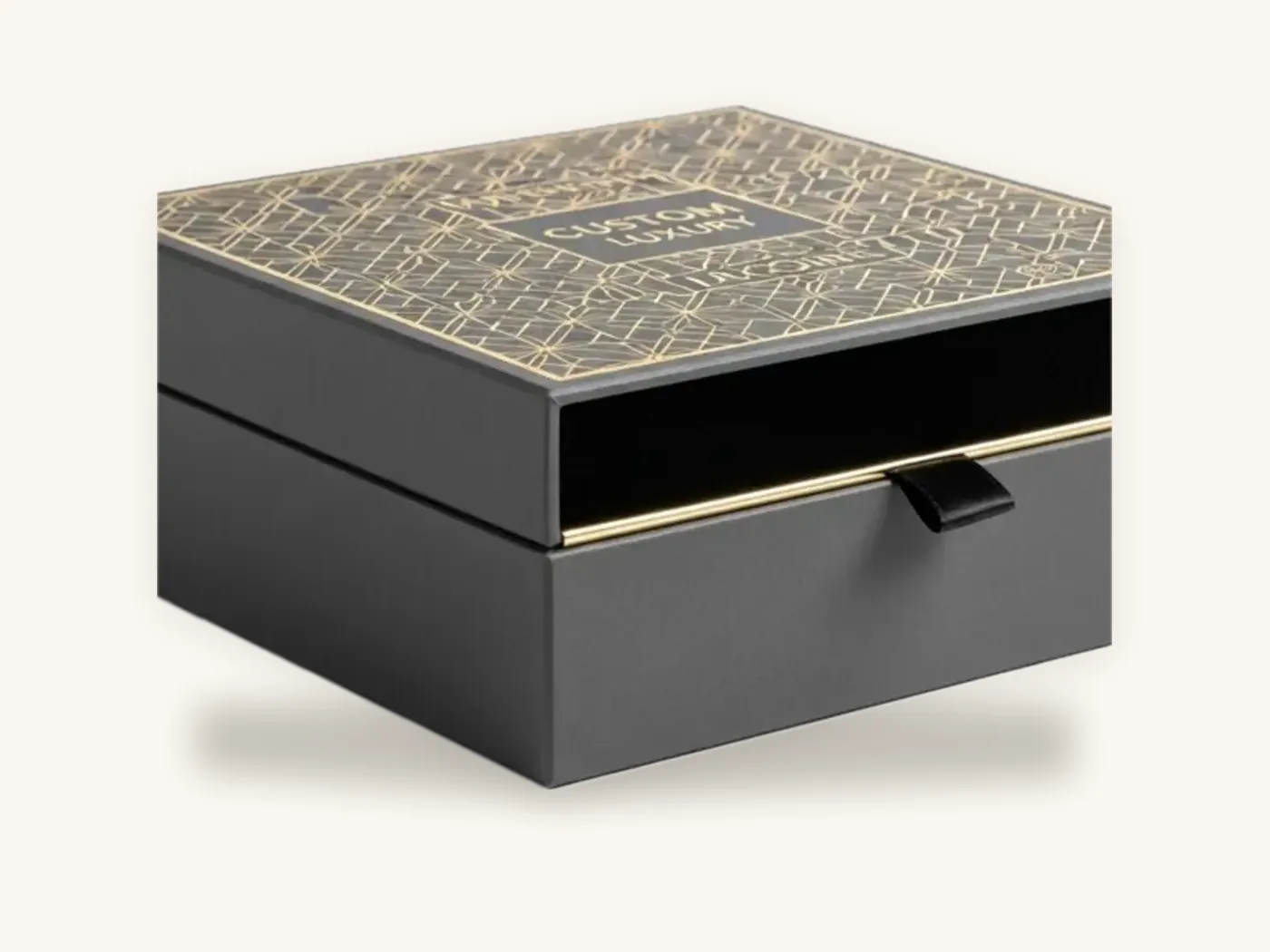
Choose a rigid box for the VIP tier when the product itself is premium, when each account is worth a lot of revenue, or when the kit will sit on a buyer's desk as a reminder. Magnetic closure boxes open and close repeatedly without wear, which suits a kit that gets shown around an office.
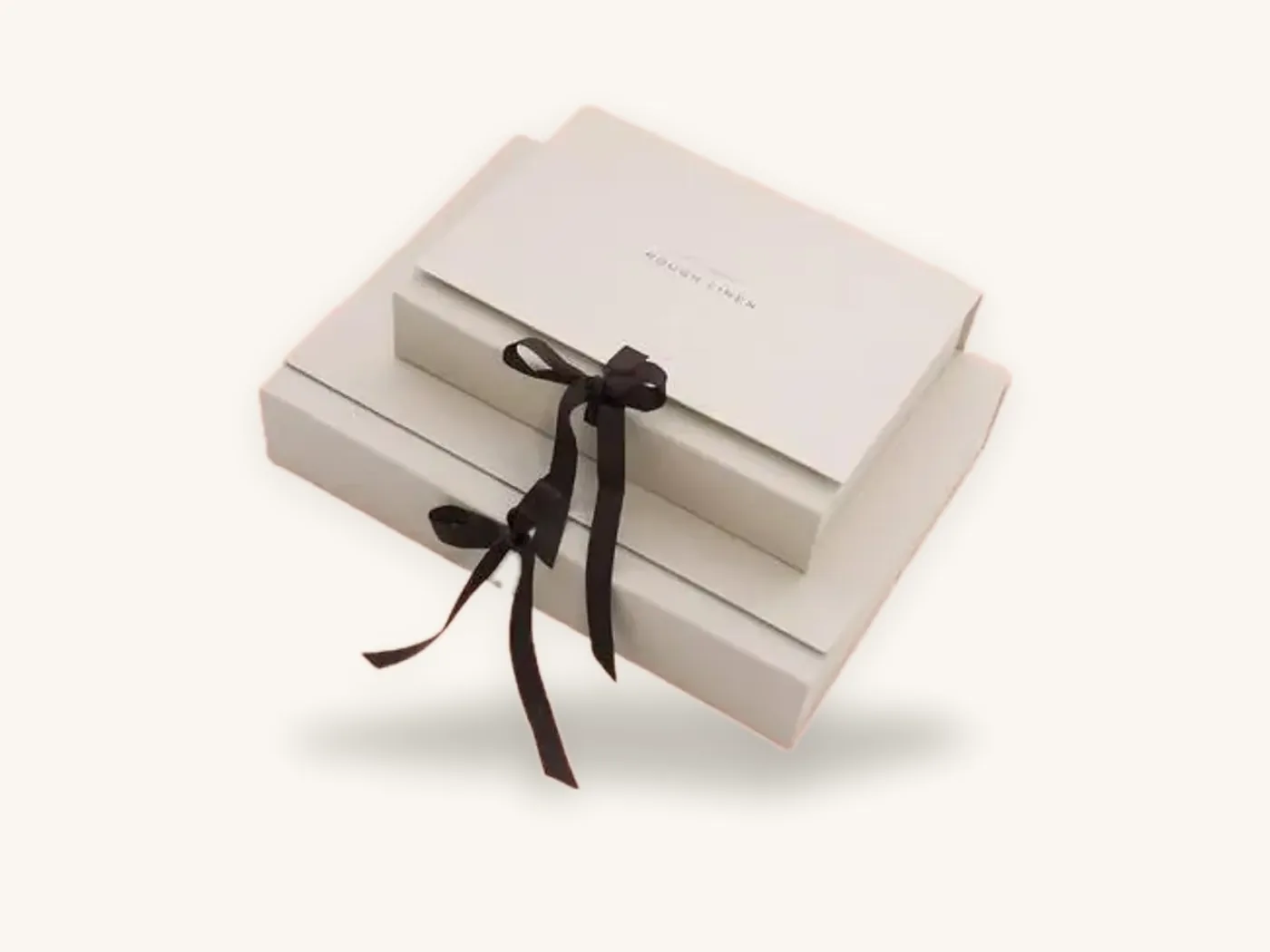
Rigid boxes ship assembled, so they take real space in a crate. For a show where you fly in, consider collapsible rigid boxes, which ship flat and fold up with a magnetic or ribbon closure. For a deeper look at premium structures, see our guide to packaging for luxury brands.
When a mailer is the better kit
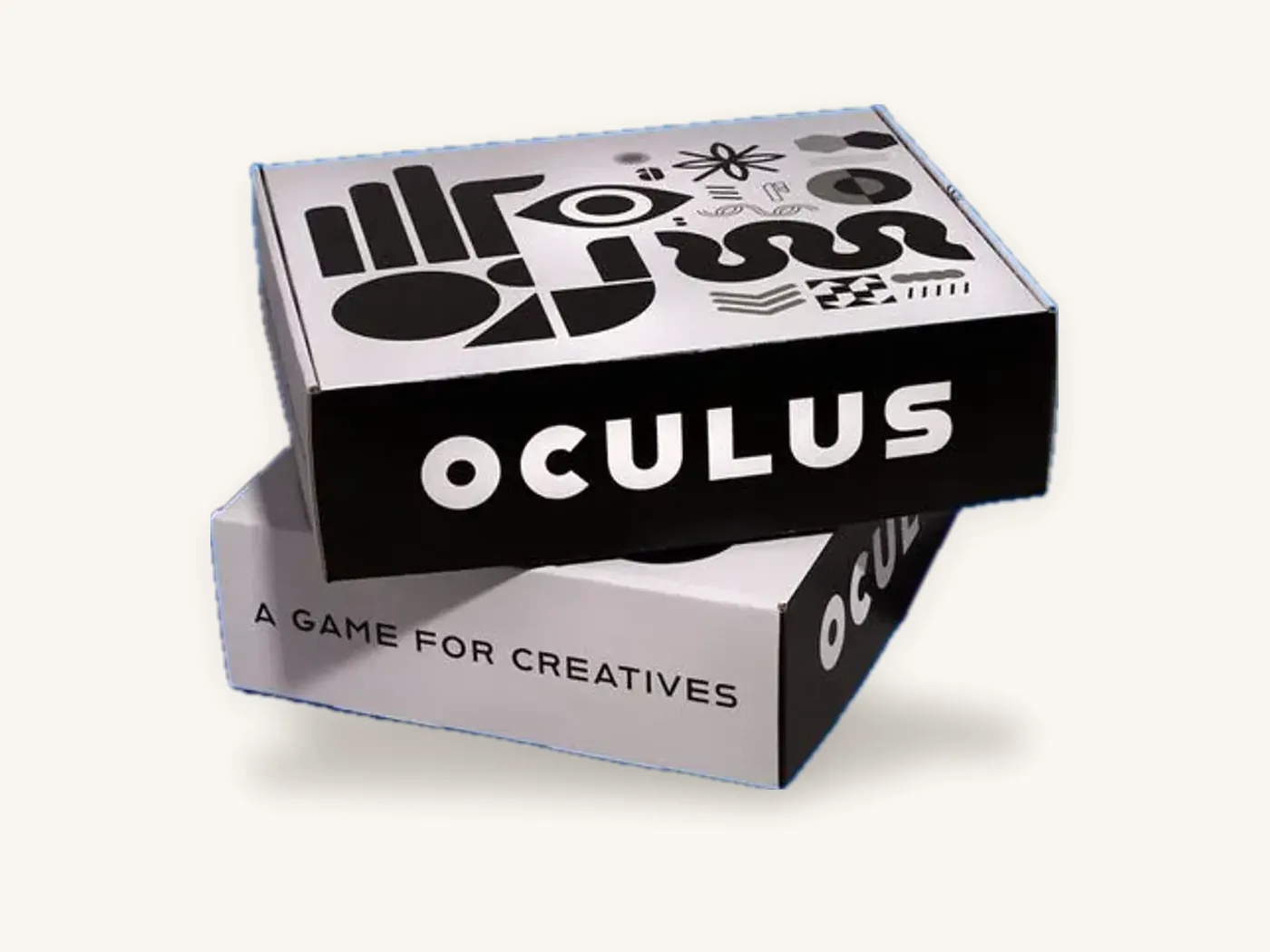
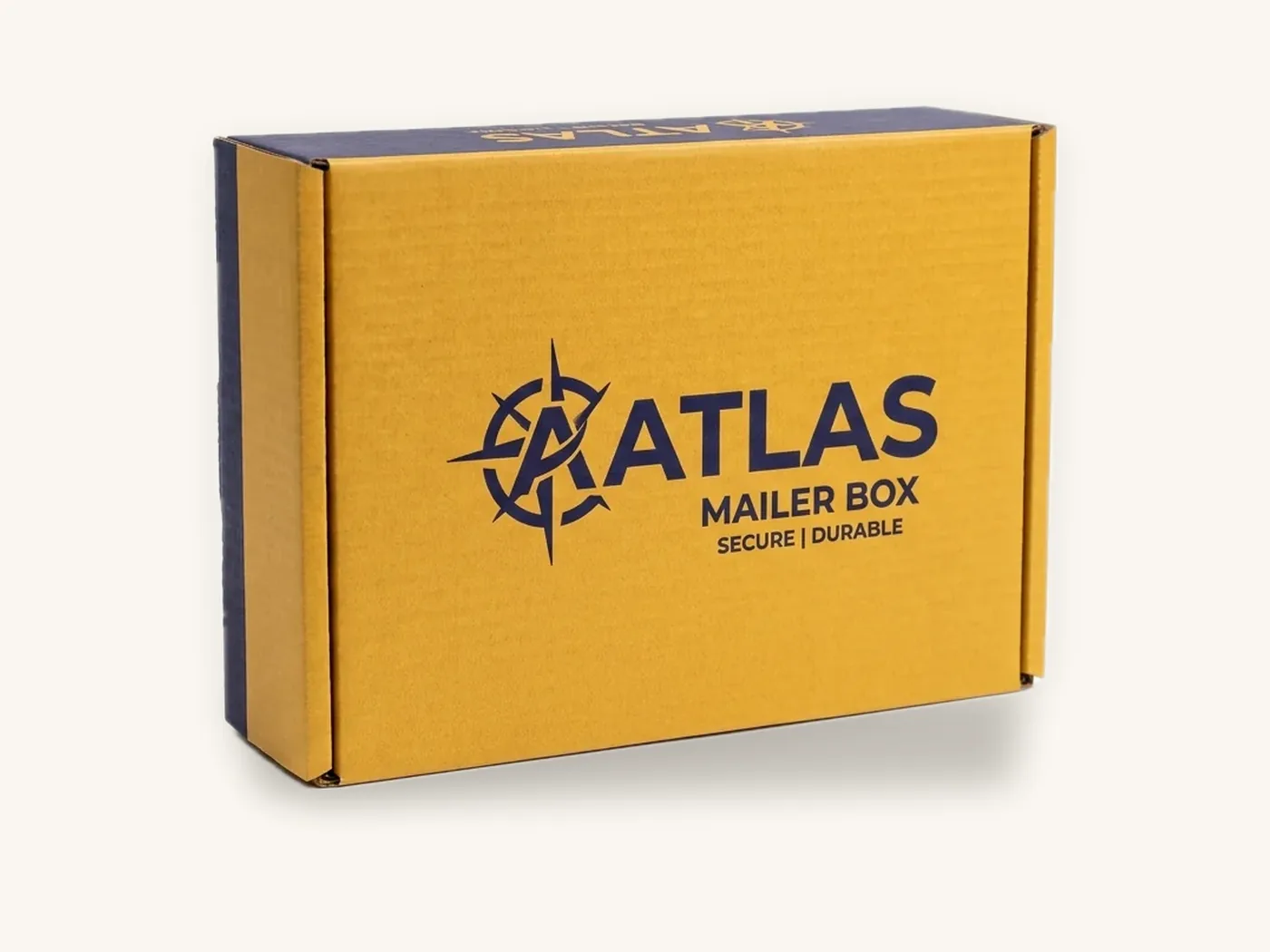
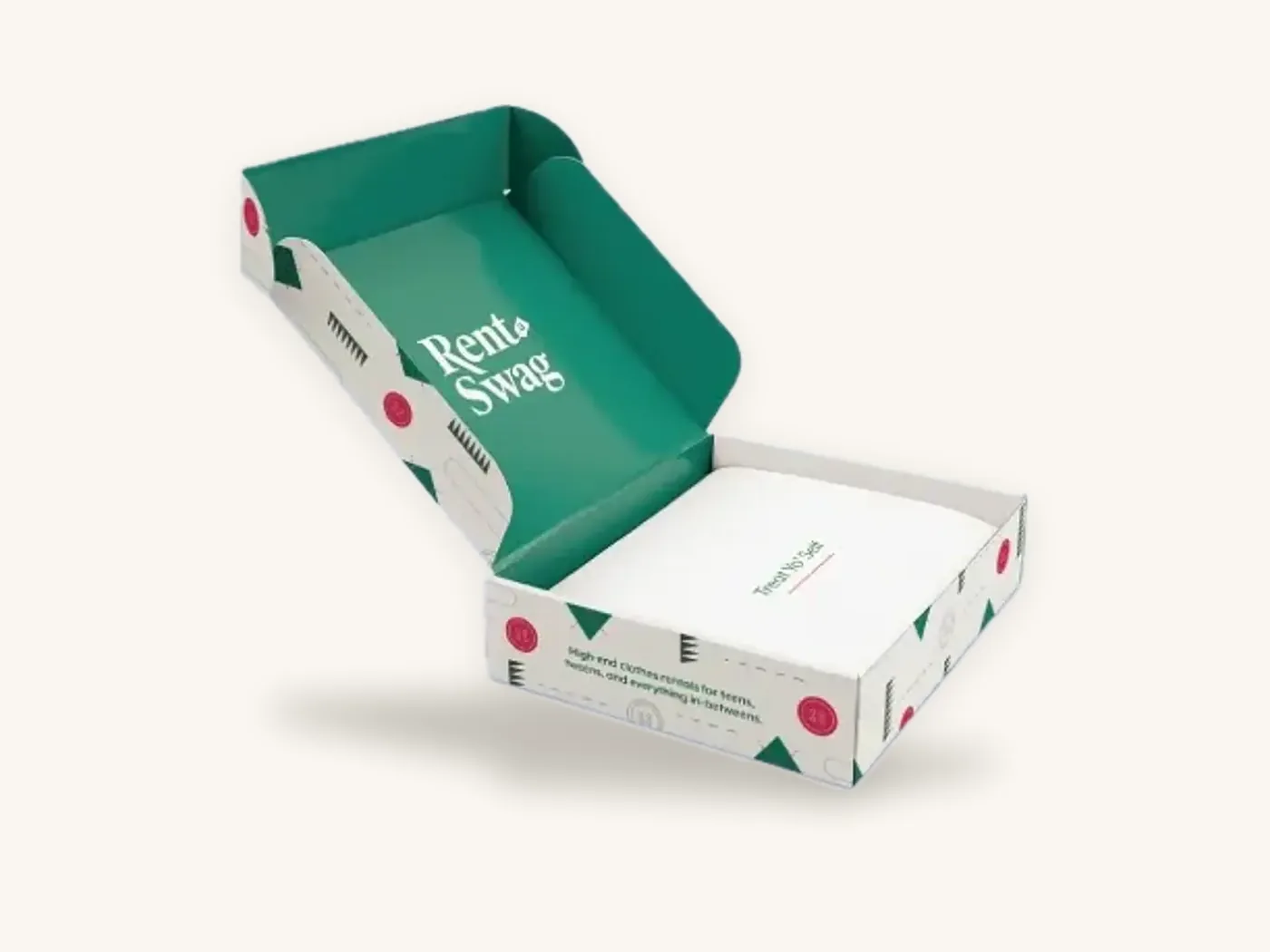
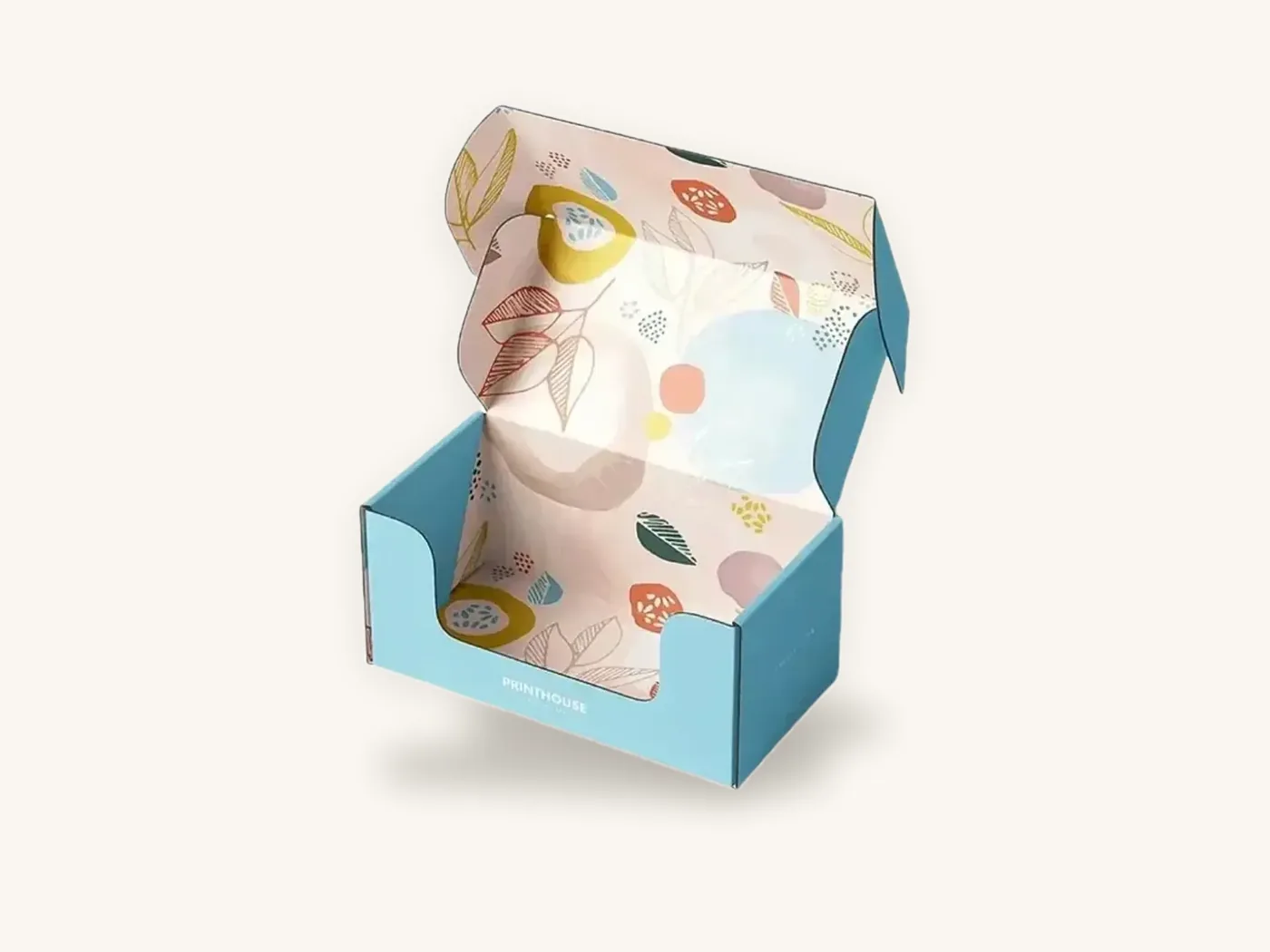
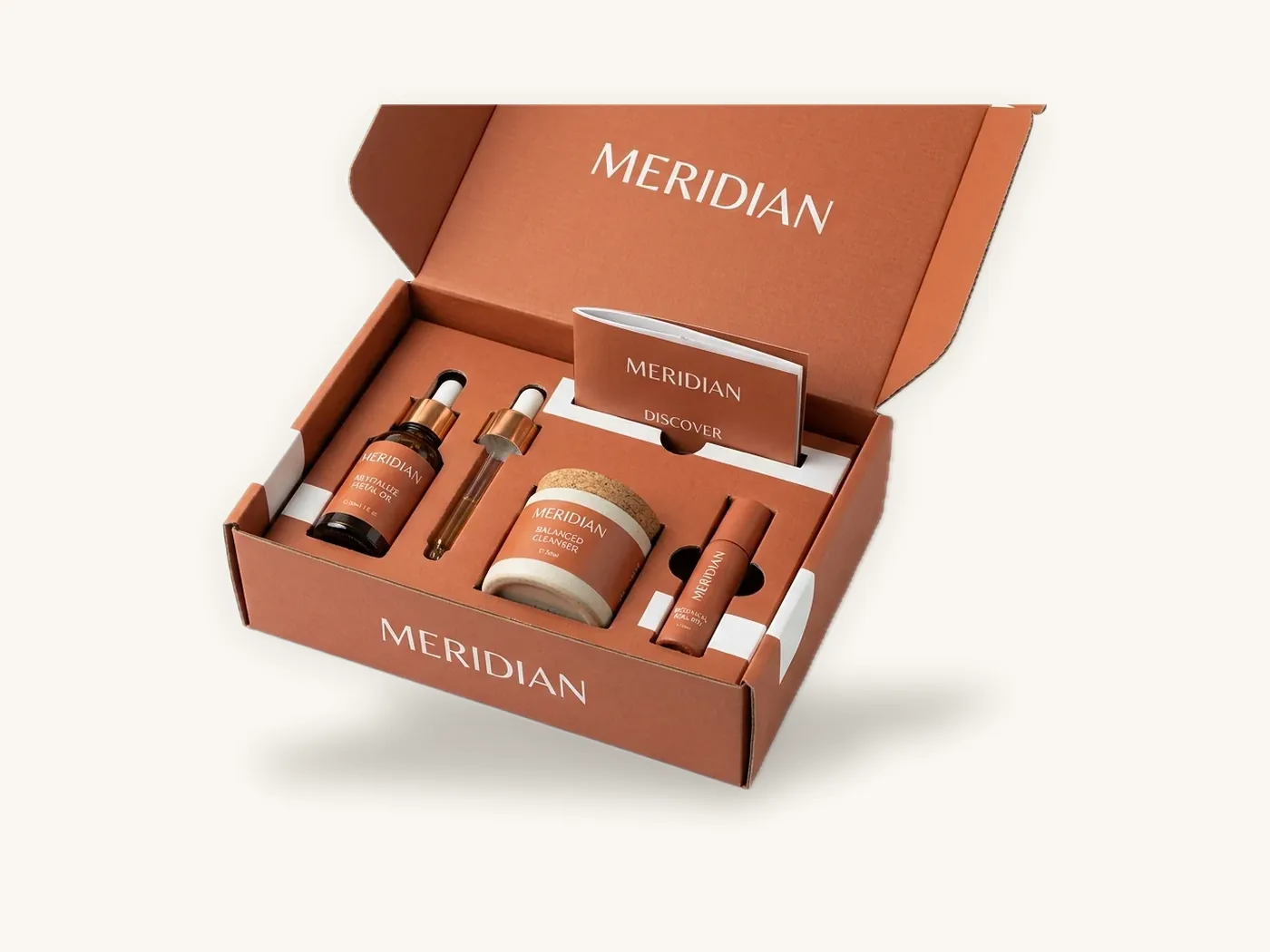
A printed custom mailer box is the workhorse of the standard sample tier. It ships flat, sets up in seconds without tape, can be printed inside and outside, and doubles as a shipping box if you mail kits after the show. For most B2B sample programs, a mailer with a die-cut insert and a printed inside lid delivers most of the presentation of a rigid box for a fraction of the cost and crate space, as the price table below shows.
Choosing structures for event giveaway boxes
Giveaway boxes live or die on unit cost and handling speed. Your booth staff will be assembling or handing these out while talking, so anything that needs tape, glue or careful folding slows the line.
Pillow boxes
Pillow boxes are formed from a single sheet with curved ends that pinch closed. They hold small, flat or soft items well: a sample sachet, a lip balm, a pin, a pair of socks, a USB key. They ship completely flat and close without tape.
Small tuck end cartons
A straight or reverse tuck carton in 18 pt SBS or kraft holds a sample bottle, a candle tin, a snack bar or a small device. As a reference, a 3x2x5 in straight tuck end carton printed full color with aqueous coating is about $0.82 each at 250 units and about $0.51 at 1,000. A 4x3x2 in kraft tuck carton with one-color print runs roughly $0.57 at 250.
Favor boxes and small window boxes
Favor boxes suit edible giveaways like two chocolates or a cookie, and a small window box lets the product sell itself from the table. If you plan to hand out food, check the event venue's food rules first, as many convention centers restrict outside food.
Tip: stack pre-assembled giveaway boxes in a shallow tray behind the counter, not on it. When the display tray empties, a staffer restocks from below. Visitors take one; they do not take ten.
What to put inside a trade show sample kit
The contents decide whether the kit gets used. Resist the urge to include every SKU. A focused kit is easier to understand and cheaper to build.
A practical contents checklist
- The hero product or a sample size of it. One product the buyer can try immediately.
- A one-page sell sheet. Product photo, key specs, case pack, wholesale price tier or a note that pricing is attached, and lead time.
- A named contact card. A person, a direct email and a phone number, not a generic inbox.
- A show-specific offer. A limited opening-order discount, free freight on a first order or a sample of a second SKU on request. Put an expiry date on it.
- A QR code to a show landing page. Use a unique URL per show so you can see which event produced traffic. Our guide to QR codes on packaging covers placement and print size.
- Protection. An insert that holds each item in place, so nothing rattles or breaks.
- A reason to keep the box. A useful rigid box, a desk tray or a printed inside lid with something worth rereading.
Designing the insert
Box inserts turn a box into a kit. Paperboard inserts are light, printable and flat-packing, which makes them a good fit for show kits that travel. Corrugated inserts give more cushion for glass or ceramics. Foam suits electronics or tools that need a precise cavity. The box inserts guide compares them in depth.
Size the insert with the product in hand. A cavity that is too snug means your staff struggle to load kits the night before the show; a cavity that is too loose lets products drop out when a buyer opens the box upside down. Aim for a slip fit: the item drops in and stays put when the box is tilted.
Branding sample kit boxes for recall, not decoration
A booth might last three days. The kit might sit on a desk for three weeks. Design for the second context.
Outside of the box
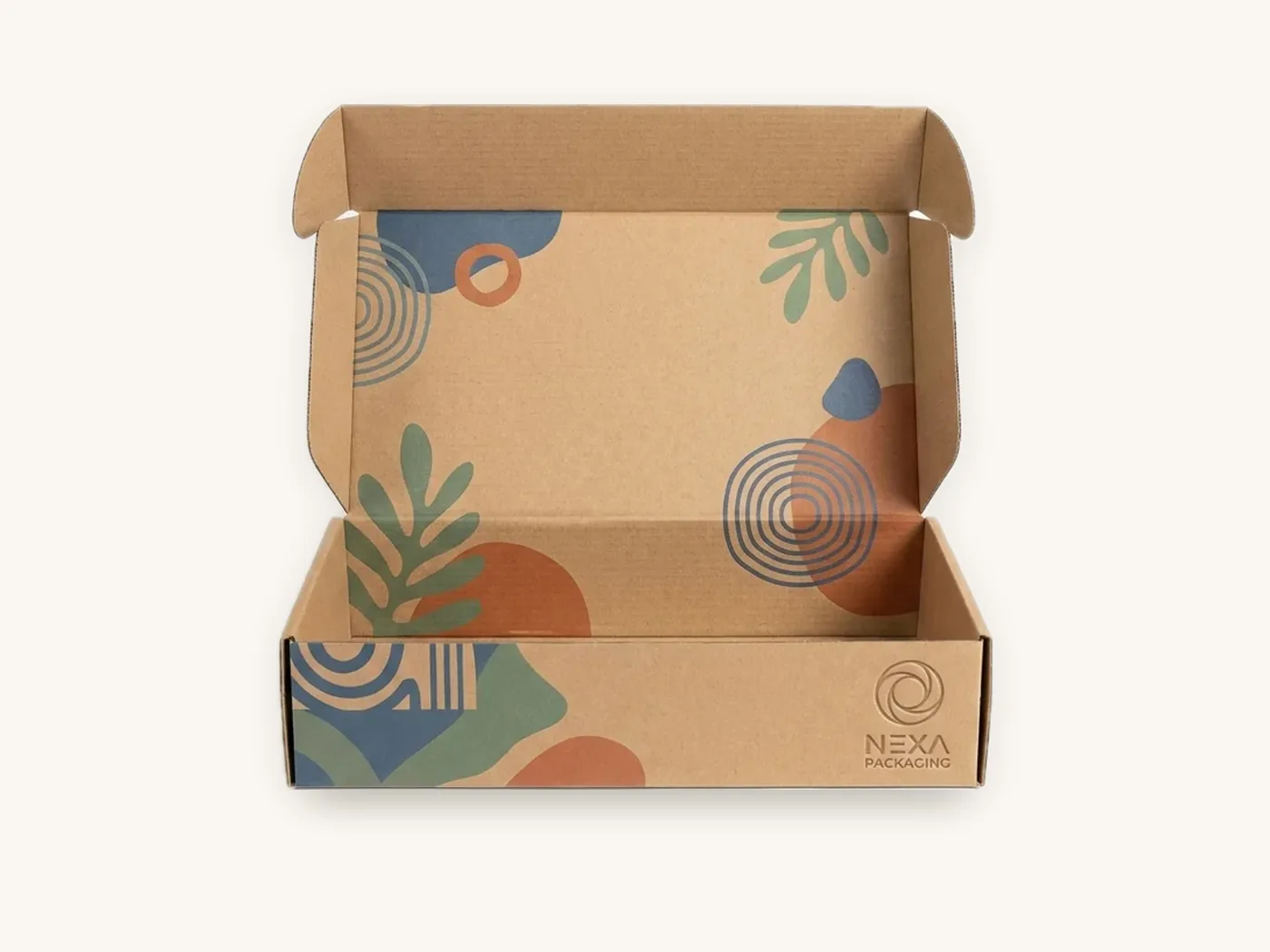
Put your company name and a one-line description of what you sell on the lid. If you exhibit at several shows a year, keep the outside generic and change only a sticker or insert card per event. That way a single run of boxes covers the whole season, and you are not left with 200 boxes printed for a show that has passed. Custom labels and stickers are the easy way to date-stamp or personalize a standard box.
Inside of the box
The inside lid gets full attention once, at the moment of opening. Use it for a short message and the call to action. Our page on printing and finishes shows inside printing, foil and soft-touch options that suit VIP kits.
Finishes that hold up in transit
Soft-touch lamination looks premium but can scuff in a tote bag. Matte lamination is a more forgiving choice for kits that travel with the buyer. Foil and embossing on the lid logo add a premium signal; each carries one-time tooling of about $60. Spot UV carries about $40 in tooling.
Watch out: do not print a show date or booth number on a large box run. Events move halls, dates shift and booths get reassigned. Put time-sensitive information on a card or sticker, not on the box.
What trade show packaging costs
Budget per tier, not per box. The table below uses indicative per-unit prices from our current rates with free US shipping included. Use the instant price estimator for your exact size.
| Spec | 10 | 100 | 250 | 500 | 1,000 |
|---|---|---|---|---|---|
| Rigid magnetic box, 2 mm, 10x8x3 in, soft-touch, foil, insert | $21.50 | $14.23 | $10.12 | $7.59 | $6.32 |
| Rigid box, 2 mm greyboard wrapped, 8x6x3 in, full color, matte | $13.76 | $9.10 | $6.47 | $4.85 | $4.05 |
| Mailer box, E-flute, 8x6x3 in, full color outside | $3.99 | $2.64 | $1.88 | $1.41 | $1.17 |
| Subscription mailer, E-flute, 12x9x4 in, full color both sides, insert + tear strip | $8.83 | $5.85 | $4.16 | $3.12 | $2.60 |
| Straight tuck end carton, 18 pt SBS, 3x2x5 in, full color, aqueous | $1.73 | $1.15 | $0.82 | $0.61 | $0.51 |
| Jewelry rigid box, 2 mm, 3x3x1.5 in, matte, foil, insert | $5.06 | $3.35 | $2.38 | $1.79 | $1.49 |
A hypothetical budget
Say a skincare brand is exhibiting at a regional beauty trade show. It plans 50 VIP kits, 250 standard sample kits and 1,000 giveaway cartons.
- VIP: a 10x8x3 in rigid magnetic box with soft-touch, foil and insert is about $16.44 each at 50.
- Standard: an 8x6x3 in printed mailer is about $1.88 each at 250, plus the cost of a paperboard insert.
- Giveaway: a 3x2x5 in tuck carton is about $0.51 each at 1,000.
The VIP tier costs the most per unit but the least in total. The giveaway tier is the opposite. If the budget is tight, cut the giveaway quantity before you downgrade the VIP kit, because the VIP kit is what reaches the people who can place orders.
Where the money leaks
- Overprinting event-specific boxes that cannot be reused at the next show.
- Shipping assembled rigid boxes in crates to and from the venue.
- Ordering too early and paying for storage, or too late and paying for rush freight.
- Handing premium kits to unqualified visitors. Train booth staff on who gets which tier.
For a broader view of cost drivers, the custom packaging cost guide breaks down how size, board and finishes add up.
Planning trade show packaging around the event date
Trade shows do not move for late boxes. Build the schedule backward from the day you need boxes in hand, which is usually earlier than the show opens.
A backward timeline
- Show opens. Boxes must be at your booth.
- Advance warehouse deadline. Many shows route exhibitor freight through an advance warehouse with a cutoff days or weeks before move-in. Check your exhibitor manual; this is often the true deadline.
- Freight transit. Allow the carrier's transit time plus a margin for weekends.
- Kit assembly. If you pack kits yourself, allow a day or two per few hundred kits, depending on contents.
- Production. Standard production is 8–12 business days after proof approval.
- Printed sample, if wanted. Allow time to receive and check it before approving the run.
- Proof and revisions. Free design support includes a 3D digital proof and two revision rounds. Budget a few business days for your team's feedback.
- Quote. Confirmed within 24 hours.
Add it up and, for a typical show, start the packaging conversation six to eight weeks ahead. That leaves room for a revision, a sample and normal freight without paying for rush.
When to use rush
Rush production in 5 business days is available on most paperboard and corrugated styles. It suits a replacement run when a show sells out of kits early in the season or when a last-minute show is added. Rigid boxes and finishes with tooling take more planning, so book those first. The custom packaging lead times guide explains what affects production time.
Shipping to the venue
Ship to the advance warehouse or directly to your hotel, following the show's freight rules. Label each carton with the booth number, company name and the number of cartons in the set (for example, 1 of 4). Keep a small carry-on with a few kits in case freight is delayed.
Booth logistics: storage, assembly and follow-up
Packaging decisions show up again on the show floor. A few logistics choices make the booth run smoother.
Assembly on site or in advance
Pre-assemble VIP kits before the show and pack them in their original shipping cartons. Flat-shipping giveaway boxes can be assembled on site during quiet periods. Mailer boxes and pillow boxes set up in seconds; tuck cartons slightly longer.
Storage under the booth
Most booth counters have limited under-counter space. Measure it before you order quantities. A few hundred flat mailers fit in a small carton; a hundred assembled rigid boxes need several large cartons.
Tracking which kits worked
Use a different QR destination or offer code per tier and per show. After the show, compare which tier produced conversations and orders. That tells you whether to increase VIP kits or cut giveaways next time. If you are building a kit program for a new company, our guide to packaging for startups covers how to phase spending as orders grow, and packaging for Kickstarter covers backer and press kits that share a lot with trade show sample kits.
How to order trade show packaging from Box Sense
Send us the event context along with the specs, because the show date shapes every recommendation.
What to include in your request
- The show name, the date boxes must be in hand and the ship-to address (warehouse, venue or office)
- Tiers you plan: VIP kit, standard kit, giveaway, post-show mailer
- Product dimensions and weight for each item going into each kit
- Structure preference or a request for a recommendation
- Print coverage, finishes and inserts per tier
- Quantities to price for each tier
- Artwork, or a request for help from our design services team
What happens next
- Quote within 24 hours for each tier and quantity.
- Free design support: dielines, artwork setup and a 3D digital proof with two revision rounds.
- Samples: unprinted structural samples are free, which is the best way to test the insert with your actual products. A printed sample of approved artwork is free on orders of 100 or more. See samples.
- Production: standard 8–12 business days after proof approval; rush in 5 business days on most paperboard and corrugated styles.
- Delivery: free shipping on every US order; international shipping for shows in the UK, UAE or elsewhere is quoted at cost.
The minimum order is 10 boxes and there are no die or plate charges, so a short run of VIP kits is practical. One-time tooling applies only to foil, embossing, spot UV and custom inserts. Browse corporate gift boxes and the gifts and events page for kit ideas.
Frequently asked questions
What is the best packaging for trade show samples?
For most B2B samples, a printed mailer box with a paperboard insert is the best balance of cost, protection and presentation. It ships flat, sets up quickly and survives a tote bag. For a short list of high-value prospects, a rigid magnetic box makes a stronger impression and stays on the buyer's desk. Keep the outside clearly branded so the kit is identifiable weeks later.
How far in advance should I order trade show packaging?
Start about six to eight weeks before the show. That covers a quote, proofing with revisions, an optional printed sample, 8–12 business days of standard production and freight to the advance warehouse, which often has a cutoff well before move-in. Rush production in 5 business days is available on most paperboard and corrugated styles if you are short on time.
How much do event giveaway boxes cost?
It depends on size, print and quantity. As a reference, a 3x2x5 in straight tuck end carton printed full color with aqueous coating is about $0.82 each at 250 and about $0.51 at 1,000. A 4x3x2 in kraft tuck carton with one-color print is roughly $0.57 at 250. Check the pricing estimator for your exact spec.
Should I hand out sample kits at the booth or mail them afterward?
Both have a place. Hand VIP kits to qualified buyers who you know will review them, since that moment builds a relationship. For everyone else, scan badges and mail a sample kit the following week. It arrives at their desk instead of in a crowded tote, and you avoid shipping heavy inventory to and from the venue.
Can I order a small number of premium kits for a trade show?
Yes. Box Sense has a minimum order of 10 boxes, so you can order a small run of rigid VIP kits for your top prospects and a larger run of mailers or giveaway cartons for general traffic. Short runs print digitally with no die or plate charges. One-time tooling applies only if you add foil, embossing, spot UV or custom inserts.
What should I print on trade show sample kit boxes?
Print your company name, a short description of what you sell and a call to action somewhere obvious. Use the inside lid for a message and a QR code to a show-specific landing page. Keep dates, booth numbers and event-specific offers on removable cards or stickers so the same boxes work for every show in the season.
How do I get trade show packaging to an overseas event?
Ship to the show's advance warehouse or official freight contractor, following the exhibitor manual's labeling and cutoff rules. Allow for customs clearance time on top of transit. Box Sense has locations in the United States, United Kingdom and UAE and ships worldwide, with international shipping quoted at cost.
Next steps
List the tiers you need and a quantity for each, then check the numbers in the packaging price estimator. When you have a show date and product dimensions, request a trade show packaging quote and we will confirm pricing within 24 hours and set up a free structural sample so you can test the kit before the show.
Boxes in this guide
Order the packaging we covered
Written by the Box Sense Packaging Team
Our structural designers, prepress technicians and production staff print and convert custom boxes every day for brands in the United States, United Kingdom and UAE. Questions about this guide? Talk to us.