Custom CBD boxes are not one product. A 30 ml tincture, a jar of gummies, a tube of balm and a vape cartridge each need a different box style, a different board and a different amount of label space. Pick the style from the product inside, and most of the other decisions follow.
This guide goes product by product. For each CBD format it names the box style that suits it best, the alternative worth considering, and the detail that buyers most often get wrong. It then compares the styles in one table and lists what to send a manufacturer for a quote.
A note on rules. CBD labeling is governed by a mix of federal and state requirements that differ by product type and change often. Box Sense prints the warnings, symbols and text you supply, exactly as supplied. We are a packaging manufacturer, so the content and its compliance stay with you or your compliance adviser.
Key takeaways
- Match the box to the container, not to the category. Bottle, jar, tube, cartridge and pre-roll each point to a different style.
- A tuck end carton suits most CBD products: tinctures, topicals, capsules and small jars.
- Use an auto-lock bottom for heavy glass, such as large jars and multi-bottle packs.
- Slide boxes suit pre-rolls and cartridges, and they are the easiest base for a child-resistant mechanism.
- Label space is the hidden constraint. Small boxes run out of room for required text long before they run out of room for branding.
- Plan the counter display with the unit box. Most CBD is sold from a display near the till.
- Box Sense makes CBD boxes from 10 units, so a new product or flavor can be tested before a large run. Request a quote with your container dimensions.
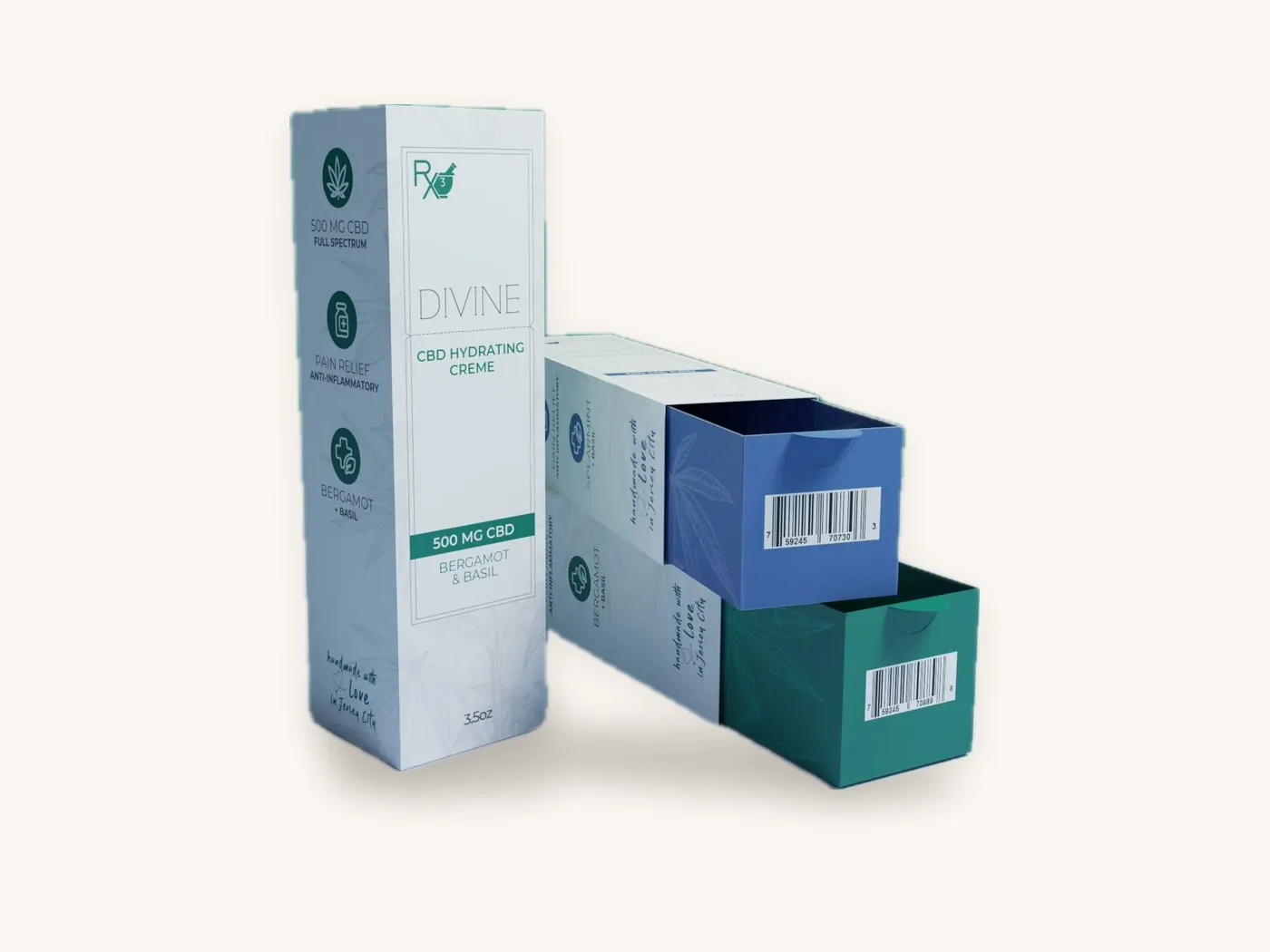
CBD box styles compared
| Box style | Best for | Bottom strength | Label space | Ships flat | Relative cost |
|---|---|---|---|---|---|
| Straight or reverse tuck end | Tinctures, topicals, capsules, small jars | Light to medium | Good | Yes | Low |
| Auto-lock bottom | Heavy jars, large bottles, multi-packs | High | Good | Yes | Low to medium |
| Slide box (drawer) | Pre-rolls, cartridges, small tins | Medium | Medium | Usually | Medium |
| Child-resistant box | Products that must be child resistant | Medium to high | Medium | Varies | Medium to high |
| Hang tab box | Cartridges and small items on pegs | Light | Limited | Yes | Low |
| Rigid gift box | Gift sets and premium bundles | High | Good | No, unless collapsible | High |
| Counter display | Holding 6 to 24 unit boxes at the till | Built to the load | Header panel | Yes | Medium |
The cost column compares styles with each other at the same size and quantity. Real prices depend on size, board, finishes and quantity, and are quoted per job.
Tinctures and oils
Best style: tuck end carton. Alternative: auto-lock bottom carton for larger bottles.
Tinctures come in glass dropper bottles, most often 15 ml, 30 ml and 60 ml. The bottle is tall, narrow and fragile, with a rubber bulb on top that adds height. A tuck end carton sized closely to the bottle is the standard, and for good reason: it is light, inexpensive and gives four tall panels for text.
What buyers get wrong:
- Measuring without the dropper. Measure the bottle with the dropper cap fitted, at its tallest and widest points.
- Leaving the bottle loose. Glass that rattles breaks. Size the carton snugly, or add a simple paperboard insert or neck collar.
- Forgetting the leaflet. If a folded leaflet goes in the box, the inside depth has to allow for it.
For 60 ml and larger bottles, an auto-lock bottom carries the weight better than a tucked flap. Our tincture boxes page shows the common sizes, and the tincture box guide goes deeper on inserts.
Gummies and edibles
Best style: tuck end or auto-lock bottom carton around a jar or pouch. Alternative: a printed pouch on its own.
Gummies are sold in jars, tubs or resealable pouches. The carton is the outer layer: it carries the branding and the label content, while the jar or pouch keeps the product fresh.
- A jar of gummies is heavy for its size. Use an auto-lock bottom for anything above a small jar.
- Do not rely on the carton for freshness. Gummies need a sealed jar or a barrier pouch. Board alone lets in air and moisture.
- Edibles attract the strictest rules. Many states limit shapes, colors and imagery that could appeal to children, and some require child-resistant and opaque packaging. Get those requirements in writing before design starts.
If you sell gummies in pouches without a carton, the pouch does all the work. See mylar bags for that route. Food-contact questions are covered in our food-safe inks and coatings guide.
Topicals: creams, balms and salves
Best style: tuck end carton. Alternative: sleeve over a jar or tin.
Topicals come in jars, tubes, tins and pump bottles. They sit closer to cosmetics than to supplements, and their packaging can borrow from beauty: soft-touch coatings, foil details and a calmer layout.
- Jars are wide and short, so the carton is squat. Check that the front panel still has room for your logo and the required text.
- Tubes are long and light. A tuck end carton works well, and a hang tab can be added for peg display.
- Tins and balms often suit a sleeve or a small tuck box with a window.
How a topical is labeled depends on how it is marketed. A product sold as a cosmetic follows different labeling rules from one that makes health claims. Our cosmetic labeling requirements guide outlines what cosmetic cartons usually carry.
Capsules and softgels
Best style: tuck end carton around a bottle. Alternative: auto-lock bottom for large bottles.
Capsules ship in plastic or glass supplement-style bottles. The carton is straightforward: a tuck end box sized to the bottle. The main design job is the supplement-style facts panel and directions, which need a full panel of their own.
- Plan one panel for facts, one for directions and warnings, and one for the brand story. The front stays clean.
- Leave an uncoated area if you add lot numbers and expiry dates after printing.
- Blister packs need a flatter carton and often a leaflet.
The supplement packaging guide covers this format in detail.
Vape cartridges and disposables
Best style: slide box or small tuck end carton. Alternative: hang tab box for retail pegs.
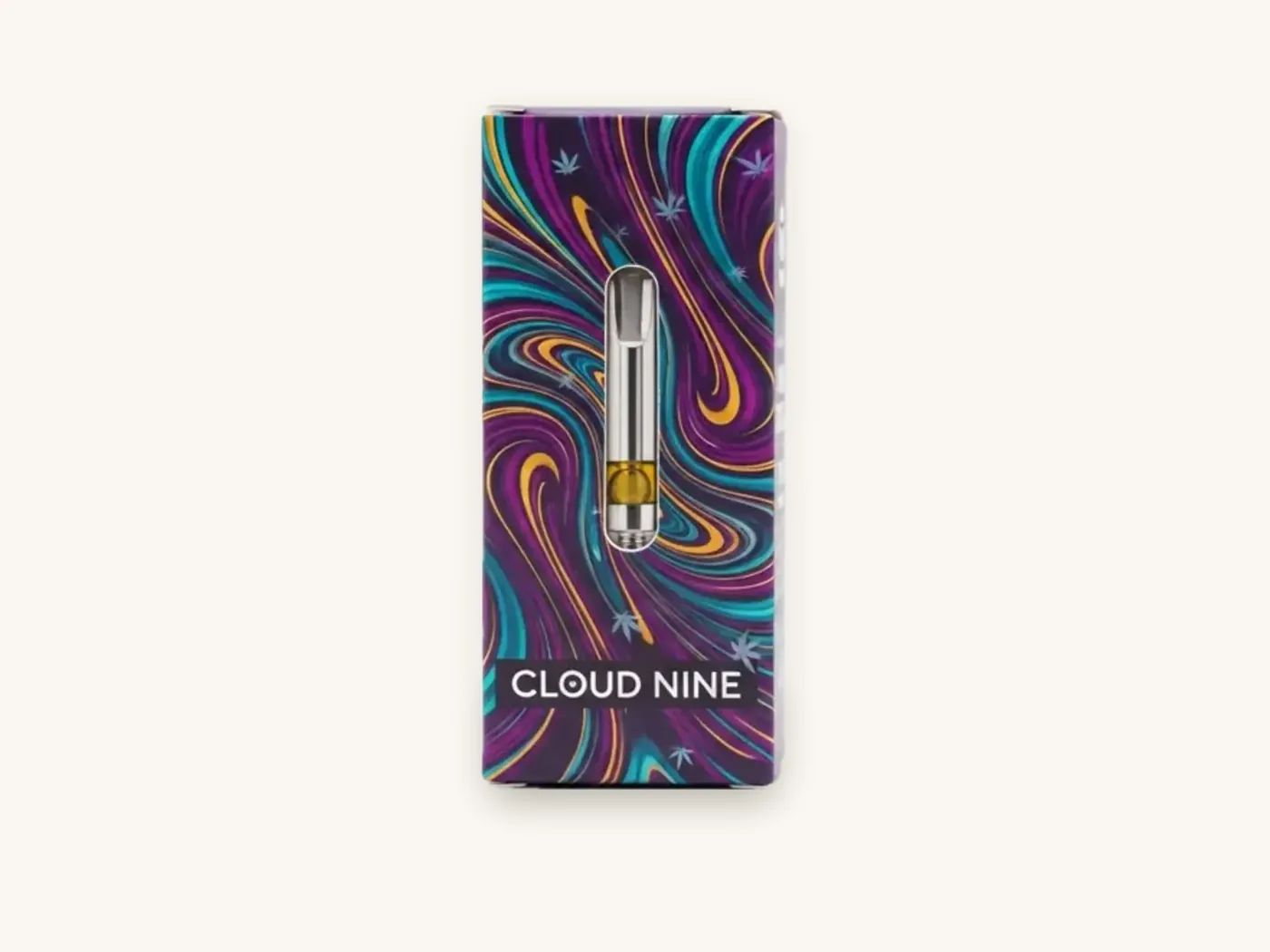
Cartridges are small, light and fragile at the tip. The box is often the smallest in a brand's range, which makes label space the main constraint.
- Use an insert. A paperboard or foam insert holds the cartridge so the mouthpiece and glass are not knocked.
- Check child-resistance rules. Many states require child-resistant packaging for vape products. Ask a supplier to confirm what is available for your format before planning a launch.
- Consider a larger box than the product needs. A slightly bigger footprint can be the only way to fit required text at a legible size.
See vape boxes for the usual formats and the vape packaging guide for the detail.
Pre-rolls and hemp flower
Best style: slide box. Alternative: tuck end carton around a tube.
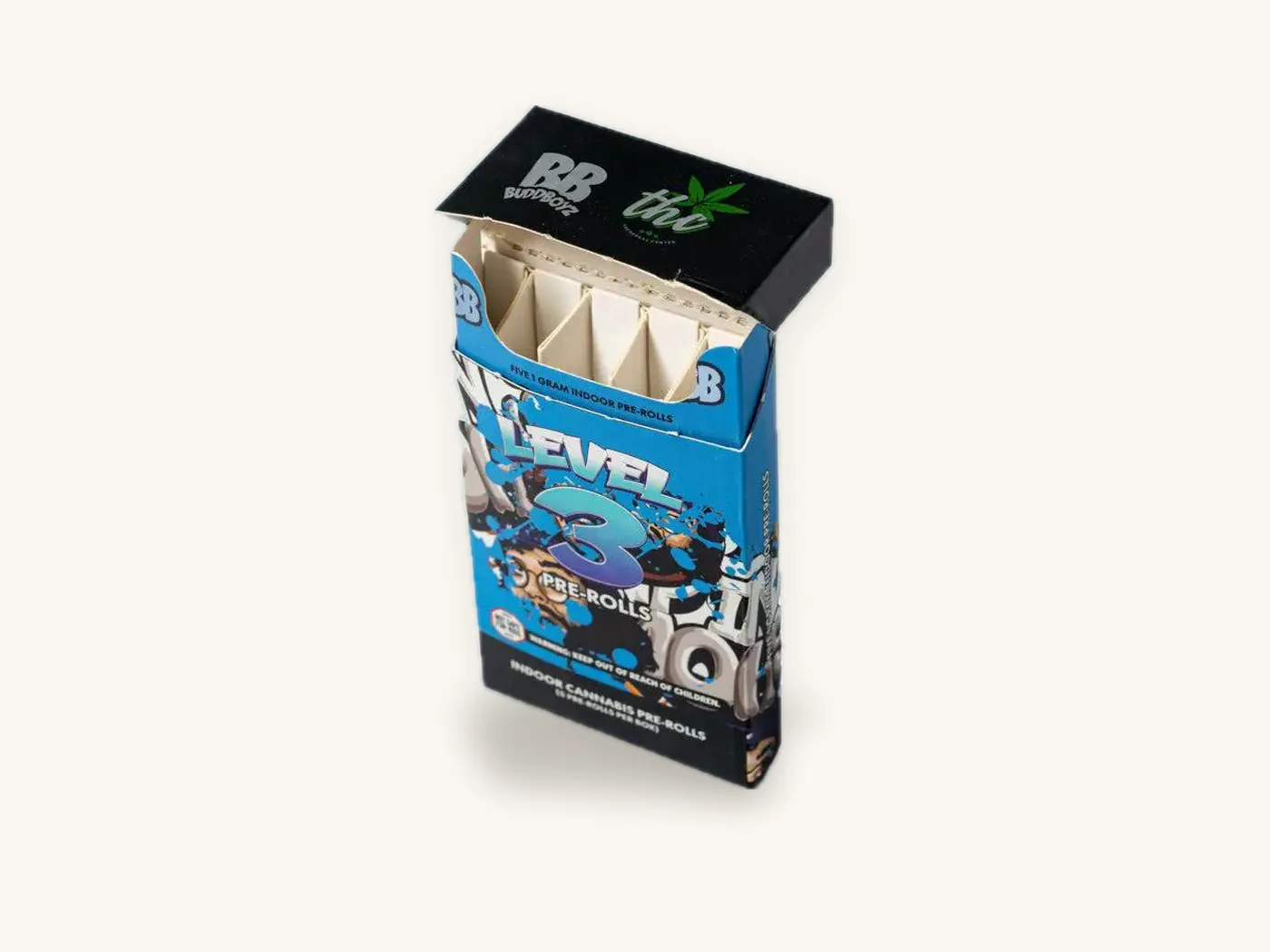
Pre-rolls are cone-shaped and easily crushed. A slide box, with an inner tray that pushes out of an outer shell, protects them and is simple to fill by hand. Singles often ship in a tube inside a small carton; multi-packs of three, five or seven sit directly in a tray.
- Size to the widest point and the full length, including the twisted tip.
- Odor and freshness come from the inner tube, bag or liner, not from the board.
- Opacity rules in many states rule out windows on these products.
Our pre-roll boxes page and the pre-roll packaging guide cover counts and inserts.
Pet CBD
Best style: tuck end carton for oils, carton or pouch for treats.
Pet tinctures use the same dropper bottles as human products, so the same tuck end carton applies. Treats are oily and scented and need an inner bag or pouch.
Keep pet products visually distinct from your human range. A clear species cue on the front panel helps prevent mix-ups at home and on the shelf.
Child-resistant boxes: when you need one
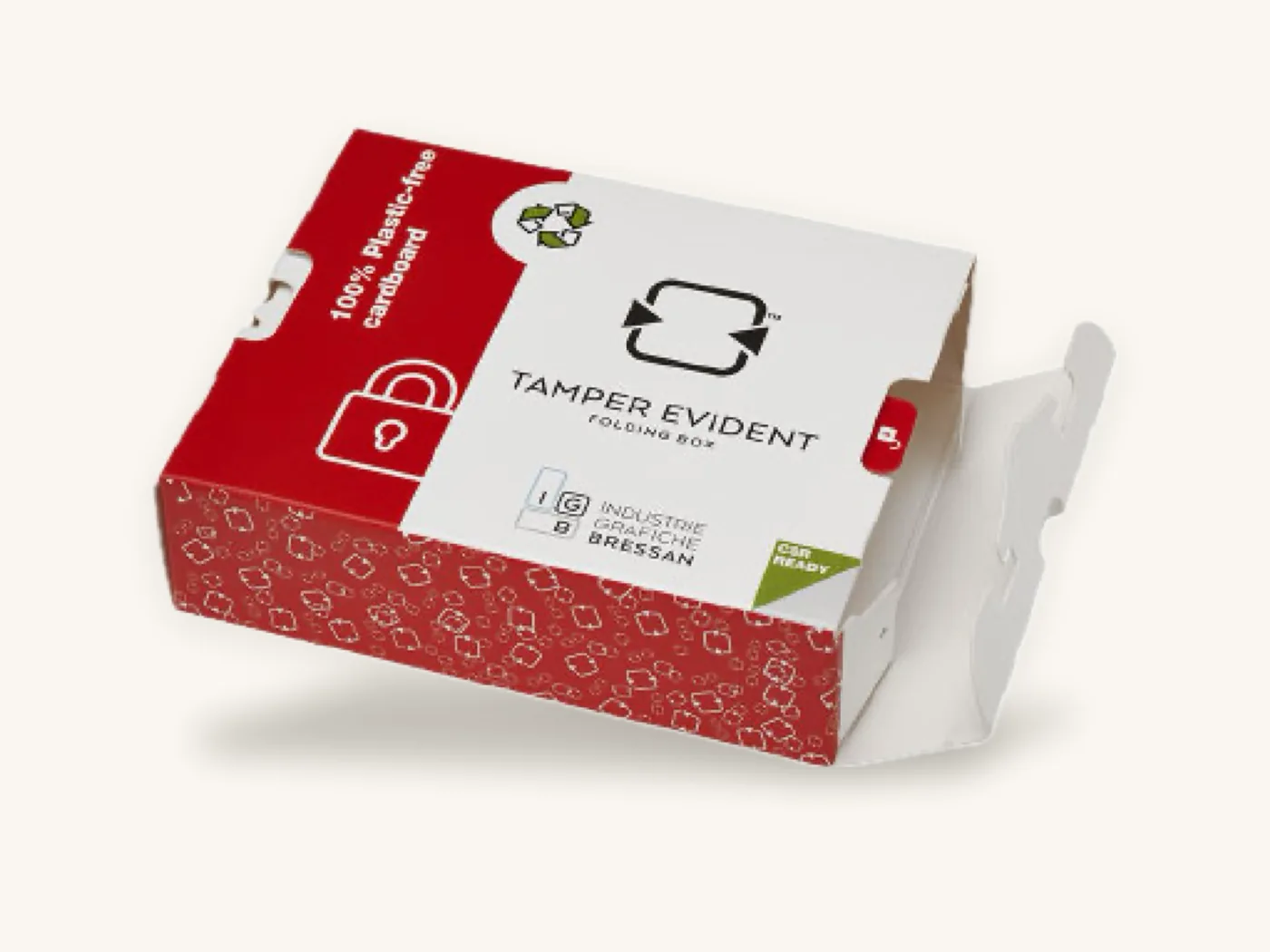
Child-resistant packaging is designed to be significantly difficult for young children to open while remaining usable by adults. Whether your product needs it depends on the product type and the state. It is commonly required for licensed cannabis products and for many vape and edible products.
Points to settle early:
- Which layer is child resistant? Sometimes the bottle cap or the pouch zipper does the job, and the outer carton does not need to.
- Ask for the paperwork. A child-resistant claim should be backed by test documentation for that specific structure. Ask your supplier to confirm what applies before you order.
- Expect a higher cost and a longer lead time than a standard carton, because the structure is more complex.
The child-resistant packaging guide explains the mechanisms, and our child-resistant boxes page shows the structures we make.
Label space: the constraint that decides box size
On most CBD boxes, required information takes more room than the brand does. Depending on the product and the state, a box may need to carry some or all of the following:
- Product identity and net quantity
- CBD content per serving and per package
- Ingredient list and, for supplement-style products, a facts panel
- Directions and warnings
- Batch or lot number and an expiry or best-by date
- Manufacturer or distributor name and address
- A QR code linking to a certificate of analysis
- State-specific symbols or statements
That list is a planning aid, not a statement of what the law requires for your product. Get the exact requirements from your compliance adviser, then tell your packaging supplier which panels they need.
Practical ways to find the space:
- Use all four side panels. Keep the front for the brand and put required text on the back and sides.
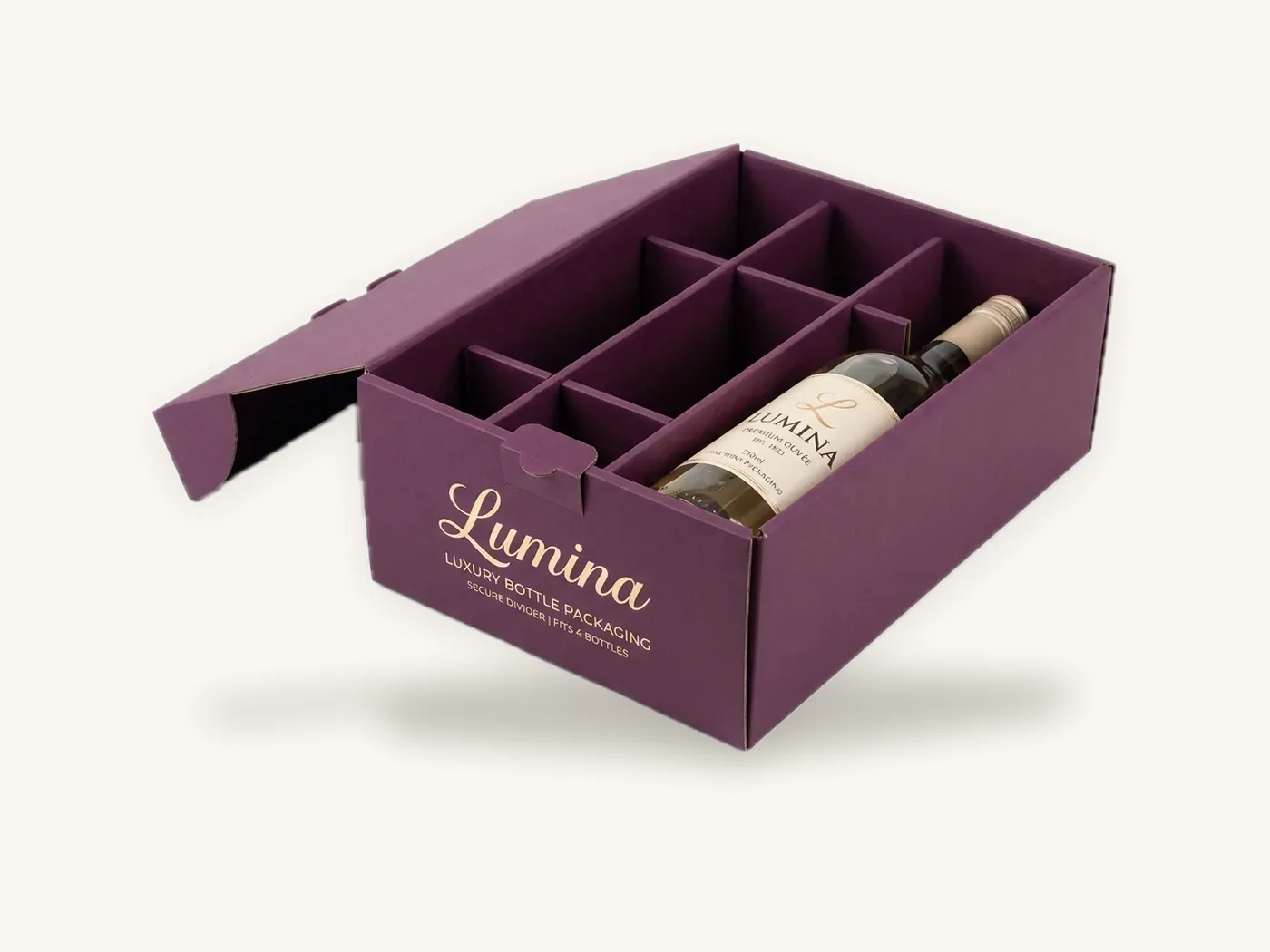
- Make the box slightly larger. A few millimetres of extra width can turn illegible text into readable text.
- Add a leaflet or a peel-back label for long text that cannot fit.
- Keep small type in one solid color on a plain background so it stays sharp.
The cannabis packaging laws guide explains how state requirements tend to differ, and the QR codes on packaging guide covers size and placement.
Board and finishes for CBD boxes
Board
- SBS paperboard, 16 pt to 24 pt, is the standard: white, smooth and sharp for small text. See SBS paperboard.
- Kraft board suits natural and organic positioning. Colors print darker, and white needs its own ink.
- Rigid board is for gift sets and premium bundles only.
Finishes
- Matte coating or soft-touch lamination gives the calm, clinical look many wellness brands want.
- Foil stamping on the logo adds a premium cue without clutter.
- Embossing adds texture on the brand mark.
- Spot UV highlights a logo or pattern on a matte box.
One finish, used well, usually does more than three used together. It also keeps the cost down on short runs.
A color system for a range
Most CBD brands sell several strengths and flavors. A consistent layout with one color per strength or flavor lets shoppers find their product at a glance, and lets you add a new product without redesigning the range.
Counter displays and shipping
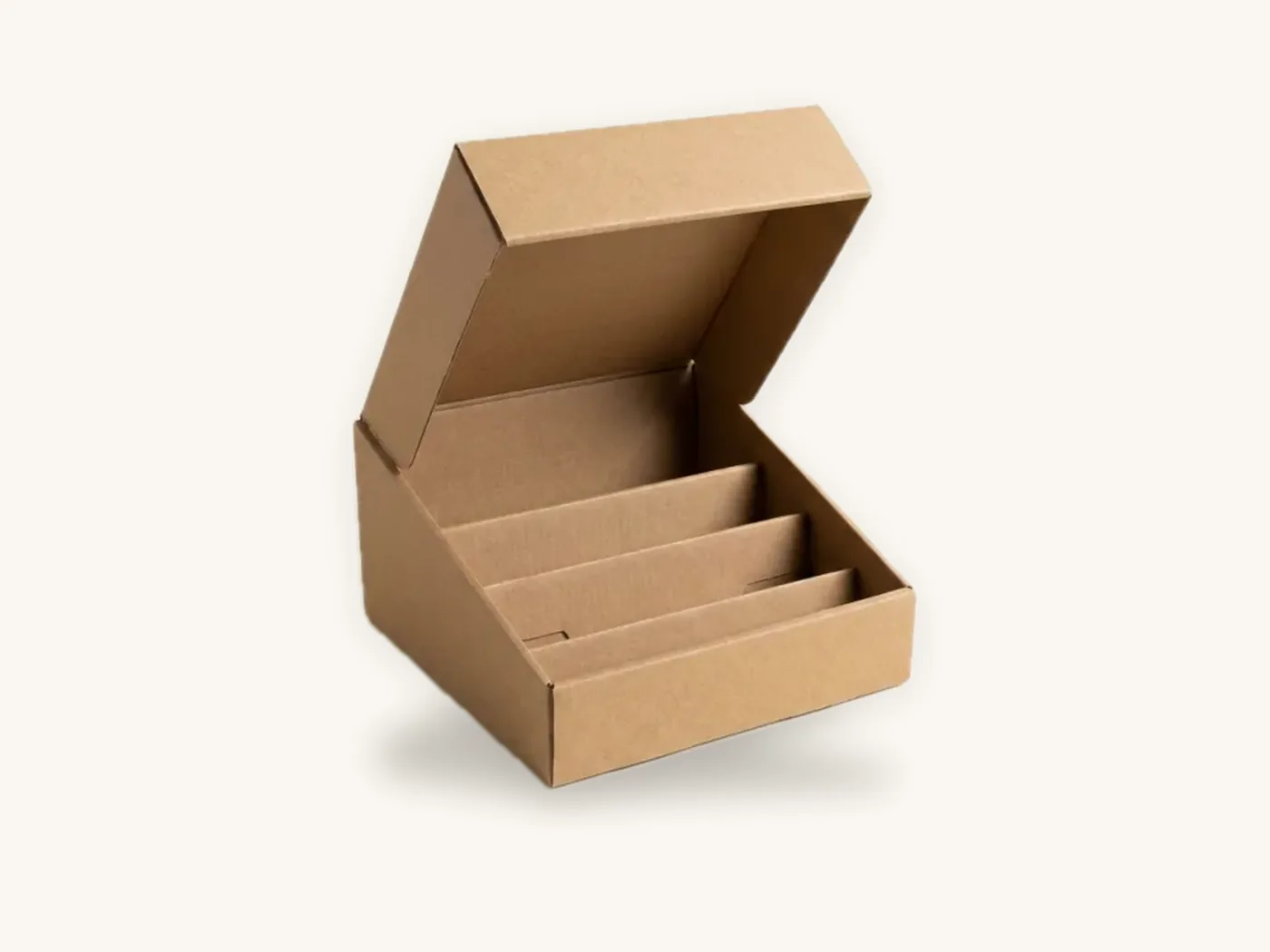
Much CBD is sold from a counter display in a shop, pharmacy or dispensary. A display holds a set number of unit boxes, ships closed and opens into a tray with a printed header.
- Design the unit box first, then build the display from its outside dimensions.
- Tell your supplier the count per display, commonly 6, 10 or 12.
- Check the retailer's limits on footprint and height.
See counter display boxes for formats. For online orders, unit boxes ship inside a corrugated mailer; glass bottles need dividers or inserts.
How to choose: a short decision guide
- Glass dropper bottle? Tuck end carton, with an insert if the bottle rattles.
- Heavy jar or large bottle? Auto-lock bottom carton.
- Tube, tin or small jar of topical? Tuck end carton or sleeve.
- Cartridge or disposable? Slide box or small carton with an insert, sized for the label text.
- Pre-rolls? Slide box sized to the widest point.
- Must be child resistant? Confirm which layer needs it, then choose a child-resistant structure if it is the box.
- Gift set or bundle? Rigid box with an insert.
- Selling through shops? Add a counter display sized to the unit box.
What to send for a quote
- Container type and dimensions, with caps and droppers fitted, or a sample
- Filled weight
- Whether an insert or leaflet is needed
- Quantity, and two or three quantities if you want to compare
- Board preference and finishes
- A list of the text and symbols the box must carry, and which states you sell in
- Whether you need a display box, and the count per display
- Artwork, or a note that you need design help
Box Sense replies to quote requests within 24 hours. Design support is free and includes the dieline, artwork setup, a 3D proof and two rounds of revisions through our design services team. Production takes 8–12 business days after proof approval, with a 5-day rush option on many styles, and shipping is free to any US address. Browse custom CBD boxes or the CBD and cannabis industry page for the full range.
Frequently asked questions
What is the best box for CBD tinctures?
A tuck end carton sized to the dropper bottle, with a paperboard insert if the bottle is loose. For 60 ml and larger bottles, an auto-lock bottom carries the weight better.
Do CBD boxes need to be child resistant?
It depends on the product and the state. Some products, such as many edibles and vape products, must be in child-resistant packaging, and sometimes the inner container meets the requirement. Confirm the rule for your product with your compliance adviser.
What information goes on a CBD box?
That depends on the product type and where you sell it. Boxes commonly carry the product identity, CBD content, ingredients, directions, warnings, a batch number and a QR code to a certificate of analysis. We print the content you supply exactly as supplied.
What board is best for CBD boxes?
SBS paperboard between 16 pt and 24 pt for most products, because it prints small text sharply. Kraft board suits a natural look, and rigid board suits gift sets.
Can I order a small quantity of custom CBD boxes?
Yes. The minimum order at Box Sense is 10 boxes, which suits a new product, a new flavor or a trial run.
Can one design work across different bottle sizes?
Yes. We build a dieline for each container size and keep the layout consistent, so a 15 ml, 30 ml and 60 ml range looks like one family.
Do you make display boxes for CBD products?
Yes. Counter displays are sized to hold a set number of your unit boxes and ship flat.
Next steps
List your products, measure each container with its cap on, and note what the box must carry. With that, a manufacturer can recommend a style and draw a dieline for each. When you are ready, request a quote and we will reply within 24 hours.
Boxes in this guide
Order the packaging we covered
PopularCBD Boxes
Tincture Boxes
Pre-Roll Boxes
Vape & Cartridge Boxes
Child Resistant Boxes
 Popular
Counter Display Boxes
Written by the Box Sense Packaging Team
Our structural designers, prepress technicians and production staff print and convert custom boxes every day for brands across the United States. Questions about this guide? Talk to us.