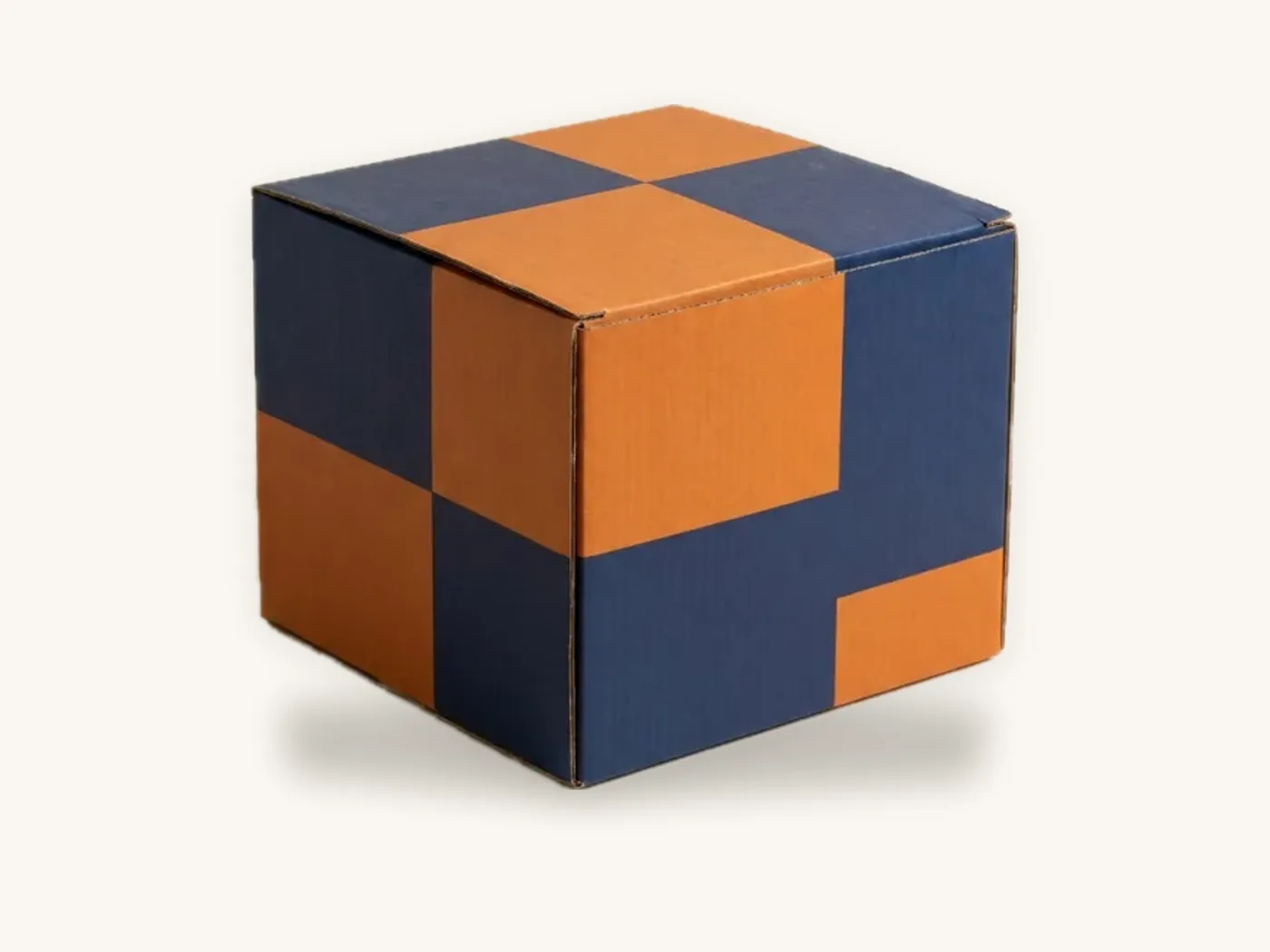
Good auto parts packaging does three things: it carries a dense, often sharp-edged part through the parcel or LTL network without the part punching through the wall, it keeps the part clean and rust-free until it is installed, and it tells a counter clerk or installer exactly what is inside before anyone opens it. For most parts that means corrugated board matched to the weight, a partition or insert that stops movement, and a printed or labeled end panel with the part number.
The mistake most aftermarket brands make is choosing one box grade for everything. A 2 lb sensor and a 35 lb brake rotor behave completely differently in a drop, so this guide works through automotive packaging by part type, then covers board grades, partitions, contamination control, labeling, cost and how to order.
Key takeaways
- Match the board to the part, not the catalog. Light electrical parts ride well in E-flute or folding cartons; rotors, hubs and gearsets need B-flute, C-flute or BC double wall.
- Movement causes more damage than impact. A snug partition or die-cut insert usually does more for a heavy part than upgrading the board a full grade.
- Protect the part from its own oil. Grease and cutting fluid soften paperboard and corrugated; a poly bag or coated liner keeps the box strong.
- Print the end panel. Installers and warehouse pickers read the narrow end of the box on a shelf, so part number, fitment and barcode belong there.
- A B-flute 12x10x6 in shipping box printed in one color runs about $2.50 each at 500 units, and a BC double wall 18x14x12 in shipper about $5.67 at 5,000.
- Box Sense makes auto parts boxes from 10 units with no die or plate charges and standard production of 8–12 business days after proof approval.
Auto parts packaging by part type
Start with the part, because the part decides almost everything else. Weight, shape, surface finish and whether it carries oil set the board grade, the insert and the closure. The matrix below is a practical starting point for the most common aftermarket categories.
| Part category | Typical weight | Main risk | Recommended package |
|---|---|---|---|
| Sensors, relays, switches, bulbs | Under 1 lb | Crushed connectors, lost in a bin | Folding carton or kraft tuck carton, optional paperboard insert |
| Spark plugs, filters, gaskets | 1–3 lb | Scuffed retail face, bent tips | Printed tuck end carton or E-flute box with insert |
| Brake pads, shocks, CV axles | 3–20 lb | Corner crush, part sliding end to end | B-flute RSC or die-cut box with end pads |
| Brake rotors, hubs, flywheels | 15–40 lb | Punch-through, box bursting on drop | BC double wall with partitions or corner blocks |
| Body panels, bumpers, trim | Light but long | Bent edges, creased faces | Telescoping corrugated with edge protection |
| Kits (timing, suspension, fastener) | Mixed | Small parts migrating, missing pieces | Corrugated box with multi-cell partitions |
Small electrical and ignition parts
Sensors and relays are light but fragile at the connector. A printed straight tuck end box in 18 pt board with a simple paperboard cradle holds the part still and gives you a clean retail face for a parts counter. If the product ships loose in a larger overbox, a kraft carton is often enough.
Heavy rotating parts
Rotors, drums and hubs are dense and have hard edges that act like a hammer on the inside of the box when it is dropped. These need thick corrugated walls and, ideally, something between the part and the wall. Our heavy duty double wall boxes are built for this category, with optional partitions when two rotors ship as a pair.

Long and awkward parts
Body panels, exhaust sections and trim strips are light for their size, which puts them at risk of bending rather than crushing. Telescoping boxes, where a tray slides inside a sleeve, let you adjust length, while corrugated edge strips keep faces from denting. Carriers often apply extra handling charges above certain lengths, so check current rules with your carrier before finalizing dimensions.
Choosing corrugated board for heavy parts
Corrugated board strength is described two ways in the US: Edge Crush Test (ECT), which measures how much force the board takes on its edge before crushing and predicts stacking strength, and Mullen or burst strength, which measures how much pressure punctures the face. For parcel shipments of heavy parts, ECT is usually the more useful number, while burst matters when sharp edges and rough handling are the main risk. Our guide to ECT vs burst strength explains the testing in detail.
| Board | Wall thickness | Typical grade range | Good fit for |
|---|---|---|---|
| E-flute single wall | about 1.5 mm | Light-duty | Retail-facing boxes for small parts, printed kits |
| B-flute single wall | about 3 mm | Around 32 ECT | Pads, filters, shocks, most parts under about 20 lb |
| C-flute single wall | about 4 mm | Around 32–44 ECT | Bulkier parts that get stacked on pallets |
| BC double wall | about 6.5 mm | Around 48 ECT and up | Rotors, hubs, gearsets, dense kits |
Every certified corrugated box carries a box maker's certificate printed on a bottom flap that states the grade and the rated maximum weight for the box and contents. Treat that rating as a ceiling, not a target. If your part sits near the limit or has sharp edges, move up a grade.
The corrugated board page lists the grades we run, and corrugated flutes explained shows how each flute behaves under compression.
When double wall is worth the extra board
Double wall roughly doubles the board in every panel, which adds cost and storage space. It earns its place when a part is dense enough to burst a single wall box in a drop from waist height, when boxes are stacked several high in a warehouse for months, or when parts ship through LTL freight where cartons get loaded and reloaded. For a 6 lb set of brake pads shipped by parcel, single wall B-flute with a snug fit is usually enough.
Watch out: a heavy part in a box that is too big is worse than the same part in a lighter box that fits. Every inch of free travel lets the part build momentum before it hits the wall. Size the box and partition first, then decide whether you still need a heavier grade.
Partitions, inserts and blocking
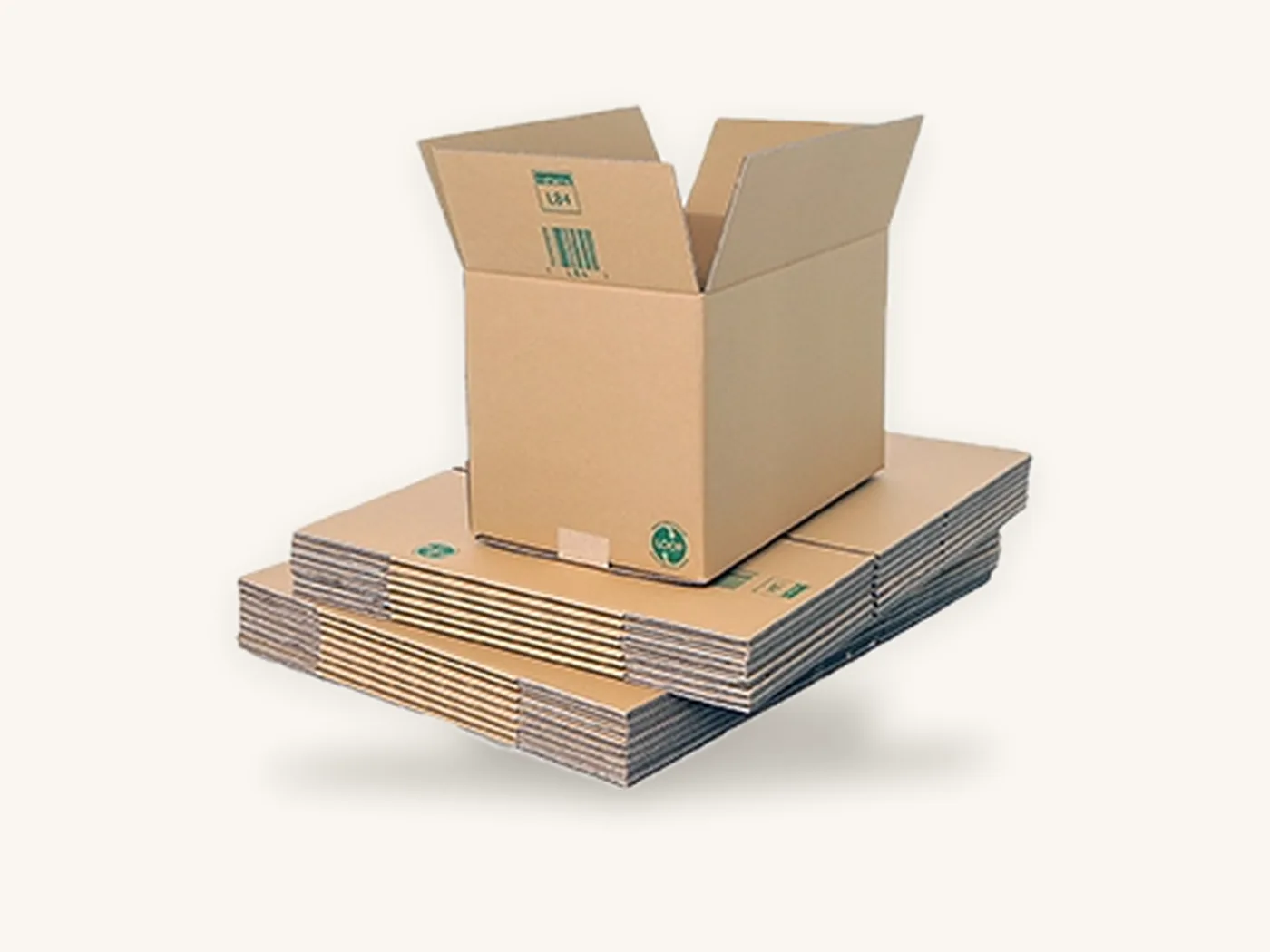
Partitions are the cheapest way to make heavy automotive packaging reliable. They separate parts from each other, add stiffness to the walls and stop the contents from shifting to one end.
Types of partitions and inserts
- Slotted partitions: interlocking corrugated or chipboard strips that form a grid of cells. Ideal for sets of spark plugs, injectors, bulbs or bottles of fluid.
- Die-cut corrugated inserts: a flat pad with cut-outs that cradle a part, useful for rotors, gears and bearings where you want the part held off the floor of the box.
- End pads and corner blocks: folded corrugated pieces that fill the ends of a box and absorb impact on long parts like shocks and axles.
- Paperboard cradles: light, printable holders for sensors and small electrical parts inside a retail carton.
- Foam inserts: EVA or PU foam cut to shape, used for precision parts, performance components and anything with a machined surface that must not be marked.
Our box inserts and dividers page shows the insert styles we make, and the box inserts guide compares materials in more depth.
How to design a partition that actually works
- Pack a real part. Use a production part, not a drawing, because castings and forgings vary slightly.
- Measure the largest envelope. Include studs, bolts, connectors and any bag the part ships in.
- Choose cell sizes with small clearance. Aim for a fit where the part drops in without force but cannot rattle; roughly 1/8 in on each side is a reasonable start for rigid parts.
- Keep partitions full height. A partition that stops short of the lid lets parts climb over it in a drop.
- Match partition board to the load. Chipboard dividers suit light parts; corrugated partitions suit anything over a couple of pounds per cell.
- Order a structural sample and drop it. Drop the packed box on each face, one edge and one corner from about waist height, then open it and look for movement, crushed cells and marks on the part.
For parts that ship through freight or long parcel routes, the reduce shipping damage guide covers testing in more detail, including how formal drop tests are run.
Keeping parts clean: oil, grease and corrosion
Automotive parts often leave the line with a light coat of oil, assembly grease or rust preventive. That film is good for the part and bad for the box. Paper fibers wick oil, the board loses stiffness, and stains show through the print.
Practical protection options
- Poly bags: the simplest barrier. Bag the part, then box it. This also keeps packing slips and instructions clean.
- Coated liners or wraps: a coated kraft sheet around the part adds some grease resistance while staying paper-based.
- Corrosion-inhibiting bags or paper: volatile corrosion inhibitor (VCI) materials are widely used for bare steel parts in storage and export. Work with your coatings or VCI supplier on the right product for your metal and storage time.
- Coatings on the box: aqueous coating or lamination on the outside protects print from handling smudges on a parts counter, but does not stop oil from inside.
Humidity and long storage
Corrugated board absorbs moisture from humid air and loses compression strength as it does. If parts sit in an uncontrolled warehouse through a summer, specify a stronger grade than a climate-controlled operation would need and avoid stacking boxes beyond what the grade supports. Keep pallets off bare concrete floors.
Tip: if a part is heavy and oily, put it in a bag and a die-cut insert rather than wrapping it in extra void fill. Loose fill soaks up oil, compresses and lets the part move; an insert holds its shape.
Labeling, barcodes and retail presentation for automotive packaging
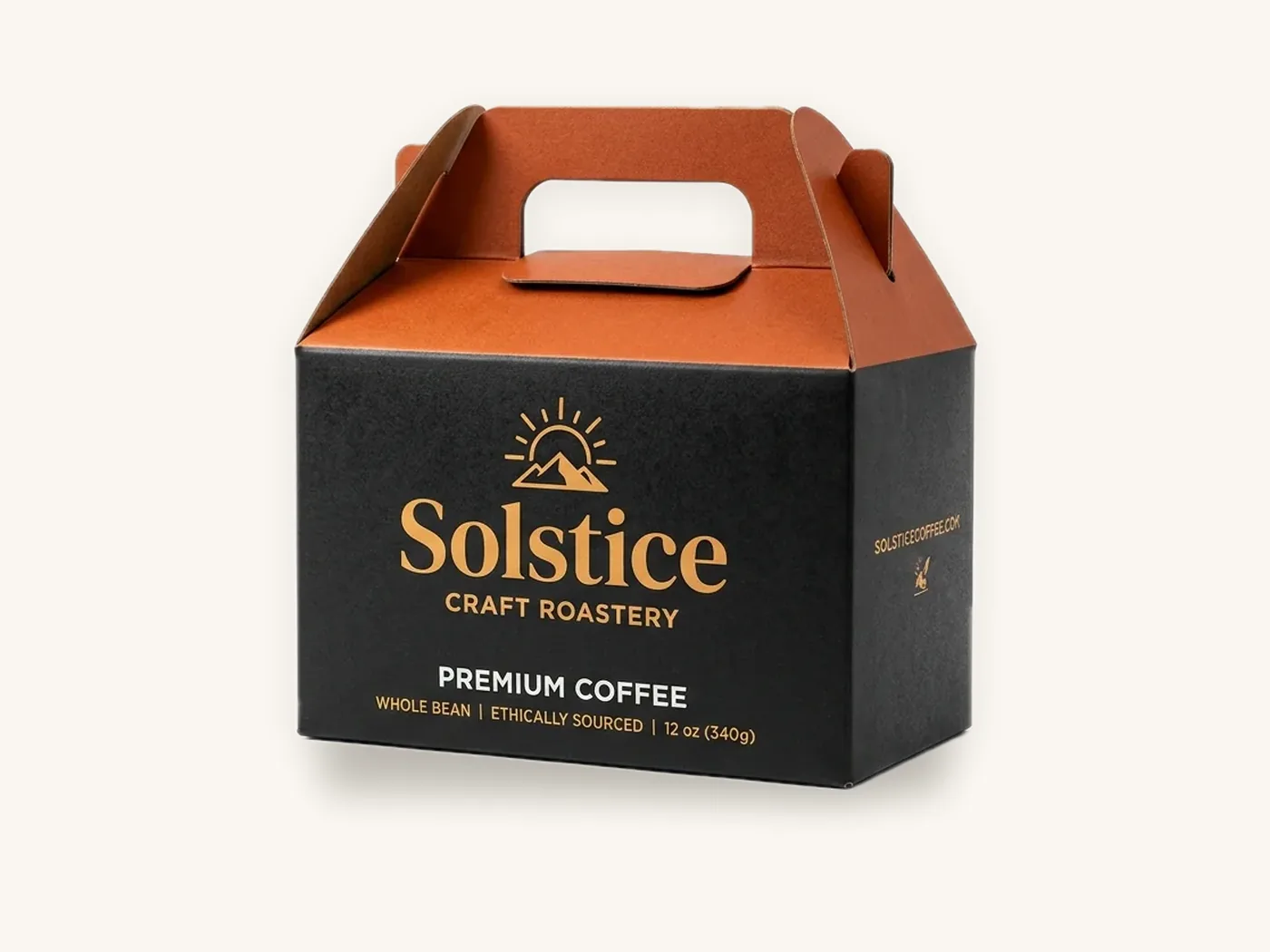
Parts are picked from shelves and bins where only one face is visible. In a warehouse that is usually the end panel; on a retail counter it might be the front. Design around the face people will actually see.
What to print and where
| Panel | Content | Why |
|---|---|---|
| End panel (both ends) | Part number, short description, barcode, brand | Readable when boxes are shelved side by side |
| Top | Brand, product line, fitment summary | Seen when boxes are stacked flat or opened |
| Side | Fitment table, installation notes, QR code to instructions | Space for detail without crowding the front |
| Bottom flap | Box maker's certificate, lot or date code area | Standard location, not needed at a glance |
Leave a blank, uncoated area where a thermal label will be applied if part numbers or lots change often. That lets you print one box design and label variants in the warehouse.
Barcodes, origin and warnings
If you sell through retailers or marketplaces, you will usually need a scannable UPC or GTIN on the package; the UPC barcodes guide explains placement and quiet zones. Imported parts typically need country of origin marking under US Customs and Border Protection rules, covered in the country of origin labeling guide. Some parts sold in California may need Proposition 65 warnings.
Batteries, fluids, airbag components and pressurized parts can be regulated as hazardous materials in transport. Those rules come from the US Department of Transportation and the carriers, and they affect packaging, marking and documentation. Read the hazmat shipping packaging guide and confirm current requirements with your carrier and the regulator before shipping.
What auto parts boxes cost
The price of automotive packaging is driven by box size, board grade, print coverage, partitions and quantity. Size and board are the big two for heavy parts, because a double wall box uses far more material than a single wall box of the same dimensions.
The figures below are indicative per-unit prices from our current rates with free US shipping included. Use the instant price estimator for your exact dimensions.
| Spec | 10 | 100 | 500 | 1,000 | 5,000 |
|---|---|---|---|---|---|
| Kraft tuck carton, 18 pt kraft, 4x3x2 in, 1-color | $1.22 | $0.81 | $0.43 | $0.36 | $0.25 |
| Shipping box RSC, B-flute, 12x10x6 in, 1-color | $7.08 | $4.69 | $2.50 | $2.08 | $1.48 |
| Shipping box RSC, B-flute, 16x12x8 in, 1-color | $11.29 | $7.47 | $3.99 | $3.32 | $2.36 |
| Double wall shipper, BC flute, 18x14x12 in, 1-color | $27.15 | $17.97 | $9.58 | $7.98 | $5.67 |
A small sensor carton like the kraft tuck spec above is about $0.36 each at 1,000 units. A B-flute 16x12x8 in box for a set of shocks is roughly $3.32 at the same quantity, and a double wall 18x14x12 in shipper for a rotor pair about $7.98. Custom inserts add a one-time insert die charge of $45 plus a per-unit cost that depends on the material.
Where heavy-duty packaging budgets go wrong
- Over-specifying every SKU. Run a grade test on your two or three heaviest parts and let lighter parts use lighter board.
- Too many sizes. Ten box sizes that each fit one part closely often cost less in damage than three generic sizes filled with void fill, but twenty sizes can clutter a warehouse. Group parts that fit within a small clearance range.
- Full-color print on shipping cartons. One or two colors on kraft reads clearly on a shelf and keeps costs down; save full color for retail-facing cartons.
- Ignoring the next quantity break. For a catalog you reorder every quarter, compare 500 and 1,000 units before buying.
Our custom shipping boxes guide goes further on RSC sizing and grades, and the custom packaging cost guide explains how each option moves the price.
Retail cartons vs shipping cartons for aftermarket brands
Many parts brands sell through three channels at once: parts stores, marketplaces and direct to installers. Each wants something slightly different from the box.

Parts store and counter sales
Parts behind a counter are pulled by part number, so clarity beats decoration. A printed corrugated box or folding carton with a strong brand color block, a large part number and a consistent layout across the whole range lets a clerk find the right box in seconds. Consistency also makes a shelf of your parts look like a system.
Marketplace and direct shipping
When a part ships straight to a customer, the box must survive the parcel network alone or inside an overbox. Heavier cartons, tight partitions and a clear return label area matter more than shelf graphics. Amazon sellers should also read the Amazon FBA packaging requirements guide, because inbound cartons are checked against their own rules.
Cores and warranty returns
Rebuilt parts such as alternators, starters and calipers often come back as cores. A box that opens cleanly and can be reclosed without tape, or with a second strip of adhesive, makes it easier for customers to send the core back in the original package. Print a short return instruction inside the lid or on a side panel.
Industrial and OEM supply
Parts moving between plants or to dealers often go in bulk cartons on pallets. Here stacking strength and consistent dimensions for pallet patterns matter more than print. The automotive and industrial packaging page covers bulk and branded options side by side.
How to order auto parts boxes from Box Sense
You can start with a single SKU and roll out across your catalog once the structure is proven. The minimum order is 10 boxes, which makes it practical to test a heavy part in two board grades before committing.
What to send with your request
- Part description, weight and dimensions, packed as it will ship (bagged, wrapped or bare)
- Whether the part carries oil, grease or rust preventive
- Shipping method: parcel, LTL freight, or both
- Preferred structure: RSC, die-cut box, telescoping, or a recommendation
- Board preference, or the heaviest part and let us suggest a grade
- Partition or insert needs, including number of cells
- Print: one color, two color or full color, and which panels
- Quantities to price, such as 100, 1,000 and 5,000, and ship-to location
From quote to delivery
- Quote within 24 hours for your spec and quantity tiers.
- Free design support: we build the dieline, set up artwork and send a 3D digital proof, with two revision rounds.
- Structural sample: unprinted structural samples are free, so you can drop test your heaviest part. Printed samples of approved artwork are free on orders of 100 or more; see samples.
- Production: 8–12 business days after proof approval, with rush in 5 business days on most corrugated styles.
- Delivery: free shipping on every US order, and international shipping quoted at cost.
There are no die or plate charges; one-time tooling applies only to foil, embossing, spot UV and custom inserts. Defective boxes reported within 14 days are reprinted free. The auto parts boxes product page shows the standard styles.
Frequently asked questions
What is the best box for shipping heavy auto parts?
For parts over roughly 15 to 20 lb, such as rotors, hubs and flywheels, a BC double wall corrugated box with a partition or die-cut insert is the most reliable choice. Check the box maker's certificate for the rated weight and stay well under it. For mid-weight parts like brake pads and shocks, single wall B-flute with a snug fit usually performs well.
How do you keep auto parts from moving inside the box?
Use partitions, die-cut corrugated inserts or end pads sized to the part, with about 1/8 in of clearance for rigid parts. Full-height partitions stop parts climbing over each other in a drop. Avoid relying on loose void fill for heavy parts, because it compresses in transit and lets the part build momentum before hitting the wall.
Do oily auto parts damage cardboard boxes?
Yes. Oil and grease soak into paper fibers, weaken the board and stain the print. Bag the part in poly or wrap it in a coated or corrosion-inhibiting paper before boxing it. That protects the box's strength and keeps instructions and packing slips clean. Outside coatings help with handling marks but do not block oil from inside.
What should be printed on auto parts boxes?
Put the part number, short description, barcode and brand on both end panels, since those face out when boxes are shelved. Use the top for brand and fitment summary and a side panel for fitment tables or a QR code linking to instructions. Leave an uncoated blank area if you plan to apply warehouse labels for lots or variants.
Is double wall corrugated necessary for automotive packaging?
Not for every part. Double wall makes sense for dense, heavy parts, freight shipments, long warehouse storage or stacking several boxes high. Lighter parts are usually better served by single wall board with a tight fit and a good insert, which costs less and takes up less space. Test your heaviest SKUs in both grades before deciding.
How much do custom auto parts boxes cost?
It depends on size, board grade, print and quantity. As a guide, a B-flute 12x10x6 in shipping box printed in one color is about $2.08 each at 1,000 units, and a BC double wall 18x14x12 in shipper about $7.98 at 1,000, including US shipping. Small kraft tuck cartons run about $0.36 at 1,000. Use the pricing page for your exact size.
Can I order a small run of auto parts boxes to test?
Yes. Box Sense produces auto parts boxes from 10 units with no die or plate charges, and unprinted structural samples are free. A small run lets you drop test your heaviest parts in the real box, check partitions and confirm the end panel is readable on your shelves before ordering a full production quantity.
Next steps
Pick your heaviest part and your best-selling part, measure them packed as they ship, and run both through the auto parts packaging price estimator in single wall and double wall. Then request an auto parts box quote with your weights and quantities, and we will confirm pricing within 24 hours and send a dieline with partitions for proofing.
Boxes in this guide
Order the packaging we covered
Written by the Box Sense Packaging Team
Our structural designers, prepress technicians and production staff print and convert custom boxes every day for brands in the United States, United Kingdom and UAE. Questions about this guide? Talk to us.