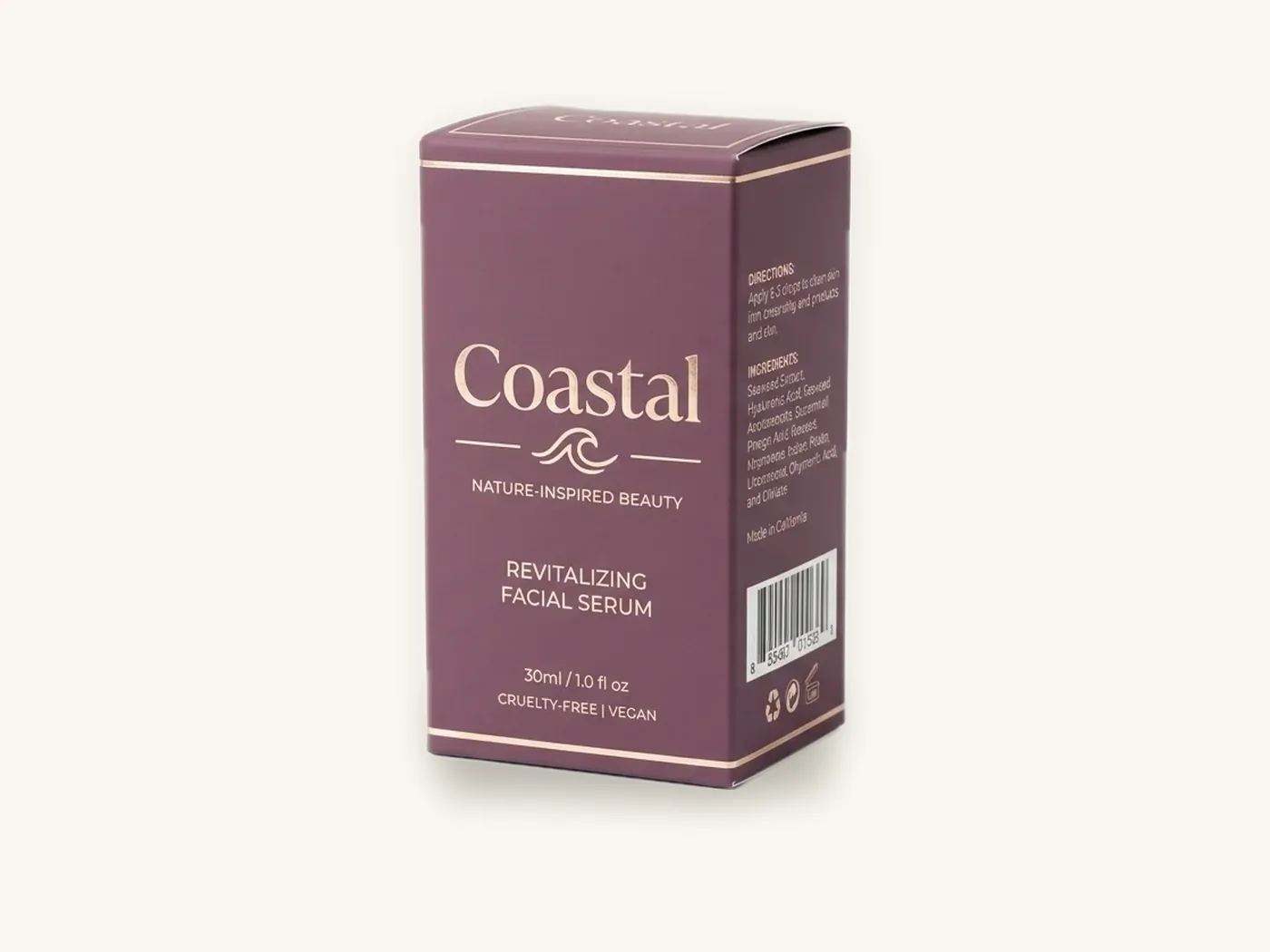
There are nine main types of cosmetic boxes: straight tuck end, reverse tuck end, auto lock bottom, sleeve and tray, window, drawer, two-piece rigid, magnetic closure and shoulder neck. The first five are folding cartons made from paperboard. The last four are premium structures, usually rigid. Which one suits a product depends on its container, its weight and the price it sells at.
Beauty brands rarely use just one. A typical range has tuck end cartons for everyday products, a sturdier base for heavy glass, and a rigid box for gift sets. This guide describes each style, shows what it is best for, and maps common beauty products to the box that fits them.
If you already know your containers, request a quote with their dimensions and we will suggest a style for each.
Key takeaways
- Tuck end cartons are the workhorse. Most skincare, makeup and haircare ships in a straight or reverse tuck end box.
- Use an auto lock bottom for heavy glass such as jars and large bottles.
- Sleeves, windows and drawers add a reveal without the cost of a rigid box.
- Rigid styles are for prestige products and sets: two-piece, magnetic closure and shoulder neck boxes.
- Fit comes first. Measure the container with its cap on; a loose box feels cheap and a tight one scuffs the label.
- Finish does as much as structure. Soft-touch, foil and embossing turn a simple carton into a premium one.
- Box Sense makes custom cosmetic boxes in all nine styles from 10 units.
Cosmetic box styles at a glance
| Style | Board | Best for | Feel | Relative cost |
|---|---|---|---|---|
| Straight tuck end | Paperboard | Serums, creams, tubes, most products | Clean and standard | Low |
| Reverse tuck end | Paperboard | High-volume everyday products | Standard | Lowest |
| Auto lock bottom | Paperboard | Heavy jars and bottles | Sturdy | Low to medium |
| Sleeve and tray | Paperboard | Soap, palettes, small sets | Considered | Low to medium |
| Window box | Paperboard | Color cosmetics, lashes, sets | Open and visual | Low to medium |
| Drawer box | Paperboard or rigid | Lashes, lip sets, small gifts | Premium | Medium to high |
| Two-piece rigid | Rigid board | Gift sets, fragrance | Substantial | High |
| Magnetic closure | Rigid board | PR kits, premium sets | Luxurious | High |
| Shoulder neck | Rigid board | Fragrance, prestige skincare | Most luxurious | Highest |
The cost column compares styles with each other at the same size and quantity. Real prices are quoted per order.
Folding carton styles
These five are made from paperboard, usually SBS between 16 pt and 24 pt. They ship flat, cost the least and suit most products. See SBS paperboard for the board itself.
1. Straight tuck end
A carton whose top and bottom flaps both tuck toward the back panel. The front edge is seamless, so the main panel looks clean.
Best for: serums, moisturizers, cleansers, tubes, mascaras, foundations. It is the default for most of a skincare or makeup range.
Why choose it: tidy front panel, easy hand filling, recloses neatly.
Watch for: the tucked bottom relies on friction. For heavy glass, choose an auto lock bottom.
2. Reverse tuck end
The top flap tucks one way and the bottom the other. It uses the printed sheet more efficiently, which lowers the cost slightly.
Best for: high-volume everyday products, sample sizes and anything price-sensitive.
Why choose it: the most economical carton.
Watch for: one flap edge shows on the front. Most shoppers never notice; prestige brands sometimes prefer straight tuck.
See reverse tuck end boxes and the tuck end boxes guide.
3. Auto lock bottom
A carton with a pre-glued base that snaps into place when the box is opened. Also called an auto bottom or crash lock bottom box.
Best for: glass jars, large bottles, candles and body care in heavier containers.
Why choose it: the base carries weight that would push through a tucked flap, and it is faster to pack.
Watch for: it costs a little more than a tuck bottom, so use it where the weight calls for it.
4. Sleeve and tray
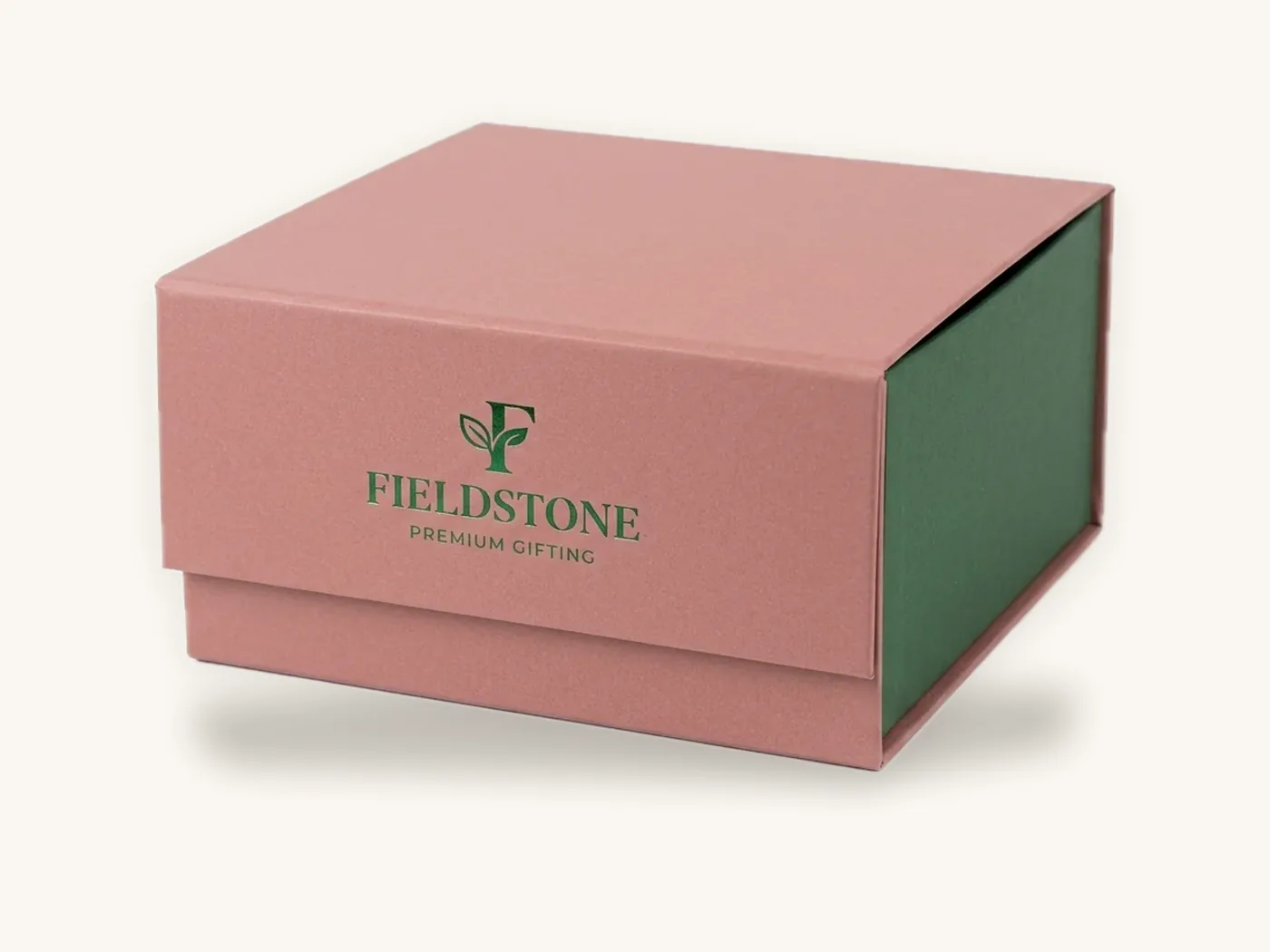
A printed sleeve slides over an inner tray that holds the product. Both parts are paperboard.
Best for: soap bars, eyeshadow palettes, lip sets, sheet masks and small gift sets.
Why choose it: sliding a tray out feels more deliberate than opening a flap, at close to carton cost. The sleeve can change for seasons while the tray stays the same.
Watch for: the fit between sleeve and tray must be right: snug enough to stay on, loose enough to slide.
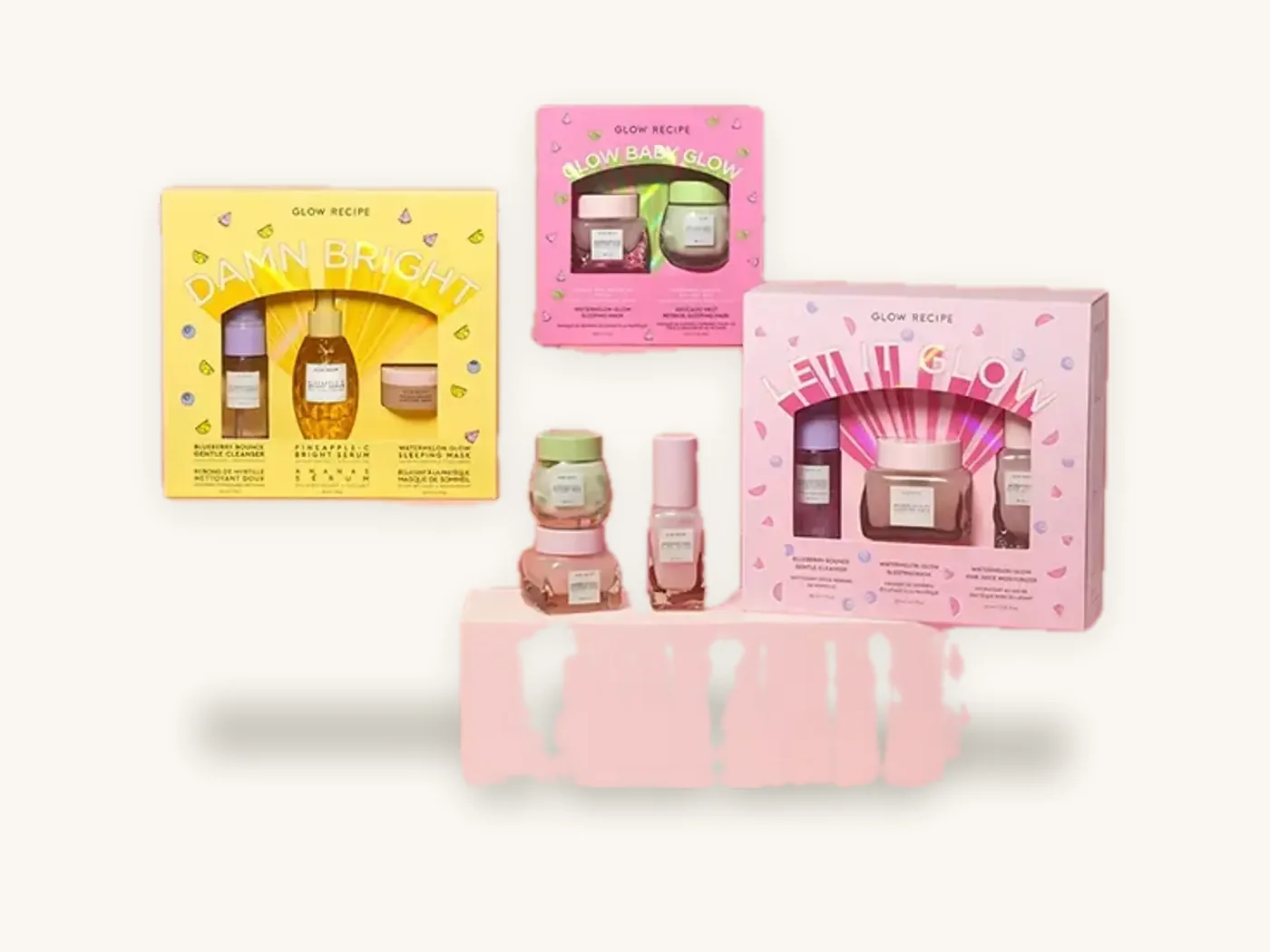
5. Window box
Any carton with a die-cut opening, covered with clear film or left open, that shows the product.
Best for: color cosmetics where shade matters, false lashes, nail polish, bath bombs and gift sets.
Why choose it: shoppers see the real color, which reduces opened boxes and returns.
Watch for: a window reduces space for text, and film affects recyclability. An open cut-out avoids film.
See window boxes and the window film guide.
Premium and rigid styles
These four use rigid greyboard wrapped in printed or specialty paper, or heavy paperboard. They cost more and take more space, and they suit products where the box is part of the price. See rigid greyboard.
6. Drawer box
A tray slides out of an outer sleeve like a drawer, often with a ribbon pull or thumb notch. Made in paperboard for lighter products or rigid board for premium ones.
Best for: false lashes, lip sets, compact palettes, jewelry-style beauty gifts.
Why choose it: a slow, satisfying opening, and customers keep the box.
Watch for: needs an insert so products stay put as the drawer slides.
See drawer boxes.
7. Two-piece rigid box
A separate lid lifts off a base. The classic gift box.
Best for: gift sets, fragrance, holiday editions and anything sold as a present.
Why choose it: weight, a clean lift-off, and room for a fitted insert.
Watch for: it ships assembled, which costs more in freight and storage than cartons.
See two-piece boxes.
8. Magnetic closure box
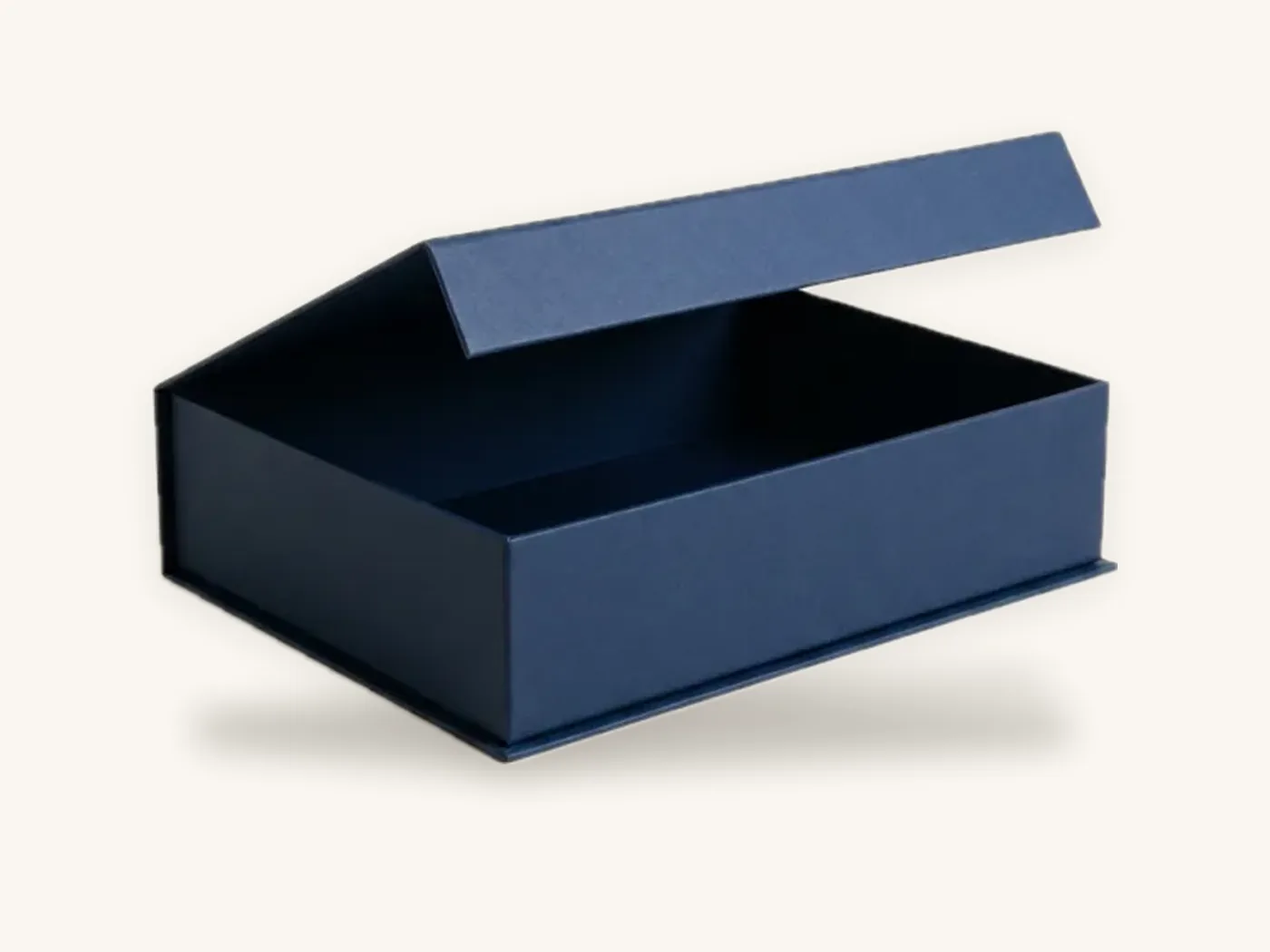
A rigid box with a hinged lid held shut by magnets hidden in the board.
Best for: PR and influencer kits, premium skincare sets, limited editions.
Why choose it: the soft snap of the lid, and a box customers reuse. A collapsible version ships flat.
Watch for: magnets should be removed before recycling.
See magnetic closure boxes and the PR box guide.
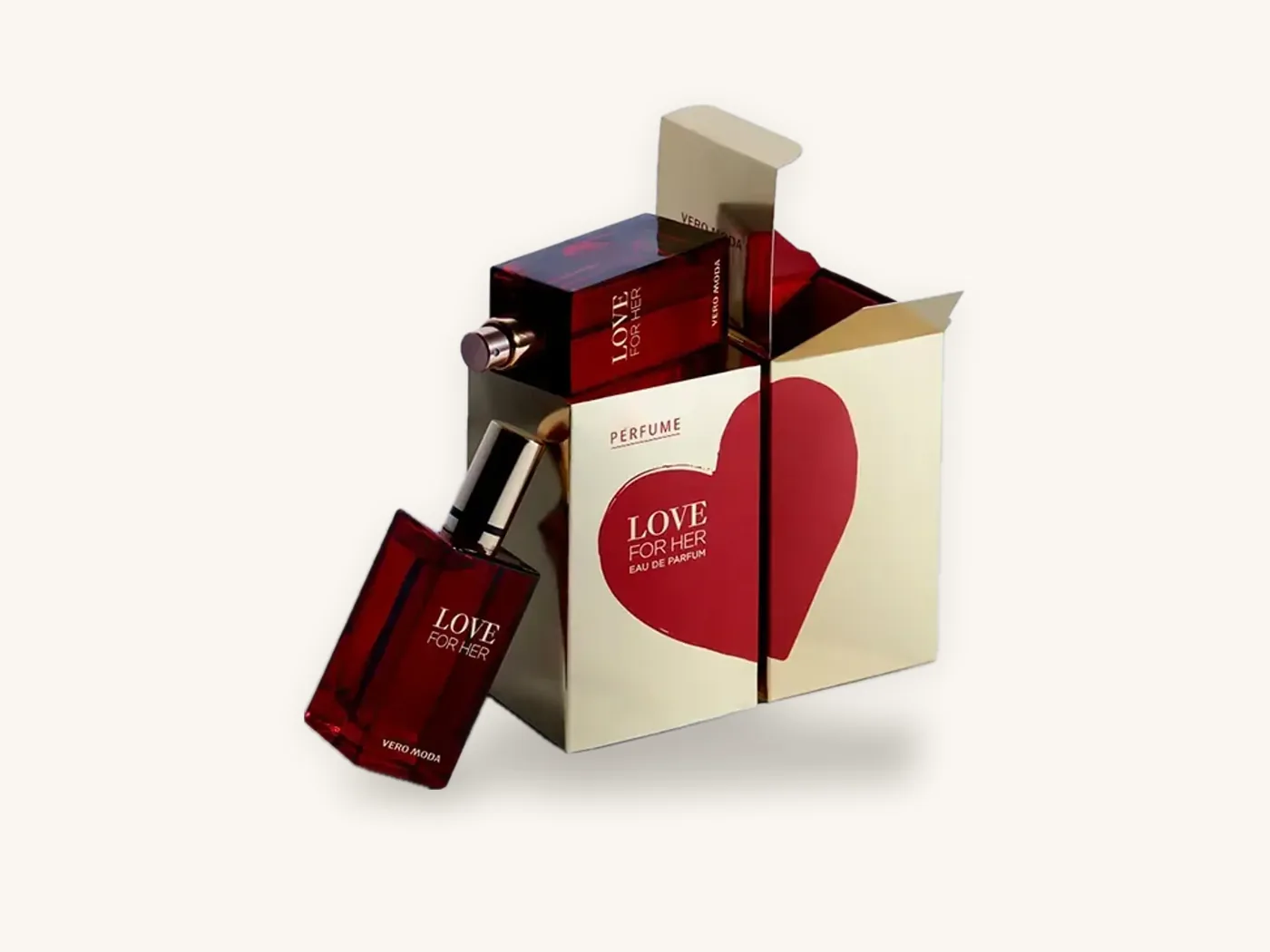
9. Shoulder neck box
A rigid box with an inner collar, the neck, that the lid slides down over. The lid and base meet with a visible band between them.
Best for: fragrance and prestige skincare.
Why choose it: the slowest, most controlled lid lift of any style, which reads as luxury.
Watch for: the most handwork and the highest cost of the nine.
See shoulder neck boxes and perfume boxes.
Which box for which product
| Product | Usual container | Recommended style | Alternative |
|---|---|---|---|
| Serum | Glass dropper bottle | Straight tuck end, with insert if loose | Auto lock bottom for large bottles |
| Moisturizer or cream | Glass or plastic jar | Auto lock bottom | Tuck end for light jars |
| Cleanser or lotion | Tube or pump bottle | Tuck end | Auto lock bottom for large pumps |
| Lipstick or lip gloss | Slim tube | Small tuck end | Drawer box for sets |
| Mascara or eyeliner | Slim tube | Tuck end, often with hang tab | Window box |
| Foundation | Glass bottle | Tuck end or auto lock bottom | Two-piece for prestige |
| Eyeshadow palette | Flat compact | Sleeve and tray | Tuck end or window box |
| False lashes | Tray | Window or drawer box | Magnetic box |
| Nail polish | Small glass bottle | Tuck end or window box | Display box for multiples |
| Soap or bath bomb | Unwrapped or wrapped | Sleeve, window or tuck box | Kraft carton |
| Perfume | Glass bottle | Two-piece or shoulder neck | Heavy tuck carton for small sizes |
| Gift or PR set | Several items | Magnetic or two-piece with insert | Mailer box with insert |
Related pages: skincare boxes, lipstick boxes, makeup boxes.
Finishes that change how a box feels
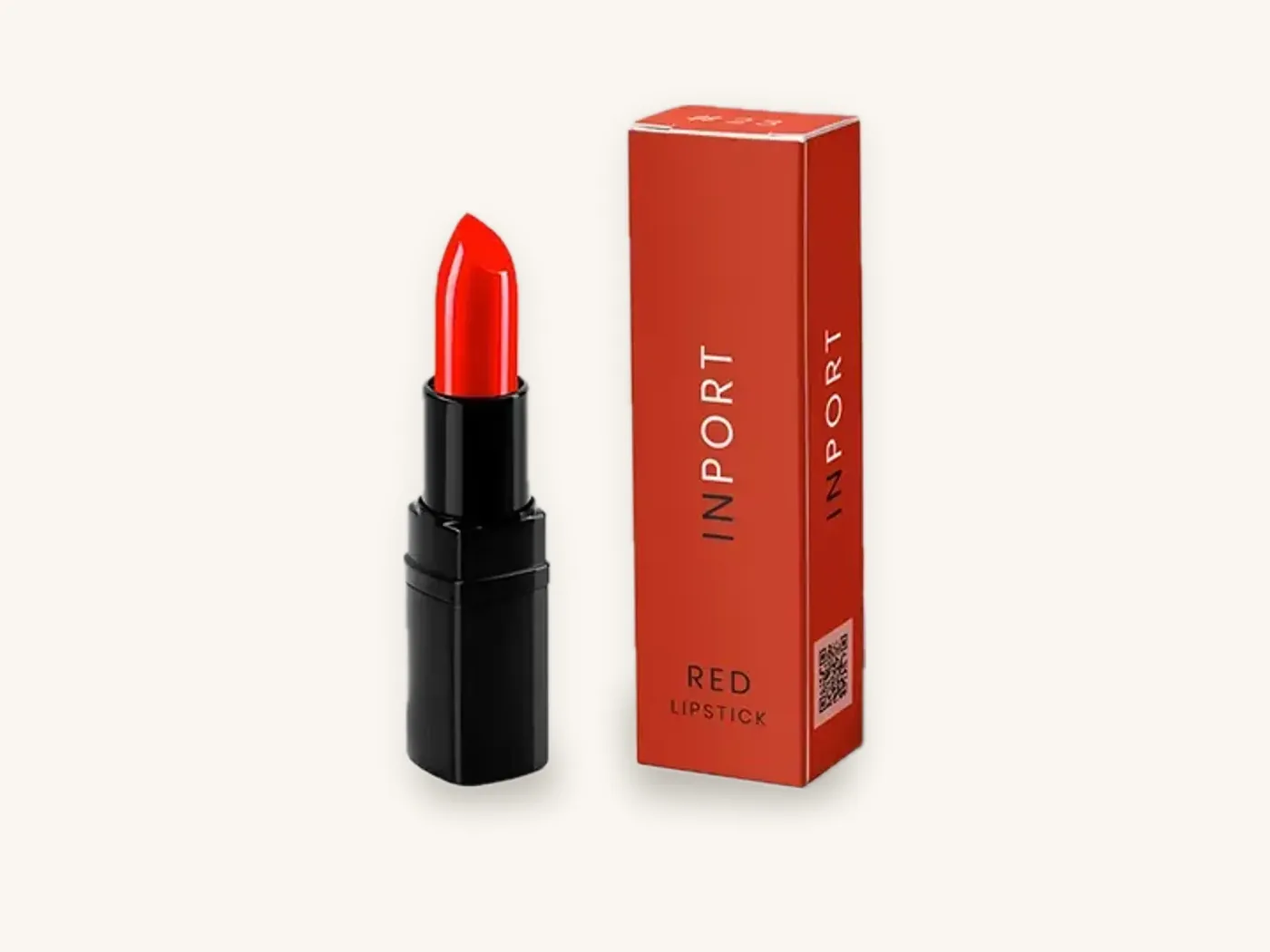
The same structure can look like a pharmacy product or a prestige one depending on the finish.
- Matte coating or lamination. Calm and modern; the most common choice for skincare.
- Soft-touch lamination. A velvety surface that feels expensive. See the soft-touch guide.
- Gloss. Brighter color and more scuff resistance.
- Foil stamping. Metallic logo or border. See the foil stamping guide.
- Embossing and debossing. A raised or pressed logo you can feel.
- Spot UV. A glossy highlight on a matte box. See the spot UV guide.
- Metallic board. An all-over shine for color cosmetics.
One or two finishes used with restraint usually look better than several together.
Sizing: getting the fit right
- Measure the container with the cap, pump or dropper fitted, at its widest and tallest points.
- Add a small clearance so the product slides in without scuffing.
- Allow for extras: an insert, a leaflet or a spatula.
- Send a sample container if the shape is unusual.
A range of sizes should share proportions and layout, so a 15 ml, 30 ml and 50 ml box look like one family.
Label space on small boxes
Cosmetic cartons carry more than branding: product identity, net contents, ingredients, directions, warnings and the responsible company. On a small box this takes planning.
- Keep the front for the brand and product name.
- Use the back and sides for required text.
- Keep small type in one solid color on a plain background.
- Consider a leaflet for long ingredient lists.
You supply the regulatory wording and we lay it out to fit. The cosmetic labeling requirements guide outlines what cartons usually carry.
Inserts: what keeps the product still
A box protects only as well as its insert. For beauty products, three kinds cover most needs.
- Paperboard inserts. A folded card with cut-outs that grip a bottle neck or hold a jar centered. Inexpensive, recyclable and suited to most cartons.
- Molded pulp trays. Formed fiber shaped to the product. Good for sets, heavier glass and brands avoiding plastic.
- Foam. The most cushioning, used for fragile glass and prestige sets, and the hardest to recycle.
For a set, the insert also decides what the customer sees first. Place the hero product in the center and the smaller items around it. The box inserts guide covers materials and layouts.
Choosing by sales channel
Where a product is sold changes the best box.
Retail shelves and counters
Shoppers handle the box, so structure and finish matter. Cartons need a clear front panel and a barcode on a flat surface. Small items often need a hang tab or a counter display that holds a dozen units.
Online orders
The carton travels inside a mailer. Keep the carton snug and add an insert for glass. A printed mailer with tissue turns the shipment into an unboxing. See custom mailer boxes.
Subscription and PR boxes
One outer box holds several products. A mailer or magnetic box with a fitted insert keeps the layout tidy and makes the reveal work on camera. The beauty subscription packaging guide goes further.
Salons and professional use
Larger sizes and plainer packs. Auto lock bottom cartons handle the weight of professional-size bottles.
Common mistakes
- Choosing the style before measuring the container. The container decides what works.
- Using a tuck bottom under heavy glass. The base can give way.
- Leaving the product loose. Rattling suggests poor quality and risks breakage.
- Crowding a small front panel. Keep it to the brand, the product name and one line.
- Printing pale brand colors on kraft board. They lose their color. Use white board.
- Ordering a rigid box for a low-priced product. The box cost eats the margin.
- Skipping a sample for a new container. A structural sample costs little and prevents a wrong-size run. See packaging samples.
Sustainability choices
- Board. Recycled-content paperboard and kraft are available; ask for the content in writing.
- Coating. A water-based coating keeps the carton easier to recycle than film lamination.
- Windows. Use an open cut-out or PLA film.
- Inserts. Paperboard or molded pulp in place of foam.
- Rigid boxes. Avoid magnets if full recyclability matters, or design the box to be kept.
How to choose: a short decision guide
- Light product in a tube or small bottle? Straight or reverse tuck end.
- Heavy glass jar or bottle? Auto lock bottom.
- Does color need to be seen? Window box.
- Flat product or small set? Sleeve and tray.
- Small premium item or lashes? Drawer box.
- Gift set or fragrance? Two-piece rigid.
- PR kit or limited edition? Magnetic closure.
- Prestige fragrance or skincare? Shoulder neck.
- Launching on a budget? Start with tuck end cartons in a low quantity, then upgrade the best sellers.
What to send for a quote
- Each container's dimensions with the cap on, and its filled weight
- The style you want, or ask for a recommendation
- Quantity for each product, and two or three quantities to compare
- Finishes: coating, foil, embossing
- Whether you need inserts or leaflets
- Pantone references for brand colors
- Artwork, or a note that you need design help
Box Sense replies within 24 hours. Design support is free and includes the dieline, artwork setup, a 3D proof and two rounds of revisions through our design services team. Production takes 8–12 business days after proof approval, with a 5-day rush option on many styles, and shipping is free to any US address.
Frequently asked questions
What is the most common type of cosmetic box?
The tuck end carton, in straight or reverse tuck form. It suits most skincare and makeup containers, ships flat and costs the least.
What box is best for a glass jar of cream?
An auto lock bottom carton. Its glued base carries the weight of a full glass jar better than a tucked flap.
What is the difference between a folding carton and a rigid cosmetic box?
A folding carton is thin paperboard that ships flat. A rigid box is thick board wrapped in paper, does not fold flat, and feels heavier and more premium.
Can I use different box styles in one product range?
Yes. Most brands do: cartons for individual products and a rigid or magnetic box for sets. Keeping colors, typography and finishes consistent ties them together.
Which finish makes a cosmetic box look premium?
Soft-touch lamination with a foil or embossed logo is the most used combination. A single finish applied well is usually enough.
What is the minimum order for custom cosmetic boxes?
The minimum order at Box Sense is 10 boxes for every style.
Can you make boxes for a whole range in matching designs?
Yes. We build a dieline for each container size and keep the layout and colors consistent across the range.
Next steps
List your products, measure each container with its cap on, and decide which need a carton and which deserve something more. Then request a quote and we will confirm styles, sizes and pricing within 24 hours.
Boxes in this guide
Order the packaging we covered
PopularCosmetic Boxes
Skincare Boxes
Lipstick Boxes
Makeup & Palette Boxes
Perfume Boxes
PopularMagnetic Closure Boxes
Written by the Box Sense Packaging Team
Our structural designers, prepress technicians and production staff print and convert custom boxes every day for brands across the United States. Questions about this guide? Talk to us.