The main types of food boxes fall into three groups: boxes for hot prepared food, such as takeout, pizza, burger and fry boxes; boxes for bakery and sweets, such as cake, cupcake, donut and cookie boxes; and retail cartons for packaged food, such as cereal, tea and snack boxes. Each group uses different board and coatings, because each faces a different problem: heat and grease, crushing and visibility, or shelf life and labeling.
Choosing a food box starts with one question. Does the food touch the board directly, or is it wrapped, bagged or lined? The answer decides the board, the coating and the inks. This guide describes twelve common styles, explains what each is for, and shows how to match a box to a menu or product line.
To get a recommendation for your food, request a quote and tell us what it is, how hot or greasy it is, and how it reaches the customer.
Key takeaways
- Hot, greasy food needs grease-resistant board and vents. Takeout, burger and fry boxes are built for it.
- Pizza and heavy delivery use corrugated board, which holds heat and resists crushing.
- Bakery boxes are about protection and display: tall sides, windows and inserts.
- Packaged food uses printed paperboard cartons with an inner bag for freshness.
- Direct food contact changes the specification. Say whether food touches the board.
- Leave room for required labeling on retail packs. You supply the wording.
- Box Sense makes custom food boxes from 10 units, shipped flat.
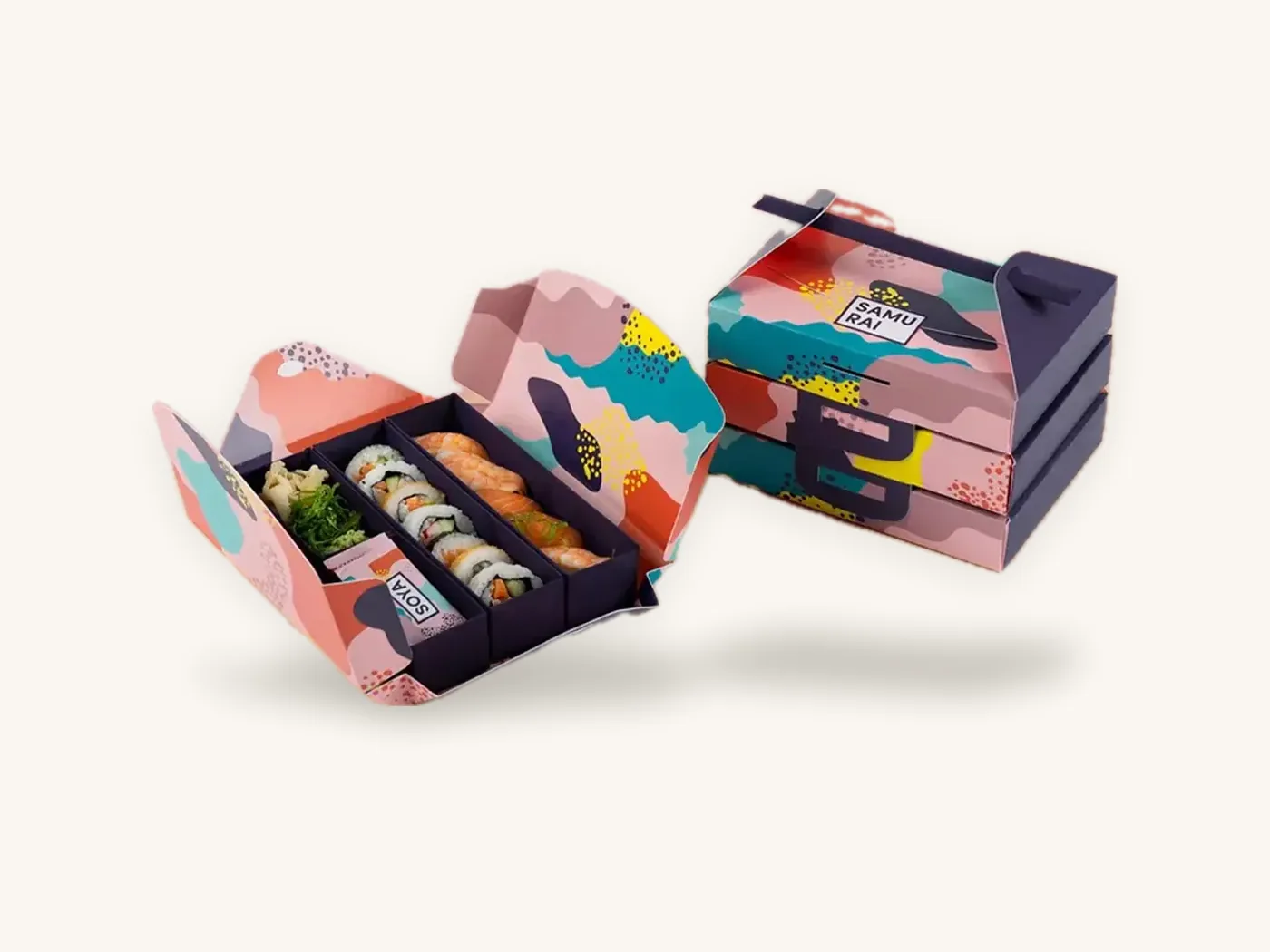
Food box types at a glance
| Box type | Board | Best for | Key feature |
|---|---|---|---|
| Takeout box | Paperboard | Hot meals, rice, noodles, salads | Folded, leak-resistant, locking tabs |
| Pizza box | Corrugated | Pizza, flatbreads | Holds heat, vents, stacks |
| Burger box | Paperboard or corrugated | Burgers, sandwiches | Clamshell, one-handed opening |
| Fry box | Paperboard | Fries, snacks | Scoop shape, open top |
| Gable box | Paperboard | Boxed lunches, catering | Built-in handle |
| Cake box | Paperboard | Whole cakes | Tall, often with window |
| Cupcake box | Paperboard | Cupcakes, muffins | Insert holds each one |
| Donut and pastry box | Paperboard | Donuts, pastries, cookies | Flat, wide, optional window |
| Window box | Paperboard | Any food sold on looks | Die-cut window |
| Sleeve | Paperboard | Trays, bars, ready meals | Band over an inner pack |
| Retail carton | Paperboard | Cereal, tea, snacks, spices | Printed, with inner bag |
| Beverage carrier | Strong paperboard | Bottles and cans | Handle and dividers |
Boxes for hot prepared food
These boxes have a short, hard life: filled hot, carried, opened within the hour. They have to hold heat and grease without collapsing.
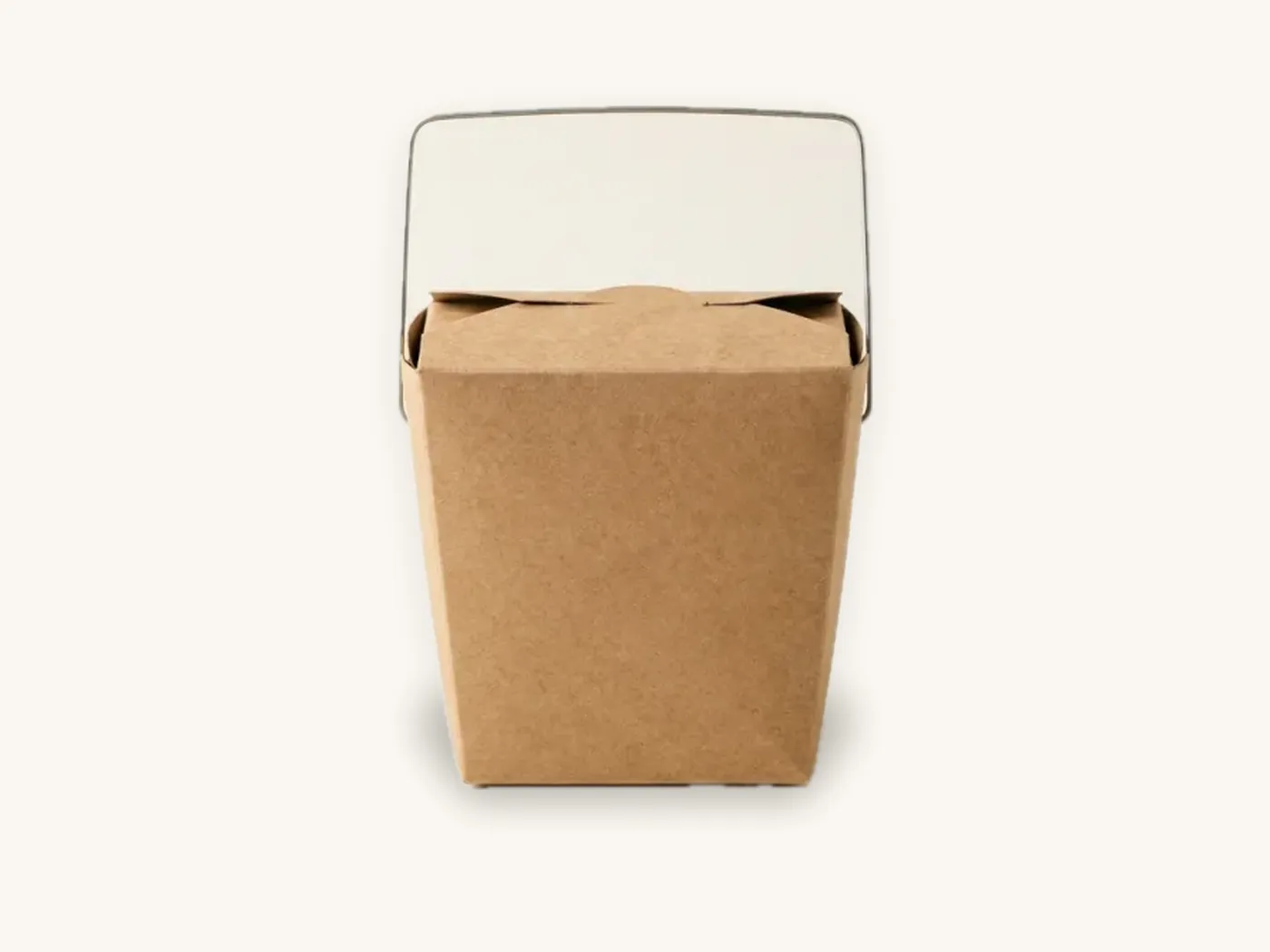
1. Takeout boxes
Folded paperboard cartons with locking tabs or a wire-free folded top. Many are made from a single sheet with glued or folded corners so liquid cannot escape through a seam.
Best for: rice and noodle dishes, curries, salads, pasta, mixed meals.
What to specify: grease-resistant board, the portion size in ounces or by dimensions, and whether the food is wet. Sauce-heavy dishes need a leak-resistant fold.
See takeout boxes and the takeout packaging guide.
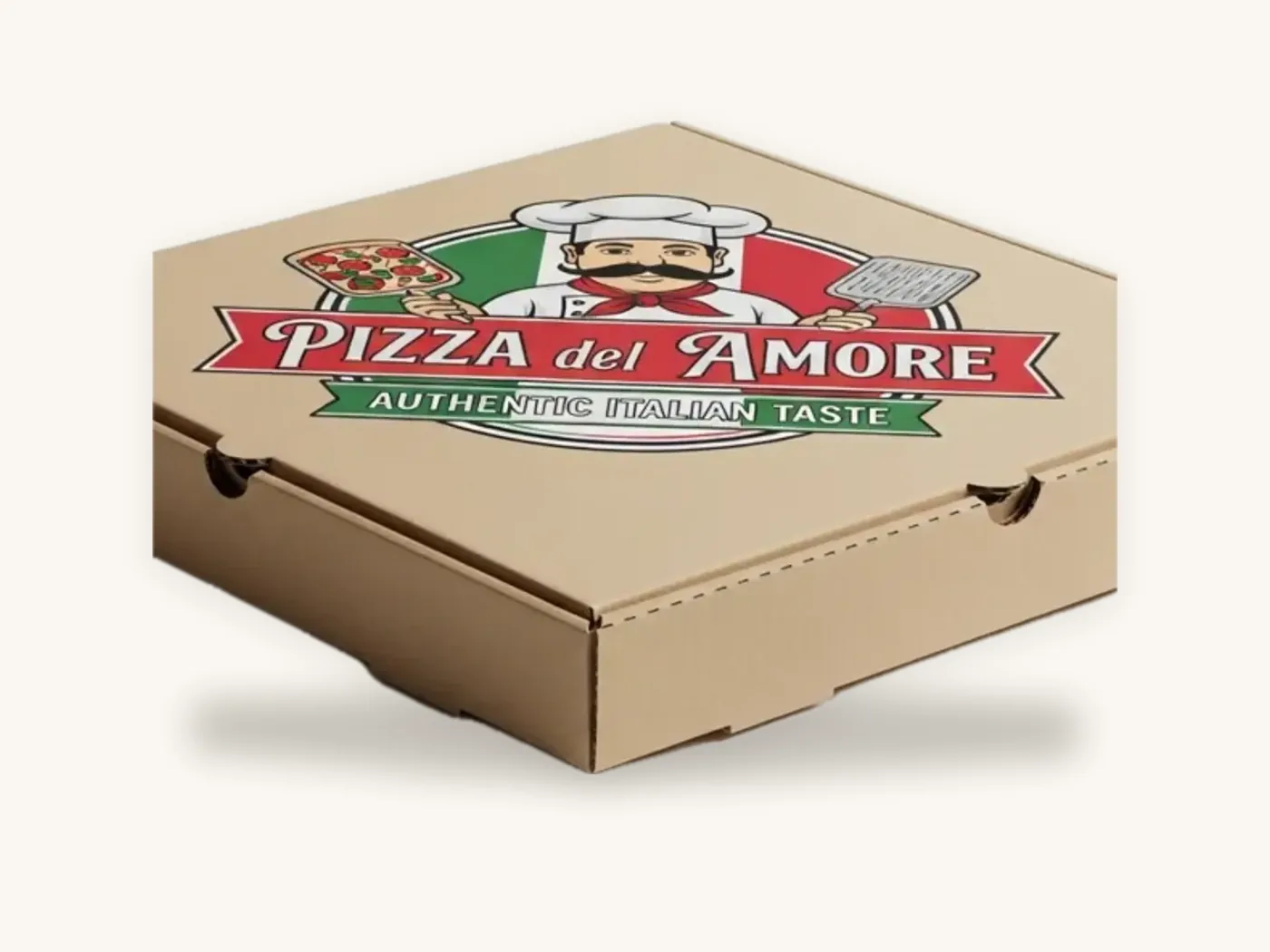
2. Pizza boxes
Corrugated boxes, usually B or E flute, with a hinged lid that locks at the front. Corrugated board holds heat and keeps the box rigid when stacked.
Best for: pizza, flatbreads, calzones and large shared dishes.
What to specify: the pizza diameter, single or double wall, vents to release steam, and print in one color or full color.
See pizza boxes and the pizza box guide.
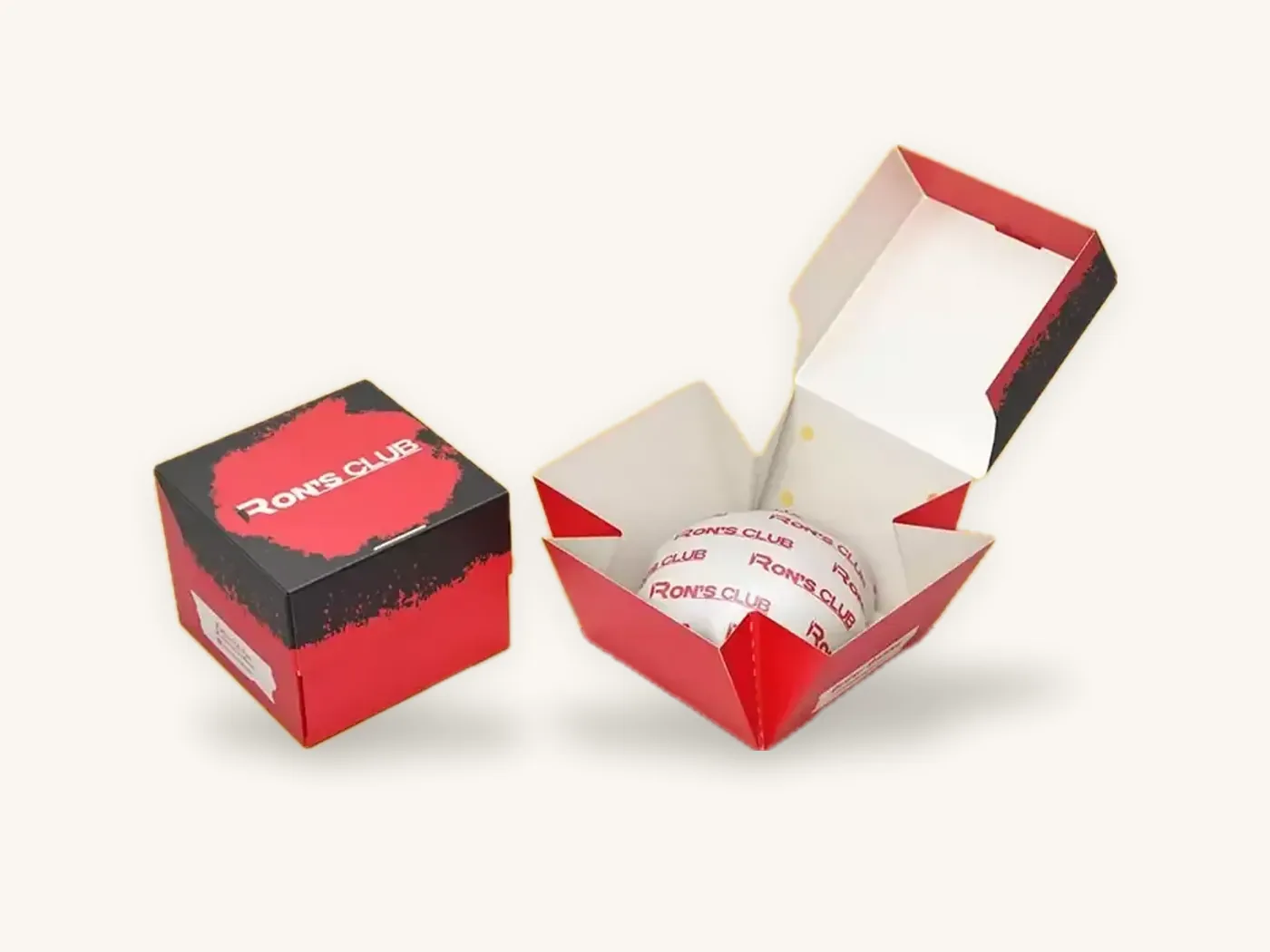
3. Burger boxes
Clamshell boxes with a hinged lid that closes over the burger. Made in paperboard for dine-in and short trips, or thin corrugated for delivery.
Best for: burgers, sandwiches, wraps and breakfast rolls.
What to specify: the burger's width and height, grease-resistant board, and vents if the food travels.
See burger boxes.
4. Fry boxes
Open-topped scoop cartons with a tall back and a low front, so fries are easy to reach.
Best for: fries, wedges, nuggets, churros and popcorn.
What to specify: portion size and grease-resistant board.
See french fry boxes.
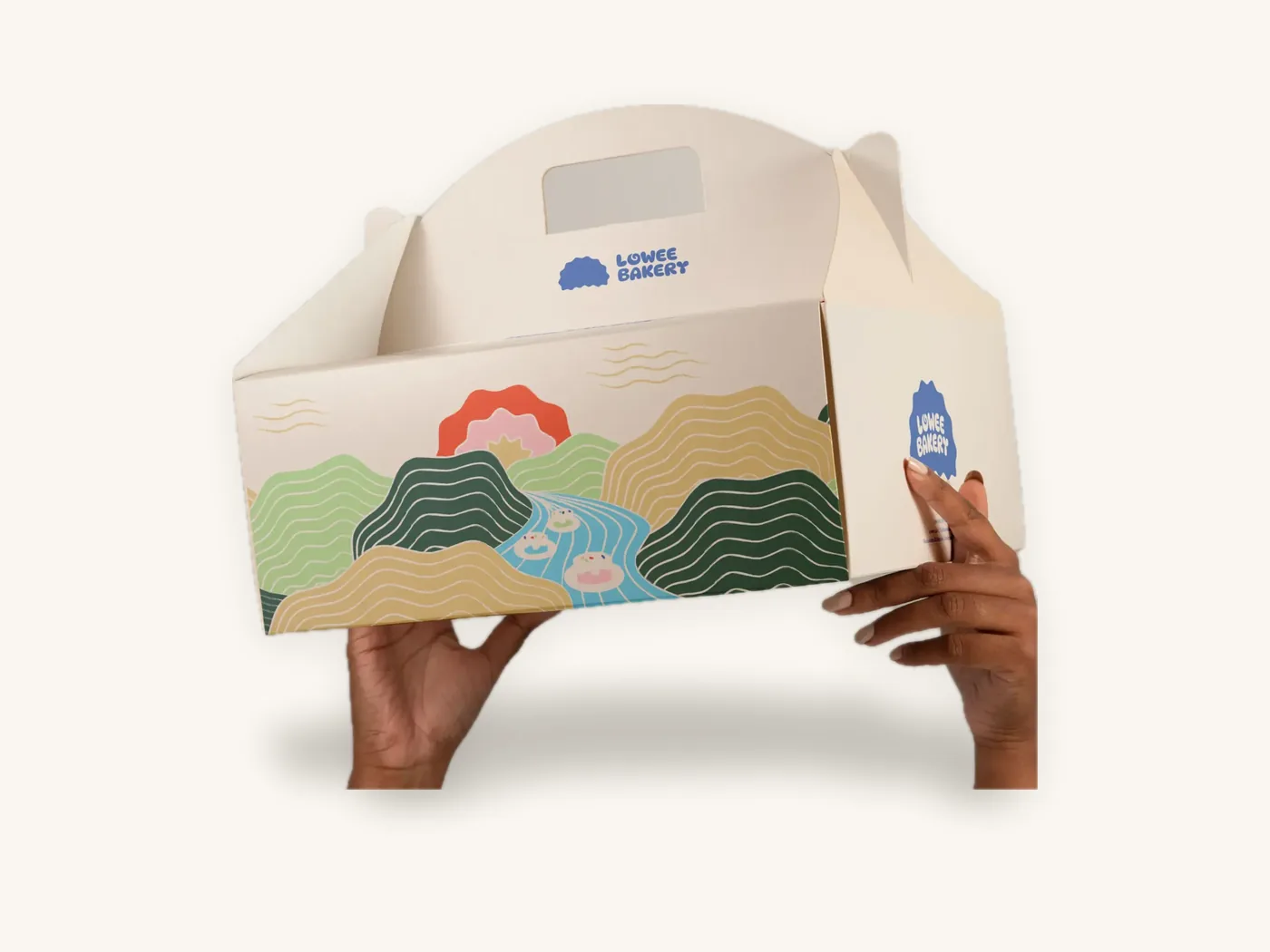
5. Gable boxes
Cartons with a pitched top that locks into a carry handle.
Best for: boxed lunches, catering packs, kids' meals and picnic sets.
What to specify: what goes inside and its weight, so the handle and board are right. Heavier loads may need corrugated.
See gable boxes and the gable boxes guide.
Boxes for bakery and sweets
Bakery items are delicate and sold on appearance. These boxes protect decoration and show the product.
6. Cake boxes
Tall paperboard boxes, often with a window on the top or front, and sometimes a separate lid and base for tall cakes.
Best for: whole cakes, cheesecakes, tarts and pies.
What to specify: cake board size, cake height including decoration, and whether you want a window.
See cake boxes and the custom cake boxes guide.
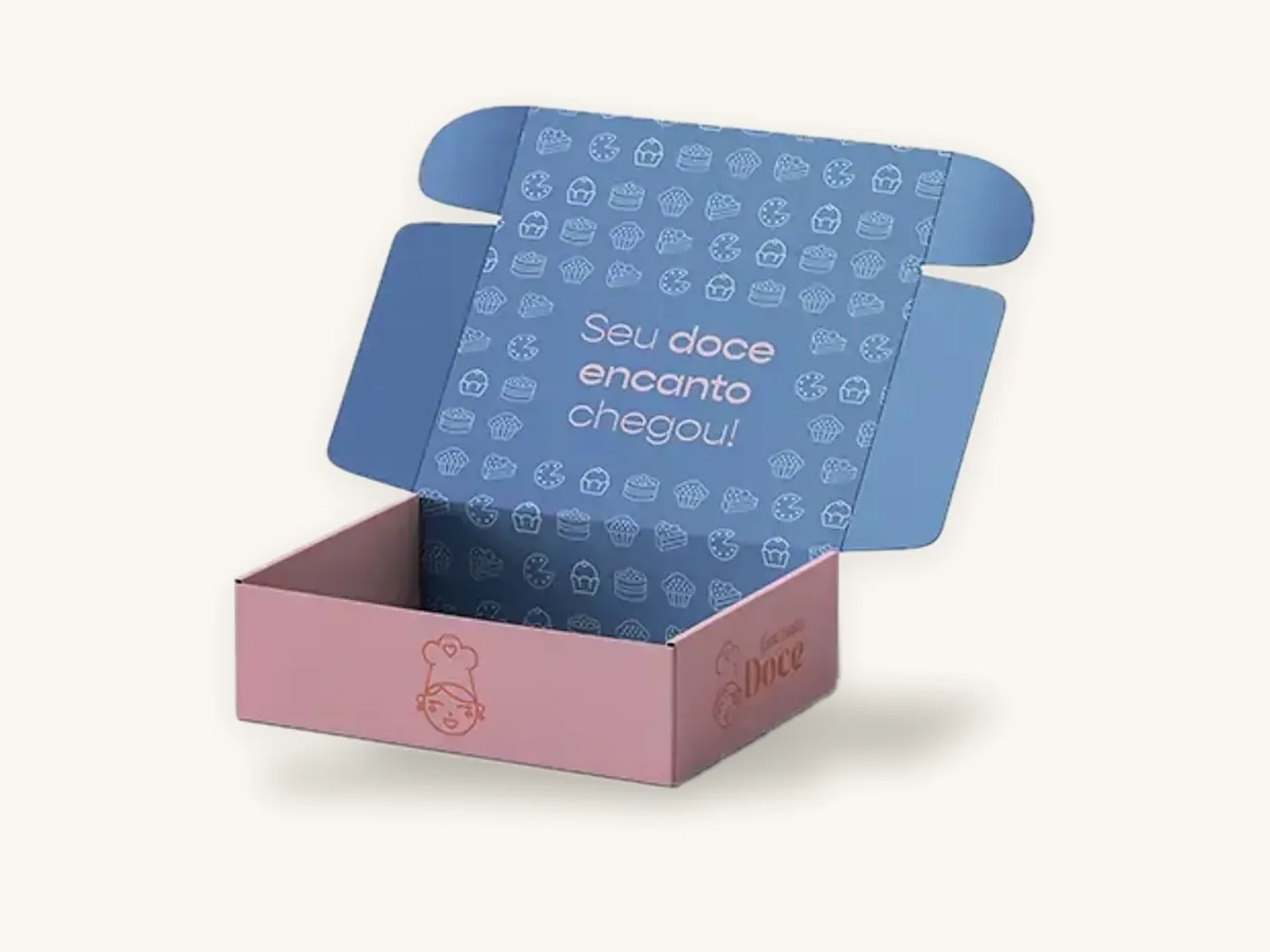
7. Cupcake boxes
Boxes with a paperboard insert that has a hole for each cupcake, so they cannot slide.
Best for: cupcakes and muffins, in counts of 1, 2, 4, 6, 12 or 24.
What to specify: cupcake size (mini, standard or jumbo), the count, and the height with frosting.
See cupcake boxes and the custom cupcake boxes guide.
8. Donut, pastry and cookie boxes
Flat, wide boxes for a single layer, with or without a window. Cookie boxes are also made as gift boxes with dividers.
Best for: donuts, pastries, cookies, macarons and brownies.
What to specify: how many per box, the size of each, and grease-resistant board for buttery or fried items.
See donut boxes, cookie boxes and macaron boxes.
Boxes for display and retail
9. Window boxes
Any food box with a die-cut window, covered with clear film or left open.
Best for: bakery, confectionery, pasta, dried fruit and gift food, wherever seeing the product sells it.
What to specify: window size and position. If unwrapped food sits behind the window, use film.
See window boxes.
10. Sleeves
A printed band of paperboard that slides over a tray, a tub or a wrapped product.
Best for: ready meals in trays, chocolate bars, sandwiches in wedges and soap-style food gifts.
What to specify: the exact outside dimensions of what the sleeve covers.
See sleeve and tray boxes and chocolate boxes.
11. Retail food cartons
Printed paperboard cartons for packaged food, almost always with an inner bag or pouch that keeps the food fresh.
Best for: cereal, granola, tea, coffee pods, crackers, snacks, spices and baking mixes.
What to specify: the inner bag's filled size, a tuck end or seal end closure, and the label content.
See cereal boxes, tea boxes and spice boxes.
12. Beverage carriers
Handled carriers with dividers for bottles or cans, in four-pack and six-pack formats.
Best for: craft beer, soda, juice, kombucha and bottled cold brew.
What to specify: bottle or can size, the count, and whether the pack will be chilled, which calls for moisture-tolerant board.
See beverage carriers and the beverage carrier guide.
Board and coatings for food
Board
- Paperboard (SBS or kraft) for bakery, takeout, retail cartons and sleeves. White board prints brightly; kraft gives a natural look.
- Corrugated for pizza, delivery and anything heavy or stacked.
- Grease-resistant board for fried, baked and oily food.
Coatings and liners
- Aqueous coating protects print and resists light moisture.
- Grease-resistant treatments stop oil soaking through.
- Liners or inner bags separate food from the board where needed.
Many US states restrict added PFAS in food packaging. Tell us which states you sell in so the board is specified to suit.
Inks
Soy and water-based inks are standard. Where food touches a printed surface, tell us, so the ink and coating are chosen for that use. The food-safe inks and coatings guide explains the options.
Direct or indirect food contact
This is the most important thing to tell a packaging supplier.
- Direct contact: unwrapped food sits on the board, as with pizza, fries, donuts and burgers.
- Indirect contact: the food is wrapped, bagged, in a tray or in a liner, as with cereal, tea and boxed chocolates.
Direct contact calls for a board, coating and ink combination intended for it. Indirect contact gives more freedom to choose on appearance and cost. We confirm the specification in writing with your quote.
Labeling space on retail food boxes
Packaged food sold at retail needs room for a statement of identity, net quantity, ingredients, allergens, nutrition facts and the responsible business. Plan a panel for each before the design starts.
You supply the content and we print it as supplied. The FDA food labeling guide outlines what cartons usually carry. Restaurant takeout packaging generally needs far less.
Which box for which food
| Food | Recommended box | Notes |
|---|---|---|
| Rice, noodles, curry | Takeout box | Leak-resistant fold |
| Pizza | Corrugated pizza box | Vents; size to diameter |
| Burgers, sandwiches | Burger clamshell | Grease-resistant |
| Fries, nuggets | Fry box | Open top |
| Boxed lunch, catering | Gable box | Handle; check weight |
| Whole cake | Cake box | Allow for height |
| Cupcakes | Cupcake box with insert | Match cupcake size |
| Donuts, pastries | Flat bakery box | Window optional |
| Cookies, macarons | Cookie or macaron box | Dividers or trays |
| Chocolate | Box with tray, or sleeve | Tray for unwrapped pieces |
| Cereal, snacks | Retail carton | Inner bag |
| Tea, spices | Small retail carton | Inner bag or sachets |
| Bottles and cans | Beverage carrier | Moisture-tolerant board |
| Meal kits | Corrugated mailer | Insulation as needed |
For meal kits and chilled food, see the meal kit packaging guide.
Choosing by business type
Restaurants and takeout
Two or three box sizes cover most menus. One-color print on kraft keeps cost down and still carries the brand. Order flat-packed and store near the pass.
Bakeries
A small set of sizes for cakes, cupcakes and pastries, most with windows. Fast assembly matters at the counter.
Food trucks and events
Compact, stackable boxes that close securely and can be eaten from.
Packaged food brands
Retail cartons with accurate color, full labeling and a barcode, plus shipping cases. A short first run tests the design before a larger one.
Caterers
Gable boxes and larger trays, often with a sticker or sleeve to label the contents.
Printing and branding food boxes
A food box is seen by the customer, by everyone they walk past and often by a camera. Print decides how much of that attention you keep.
- One color on kraft is the lowest-cost option and suits cafes, bakeries and casual food. A dark logo and a short line of text are enough.
- Full color on white board suits brands that rely on bright color or food photography, and retail cartons competing on a shelf.
- Inside print on a pizza or takeout lid is an inexpensive place for a message, a reorder code or a QR link to the menu.
- Stickers and sleeves let one plain box serve several products. A flavor sticker on a standard bakery box is cheaper than a box per flavor.
Keep important artwork away from folds, vents and glue areas, where it distorts or disappears. A dieline shows these zones before you design. The dieline guide explains how to read one.
Getting the size right
Oversized boxes let food slide and waste board and storage. Undersized boxes crush it.
- Hot meals: size by portion volume and allow headroom so the lid does not press on the food.
- Pizza: the box is usually about an inch wider than the pizza.
- Burgers: measure the tallest build on the menu, with toppings.
- Cakes: add about an inch around the cake board and an inch above the tallest decoration.
- Cupcakes and donuts: size the insert or the grid to the item, then build the box around it.
- Retail cartons: size to the filled inner bag, allowing for settling.
If you serve several portion sizes, two or three box sizes usually cover the menu. Fewer sizes means simpler ordering and less stock on the shelf.
Delivery changes the box
A box that works at the counter can fail on a twenty-minute delivery.
- Steam softens fried food and warps thin board. Vents help.
- Stacking in a delivery bag crushes paperboard. Corrugated holds up.
- Movement tips sauces and slides toppings. A snug fit and a secure closure matter.
- Tamper evidence reassures customers. A sticker seal across the opening is the simplest answer.
If delivery is a large share of orders, specify boxes for delivery first and use the same ones at the counter.
Storing and reordering
Food boxes ship flat, in bundles, and take far less room than assembled boxes. Even so, a busy kitchen uses them quickly.
- Work out how many boxes you use in a month.
- Order enough to cover production and delivery time, plus a margin.
- Store bundles flat, dry and away from strong odors, since board absorbs both.
Larger orders cost less per box, so a quantity that covers two or three months is often the best value if you have the space.
Common mistakes
- Not saying the food touches the board. The specification depends on it.
- No vents on fried food. Steam makes it soggy.
- Boxes that are too big. Food slides, and storage and shipping cost more.
- Paperboard for heavy delivery. Use corrugated.
- Forgetting cake height. Decoration gets crushed.
- No space for labels on retail packs. Plan the panels first.
- Ordering too many sizes. A few well-chosen sizes are easier to stock.
What to send for a quote
- The food, and whether it touches the board
- How hot, wet or greasy it is
- Portion or product dimensions, and weight
- The box type, or ask for a recommendation
- Print: one color or full color, and whether you want a window
- Quantity, and how many you use in a month
- The states you sell in
- Artwork, or a note that you need design help
Box Sense replies within 24 hours. Design support is free and includes the dieline, artwork setup, a 3D proof and two rounds of revisions through our design services team. Production takes 8–12 business days after proof approval, with a 5-day rush option on many styles, and shipping is free to any US address. See custom food boxes and the food and beverage industry page.
Frequently asked questions
What are the main types of food boxes?
Takeout boxes, pizza boxes, burger and fry boxes for hot food; cake, cupcake, donut and cookie boxes for bakery; and printed retail cartons for packaged food. Gable boxes, window boxes, sleeves and beverage carriers cover the rest.
What material are food boxes made of?
Paperboard for most styles, and corrugated board for pizza and heavy delivery. Greasy food needs grease-resistant board.
Are your food boxes safe for direct food contact?
Tell us whether the food touches the board. We then quote a board, coating and ink combination intended for that use and confirm it in writing.
What box is best for hot, greasy food?
A grease-resistant paperboard box with vents for short trips, or a corrugated box for delivery, which holds heat and stays rigid.
Can food boxes be printed with my logo?
Yes, in one color or full color, on kraft or white board.
Do food boxes arrive assembled?
No. They ship flat to save freight and storage, and fold up quickly.
What is the minimum order?
The minimum order at Box Sense is 10 boxes for every food box style.
Next steps
List what you serve or sell, note which items are hot, greasy or fragile, and measure a typical portion. Then request a quote and we will recommend a box for each, with pricing within 24 hours.
Boxes in this guide
Order the packaging we covered
PopularCustom Food Boxes
Takeout & Noodle Boxes
Pizza Boxes
Cake Boxes
Burger & Sandwich Boxes
Gable Boxes
Written by the Box Sense Packaging Team
Our structural designers, prepress technicians and production staff print and convert custom boxes every day for brands across the United States. Questions about this guide? Talk to us.